India Smart Aviation Systems Market Size & Growth Rate
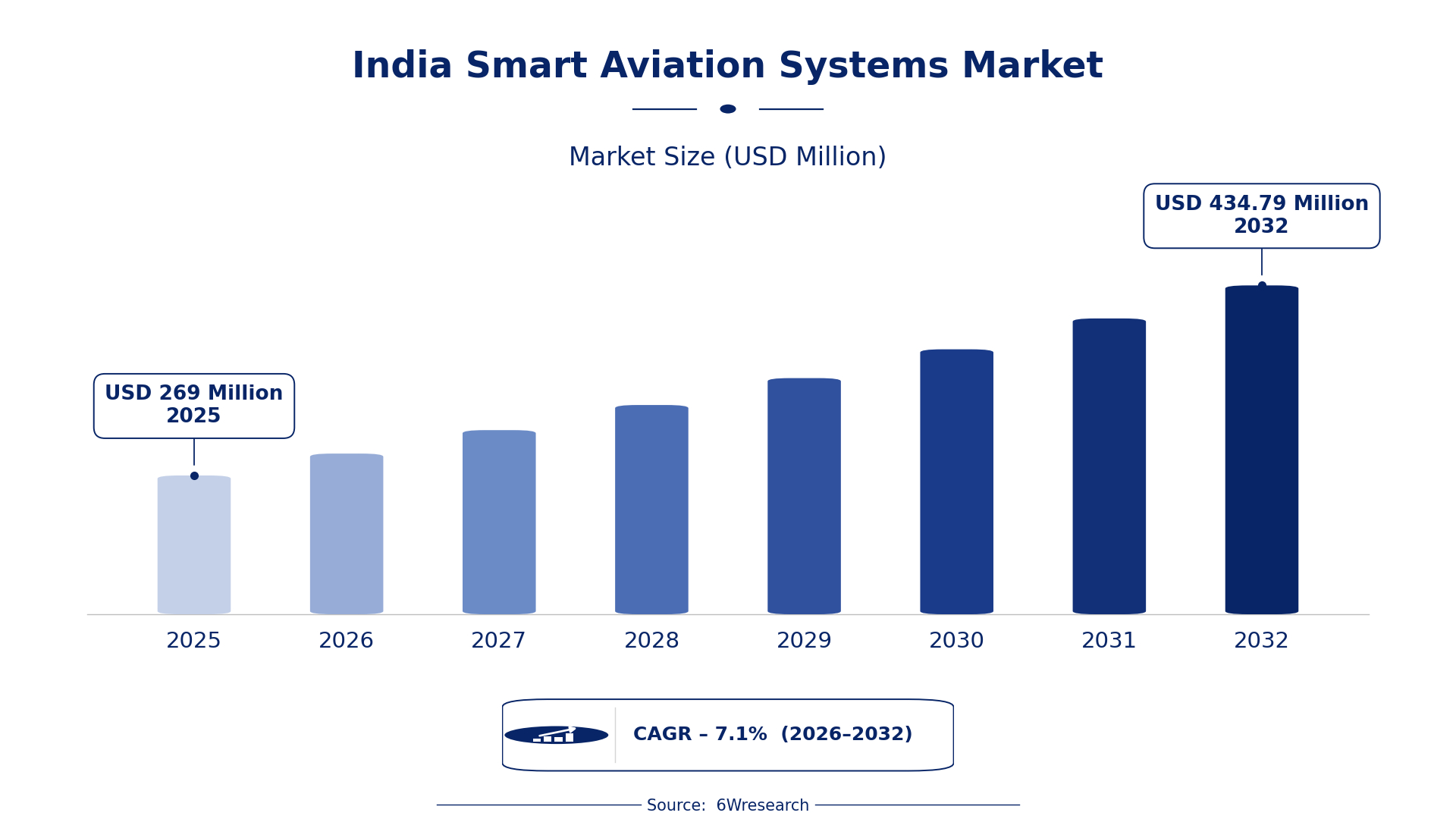
According to 6Wresearch internal database and industry insights, the India Smart Aviation Systems Market was valued at USD 269.0 million in 2025 and is projected to reach USD 434.79 million by 2032, growing at a CAGR of approximately 7.1% during 2026–2032.
India Smart Aviation Systems Market Highlights
| Report Metric | Details |
| Report Name | India Smart Aviation Systems Market |
| Market Size 2025 | USD 269.0 million |
| Market Size 2032 | USD 434.79 million |
| Absolute Growth 2025–2032 | USD 165.79 million |
| CAGR 2026–2032 | 7.1% |
| Peak Annual Growth | 9.4% in 2027 |
| Forecast Period | 2026–2032 |
| Historical Data | 2022–2025 |
| Base Year | 2025 |
| Leading System Type, 2025 | Predictive Maintenance (45% share) |
| Leading Smart Feature, 2025 | Sensor Data AI (50% share) |
| Leading Aircraft Type, 2025 | Commercial Aircraft (49% share) |
| Leading End User, 2025 | Airlines (44% share) |
| Fastest-Growing System Type | Cabin Automation (8.6% CAGR) |
| Fastest-Growing Smart Feature | Passenger Comfort (8.6% CAGR) |
| Fastest-Growing Aircraft Type | Regional Jets/Private Planes (9.5% CAGR) |
| Fastest-Growing End User | Defense OEMs (8.8% CAGR) |
| Growing Sector | Defense OEMs |
| Key End Users | Airlines, Defense OEMs, Avionics Developers, Aerospace Interior Makers |
India Smart Aviation Systems Market Year-wise Growth Rate and Key Drivers (2022–2032)
This graph illustrates the annual growth rates of the market from 2022 to 2032, highlighting a steady upward trajectory and projected market expansion over the forecast period.
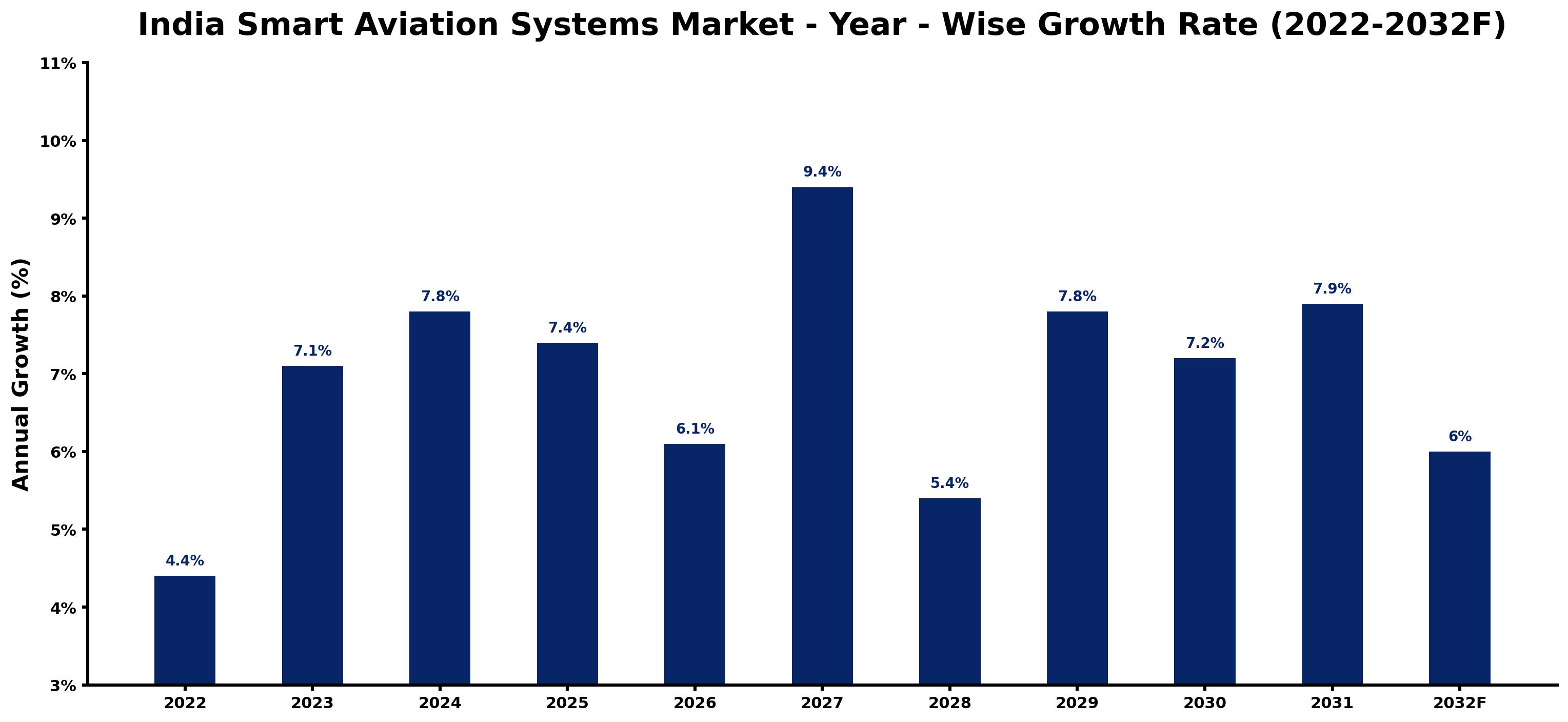
Below, each year's estimated growth is shown next to the factor that most influenced it.
| Year | Estimated Annual Growth (%) | Market Rationale |
| 2022 | 4.4 | The market showed steady activity with ongoing modernization initiatives in the aviation sector. |
| 2023 | 7.1 | Increased investment in smart technologies led to significant growth in the market. |
| 2024 | 7.8 | The 'Make in India' initiative further boosted local production and demand for smart systems. |
| 2025 | 7.4 | Growth slowed slightly as the market adjusted to previous rapid expansions. |
| 2026 | 6.1 | A slowdown occurred as investments stabilised, yet demand remained strong from airlines. |
| 2027 | 9.4 | The peak growth year saw heightened demand from both commercial and defense sectors. |
| 2028 | 5.4 | Growth slowed again as the market began to normalise after rapid expansion. |
| 2029 | 7.8 | Demand surged again as airlines expanded their fleets and upgraded systems. |
| 2030 | 7.2 | A slight slowdown was noted as the market adjusted to previous growth rates. |
| 2031 | 7.9 | Demand increased as modernization efforts continued across the aviation sector. |
| 2032 | 6.0 | Growth slowed as the market stabilised, reflecting a mature phase of development. |
Note: Market size estimations and growth projections presented in this report are based on 6Wresearch's proprietary forecasting methodology, utilizing the latest available industry data, government publications, and primary research inputs.
India Smart Aviation Systems Market Synopsis
Smart Aviation Systems in India encompass advanced technologies that improve operational efficiency, safety, and passenger experience. These systems integrate software, hardware, and data analytics for applications like predictive maintenance and real-time navigation. The India Smart Aviation Systems Market is growing due to rising demand from airlines and defense sectors, driven by modernization initiatives and a growing number of air travelers. The 'Make in India' initiative supports local production, further stimulating market growth.
Market Dynamics Impact Analysis (2026–2032)
| Factor | Type | Impact | Primary Segment Affected |
| Increased investment in smart aviation technologies is driving demand from airlines and defense sectors. | Driver | High | Predictive Maintenance |
| Growing number of air travelers is creating demand for enhanced passenger experiences. | Driver | High | Cabin Automation |
| The aviation sector's modernization initiatives present opportunities for local suppliers. | Opportunity | High | Commercial Aircraft |
| The 'UDAN' scheme enhances regional connectivity, increasing demand for smart systems. | Opportunity | High | Flight Navigation |
| High initial costs of smart systems can deter smaller airlines from investing. | Restraint | Medium | Smart Cockpit Displays |
| Limited awareness of advanced technologies among smaller operators may slow adoption. | Restraint | Medium | Cabin Automation |
| The India Smart Aviation Systems Market faces challenges related to regulatory compliance. | Challenge | High | Predictive Maintenance |
| Competition from established international suppliers may hinder local market entry. | Challenge | High | Commercial Aircraft |
Evaluation of Drivers in India Smart Aviation Systems Market (2026–2032)
The main growth drivers and the segments they affect most are set out below.
| Drivers | Primary Segment Affected | Why It Matters (Evidence) |
| Investment in predictive maintenance systems reduces downtime and maintenance costs. | Predictive Maintenance | The growth of the commercial aircraft fleet to over 2,000 by 2035 is driving demand for efficient maintenance solutions. |
| Rising passenger numbers necessitate cabin automation for improved comfort. | Cabin Automation | Airlines are investing in technologies that improve passenger experience and operational efficiency as their fleets grow. |
| Modernization of defense capabilities is driving demand for advanced avionics. | Fighter Aircraft | Investments in advanced avionics systems support national security and enhance operational readiness in defense applications. |
| The 'Make in India' initiative encourages local production of aviation technologies. | Commercial Aircraft | This initiative aims to boost domestic manufacturing, increasing demand for locally produced smart aviation systems. |
| The 'Digital Sky' initiative promotes the adoption of drone technologies. | Flight Navigation | This initiative aims for a comprehensive framework for drone operations, increasing the need for integrated smart aviation systems. |
Expansion of the Smart Aviation Systems market in India is supported by substantial investments in predictive maintenance and cabin automation technologies. The projected growth of the commercial aircraft fleet to over 2,000 by 2035 creates demand for efficient maintenance solutions. Rising passenger numbers are prompting airlines to invest in cabin automation for improved comfort and operational efficiency. These factors are driving notable growth in the market, with substantial investments expected to continue shaping the future.
Evaluation of Restraints in India Smart Aviation Systems Market
The key brakes on demand, and where they bite hardest, are shown below.
| Market Restraint | Primary Segment Affected | Why It Matters (Evidence) |
| High initial costs of smart aviation systems can deter smaller airlines from investing. | Smart Cockpit Displays | The financial burden of implementing advanced systems may limit access for smaller operators, affecting overall market growth. |
| Limited awareness of advanced technologies among smaller operators may slow adoption. | Cabin Automation | Smaller airlines often lack the resources to invest in new technologies, impacting their operational efficiency. |
| Regulatory compliance can be complex and costly for new entrants. | Predictive Maintenance | Navigating regulatory requirements requires substantial investment in compliance measures, which can deter new market participants. |
| Competition from established international suppliers may hinder local market entry. | Commercial Aircraft | Local suppliers face challenges in competing with established firms that have greater resources and market presence. |
| Supply chain disruptions can impact the availability of critical components. | Flight Navigation | Global supply chain issues may lead to delays in procuring essential technologies, affecting project timelines. |
India Smart Aviation Systems Market Challenges
The India Smart Aviation Systems market faces a few practical problems, and the first is intense competition. Domestic and international players vie for market share, leading to price reductions that squeeze profit margins for producers. Skills shortages present another challenge, as the rapid technological advancements outpace the training of aviation professionals, causing delays in project timelines for buyers. Buyers incur high costs due to regulatory compliance, with safety standards from the Bureau of Civil Aviation Security requiring investments that can reach millions annually. Supply chain disruptions also hinder operational efficiency, delaying the delivery of essential components for airlines.
Trends in the India Smart Aviation Systems Market
Below mentioned are some of the trends shaping the India Smart Aviation Systems Market growth.
- Transition from Traditional to Smart Aviation Systems: The shift towards smart aviation systems began in 2016 with the launch of the 'National Civil Aviation Policy'. This policy promotes the adoption of advanced technologies, improving operational efficiency and safety across the sector. The market is expected to see a notable increase in smart system implementations as a result.
- Emergence of Cabin Automation Technologies: Cabin automation technologies are becoming increasingly prevalent, driven by rising passenger expectations for comfort. The 'UDAN' scheme, which aims to improve regional connectivity, has led to a surge in demand for these systems, reflecting a growing trend in the aviation industry.
- Growth of Predictive Maintenance Solutions: Predictive maintenance solutions are gaining traction as airlines seek to reduce operational costs. The Indian aviation sector's projected fleet growth to over 2,000 aircraft by 2035 is driving this trend, leading to increased investments in maintenance technologies.
- Rise of Advanced Avionics in Defense Aviation: The Indian Air Force's modernization efforts, showcased during the 'Aero India 2023' event, highlight the increasing demand for advanced avionics in fighter aircraft. This trend is expected to continue as defense budgets increase, further driving innovation in aviation systems.
Investment Opportunities in the India Smart Aviation Systems Market
Below are the investment opportunities with the strongest case in the India Smart Aviation Systems Market.
- USD 434.79 million market potential by 2032: With the market expected to reach USD 434.79 million by 2032, there is an opportunity for suppliers of smart aviation systems. Airlines are the primary buyer group, seeking innovative solutions to improve operational efficiency.
- Growing demand for predictive maintenance solutions: As airlines expand their fleets, the need for predictive maintenance solutions is increasing. Local suppliers can enter the market by partnering with airlines to provide tailored solutions that address their specific needs.
- Investment in cabin automation technologies: The rise in passenger numbers presents an opportunity for suppliers of cabin automation technologies. Airlines are looking to improve passenger comfort, creating a demand for innovative solutions that enhance the travel experience.
- Entry through local partnerships: The 'Make in India' initiative encourages foreign companies to partner with local firms to produce aviation technologies. This approach can facilitate market entry and expand the reach of innovative solutions in the Indian aviation sector.
Government Initiatives in the India Smart Aviation Systems Market
The 'National Civil Aviation Policy' launched in 2016 by the Ministry of Civil Aviation promotes the adoption of smart aviation technologies. This policy encourages investment in advanced systems that improve operational efficiency and safety, directly benefiting both producers and buyers in the aviation sector. Additionally, the 'Aviation Sector Vision 2040' plan aims to modernize aviation infrastructure and promote sustainability, further supporting the growth of smart aviation systems.
The Directorate General of Civil Aviation oversees the implementation of safety standards and regulations for aviation operations. This agency ensures compliance with safety measures and promotes the adoption of advanced technologies in the sector. The Bureau of Civil Aviation Security also plays a key role, having updated the 'Civil Aviation Security Programme' in 2022 to incorporate advanced technologies for improved airport security measures, enhancing safety for both passengers and operators.
Future Insight of the India Smart Aviation Systems Market
By 2032, buyers and suppliers in the India Smart Aviation Systems market can anticipate transformative changes driven by key initiatives. The 'Make in India' initiative will strengthen local production capabilities, enhancing supply chain resilience. The 'Digital Sky' initiative will redefine drone operations, creating new opportunities for smart aviation technologies. The Indian Air Force's increased investment in advanced avionics will stimulate innovation across the sector. These factors will create a more dynamic environment for all stakeholders.
Market Segmentation Analysis
The analysis below covers each segmentation, its leading category in 2025 and its fastest-growing category through 2032.
By System Type – Predictive Maintenance Dominated, Cabin Automation Expected to Grow Fastest
According to Dhaval Chaurasia, Assistant Manager at 6Wresearch, Predictive Maintenance took a 45% share of system type in 2025, more than any other category. Predictive Maintenance captures the largest share because it is vital for minimising downtime and maintenance expenses for airlines. The projected increase in India's commercial aircraft fleet to over 2,000 by 2035 underscores the growing necessity for these systems. The quickest growth will come from Cabin Automation, forecast to expand at a CAGR of 8.6% between 2026 and 2032. Cabin Automation is experiencing rapid growth as it significantly enhances passenger comfort and operational efficiency, essential for airlines competing in the market. The 'UDAN' scheme, aimed at improving regional connectivity, further fuels this demand. Suppliers should prioritise the development of cabin automation technologies to meet the rising expectations of airlines and their passengers.
By Smart Feature – Sensor Data AI Dominated, Passenger Comfort Expected to Grow Fastest
With a 50% revenue share in 2025, Sensor Data AI was the largest smart feature category. Sensor Data holds the largest share as it supports predictive analytics, crucial for optimising aviation operations. Its integration into smart systems has become essential for maintaining efficiency and safety within the industry. Passenger Comfort is projected to grow fastest, at a CAGR of 8.6% during 2026–2032. Passenger Comfort is the fastest-growing feature because it directly affects passenger experience and satisfaction, which are top priorities for airlines. With the increase in air travel in India, enhancing comfort is becoming a key competitive advantage. Buyers should invest in technologies that enhance passenger comfort, as this will likely improve customer loyalty and encourage repeat business.
By Aircraft Type – Commercial Aircraft Dominated, Regional Jets/Private Planes Expected to Grow Fastest
The largest aircraft type category in 2025 was Commercial Aircraft, with a 49% share of total revenue. Commercial Aircraft dominate the market share as they are the primary segment for aviation systems, driven by the increasing number of air travellers and expanding airline operations. Ongoing modernisation initiatives in the aviation sector highlight the importance of this segment. Regional Jets/Private Planes are set to record the highest CAGR in this split, 9.5% over 2026–2032. Regional Jets/Private Planes are the fastest-growing segment due to the rising demand for regional connectivity and private travel options. This trend aligns with government efforts to enhance air travel accessibility across the country. Suppliers should tailor their offerings to meet the growing demands of regional jets and private planes, as this segment presents significant growth opportunities.
By End User – Airlines Dominated, Defense OEMs Expected to Grow Fastest
Airlines accounted for a 44% market share by end user in 2025. Airlines represent the largest share as they are the primary end-users of smart aviation systems, which are crucial for operational efficiency and customer satisfaction. The competitive landscape among airlines in India drives the adoption of advanced technologies. Over 2026–2032, Defense OEMs are expected to post the fastest growth, at a CAGR of 8.8%. Defense OEMs are the fastest-growing end-user group, as their essential role in national security applications necessitates the integration of advanced aviation systems. Significant allocations in India's defence budget for modernisation initiatives further support this growth. Suppliers should focus on forming partnerships with defense OEMs to leverage the expanding market for advanced aviation technologies in the defence sector.
Key Attractiveness of the Report
- 10 Years of Market Numbers
- Historical Data Starting from 2022 to 2025
- Base Year 2025
- Forecast Data until 2032
- Key Performance Indicators Impacting the Market
- Major Upcoming Developments and Projects
Key Highlights of the Report:
- India Smart Aviation Systems Market Outlook
- Market Size of India Smart Aviation Systems Market, 2025
- Forecast of India Smart Aviation Systems Market, 2032
- Historical Data and Forecast of India Smart Aviation Systems Revenues & Volume for the Period 2022 - 2032F
- India Smart Aviation Systems Market Trend Evolution
- India Smart Aviation Systems Market Drivers and Challenges
- India Smart Aviation Systems Price Trends
- India Smart Aviation Systems Porter's Five Forces
- India Smart Aviation Systems Industry Life Cycle
- Historical Data and Forecast of India Smart Aviation Systems Market Revenues & Volume By System Type for the Period 2022 - 2032F
- Historical Data and Forecast of India Smart Aviation Systems Market Revenues & Volume By Predictive Maintenance for the Period 2022 - 2032F
- Historical Data and Forecast of India Smart Aviation Systems Market Revenues & Volume By Flight Navigation for the Period 2022 - 2032F
- Historical Data and Forecast of India Smart Aviation Systems Market Revenues & Volume By Smart Cockpit Displays for the Period 2022 - 2032F
- Historical Data and Forecast of India Smart Aviation Systems Market Revenues & Volume By Cabin Automation for the Period 2022 - 2032F
- Historical Data and Forecast of India Smart Aviation Systems Market Revenues & Volume By Smart Feature for the Period 2022 - 2032F
- Historical Data and Forecast of India Smart Aviation Systems Market Revenues & Volume By Sensor Data AI for the Period 2022 - 2032F
- Historical Data and Forecast of India Smart Aviation Systems Market Revenues & Volume By Satellite + AI for the Period 2022 - 2032F
- Historical Data and Forecast of India Smart Aviation Systems Market Revenues & Volume By HUD + AR for the Period 2022 - 2032F
- Historical Data and Forecast of India Smart Aviation Systems Market Revenues & Volume By Passenger Comfort for the Period 2022 - 2032F
- Historical Data and Forecast of India Smart Aviation Systems Market Revenues & Volume By Aircraft Type for the Period 2022 - 2032F
- Historical Data and Forecast of India Smart Aviation Systems Market Revenues & Volume By Commercial Aircraft for the Period 2022 - 2032F
- Historical Data and Forecast of India Smart Aviation Systems Market Revenues & Volume By Regional Jets/Private Planes for the Period 2022 - 2032F
- Historical Data and Forecast of India Smart Aviation Systems Market Revenues & Volume By Fighter Aircraft for the Period 2022 - 2032F
- Historical Data and Forecast of India Smart Aviation Systems Market Revenues & Volume By Commercial Jets for the Period 2022 - 2032F
- Historical Data and Forecast of India Smart Aviation Systems Market Revenues & Volume By End User for the Period 2022 - 2032F
- Historical Data and Forecast of India Smart Aviation Systems Market Revenues & Volume By Airlines for the Period 2022 - 2032F
- Historical Data and Forecast of India Smart Aviation Systems Market Revenues & Volume By Avionics Developers for the Period 2022 - 2032F
- Historical Data and Forecast of India Smart Aviation Systems Market Revenues & Volume By Defense OEMs for the Period 2022 - 2032F
- Historical Data and Forecast of India Smart Aviation Systems Market Revenues & Volume By Aerospace Interior Makers for the Period 2022 - 2032F
- India Smart Aviation Systems Import Export Trade Statistics
- Market Opportunity Assessment By System Type
- Market Opportunity Assessment By Smart Feature
- Market Opportunity Assessment By Aircraft Type
- Market Opportunity Assessment By End User
- India Smart Aviation Systems Top Companies Market Share
- India Smart Aviation Systems Competitive Benchmarking By Technical and Operational Parameters
- India Smart Aviation Systems Company Profiles
- India Smart Aviation Systems Key Strategic Recommendations
Market Covered
Segments analysed in this report are listed below.
By System Type
- Predictive Maintenance
- Flight Navigation
- Smart Cockpit Displays
- Cabin Automation
By Smart Feature
- Sensor Data AI
- Satellite + AI
- HUD + AR
- Passenger Comfort
By Aircraft Type
- Commercial Aircraft
- Regional Jets/Private Planes
- Fighter Aircraft
- Commercial Jets
By End User
- Airlines
- Avionics Developers
- Defense OEMs
- Aerospace Interior Makers






































