India Specialty Grains Market Size & Growth Rate
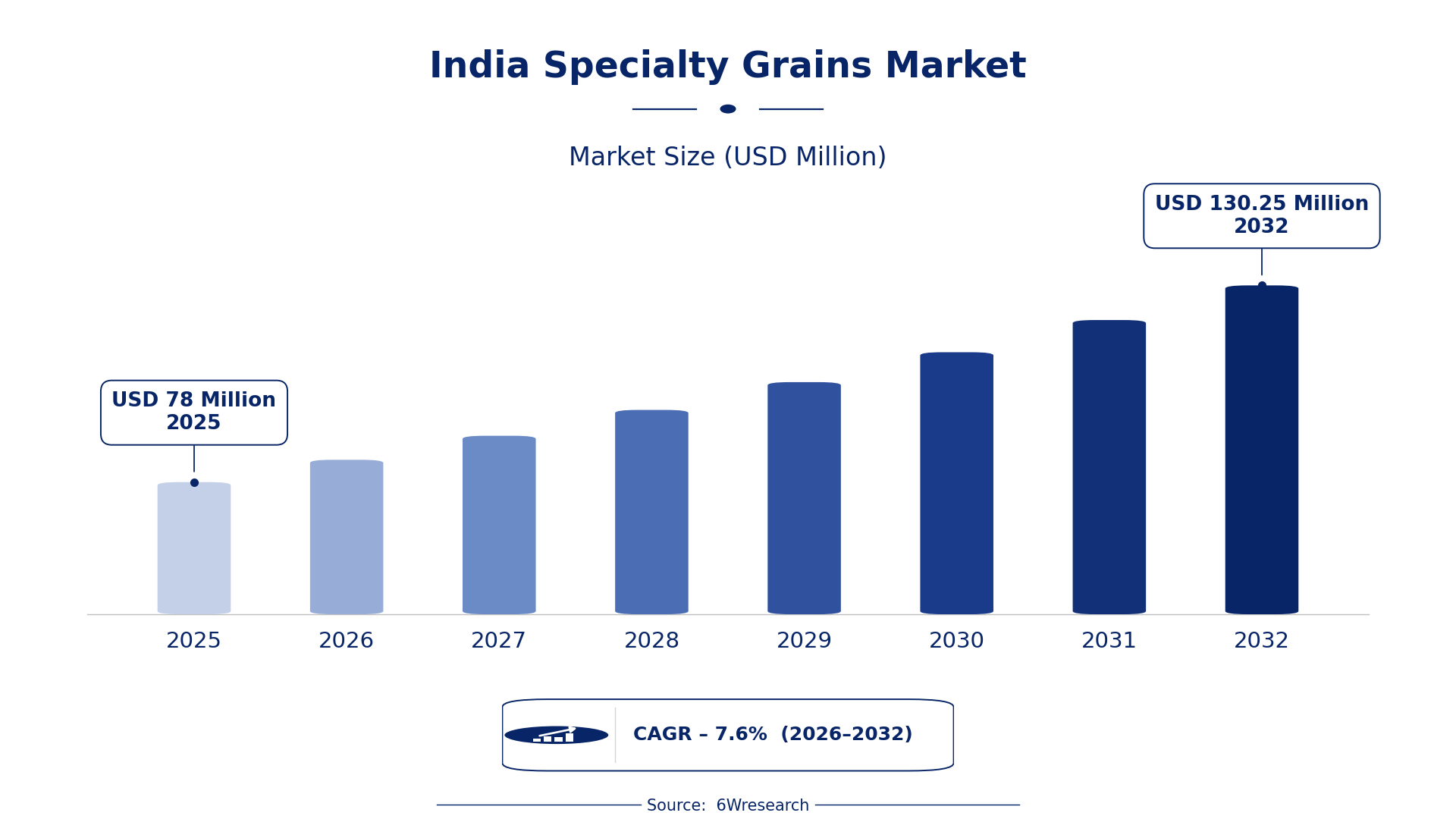
According to 6Wresearch internal database and industry insights, the India Specialty Grains Market was valued at USD 78.0 million in 2025 and is projected to reach USD 130.25 million by 2032, growing at a CAGR of approximately 7.6% during 2026–2032.
India Specialty Grains Market Highlights
| Report Metric | Details |
| Report Name | India Specialty Grains Market |
| Market Size 2025 | USD 78.0 million |
| Market Size 2032 | USD 130.25 million |
| Absolute Growth 2025–2032 | USD 52.25 million |
| CAGR 2026–2032 | 7.6% |
| Peak Annual Growth | 9.5% in 2030 |
| Forecast Period | 2026–2032 |
| Historical Data | 2022–2025 |
| Base Year | 2025 |
| Leading Grain Type, 2025 | Millet (42% share) |
| Leading Nutritional Feature, 2025 | High Protein (37% share) |
| Leading Processing Form, 2025 | Flour (40% share) |
| Leading End User, 2025 | Healthy Food Retailers (38% share) |
| Fastest-Growing Grain Type | Amaranth (9.5% CAGR) |
| Fastest-Growing Nutritional Feature | Gluten-Free (8.9% CAGR) |
| Fastest-Growing Processing Form | Ready-to-Cook (10.3% CAGR) |
| Fastest-Growing End User | Functional Food Brands (10.0% CAGR) |
| Growing Sector | Functional Food Brands |
| Key End Users | Healthy Food Retailers, Cereal Manufacturers, Functional Food Brands, Baking Industry |
India Specialty Grains Market Year-wise Growth Rate and Key Drivers (2022–2032)
This graph illustrates the annual growth rates of the market from 2022 to 2032, highlighting a steady upward trajectory and projected market expansion over the forecast period.
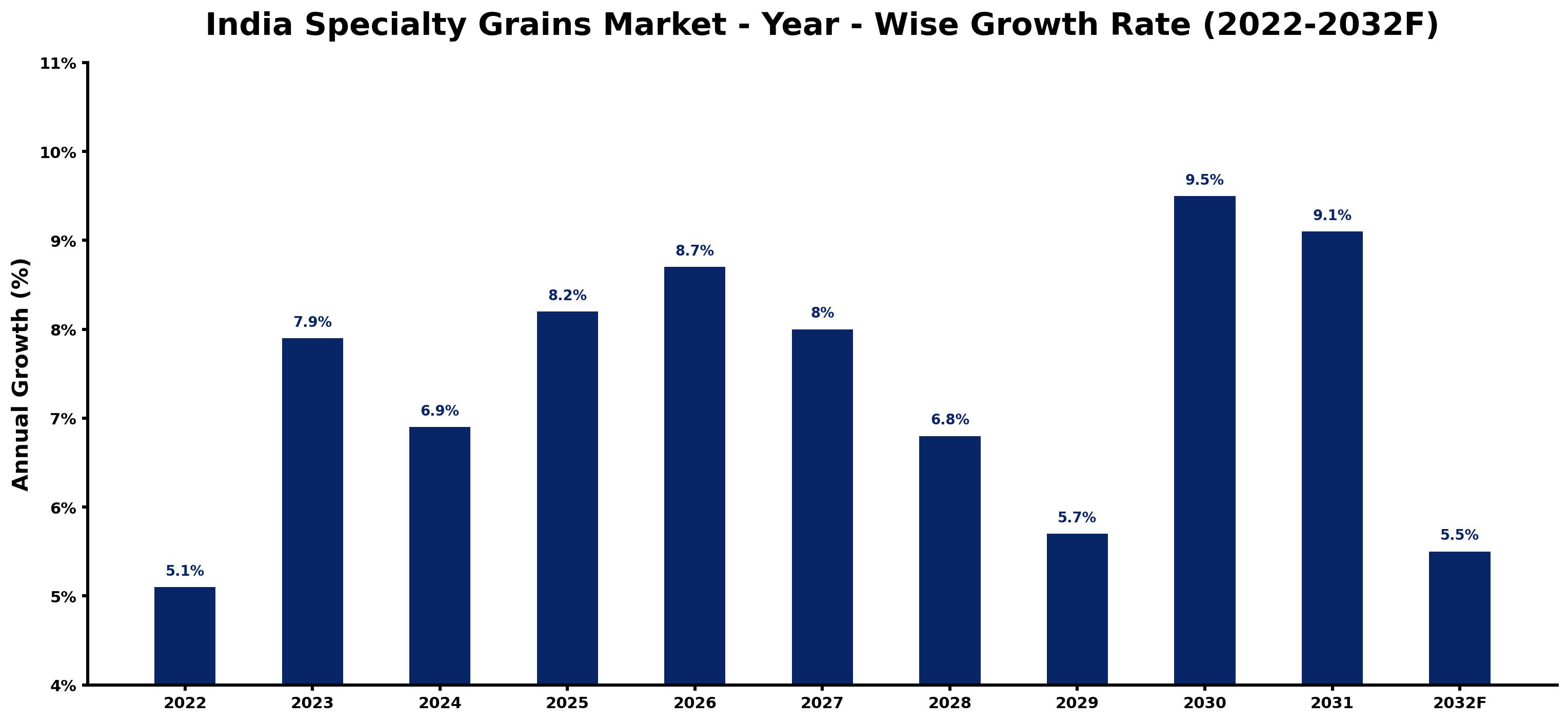
Annual growth estimates for each year appear below with the principal reason behind them, explaining the shifts that set the pace of the market.
| Year | Estimated Annual Growth (%) | Market Rationale |
| 2022 | 5.1 | The market experienced steady growth, driven by the Eat Right India movement promoting nutritious diets. |
| 2023 | 7.9 | Demand surged as healthy food retailers expanded rapidly in urban areas, increasing specialty grain purchases. |
| 2024 | 6.9 | Growth slowed slightly as supply chain adjustments took time to align with rising demand. |
| 2025 | 8.2 | The market rebounded with increased production and consumer interest in nutritious options. |
| 2026 | 8.7 | Demand is expected to rise as the National Policy on Millets promotes greater consumption and awareness. |
| 2027 | 8.0 | Growth is projected to slow as market saturation begins to impact the pace of new purchases. |
| 2028 | 6.8 | A further slowdown is anticipated as competition intensifies among specialty grain suppliers. |
| 2029 | 5.7 | The market is expected to see continued growth, but at a reduced rate due to evolving consumer preferences. |
| 2030 | 9.5 | A peak in growth is projected as health trends drive increased demand for specialty grains. |
| 2031 | 9.1 | Growth is anticipated to moderate slightly as the market adjusts to the previous year's surge in demand. |
| 2032 | 5.5 | The market is expected to grow steadily as health-focused consumers continue to seek nutritious options. |
Note: Market size estimations and growth projections presented in this report are based on 6Wresearch's proprietary forecasting methodology, utilizing the latest available industry data, government publications, and primary research inputs.
India Specialty Grains Market Synopsis
The India Specialty Grains Market includes a variety of grains prized for their distinctive nutritional benefits and culinary applications. Cultivated through specific practices, these grains find their way into health food products and gluten-free options. Healthy food retailers are the main purchasers, rapidly expanding in urban centres. Government initiatives such as the National Policy on Millets advocate for both the cultivation and consumption of these grains, further propelling demand. The market is expected to grow robustly, reaching USD 130.25 million by 2032.
Market Dynamics Impact Analysis (2026–2032)
| Factor | Type | Impact | Primary Segment Affected |
| Growing health consciousness among consumers is driving demand for nutritious specialty grains. | Driver | High | High Protein |
| The increasing popularity of gluten-free diets is expanding the market for specialty grains. | Driver | High | Gluten-Free |
| Urban health food retailers are rapidly expanding, creating demand for specialty grains. | Opportunity | High | Healthy Food Retailers |
| The rise of functional food brands is creating new markets for specialty grains in health products. | Opportunity | High | Functional Food Brands |
| Supply chain disruptions have led to increased costs for specialty grain producers. | Restraint | Medium | Millet |
| Limited consumer awareness about certain specialty grains may hinder market growth. | Restraint | Medium | Teff |
| High production costs for specialty grains can deter new entrants into the market. | Challenge | Medium | Amaranth |
| Regulatory hurdles in food safety can delay product approvals for specialty grains. | Challenge | Medium | Quinoa |
Evaluation of Drivers in India Specialty Grains Market (2026–2032)
The table below links each growth driver to the segment it affects and the evidence for it.
| Drivers | Primary Segment Affected | Why It Matters (Evidence) |
| Rising health consciousness drives demand for high-protein specialty grains. | High Protein | Approximately 1.4 billion people in India are seeking nutritious food options, increasing purchases. |
| The gluten-free trend is boosting sales of specialty grains. | Gluten-Free | The market for gluten-free products is projected to grow by 8.9%, encouraging more consumers to buy specialty grains. |
| Urbanisation is leading to more health food retailers stocking specialty grains. | Healthy Food Retailers | Urban areas are experiencing a 15% growth in health food retailers, increasing specialty grain availability. |
| Functional food brands are integrating specialty grains into their products. | Functional Food Brands | These brands are projected to grow by 10% annually, increasing demand for specialty grains. |
| Government initiatives are promoting the cultivation of specialty grains. | Millet | The National Mission on Sustainable Agriculture supports millet production, enhancing market supply. |
Growth across the Specialty Grains market in India is anchored in rising health consciousness, increasing urbanisation, and support for sustainable agriculture. The population of 1.4 billion is actively seeking nutritious food options, which boosts demand for high-protein specialty grains. Urban areas are seeing a 15% growth in health food retailers, which increases the availability of these grains. Functional food brands are projected to grow by 10% annually, driving further demand.
Evaluation of Restraints in India Specialty Grains Market
The key brakes on demand, and where they bite hardest, are shown below.
| Market Restraint | Primary Segment Affected | Why It Matters (Evidence) |
| Supply chain disruptions are increasing production costs for specialty grains. | Millet | Production costs have risen by 20% due to supply chain issues, affecting profitability. |
| Limited consumer awareness about specialty grains restricts market potential. | Teff | Only 5% of consumers are familiar with teff, limiting its market growth. |
| High production costs deter new entrants into the specialty grains market. | Amaranth | Producers face costs that can exceed INR 50,000 per hectare, limiting expansion. |
| Regulatory hurdles delay product approvals for specialty grains. | Quinoa | Approval processes can take up to 12 months, affecting market entry. |
| Market saturation is beginning to slow growth rates for specialty grains. | High Protein | Increased competition has led to a 10% decline in growth rates. |
India Specialty Grains Market Challenges
Producers in the India Specialty Grains Market encounter a skills gap, as many farmers lack training in modern agricultural techniques. This deficiency leads to lower yields, hindering their ability to satisfy the growing demand for nutritious food. Supply chain challenges stem from inconsistent access to quality seeds, resulting in production delays and escalating costs, with input expenses rising by 20% over the past year for growers. Competition from imported specialty grains adds pressure, as lower-priced imports can adversely affect sales for local producers in urban health food outlets.
Trends in the India Specialty Grains Market
The trends below show where the India Specialty Grains Market is heading.
- Shift towards Health-Conscious Eating: In urban areas, the Eat Right India movement is promoting healthy eating habits, resulting in a 15% increase in specialty grain consumption among health food retailers.
- Growing Popularity of Gluten-Free Products: The rise of gluten-free diets has led to an increase in the availability of gluten-free specialty grains, with a market growth rate of 8.9% projected for the coming years.
- Increased Cultivation of Quinoa: Since 2021, quinoa cultivation has expanded in states like Uttarakhand and Himachal Pradesh, contributing to a 10% rise in local production.
- Emergence of Ready-to-Cook Specialty Grains: Ready-to-cook specialty grains are gaining traction, with a projected CAGR of 10.3%, catering to busy urban consumers seeking convenience.
Investment Opportunities in the India Specialty Grains Market
Investors looking at the India Specialty Grains Market should consider the following areas.
- Urban Health Food Retailers Expanding: Urban areas are experiencing rapid growth in health food retailers, with a 15% increase in 2023, creating opportunities for specialty grain suppliers to meet rising demand.
- Functional Food Brands Seeking Specialty Grains: With functional food brands projected to grow by 10% annually, suppliers can target these brands to incorporate specialty grains into their products.
- Government Support for Millet Cultivation: The National Policy on Millets aims to boost production and consumption, creating a favourable environment for investment in millet farming and processing.
- Growing Demand for Gluten-Free Products: As gluten-free diets gain traction, suppliers can capitalise on this trend by providing a broader range of gluten-free specialty grains.
Government Initiatives in the India Specialty Grains Market
The National Mission on Sustainable Agriculture, launched in 2020, promotes the cultivation of specialty grains by encouraging sustainable practices. This initiative complements existing laws by offering targeted support to farmers, ensuring higher yields and improved market access. The National Policy on Millets, introduced in 2022, aims to increase millet production and consumption, further supporting the specialty grains sector.
The Agricultural and Processed Food Products Export Development Authority oversees various schemes, including the Pradhan Mantri Kisan Sampada Yojana, which allocates INR 600 crore for processing specialty grains. This initiative enhances the quality and marketability of these grains while promoting them for export, boosting their global presence.
Future Insight of the India Specialty Grains Market
The India Specialty Grains Market is set to evolve by 2032, driven by increased health awareness among consumers. The National Food Security Mission's support for millet cultivation will improve local production capabilities. Urban health food retailers are expected to expand their product offerings, responding to the rising interest in nutritious options. The Ministry of Agriculture's sustainability programme will encourage more farmers to cultivate specialty grains, aligning with the trend towards functional foods.
Market Segmentation Analysis
The report offers a comprehensive study of the following market segments and their leading categories in the market.
By Grain Type – Millet Dominated, Amaranth Expected to Grow Fastest
According to Summon Dutta, Assistant Manager at 6Wresearch, the largest grain type category in 2025 was Millet, with a 42% share of total revenue. Millet holds the largest share in the India Specialty Grains Market due to its widespread use in rural diets and health products, appealing to both local consumers and health-conscious markets. Approximately 1.5 million tons of millet were produced in India in 2022, highlighting its significance as a staple crop. The quickest growth will come from Amaranth, forecast to expand at a CAGR of 9.5% between 2026 and 2032. Amaranth is experiencing rapid growth as a health food, particularly among consumers seeking high-protein options, which aligns with the increasing demand for nutritious food. Its recognition for high protein content makes it a popular choice in health-focused diets. Suppliers should focus on promoting amaranth to capitalise on its growing popularity among health-conscious consumers.
By Nutritional Feature – High Protein Dominated, Gluten-Free Expected to Grow Fastest
High Protein accounted for a 37% market share by nutritional feature in 2025. High Protein specialty grains dominate the market share as they cater to health-focused consumers who prioritise nutritional value in their diets. The National Institute of Nutrition recommends incorporating more high-protein grains, reinforcing their importance in health-conscious eating. Over 2026–2032, Gluten-Free is expected to post the fastest growth, at a CAGR of 8.9%. The Gluten-Free segment is growing rapidly, driven by the increasing number of gluten-intolerant individuals seeking suitable dietary options. This shift towards gluten-free products reflects a broader trend in health and wellness among Indian consumers. Buyers will benefit from a wider range of gluten-free specialty grains as demand continues to rise.
By Processing Form – Flour Dominated, Ready-to-Cook Expected to Grow Fastest
With a 40% revenue share in 2025, Flour was the largest processing form category. Flour is the leading processing form in the market, widely used in various baked goods, making it essential for both home cooks and commercial bakers. Its versatility in culinary applications ensures a strong market share among specialty grains. Ready-to-Cook is projected to grow fastest, at a CAGR of 10.3% during 2026–2032. Ready-to-Cook products are gaining traction due to their convenience for busy consumers, aligning with the fast-paced lifestyle of urban populations. This trend indicates a shift towards more accessible meal solutions in the specialty grains sector. Suppliers should invest in ready-to-cook options to meet the growing demand for convenience among consumers.
By End User – Healthy Food Retailers Dominated, Functional Food Brands Expected to Grow Fastest
Healthy Food Retailers took a 38% share of end user in 2025, more than any other category. Healthy Food Retailers hold the largest share of the India Specialty Grains Market as they serve as the primary market for consumers seeking nutritious food options. With a notable growth rate of 15% in 2023, these retailers are expanding rapidly in urban areas, reinforcing their dominant position. Functional Food Brands are set to record the highest CAGR in this split, 10.0% over 2026–2032. Functional Food Brands are the fastest growing segment, driven by their integration of specialty grains into health-focused products that cater to a wellness-oriented demographic. This growth is further supported by a projected annual increase of 10% in the functional food sector, indicating a strong market trend. This means suppliers should focus on partnerships with healthy food retailers and functional food brands to maximise their market share in specialty grains.
Key Attractiveness of the Report
- 10 Years of Market Numbers
- Historical Data Starting from 2022 to 2025
- Base Year 2025
- Forecast Data until 2032
- Key Performance Indicators Impacting the Market
- Major Upcoming Developments and Projects
Key Highlights of the Report:
- India Specialty Grains Market Outlook
- Market Size of India Specialty Grains Market, 2025
- Forecast of India Specialty Grains Market, 2032
- Historical Data and Forecast of India Specialty Grains Revenues & Volume for the Period 2022 - 2032F
- India Specialty Grains Market Trend Evolution
- India Specialty Grains Market Drivers and Challenges
- India Specialty Grains Price Trends
- India Specialty Grains Porter's Five Forces
- India Specialty Grains Industry Life Cycle
- Historical Data and Forecast of India Specialty Grains Market Revenues & Volume By Grain Type for the Period 2022 - 2032F
- Historical Data and Forecast of India Specialty Grains Market Revenues & Volume By Quinoa for the Period 2022 - 2032F
- Historical Data and Forecast of India Specialty Grains Market Revenues & Volume By Amaranth for the Period 2022 - 2032F
- Historical Data and Forecast of India Specialty Grains Market Revenues & Volume By Millet for the Period 2022 - 2032F
- Historical Data and Forecast of India Specialty Grains Market Revenues & Volume By Teff for the Period 2022 - 2032F
- Historical Data and Forecast of India Specialty Grains Market Revenues & Volume By Nutritional Feature for the Period 2022 - 2032F
- Historical Data and Forecast of India Specialty Grains Market Revenues & Volume By High Protein for the Period 2022 - 2032F
- Historical Data and Forecast of India Specialty Grains Market Revenues & Volume By Gluten-Free for the Period 2022 - 2032F
- Historical Data and Forecast of India Specialty Grains Market Revenues & Volume By Rich in Fiber for the Period 2022 - 2032F
- Historical Data and Forecast of India Specialty Grains Market Revenues & Volume By Iron-Rich for the Period 2022 - 2032F
- Historical Data and Forecast of India Specialty Grains Market Revenues & Volume By Processing Form for the Period 2022 - 2032F
- Historical Data and Forecast of India Specialty Grains Market Revenues & Volume By Whole/Frozen for the Period 2022 - 2032F
- Historical Data and Forecast of India Specialty Grains Market Revenues & Volume By Puffed/Flour for the Period 2022 - 2032F
- Historical Data and Forecast of India Specialty Grains Market Revenues & Volume By Ready-to-Cook for the Period 2022 - 2032F
- Historical Data and Forecast of India Specialty Grains Market Revenues & Volume By Flour for the Period 2022 - 2032F
- Historical Data and Forecast of India Specialty Grains Market Revenues & Volume By End User for the Period 2022 - 2032F
- Historical Data and Forecast of India Specialty Grains Market Revenues & Volume By Healthy Food Retailers for the Period 2022 - 2032F
- Historical Data and Forecast of India Specialty Grains Market Revenues & Volume By Cereal Manufacturers for the Period 2022 - 2032F
- Historical Data and Forecast of India Specialty Grains Market Revenues & Volume By Functional Food Brands for the Period 2022 - 2032F
- Historical Data and Forecast of India Specialty Grains Market Revenues & Volume By Baking Industry for the Period 2022 - 2032F
- India Specialty Grains Import Export Trade Statistics
- Market Opportunity Assessment By Grain Type
- Market Opportunity Assessment By Nutritional Feature
- Market Opportunity Assessment By Processing Form
- Market Opportunity Assessment By End User
- India Specialty Grains Top Companies Market Share
- India Specialty Grains Competitive Benchmarking By Technical and Operational Parameters
- India Specialty Grains Company Profiles
- India Specialty Grains Key Strategic Recommendations
Market Covered
The report offers an extensive study of the following market segments.
By Grain Type
- Quinoa
- Amaranth
- Millet
- Teff
By Nutritional Feature
- High Protein
- Gluten-Free
- Rich in Fiber
- Iron-Rich
By Processing Form
- Whole/Frozen
- Puffed/Flour
- Ready-to-Cook
- Flour
By End User
- Healthy Food Retailers
- Cereal Manufacturers
- Functional Food Brands
- Baking Industry































