China Specialty Grains Market Size & Growth Rate
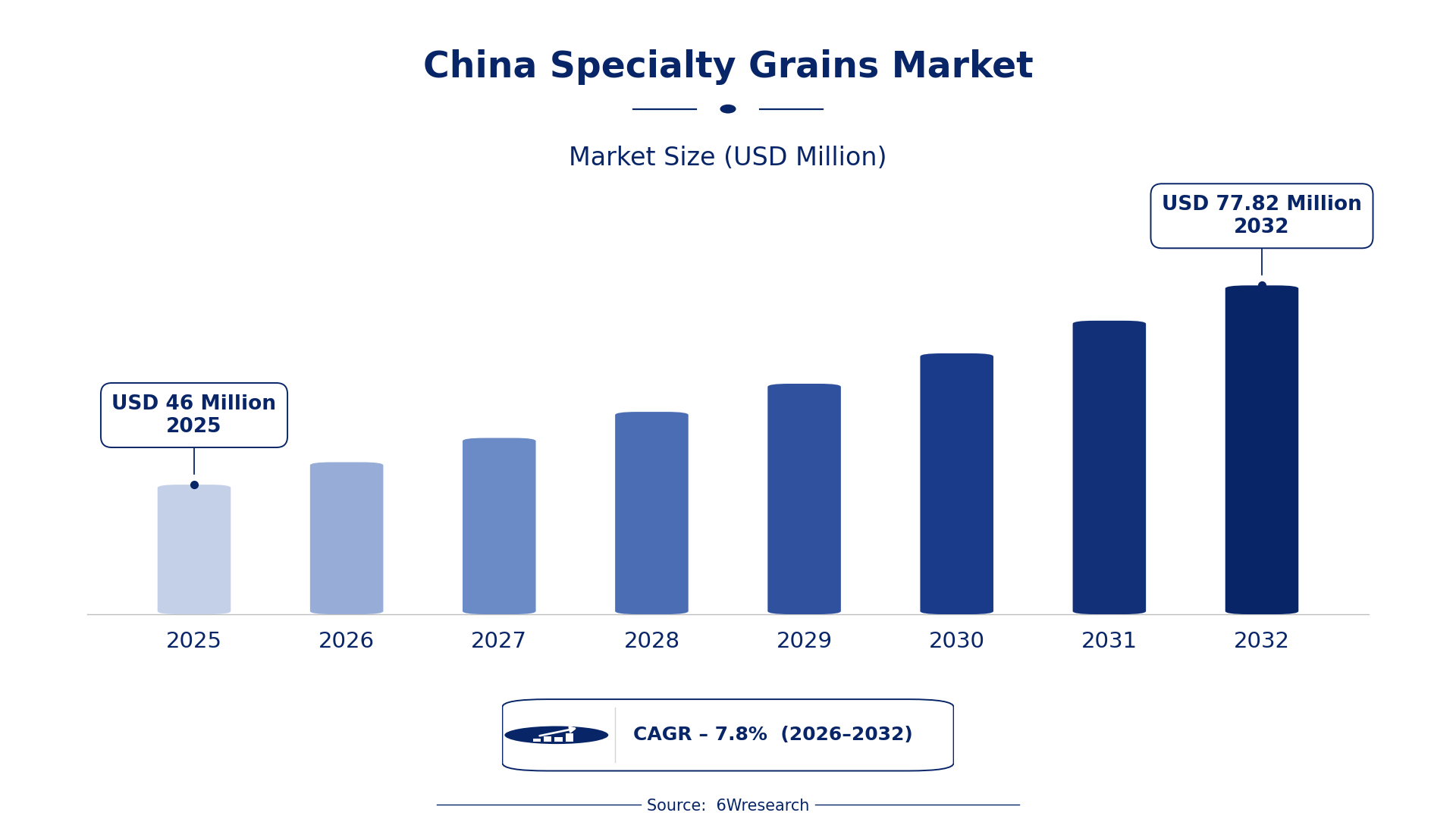
According to 6Wresearch internal database and industry insights, the China Specialty Grains Market was valued at USD 46.0 million in 2025 and is projected to reach USD 77.82 million by 2032, growing at a CAGR of approximately 7.8% during 2026–2032.
China Specialty Grains Market Highlights
| Report Metric | Details |
| Report Name | China Specialty Grains Market |
| Market Size 2025 | USD 46.0 million |
| Market Size 2032 | USD 77.82 million |
| Absolute Growth 2025–2032 | USD 31.82 million |
| CAGR 2026–2032 | 7.8% |
| Peak Annual Growth | 10.0% in 2030 |
| Forecast Period | 2026–2032 |
| Historical Data | 2022–2025 |
| Base Year | 2025 |
| Leading Grain Type, 2025 | Quinoa (49% share) |
| Leading Nutritional Feature, 2025 | High Protein (55% share) |
| Leading Processing Form, 2025 | Ready-to-Cook (37% share) |
| Leading End User, 2025 | Healthy Food Retailers (40% share) |
| Fastest-Growing Grain Type | Amaranth (9.2% CAGR) |
| Fastest-Growing Processing Form | Whole/Frozen (10.1% CAGR) |
| Fastest-Growing End User | Cereal Manufacturers (10.1% CAGR) |
| Growing Sector | Health Food Retailing |
| Key End Users | Healthy Food Retailers, Functional Food Brands, Cereal Manufacturers |
China Specialty Grains Market Year-wise Growth Rate and Key Drivers (2022–2032)
This graph illustrates the annual growth rates of the market from 2022 to 2032, highlighting a steady upward trajectory and projected market expansion over the forecast period.
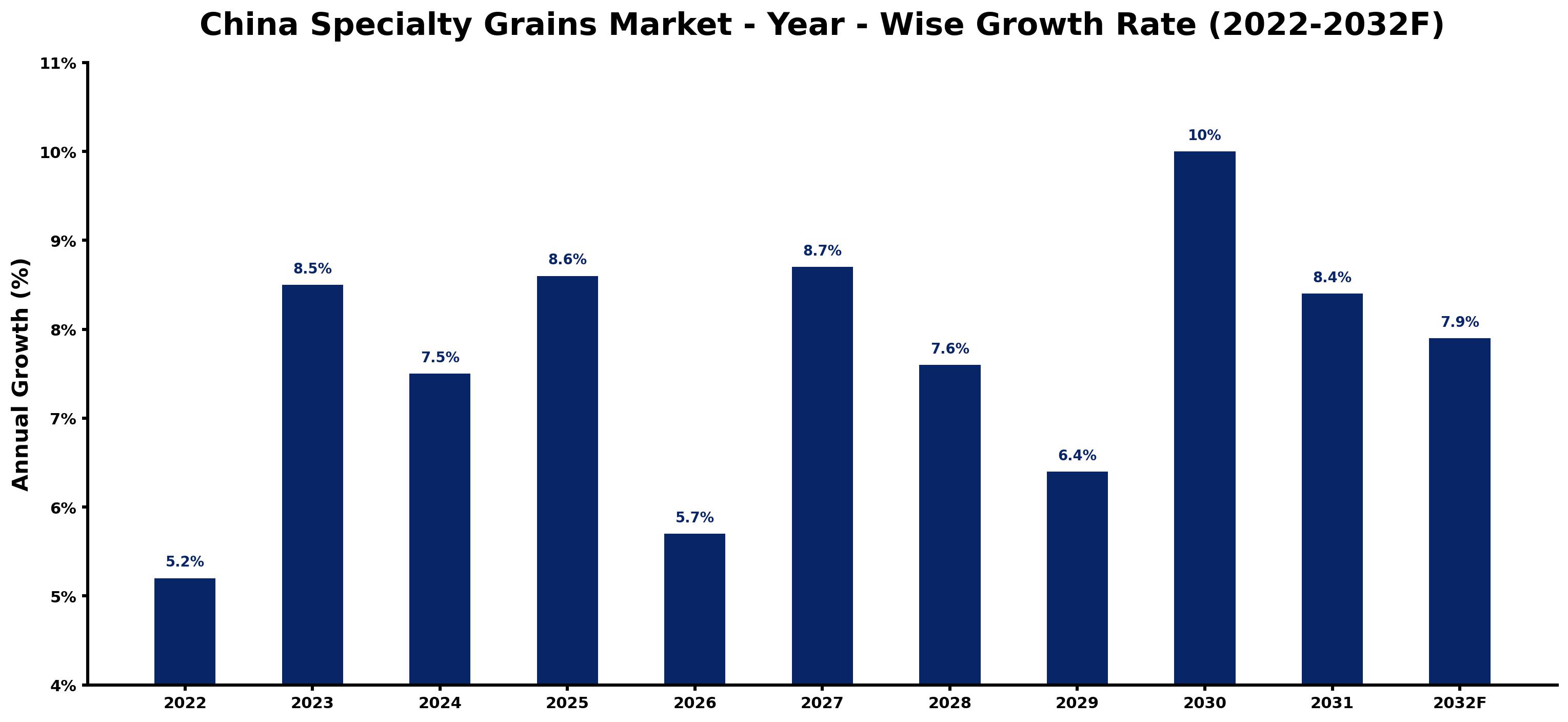
Year by year, the estimates below pair each growth rate with the development that shaped it.
| Year | Estimated Annual Growth (%) | Market Rationale |
| 2022 | 5.2 | The market experienced moderate growth as consumers began exploring specialty grains. |
| 2023 | 8.5 | Demand surged due to increasing health consciousness among urban populations. |
| 2024 | 7.5 | Growth slowed as the 'Healthy China 2030' initiative began to influence consumer choices. |
| 2025 | 8.6 | A peak in growth occurred as specialty grains gained popularity in health food sectors. |
| 2026 | 5.7 | Demand growth is expected to decelerate as the market stabilises after previous highs. |
| 2027 | 8.7 | Interest in high-protein grains is projected to rise, boosting market performance as health food retailers expand. |
| 2028 | 7.6 | Growth is anticipated to slow again as consumers diversify their dietary preferences towards traditional grains. |
| 2029 | 6.4 | The market will continue to grow, albeit at a slower pace due to changing health trends. |
| 2030 | 10.0 | A new peak in growth is expected as gluten-free diets become mainstream among urban consumers. |
| 2031 | 8.4 | Growth is projected to decelerate as the market begins to normalise following rapid expansion in health food offerings. |
| 2032 | 7.9 | Demand will remain strong, driven by ongoing health trends and consumer education initiatives. |
Note: Market size estimations and growth projections presented in this report are based on 6Wresearch's proprietary forecasting methodology, utilizing the latest available industry data, government publications, and primary research inputs.
China Specialty Grains Market Synopsis
The Specialty Grains Market in China includes grains cultivated for their nutritional benefits and culinary versatility. Grains like quinoa and amaranth are increasingly featured in health food products and gluten-free alternatives. Rising health awareness among consumers is driving market expansion, with the gluten-free sector expected to see substantial growth. The 'Healthy China 2030' initiative promotes nutritious diets, further increasing demand for specialty grains in urban areas.
Market Dynamics Impact Analysis (2026–2032)
| Factor | Type | Impact | Primary Segment Affected |
| Increasing health awareness among consumers drives demand for gluten-free options. | Driver | High | Gluten-Free |
| The growing popularity of high-protein diets encourages purchases of specialty grains. | Driver | High | High Protein |
| The gluten-free market is expanding, creating opportunities for suppliers to introduce new products. | Opportunity | High | Gluten-Free |
| Health food retailers are expanding their offerings of specialty grains to meet consumer demand. | Opportunity | High | Healthy Food Retailers |
| Quality control standards can limit the availability of certain specialty grains. | Restraint | Medium | Quinoa |
| Sourcing challenges for specific grains may affect supply consistency. | Restraint | Medium | Quinoa |
| Producers face rising supply costs, affecting pricing strategies. | Challenge | Medium | Quinoa |
| Competition from conventional grains can limit market penetration for specialty grains. | Challenge | Medium | Quinoa |
Evaluation of Drivers in China Specialty Grains Market (2026–2032)
The main growth drivers and the segments they affect most are set out below.
| Drivers | Primary Segment Affected | Why It Matters (Evidence) |
| Rising health consciousness among consumers boosts demand for gluten-free grains. | Gluten-Free | The gluten-free market is projected to grow significantly, encouraging more purchases from health food retailers. |
| Increased interest in high-protein diets drives sales of specialty grains. | High Protein | Functional food brands are increasingly incorporating high-protein grains, increasing consumer purchases. |
| Urbanisation is expanding the reach of health food retailers, increasing grain availability. | Healthy Food Retailers | The total number of health food retailers in China is estimated to exceed 100,000, improving access to specialty grains. |
| The adoption of gluten-free alternatives in the baking industry is rising. | Baking Industry | The baking industry is adopting gluten-free options, boosting demand for specialty grains. |
| The 'Healthy China 2030' initiative promotes nutritious diets, impacting grain consumption. | Quinoa | This initiative encourages consumers to include diverse grains in their diets, increasing overall demand. |
Growth in the Specialty Grains market in China comes from rising health consciousness, urbanisation, and the adoption of nutritious diets. The gluten-free market is expanding, with health food retailers exceeding 100,000 in number. Increased interest in high-protein diets drives functional food brands to incorporate specialty grains, boosting consumer purchases. The baking industry is also adopting gluten-free alternatives, further expanding demand.
Evaluation of Restraints in China Specialty Grains Market
The following restraints limit how fast demand can grow.
| Market Restraint | Primary Segment Affected | Why It Matters (Evidence) |
| Quality control standards may restrict the supply of certain specialty grains. | Quinoa | The updated 'Standards for the Quality of Grains' ensure better quality control, limiting availability. |
| Sourcing challenges for quinoa can affect supply consistency. | Quinoa | Quinoa is primarily sourced from specific regions, making supply vulnerable to disruptions. |
| Limited consumer awareness of specialty grains may hinder market growth. | Quinoa | Despite health trends, many consumers remain unaware of the benefits of specialty grains. |
| High production costs can affect pricing and availability of specialty grains. | Quinoa | Producers face challenges in maintaining profitability while adhering to quality standards. |
| Market competition may lead to price wars, impacting profit margins. | Quinoa | As more brands enter the market, competitive pricing can squeeze margins for existing players. |
China Specialty Grains Market Challenges
Buyers in the China specialty grains market face increasing supply costs, as sourcing from regions like Yunnan and Xinjiang incurs transportation expenses that can raise prices by up to 15%. Suppliers contend with intense competition from conventional grains, which are often 20% cheaper, hindering the market share of specialty grains. Limited consumer awareness of these grains results in slower purchasing decisions, causing a 10% decline in potential sales for producers. Compliance with the National Standard for Food Safety raises operational costs for suppliers, restricting their pricing flexibility and squeezing profit margins.
Trends in the China Specialty Grains Market
Below mentioned are some of the trends shaping the China Specialty Grains Market growth.
- Shift towards Gluten-Free Products: Urban areas in China are seeing a shift towards gluten-free products, driven by health trends. The gluten-free market is expected to grow significantly, reflecting changing consumer preferences.
- Rise of High-Protein Grains: The growing interest in fitness and health has led to an increase in high-protein grains. Functional food brands are incorporating these grains into their products to appeal to health-conscious consumers.
- Increased Focus on Whole Grains: A national campaign promoting whole grain consumption has gained traction in China. This initiative aims to educate consumers on the health benefits of whole grains, increasing demand.
- Expansion of Health Food Retailers: Health food retailers are rapidly expanding across urban areas, improving access to specialty grains. The total number of health food retailers in China is estimated to exceed 100,000, enhancing consumer choice.
Investment Opportunities in the China Specialty Grains Market
Below are the investment opportunities with the strongest case in the China Specialty Grains Market.
- Growing Demand for Gluten-Free Products: With the gluten-free market projected to grow significantly, suppliers can focus on providing gluten-free specialty grains. Health food retailers are key buyers, and partnerships can facilitate market entry.
- High-Protein Grain Market Expansion: The rising interest in high-protein diets presents opportunities for suppliers to invest in high-protein specialty grains. Functional food brands are increasingly seeking these products to meet consumer demand.
- Sustainable Practices in Specialty Grain Production: The 'Green Food Certification Program' encourages sustainable practices among specialty grain producers. This creates opportunities for investment in eco-friendly production methods.
- Health Food Promotion Program: The 'Healthy Food Promotion Program' launched in 2023 aims to educate consumers on specialty grains. This initiative provides a platform for suppliers to reach health-conscious buyers.
Government Initiatives in the China Specialty Grains Market
The 'Specialty Grain Development Plan' launched by the Ministry of Agriculture in 2021 aims for a 20% increase in cultivation by 2025. This measure improves production and processing capabilities for specialty grains, benefiting producers and consumers alike. The 'National Nutrition Plan (2017-2030)' introduced by the National Health Commission emphasises the inclusion of diverse grains in diets, positively impacting public health. This plan encourages consumers to incorporate specialty grains into their meals, driving demand.
The 'Healthy Food Promotion Program' initiated in 2023 aims to educate consumers about the benefits of specialty grains. Various health agencies support this initiative, helping to raise awareness and boost consumption. The 'Green Food Certification Program' encourages sustainable practices among specialty grain producers, ensuring quality and environmental responsibility. This program helps buyers identify certified products, building consumer trust in specialty grains.
Future Insight of the China Specialty Grains Market
Several forward-looking factors should drive growth in the specialty grains market in China by 2032. The 'Healthy China 2030' initiative will promote nutritious diets, increasing demand for specialty grains significantly. The gluten-free segment is projected to grow, prompting producers to innovate and diversify their offerings. The number of health food retailers is set to surpass 100,000, boosting the visibility of specialty grains among consumers. Additionally, the trend of incorporating high-protein grains into various food products will further attract health-conscious buyers.
Market Segmentation Analysis
Each segment group is reviewed below, with the leader by share and the fastest grower by CAGR.
By Grain Type – Quinoa Dominated, Amaranth Expected to Grow Fastest
According to Summon Dutta, Assistant Manager at 6Wresearch, in 2025, Quinoa led the grain type split with a 49% share. Quinoa commands the largest market share in the China Specialty Grains Market due to its established presence as a health food staple among urban consumers. Its cultivation in regions like Yunnan and Xinjiang guarantees a steady supply, solidifying its dominance. Amaranth is set to record the highest CAGR in this split, 9.2% over 2026–2032. Amaranth is experiencing rapid growth as it gains popularity among health-conscious consumers in major cities, particularly for its gluten-free properties. The increasing recognition of its nutritional benefits is propelling this trend forward. Suppliers should focus on expanding their amaranth product lines to capitalise on the rising demand from health-oriented consumers.
By Nutritional Feature – High Protein Dominated and Is Expected to Record the Fastest Growth
With a 55% revenue share in 2025, High Protein was the largest nutritional feature category. High Protein grains dominate the market share as they resonate with fitness-oriented consumers who prioritise nutritious food options. This segment's strength is reflected in the growing health consciousness among urban populations in China. High Protein is also forecast to expand faster than any other category, at a CAGR of 9.0% over 2026–2032. The High Protein segment is also the fastest-growing, with more consumers incorporating these grains into their diets for health benefits. The 'Healthy China 2030' initiative is further promoting this trend, encouraging nutritious eating habits nationwide. Suppliers must focus on high-protein grain products to satisfy the increasing demand from health-conscious consumers.
By Processing Form – Ready-to-Cook Dominated, Whole/Frozen Expected to Grow Fastest
Ready-to-Cook held a 37% share of the China Specialty Grains Market by processing form in 2025. Ready-to-Cook products dominate the market share as they cater to busy consumers seeking convenience without compromising on nutrition. This segment's stronghold is reinforced by the increasing number of health food retailers offering such options in urban areas. The quickest growth will come from Whole/Frozen, forecast to expand at a CAGR of 10.1% between 2026 and 2032. Whole/Frozen products are the fastest-growing segment, as they are commonly used in ready-to-eat meals, appealing to consumers looking for quick yet healthy meal solutions. This growth is driven by the rising trend of convenient meal preparations in modern lifestyles. Suppliers should consider expanding their range of whole and frozen specialty grains to capture the growing demand for convenient meal options.
By End User – Healthy Food Retailers Dominated, Cereal Manufacturers Expected to Grow Fastest
The largest end user category in 2025 was Healthy Food Retailers, with a 40% share of total revenue. Healthy Food Retailers dominate the market share as they serve as a vital channel for specialty grains, appealing to the growing health-conscious consumer demographic. Their extensive reach in urban areas ensures a steady demand for these nutritious products. Over 2026–2032, Cereal Manufacturers are expected to post the fastest growth, at a CAGR of 10.1%. Cereal Manufacturers are the fastest-growing end user segment, increasingly incorporating specialty grains into their products to meet the demand for healthier breakfast options. This growth is fuelled by changing consumer preferences towards nutritious cereals and snacks. Suppliers should strengthen partnerships with cereal manufacturers to leverage the increasing interest in specialty grains.
Key Attractiveness of the Report
- 10 Years of Market Numbers
- Historical Data Starting from 2022 to 2025
- Base Year 2025
- Forecast Data until 2032
- Key Performance Indicators Impacting the Market
- Major Upcoming Developments and Projects
Key Highlights of the Report:
- China Specialty Grains Market Outlook
- Market Size of China Specialty Grains Market, 2025
- Forecast of China Specialty Grains Market, 2032
- Historical Data and Forecast of China Specialty Grains Revenues & Volume for the Period 2022 - 2032F
- China Specialty Grains Market Trend Evolution
- China Specialty Grains Market Drivers and Challenges
- China Specialty Grains Price Trends
- China Specialty Grains Porter's Five Forces
- China Specialty Grains Industry Life Cycle
- Historical Data and Forecast of China Specialty Grains Market Revenues & Volume By Grain Type for the Period 2022 - 2032F
- Historical Data and Forecast of China Specialty Grains Market Revenues & Volume By Quinoa for the Period 2022 - 2032F
- Historical Data and Forecast of China Specialty Grains Market Revenues & Volume By Amaranth for the Period 2022 - 2032F
- Historical Data and Forecast of China Specialty Grains Market Revenues & Volume By Millet for the Period 2022 - 2032F
- Historical Data and Forecast of China Specialty Grains Market Revenues & Volume By Teff for the Period 2022 - 2032F
- Historical Data and Forecast of China Specialty Grains Market Revenues & Volume By Nutritional Feature for the Period 2022 - 2032F
- Historical Data and Forecast of China Specialty Grains Market Revenues & Volume By High Protein for the Period 2022 - 2032F
- Historical Data and Forecast of China Specialty Grains Market Revenues & Volume By Gluten-Free for the Period 2022 - 2032F
- Historical Data and Forecast of China Specialty Grains Market Revenues & Volume By Rich in Fiber for the Period 2022 - 2032F
- Historical Data and Forecast of China Specialty Grains Market Revenues & Volume By Iron-Rich for the Period 2022 - 2032F
- Historical Data and Forecast of China Specialty Grains Market Revenues & Volume By Processing Form for the Period 2022 - 2032F
- Historical Data and Forecast of China Specialty Grains Market Revenues & Volume By Whole/Frozen for the Period 2022 - 2032F
- Historical Data and Forecast of China Specialty Grains Market Revenues & Volume By Puffed/Flour for the Period 2022 - 2032F
- Historical Data and Forecast of China Specialty Grains Market Revenues & Volume By Ready-to-Cook for the Period 2022 - 2032F
- Historical Data and Forecast of China Specialty Grains Market Revenues & Volume By Flour for the Period 2022 - 2032F
- Historical Data and Forecast of China Specialty Grains Market Revenues & Volume By End User for the Period 2022 - 2032F
- Historical Data and Forecast of China Specialty Grains Market Revenues & Volume By Healthy Food Retailers for the Period 2022 - 2032F
- Historical Data and Forecast of China Specialty Grains Market Revenues & Volume By Cereal Manufacturers for the Period 2022 - 2032F
- Historical Data and Forecast of China Specialty Grains Market Revenues & Volume By Functional Food Brands for the Period 2022 - 2032F
- Historical Data and Forecast of China Specialty Grains Market Revenues & Volume By Baking Industry for the Period 2022 - 2032F
- China Specialty Grains Import Export Trade Statistics
- Market Opportunity Assessment By Grain Type
- Market Opportunity Assessment By Nutritional Feature
- Market Opportunity Assessment By Processing Form
- Market Opportunity Assessment By End User
- China Specialty Grains Top Companies Market Share
- China Specialty Grains Competitive Benchmarking By Technical and Operational Parameters
- China Specialty Grains Company Profiles
- China Specialty Grains Key Strategic Recommendations
Market Covered
Segments analysed in this report are listed below.
By Grain Type
- Quinoa
- Amaranth
- Millet
- Teff
By Nutritional Feature
- High Protein
- Gluten-Free
- Rich in Fiber
- Iron-Rich
By Processing Form
- Whole/Frozen
- Puffed/Flour
- Ready-to-Cook
- Flour
By End User
- Healthy Food Retailers
- Cereal Manufacturers
- Functional Food Brands
- Baking Industry































