India Stroke Prevention Drugs Market Size & Growth Rate
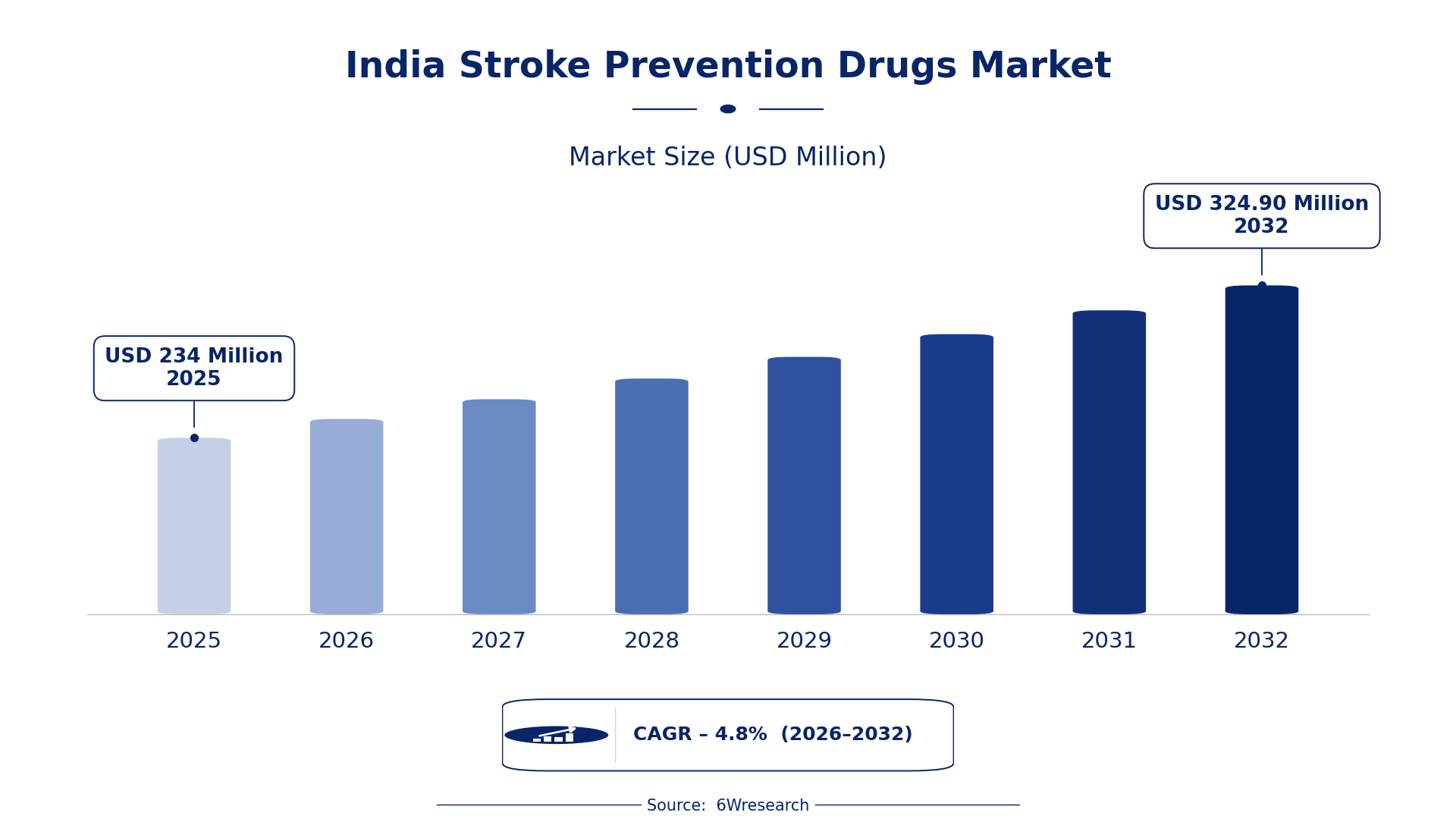
According to 6Wresearch internal database and industry insights, the India Stroke Prevention Drugs Market was valued at USD 234.0 million in 2025 and is projected to reach USD 324.90 million by 2032, growing at a CAGR of approximately 4.8% during 2026–2032.
India Stroke Prevention Drugs Market Highlights
| Report Metric | Details |
| Report Name | India Stroke Prevention Drugs Market |
| Market Size 2025 | USD 234.0 million |
| Market Size 2032 | USD 324.90 million |
| Absolute Growth 2025–2032 | USD 90.90 million |
| CAGR 2026–2032 | 4.8% |
| Peak Annual Growth | 7.3% in 2026 |
| Forecast Period | 2026–2032 |
| Historical Data | 2022–2025 |
| Base Year | 2025 |
| Leading Drug Class, 2025 | Anticoagulants (36% share) |
| Leading Route of Administration, 2025 | Oral (36% share) |
| Leading Prescription Type, 2025 | Prescription Only (50% share) |
| Leading End User, 2025 | Hospitals (49% share) |
| Fastest-Growing Drug Class | Antiplatelets (6.3% CAGR) |
| Fastest-Growing Route of Administration | Tablet (6.5% CAGR) |
| Fastest-Growing Prescription Type | Over-the-Counter (6.2% CAGR) |
| Fastest-Growing End User | Cardiology Clinics (6.9% CAGR) |
| Growing Sector | Healthcare |
| Key End Users | Hospitals, Cardiology Clinics, Health Insurance Providers |
India Stroke Prevention Drugs Market Year-wise Growth Rate and Key Drivers (2022–2032)
This graph illustrates the annual growth rates of the market from 2022 to 2032, highlighting a steady upward trajectory and projected market expansion over the forecast period.
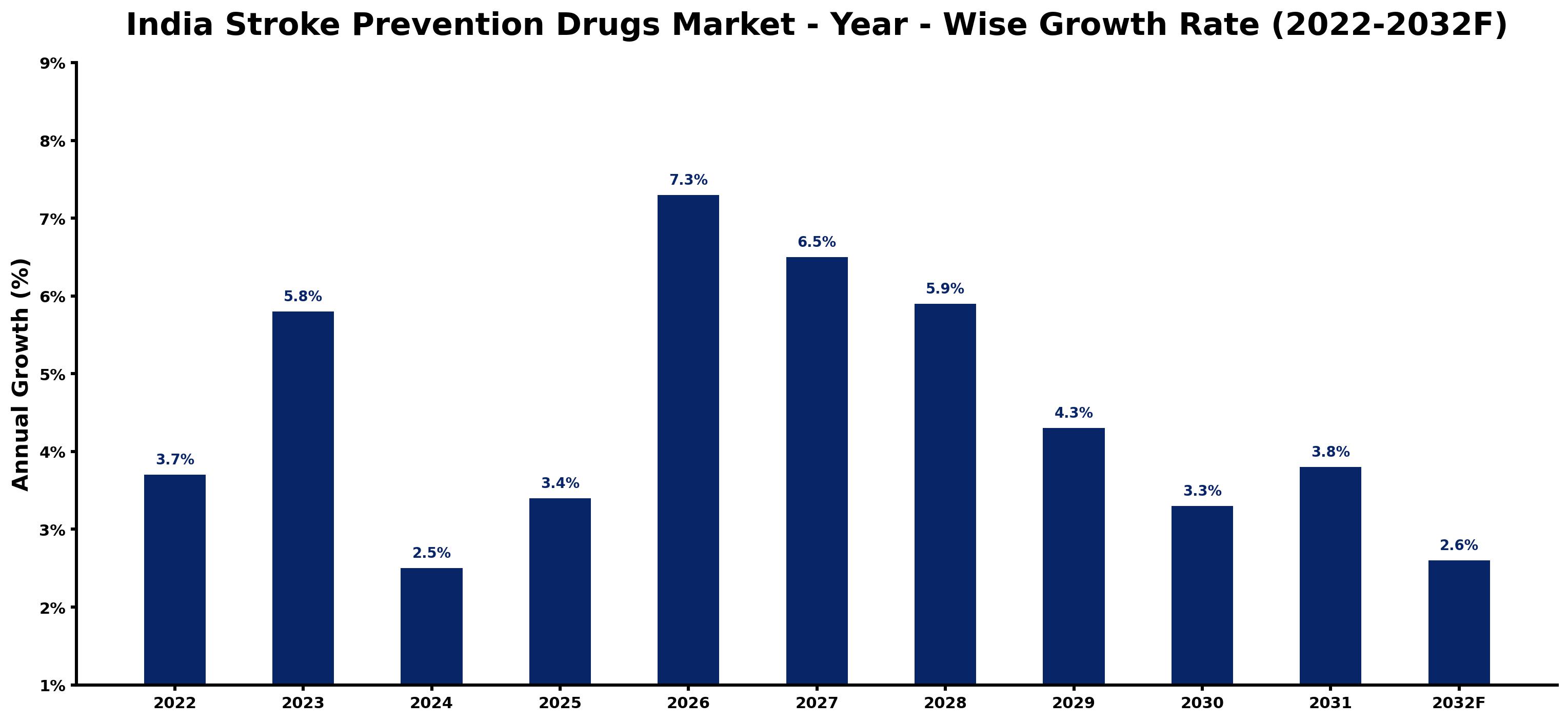
Year by year, the estimates below pair each growth rate with the development that shaped it.
| Year | Estimated Annual Growth (%) | Market Rationale |
| 2022 | 3.7 | The market experienced steady growth, reflecting ongoing healthcare demand. |
| 2023 | 5.8 | Growth accelerated due to heightened awareness of stroke prevention measures. |
| 2024 | 2.5 | A slowdown occurred as market dynamics adjusted to new healthcare policies. |
| 2025 | 3.4 | Demand increased as hospitals expanded their stroke management programs. |
| 2026 | 7.3 | The peak growth year was driven by significant investments in healthcare infrastructure. |
| 2027 | 6.5 | Growth slowed as the market began to stabilise after rapid expansion. |
| 2028 | 5.9 | A continued slowdown was noted as competition intensified among providers. |
| 2029 | 4.3 | Demand growth decelerated, influenced by market saturation in urban areas. |
| 2030 | 3.3 | The market maintained growth, supported by ongoing healthcare initiatives. |
| 2031 | 3.8 | Growth picked up again as new treatment protocols were adopted. |
| 2032 | 2.6 | A further slowdown was observed as the market reached maturity. |
Note: Market size estimations and growth projections presented in this report are based on 6Wresearch's proprietary forecasting methodology, utilizing the latest available industry data, government publications, and primary research inputs.
India Stroke Prevention Drugs Market Synopsis
These drugs are synthesized using complex chemical processes and are primarily used in managing patients with atrial fibrillation. Initiatives like the National Health Mission focus on reducing non-communicable diseases, driving demand for effective stroke prevention treatments. With a population exceeding 1.4 billion, the need for these drugs is substantial, particularly in urban hospitals and clinics.
Market Dynamics Impact Analysis (2026–2032)
| Factor | Type | Impact | Primary Segment Affected |
| Growing prevalence of stroke risk factors due to lifestyle changes. | Driver | High | Anticoagulants |
| Increased hospital investments in stroke management programs. | Driver | High | Hospitals |
| Rising demand for preventive healthcare solutions among urban populations. | Opportunity | High | Cardiology Clinics |
| Expansion of health insurance coverage for stroke prevention treatments. | Opportunity | Medium | Health Insurance Providers |
| Regulatory hurdles in drug approval processes can delay market entry. | Restraint | High | Antiplatelets |
| Limited awareness among patients regarding stroke prevention options. | Restraint | Medium | Stroke Risk Patients |
| The India Stroke Prevention Drugs Market faces challenges in regulatory compliance. | Challenge | High | Antihypertensives |
| High competition among pharmaceutical companies can impact pricing strategies. | Challenge | Medium | Statins |
Evaluation of Drivers in India Stroke Prevention Drugs Market (2026–2032)
Key forces behind demand, with the segment each one moves most, are listed below.
| Drivers | Primary Segment Affected | Why It Matters (Evidence) |
| Increased prevalence of hypertension and atrial fibrillation. | Antihypertensives | This rise leads to higher prescriptions of antihypertensive drugs, particularly in urban hospitals, increasing demand. |
| Growing awareness of stroke symptoms and prevention measures. | Hospitals | Investment in hospitals has increased the availability of stroke prevention drugs for patients, improving access. |
| Government initiatives targeting non-communicable diseases. | Stroke Risk Patients | This demographic shift increases demand for preventive treatments in healthcare facilities, driving growth. |
| Rising number of stroke risk patients under 60 years old. | Anticoagulants | This trend increases the need for effective preventive treatments in hospitals and clinics, boosting sales. |
| Expansion of healthcare infrastructure in urban areas. | Cardiology Clinics | This growth enhances access to stroke prevention drugs, leading to higher patient enrolment and treatment. |
Market growth for Stroke Prevention Drugs in India is underpinned by rising prevalence of hypertension and atrial fibrillation, which drives demand for antihypertensive medications. Urban hospitals have seen increased awareness of stroke symptoms, resulting in a surge in prescriptions for antiplatelet drugs. The expansion of healthcare infrastructure has improved access to these medications, particularly in cities. The growing number of stroke risk patients under 60 years old necessitates effective preventive treatments in healthcare facilities, leading to increased purchases.
Evaluation of Restraints in India Stroke Prevention Drugs Market
The main factors holding the market back are set out below.
| Market Restraint | Primary Segment Affected | Why It Matters (Evidence) |
| Regulatory compliance issues can delay drug approvals. | Anticoagulants | The Drug Controller General of India has stringent requirements that can slow market entry by several months. |
| Limited public awareness about stroke prevention options. | Antiplatelets | The Drug Controller General of India has stringent requirements that can slow market entry by several months. |
| High costs associated with advanced stroke prevention treatments. | Antihypertensives | Patients may delay treatment due to financial constraints, affecting overall market growth and access to care. |
| Competition among pharmaceutical companies can lead to price wars. | Statins | This competition can reduce profit margins for producers, affecting their ability to invest in research and development. |
| Variability in healthcare access across regions. | Stroke Risk Patients | Patients in rural areas may have limited access to essential stroke prevention drugs, impacting treatment outcomes. |
India Stroke Prevention Drugs Market Challenges
Healthcare facilities in the India Stroke Prevention Drugs Market face rising costs due to the complex synthesis of active pharmaceutical ingredients, increasing prices by up to 20% for hospitals. Regulatory hurdles emerge as the Drug Controller General of India can take six months longer than expected to approve new medications, delaying access to essential treatments for patients. A lack of skilled healthcare professionals trained in stroke management results in inadequate care, potentially raising stroke incidents by 15% among high-risk individuals. Supply chain disruptions further exacerbate the situation, causing delays in medication delivery and compelling hospitals to ration treatments, which adversely affects patient outcomes.
Trends in the India Stroke Prevention Drugs Market
Four trends stand out in the India Stroke Prevention Drugs Market.
- Shift from Traditional to Advanced Stroke Prevention Techniques: India is experiencing a shift towards advanced stroke prevention techniques, particularly in urban hospitals. The All India Institute of Medical Sciences has reported a 30% increase in the adoption of newer anticoagulants since 2021.
- Growing Focus on Preventive Healthcare: The National Programme for Prevention and Control of Cancer, Diabetes, Cardiovascular Diseases & Stroke has been active since 2020, promoting preventive healthcare measures. This initiative has led to a 25% increase in screenings for stroke risk factors.
- Increased Use of Telemedicine for Stroke Management: Telemedicine is becoming a vital tool in stroke management, especially post-2021. Reports indicate that teleconsultations for stroke risk assessments have surged by 40%, improving patient access to care.
- Expansion of Health Insurance Coverage: Health insurance providers are increasingly covering stroke prevention drugs, a trend that began in 2021. This expansion has resulted in a 20% rise in insured patients receiving these medications.
Investment Opportunities in the India Stroke Prevention Drugs Market
Several openings in the India Stroke Prevention Drugs Market merit attention from investors.
- Hospitals seeking to improve stroke management protocols: With over 1.4 billion people, hospitals in India are investing in stroke management. The market is projected to grow by USD 90 million by 2032, creating opportunities for suppliers of stroke prevention drugs.
- Cardiology Clinics expanding services: Cardiology Clinics are increasingly focusing on stroke prevention, especially in urban areas. This trend is supported by a 6.9% CAGR in the clinic segment, indicating a growing demand for related medications.
- Supply of advanced anticoagulants: The demand for advanced anticoagulants is rising due to increased awareness. Suppliers can target urban hospitals, which are projected to increase their anticoagulant prescriptions by 25% by 2025.
- Health Insurance Providers expanding coverage: Health Insurance Providers are expanding coverage for stroke prevention drugs, particularly in urban settings. This shift is expected to drive a 20% increase in patient access to these medications.
Government Initiatives in the India Stroke Prevention Drugs Market
The regulatory framework for stroke prevention drugs in India is shaped by the Drugs and Cosmetics Act of 1940 and the Drug and Cosmetics (Amendment) Act of 2023. These laws mandate rigorous testing and approval processes for new medications, ensuring safety and efficacy. The Drug Controller General of India oversees these regulations, requiring compliance from manufacturers to maintain quality standards. Additionally, the National Health Mission, launched in 2013, aims to reduce non-communicable diseases, including stroke, through various health initiatives and awareness campaigns.
The National Programme for Prevention and Control of Cancer, Diabetes, Cardiovascular Diseases & Stroke funds awareness campaigns and preventive measures. The Indian Council of Medical Research plays a key role in approving research and treatment protocols for stroke prevention. This agency collaborates with hospitals and clinics to ensure that guidelines are followed, improving the effectiveness of stroke prevention strategies across the country.
Future Insight of the India Stroke Prevention Drugs Market
Several forward-looking factors should support the India Stroke Prevention Drugs Market over the coming years. The National Programme for Prevention and Control of Cancer, Diabetes, Cardiovascular Diseases & Stroke aims to reduce mortality rates, which will drive demand for effective medications. Research initiatives at the All India Institute of Medical Sciences are expected to lead to new therapies, broadening treatment options for patients. Awareness campaigns by the Ministry of Health will enhance public understanding of stroke symptoms and prevention, ultimately improving health outcomes.
Market Segmentation Analysis
Each segment group is reviewed below, with the leader by share and the fastest grower by CAGR.
By Drug Class – Anticoagulants Dominated, Antiplatelets Expected to Grow Fastest
According to Summon Dutta, Assistant Manager at 6Wresearch, in 2025, Anticoagulants led the drug class split with a 36% share. Anticoagulants hold the largest share in the India Stroke Prevention Drugs Market due to their critical role in preventing blood clots, especially among patients with atrial fibrillation. Their widespread use in urban hospitals, where stroke cases are notably high, underscores their importance in stroke management. Antiplatelets are set to record the highest CAGR in this split, 6.3% over 2026–2032. Antiplatelets are experiencing rapid growth as they are increasingly prescribed for patients with high cholesterol, a significant stroke risk factor. The rising awareness about stroke prevention is driving demand for these medications, particularly in outpatient settings. Suppliers need to focus on increasing the availability of antiplatelets to meet the growing demand and improve patient outcomes.
By Route of Administration – Oral Dominated, Tablet Expected to Grow Fastest
With a 36% revenue share in 2025, Oral was the largest route of administration category. The oral route commands the largest share for administering stroke prevention drugs, primarily due to its convenience and ease of use for patients. This method enhances compliance, particularly for individuals managing chronic conditions like atrial fibrillation. The quickest growth will come from Tablet, forecast to expand at a CAGR of 6.5% between 2026 and 2032. Tablets are the fastest-growing form of administration, valued for their practicality and ease of consumption. Their increasing acceptance among patients seeking non-intrusive medication options is propelling their popularity. Suppliers should expand their tablet product lines to align with the increasing preference for this administration method, thereby improving patient adherence.
By Prescription Type – Prescription Only Dominated, Over-the-Counter Expected to Grow Fastest
Prescription Only took a 50% share of prescription type in 2025, more than any other category. Prescription Only medications account for the largest share in the market, as most stroke prevention drugs require a doctor's approval for safe use. This ensures that patients receive appropriate treatment tailored to their specific health conditions, particularly those at high risk of stroke. Over-the-Counter is projected to grow fastest, at a CAGR of 6.2% during 2026–2032. Over-the-Counter options are growing rapidly, albeit with limited availability, as they cater to low-risk patients seeking preventive measures without the need for a prescription. This trend reflects a shift towards more accessible healthcare solutions for stroke prevention. Suppliers should explore opportunities to introduce more Over-the-Counter products, meeting the demand for accessible stroke prevention solutions among low-risk individuals.
By End User – Hospitals Dominated, Cardiology Clinics Expected to Grow Fastest
Hospitals held a 49% share of the India Stroke Prevention Drugs Market by end user in 2025. Hospitals represent the largest end-user segment for stroke prevention drugs, primarily due to their role in treating acute stroke cases and managing high-risk patients. The concentration of healthcare resources and expertise in hospitals makes them the primary setting for administering these vital medications. Over 2026–2032, Cardiology Clinics are expected to post the fastest growth, at a CAGR of 6.9%. Cardiology Clinics are the fastest-growing end-user segment, as they specialise in the management of cardiovascular diseases and are increasingly prescribing stroke prevention drugs. Their focus on preventive care aligns with the rising awareness of stroke risks and the need for targeted treatment. This indicates that suppliers should strengthen partnerships with cardiology clinics to tap into the growing market for stroke prevention drugs in specialised settings.
Key Attractiveness of the Report
- 10 Years of Market Numbers
- Historical Data Starting from 2022 to 2025
- Base Year 2025
- Forecast Data until 2032
- Key Performance Indicators Impacting the Market
- Major Upcoming Developments and Projects
Key Highlights of the Report:
- India Stroke Prevention Drugs Market Outlook
- Market Size of India Stroke Prevention Drugs Market, 2025
- Forecast of India Stroke Prevention Drugs Market, 2032
- Historical Data and Forecast of India Stroke Prevention Drugs Revenues & Volume for the Period 2022 - 2032F
- India Stroke Prevention Drugs Market Trend Evolution
- India Stroke Prevention Drugs Market Drivers and Challenges
- India Stroke Prevention Drugs Price Trends
- India Stroke Prevention Drugs Porter's Five Forces
- India Stroke Prevention Drugs Industry Life Cycle
- Historical Data and Forecast of India Stroke Prevention Drugs Market Revenues & Volume By Drug Class for the Period 2022 - 2032F
- Historical Data and Forecast of India Stroke Prevention Drugs Market Revenues & Volume By Anticoagulants for the Period 2022 - 2032F
- Historical Data and Forecast of India Stroke Prevention Drugs Market Revenues & Volume By Antiplatelets for the Period 2022 - 2032F
- Historical Data and Forecast of India Stroke Prevention Drugs Market Revenues & Volume By Antihypertensives for the Period 2022 - 2032F
- Historical Data and Forecast of India Stroke Prevention Drugs Market Revenues & Volume By Statins for the Period 2022 - 2032F
- Historical Data and Forecast of India Stroke Prevention Drugs Market Revenues & Volume By Route of Administration for the Period 2022 - 2032F
- Historical Data and Forecast of India Stroke Prevention Drugs Market Revenues & Volume By Oral for the Period 2022 - 2032F
- Historical Data and Forecast of India Stroke Prevention Drugs Market Revenues & Volume By Tablet for the Period 2022 - 2032F
- Historical Data and Forecast of India Stroke Prevention Drugs Market Revenues & Volume By Injectable for the Period 2022 - 2032F
- Historical Data and Forecast of India Stroke Prevention Drugs Market Revenues & Volume By Capsule for the Period 2022 - 2032F
- Historical Data and Forecast of India Stroke Prevention Drugs Market Revenues & Volume By Prescription Type for the Period 2022 - 2032F
- Historical Data and Forecast of India Stroke Prevention Drugs Market Revenues & Volume By Prescription Only for the Period 2022 - 2032F
- Historical Data and Forecast of India Stroke Prevention Drugs Market Revenues & Volume By Over-the-Counter for the Period 2022 - 2032F
- Historical Data and Forecast of India Stroke Prevention Drugs Market Revenues & Volume By Hospital Dispensed for the Period 2022 - 2032F
- Historical Data and Forecast of India Stroke Prevention Drugs Market Revenues & Volume By Branded/Generic for the Period 2022 - 2032F
- Historical Data and Forecast of India Stroke Prevention Drugs Market Revenues & Volume By End User for the Period 2022 - 2032F
- Historical Data and Forecast of India Stroke Prevention Drugs Market Revenues & Volume By Hospitals for the Period 2022 - 2032F
- Historical Data and Forecast of India Stroke Prevention Drugs Market Revenues & Volume By Cardiology Clinics for the Period 2022 - 2032F
- Historical Data and Forecast of India Stroke Prevention Drugs Market Revenues & Volume By Stroke Risk Patients for the Period 2022 - 2032F
- Historical Data and Forecast of India Stroke Prevention Drugs Market Revenues & Volume By Health Insurance Providers for the Period 2022 - 2032F
- India Stroke Prevention Drugs Import Export Trade Statistics
- Market Opportunity Assessment By Drug Class
- Market Opportunity Assessment By Route of Administration
- Market Opportunity Assessment By Prescription Type
- Market Opportunity Assessment By End User
- India Stroke Prevention Drugs Top Companies Market Share
- India Stroke Prevention Drugs Competitive Benchmarking By Technical and Operational Parameters
- India Stroke Prevention Drugs Company Profiles
- India Stroke Prevention Drugs Key Strategic Recommendations
Market Covered
Segments analysed in this report are listed below.
By Drug Class
- Anticoagulants
- Antiplatelets
- Antihypertensives
- Statins
By Route of Administration
- Oral
- Tablet
- Injectable
- Capsule
By Prescription Type
- Prescription Only
- Over-the-Counter
- Hospital Dispensed
- Branded/Generic
By End User
- Hospitals
- Cardiology Clinics
- Stroke Risk Patients
- Health Insurance Providers































