India Substructure Waterproofing Market Size & Growth Rate
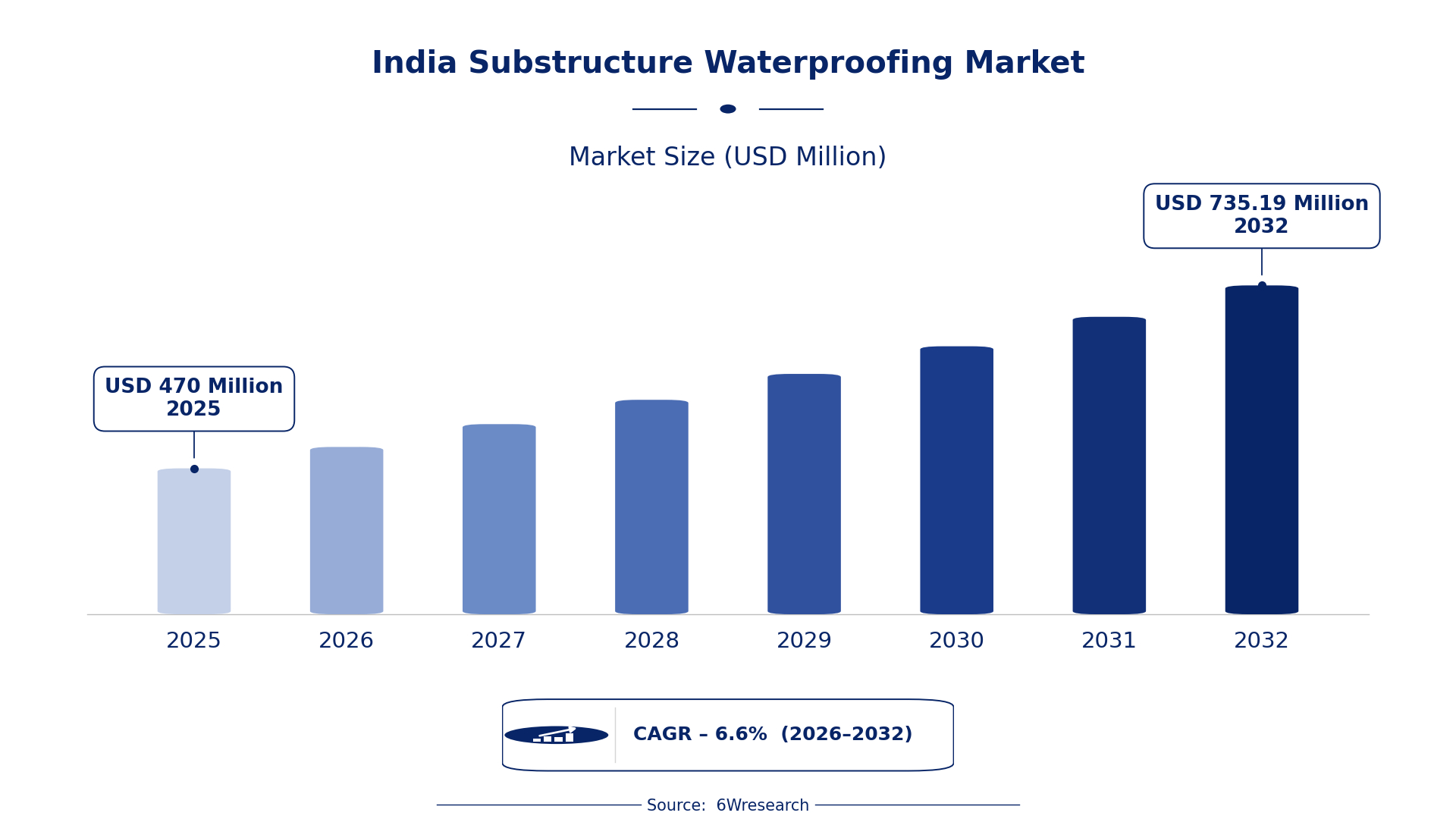
According to 6Wresearch internal database and industry insights, the India Substructure Waterproofing Market was valued at USD 470.0 million in 2025 and is projected to reach USD 735.19 million by 2032, growing at a CAGR of approximately 6.6% during 2026–2032.
India Substructure Waterproofing Market Highlights
| Report Metric | Details |
| Report Name | India Substructure Waterproofing Market |
| Market Size 2025 | USD 470.0 million |
| Market Size 2032 | USD 735.19 million |
| Absolute Growth 2025–2032 | USD 265.19 million |
| CAGR 2026–2032 | 6.6% |
| Peak Annual Growth | 8.8% in 2030 |
| Forecast Period | 2026–2032 |
| Historical Data | 2022–2025 |
| Base Year | 2025 |
| Leading Waterproofing Type, 2025 | Membrane Systems (45% share) |
| Leading Material Type, 2025 | Bituminous (42% share) |
| Leading Structure Type, 2025 | Foundations (42% share) |
| Leading End User, 2025 | Basement Contractors (46% share) |
| Fastest-Growing Waterproofing Type | Crystalline Coatings (7.7% CAGR) |
| Fastest-Growing Material Type | Cementitious (7.9% CAGR) |
| Fastest-Growing Structure Type | Underground Walls (9.1% CAGR) |
| Fastest-Growing End User | Civil Engineers (7.8% CAGR) |
| Growing Sector | Civil Engineers |
| Key End Users | Basement Contractors, Civil Engineers, Infrastructure Builders, Residential Developers |
India Substructure Waterproofing Market Year-wise Growth Rate and Key Drivers (2022–2032)
This graph illustrates the annual growth rates of the market from 2022 to 2032, highlighting a steady upward trajectory and projected market expansion over the forecast period.
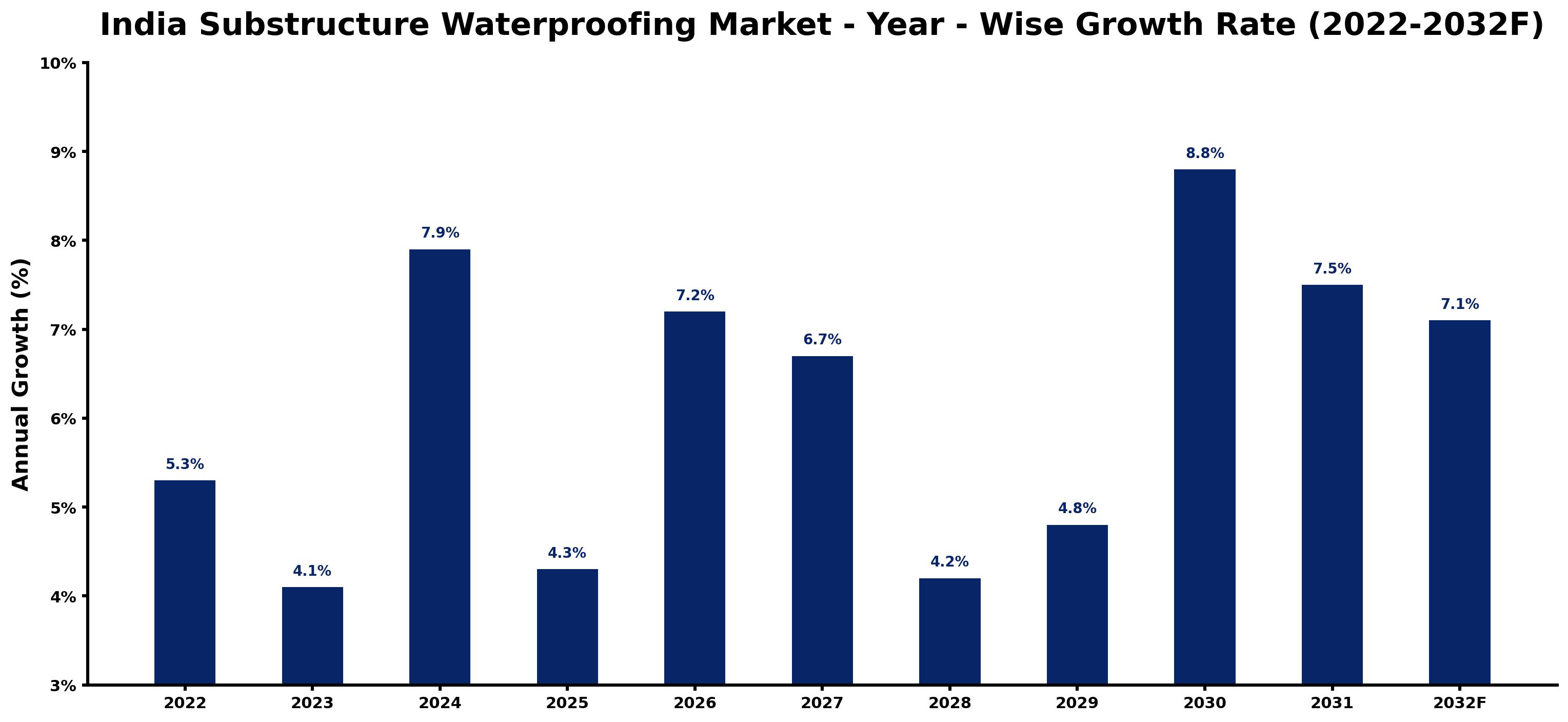
Year by year, the estimates below pair each growth rate with the development that shaped it.
| Year | Estimated Annual Growth (%) | Market Rationale |
| 2022 | 5.3 | The market saw steady activity in construction projects, driving demand for waterproofing solutions. |
| 2023 | 4.1 | Growth slowed as some infrastructure projects faced delays, impacting waterproofing requirements. |
| 2024 | 7.9 | Increased construction activity led to a surge in demand for waterproofing, particularly in urban areas. |
| 2025 | 4.3 | Demand remained strong, but growth decelerated due to project timelines under the Pradhan Mantri Awas Yojana. |
| 2026 | 7.2 | The market is expected to rebound with renewed investment in infrastructure, boosting waterproofing needs. |
| 2027 | 6.7 | Demand growth is projected to slow as project completions reduce the immediate need for waterproofing solutions. |
| 2028 | 4.2 | A slowdown is expected as urban projects reach completion, limiting new waterproofing contracts. |
| 2029 | 4.8 | Growth is anticipated to pick up again with new urban developments requiring extensive waterproofing solutions. |
| 2030 | 8.8 | The market is projected to peak as infrastructure projects accelerate, significantly increasing waterproofing demand. |
| 2031 | 7.5 | As the market stabilises after the peak demand year, growth is expected to slow slightly. |
| 2032 | 7.1 | A further slowdown is projected as projects complete, but demand will remain strong. |
Note: Market size estimations and growth projections presented in this report are based on 6Wresearch's proprietary forecasting methodology, utilizing the latest available industry data, government publications, and primary research inputs.
India Substructure Waterproofing Market Synopsis
Substructure Waterproofing in India encompasses techniques designed to prevent water ingress in below-ground structures. This includes waterproofing membranes, coatings, and sealants, primarily utilised for foundations and basements. The India Substructure Waterproofing Market is growing, driven by a robust construction sector valued at over $200 billion. Urbanisation and infrastructure initiatives are increasing demand, particularly due to the Pradhan Mantri Awas Yojana and the Bharatmala Pariyojana, which are advancing housing and infrastructure development.
Market Dynamics Impact Analysis (2026–2032)
| Factor | Type | Impact | Primary Segment Affected |
| Growing construction sector value exceeding $200 billion drives demand for waterproofing solutions. | Driver | High | Membrane Systems |
| Increased urbanisation leads to more residential projects requiring waterproofing. | Driver | High | Cementitious |
| Rising rainfall levels create a pressing need for effective waterproofing solutions. | Opportunity | High | Liquid Waterproofing |
| Infrastructure projects under Bharatmala Pariyojana require extensive waterproofing measures. | Opportunity | High | Bituminous |
| Limited awareness about the benefits of advanced waterproofing solutions. | Restraint | High | Liquid Waterproofing |
| High initial costs of advanced waterproofing materials deter some buyers. | Restraint | High | Cementitious |
| Availability of skilled labour for advanced waterproofing techniques is limited. | Challenge | High | Membrane Systems |
| Regulatory compliance can delay project timelines, impacting waterproofing needs. | Challenge | High | Crystalline Coatings |
Evaluation of Drivers in India Substructure Waterproofing Market (2026–2032)
The table below links each growth driver to the segment it affects and the evidence for it.
| Drivers | Primary Segment Affected | Why It Matters (Evidence) |
| The construction sector's growth fuels demand for waterproofing solutions. | Membrane Systems | The sector's value exceeds $200 billion, leading to increased waterproofing purchases. |
| Urbanisation drives the need for waterproofing in residential buildings. | Cementitious | The demand for waterproofing in residential buildings is projected to grow due to urbanisation. |
| High annual rainfall increases the necessity for waterproofing solutions. | Liquid Waterproofing | The average annual rainfall in India is about 1,170 mm, necessitating waterproofing. |
| Infrastructure projects create demand for waterproofing solutions. | Bituminous | Projects under the Bharatmala Pariyojana require extensive waterproofing measures. |
| The adoption of new waterproofing standards improves product quality. | Crystalline Coatings | The National Building Code of India provides guidelines for waterproofing standards. |
Market growth for Substructure Waterproofing in India is underpinned by rising end-use demand from the construction sector, urbanisation, and increased rainfall. The construction industry, valued at over $200 billion, drives substantial purchases of waterproofing solutions. The average annual rainfall of approximately 1,170 mm necessitates effective waterproofing measures, particularly in residential buildings. Infrastructure projects under the Bharatmala Pariyojana further boost demand for waterproofing solutions, ensuring quality and longevity in construction. The adoption of new standards from the National Building Code of India improves product quality and reliability, encouraging purchases from contractors and builders.
Evaluation of Restraints in India Substructure Waterproofing Market
The key brakes on demand, and where they bite hardest, are shown below.
| Market Restraint | Primary Segment Affected | Why It Matters (Evidence) |
| Limited awareness about the benefits of advanced waterproofing solutions. | Liquid Waterproofing | Many contractors still prefer traditional methods, hindering the adoption of modern solutions. |
| High initial costs of advanced waterproofing materials deter some buyers. | Cementitious | Budget constraints in residential projects often lead to cheaper alternatives being chosen. |
| Inconsistent quality control in waterproofing products affects buyer confidence. | Bituminous | The Bureau of Indian Standards oversees quality control, but enforcement varies. |
| Availability of skilled labour for advanced waterproofing techniques is limited. | Membrane Systems | The construction industry employs over 50 million workers, but skilled waterproofing specialists are scarce. |
| Regulatory compliance can delay project timelines, impacting waterproofing needs. | Crystalline Coatings | The National Building Code of India requires adherence to strict guidelines, causing delays. |
India Substructure Waterproofing Market Challenges
The India Substructure Waterproofing Market encounters several practical issues, with supply chain disruptions being a primary concern. Many producers depend on a limited number of local suppliers for waterproofing materials, potentially delaying project timelines for builders by up to 20%. Technological limitations also impede progress, as outdated waterproofing methods remain common, increasing water damage risks for residential and commercial property buyers. Buyers often face high costs due to fluctuating raw material prices, which can inflate project budgets by 15%. A lack of awareness regarding modern waterproofing solutions can lead to poor choices, resulting in long-term maintenance costs for property owners that may exceed 10% of their initial investment.
Trends in the India Substructure Waterproofing Market
The trends below show where the India Substructure Waterproofing Market is heading.
- Civil Engineers Prioritising Sustainable Practices: Civil engineers are increasingly prioritising sustainable waterproofing solutions in projects, driven by the Indian Green Building Council's initiatives. This shift reflects a growing demand for eco-friendly materials, with a projected increase in sustainable construction practices by 30% by 2030.
- Maharashtra Leading in Waterproofing Innovations: Maharashtra is at the forefront of adopting advanced waterproofing technologies, with numerous infrastructure projects underway. The state accounts for approximately 25% of the total waterproofing demand in India, reflecting its commitment to quality construction.
- Rise in Liquid Waterproofing Applications: The use of liquid waterproofing membranes is gaining traction due to their effective application and durability. This trend is supported by an annual growth rate of 6% in liquid waterproofing solutions, highlighting their increasing popularity.
- Shift Towards Crystalline Waterproofing Solutions: Crystalline waterproofing is becoming more prevalent due to its self-healing properties, particularly in urban infrastructure projects. This trend is endorsed by the Indian Standards Institute, with a projected growth rate of 7% in this segment.
Investment Opportunities in the India Substructure Waterproofing Market
Investors looking at the India Substructure Waterproofing Market should consider the following areas.
- Timing for Investment in Waterproofing: With the construction market projected to reach USD 470 million by 2025, there is a significant opportunity to invest in advanced waterproofing solutions. Residential developers are increasingly seeking reliable waterproofing products to ensure quality in housing projects.
- Growing Demand from Infrastructure Builders: Infrastructure builders are actively seeking waterproofing solutions as urbanisation accelerates. The Bharatmala Pariyojana, which focuses on road and tunnel construction, presents a prime opportunity for suppliers to enter this growing market.
- Supplying Innovative Waterproofing Materials: There is a rising demand for innovative waterproofing materials such as crystalline waterproofing. Civil engineers are specifying these solutions more frequently, making it an ideal time for suppliers to invest in this segment.
- Focus on Sustainable Practices: The increasing emphasis on sustainable construction practices creates an opportunity for suppliers of eco-friendly waterproofing solutions. The Indian Green Building Council's initiatives encourage the adoption of such materials, aligning with market trends.
Government Initiatives in the India Substructure Waterproofing Market
The National Building Code of India, updated in 2021, includes new waterproofing standards that impact producers and buyers. These guidelines ensure that waterproofing products meet quality and performance criteria, which is essential for compliance in construction projects. The updated code aims to enhance the durability and effectiveness of waterproofing solutions, ultimately benefiting end-users by reducing maintenance costs and improving building longevity. Compliance with these standards is crucial for contractors and builders to ensure project success and buyer satisfaction.
The Ministry of Housing and Urban Affairs oversees various initiatives that promote effective waterproofing in construction. The Smart Cities Mission, launched in 2020, focuses on improving urban infrastructure, including the implementation of advanced waterproofing measures. This initiative provides funding for projects that enhance urban resilience, ensuring that waterproofing solutions are integrated into new developments. Additionally, the Central Public Works Department issues guidelines for waterproofing in government projects, further supporting compliance and quality assurance.
Future Insight of the India Substructure Waterproofing Market
In the India Substructure Waterproofing Market, buyers and suppliers can expect transformative changes by 2032, driven by urbanisation and government initiatives. The Pradhan Mantri Awas Yojana will continue to promote housing development, boosting demand for effective waterproofing solutions. Infrastructure projects under the Bharatmala Pariyojana will require extensive waterproofing, creating new opportunities for suppliers. The adoption of innovative materials like crystalline waterproofing, known for its self-healing properties, is anticipated to rise, enhancing the durability and effectiveness of waterproofing systems.
Market Segmentation Analysis
The analysis below covers each segmentation, its leading category in 2025 and its fastest-growing category through 2032.
By Waterproofing Type – Membrane Systems Dominated, Crystalline Coatings Expected to Grow Fastest
According to Sumit Sagar, AM at 6Wresearch, Membrane Systems took a 45% share of waterproofing type in 2025, more than any other category. Membrane systems hold the largest share in the India substructure waterproofing market due to their extensive application in various structures like foundations and basements. Their proven effectiveness in preventing water ingress makes them the preferred choice among contractors, particularly in regions with high rainfall. Crystalline Coatings are projected to grow fastest, at a CAGR of 7.7% during 2026–2032. Crystalline coatings are experiencing rapid growth as they significantly enhance the durability and water resistance of concrete structures, especially in long-lasting projects. Their self-healing properties are increasingly appealing to contractors focused on reliable waterproofing solutions, thus expanding their market presence. Suppliers should prioritise crystalline coatings to leverage the increasing demand for advanced waterproofing solutions in the construction sector.
By Material Type – Bituminous Dominated, Cementitious Expected to Grow Fastest
Bituminous accounted for a 42% market share by material type in 2025. Bituminous materials dominate the market share in India due to their cost-effectiveness and reliability, making them a staple in many construction projects. Their established presence ensures a strong installed base among contractors, particularly in large-scale developments. Over 2026–2032, Cementitious is expected to post the fastest growth, at a CAGR of 7.9%. Cementitious materials are gaining traction as they are preferred for their compatibility with concrete and ease of application, especially in new construction projects. This trend is likely to accelerate as more builders seek efficient waterproofing methods that integrate seamlessly with existing materials. Buyers should consider cementitious materials to enhance the efficiency and effectiveness of their waterproofing applications.
By Structure Type – Foundations Dominated, Underground Walls Expected to Grow Fastest
In 2025, Foundations led the structure type split with a 42% share. Foundations represent the largest share of the waterproofing market as they are the primary application area for waterproofing solutions, essential for preventing structural damage. The high frequency of foundation construction in urban areas significantly drives this demand, particularly in regions prone to heavy rainfall. The quickest growth will come from Underground Walls, forecast to expand at a CAGR of 9.1% between 2026 and 2032. Underground walls are the fastest-growing segment due to their critical role in preventing water ingress in subterranean structures, especially in densely populated urban regions. As urban development continues, the need for effective waterproofing in these areas will likely see substantial growth. Suppliers must enhance their offerings for underground wall waterproofing to meet the rising demand driven by urban construction.
By End User – Basement Contractors Dominated, Civil Engineers Expected to Grow Fastest
With a 46% revenue share in 2025, Basement Contractors was the largest end user category. Basement contractors lead the market share as they are key users of waterproofing products, particularly for residential projects where water protection is crucial. Their reliance on effective waterproofing solutions ensures a steady demand for these products, especially in urban settings. Civil Engineers are set to record the highest CAGR in this split, 7.8% over 2026–2032. Civil engineers are the fastest-growing end user group as they play a vital role in specifying waterproofing solutions for infrastructure projects, which are increasing in number. Their influence in design criteria will likely drive further adoption of advanced waterproofing materials across various sectors. Suppliers should engage with civil engineers to align their product offerings with the specifications required for modern infrastructure projects.
Key Attractiveness of the Report
- 10 Years of Market Numbers
- Historical Data Starting from 2022 to 2025
- Base Year 2025
- Forecast Data until 2032
- Key Performance Indicators Impacting the Market
- Major Upcoming Developments and Projects
Key Highlights of the Report:
- India Substructure Waterproofing Market Outlook
- Market Size of India Substructure Waterproofing Market, 2025
- Forecast of India Substructure Waterproofing Market, 2032
- Historical Data and Forecast of India Substructure Waterproofing Revenues & Volume for the Period 2022 - 2032F
- India Substructure Waterproofing Market Trend Evolution
- India Substructure Waterproofing Market Drivers and Challenges
- India Substructure Waterproofing Price Trends
- India Substructure Waterproofing Porter's Five Forces
- India Substructure Waterproofing Industry Life Cycle
- Historical Data and Forecast of India Substructure Waterproofing Market Revenues & Volume By Waterproofing Type for the Period 2022 - 2032F
- Historical Data and Forecast of India Substructure Waterproofing Market Revenues & Volume By Membrane Systems for the Period 2022 - 2032F
- Historical Data and Forecast of India Substructure Waterproofing Market Revenues & Volume By Crystalline Coatings for the Period 2022 - 2032F
- Historical Data and Forecast of India Substructure Waterproofing Market Revenues & Volume By Liquid Waterproofing for the Period 2022 - 2032F
- Historical Data and Forecast of India Substructure Waterproofing Market Revenues & Volume By Bentonite Clay Sheets for the Period 2022 - 2032F
- Historical Data and Forecast of India Substructure Waterproofing Market Revenues & Volume By Material Type for the Period 2022 - 2032F
- Historical Data and Forecast of India Substructure Waterproofing Market Revenues & Volume By Bituminous for the Period 2022 - 2032F
- Historical Data and Forecast of India Substructure Waterproofing Market Revenues & Volume By Cementitious for the Period 2022 - 2032F
- Historical Data and Forecast of India Substructure Waterproofing Market Revenues & Volume By Polyurethane for the Period 2022 - 2032F
- Historical Data and Forecast of India Substructure Waterproofing Market Revenues & Volume By Natural Clay for the Period 2022 - 2032F
- Historical Data and Forecast of India Substructure Waterproofing Market Revenues & Volume By Structure Type for the Period 2022 - 2032F
- Historical Data and Forecast of India Substructure Waterproofing Market Revenues & Volume By Foundations for the Period 2022 - 2032F
- Historical Data and Forecast of India Substructure Waterproofing Market Revenues & Volume By Underground Walls for the Period 2022 - 2032F
- Historical Data and Forecast of India Substructure Waterproofing Market Revenues & Volume By Tunnels for the Period 2022 - 2032F
- Historical Data and Forecast of India Substructure Waterproofing Market Revenues & Volume By Below-Grade Slabs for the Period 2022 - 2032F
- Historical Data and Forecast of India Substructure Waterproofing Market Revenues & Volume By End User for the Period 2022 - 2032F
- Historical Data and Forecast of India Substructure Waterproofing Market Revenues & Volume By Basement Contractors for the Period 2022 - 2032F
- Historical Data and Forecast of India Substructure Waterproofing Market Revenues & Volume By Civil Engineers for the Period 2022 - 2032F
- Historical Data and Forecast of India Substructure Waterproofing Market Revenues & Volume By Infrastructure Builders for the Period 2022 - 2032F
- Historical Data and Forecast of India Substructure Waterproofing Market Revenues & Volume By Residential Developers for the Period 2022 - 2032F
- India Substructure Waterproofing Import Export Trade Statistics
- Market Opportunity Assessment By Waterproofing Type
- Market Opportunity Assessment By Material Type
- Market Opportunity Assessment By Structure Type
- Market Opportunity Assessment By End User
- India Substructure Waterproofing Top Companies Market Share
- India Substructure Waterproofing Competitive Benchmarking By Technical and Operational Parameters
- India Substructure Waterproofing Company Profiles
- India Substructure Waterproofing Key Strategic Recommendations
Market Covered
This report examines the market across the segments below.
By Waterproofing Type
- Membrane Systems
- Crystalline Coatings
- Liquid Waterproofing
- Bentonite Clay Sheets
By Material Type
- Bituminous
- Cementitious
- Polyurethane
- Natural Clay
By Structure Type
- Foundations
- Underground Walls
- Tunnels
- Below-Grade Slabs
By End User
- Basement Contractors
- Civil Engineers
- Infrastructure Builders
- Residential Developers































