India Tropical Medicine Market Size & Growth Rate
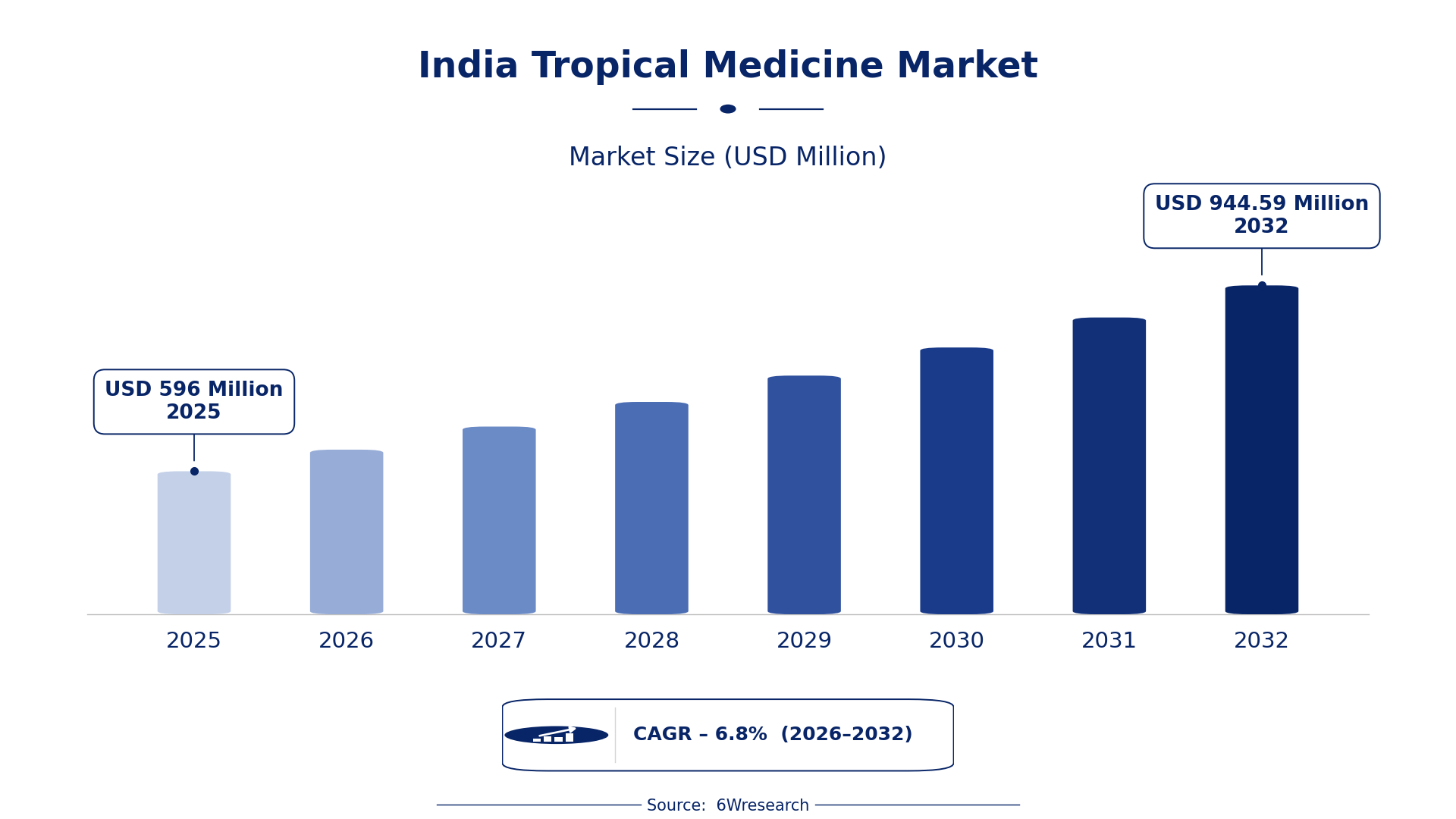
According to 6Wresearch internal database and industry insights, the India Tropical Medicine Market was valued at USD 596.0 million in 2025 and is projected to reach USD 944.59 million by 2032, growing at a CAGR of approximately 6.8% during 2026–2032.
India Tropical Medicine Market Highlights
| Report Metric | Details |
| Report Name | India Tropical Medicine Market |
| Market Size 2025 | USD 596.0 million |
| Market Size 2032 | USD 944.59 million |
| Absolute Growth 2025–2032 | USD 348.59 million |
| CAGR 2026–2032 | 6.8% |
| Peak Annual Growth | 8.6% in 2028 |
| Forecast Period | 2026–2032 |
| Historical Data | 2022–2025 |
| Base Year | 2025 |
| Leading Medicine Type, 2025 | Antimalarial Medicines (37% share) |
| Leading Target Disease, 2025 | Malaria (38% share) |
| Leading Distribution Channel, 2025 | NGOs/Government Tenders (47% share) |
| Leading End User, 2025 | Remote Hospitals (43% share) |
| Fastest-Growing Medicine Type | Anti-Leprosy Drugs (9.2% CAGR) |
| Fastest-Growing Target Disease | Leprosy (8.9% CAGR) |
| Fastest-Growing Distribution Channel | Public Health Campaigns (9.5% CAGR) |
| Fastest-Growing End User | Clinics (9.1% CAGR) |
| Growing Sector | Public Health |
| Key End Users | NGOs, Government Health Departments, Remote Hospitals, Clinics |
India Tropical Medicine Market Year-wise Growth Rate and Key Drivers (2022–2032)
This graph illustrates the annual growth rates of the market from 2022 to 2032, highlighting a steady upward trajectory and projected market expansion over the forecast period.
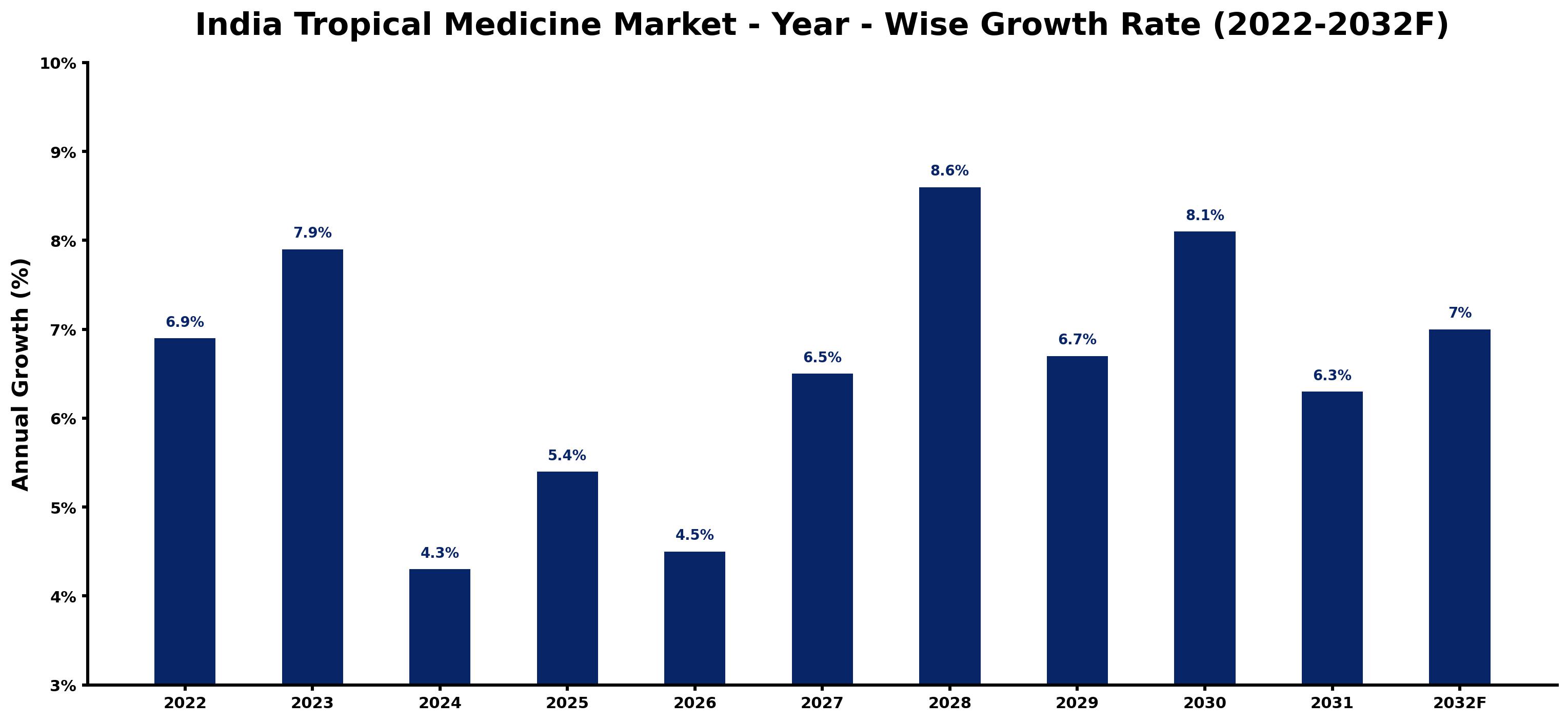
Year by year, the estimates below pair each growth rate with the development that shaped it.
| Year | Estimated Annual Growth (%) | Market Rationale |
| 2022 | 6.9 | The market experienced solid growth due to ongoing public health initiatives. |
| 2023 | 7.9 | Demand surged as malaria cases remained high across the country. |
| 2024 | 4.3 | Growth slowed slightly as the market adjusted to previous peaks in demand. |
| 2025 | 5.4 | Increased procurement from NGOs and government tenders boosted market performance. |
| 2026 | 4.5 | A slight deceleration occurred as the National Vector Borne Disease Control Programme began to show effects. |
| 2027 | 6.5 | Demand rose again, driven by heightened awareness of tropical diseases through public health campaigns. |
| 2028 | 8.6 | The peak growth year saw a surge in investments in health campaigns and treatment options. |
| 2029 | 6.7 | A slowdown followed, reflecting adjustments in public health strategies and resource allocation. |
| 2030 | 8.1 | Demand accelerated again as new treatment protocols were introduced to combat rising cases. |
| 2031 | 6.3 | Growth moderated as the market adapted to evolving healthcare needs and treatment guidelines. |
| 2032 | 7.0 | The market is expected to grow as public health initiatives expand and awareness increases. |
Note: Market size estimations and growth projections presented in this report are based on 6Wresearch's proprietary forecasting methodology, utilizing the latest available industry data, government publications, and primary research inputs.
India Tropical Medicine Market Synopsis
The Tropical Medicine market in India addresses diseases common in tropical regions, such as malaria, leprosy, and dengue. Medicines in this sector are developed through chemical synthesis and biotechnological methods. Growth in the India Tropical Medicine Market is driven by high disease prevalence and public health initiatives. Domestic users and international aid organizations are key sources of demand. The National Vector Borne Disease Control Programme aims to cut malaria incidence by 50% by 2025, further propelling market expansion.
Market Dynamics Impact Analysis (2026–2032)
| Factor | Type | Impact | Primary Segment Affected |
| High disease prevalence and public health initiatives drive demand for antimalarial medicines. | Driver | High | Antimalarial Medicines |
| Increased funding from NGOs supports procurement of essential tropical medicines. | Driver | High | NGOs/Government Tenders |
| Growing awareness of dengue prevention creates opportunities for management drugs. | Opportunity | High | Dengue Management Drugs |
| Rising cases of leprosy necessitate ongoing treatment programs, presenting investment opportunities. | Opportunity | High | Anti-Leprosy Drugs |
| Limited access to healthcare in rural areas restricts medicine distribution. | Restraint | High | Anthelminthic Drugs |
| Public health campaigns face challenges in reaching remote populations effectively. | Restraint | Medium | Public Health Campaigns |
| Inconsistent supply chain issues hinder timely delivery of medicines. | Challenge | High | Bulk Hospitals |
| Regulatory hurdles can delay the introduction of new tropical medicines. | Challenge | Medium | Remote Hospitals |
Evaluation of Drivers in India Tropical Medicine Market (2026–2032)
The table below links each growth driver to the segment it affects and the evidence for it.
| Drivers | Primary Segment Affected | Why It Matters (Evidence) |
| High disease prevalence increases demand for antimalarial medicines. | Antimalarial Medicines | India reports over 1.4 million malaria cases annually, prompting increased purchases from healthcare providers. |
| Funding from international aid organizations boosts procurement of tropical medicines. | NGOs/Government Tenders | The rise in dengue cases in 2022 highlights the urgent need for effective management drugs. |
| Public health campaigns raise awareness and drive demand for dengue management drugs. | Dengue Management Drugs | Increased public awareness leads to higher purchases by clinics and hospitals, improving treatment accessibility. |
| Ongoing treatment programs for leprosy create consistent demand for anti-leprosy drugs. | Anti-Leprosy Drugs | The government supports leprosy management in endemic states, ensuring a steady supply of necessary medications. |
| School health programs promote the use of anthelminthic drugs among children. | Anthelminthic Drugs | These programs aim to combat intestinal parasites, increasing demand in rural pharmacies. |
The Tropical Medicine market in India is growing on the back of rising public health campaigns, increased funding from NGOs, and heightened awareness of tropical diseases. In 2022, over 200,000 cases of dengue were reported, driving demand for effective management drugs. The National Vector Borne Disease Control Programme aims to reduce malaria incidence by 50% by 2025, prompting healthcare providers to stock antimalarial medicines. Ongoing treatment programs for leprosy create consistent demand for anti-leprosy drugs, particularly in endemic regions. School health initiatives further boost the need for anthelminthic drugs, driving overall market growth.
Evaluation of Restraints in India Tropical Medicine Market
The main factors holding the market back are set out below.
| Market Restraint | Primary Segment Affected | Why It Matters (Evidence) |
| Limited access to healthcare in rural areas restricts medicine distribution. | Anthelminthic Drugs | Inadequate infrastructure hampers the timely delivery of essential medicines to remote populations. |
| Public health campaigns face challenges in reaching remote populations effectively. | Public Health Campaigns | Awareness efforts often struggle to penetrate rural areas, limiting their impact on disease prevention. |
| Inconsistent supply chain issues hinder timely delivery of medicines. | Bulk Hospitals | Supply disruptions can lead to shortages, affecting patient care and treatment outcomes. |
| Regulatory hurdles can delay the introduction of new tropical medicines. | Remote Hospitals | Lengthy approval processes slow down the availability of new treatments for patients. |
| High production costs can limit the affordability of tropical medicines. | Dengue Management Drugs | Manufacturers face challenges in keeping prices competitive while ensuring quality. |
India Tropical Medicine Market Challenges
The India Tropical Medicine Market still has to solve a few problems, and the first is skills shortages. A lack of trained professionals in tropical medicine hampers drug development and treatment, delaying patient care for millions. Regulatory challenges present the second issue, as compliance with stringent health standards can extend the approval process for new medications, affecting suppliers' ability to meet urgent demand. Rising production costs are the third challenge; manufacturers face increased expenses from raw material price fluctuations, leading to higher prices for hospitals. Technology adoption also lags, restricting the efficiency of drug manufacturing processes and delaying essential medicines for end users.
Trends in the India Tropical Medicine Market
Below mentioned are some of the trends shaping the India Tropical Medicine Market growth.
- Shift Towards Integrated Health Campaigns: India is increasingly integrating health campaigns to tackle multiple tropical diseases at once. The National Health Mission supports these initiatives, resulting in a 50% increase in public health outreach efforts.
- Emergence of Digital Health Solutions: The rise of digital health solutions is changing the delivery of tropical medicine. Telemedicine platforms have broadened access to treatment, with over 30% of rural patients now utilising these services.
- Increased Focus on Preventive Healthcare: There is a growing emphasis on preventive healthcare measures within tropical medicine. Campaigns from the Ministry of Health and Family Welfare have led to a 40% increase in vaccination rates against tropical diseases.
- Expansion of School Health Programs: School health programs are being prioritised to combat intestinal parasites among children. In 2022, these initiatives reached over 10 million students, significantly improving health outcomes.
Investment Opportunities in the India Tropical Medicine Market
The following opportunities in the India Tropical Medicine Market pair current demand with a clear way in.
- Rising Demand for Dengue Management Drugs: With over 200,000 dengue cases reported in 2022, there is an urgent need for effective management drugs. Investing in production facilities for these medicines can satisfy the growing demand from clinics and hospitals.
- Partnerships with NGOs for Distribution: Now is an ideal time to collaborate with NGOs for the distribution of tropical medicines. Partnering with humanitarian agencies can enhance reach and effectiveness, particularly in rural areas.
- Investment in Anti-Leprosy Drug Production: Ongoing treatment programs for leprosy present a notable investment opportunity. Focusing on production capabilities can meet the needs of endemic regions, ensuring a reliable supply.
- Expansion of Public Health Campaigns: The current emphasis on public health campaigns creates opportunities for suppliers. Engaging with the National Health Mission can facilitate market entry and improve visibility.
Government Initiatives in the India Tropical Medicine Market
The Drugs and Cosmetics Act of 1940 established a regulatory framework for the approval of medicines in India. This law ensures that tropical medicines meet safety and efficacy standards. The National Health Mission, launched in 2013, further supports healthcare delivery, focusing on tropical disease management. More recently, the National Vector Borne Disease Control Programme aims to reduce malaria incidence by 50% by 2025, enhancing the focus on effective treatment options.
The Indian Council of Medical Research oversees research on tropical diseases and their treatments. This agency funds various studies aimed at improving therapeutic options for tropical medicine. Additionally, the Ministry of Health and Family Welfare approves health initiatives that focus on disease prevention and management, ensuring that public health campaigns are adequately supported. The National Health Mission allocates funds for healthcare delivery in rural areas, facilitating access to tropical medicines.
Future Insight of the India Tropical Medicine Market
The India Tropical Medicine Market is set to evolve by 2032, driven by several key factors. The Indian Council of Medical Research will enhance research efforts on tropical diseases, ensuring better treatment options become available. Public health campaigns will continue to raise awareness about dengue prevention, leading to increased demand for management drugs. Advances in biotechnological methods for drug development will streamline production processes, and the National Health Mission will support healthcare delivery in rural areas, ensuring a steady supply of medications for both domestic users and international aid organizations.
Market Segmentation Analysis
The report offers a comprehensive study of the following market segments and their leading categories in the market.
By Medicine Type – Antimalarial Medicines Dominated, Anti-Leprosy Drugs Expected to Grow Fastest
According to Vasudha, AM at 6Wresearch, Antimalarial Medicines accounted for a 37% market share by medicine type in 2025. Antimalarial medicines hold the largest market share because they are classified under the National List of Essential Medicines, ensuring their widespread availability. Given the high incidence of malaria in India, these medicines are vital for public health efforts aimed at controlling the disease. The quickest growth will come from Anti-Leprosy Drugs, forecast to expand at a CAGR of 9.2% between 2026 and 2032. Anti-leprosy drugs are experiencing rapid growth, particularly due to the government's national strategy for leprosy elimination launched in 2021. This initiative has intensified focus on treatment programs, significantly increasing the demand for these critical medicines. Suppliers need to prioritise the production of anti-leprosy drugs to align with national health objectives.
By Target Disease – Malaria Dominated, Leprosy Expected to Grow Fastest
Malaria held a 38% share of the India Tropical Medicine Market by target disease in 2025. Malaria commands the largest market share due to its high prevalence in India, necessitating ongoing treatment efforts. The government's National Vector Borne Disease Control Programme aims to significantly reduce malaria incidence, underscoring its importance in the tropical medicine sector. Over 2026–2032, Leprosy is expected to post the fastest growth, at a CAGR of 8.9%. Leprosy is the fastest-growing target disease segment, driven by the government's commitment to its elimination through continuous treatment initiatives. With endemic cases still reported in certain states, the demand for effective management remains strong. Buyers must ensure access to leprosy treatments as public health initiatives gain momentum.
By Distribution Channel – NGOs/Government Tenders Dominated, Public Health Campaigns Expected to Grow Fastest
NGOs/Government Tenders took a 47% share of distribution channel in 2025, more than any other category. NGOs and government tenders dominate the distribution channel, serving as a primary procurement source for essential tropical medicines. Their crucial role ensures that these medicines reach underserved populations, particularly in rural areas with limited healthcare access. Public Health Campaigns are projected to grow fastest, at a CAGR of 9.5% during 2026–2032. Public health campaigns are emerging as the fastest distribution channel, effectively raising awareness about tropical diseases and facilitating medicine distribution. This growth is particularly important in urban areas where effective public health messaging is vital for disease prevention. Suppliers should leverage public health campaigns to enhance their distribution strategies for tropical medicines.
By End User – Remote Hospitals Dominated, Clinics Expected to Grow Fastest
In 2025, Remote Hospitals led the end user split with a 43% share. Remote hospitals capture the largest market share as they often serve as the first line of care for patients with tropical diseases. Their essential role in rural healthcare makes them critical for the effective distribution of tropical medicines. Clinics are set to record the highest CAGR in this split, 9.1% over 2026–2032. Clinics represent the fastest-growing end-user segment, frequently providing tropical medicine to patients in urban settings. Their accessibility and high patient turnover significantly contribute to the rising demand for these essential treatments. Suppliers should focus on strengthening partnerships with clinics to meet the increasing demand for tropical medicines.
Key Attractiveness of the Report
- 10 Years of Market Numbers
- Historical Data Starting from 2022 to 2025
- Base Year 2025
- Forecast Data until 2032
- Key Performance Indicators Impacting the Market
- Major Upcoming Developments and Projects
Key Highlights of the Report:
- India Tropical Medicine Market Outlook
- Market Size of India Tropical Medicine Market, 2025
- Forecast of India Tropical Medicine Market, 2032
- Historical Data and Forecast of India Tropical Medicine Revenues & Volume for the Period 2022 - 2032F
- India Tropical Medicine Market Trend Evolution
- India Tropical Medicine Market Drivers and Challenges
- India Tropical Medicine Price Trends
- India Tropical Medicine Porter's Five Forces
- India Tropical Medicine Industry Life Cycle
- Historical Data and Forecast of India Tropical Medicine Market Revenues & Volume By Medicine Type for the Period 2022 - 2032F
- Historical Data and Forecast of India Tropical Medicine Market Revenues & Volume By Antimalarial Medicines for the Period 2022 - 2032F
- Historical Data and Forecast of India Tropical Medicine Market Revenues & Volume By Anti-Leprosy Drugs for the Period 2022 - 2032F
- Historical Data and Forecast of India Tropical Medicine Market Revenues & Volume By Dengue Management Drugs for the Period 2022 - 2032F
- Historical Data and Forecast of India Tropical Medicine Market Revenues & Volume By Anthelminthic Drugs for the Period 2022 - 2032F
- Historical Data and Forecast of India Tropical Medicine Market Revenues & Volume By Target Disease for the Period 2022 - 2032F
- Historical Data and Forecast of India Tropical Medicine Market Revenues & Volume By Malaria for the Period 2022 - 2032F
- Historical Data and Forecast of India Tropical Medicine Market Revenues & Volume By Leprosy for the Period 2022 - 2032F
- Historical Data and Forecast of India Tropical Medicine Market Revenues & Volume By Dengue Hemorrhagic Fever for the Period 2022 - 2032F
- Historical Data and Forecast of India Tropical Medicine Market Revenues & Volume By Intestinal Parasites for the Period 2022 - 2032F
- Historical Data and Forecast of India Tropical Medicine Market Revenues & Volume By Distribution Channel for the Period 2022 - 2032F
- Historical Data and Forecast of India Tropical Medicine Market Revenues & Volume By NGOs/Government Tenders for the Period 2022 - 2032F
- Historical Data and Forecast of India Tropical Medicine Market Revenues & Volume By Public Health Campaigns for the Period 2022 - 2032F
- Historical Data and Forecast of India Tropical Medicine Market Revenues & Volume By Bulk Hospitals for the Period 2022 - 2032F
- Historical Data and Forecast of India Tropical Medicine Market Revenues & Volume By Rural Pharmacies for the Period 2022 - 2032F
- Historical Data and Forecast of India Tropical Medicine Market Revenues & Volume By End User for the Period 2022 - 2032F
- Historical Data and Forecast of India Tropical Medicine Market Revenues & Volume By Remote Hospitals for the Period 2022 - 2032F
- Historical Data and Forecast of India Tropical Medicine Market Revenues & Volume By Clinics for the Period 2022 - 2032F
- Historical Data and Forecast of India Tropical Medicine Market Revenues & Volume By Health Departments for the Period 2022 - 2032F
- Historical Data and Forecast of India Tropical Medicine Market Revenues & Volume By Humanitarian Agencies for the Period 2022 - 2032F
- India Tropical Medicine Import Export Trade Statistics
- Market Opportunity Assessment By Medicine Type
- Market Opportunity Assessment By Target Disease
- Market Opportunity Assessment By Distribution Channel
- Market Opportunity Assessment By End User
- India Tropical Medicine Top Companies Market Share
- India Tropical Medicine Competitive Benchmarking By Technical and Operational Parameters
- India Tropical Medicine Company Profiles
- India Tropical Medicine Key Strategic Recommendations
Market Covered
Segments analysed in this report are listed below.
By Medicine Type
- Antimalarial Medicines
- Anti-Leprosy Drugs
- Dengue Management Drugs
- Anthelminthic Drugs
By Target Disease
- Malaria
- Leprosy
- Dengue Hemorrhagic Fever
- Intestinal Parasites
By Distribution Channel
- NGOs/Government Tenders
- Public Health Campaigns
- Bulk Hospitals
- Rural Pharmacies
By End User
- Remote Hospitals
- Clinics
- Health Departments
- Humanitarian Agencies































