India Vascular Intervention Devices Market Size & Growth Rate
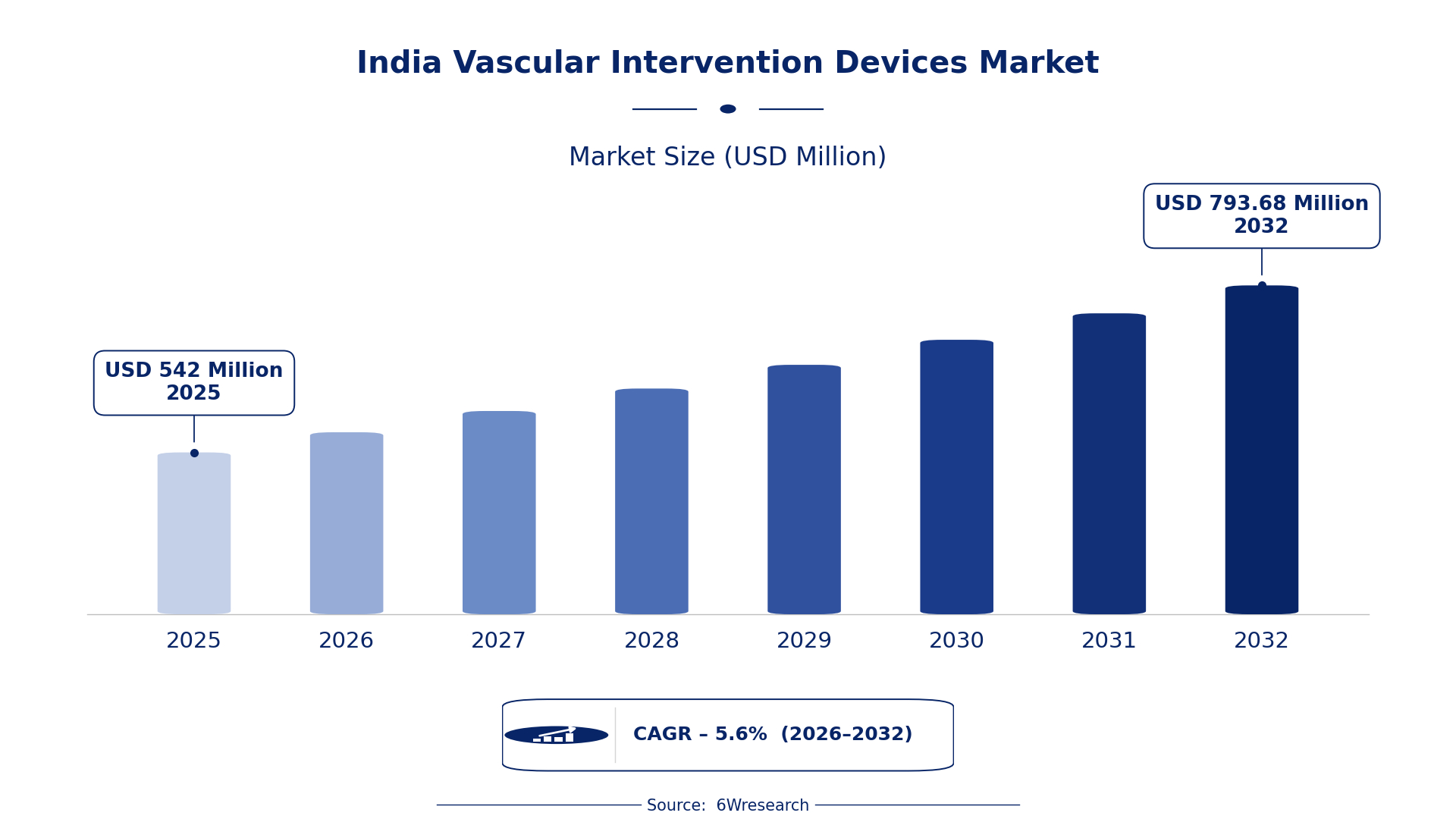
According to 6Wresearch internal database and industry insights, the India Vascular Intervention Devices Market was valued at USD 542.0 million in 2025 and is projected to reach USD 793.68 million by 2032, growing at a CAGR of approximately 5.6% during 2026–2032.
India Vascular Intervention Devices Market Highlights
| Report Metric | Details |
| Report Name | India Vascular Intervention Devices Market |
| Market Size 2025 | USD 542.0 million |
| Market Size 2032 | USD 793.68 million |
| Absolute Growth 2025–2032 | USD 251.68 million |
| CAGR 2026–2032 | 5.6% |
| Peak Annual Growth | 8.2% in 2028 |
| Forecast Period | 2026–2032 |
| Historical Data | 2022–2025 |
| Base Year | 2025 |
| Leading Device Type, 2025 | Balloon Catheters (49% share) |
| Leading Technique Used, 2025 | Angioplasty (53% share) |
| Leading Target Vessels, 2025 | Coronary Arteries (50% share) |
| Leading End User, 2025 | Cardiology Labs (37% share) |
| Fastest-Growing Device Type | Drug-Eluting Stents (8.2% CAGR) |
| Fastest-Growing Technique Used | Stent Implant (6.7% CAGR) |
| Fastest-Growing Target Vessels | Peripheral Arteries (7.6% CAGR) |
| Fastest-Growing End User | Hospitals (7.6% CAGR) |
| Growing Sector | Hospitals |
| Key End Users | Cardiology Labs, Hospitals, Stroke Centers, Vascular Clinics |
India Vascular Intervention Devices Market Year-wise Growth Rate and Key Drivers (2022–2032)
This graph illustrates the annual growth rates of the market from 2022 to 2032, highlighting a steady upward trajectory and projected market expansion over the forecast period.
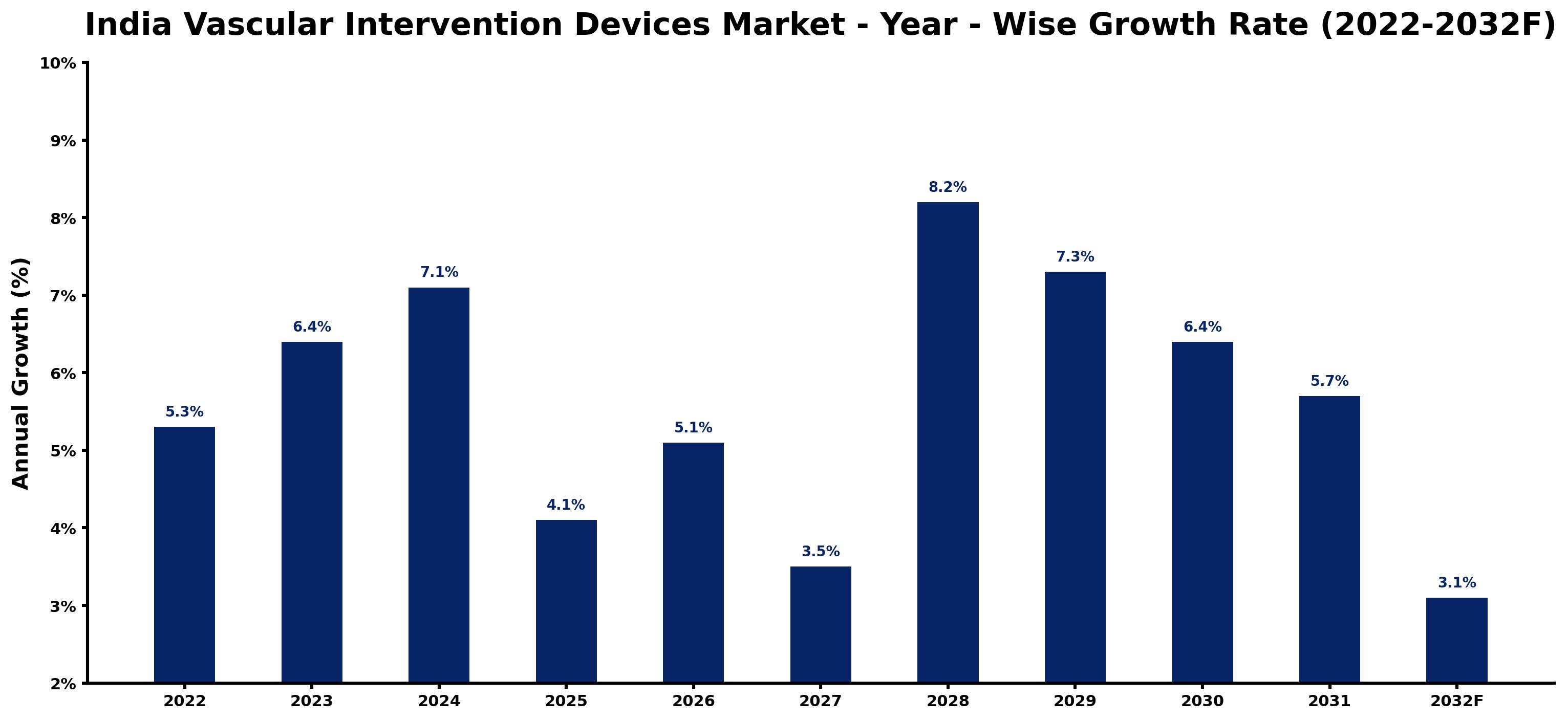
The table below sets out the estimated growth rate for each year and the main factor behind it.
| Year | Estimated Annual Growth (%) | Market Rationale |
| 2022 | 5.3 | The market exhibited steady growth, driven by increasing healthcare expenditure and the rising prevalence of cardiovascular diseases. |
| 2023 | 6.4 | Growth accelerated due to improved access to vascular intervention devices across various healthcare facilities, including rural hospitals. |
| 2024 | 7.1 | Demand surged as hospitals expanded their cardiac catheterization capabilities, improving treatment outcomes for patients. |
| 2025 | 4.1 | Growth slowed as hospitals faced challenges in sourcing advanced technologies for vascular interventions. |
| 2026 | 5.1 | Healthcare investments are expected to revitalise demand for vascular intervention devices in hospitals across India. |
| 2027 | 3.5 | Growth is projected to decelerate as the market adjusts to the saturation of certain device types, affecting procurement strategies. |
| 2028 | 8.2 | The market is expected to peak as new technologies and procedures gain traction among healthcare providers, enhancing treatment options. |
| 2029 | 7.3 | Demand is anticipated to moderate following the peak, as hospitals reassess procurement strategies and device usage in response to market conditions. |
| 2030 | 6.4 | Growth is projected to slow as the market stabilises, with a focus on cost-effective treatment options for patients in need. |
| 2031 | 5.7 | The market is expected to continue growing, supported by ongoing investments in healthcare infrastructure and technology advancements. |
| 2032 | 3.1 | Growth is projected to further decelerate as the market approaches maturity, with a focus on efficiency and improved patient outcomes. |
Note: Market size estimations and growth projections presented in this report are based on 6Wresearch's proprietary forecasting methodology, utilizing the latest available industry data, government publications, and primary research inputs.
India Vascular Intervention Devices Market Synopsis
Vascular intervention devices are essential medical tools used in India to treat vascular diseases through minimally invasive procedures. These devices include balloon catheters and drug-eluting stents, primarily utilised in hospitals and cardiology labs. The India Vascular Intervention Devices Market is expanding due to increased healthcare spending and a rising prevalence of cardiovascular diseases. With over 1,000 hospitals equipped with cardiac catheterization labs, the demand for these devices is expected to grow. The National Health Mission's initiatives to improve access to these technologies further stimulate market growth.
Market Dynamics Impact Analysis (2026–2032)
| Factor | Type | Impact | Primary Segment Affected |
| Increasing healthcare expenditure supports the acquisition of advanced vascular intervention devices. | Driver | High | Balloon Catheters |
| The rising prevalence of cardiovascular diseases drives demand for treatment options. | Driver | High | Balloon Catheters |
| The current healthcare expenditure is projected to reach 3% of GDP by 2025, creating opportunities for suppliers. | Opportunity | High | Balloon Catheters |
| Growing demand for minimally invasive procedures presents a chance for new entrants in the market. | Opportunity | Medium | Balloon Catheters |
| Limited access to advanced technologies in rural areas restricts market growth. | Restraint | High | Balloon Catheters |
| The high cost of advanced vascular intervention devices may deter some healthcare facilities from purchasing. | Restraint | Medium | Balloon Catheters |
| Buyers face challenges in sourcing high-quality devices that meet international standards. | Challenge | High | Balloon Catheters |
| Suppliers encounter difficulties in navigating regulatory approvals for new devices. | Challenge | Medium | Balloon Catheters |
Evaluation of Drivers in India Vascular Intervention Devices Market (2026–2032)
The main growth drivers and the segments they affect most are set out below.
| Drivers | Primary Segment Affected | Why It Matters (Evidence) |
| Rising healthcare expenditure encourages hospitals to invest in vascular intervention technologies. | Hospitals | India's healthcare expenditure is projected to reach 3% of GDP by 2025, leading to increased procurement. |
| Growing prevalence of cardiovascular diseases necessitates more treatment options. | Balloon Catheters | The population of India is approximately 1.4 billion, with a significant rise in cardiovascular conditions. |
| The National Health Mission promotes access to vascular intervention devices in rural areas, expanding market reach. | Hospitals | This initiative increases availability, encouraging hospitals to adopt these devices. |
| Drug-eluting stents are widely used in over 70% of angioplasty procedures, driving demand for these devices. | Drug-Eluting Stents | The high usage rate indicates a strong preference among healthcare providers for effective treatment options. |
| Research support from the Indian Council of Medical Research fosters innovation in vascular intervention technologies. | Balloon Catheters | This backing aids in the development of advanced devices, increasing market offerings. |
Market growth for Vascular Intervention Devices in India is supported by rising healthcare expenditure, expanding hospital capacity, and increasing end-user demand. Healthcare spending is projected to reach 3% of GDP by 2025, prompting hospitals to invest in advanced technologies. The increasing prevalence of cardiovascular diseases leads to a greater need for effective treatment options. The widespread adoption of drug-eluting stents in angioplasty procedures reflects the growing preference for effective vascular treatments.
Evaluation of Restraints in India Vascular Intervention Devices Market
The following restraints limit how fast demand can grow.
| Market Restraint | Primary Segment Affected | Why It Matters (Evidence) |
| Limited access to advanced technologies in rural areas restricts market growth. | Hospitals | Many rural hospitals lack the necessary infrastructure to procure and implement advanced vascular devices. |
| The high cost of advanced vascular intervention devices may deter some healthcare facilities from purchasing. | Balloon Catheters | The average cost of a drug-eluting stent procedure is around INR 1 lakh, limiting affordability. |
| Regulatory hurdles can delay the introduction of new vascular intervention devices to the market. | Balloon Catheters | Stringent approval processes can slow down the availability of new treatment options. |
| Competition from alternative treatment methods may impact device sales. | Balloon Catheters | Patients may opt for less invasive or non-device-based treatments, affecting demand. |
| Quality assurance challenges can affect buyer confidence in device procurement. | Balloon Catheters | Buyers may hesitate to invest without guaranteed compliance with ISO 13485 standards. |
India Vascular Intervention Devices Market Challenges
Buyers in the India vascular intervention devices market face regulatory hurdles, as compliance with ISO 13485 standards can delay product availability, impacting over 1,000 hospitals equipped with cardiac catheterization labs. Suppliers encounter technological limitations, with many devices relying on outdated materials, which increases production costs and reduces competitiveness. Hospitals struggle with the average cost of drug-eluting stent procedures at around INR 1 lakh, restricting their ability to offer affordable care amidst rising cardiovascular disease rates. Clinics also deal with supply chain disruptions, as reliance on imports for advanced technologies can lead to treatment delays, ultimately affecting patient outcomes.
Trends in the India Vascular Intervention Devices Market
Four trends stand out in the India Vascular Intervention Devices Market.
- Expansion of Cardiac Catheterization Labs: The number of cardiac catheterization labs in India is growing rapidly, with over 1,000 currently in operation. This expansion is expected to improve the accessibility of vascular intervention devices, significantly enhancing treatment outcomes.
- Increased Focus on Drug-Eluting Stents: There is a growing emphasis on drug-eluting stents in angioplasty procedures, with over 70% of such procedures using these devices. This trend indicates a strong preference for advanced solutions that reduce restenosis rates.
- Rising Demand for Vascular Clinics: The establishment of specialized vascular clinics is increasing, catering to the growing patient base with vascular diseases. This trend is supported by the Cardiology Society of India, which promotes advancements in cardiovascular care.
- Shift towards Minimally Invasive Procedures: India is experiencing a shift towards minimally invasive vascular interventions, especially in urban hospitals. The National Medical Devices Policy 2023 aims to promote these technologies, with a projected increase in adoption rates of around 30%.
Investment Opportunities in the India Vascular Intervention Devices Market
Investors looking at the India Vascular Intervention Devices Market should consider the following areas.
- Supply of Drug-Eluting Stents: There is a notable opportunity to supply drug-eluting stents, as they are used in over 70% of angioplasty procedures. Collaborating with hospitals will facilitate market entry and growth.
- Focus on Rural Healthcare Facilities: Rural healthcare facilities are in need of advanced vascular intervention devices, presenting an opportunity for suppliers to enter this underserved market through partnerships with local distributors.
- Entry through Regulatory Compliance: Entering the market through compliance with ISO 13485 standards will build credibility and access to hospitals, as quality assurance is critical for device procurement.
- Timing for Investment in Advanced Technologies: Now is an opportune time to invest in advanced vascular intervention devices, as India's healthcare expenditure is projected to reach 3% of GDP by 2025, encouraging procurement by hospitals.
Government Initiatives in the India Vascular Intervention Devices Market
The National Medical Devices Policy 2023 aims to boost domestic manufacturing of medical devices, including vascular intervention devices. This policy supports earlier regulations by promoting local production and reducing dependency on imports. It sets a target to increase local manufacturing to 40% by 2025, which will encourage investment in the sector and improve device availability.
The Indian Council of Medical Research funds research on vascular intervention technologies, supporting innovation and development. The agency allocates approximately INR 500 million annually for projects aimed at improving treatment options and patient outcomes, facilitating advancements in the market.
Future Insight of the India Vascular Intervention Devices Market
By 2032, buyers and suppliers in the India vascular intervention devices market can anticipate greater access to advanced technologies, driven by the National Medical Devices Policy 2023 which aims to boost local manufacturing. The National Health Mission will improve availability in rural areas, significantly increasing patient access. Research initiatives from the Indian Council of Medical Research are set to yield innovative solutions for vascular diseases. With healthcare expenditure projected to reach 3% of GDP by 2025, investment in medical technologies will likely rise, benefiting both hospitals and patients.
Market Segmentation Analysis
The report offers a comprehensive study of the following market segments and their leading categories in the market.
By Device Type – Balloon Catheters Dominated, Drug-Eluting Stents Expected to Grow Fastest
According to Bhawna Singh, Assistant Manager at 6Wresearch, Balloon Catheters took a 49% share of device type in 2025, more than any other category. Balloon catheters hold the largest share in the India vascular intervention devices market due to their extensive use in angioplasty procedures performed in over 1,000 hospitals equipped with cardiac catheterization labs. Their effectiveness in treating coronary artery disease solidifies their essential role in the healthcare system. Drug-Eluting Stents are set to record the highest CAGR in this split, 8.2% over 2026–2032. The rapid growth of drug-eluting stents is attributed to their critical role in more than 70% of angioplasty procedures, significantly lowering the risk of restenosis. As healthcare expenditure is projected to rise, the demand for these advanced devices will continue to increase. Suppliers should prioritise the availability of drug-eluting stents to meet the rising demand from hospitals.
By Technique Used – Angioplasty Dominated, Stent Implant Expected to Grow Fastest
The largest technique used category in 2025 was Angioplasty, with a 53% share of total revenue. Angioplasty is the leading technique in the vascular intervention devices market, primarily due to its effectiveness in treating blockages in coronary arteries. This procedure is widely adopted in hospitals across India, reflecting its critical role in cardiovascular care. Stent Implant is projected to grow fastest, at a CAGR of 6.7% during 2026–2032. Stent implant procedures are experiencing rapid growth as they provide essential support to artery walls during angioplasty, addressing the increasing prevalence of cardiovascular diseases. The rise in younger patients undergoing these procedures further fuels this growth. Buyers will benefit from advancements in stent implant techniques, which can improve patient outcomes and reduce recovery times.
By Target Vessels – Coronary Arteries Dominated, Peripheral Arteries Expected to Grow Fastest
In 2025, Coronary Arteries led the target vessels split with a 50% share. Coronary arteries represent the largest share in the vascular intervention devices market as they are the primary focus for treating heart disease, with a growing prevalence of cardiovascular conditions among the population. This focus is further supported by initiatives from the National Health Mission to improve access to treatments. The quickest growth will come from Peripheral Arteries, forecast to expand at a CAGR of 7.6% between 2026 and 2032. Peripheral arteries are emerging as the fastest-growing target due to the increasing incidence of peripheral artery disease, particularly among patients under 50 years old. This trend indicates a growing awareness of vascular health issues beyond traditional coronary concerns. Suppliers should expand their product lines to include options for peripheral artery treatments to capture this developing market.
By End User – Cardiology Labs Dominated, Hospitals Expected to Grow Fastest
With a 37% revenue share in 2025, Cardiology Labs was the largest end user category. Cardiology labs lead the market as the primary end users of vascular intervention devices, highlighting their specialised role in performing complex procedures. Their established presence in urban healthcare facilities ensures a consistent demand for these essential devices. Over 2026–2032, Hospitals are expected to post the fastest growth, at a CAGR of 7.6%. Hospitals are rapidly becoming the fastest-growing end user, driven by the increasing volume of procedures and the expansion of healthcare facilities across India. This shift indicates a trend towards more comprehensive care within hospital environments. Suppliers must enhance collaborations with hospitals to ensure their products are readily available for the growing number of procedures being performed.
Key Attractiveness of the Report
- 10 Years of Market Numbers
- Historical Data Starting from 2022 to 2025
- Base Year 2025
- Forecast Data until 2032
- Key Performance Indicators Impacting the Market
- Major Upcoming Developments and Projects
Key Highlights of the Report:
- India Vascular Intervention Devices Market Outlook
- Market Size of India Vascular Intervention Devices Market, 2025
- Forecast of India Vascular Intervention Devices Market, 2032
- Historical Data and Forecast of India Vascular Intervention Devices Revenues & Volume for the Period 2022 - 2032F
- India Vascular Intervention Devices Market Trend Evolution
- India Vascular Intervention Devices Market Drivers and Challenges
- India Vascular Intervention Devices Price Trends
- India Vascular Intervention Devices Porter's Five Forces
- India Vascular Intervention Devices Industry Life Cycle
- Historical Data and Forecast of India Vascular Intervention Devices Market Revenues & Volume By Device Type for the Period 2022 - 2032F
- Historical Data and Forecast of India Vascular Intervention Devices Market Revenues & Volume By Balloon Catheters for the Period 2022 - 2032F
- Historical Data and Forecast of India Vascular Intervention Devices Market Revenues & Volume By Drug-Eluting Stents for the Period 2022 - 2032F
- Historical Data and Forecast of India Vascular Intervention Devices Market Revenues & Volume By Thrombectomy Devices for the Period 2022 - 2032F
- Historical Data and Forecast of India Vascular Intervention Devices Market Revenues & Volume By Embolic Protection Dev. for the Period 2022 - 2032F
- Historical Data and Forecast of India Vascular Intervention Devices Market Revenues & Volume By Technique Used for the Period 2022 - 2032F
- Historical Data and Forecast of India Vascular Intervention Devices Market Revenues & Volume By Angioplasty for the Period 2022 - 2032F
- Historical Data and Forecast of India Vascular Intervention Devices Market Revenues & Volume By Stent Implant for the Period 2022 - 2032F
- Historical Data and Forecast of India Vascular Intervention Devices Market Revenues & Volume By Clot Removal for the Period 2022 - 2032F
- Historical Data and Forecast of India Vascular Intervention Devices Market Revenues & Volume By Filtration/Blockade for the Period 2022 - 2032F
- Historical Data and Forecast of India Vascular Intervention Devices Market Revenues & Volume By Target Vessels for the Period 2022 - 2032F
- Historical Data and Forecast of India Vascular Intervention Devices Market Revenues & Volume By Coronary Arteries for the Period 2022 - 2032F
- Historical Data and Forecast of India Vascular Intervention Devices Market Revenues & Volume By Peripheral Arteries for the Period 2022 - 2032F
- Historical Data and Forecast of India Vascular Intervention Devices Market Revenues & Volume By Deep Veins/Arteries for the Period 2022 - 2032F
- Historical Data and Forecast of India Vascular Intervention Devices Market Revenues & Volume By Carotid Arteries for the Period 2022 - 2032F
- Historical Data and Forecast of India Vascular Intervention Devices Market Revenues & Volume By End User for the Period 2022 - 2032F
- Historical Data and Forecast of India Vascular Intervention Devices Market Revenues & Volume By Cardiology Labs for the Period 2022 - 2032F
- Historical Data and Forecast of India Vascular Intervention Devices Market Revenues & Volume By Hospitals for the Period 2022 - 2032F
- Historical Data and Forecast of India Vascular Intervention Devices Market Revenues & Volume By Stroke Centers for the Period 2022 - 2032F
- Historical Data and Forecast of India Vascular Intervention Devices Market Revenues & Volume By Vascular Clinics for the Period 2022 - 2032F
- India Vascular Intervention Devices Import Export Trade Statistics
- Market Opportunity Assessment By Device Type
- Market Opportunity Assessment By Technique Used
- Market Opportunity Assessment By Target Vessels
- Market Opportunity Assessment By End User
- India Vascular Intervention Devices Top Companies Market Share
- India Vascular Intervention Devices Competitive Benchmarking By Technical and Operational Parameters
- India Vascular Intervention Devices Company Profiles
- India Vascular Intervention Devices Key Strategic Recommendations
Market Covered
This report examines the market across the segments below.
By Device Type
- Balloon Catheters
- Drug-Eluting Stents
- Thrombectomy Devices
- Embolic Protection Dev.
By Technique Used
- Angioplasty
- Stent Implant
- Clot Removal
- Filtration/Blockade
By Target Vessels
- Coronary Arteries
- Peripheral Arteries
- Deep Veins/Arteries
- Carotid Arteries
By End User
- Cardiology Labs
- Hospitals
- Stroke Centers
- Vascular Clinics































