India Vasculitis Drugs Market Size & Growth Rate
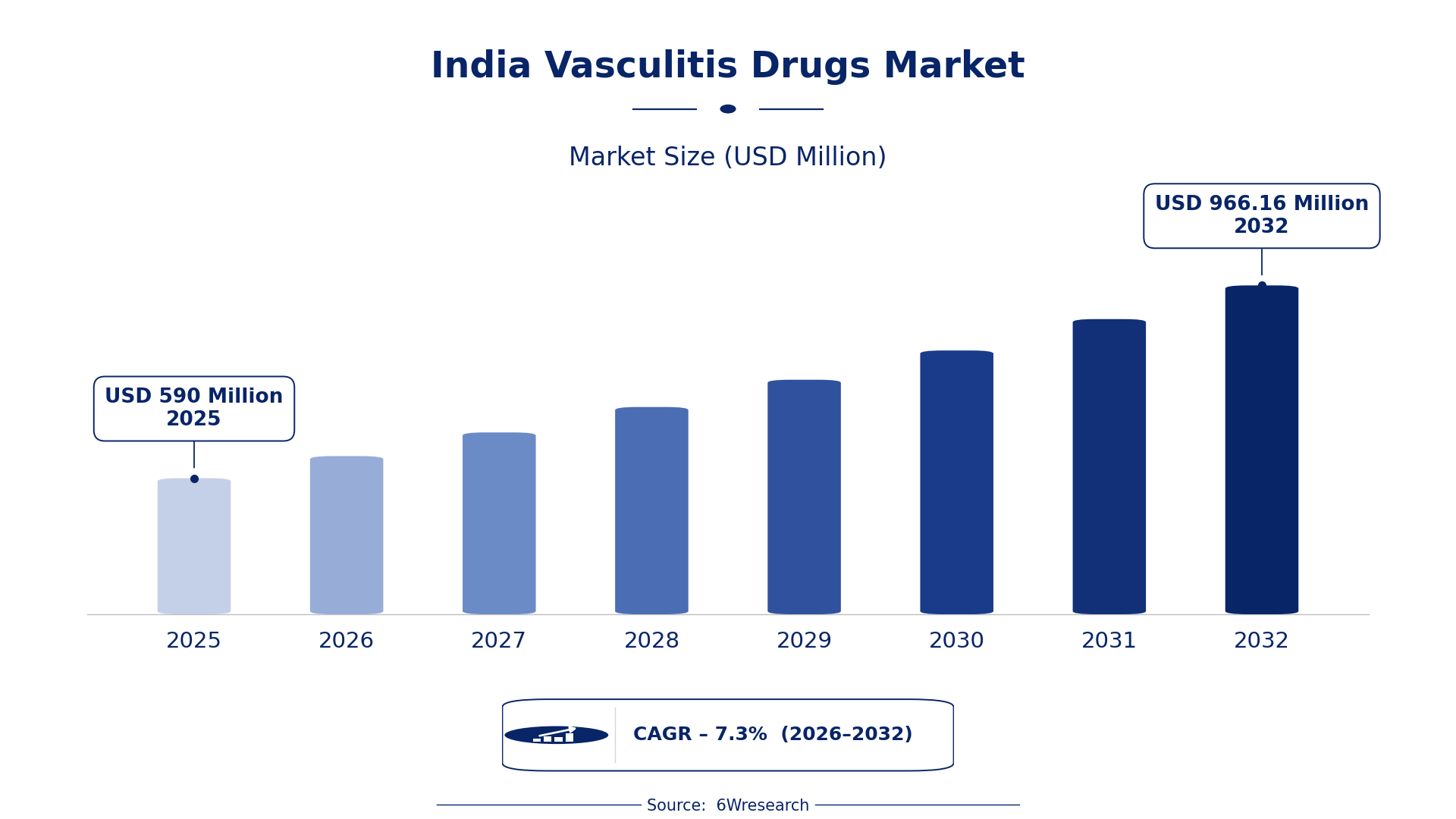
According to 6Wresearch internal database and industry insights, the India Vasculitis Drugs Market was valued at USD 590.0 million in 2025 and is projected to reach USD 966.16 million by 2032, growing at a CAGR of approximately 7.3% during 2026–2032.
India Vasculitis Drugs Market Highlights
| Report Metric | Details |
| Report Name | India Vasculitis Drugs Market |
| Market Size 2025 | USD 590.0 million |
| Market Size 2032 | USD 966.16 million |
| Absolute Growth 2025–2032 | USD 376.16 million |
| CAGR 2026–2032 | 7.3% |
| Peak Annual Growth | 9.8% in 2031 |
| Forecast Period | 2026–2032 |
| Historical Data | 2022–2025 |
| Base Year | 2025 |
| Leading Drug Type, 2025 | Corticosteroids (34% share) |
| Leading Administration Route, 2025 | Oral (53% share) |
| Leading Disease Stage, 2025 | Acute Phase (51% share) |
| Leading End User, 2025 | Hospitals (49% share) |
| Fastest-Growing Drug Type | Biologics (9.9% CAGR) |
| Fastest-Growing Administration Route | IV/Subcutaneous (9.9% CAGR) |
| Fastest-Growing Disease Stage | Refractory Cases (9.9% CAGR) |
| Fastest-Growing End User | Rheumatology Clinics (10.1% CAGR) |
| Growing Sector | Healthcare |
| Key End Users | Hospitals, Rheumatology Clinics, Specialty Pharmacies, Outpatient Settings |
India Vasculitis Drugs Market Year-wise Growth Rate and Key Drivers (2022–2032)
This graph illustrates the annual growth rates of the market from 2022 to 2032, highlighting a steady upward trajectory and projected market expansion over the forecast period.
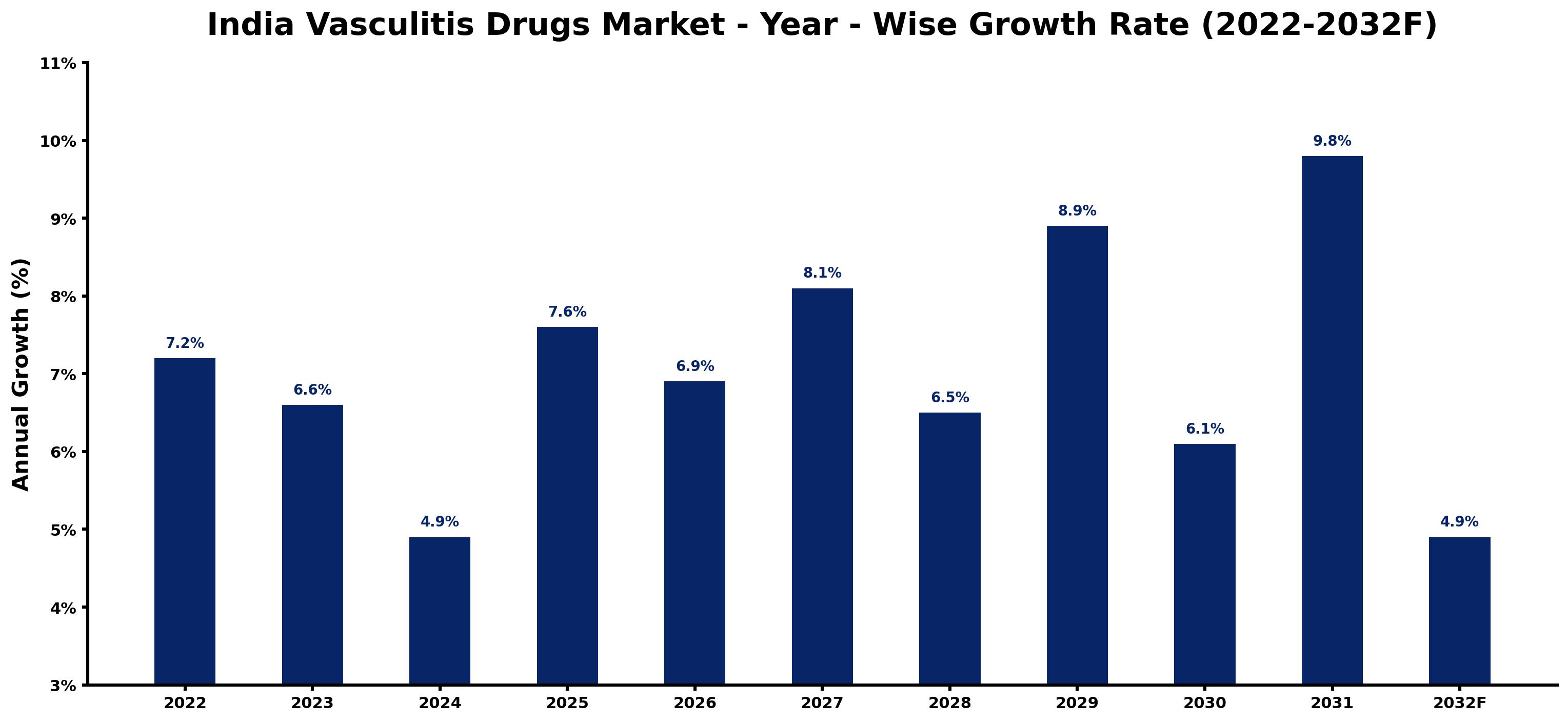
The table below sets out the estimated growth rate for each year and the main factor behind it.
| Year | Estimated Annual Growth (%) | Market Rationale |
| 2022 | 7.2 | The market experienced steady growth due to the increasing prevalence of autoimmune diseases, as reported by the Indian Rheumatology Association. |
| 2023 | 6.6 | Growth slowed as healthcare facilities adjusted to rising patient demands for vasculitis treatments, particularly in urban areas. |
| 2024 | 4.9 | The market continued to grow, albeit at a slower pace, influenced by ongoing research initiatives from the Indian Council of Medical Research. |
| 2025 | 7.6 | An increase in vasculitis cases led to heightened demand for corticosteroids in acute management, especially in hospitals. |
| 2026 | 6.9 | Demand growth slowed as urban hospitals expanded their biologics offerings for severe cases, impacting treatment availability. |
| 2027 | 8.1 | Growth accelerated as rheumatology clinics expanded their services for vasculitis management, improving patient access. |
| 2028 | 6.5 | The market saw a slowdown as the focus shifted to long-term maintenance therapies, affecting immediate treatment options. |
| 2029 | 8.9 | An increase in biologics adoption in hospitals spurred growth in the market, enhancing treatment protocols. |
| 2030 | 6.1 | Growth decelerated as the market adjusted to evolving treatment standards and patient management strategies. |
| 2031 | 9.8 | The peak growth was driven by the introduction of new biologics for vasculitis treatment, improving patient outcomes. |
| 2032 | 4.9 | The market is expected to stabilise as treatment protocols become more established, particularly in rural healthcare settings. |
Note: Market size estimations and growth projections presented in this report are based on 6Wresearch's proprietary forecasting methodology, utilizing the latest available industry data, government publications, and primary research inputs.
India Vasculitis Drugs Market Synopsis
Vasculitis Drugs in India include medications designed to treat vasculitis, a condition characterised by inflammation of blood vessels. These drugs are primarily produced through chemical synthesis or biotechnological methods and play a crucial role in managing symptoms and preventing organ damage. The India Vasculitis Drugs Market is expanding due to a rise in autoimmune disease cases and the growth of healthcare facilities. The Indian Rheumatology Association has noted an increase in vasculitis cases, highlighting the need for improved treatment options and driving demand for effective therapies.
Market Dynamics Impact Analysis (2026–2032)
| Factor | Type | Impact | Primary Segment Affected |
| Increasing prevalence of autoimmune diseases drives demand for vasculitis drugs. | Driver | High | Corticosteroids |
| Growing adoption of biologics in urban hospitals enhances treatment options. | Driver | High | Biologics |
| Rising number of rheumatology clinics expands access to specialized care. | Opportunity | High | Rheumatology Clinics |
| Expansion of the 'Ayushman Bharat' programme improves healthcare access. | Opportunity | High | Hospitals |
| Limited awareness of vasculitis among healthcare providers restricts treatment options. | Restraint | Medium | Immunosuppressants |
| High costs associated with biologics may limit access for some patients. | Restraint | Medium | Biologics |
| The Vasculitis Drugs market in India faces challenges due to regulatory hurdles in drug approvals. | Challenge | High | Corticosteroids |
| Inconsistent availability of treatments in rural areas complicates patient access. | Challenge | Medium | Oral/Injectable |
Evaluation of Drivers in India Vasculitis Drugs Market (2026–2032)
The main growth drivers and the segments they affect most are set out below.
| Drivers | Primary Segment Affected | Why It Matters (Evidence) |
| Rising prevalence of autoimmune diseases increases demand for effective treatments. | Corticosteroids | In 2022, approximately 1.4 billion people in India contributed to the growing need for vasculitis drugs. |
| Increased adoption of biologics enhances treatment options for severe cases. | Biologics | Urban hospitals are increasingly adopting biologics, improving patient outcomes for severe vasculitis. |
| Expansion of rheumatology clinics improves patient access to specialized care. | Rheumatology Clinics | The growth of rheumatology clinics in metropolitan areas facilitates better management of vasculitis. |
| Research initiatives lead to the development of new treatment strategies. | Immunosuppressants | The Indian Council of Medical Research is funding studies to improve vasculitis treatment options. |
| Government policies support healthcare access for chronic conditions. | Corticosteroids | The updated Ayushman Bharat programme provides comprehensive coverage for autoimmune diseases, including vasculitis. |
The Vasculitis Drugs market in India is expanding as rising prevalence of autoimmune diseases, increased adoption of biologics, and the growth of rheumatology clinics drive demand. In 2022, the population of India was approximately 1.4 billion, with a growing prevalence of autoimmune diseases. The Indian Rheumatology Association reported a rise in vasculitis cases, necessitating improved treatment options. Urban hospitals are increasingly adopting biologics for severe cases, which enhances the range of available therapies. The expansion of rheumatology clinics in metropolitan areas improves patient access to specialized care, further stimulating market growth.
Evaluation of Restraints in India Vasculitis Drugs Market
The key brakes on demand, and where they bite hardest, are shown below.
| Market Restraint | Primary Segment Affected | Why It Matters (Evidence) |
| Limited research funding hampers the development of new therapies. | Biologics | Research initiatives for vasculitis treatments require substantial funding, which is often lacking, slowing innovation. |
| High costs of biologics limit patient access to effective treatments. | Corticosteroids | Biologics can exceed 50,000 INR per month, restricting availability for many patients. |
| Regulatory hurdles disrupt supply chains for vasculitis drugs. | Immunosuppressants | Regulatory challenges can lead to inconsistent availability of essential medications. |
| Shortage of skilled healthcare professionals affects treatment delivery. | Rheumatology Clinics | A lack of trained specialists in rural areas delays diagnoses and treatment for patients. |
| Limited awareness of vasculitis among healthcare providers hinders diagnosis. | Acute Phase | Many healthcare professionals may not recognize symptoms early, affecting timely treatment. |
India Vasculitis Drugs Market Challenges
Buyers in the India vasculitis drugs market encounter considerable challenges due to a shortage of skilled healthcare professionals, especially in rural regions, which delays access to necessary treatments. This skills gap leads to longer waiting times for diagnoses and therapy, negatively impacting patient health outcomes. The high cost of biologics, often exceeding 50,000 INR per month, limits access for many patients, forcing reliance on less effective alternatives. Furthermore, regulatory obstacles create supply chain disruptions, resulting in inconsistent availability of essential vasculitis drugs, complicating treatment continuity for hospitals and clinics.
Trends in the India Vasculitis Drugs Market
Four trends stand out in the India Vasculitis Drugs Market.
- Expansion of Biologics in Treatment Protocols: The adoption of biologics for treating vasculitis is on the rise, particularly in urban hospitals. In 2023, new guidelines for biologics prescription were approved, enhancing treatment options for patients.
- Shift Towards Comprehensive Healthcare Coverage: The 'Ayushman Bharat' programme has broadened its scope to include autoimmune diseases, improving healthcare access. In 2022, the programme was updated to provide more extensive coverage for chronic conditions.
- Growth of Rheumatology Clinics: Rheumatology clinics are broadening their services to accommodate the increasing number of vasculitis patients. This trend is particularly noticeable in metropolitan areas, where these clinics are enhancing patient management.
- Increased Research Funding for Vasculitis: The Indian Council of Medical Research launched a research grant in 2022 specifically for studies on vasculitis. This funding aims to improve treatment options and deepen understanding of the disease.
Investment Opportunities in the India Vasculitis Drugs Market
Some of the investment opportunities in the India Vasculitis Drugs Market are mentioned below.
- Rheumatology Clinics Expanding Services: Rheumatology clinics are actively working to enhance their services for vasculitis management. With a growing patient base, clinics can invest in specialised treatments and training to improve care. By 2025, the market for vasculitis drugs is expected to reach USD 590 million, indicating a substantial opportunity for growth.
- Partnerships with Hospitals for Treatment Access: Hospitals are exploring partnerships to improve access to vasculitis treatments. Collaborating with local healthcare providers can lead to better patient outcomes and service delivery, particularly in underserved regions. The National Health Mission's support for rural healthcare bolsters this opportunity.
- Investment in Biologics Manufacturing: The rising demand for biologics presents an opportunity for investment in local manufacturing. With a projected growth rate of 9.9%, manufacturers can enter the market through joint ventures or partnerships with established healthcare providers to meet this demand.
- Improving Rural Healthcare Facilities: Rural healthcare facilities require enhanced access to vasculitis treatments. Investing in these areas can help meet demand and improve patient outcomes, especially with government support through initiatives like the 'Ayushman Bharat' programme.
Government Initiatives in the India Vasculitis Drugs Market
The 'National Health Policy 2021' launched by the Ministry of Health and Family Welfare aims to increase healthcare access for chronic conditions, including vasculitis. This policy encourages healthcare providers to offer better treatment options and ensures that patients receive necessary medications. It also focuses on improving healthcare infrastructure, particularly in rural areas, to support patients with autoimmune diseases. By increasing funding for healthcare initiatives, the policy seeks to enhance health outcomes for affected populations. The government allocated INR 1,500 crore for healthcare infrastructure improvements in rural settings, which will directly benefit vasculitis patients.
The 'Ayushman Bharat' scheme, updated in 2022, offers comprehensive coverage for autoimmune diseases, including vasculitis. This scheme enables patients to access essential treatments at minimal costs, greatly benefiting low-income families. The Central Drugs Standard Control Organization oversees the implementation of these guidelines, ensuring that patients receive timely and effective treatments. Additionally, the Indian Council of Medical Research supports research initiatives aimed at improving vasculitis management, promoting innovation in treatment approaches. In 2023, the government allocated INR 200 crore for research on autoimmune diseases, enhancing the potential for new therapies.
Future Insight of the India Vasculitis Drugs Market
The India vasculitis drugs market is set to evolve by 2032, driven by advancements in biotechnological research and increased government initiatives like the 'Ayushman Bharat' programme aimed at chronic disease management. Improved treatment protocols and expanded rheumatology services in urban clinics will enhance patient care. Ongoing research by the National Institute of Immunology is expected to yield new therapeutic options, while the implementation of national standards for drug safety will elevate treatment quality. These developments will collectively improve access and affordability for buyers and healthcare providers.
Market Segmentation Analysis
The analysis below covers each segmentation, its leading category in 2025 and its fastest-growing category through 2032.
By Drug Type – Corticosteroids Dominated, Biologics Expected to Grow Fastest
According to Bhawna Singh, Assistant Manager at 6Wresearch, Corticosteroids took a 34% share of drug type in 2025, more than any other category. Corticosteroids command the largest market share because they are the primary choice for managing acute vasculitis symptoms, with healthcare providers relying on them for immediate patient relief. Their widespread use is particularly evident in urban hospitals, where they are a standard treatment protocol during acute phases of the disease. Over 2026–2032, Biologics are expected to post the fastest growth, at a CAGR of 9.9%. Biologics are experiencing rapid growth as they are increasingly adopted in urban hospitals for severe vasculitis cases requiring targeted therapies. This trend highlights a shift towards advanced treatment options that cater to the specific needs of patients, ensuring better management of their conditions. Suppliers should focus on expanding their biologics offerings to meet the rising demand for specialised vasculitis treatments.
By Administration Route – Oral Dominated, IV/Subcutaneous Expected to Grow Fastest
Oral accounted for a 53% market share by administration route in 2025. The oral route holds the largest market share as it is the most common method for administering corticosteroids, making it accessible for patients in various healthcare settings. This method is particularly beneficial in rural areas, where ease of use is crucial for patient adherence to treatment regimens. The quickest growth will come from IV/Subcutaneous, forecast to expand at a CAGR of 9.9% between 2026 and 2032. Intravenous and subcutaneous administration routes are rapidly gaining traction, especially for biologics that require swift action in severe vasculitis cases. The growing use of these methods in hospitals is significantly improving patient outcomes and treatment efficacy. Buyers and suppliers must adapt to the increasing importance of IV and subcutaneous administration routes to optimise treatment strategies for vasculitis patients.
By Disease Stage – Acute Phase Dominated, Refractory Cases Expected to Grow Fastest
The largest disease stage category in 2025 was Acute Phase, with a 51% share of total revenue. The acute phase of vasculitis treatment commands the largest share due to the urgent need for immediate intervention in critical cases. Healthcare facilities prioritise acute management to prevent serious complications associated with the disease. Refractory Cases are set to record the highest CAGR in this split, 9.9% over 2026–2032. Refractory cases are seeing the fastest growth as they require specific treatments when standard therapies fail, highlighting a gap in current treatment protocols. This need for specialised care is prompting healthcare providers to seek more effective solutions. Suppliers should develop targeted therapies for refractory cases to address the unmet needs of healthcare providers and patients.
By End User – Hospitals Dominated, Rheumatology Clinics Expected to Grow Fastest
In 2025, Hospitals led the end user split with a 49% share. Hospitals lead the market share as they are the primary setting for vasculitis treatment, equipped with the necessary resources and specialists to manage complex cases effectively. The high volume of patients requiring hospitalisation for acute management underscores their critical role in the healthcare landscape. Rheumatology Clinics are projected to grow fastest, at a CAGR of 10.1% during 2026–2032. Rheumatology clinics are rapidly expanding their services for vasculitis management, driven by the increasing prevalence of autoimmune diseases and the demand for specialised care. This growth signifies a shift towards more focused treatment approaches for patients with complex conditions. Suppliers should strengthen partnerships with rheumatology clinics to leverage the growing demand for specialised vasculitis treatments.
Key Attractiveness of the Report
- 10 Years of Market Numbers
- Historical Data Starting from 2022 to 2025
- Base Year 2025
- Forecast Data until 2032
- Key Performance Indicators Impacting the Market
- Major Upcoming Developments and Projects
Key Highlights of the Report:
- India Vasculitis Drugs Market Outlook
- Market Size of India Vasculitis Drugs Market, 2025
- Forecast of India Vasculitis Drugs Market, 2032
- Historical Data and Forecast of India Vasculitis Drugs Revenues & Volume for the Period 2022 - 2032F
- India Vasculitis Drugs Market Trend Evolution
- India Vasculitis Drugs Market Drivers and Challenges
- India Vasculitis Drugs Price Trends
- India Vasculitis Drugs Porter's Five Forces
- India Vasculitis Drugs Industry Life Cycle
- Historical Data and Forecast of India Vasculitis Drugs Market Revenues & Volume By Drug Type for the Period 2022 - 2032F
- Historical Data and Forecast of India Vasculitis Drugs Market Revenues & Volume By Corticosteroids for the Period 2022 - 2032F
- Historical Data and Forecast of India Vasculitis Drugs Market Revenues & Volume By Immunosuppressants for the Period 2022 - 2032F
- Historical Data and Forecast of India Vasculitis Drugs Market Revenues & Volume By Biologics for the Period 2022 - 2032F
- Historical Data and Forecast of India Vasculitis Drugs Market Revenues & Volume By NSAIDs for the Period 2022 - 2032F
- Historical Data and Forecast of India Vasculitis Drugs Market Revenues & Volume By Administration Route for the Period 2022 - 2032F
- Historical Data and Forecast of India Vasculitis Drugs Market Revenues & Volume By Oral/IV for the Period 2022 - 2032F
- Historical Data and Forecast of India Vasculitis Drugs Market Revenues & Volume By Oral/Injectable for the Period 2022 - 2032F
- Historical Data and Forecast of India Vasculitis Drugs Market Revenues & Volume By IV/Subcutaneous for the Period 2022 - 2032F
- Historical Data and Forecast of India Vasculitis Drugs Market Revenues & Volume By Oral for the Period 2022 - 2032F
- Historical Data and Forecast of India Vasculitis Drugs Market Revenues & Volume By Disease Stage for the Period 2022 - 2032F
- Historical Data and Forecast of India Vasculitis Drugs Market Revenues & Volume By Acute Phase for the Period 2022 - 2032F
- Historical Data and Forecast of India Vasculitis Drugs Market Revenues & Volume By Maintenance Therapy for the Period 2022 - 2032F
- Historical Data and Forecast of India Vasculitis Drugs Market Revenues & Volume By Refractory Cases for the Period 2022 - 2032F
- Historical Data and Forecast of India Vasculitis Drugs Market Revenues & Volume By Mild Symptoms for the Period 2022 - 2032F
- Historical Data and Forecast of India Vasculitis Drugs Market Revenues & Volume By End User for the Period 2022 - 2032F
- Historical Data and Forecast of India Vasculitis Drugs Market Revenues & Volume By Hospitals for the Period 2022 - 2032F
- Historical Data and Forecast of India Vasculitis Drugs Market Revenues & Volume By Rheumatology Clinics for the Period 2022 - 2032F
- Historical Data and Forecast of India Vasculitis Drugs Market Revenues & Volume By Specialty Pharmacies for the Period 2022 - 2032F
- Historical Data and Forecast of India Vasculitis Drugs Market Revenues & Volume By Outpatient Settings for the Period 2022 - 2032F
- India Vasculitis Drugs Import Export Trade Statistics
- Market Opportunity Assessment By Drug Type
- Market Opportunity Assessment By Administration Route
- Market Opportunity Assessment By Disease Stage
- Market Opportunity Assessment By End User
- India Vasculitis Drugs Top Companies Market Share
- India Vasculitis Drugs Competitive Benchmarking By Technical and Operational Parameters
- India Vasculitis Drugs Company Profiles
- India Vasculitis Drugs Key Strategic Recommendations
Market Covered
The report offers an extensive study of the following market segments.
By Drug Type
- Corticosteroids
- Immunosuppressants
- Biologics
- NSAIDs
By Administration Route
- Oral/IV
- Oral/Injectable
- IV/Subcutaneous
- Oral
By Disease Stage
- Acute Phase
- Maintenance Therapy
- Refractory Cases
- Mild Symptoms
By End User
- Hospitals
- Rheumatology Clinics
- Specialty Pharmacies
- Outpatient Settings































