Indonesia Automotive Wiper Market: Import Trend Analysis
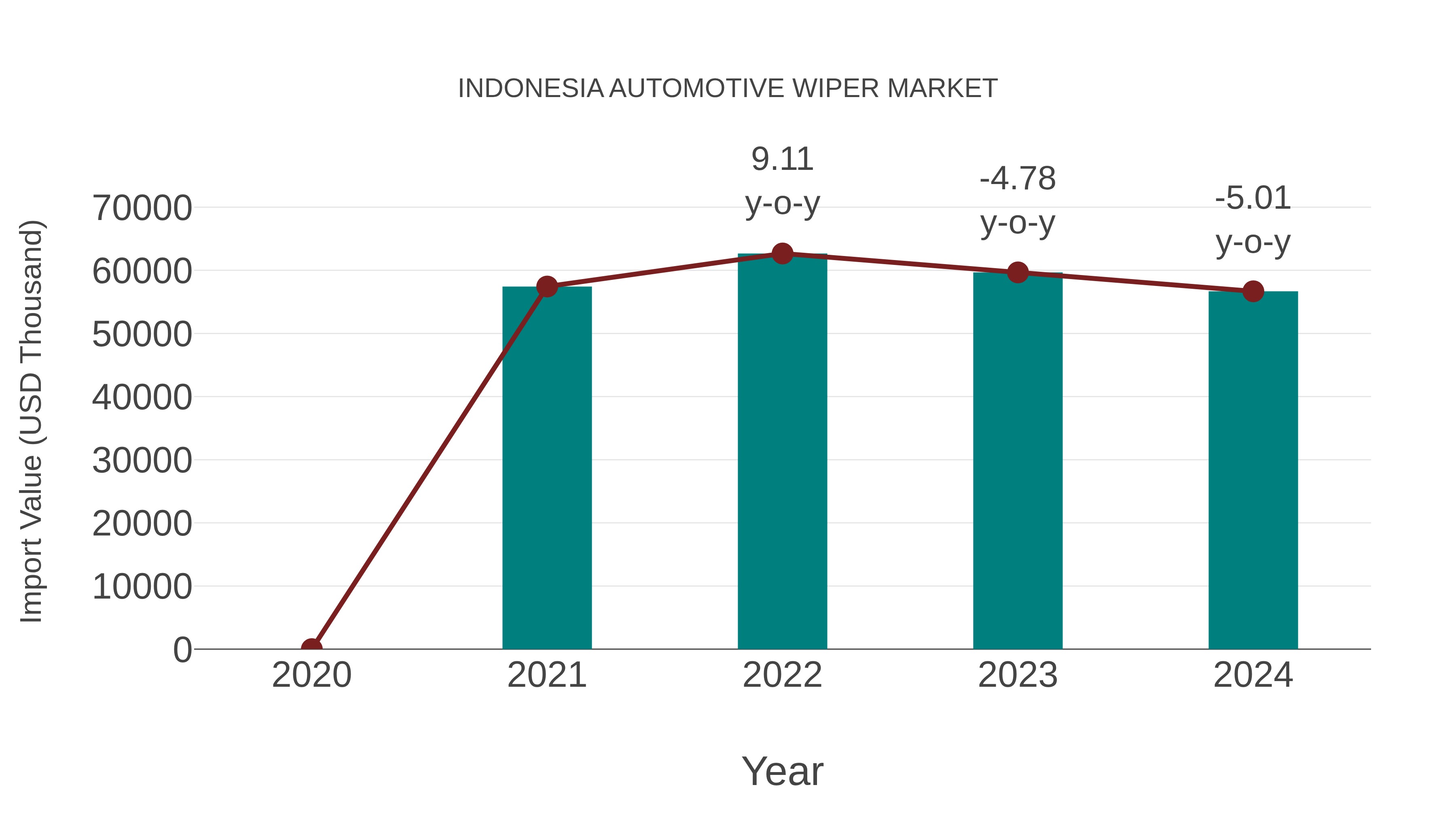
Indonesia`s import trend for the automotive wiper market experienced a decline from 2023 to 2024, with a growth rate of -5.01%. The compound annual growth rate (CAGR) for the period of 2020-2024 stood at -0.44%. This negative import momentum can be attributed to shifts in consumer demand towards more sustainable and durable automotive parts, impacting market stability.
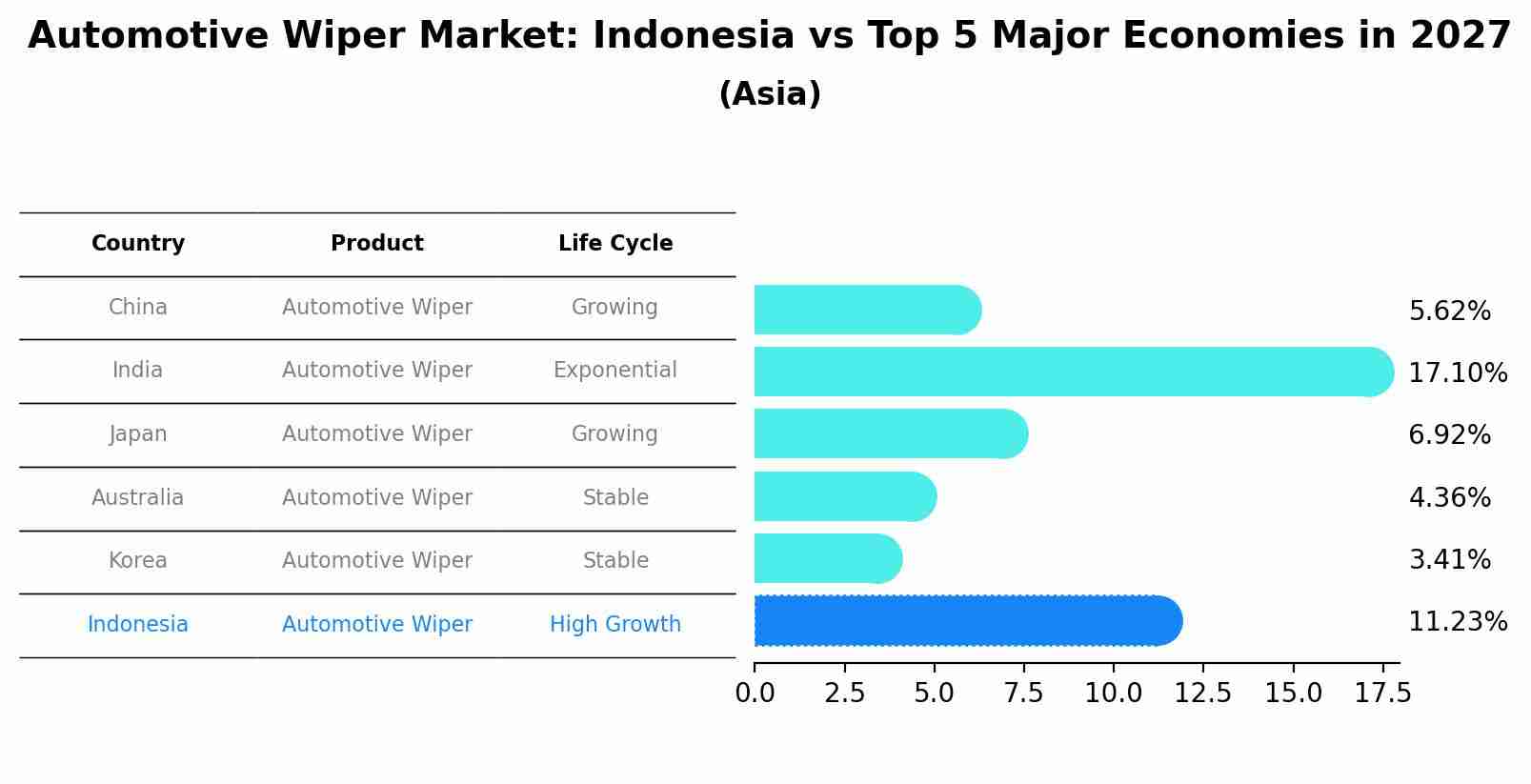
Automotive Wiper Market: Indonesia vs Top 5 Major Economies in 2027 (Asia)
In the Asia region, the Automotive Wiper market in Indonesia is projected to expand at a high growth rate of 11.23% by 2027. The largest economy is China, followed by India, Japan, Australia and South Korea.
Indonesia Automotive Wiper Market Highlights
| Report Name | Indonesia Automotive Wiper Market |
| Forecast Period | 2025–2029 |
| CAGR | 12.50% |
| Growing Sector | Automotive |
Topics Covered in the Indonesia Automotive Wiper Market Report
The Indonesia Automotive Wiper Market report thoroughly covers the market by Application Type, Market Type, Vehicle Type, and Blade Type. The report provides an unbiased and detailed analysis of the ongoing market trends, opportunities/high-growth areas, and market drivers to help stakeholders align their strategies with current and future market dynamics.
Indonesia Automotive Wiper Market Synopsis
The Indonesia automotive wiper market is growing consistently, driven by road safety awareness and vehicle ownership. There's a rise in demand for front windshield wipers, with beam and hybrid blades gaining traction for their stylish, modern design and durability. Aftermarket sales are growing, particularly through online platforms and service centers. Local production remains active, while a consistent replacement requirement is driven by seasonal weather patterns. Though price competition and raw material costs act as hurdles, the long-term potential remains promising.
The Indonesia Automotive Wiper Market is anticipated to grow at a CAGR of 12.50% during the forecast period 2025-2029. The Indonesia automotive wiper industry is driven by an increase in vehicle ownership, particularly passenger cars, and a rise in road safety awareness in diverse weather conditions. Seasonal rainfall accelerates the requirement for regular wiper replacement. Growing demand for durable hybrid and beam blades, development in the automotive aftermarket, and expanding online sales channels also contribute. Technological innovations and local production also back consistent market expansion in semi-urban and urban areas.
Indonesia Automotive Wiper Market Challenges
The Indonesia automotive wiper market encounters intense price competition, particularly in the aftermarket, putting pressure on margins and brand differentiation. Unstable raw material costs (plastics, rubber, silicon) hinder benefits and production planning. There's low consumer awareness of replacement schedules, which reduces consistent demand. Compatibility with various vehicle models is difficult. Furthermore, due to rapid innovation, companies need to invest a lot in R&D, making it hard for the smaller local manufacturers to compete with larger or more advanced players.
Indonesia Automotive Wiper Market Trends
The Indonesia automotive wiper market is experiencing a massive growth, influenced by the rising automotive industry and vehicle ownership in Indonesia. Other major trends include the advanced wiper technologies are gaining traction across the country, such as hybrid blades and rain-sensing wipers, to improve safety and performance in fluctuating weather conditions. Additionally, the demand for durable wiper and eco-friendly materials is on the rise, aligning with the global push for sustainable automotive solutions.
Investment Opportunities in the Indonesia Automotive Wiper Market
Investment opportunities in the Indonesia automotive wiper market are abundant, particularly in the areas of manufacturing and innovation. With the expansion of local and regional automotive production, there is potential to collaborate with vehicle manufacturers to provide tailored wiper solutions. Furthermore, investments in research and development to create smarter and more energy-efficient wiper systems could lead to a competitive edge in the market. The increasing consumer preference for premium-quality automotive accessories also presents lucrative opportunities for businesses seeking to cater to this demand.
Leading Players in the Indonesia Automotive Wiper Market
The Indonesia automotive wiper market is dominated by both global and local players, contributing to a competitive environment. Leading international brands like Bosch, Valeo, and DENSO have a significant presence, owing to their advanced technology and wide product offerings. Meanwhile, local manufacturers are steadily growing their market share by providing cost-effective and region-specific solutions to meet the demands of Indonesian consumers.
Government Regulations in the Indonesia Automotive Wiper Market
According to Indonesian government data, the automotive sector must adhere to strict environmental and safety regulations. Wiper systems, being an essential safety component, are subject to quality assurance standards set by authorities. Additionally, policies promoting the use of eco-friendly materials in automotive manufacturing are influencing the design and production of wiper systems. Import regulations also play a vital role, encouraging local manufacturing and reducing reliance on imported components, thus fostering the growth of domestic industries.
Future Insights of the Indonesia Automotive Wiper Market
The future of the Indonesia automotive wiper industry seems optimistic with the growing automotive industry and vehicle ownership rates in the country. The rising shift towards electric and hybrid vehicles in the country is anticipated to generate a huge demand for energy-efficient and innovative wiper systems. Furthermore, the rising need for technological advancements in wiper systems, which include automatic rain-sensing wipers, as awareness for passenger safety and visibility during adverse weather circumstances has been increasing. With ongoing government initiatives aimed at boosting domestic production and exports, the industry is poised for sustained growth and innovation in the coming years.
Market Segmentation Analysis
The report offers a comprehensive study of the following market segments and their leading categories:
Front Windshield Segment to Dominate the Market – By Application Type
According to Adammya, Senior Research Analyst at 6Wresearch, the front windshield segment dominates the market, as nearly all vehicles are equipped with front wiper blades, making this the most critical and highest volume application.
Passenger Vehicles to Dominate the Market – By Vehicle Type
Passenger vehicles (including sedans, SUVs, MPVs, and hatchbacks) lead the Indonesian wiper market, given their overwhelming majority share in vehicle registrations and sales across urban and rural regions.
Hybrid wiper blades are leading- By Blade Type
Hybrid wiper blades are the leading blade type, preferred for their better pressure distribution, performance in varied weather, and growing consumer adoption; beam blades are also gaining traction thanks to sleek aerodynamics and durability.
Key Attractiveness of the Report
- 10 Years of Market Numbers.
- Historical Data Starting from 2021 to 2024.
- Base Year: 2024
- Forecast Data until 2029.
- Key Performance Indicators Impacting the Market.
- Major Upcoming Developments and Projects.
Key Highlights of the Report:
- Indonesia Automotive Wiper Market Outlook
- Market Size of Indonesia Automotive Wiper Market, 2025
- Forecast of Indonesia Automotive Wiper Market, 2032
- Historical Data and Forecast of Indonesia Automotive Wiper Revenues & Volume for the Period 2022-2032F
- Indonesia Automotive Wiper Market Trend Evolution
- Indonesia Automotive Wiper Market Drivers and Challenges
- Indonesia Automotive Wiper Price Trends
- Indonesia Automotive Wiper Porter's Five Forces
- Indonesia Automotive Wiper Industry Life Cycle
- Historical Data and Forecast of Indonesia Automotive Wiper Market Revenues & Volume By Blade Type for the Period 2022-2032F
- Historical Data and Forecast of Indonesia Automotive Wiper Market Revenues & Volume By Traditional Brackets for the Period 2022-2032F
- Historical Data and Forecast of Indonesia Automotive Wiper Market Revenues & Volume By Low-Profile Beam for the Period 2022-2032F
- Historical Data and Forecast of Indonesia Automotive Wiper Market Revenues & Volume By Hybrid Blade for the Period 2022-2032F
- Historical Data and Forecast of Indonesia Automotive Wiper Market Revenues & Volume By Application Type for the Period 2022-2032F
- Historical Data and Forecast of Indonesia Automotive Wiper Market Revenues & Volume By Windshield for the Period 2022-2032F
- Historical Data and Forecast of Indonesia Automotive Wiper Market Revenues & Volume By Rear for the Period 2022-2032F
- Historical Data and Forecast of Indonesia Automotive Wiper Market Revenues & Volume By Market Type for the Period 2022-2032F
- Historical Data and Forecast of Indonesia Automotive Wiper Market Revenues & Volume By OEM for the Period 2022-2032F
- Historical Data and Forecast of Indonesia Automotive Wiper Market Revenues & Volume By Aftermarket for the Period 2022-2032F
- Historical Data and Forecast of Indonesia Automotive Wiper Market Revenues & Volume By Vehicle Type for the Period 2022-2032F
- Historical Data and Forecast of Indonesia Automotive Wiper Market Revenues & Volume By Passenger Cars for the Period 2022-2032F
- Historical Data and Forecast of Indonesia Automotive Wiper Market Revenues & Volume By Light Commercial Vehicles for the Period 2022-2032F
- Historical Data and Forecast of Indonesia Automotive Wiper Market Revenues & Volume By Heavy Commercial Vehicles for the Period 2022-2032F
- Indonesia Automotive Wiper Import Export Trade Statistics
- Market Opportunity Assessment By Blade Type
- Market Opportunity Assessment By Application Type
- Market Opportunity Assessment By Market Type
- Market Opportunity Assessment By Vehicle Type
- Indonesia Automotive Wiper Top Companies Market Share
- Indonesia Automotive Wiper Competitive Benchmarking By Technical and Operational Parameters
- Indonesia Automotive Wiper Company Profiles
- Indonesia Automotive Wiper Key Strategic Recommendations
Market Segmentation
The Market report covers a detailed analysis of the following market segments:
By Blade Type
- Traditional Brackets
- Low-Profile Beam
- Hybrid Blade
By Application Type
- Windshield
- Rear
By Market Type
- OEM
- Aftermarket
By Vehicle Type
- Passenger Cars
- Light Commercial Vehicles
- Heavy Commercial Vehicles






































