Indonesia Baby Car Seat Market (2026-2032) | Forecast, Size & Revenue, Competitive Landscape, Segmentation, Trends, Analysis, Outlook, Share, Value, Growth, Companies, Industry
Market Forecast By Seat Type (Infant, Convertibles, Booster, Combination), By Distribution Channel (Hypermarkets/Supermarkets, Specialty Stores, Online) And Competitive Landscape
| Product Code: ETC7559585 | Publication Date: Sep 2024 | Updated Date: Mar 2026 | Product Type: Market Research Report | |
| Publisher: 6Wresearch | Author: Vasudha | No. of Pages: 75 | No. of Figures: 35 | No. of Tables: 20 |
Indonesia Baby Car Seat Market: Import Trend Analysis
In 2024, Indonesia`s import trend for baby car seats exhibited robust growth, with a notable 21.3% increase from 2023. The compound annual growth rate (CAGR) for the period 2020-2024 stood at 11.87%. This suggests a significant surge in demand for baby car seats, likely driven by heightened awareness of child safety and increasing disposable incomes among Indonesian consumers.
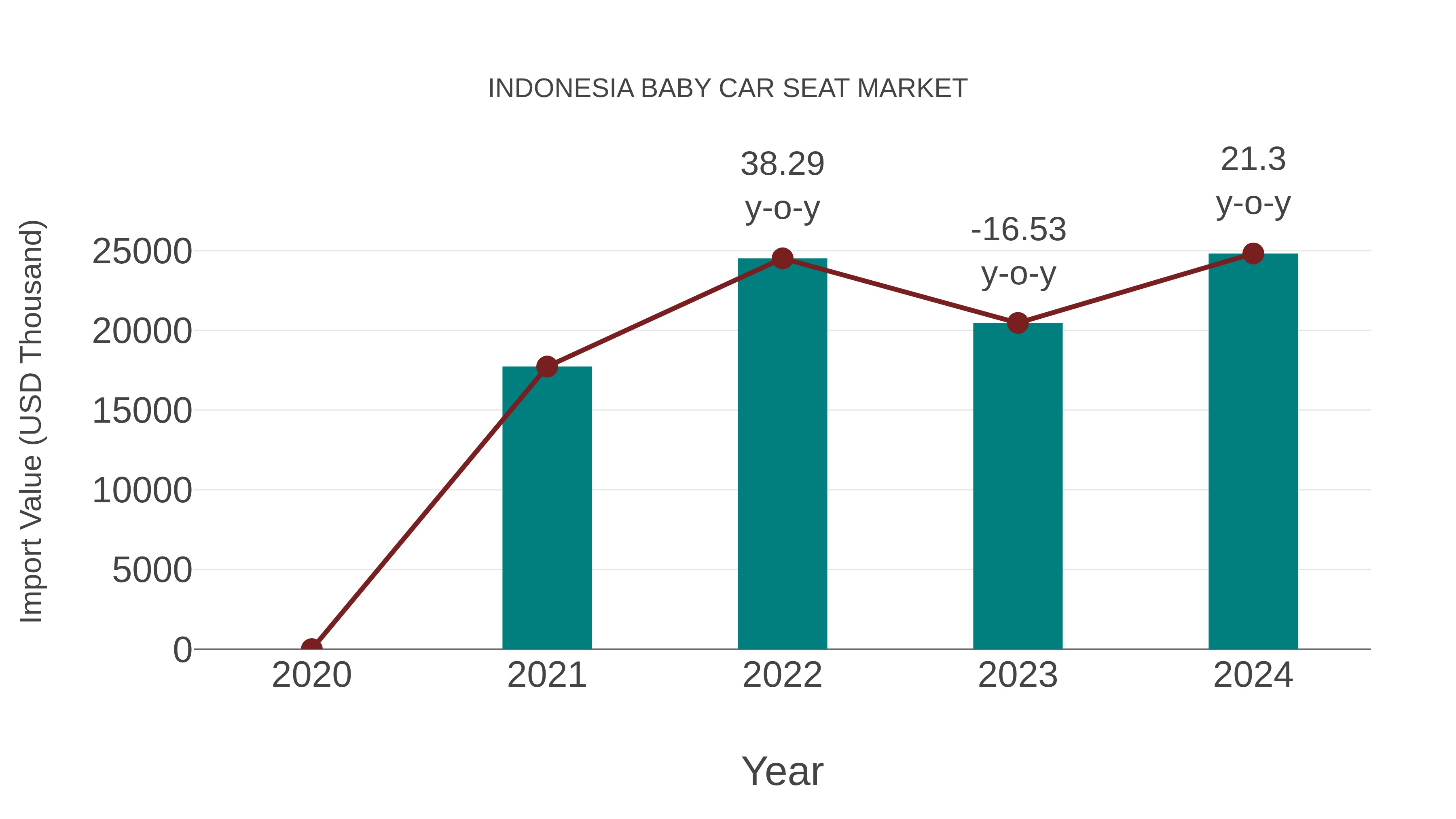
Indonesia Baby Car Seat Market Growth Rate
According to 6Wresearch internal database and industry insights, the Indonesia Baby Car Seat Market is projected to grow at a compound annual growth rate (CAGR) of 7.2% during the forecast period 2026–2032.
Topics Covered in the Indonesia Baby Car Seat Market Report
The Indonesia Baby Car Seat Market report thoroughly covers the market by seat type and distribution channel. It provides an unbiased and detailed analysis of ongoing market trends, opportunities, challenges, and market drivers, helping stakeholders align their strategies with current and future market dynamics.
Indonesia Baby Car Seat Market Highlights
| Report Name | Indonesia Baby Car Seat Market |
| Forecast period | 2026–2032 |
| CAGR | 7.2% |
| Growing Sector | Online Retail Channel |
Indonesia Baby Car Seat Market Synopsis
Indonesia Baby Car Seat Market is anticipated to experience robust growth owing to increasing concerns about child safety in vehicles, rising disposable incomes, and widespread awareness campaigns on child injury prevention. As more families adopt car travel as a primary mode of transportation, the demand for baby car seats has surged. Parents are becoming more conscious of the importance of certified safety products, particularly those that meet international safety standards. The convenience of online shopping and the expansion of modern retail formats have made baby car seats more accessible.
Evaluation of Growth Drivers in the Indonesia Baby Car Seat Market
Below mentioned are some prominent drivers and their influence on the Indonesia Baby Car Seat Market dynamics:
| Drivers | Primary Segment Affected | Why It Matters |
| Rising Child Safety Awareness | All Seat Types | Increased parental focus on safety leads to higher adoption of certified baby car seats. |
| Increasing Vehicle Ownership | Infant, Convertibles | The demand for travel safety accessories for children proliferates as more families are now owning cars. |
| Expansion of Online Retail | Online | Baby car seats are becoming simpler for research and buying through E-commerce channels. |
| Higher Disposable Income | All Seat Types | Families with growing buying power are more likely to allocate funds in high-level safety products. |
Indonesia Baby Car Seat Market is projected to grow at a CAGR of 7.2% from 2026 to 2032. Market growth is supported by rising awareness about child safety in vehicles, increasing car ownership among families, and the convenience provided by online distribution channels. Education campaigns in modern retail formats are predicted encourage development. The government's regulations encouraging child safety and the growing number of families wanting for long-distance travel are predicted to proliferate the need for baby car seats.
Evaluation of Restraints in the Indonesia Baby Car Seat Market
Below mentioned are some major restraints and their influence on the Indonesia Baby Car Seat Market dynamics:
| Restraints | Primary Segment Affected | What This Means |
| Price Sensitivity | All Seat Types | Premium car seats may be unaffordable for price sensitive households. |
| Limited Awareness in Rural Areas | Specialty Stores, Hypermarkets | Lack of knowledge around certified safety standards can slow adoption. |
| Competition from Unbranded Products | Aftermarket Channels | Consumers may get deterred from purchasing quality seats owing to non-certified products. |
| Complex Installation Concerns | Convertible, Booster | Some parents are discouraged by installation difficulty and safety uncertainties. |
Indonesia Baby Car Seat Market Challenges
Indonesia Baby Car Seat Industry go through numerous challenges. It consist of cost sensitivity, lack of awareness in rural and lower income segments, and competition from inexpensive, non-certified alternatives. Many consumers in emerging regions may not fully understand the importance of certified safety features, which can restrict market penetration. Perceptions about installation complexity and price can discourage purchases, especially when informal travel conditions do not support the utilization of secure seating products for children.
Indonesia Baby Car Seat Market Trends
Several notable trends are shaping the Indonesia Baby Car Seat Market dynamics:
- Growing E-commerce Adoption for Baby Products: Parents highly depend on online platforms to research and buy baby car seats, proliferated by product reviews, easy comparison, and doorstep delivery.
- Preference for Multi-functional Seat Types: Owing to longer usability of convertible seats, they are getting famous and highly recognised amongst individuals.
- Rise in Premium Safety Certifications: Seats with international safety certifications, signalling quality and reliability are highly chosen by consumers.
- Urban Parents Leading Demand: Owing to better enforcement of safety norms and greater knowledge, urban centres show rising deployment of baby car seats.
Investment Opportunities in the Indonesia Baby Car Seat Market
Some notable investment opportunities in the Indonesia Baby Car Seat Market are:
- Product Innovation for Comfort and Safety: Development of advanced ergonomic, lightweight, and impact-resistant materials can attract premium buyers.
- Expansion of Retail Channels: The visibility of the product can rise owing to fund allocation in growing presence in specialty baby stores and online marketplaces.
- Education and Awareness Initiatives: Funding safety awareness campaigns and partnerships with healthcare providers can create trust and adoption.
Leading Players in the Indonesia Baby Car Seat Market
The Indonesia Baby Car Seat Market is largely composed of small-to-medium-sized enterprises (SMEs) and independent distributors rather than large, centralized corporations, with key production and distribution hubs in major cities like Jakarta and Surabaya. The industry is highly competitive, with brands focusing on providing safe, reliable, and affordable options for parents. Below you can find some global brands operating in the Baby Car Seat Market:
- Graco
- Chicco
- Britax
- Maxi-Cosi
- Joie
Government Regulations Introduced in the Indonesia Baby Car Seat Market
According to Indonesian government data, regulations that focus on the significance of child restraint systems in vehicles have been executed and they consist of safety regulations and road safety campaigns. Consumer behaviour and rise in Indonesia Baby Car Seat Market Growth are accelerated by policies supporting the usage of certified safety products, merged with public education on child travel safety. Augmentation in the deployment of quality baby car seats owing to continuous efforts to harmonize national safety standards with international benchmarks.
Future Insights of the Indonesia Baby Car Seat Market
The Indonesia Baby Car Seat Market is predicted to continue expanding. As knowledge about child travel safety rises and urban families highly deploy certified safety products, the market growth will increase. Market demand Rise in vehicle ownership, digital retailing, and targeted safety campaigns. Product innovations focused on comfort, convenience, and advanced safety features are predicted to make new growth avenues for market players. Government incentives and regulations encouraging child car seat usage are predicted to play a major role in further proliferating market deployment and supporting safe travel practices across the country.
Market Segmentation Analysis
The report offers a comprehensive study of the following market segments and their leading categories:
By Seat Type – Convertibles to Dominate the Market
According to Lakshita, Senior Research Analyst, 6Wresearch, Convertible seats are expected to lead the Indonesia Baby Car Seat Market Share owing to their versatility, ability to grow with the child, and perceived value for money. These seats bridge the gap between infant carriers and booster seats, attracting to cost-conscious parents who want a longer-lasting solution.
By Distribution Channel – Online to Dominate the Market
Online distribution channels are anticipated to lead the market as e-commerce platforms highly become the favored choice for busy parents seeking convenience, wider product selection, and easy delivery options.
Key attractiveness of the Report
- 10 Years Market Numbers.
- Historical Data Starting from 2022 to 2025.
- Base Year: 2025.
- Forecast Data until 2032.
- Key Performance Indicators Impacting the Market.
- Major Upcoming Developments and Projects.
Key Highlights of the Report:
- Indonesia Baby Car Seat Market Outlook
- Market Size of Indonesia Baby Car Seat Market, 2025
- Forecast of Indonesia Baby Car Seat Market, 2032
- Historical Data and Forecast of Indonesia Baby Car Seat Revenues & Volume for the Period 2022-2032F
- Indonesia Baby Car Seat Market Trend Evolution
- Indonesia Baby Car Seat Market Drivers and Challenges
- Indonesia Baby Car Seat Price Trends
- Indonesia Baby Car Seat Porter's Five Forces
- Indonesia Baby Car Seat Industry Life Cycle
- Historical Data and Forecast of Indonesia Baby Car Seat Market Revenues & Volume By Seat Type for the Period 2022-2032F
- Historical Data and Forecast of Indonesia Baby Car Seat Market Revenues & Volume By Infant for the Period 2022-2032F
- Historical Data and Forecast of Indonesia Baby Car Seat Market Revenues & Volume By Convertibles for the Period 2022-2032F
- Historical Data and Forecast of Indonesia Baby Car Seat Market Revenues & Volume By Booster for the Period 2022-2032F
- Historical Data and Forecast of Indonesia Baby Car Seat Market Revenues & Volume By Combination for the Period 2022-2032F
- Historical Data and Forecast of Indonesia Baby Car Seat Market Revenues & Volume By Distribution Channel for the Period 2022-2032F
- Historical Data and Forecast of Indonesia Baby Car Seat Market Revenues & Volume By Hypermarkets/Supermarkets for the Period 2022-2032F
- Historical Data and Forecast of Indonesia Baby Car Seat Market Revenues & Volume By Specialty Stores for the Period 2022-2032F
- Historical Data and Forecast of Indonesia Baby Car Seat Market Revenues & Volume By Online for the Period 2022-2032F
- Indonesia Baby Car Seat Import Export Trade Statistics
- Market Opportunity Assessment By Seat Type
- Market Opportunity Assessment By Distribution Channel
- Indonesia Baby Car Seat Top Companies Market Share
- Indonesia Baby Car Seat Competitive Benchmarking By Technical and Operational Parameters
- Indonesia Baby Car Seat Company Profiles
- Indonesia Baby Car Seat Key Strategic Recommendations
Market Covered
The market report has been segmented and sub segmented into the following categories:
By Seat Type:
- Infant
- Convertibles
- Booster
- Combination
By Distribution Channel:
- Hypermarkets/Supermarkets
- Specialty Stores
- Online
Indonesia Baby Car Seat Market (2026-2032): FAQs
The Indonesia Baby Car Seat Market is expected to grow at a compound annual growth rate of 7.2% from 2026 to 2032.
Market growth is accelerated by growing knowledge about child safety and increasing vehicle ownership.
The primary challenges in the Indonesia Baby Car Seat Market include the relatively high cost of certified baby car seats, which may deter price-sensitive consumers.
Major investment opportunities in the Indonesia Baby Car Seat Market consist of expanding digital retail platforms.
6Wresearch actively monitors the Indonesia Baby Car Seat Market and publishes its comprehensive annual report, highlighting emerging trends, growth drivers, revenue analysis, and forecast outlook. Our insights help businesses to make data-backed strategic decisions with ongoing market dynamics. Our analysts track relevent industries related to the Indonesia Baby Car Seat Market, allowing our clients with actionable intelligence and reliable forecasts tailored to emerging regional needs.
Yes, we provide customisation as per your requirements. To learn more, feel free to contact us on sales@6wresearch.com
|
1 Executive Summary |
|
2 Introduction |
|
2.1 Key Highlights of the Report |
|
2.2 Report Description |
|
2.3 Market Scope & Segmentation |
|
2.4 Research Methodology |
|
2.5 Assumptions |
|
3 Indonesia Baby Car Seat Market Overview |
|
3.1 Indonesia Country Macro Economic Indicators |
|
3.2 Indonesia Baby Car Seat Market Revenues & Volume, 2022 & 2032F |
|
3.3 Indonesia Baby Car Seat Market - Industry Life Cycle |
|
3.4 Indonesia Baby Car Seat Market - Porter's Five Forces |
|
3.5 Indonesia Baby Car Seat Market Revenues & Volume Share, By Seat Type, 2022 & 2032F |
|
3.6 Indonesia Baby Car Seat Market Revenues & Volume Share, By Distribution Channel, 2022 & 2032F |
|
4 Indonesia Baby Car Seat Market Dynamics |
|
4.1 Impact Analysis |
|
4.2 Market Drivers |
|
4.2.1 Increasing awareness about child safety and the importance of using baby car seats |
|
4.2.2 Growth in disposable income leading to higher spending on child safety products |
|
4.2.3 Stringent government regulations mandating the use of baby car seats in vehicles |
|
4.3 Market Restraints |
|
4.3.1 High cost associated with quality baby car seats may deter price-sensitive consumers |
|
4.3.2 Limited availability and accessibility of baby car seats in certain regions of Indonesia |
|
4.3.3 Cultural factors and beliefs that may not prioritize the use of baby car seats |
|
5 Indonesia Baby Car Seat Market Trends |
|
6 Indonesia Baby Car Seat Market, By Types |
|
6.1 Indonesia Baby Car Seat Market, By Seat Type |
|
6.1.1 Overview and Analysis |
|
6.1.2 Indonesia Baby Car Seat Market Revenues & Volume, By Seat Type, 2022-2032F |
|
6.1.3 Indonesia Baby Car Seat Market Revenues & Volume, By Infant, 2022-2032F |
|
6.1.4 Indonesia Baby Car Seat Market Revenues & Volume, By Convertibles, 2022-2032F |
|
6.1.5 Indonesia Baby Car Seat Market Revenues & Volume, By Booster, 2022-2032F |
|
6.1.6 Indonesia Baby Car Seat Market Revenues & Volume, By Combination, 2022-2032F |
|
6.2 Indonesia Baby Car Seat Market, By Distribution Channel |
|
6.2.1 Overview and Analysis |
|
6.2.2 Indonesia Baby Car Seat Market Revenues & Volume, By Hypermarkets/Supermarkets, 2022-2032F |
|
6.2.3 Indonesia Baby Car Seat Market Revenues & Volume, By Specialty Stores, 2022-2032F |
|
6.2.4 Indonesia Baby Car Seat Market Revenues & Volume, By Online, 2022-2032F |
|
7 Indonesia Baby Car Seat Market Import-Export Trade Statistics |
|
7.1 Indonesia Baby Car Seat Market Export to Major Countries |
|
7.2 Indonesia Baby Car Seat Market Imports from Major Countries |
|
8 Indonesia Baby Car Seat Market Key Performance Indicators |
|
8.1 Number of road accidents involving children in vehicles |
|
8.2 Percentage of parents using baby car seats in urban areas |
|
8.3 Number of retailers stocking a variety of baby car seat brands |
|
8.4 Average time spent by parents researching about baby car seats |
|
8.5 Number of online searches for baby car seat safety tips and recommendations |
|
9 Indonesia Baby Car Seat Market - Opportunity Assessment |
|
9.1 Indonesia Baby Car Seat Market Opportunity Assessment, By Seat Type, 2022 & 2032F |
|
9.2 Indonesia Baby Car Seat Market Opportunity Assessment, By Distribution Channel, 2022 & 2032F |
|
10 Indonesia Baby Car Seat Market - Competitive Landscape |
|
10.1 Indonesia Baby Car Seat Market Revenue Share, By Companies, 2025 |
|
10.2 Indonesia Baby Car Seat Market Competitive Benchmarking, By Operating and Technical Parameters |
|
11 Company Profiles |
|
12 Recommendations |
|
13 Disclaimer |
Global Go To Market Strategy - 2030
Export potential enables firms to identify high-growth global markets with greater confidence by combining advanced trade intelligence with a structured quantitative methodology. The framework analyzes emerging demand trends and country-level import patterns while integrating macroeconomic and trade datasets such as GDP and population forecasts, bilateral import–export flows, tariff structures, elasticity differentials between developed and developing economies, geographic distance, and import demand projections. Using weighted trade values from 2020–2024 as the base period to project country-to-country export potential for 2030, these inputs are operationalized through calculated drivers such as gravity model parameters, tariff impact factors, and projected GDP per-capita growth. Through an analysis of hidden potentials, demand hotspots, and market conditions that are most favorable to success, this method enables firms to focus on target countries, maximize returns, and global expansion with data, backed by accuracy.
By factoring in the projected importer demand gap that is currently unmet and could be potential opportunity, it identifies the potential for the Exporter (Country) among 190 countries, against the general trade analysis, which identifies the biggest importer or exporter.
To discover high-growth global markets and optimize your business strategy:
Click Here
Pricing
- Single User License$ 1,995
- Department License$ 2,400
- Site License$ 3,120
- Global License$ 3,795

Leadership Perspectives from Industry Events
Search
Thought Leadership and Analyst Meet





Our Clients








6WResearch In News
- India Export Attractiveness Tracker 2026
- India Air Conditioner Market Set for Strong Rebound in 2026 After Weather-Led Correction and GST-Driven Recovery: 6Wresearch
- ADAS in India: How Automatic Emergency Braking, Blind Spot Detection & Driver Monitoring are Transforming Road Safety
- Doha a strategic location for EV manufacturing hub: IPA Qatar
- Demand for luxury TVs surging in the GCC, says Samsung
- Empowering Growth: The Thriving Journey of Bangladesh’s Cable Industry
Latest Reports
- Nicaragua RPG Gaming Market (2026-2032)
- New Zealand RPG Gaming Market (2026-2032)
- Netherlands RPG Gaming Market (2026-2032)
- Nauru RPG Gaming Market (2026-2032)
- Namibia RPG Gaming Market (2026-2032)
- Mozambique RPG Gaming Market (2026-2032)
- Montenegro RPG Gaming Market (2026-2032)
- Mongolia RPG Gaming Market (2026-2032)
- Monaco RPG Gaming Market (2026-2032)
- Micronesia RPG Gaming Market (2026-2032)
Industry Events and Analyst Meet

EV India Expo 2026

HIMTEX 2026

India Refining Summit 2026

India EV Show 2026

EV tech India Expo 2026
Whitepaper
- Middle East & Africa Commercial Security Market Click here to view more.
- Middle East & Africa Fire Safety Systems & Equipment Market Click here to view more.
- GCC Drone Market Click here to view more.
- Middle East Lighting Fixture Market Click here to view more.
- GCC Physical & Perimeter Security Market Click here to view more.


