Indonesia Facade Market: Import Trend Analysis
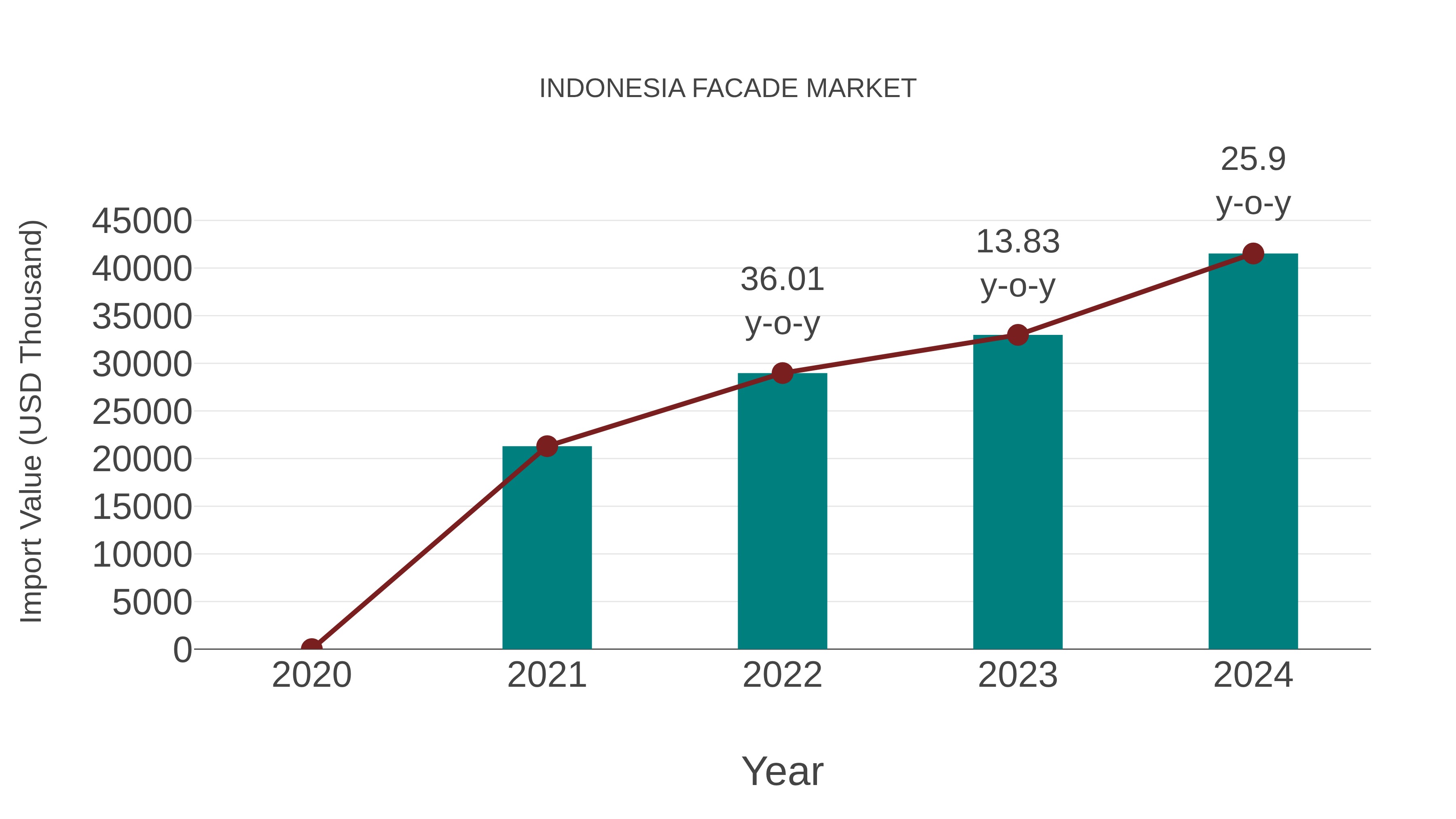
In the Indonesia facade market, the import trend showed significant growth from 2023 to 2024, with a growth rate of 25.9%. The compound annual growth rate (CAGR) for imports from 2020 to 2024 stood at 24.92%. This robust import momentum can be attributed to the increasing demand for high-quality facade materials and components, indicating a positive market stability and demand shift towards premium imports during the period analyzed.
Indonesia Facade Market Synopsis
The facade market in Indonesia is expected to experience considerable revenue expansion at a CAGR 9.1% during the estimated years owing escalating investments made by government authorities for infrastructural upgradations taking place throughout nation?s tier I cities like Jakarta or Surabaya combined with private real estate projects set up by independent entities across the country leading towards higher implementation rates amongst contractors engaged within sectoral space. Furthermore, increasing preference being given towards metal fa?ades due their superior durability characteristics providing resistance against extreme weather conditions along with low maintenance costs when compared other more traditional mediums such cement or wood panels will highly contribute toward overall industry size over forthcoming timeframe.
Drivers of the Market
The Indonesia Facade market is experiencing robust growth, driven by a combination of factors that are reshaping the construction and architectural landscape. The increasing demand for energy-efficient buildings and the implementation of sustainable design principles have elevated the significance of facades in modern construction. Facades play a pivotal role in regulating temperature, enhancing natural lighting, and improving overall building efficiency. As urbanization continues and more commercial and residential structures are developed, the demand for innovative and visually appealing facades is on the rise. Architects and developers are focusing on creating iconic structures that stand out in the skyline while adhering to energy efficiency standards. The integration of smart technologies into building facades is also gaining traction, further augmenting the market`s growth. The convergence of design aesthetics, technological advancements, and sustainability imperatives is driving the rapid expansion of the facade market in Indonesia.
Challenges of the Market
The Indonesia Facade market grapples with design and regulatory challenges. Developing facades that meet both aesthetic preferences and functional requirements can be intricate, demanding collaboration between architects, engineers, and manufacturers. Regulatory compliance, especially in the context of green building standards and safety codes, adds complexity to facade design and implementation. As the market evolves, maintaining a balance between artistic innovation and regulatory adherence is a continuous challenge.
COVID-19 Impact on the Market
The COVID-19 pandemic has significantly influenced the Indonesia Facade market, introducing both challenges and opportunities. As construction projects were temporarily halted due to lockdowns and restrictions, the facade market experienced delays and disruptions. Supply chain interruptions and labor shortages further hampered progress. However, the pandemic also highlighted the importance of well-designed and functional facades, as buildings were reconsidered to accommodate better ventilation systems and touchless entry points to reduce virus transmission risks. The emphasis on health and safety aspects reshaped facade design priorities.
Key Players in the Market
PT Muliakeramik Indahraya Tbk, PT Dyandra Media International Tbk, and PT Aica Indria are some major players operating in the market.
Key Highlights of the Report:
- Indonesia Facade Market Outlook
- Market Size of Indonesia Facade Market, 2025
- Forecast of Indonesia Facade Market, 2032
- Historical Data and Forecast of Indonesia Facade Revenues & Volume for the Period 2022-2032F
- Indonesia Facade Market Trend Evolution
- Indonesia Facade Market Drivers and Challenges
- Indonesia Facade Price Trends
- Indonesia Facade Porter's Five Forces
- Indonesia Facade Industry Life Cycle
- Historical Data and Forecast of Indonesia Facade Market Revenues & Volume By Product for the Period 2022-2032F
- Historical Data and Forecast of Indonesia Facade Market Revenues & Volume By Ventilated Facades for the Period 2022-2032F
- Historical Data and Forecast of Indonesia Facade Market Revenues & Volume By Non-ventilated Facades for the Period 2022-2032F
- Historical Data and Forecast of Indonesia Facade Market Revenues & Volume By Others for the Period 2022-2032F
- Historical Data and Forecast of Indonesia Facade Market Revenues & Volume By End-use for the Period 2022-2032F
- Historical Data and Forecast of Indonesia Facade Market Revenues & Volume By Commercial for the Period 2022-2032F
- Historical Data and Forecast of Indonesia Facade Market Revenues & Volume By Residential for the Period 2022-2032F
- Historical Data and Forecast of Indonesia Facade Market Revenues & Volume By Industrial for the Period 2022-2032F
- Indonesia Facade Import Export Trade Statistics
- Market Opportunity Assessment By Product
- Market Opportunity Assessment By End-use
- Indonesia Facade Top Companies Market Share
- Indonesia Facade Competitive Benchmarking By Technical and Operational Parameters
- Indonesia Facade Company Profiles
- Indonesia Facade Key Strategic Recommendations






































