Indonesia Plastic Bottles Market Size, Share & Growth Rate
The Indonesia Plastic Bottles Market was estimated at USD 407 Million in 2025 and is projected to reach USD 539 Million by 2032, growing at a CAGR of 4.1% from 2026 to 2032. This growth trajectory is primarily fueled by the increasing preference of food & beverage companies to transition from traditional glass packaging to lighter, more versatile plastic bottles. Additionally, the rising consumer demand for convenient, single-use packaging is expanding the markets reach across various demographics, which is further amplified by a heightened focus on sustainability initiatives.
Indonesia Plastic Bottles Market Year-wise Growth Rate and Key Drivers
This graph highlights how the Indonesia Plastic Bottles Market has steadily grown over the years, supported by major growth factors.
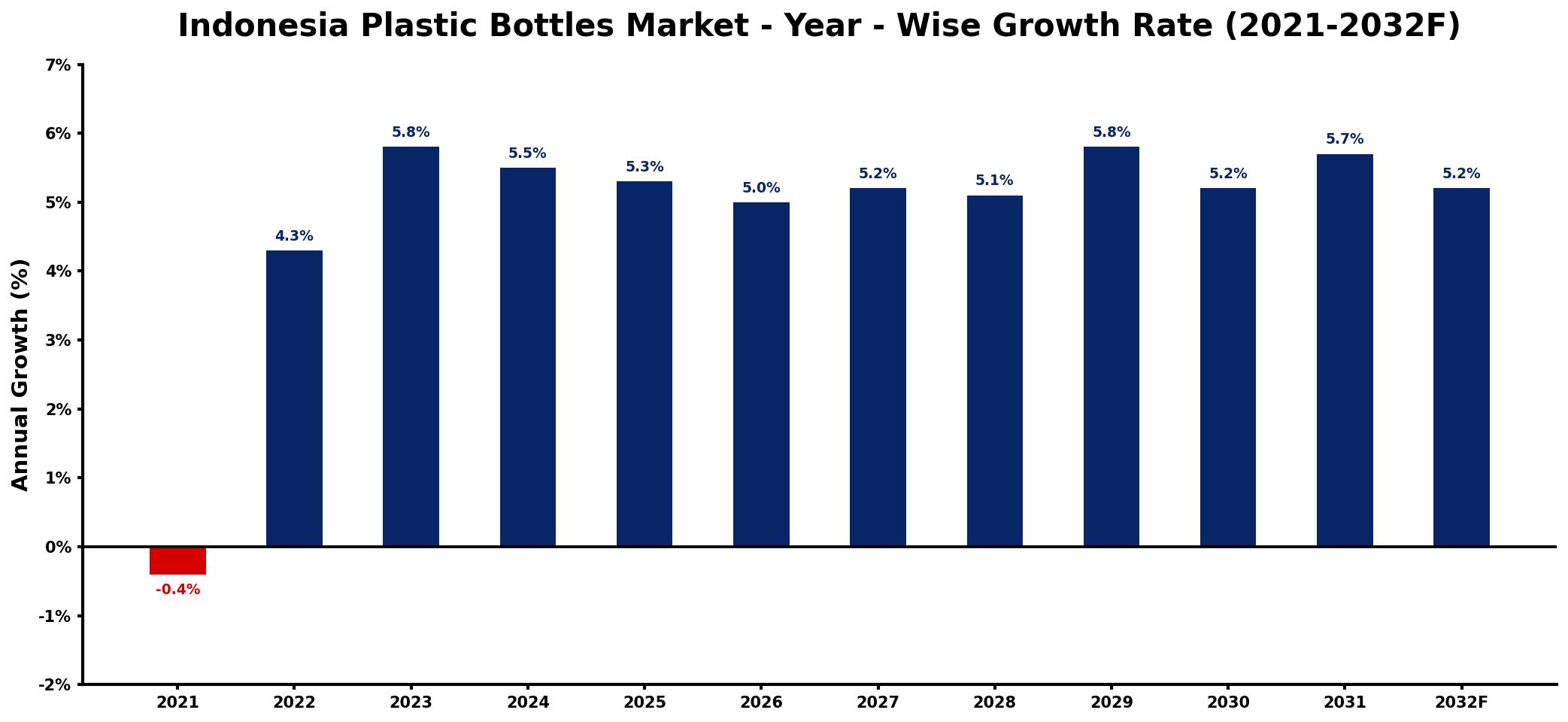
The table below presents the year‑wise growth rates along with the key drivers influencing the market
| Year | Growth Rate | Major Drivers |
| 2021 | -0.4% | decreased consumer purchasing power |
| 2022 | 4.3% | rising demand for sustainable packaging |
| 2023 | 5.8% | expanding beverage industry growth |
| 2024 | 5.5% | increased investment in recycling |
| 2025 | 5.3% | growing health and wellness trends |
| 2026 | 5.0% | advancements in manufacturing technology |
| 2027 | 5.2% | emerging e-commerce distribution channels |
| 2028 | 5.1% | increased urbanization and lifestyle changes |
| 2029 | 5.8% | higher export opportunities in Asia |
| 2030 | 5.2% | growing awareness of environmental issues |
| 2031 | 5.7% | rising procurement volume requirements |
| 2032 | 5.2% | expansion of retail market presence |
Note: Market size estimations and growth projections presented in this report are based on 6Wresearch's proprietary forecasting methodology, utilizing the latest available industry data, government publications, and primary research inputs.
Indonesia Plastic Bottles Market Synopsis
Recent developments in the Indonesia plastic bottles market indicate a robust shift towards greater adoption, driven by consumer preferences for convenience and value. As companies pivot to meet this demand, the outlook for growth remains strong amidst an evolving landscape of sustainable practices and responsible production.
Looking forward, the market is expected to experience a burgeoning expansion as new technologies emerge and governmental policies increasingly emphasize eco-friendly alternatives. While potential challenges surrounding plastic waste persist, ongoing innovations promise to reshape the future of packaging in Indonesia.
Indonesia Plastic Bottles Market Key Takeaways
- The market is shifting from glass to plastic bottles, driven by convenience and cost-effectiveness.
- Consumer demand for single-use packaging solutions is bolstering growth across various sectors.
- Sustainability initiatives and recycling efforts are shaping the future of the industry.
- The personal care and beverage sectors remain the largest consumers of plastic bottles.
- Government policies and public spending aimed at sustainability will significantly impact market dynamics.
Evaluation of Restraints in Indonesia Plastic Bottles Market
Despite favorable market conditions, significant restraints exist that could hinder growth in the Indonesia plastic bottles market. The escalating public concern surrounding environmental impacts, particularly regarding plastic waste, presents a formidable challenge. Consumers and regulatory bodies are increasingly advocating for more sustainable practices, necessitating that companies invest in innovative solutions such as biodegradable alternatives and robust recycling programs. The pressure to adapt to these changes could strain existing operational frameworks while also impacting profitability.
Indonesia Plastic Bottles Market Trends
A prominent trend shaping the Indonesia plastic bottles market is the growing emphasis on environmentally friendly packaging solutions. Manufacturers are increasingly investing in technologies that facilitate recycling and the development of biodegradable materials. Furthermore, the e-commerce boom is driving demand for lightweight and durable packaging that offers convenience to online shoppers. Additionally, a rise in health-conscious consumer behavior is influencing the types of beverages and personal care products packaged in plastic, creating niche markets for specialty items.
Indonesia Plastic Bottles Market Opportunities
Significant growth opportunities are on the horizon for the Indonesia plastic bottles market, particularly in sectors that prioritize sustainability. Businesses that pivot towards circular economy practices by incorporating recycled materials or offering refillable options stand to gain a competitive edge. Moreover, tapping into emerging consumer demographics that favor health-conscious products opens doors for innovative packaging solutions tailored to those needs. Collaborations between industry players and government entities to promote sustainable practices can also catalyze growth.
Government Initiatives in the Indonesia Plastic Bottles Market
The Indonesian government is actively promoting sustainability in the plastic bottles market through various initiatives aimed at reducing plastic waste. This includes public awareness campaigns encouraging responsible plastic use and disposal, as well as investment in recycling infrastructure. Additionally, the government has been fostering partnerships with businesses to explore and implement eco-friendly packaging solutions, reflecting a commitment to addressing environmental challenges while supporting economic growth in the sector.
Future Insights of the Indonesia Plastic Bottles Market
From 2026 to 2032, the Indonesia plastic bottles market is poised for a transformative journey driven by both consumer and regulatory shifts. As sustainability takes center stage, industry players will need to evolve their practices to align with changing societal expectations. This evolution will likely be characterized by increased collaboration between businesses and government bodies, fostering innovation in sustainable packaging solutions and improving recycling rates. The confluence of these factors is expected to not only bolster market growth but also enhance the overall perception of plastic packaging within Indonesian society.
Indonesia Plastic Bottles Market Latest Developments (2025 - 2026)
Recent months have seen a surge in initiatives aimed at reducing plastic waste in Indonesia, with industry stakeholders advocating for increased recycling and the use of biodegradable materials. Innovations in production processes are also underway, as companies look to enhance the efficiency and sustainability of plastic bottle manufacturing. As public sentiment continues to shift towards environmental responsibility, the industry is adapting by exploring alternative packaging solutions that align with consumer expectations.
Indonesia Plastic Bottles Market - Key Attractiveness of the Report
- 10 Years of Market Numbers
- Historical Data Starting from 2022 to 2025
- Base Year: 2025
- Forecast Data until 2032
- Key Performance Indicators Impacting the Market
- Major Upcoming Developments and Projects
Key Highlights of the Report:
- Indonesia Plastic Bottles Market Outlook
- Market Size of Indonesia Plastic Bottles Market, 2025
- Forecast of Indonesia Plastic Bottles Market, 2032
- Historical Data and Forecast of Indonesia Plastic Bottles Revenues & Volume for the Period 2022-2032F
- Indonesia Plastic Bottles Market Trend Evolution
- Indonesia Plastic Bottles Market Drivers and Challenges
- Indonesia Plastic Bottles Price Trends
- Indonesia Plastic Bottles Porter's Five Forces
- Indonesia Plastic Bottles Industry Life Cycle
- Historical Data and Forecast of Indonesia Plastic Bottles Market Revenues & Volume By Raw Material Type for the Period 2022-2032F
- Historical Data and Forecast of Indonesia Plastic Bottles Market Revenues & Volume By Polyethylene Terephthalate (PET) for the Period 2022-2032F
- Historical Data and Forecast of Indonesia Plastic Bottles Market Revenues & Volume By Poly Propylene (PP) for the Period 2022-2032F
- Historical Data and Forecast of Indonesia Plastic Bottles Market Revenues & Volume By Low-density Polyethylene (LDPE) for the Period 2022-2032F
- Historical Data and Forecast of Indonesia Plastic Bottles Market Revenues & Volume By High-density Polyethylene (HDPE) for the Period 2022-2032F
- Historical Data and Forecast of Indonesia Plastic Bottles Market Revenues & Volume By Other Raw Materials for the Period 2022-2032F
- Historical Data and Forecast of Indonesia Plastic Bottles Market Revenues & Volume By End-user for the Period 2022-2032F
- Historical Data and Forecast of Indonesia Plastic Bottles Market Revenues & Volume By Beverage for the Period 2022-2032F
- Historical Data and Forecast of Indonesia Plastic Bottles Market Revenues & Volume By Food for the Period 2022-2032F
- Historical Data and Forecast of Indonesia Plastic Bottles Market Revenues & Volume By Cosmetics for the Period 2022-2032F
- Historical Data and Forecast of Indonesia Plastic Bottles Market Revenues & Volume By Pharmaceutical for the Period 2022-2032F
- Historical Data and Forecast of Indonesia Plastic Bottles Market Revenues & Volume By Household Care for the Period 2022-2032F
- Historical Data and Forecast of Indonesia Plastic Bottles Market Revenues & Volume By Other for the Period 2022-2032F
- Indonesia Plastic Bottles Import Export Trade Statistics
- Market Opportunity Assessment By Raw Material Type
- Market Opportunity Assessment By End-user
- Indonesia Plastic Bottles Top Companies Market Share
- Indonesia Plastic Bottles Competitive Benchmarking By Technical and Operational Parameters
- Indonesia Plastic Bottles Company Profiles
- Indonesia Plastic Bottles Key Strategic Recommendations






































