Indonesia Washable Markers Market: Import Trend Analysis
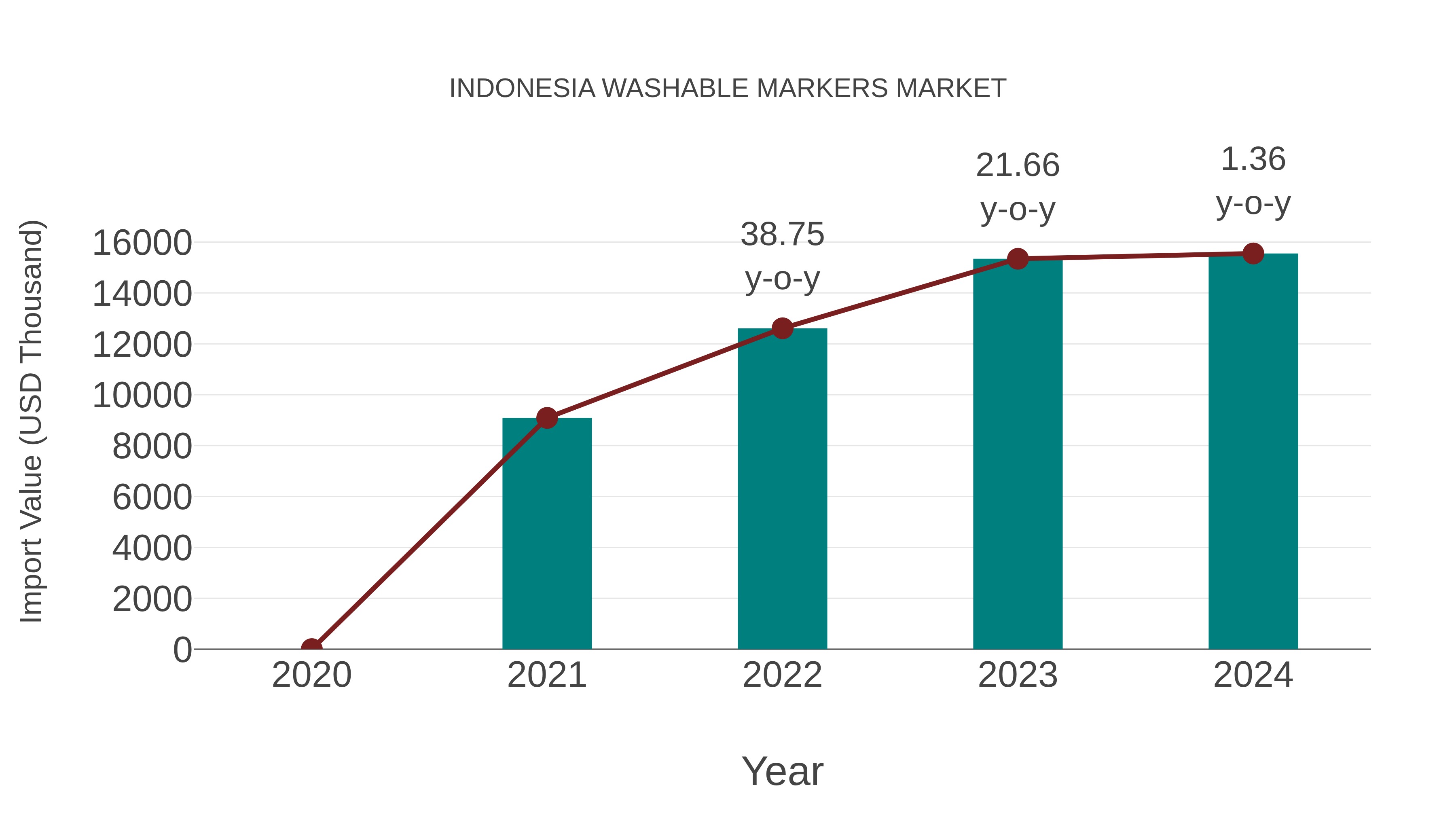
Indonesia`s import trend for washable markers showed a growth rate of 1.36% from 2023 to 2024, with a compound annual growth rate (CAGR) of 19.6% from 2020 to 2024. This increase can be attributed to a sustained demand shift towards eco-friendly and non-toxic stationery products in the market.
Indonesia Washable Markers Market Synopsis
The washable markers market in Indonesia is forecasted to grow from USD 6 million in 2025 and reach USD 8 million by 2025, registering a CAGR of 5.1% during the period. Increasing demand for easy-to-clean writing material due to Covid-19 pandemic along with growing preference for ecofriendly markers are some of the major factors driving this market?s growth over the forecast period. Moreover, presence of many local players offering low priced washable markers helps expand its reach among price conscious consumers which further add up towards its growth prospects over coming years.
Drivers of the Market
The market for washable markers can be driven by the education sector, the growing interest in arts and crafts, and the popularity of creative activities among children and adults alike. Product innovations, such as non-toxic and eco-friendly markers, can also impact market growth.
Challenges of the Market
Washable markers market might need to address concerns about safety, washability, and environmental impact, especially with growing awareness of eco-friendly products.
COVID-19 Impact on the Market
The pandemic may have impacted the education sector and office activities, affecting the demand for washable markers. However, with the resumption of educational and commercial activities, the market is likely to pick up again.
Key Players in the Market
Crayola LLC, Faber-Castell, Newell Brands (Sharpie), BIC Group, Dixon Ticonderoga Company are some major players operating in the market.
Key Highlights of the Report:
- Indonesia Washable Markers Market Outlook
- Market Size of Indonesia Washable Markers Market, 2025
- Forecast of Indonesia Washable Markers Market, 2032
- Historical Data and Forecast of Indonesia Washable Markers Revenues & Volume for the Period 2022-2032F
- Indonesia Washable Markers Market Trend Evolution
- Indonesia Washable Markers Market Drivers and Challenges
- Indonesia Washable Markers Price Trends
- Indonesia Washable Markers Porter's Five Forces
- Indonesia Washable Markers Industry Life Cycle
- Historical Data and Forecast of Indonesia Washable Markers Market Revenues & Volume By Washability for the Period 2022-2032F
- Historical Data and Forecast of Indonesia Washable Markers Market Revenues & Volume By Basic- Washable for the Period 2022-2032F
- Historical Data and Forecast of Indonesia Washable Markers Market Revenues & Volume By Super-washable for the Period 2022-2032F
- Historical Data and Forecast of Indonesia Washable Markers Market Revenues & Volume By End User for the Period 2022-2032F
- Historical Data and Forecast of Indonesia Washable Markers Market Revenues & Volume By Children for the Period 2022-2032F
- Historical Data and Forecast of Indonesia Washable Markers Market Revenues & Volume By Professionals for the Period 2022-2032F
- Indonesia Washable Markers Import Export Trade Statistics
- Market Opportunity Assessment By Washability
- Market Opportunity Assessment By End User
- Indonesia Washable Markers Top Companies Market Share
- Indonesia Washable Markers Competitive Benchmarking By Technical and Operational Parameters
- Indonesia Washable Markers Company Profiles
- Indonesia Washable Markers Key Strategic Recommendations






































