Indonesia Wooden Furniture Market: Import Trend Analysis
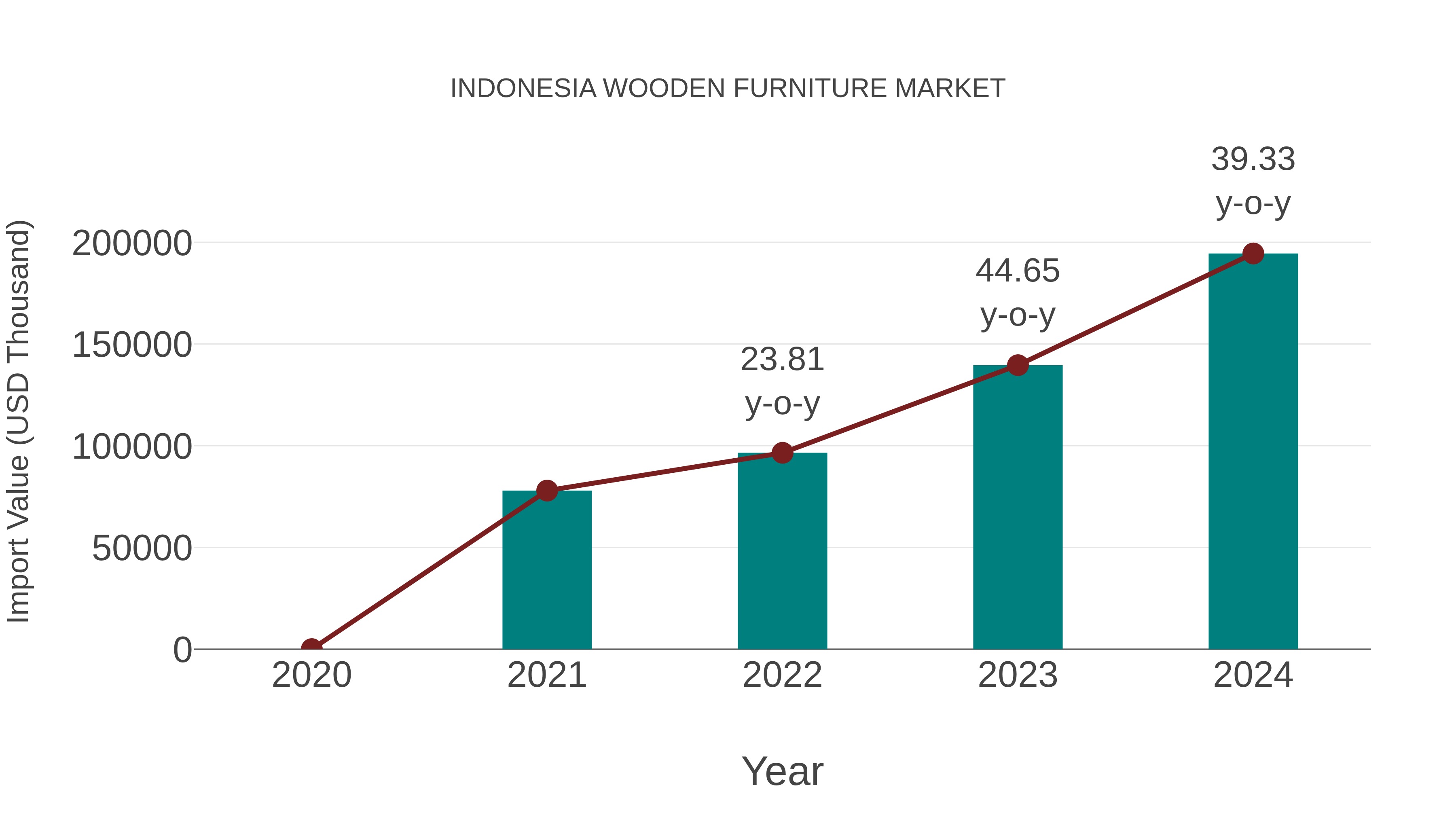
In the Indonesia wooden furniture market, the import trend showed significant growth from 2023 to 2024, increasing by 39.33%. The compound annual growth rate (CAGR) from 2020 to 2024 stood at 35.63%. This import momentum can be attributed to a notable shift in global demand for Indonesian wooden furniture, indicating sustained market stability and strong trade relationships during the period.
Indonesia Wooden Furniture Market Synopsis
The Indonesia Wooden Furniture Market remains a significant player in the country`s furniture industry. The market is characterized by a wide variety of products, from traditional to modern designs, catering to both domestic and international markets. Indonesia`s rich natural resources provide a steady supply of high-quality wood, making it a favorable location for wooden furniture production. The industry faces challenges related to sustainability and environmental concerns, leading to increased adoption of eco-friendly practices. Export opportunities, particularly to Western markets, are a driving force behind innovation and quality improvement.
Drivers of the Market
The Indonesia wooden furniture market is primarily driven by the country`s rich natural resources and a long tradition of woodworking craftsmanship. Additionally, the growing demand for eco-friendly and sustainable furniture choices is boosting the market, as Indonesia manufacturers increasingly emphasize sustainable sourcing and production practices. Export opportunities to international markets, especially Europe and North America, have further propelled the industry`s growth.
Challenges of the Market
The Indonesia wooden furniture market encounters various challenges. One major concern is the sustainability of wood sourcing and the environmental impact of deforestation. The industry must grapple with ensuring a responsible supply chain and addressing concerns over illegal logging and habitat destruction. Additionally, competition from lower-cost alternatives, such as synthetic or plastic furniture, may hinder growth. Economic factors, including fluctuating exchange rates and material costs, can also pose challenges to the industry`s profitability.
COVID-19 Impact on the Market
The wooden furniture market had a turbulent journey during the pandemic. Initially, supply chain disruptions and reduced consumer spending affected the industry. However, the market rebounded as consumers started investing in home improvement and renovation projects. Online sales platforms played a crucial role in sustaining the market.
Key Players in the Market
Indonesia has a thriving wooden furniture industry known for its craftsmanship and high-quality products. Key players in the wooden furniture market include both large-scale manufacturers and smaller, artisanal producers. Well-established companies like PT. Hero Intercontinental and PT. Wisanka Indonesia are prominent players in this sector, catering to both domestic and international markets.
Key Highlights of the Report:
- Indonesia Wooden Furniture Market Outlook
- Market Size of Indonesia Wooden Furniture Market, 2025
- Forecast of Indonesia Wooden Furniture Market, 2032
- Historical Data and Forecast of Indonesia Wooden Furniture Revenues & Volume for the Period 2022-2032F
- Indonesia Wooden Furniture Market Trend Evolution
- Indonesia Wooden Furniture Market Drivers and Challenges
- Indonesia Wooden Furniture Price Trends
- Indonesia Wooden Furniture Porter's Five Forces
- Indonesia Wooden Furniture Industry Life Cycle
- Historical Data and Forecast of Indonesia Wooden Furniture Market Revenues & Volume By Type for the Period 2022-2032F
- Historical Data and Forecast of Indonesia Wooden Furniture Market Revenues & Volume By Hardwood for the Period 2022-2032F
- Historical Data and Forecast of Indonesia Wooden Furniture Market Revenues & Volume By Softwood for the Period 2022-2032F
- Historical Data and Forecast of Indonesia Wooden Furniture Market Revenues & Volume By Material for the Period 2022-2032F
- Historical Data and Forecast of Indonesia Wooden Furniture Market Revenues & Volume By Plywood for the Period 2022-2032F
- Historical Data and Forecast of Indonesia Wooden Furniture Market Revenues & Volume By Laminates for the Period 2022-2032F
- Historical Data and Forecast of Indonesia Wooden Furniture Market Revenues & Volume By MDF for the Period 2022-2032F
- Historical Data and Forecast of Indonesia Wooden Furniture Market Revenues & Volume By Other Materials for the Period 2022-2032F
- Historical Data and Forecast of Indonesia Wooden Furniture Market Revenues & Volume By Product for the Period 2022-2032F
- Historical Data and Forecast of Indonesia Wooden Furniture Market Revenues & Volume By Bedroom for the Period 2022-2032F
- Historical Data and Forecast of Indonesia Wooden Furniture Market Revenues & Volume By Seating for the Period 2022-2032F
- Historical Data and Forecast of Indonesia Wooden Furniture Market Revenues & Volume By Kitchen for the Period 2022-2032F
- Historical Data and Forecast of Indonesia Wooden Furniture Market Revenues & Volume By Other Products for the Period 2022-2032F
- Historical Data and Forecast of Indonesia Wooden Furniture Market Revenues & Volume By Application for the Period 2022-2032F
- Historical Data and Forecast of Indonesia Wooden Furniture Market Revenues & Volume By Residential for the Period 2022-2032F
- Historical Data and Forecast of Indonesia Wooden Furniture Market Revenues & Volume By Commercial for the Period 2022-2032F
- Historical Data and Forecast of Indonesia Wooden Furniture Market Revenues & Volume By Distribution Channel for the Period 2022-2032F
- Historical Data and Forecast of Indonesia Wooden Furniture Market Revenues & Volume By Offline for the Period 2022-2032F
- Historical Data and Forecast of Indonesia Wooden Furniture Market Revenues & Volume By Online for the Period 2022-2032F
- Indonesia Wooden Furniture Import Export Trade Statistics
- Market Opportunity Assessment By Type
- Market Opportunity Assessment By Material
- Market Opportunity Assessment By Product
- Market Opportunity Assessment By Application
- Market Opportunity Assessment By Distribution Channel
- Indonesia Wooden Furniture Top Companies Market Share
- Indonesia Wooden Furniture Competitive Benchmarking By Technical and Operational Parameters
- Indonesia Wooden Furniture Company Profiles
- Indonesia Wooden Furniture Key Strategic Recommendations






































