Iraq Aquarium Fish Market Size, Share & Growth Rate
The Iraq Aquarium Fish Market was estimated at USD 597 Million in 2025 and is projected to reach USD 871 Million by 2032, growing at a CAGR of 5.5% from 2026 to 2032. This growth trajectory is primarily fueled by an increasing interest in ornamental fishkeeping among the populace, particularly in urban centers. As disposable incomes rise and the trend of enhancing living spaces with aquariums gains traction, the demand for both exotic fish and quality aquarium supplies is set to increase significantly.
Iraq Aquarium Fish Market Year-wise Growth Rate and Key Drivers
This graph highlights how the Iraq Aquarium Fish Market has steadily grown over the years, supported by major growth factors.
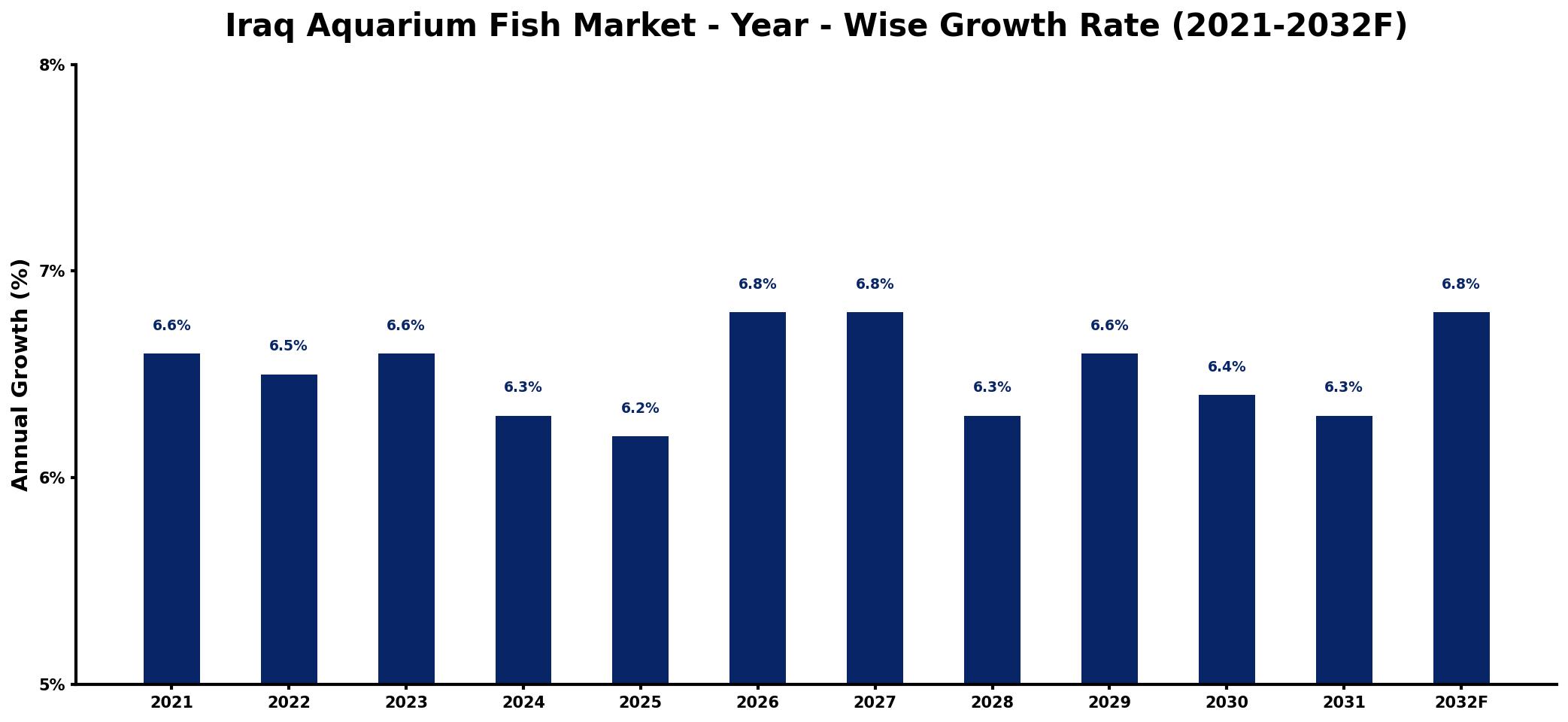
The table below presents the year‑wise growth rates along with the key drivers influencing the market
| Year | Growth Rate | Major Drivers |
| 2021 | 6.6% | increased consumer interest in pets |
| 2022 | 6.5% | enhanced product quality standards |
| 2023 | 6.6% | rising disposable income levels |
| 2024 | 6.3% | expansion of retail distribution channels |
| 2025 | 6.2% | enhanced online shopping experiences |
| 2026 | 6.8% | influx of international suppliers |
| 2027 | 6.8% | development of sustainable practices |
| 2028 | 6.3% | increased focus on aquascaping trends |
| 2029 | 6.6% | growing awareness of aquatic ecosystems |
| 2030 | 6.4% | rising demand for educational resources |
| 2031 | 6.3% | increased investment in leisure activities |
| 2032 | 6.8% | emerging trends in home decor |
Note: Market size estimations and growth projections presented in this report are based on 6Wresearch's proprietary forecasting methodology, utilizing the latest available industry data, government publications, and primary research inputs.
Iraq Aquarium Fish Market Synopsis
The strongest force currently shaping the Iraq Aquarium Fish Market is the rising popularity of ornamental fishkeeping. This hobby is becoming increasingly appealing among Iraqi families, leading to a burgeoning demand for various freshwater and marine fish species. Major cities like Baghdad and Basra have emerged as focal points for this market, where specialized retailers and online platforms thrive.
Local breeders and importers are meeting the diverse preferences of consumers, with popular species such as guppies, goldfish, and cichlids at the forefront. Moreover, an emphasis on sustainable practices is beginning to influence buying decisions, as more enthusiasts adopt responsible fishkeeping and conservation efforts, setting the stage for a responsible and vibrant market.
Iraq Aquarium Fish Market Key Takeaways
- The market is primarily driven by a growing interest in ornamental fishkeeping among urban populations.
- There is a notable demand for exotic fish species and aquascaping supplies.
- Local breeders are significant suppliers, responding to the increasing popularity of planted tanks.
- Sustainable practices are gaining traction, aligning with global trends in responsible fishkeeping.
- The market faces challenges related to infrastructure and fluctuating regulations, yet shows potential for expansion.
Evaluation of Restraints in Iraq Aquarium Fish Market
While the Iraq Aquarium Fish Market is poised for growth, several notable restraints must be addressed. Limited access to high-quality fish breeds, often due to stringent trade restrictions, presents a significant challenge for suppliers. Additionally, inconsistent water quality standards and a lack of proper transportation infrastructure can lead to elevated mortality rates during fish transit. Economic instability in the region further complicates consumer purchasing power, causing variability in market demand. Addressing these restraints will be essential for realizing the market's full potential.
Iraq Aquarium Fish Market Trends
Current trends in the Iraq Aquarium Fish Market reveal a notable shift towards the acquisition of exotic and vividly colored fish species. Aquarium enthusiasts are increasingly interested in creating naturalistic environments through aquascaping, leading to a demand for both unique fish and various aquatic plants. Moreover, the market is witnessing a heightened focus on sustainability, with consumers becoming more discerning about responsible sourcing practices and environmentally friendly options.
Iraq Aquarium Fish Market Opportunities
Investment opportunities within the Iraq Aquarium Fish Market are manifold, particularly for those looking to establish fish farms that breed popular species. Retail spaces and online platforms dedicated to selling aquarium-related products are also ripe for development, catering to the growing number of enthusiasts. Collaborations with international suppliers can enhance the diversity of available fish species, meeting the desires of collectors and hobbyists alike. Such ventures stand to benefit from the expanding popularity of fishkeeping in the region.
Government Initiatives in the Iraq Aquarium Fish Market
Government policies in Iraq significantly influence the aquarium fish market, particularly through the Ministry of Agriculture's regulations on the import and export of aquatic species. These policies are designed to protect endangered species and maintain disease-free aquatic populations. Importers and sellers are required to adhere to strict guidelines, emphasizing the importance of sustainability and responsible practices within the industry. These initiatives not only safeguard the ecosystem but also help ensure the market's longevity.
Future Insights of the Iraq Aquarium Fish Market
Looking ahead to 2026-2032, the Iraq Aquarium Fish Market appears poised for further expansion. As urbanization accelerates and consumer income levels rise, a greater number of Iraqis are likely to invest in aquariums for both aesthetic and recreational purposes. The anticipated growth of aquascaping as an art form, coupled with technological advancements in breeding and distribution, will enhance the overall quality and variety of aquarium fish available. However, ongoing regulatory challenges and economic fluctuations will need to be carefully navigated to maintain this upward trajectory.
Iraq Aquarium Fish Market Latest Developments (2025 - 2026)
Recent developments in the Iraq Aquarium Fish Market indicate a shift towards greater sustainability. Industry stakeholders are increasingly adopting eco-friendly practices and sourcing fish from responsible suppliers. There has also been a marked increase in community awareness campaigns aimed at educating consumers about the benefits of sustainable fishkeeping. Additionally, the emergence of more online retail options is making it easier for hobbyists to access a diverse range of aquarium supplies.
Iraq Aquarium Fish Market - Key Attractiveness of the Report
- 10 Years of Market Numbers
- Historical Data Starting from 2022 to 2025
- Base Year: 2025
- Forecast Data until 2032
- Key Performance Indicators Impacting the Market
- Major Upcoming Developments and Projects
Key Highlights of the Report:
- Iraq Aquarium Fish Market Outlook
- Market Size of Iraq Aquarium Fish Market, 2025
- Forecast of Iraq Aquarium Fish Market, 2032
- Historical Data and Forecast of Iraq Aquarium Fish Revenues & Volume for the Period 2022-2032F
- Iraq Aquarium Fish Market Trend Evolution
- Iraq Aquarium Fish Market Drivers and Challenges
- Iraq Aquarium Fish Price Trends
- Iraq Aquarium Fish Porter's Five Forces
- Iraq Aquarium Fish Industry Life Cycle
- Historical Data and Forecast of Iraq Aquarium Fish Market Revenues & Volume By Type for the Period 2022-2032F
- Historical Data and Forecast of Iraq Aquarium Fish Market Revenues & Volume By Freshwater Fish for the Period 2022-2032F
- Historical Data and Forecast of Iraq Aquarium Fish Market Revenues & Volume By Saltwater Fish for the Period 2022-2032F
- Historical Data and Forecast of Iraq Aquarium Fish Market Revenues & Volume By Application for the Period 2022-2032F
- Historical Data and Forecast of Iraq Aquarium Fish Market Revenues & Volume By Commercial Aquarium for the Period 2022-2032F
- Historical Data and Forecast of Iraq Aquarium Fish Market Revenues & Volume By Home Aquarium for the Period 2022-2032F
- Iraq Aquarium Fish Import Export Trade Statistics
- Market Opportunity Assessment By Type
- Market Opportunity Assessment By Application
- Iraq Aquarium Fish Top Companies Market Share
- Iraq Aquarium Fish Competitive Benchmarking By Technical and Operational Parameters
- Iraq Aquarium Fish Company Profiles
- Iraq Aquarium Fish Key Strategic Recommendations






































