Iraq Bread Market Summary
The iraq bread market was estimated at USD 1324 Million in 2025 and is projected to reach USD 1889 Million by 2032, growing at a CAGR of 5.9% from 2026 to 2032.
Iraq Bread Market Year-wise Growth Rate and Key Drivers
This graph highlights how the Iraq Bread Market has steadily grown over the past five years, supported by major growth factors.
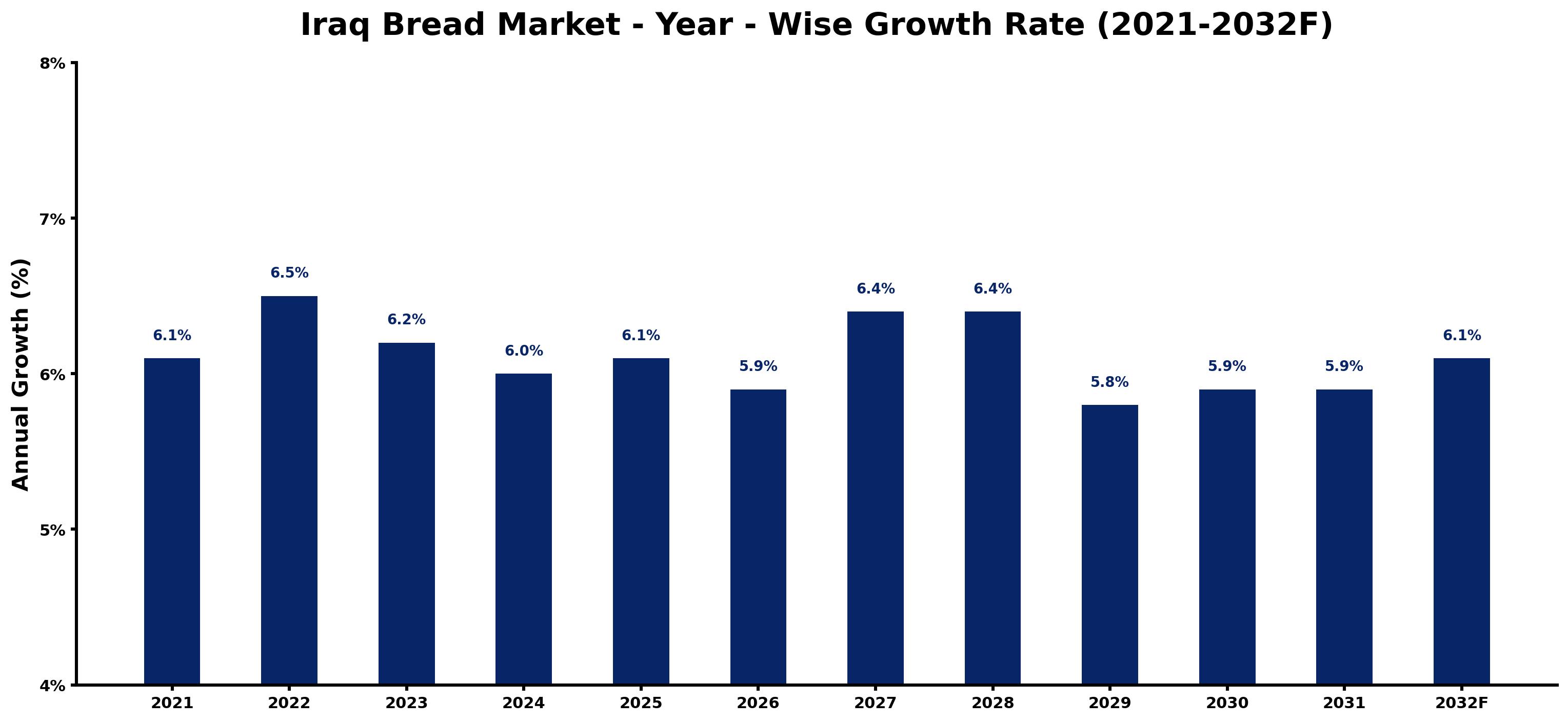
The table below presents the year wise growth rates along with the key drivers influencing the market
| Year | Growth Rate | Major Drivers |
| 2021 | 6.1% | Local producers focus on quality ingredients to meet consumer expectations post-conflict. |
| 2022 | 6.5% | Increased urbanization leads to higher demand for diverse bread products in cities. |
| 2023 | 6.2% | Cultural preferences shape bread consumption trends, emphasizing traditional recipes and flavors. |
| 2024 | 6.0% | Investment in local bakeries expands product offerings, enhancing competition in the market. |
| 2025 | 6.1% | Rising disposable income allows families to explore premium bread options and brands. |
| 2026 | 5.9% | E-commerce growth facilitates wider distribution of artisanal and specialty bread varieties. |
| 2027 | 6.4% | Health-conscious consumers push for whole grain and gluten-free alternatives in the market. |
| 2028 | 6.4% | Tourism recovery promotes unique bread types, boosting local bakeries and export opportunities. |
| 2029 | 5.8% | Supply chain improvements help stabilize prices, leading to consistent product availability. |
| 2030 | 5.9% | A focus on sustainability encourages the use of organic ingredients in bread production. |
| 2031 | 5.9% | Emerging bakeries innovate with fusion recipes, catering to evolving consumer tastes. |
| 2032 | 6.1% | Increased investments in technology enhance baking efficiency, shaping industry growth patterns. |
Note - Market size estimations and growth projections presented in this report are based on 6Wresearch's advanced forecasting approach, validated with industry datasets as of June 2026.
Iraq Bread Market Synopsis
The Iraq Bread Market is projected to reach 5.9% and witness significant growth during the forecast period (2026-2032). This vital sector within the Iraqi food industry is characterized by a diverse array of bread products, which include traditional favorites such as Samoon and Khubz, as well as various flatbreads, pita bread, and baguettes. The market dynamics are influenced by a blend of small, local bakeries and larger commercial operations, with consumer preferences leaning towards convenience, affordability, and taste.
Iraq Bread Market Growth Drivers
Several factors are propelling the growth of the Iraq Bread Market. Firstly, the increasing population and urbanization in Iraq create a higher demand for bread products as a staple food. Secondly, the integration of health consciousness among consumers is driving interest towards whole grain and multigrain bread options. Thirdly, shifts in consumer lifestyles have heightened the demand for convenient and ready-to-eat bread products. Additionally, the cultural significance of bread in Iraqi cuisine fosters consistent consumption. Lastly, ongoing innovations in bread production methods and ingredients are enhancing product offerings to meet evolving consumer preferences.
Iraq Bread Market Trends and Opportunities
Current trends within the Iraq Bread Market indicate a rising preference for healthier and specialty bread options, shaped by growing awareness of nutrition among Iraqi consumers. The popularity of artisanal and gourmet bread varieties is gaining traction as consumers diversify their bread choices. Furthermore, the demand for pre-packaged and ready-to-eat bread products is on the rise, reflecting modern consumer habits that favor convenience. The loyalty towards traditional flavors and locally sourced ingredients continues to influence new product developments, allowing producers to capitalize on cultural tastes while innovating their offerings.
Iraq Bread Market Challenges and Restraints
Despite its promising outlook, the Iraq Bread Market faces several challenges. The inconsistent supply of wheat, largely due to political instability and economic factors, poses a significant threat to production stability. Moreover, many local bakeries struggle to modernize their facilities due to limited investment capabilities, which can hinder efficiency and quality. Rising operational costs further complicate the situation, making it difficult for bakeries to compete with imported bread products. Additionally, issues surrounding food safety and a lack of regulatory standards may negatively affect consumer confidence in local offerings. The combination of these challenges necessitates strategic planning and support to navigate market dynamics effectively.
Iraq Bread Market Investment Opportunities
The landscape of the Iraq Bread Market presents various investment opportunities that stakeholders can exploit. One promising avenue is the establishment of modern bakeries that utilize advanced technology to improve production efficiency and product quality. The burgeoning demand for diverse bread types allows for significant innovation potential, particularly in product diversification. Moreover, enhancing distribution networks and logistics can facilitate reaching a broader customer base within urban and remote areas alike. With changing consumer preferences leaning towards convenience food, investing in ready-to-eat or packaged bread could yield substantial returns. Lastly, exploring opportunities for exporting Iraqi bread products to neighboring markets could pave the way for further growth and international market presence.
Iraq Bread Market Government Investment and Initiatives
The Iraqi government has implemented various policies and initiatives aimed at supporting the bread market. Chief among these is the substantial subsidization of wheat imports, which is crucial for local bakers to maintain affordability and quality in their products. Regulations are enforced to ensure production standards and consumer safety concerning the use of additives and preservatives. In addition, the government closely monitors pricing controls to prevent market distortions and ensure that bread remains affordable across different income levels. These measures collectively aim to stabilize the bread market, enhance food security, and safeguard consumer access to essential products.
Iraq Bread Market Latest Developments (May 2025 - June 2026)
As of mid-2026, the Iraq Bread Market has shown resilience amid ongoing economic challenges. There has been a notable push towards modernizing production facilities, with several initiatives aimed at increasing efficiency and sustainability. Local bakeries are increasingly experimenting with innovative recipes and marketable varieties to attract a broader audience. The government has intensified its focus on food security and quality standards, leading to improved regulations affecting local production. Moreover, consumer trends indicate a continuous shift towards healthier bread options, prompting bakers to adapt their offerings to meet these demands. This period reflects both the challenges and the adaptive strategies employed within the market.
Iraq Bread Market - Key Attractiveness of the Report
- 10 Years of Market Numbers
- Historical Data Starting from 2022 to 2025
- Base Year: 2025
- Forecast Data until 2032
- Key Performance Indicators Impacting the Market
- Major Upcoming Developments and Projects
Key Highlights of the Report:
- Iraq Bread Market Outlook
- Market Size of Iraq Bread Market, 2025
- Forecast of Iraq Bread Market, 2032F
- Historical Data and Forecast of Iraq Bread Revenues & Volume for the Period 2022-2032F
- Iraq Bread Market Trend Evolution
- Iraq Bread Market Drivers and Challenges
- Iraq Bread Price Trends
- Iraq Bread Porter's Five Forces
- Iraq Bread Industry Life Cycle
- Historical Data and Forecast of Iraq Bread Market Revenues & Volume By Loaves for the Period 2022-2032F
- Historical Data and Forecast of Iraq Bread Market Revenues & Volume By Baguettes for the Period 2022-2032F
- Historical Data and Forecast of Iraq Bread Market Revenues & Volume By Rolls for the Period 2022-2032F
- Historical Data and Forecast of Iraq Bread Market Revenues & Volume By Burger Buns for the Period 2022-2032F
- Historical Data and Forecast of Iraq Bread Market Revenues & Volume By Ciabatta for the Period 2022-2032F
- Historical Data and Forecast of Iraq Bread Market Revenues & Volume By Others for the Period 2022-2032F
- Historical Data and Forecast of Iraq Bread Market Revenues & Volume By Convenience Stores for the Period 2022-2032F
- Historical Data and Forecast of Iraq Bread Market Revenues & Volume By Specialist Retailers for the Period 2022-2032F
- Historical Data and Forecast of Iraq Bread Market Revenues & Volume By Supermarkets and Hypermarkets for the Period 2022-2032F
- Historical Data and Forecast of Iraq Bread Market Revenues & Volume By Online Retail for the Period 2022-2032F
- Historical Data and Forecast of Iraq Bread Market Revenues & Volume By Variety Stores for the Period 2022-2032F
- Historical Data and Forecast of Iraq Bread Market Revenues & Volume By Others for the Period 2022-2032F
- Iraq Bread Import Export Trade Statistics
- Market Opportunity Assessment By Loaves
- Market Opportunity Assessment By Convenience Stores
- Iraq Bread Top Companies Market Share
- Iraq Bread Competitive Benchmarking By Technical and Operational Parameters
- Iraq Bread Company Profiles
- Iraq Bread Key Strategic Recommendations






































