Iraq Energy Security Market Size & Growth Rate (2026-2032)
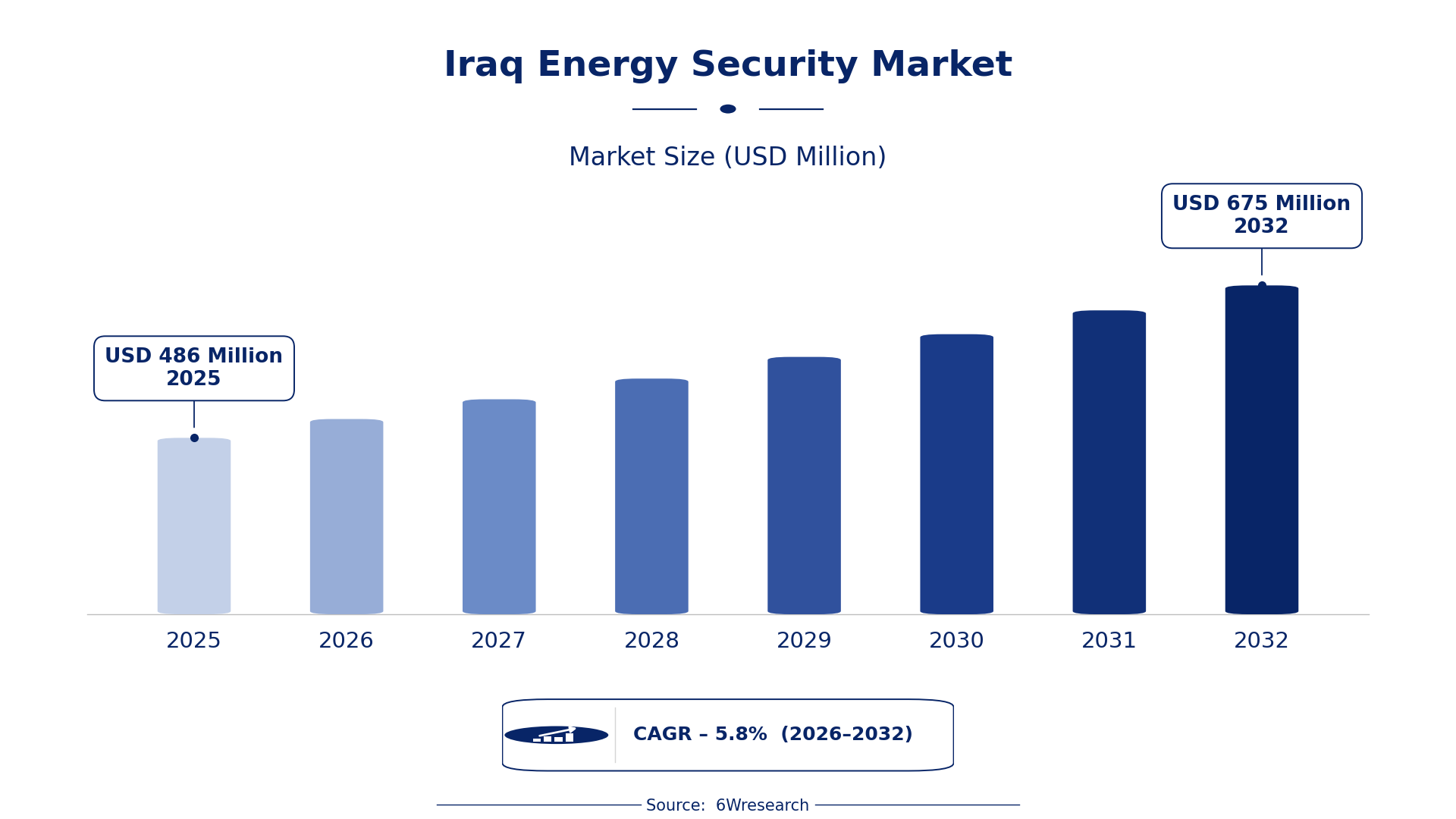
The Iraq Energy Security Market was estimated at USD 486 Million in 2025 and is projected to reach USD 675 Million by 2032, growing at a CAGR of 5.8% from 2026 to 2032.
Iraq Energy Security Market Synopsis
Iraq's energy sector is at a critical juncture, primarily driven by its vast oil reserves. As geopolitical tensions persist, the nation is increasingly focusing on strengthening its energy security while exploring renewable options.
Amid these challenges, the Iraqi government is making strides in attracting foreign investment and modernizing its energy infrastructure. This dual approach aims not only to secure energy supplies but also to diversify sources and promote sustainable practices.
Iraq Energy Security Market Year-wise Growth Rate and Key Drivers
This graph illustrates the annual growth rates of the Iraq Energy Security Market from 2021 to 2032, highlighting a steady upward trajectory and projected expansion over the forecast period.
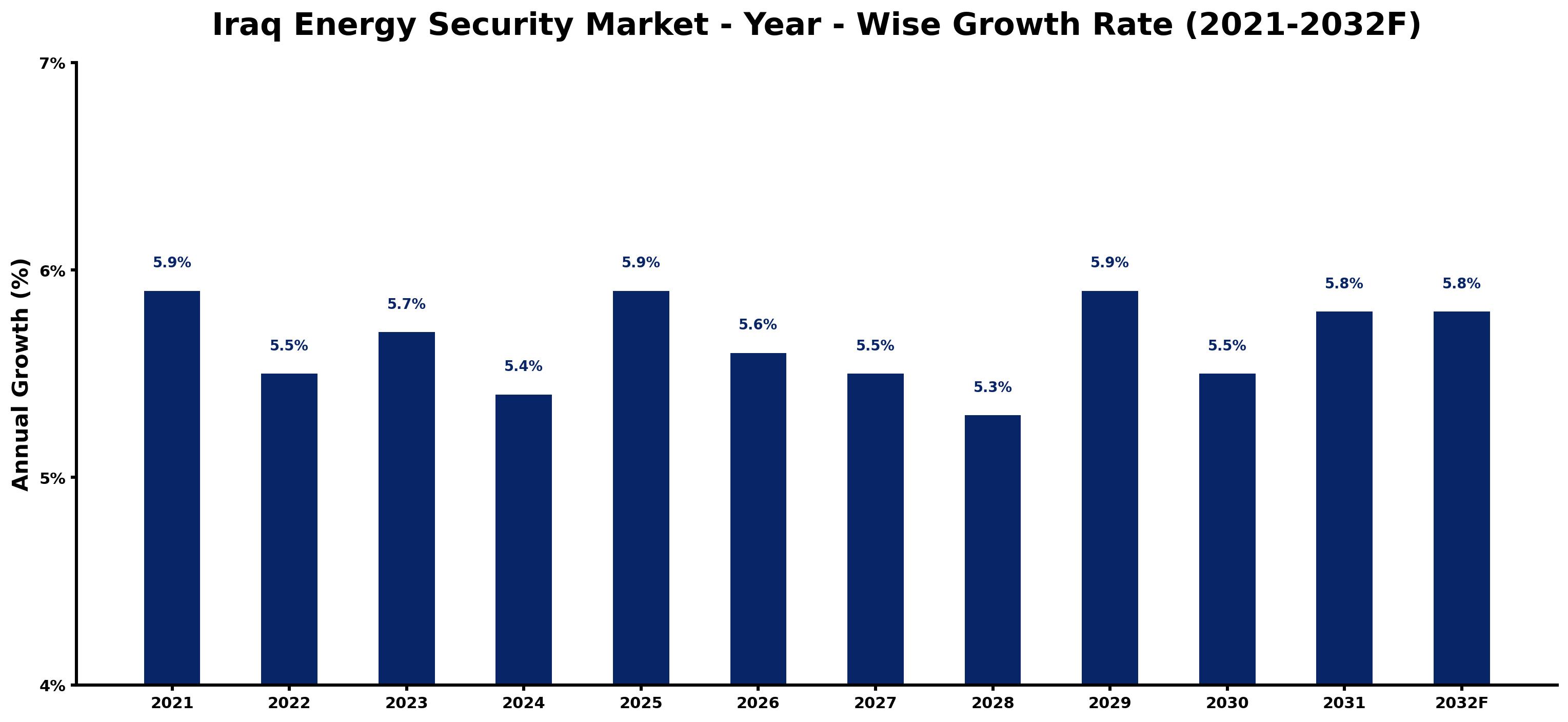
The table below presents the year‑wise growth rates along with the key drivers influencing the market
| Year | Growth Rate | Major Drivers |
| 2021 | 5.9% | Increased focus on natural gas exploration initiatives. |
| 2022 | 5.5% | Implementation of Iraq's National Energy Strategy 2022. |
| 2023 | 5.7% | Foreign investment surge in energy infrastructure projects. |
| 2024 | 5.4% | Revitalization of aging power plants through foreign partnerships. |
| 2025 | 5.9% | Adoption of renewable energy policies boosting diversification. |
| 2026 | 5.6% | Strengthening of energy security laws by government. |
| 2027 | 5.5% | Rise in domestic energy consumption due to population growth. |
| 2028 | 5.3% | Launch of energy efficiency programs supporting modernization. |
| 2029 | 5.9% | Partnerships with international companies for energy technology transfer. |
| 2030 | 5.5% | Legal framework supporting private sector participation in energy. |
| 2031 | 5.8% | Increased exports of electricity to neighboring countries. |
| 2032 | 5.8% | Emergence of local energy startups promoting innovation. |
Note: Market size estimations and growth projections presented in this report are based on 6Wresearch's proprietary forecasting methodology, utilizing the latest available industry data, government publications, and primary research inputs.
Iraq Energy Security Market Key Takeaways
Below are some of the specific key takeaways from the market, including:
- The market is heavily reliant on oil production and export, making it vulnerable to geopolitical risks.
- There is a significant push towards developing renewable energy sources such as solar and wind.
- Government initiatives are crucial in shaping the market, especially in attracting foreign investments.
- Infrastructure upgrades are essential for enhancing energy security and operational efficiency.
- Ongoing political challenges may impact market growth and investment decisions.
Evaluation of Restraints in Iraq Energy Security Market
The Iraq Energy Security Market is hindered by several key restraints. Political instability remains a predominant concern, affecting investor confidence and long-term planning. The ongoing security threats, particularly from militant groups targeting energy infrastructure, create an uncertain environment for operational continuity. on top of that, the existing energy infrastructure is often outdated and requires substantial investment for modernization. These issues pose real challenges to the market’s growth and its attractiveness to potential investors.
Iraq Energy Security Market Trends
Emerging trends are shaping the Iraq Energy Security Market significantly. There’s a clear shift towards modernizing facilities to improve efficiency and reliability in energy production. Renewable energy projects are gaining momentum, reflecting a broader commitment to sustainable practices. Additionally, investment in technology, especially for enhancing cybersecurity measures within energy infrastructure, is becoming increasingly vital as threats to physical assets escalate.
Iraq Energy Security Market Opportunities
The potential for growth in the Iraq Energy Security Market is noteworthy. Investments in upgrading energy infrastructure present opportunities for both local and international stakeholders. The government's push for diversification into renewable energy sources like solar power opens new avenues for innovative technology companies. on top of that, partnerships with foreign firms can accelerate development and enhance operational capabilities across the sector.
Government Initiatives in the Iraq Energy Security Market
Government policy plays a fundamental role in shaping the Iraq Energy Security Market. The Iraqi administration is actively promoting reforms aimed at enhancing energy security through foreign investments, infrastructure development, and diversification of energy resources. By focusing on regulatory improvements, the government is creating an environment that seeks to encourage robust participation from both domestic and international players.
- A national energy reform program launched in early 2025 focuses on attracting foreign partnerships and investments in oil and gas exploration.
- Current initiatives include upgrading existing oil infrastructure, with projects underway to modernize pipelines and refineries.
- Plans are in place for a renewable energy investment strategy aimed at boosting solar power capacity by 2030.
- The introduction of a competitive licensing framework in 2025 is designed to streamline processes for foreign investors.
- A cybersecurity enhancement initiative is currently underway to protect critical energy infrastructure against emerging threats.
Future Insights of the Iraq Energy Security Market
Looking ahead to 2026-2032, the Iraq Energy Security Market is likely to experience positive developments. Continued focus on diversifying energy sources and increasing production capacity will attract further investments. As Iraq aims to position itself as a significant player in the global energy market, collaborations with international firms and advancements in technology are expected to bolster the overall stability of the sector. However, stakeholders must remain vigilant regarding geopolitical dynamics that could influence market conditions.
Iraq Energy Security Market Latest Developments
Recent activity in the Iraq Energy Security Market has been characterized by a series of strategic initiatives aimed at bolstering energy security and infrastructure. Investments and governmental reforms reflect a concerted effort to overcome existing challenges while seeking opportunities for growth.
- A major refinery upgrade project started in Q3 2025, enhancing production efficiency and capacity.
- Ongoing collaborations with international firms aim to improve energy management systems, currently in implementation stages.
- A renewable energy pilot project focusing on solar installations was initiated in early 2026 and is expected to showcase viability by late 2026.
- The establishment of a new regulatory body to oversee energy sector activities is planned for mid-2026, intended to improve oversight and compliance.
- An energy security task force has been set up, recently launched to address and mitigate security threats in the energy sector.
Iraq Energy Security Market - Key Attractiveness of the Report
- 10 Years of Market Numbers
- Historical Data Starting from 2022 to 2025
- Base Year: 2025
- Forecast Data until 2032
- Key Performance Indicators Impacting the Market
- Major Upcoming Developments and Projects
Key Highlights of the Report:
- Iraq Energy Security Market Outlook
- Market Size of Iraq Energy Security Market, 2025
- Forecast of Iraq Energy Security Market, 2032
- Historical Data and Forecast of Iraq Energy Security Revenues & Volume for the Period 2022-2032F
- Iraq Energy Security Market Trend Evolution
- Iraq Energy Security Market Drivers and Challenges
- Iraq Energy Security Price Trends
- Iraq Energy Security Porter's Five Forces
- Iraq Energy Security Industry Life Cycle
- Historical Data and Forecast of Iraq Energy Security Market Revenues & Volume By Power Plants for the Period 2022-2032F
- Historical Data and Forecast of Iraq Energy Security Market Revenues & Volume By Nuclear for the Period 2022-2032F
- Historical Data and Forecast of Iraq Energy Security Market Revenues & Volume By Thermal for the Period 2022-2032F
- Historical Data and Forecast of Iraq Energy Security Market Revenues & Volume By Hydro for the Period 2022-2032F
- Historical Data and Forecast of Iraq Energy Security Market Revenues & Volume By Oil for the Period 2022-2032F
- Historical Data and Forecast of Iraq Energy Security Market Revenues & Volume By Gas for the Period 2022-2032F
- Historical Data and Forecast of Iraq Energy Security Market Revenues & Volume By Renewable Energy for the Period 2022-2032F
- Historical Data and Forecast of Iraq Energy Security Market Revenues & Volume By Technologies for the Period 2022-2032F
- Historical Data and Forecast of Iraq Energy Security Market Revenues & Volume By Physical for the Period 2022-2032F
- Historical Data and Forecast of Iraq Energy Security Market Revenues & Volume By Network Security for the Period 2022-2032F
- Iraq Energy Security Import Export Trade Statistics
- Market Opportunity Assessment By Power Plants
- Market Opportunity Assessment By Technologies
- Iraq Energy Security Top Companies Market Share
- Iraq Energy Security Competitive Benchmarking By Technical and Operational Parameters
- Iraq Energy Security Company Profiles
- Iraq Energy Security Key Strategic Recommendations






































