Ireland Aluminium Market Size (2020-2030)
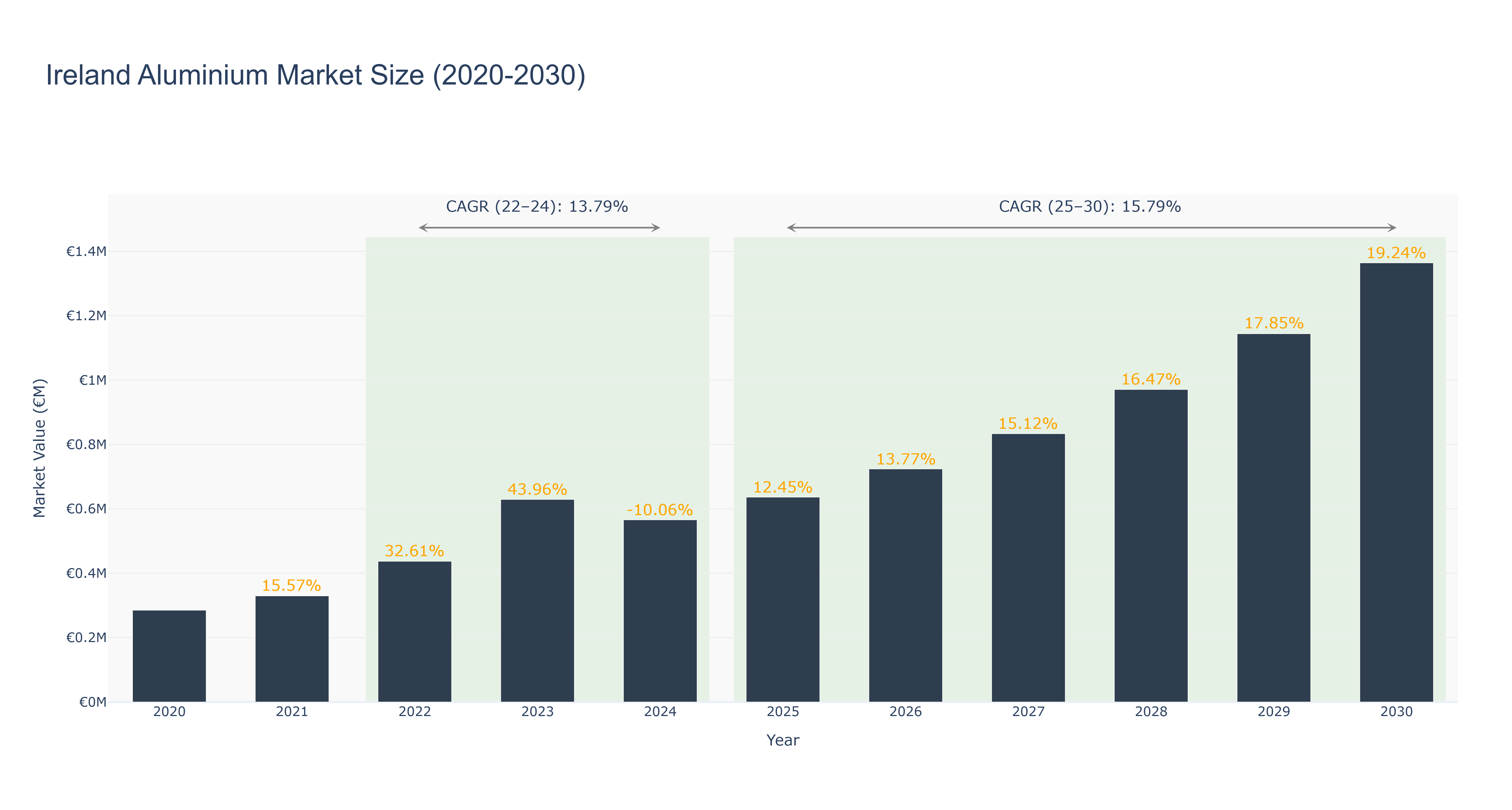
Ireland Aluminium Market has shown a steady growth trajectory over the past decade. The peak market size of €1.36 million is forecasted for 2030, with a notable increase in market size from €0.29 million in 2020 to €0.97 million in 2028. The market experienced a slight decline in 2024 to €0.57 million, attributed to a temporary market correction. However, strong growth resumed in the following years, with a market size of €0.72 million in 2026. The CAGR for 2022-24 stands at 13.79%, while the CAGR for 2025-30 is projected at 15.79%. Industry drivers for this market include increasing demand for lightweight materials in various industries and a focus on sustainable practices. Looking ahead, Ireland's Aluminium Market is set to benefit from upcoming infrastructure projects aimed at enhancing energy efficiency and reducing carbon emissions. The market is poised for continued growth as these developments unfold.
Ireland Aluminium Market: Production & Trade Performance (2019-2025)
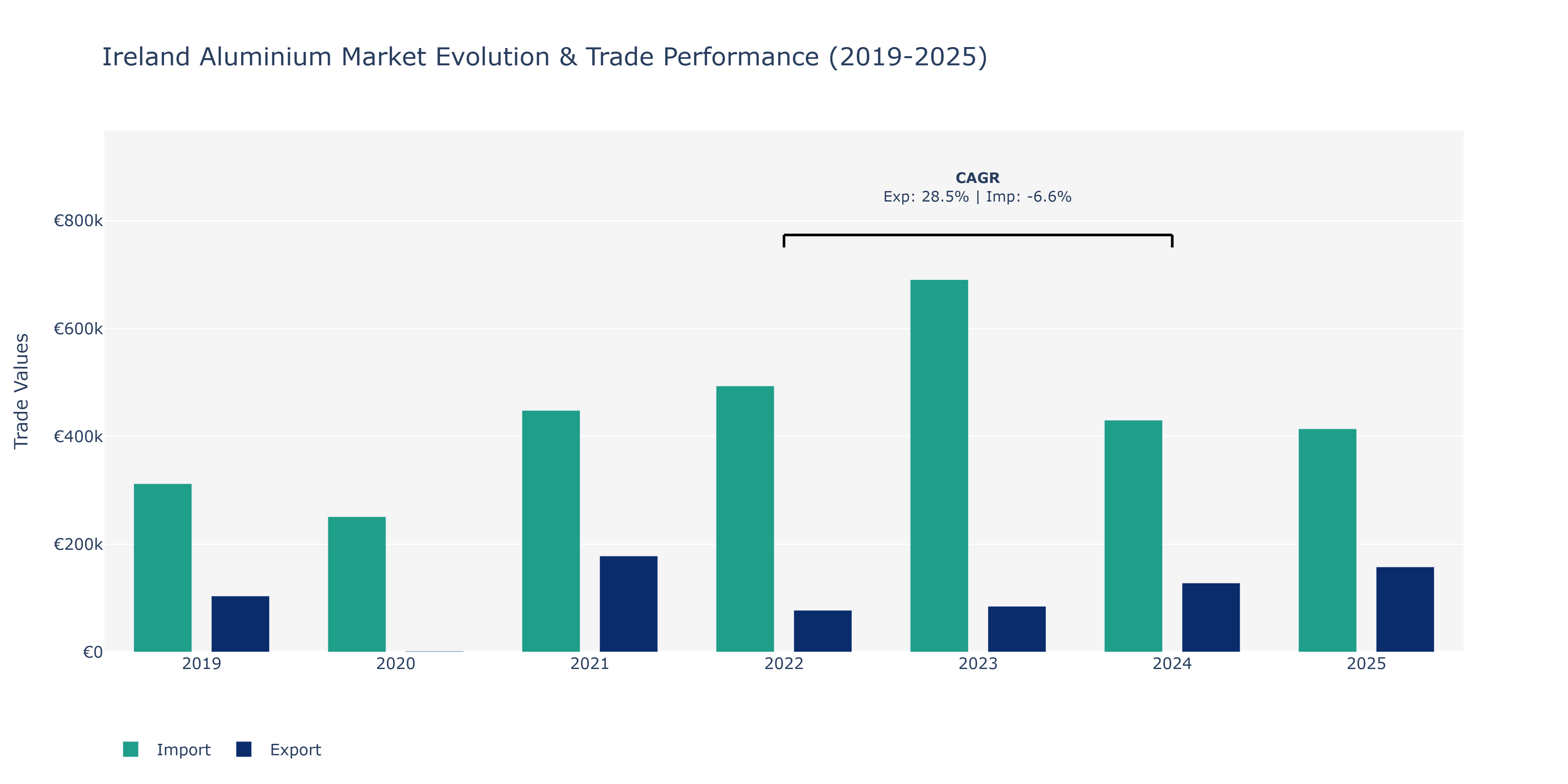
The Ireland Aluminium Market displayed notable fluctuations in both exports and imports from 2019 to 2025. Exports experienced a substantial increase from €104.02 thousand in 2019 to €158.00 thousand in 2025, with a peak in 2021 at €178.32 thousand. On the other hand, imports saw fluctuations, reaching a peak of €690.71 thousand in 2023 after starting at €312.33 thousand in 2019. Interestingly, imports peaked in 2023, whereas exports peaked in 2021. This divergence can be attributed to various factors such as changes in global demand for aluminium products, currency exchange rates impacting trade competitiveness, and domestic production capacity constraints influencing import levels. The surge in exports post-2023 could be linked to strategic partnerships with other countries, increased efficiency in production processes, or the development of innovative aluminium products driving international demand. These trends highlight the dynamic nature of the market and the importance of adapting to global economic shifts to maintain competitiveness in the aluminium sector.
Key Highlights of the Report:
- Ireland Aluminium Market Outlook
- Market Size of Ireland Aluminium Market, 2024
- Forecast of Ireland Aluminium Market, 2031
- Historical Data and Forecast of Ireland Aluminium Revenues & Volume for the Period 2021-2031
- Ireland Aluminium Market Trend Evolution
- Ireland Aluminium Market Drivers and Challenges
- Ireland Aluminium Price Trends
- Ireland Aluminium Porter`s Five Forces
- Ireland Aluminium Industry Life Cycle
- Historical Data and Forecast of Ireland Aluminium Market Revenues & Volume By End-Use for the Period 2021-2031
- Historical Data and Forecast of Ireland Aluminium Market Revenues & Volume By Construction for the Period 2021-2031
- Historical Data and Forecast of Ireland Aluminium Market Revenues & Volume By Transportation for the Period 2021-2031
- Historical Data and Forecast of Ireland Aluminium Market Revenues & Volume By Packaging for the Period 2021-2031
- Historical Data and Forecast of Ireland Aluminium Market Revenues & Volume By Electrical for the Period 2021-2031
- Historical Data and Forecast of Ireland Aluminium Market Revenues & Volume By Consumer Durables for the Period 2021-2031
- Historical Data and Forecast of Ireland Aluminium Market Revenues & Volume By Machinery & Equipment for the Period 2021-2031
- Historical Data and Forecast of Ireland Aluminium Market Revenues & Volume By Others for the Period 2021-2031
- Ireland Aluminium Import Export Trade Statistics
- Market Opportunity Assessment By End-Use
- Ireland Aluminium Top Companies Market Share
- Ireland Aluminium Competitive Benchmarking By Technical and Operational Parameters
- Ireland Aluminium Company Profiles
- Ireland Aluminium Key Strategic Recommendations






































