Ireland Induction Motor Market Size (2020-2030)
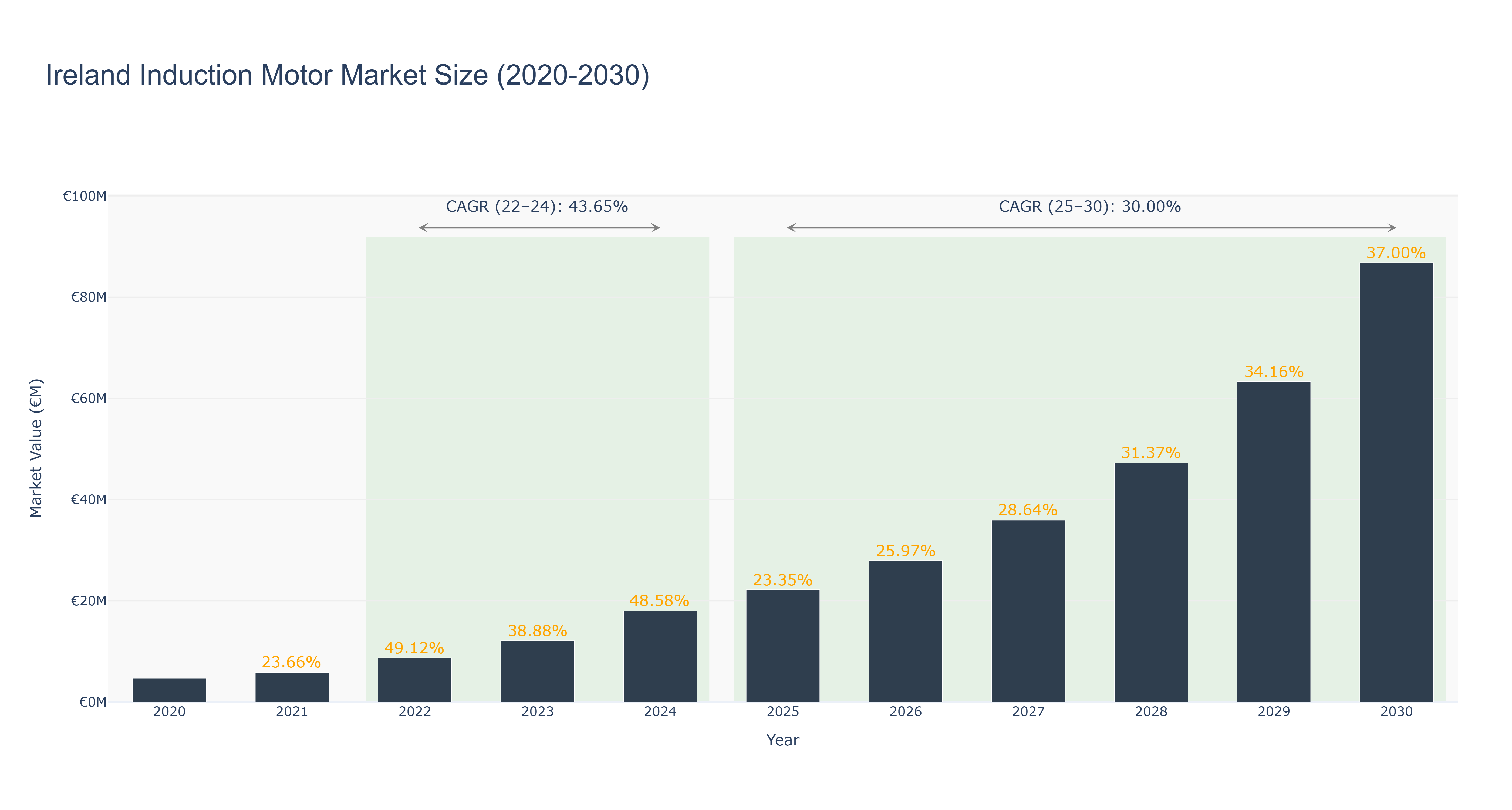
Ireland Induction Motor Market has shown a remarkable growth trend over the years. The peak market size of €86.79 million is forecasted for 2030, reflecting a strong upward trajectory. From 2020 to 2024, the market size increased steadily from €4.73 million to €17.98 million, driven by factors such as increasing industrial automation and energy efficiency initiatives. The market experienced a significant growth spurt between 2022 and 2024 with a CAGR of 43.65%, attributed to expanding industrial applications. Looking ahead, the market is projected to maintain a healthy growth rate with a CAGR of 30.0% from 2025 to 2030, supported by ongoing investments in renewable energy projects and infrastructure development in Ireland. Notable upcoming developments include the implementation of smart grid technologies to enhance energy efficiency and sustainability in the country.
Ireland Induction Motor Market: Production & Trade Performance (2019-2025)
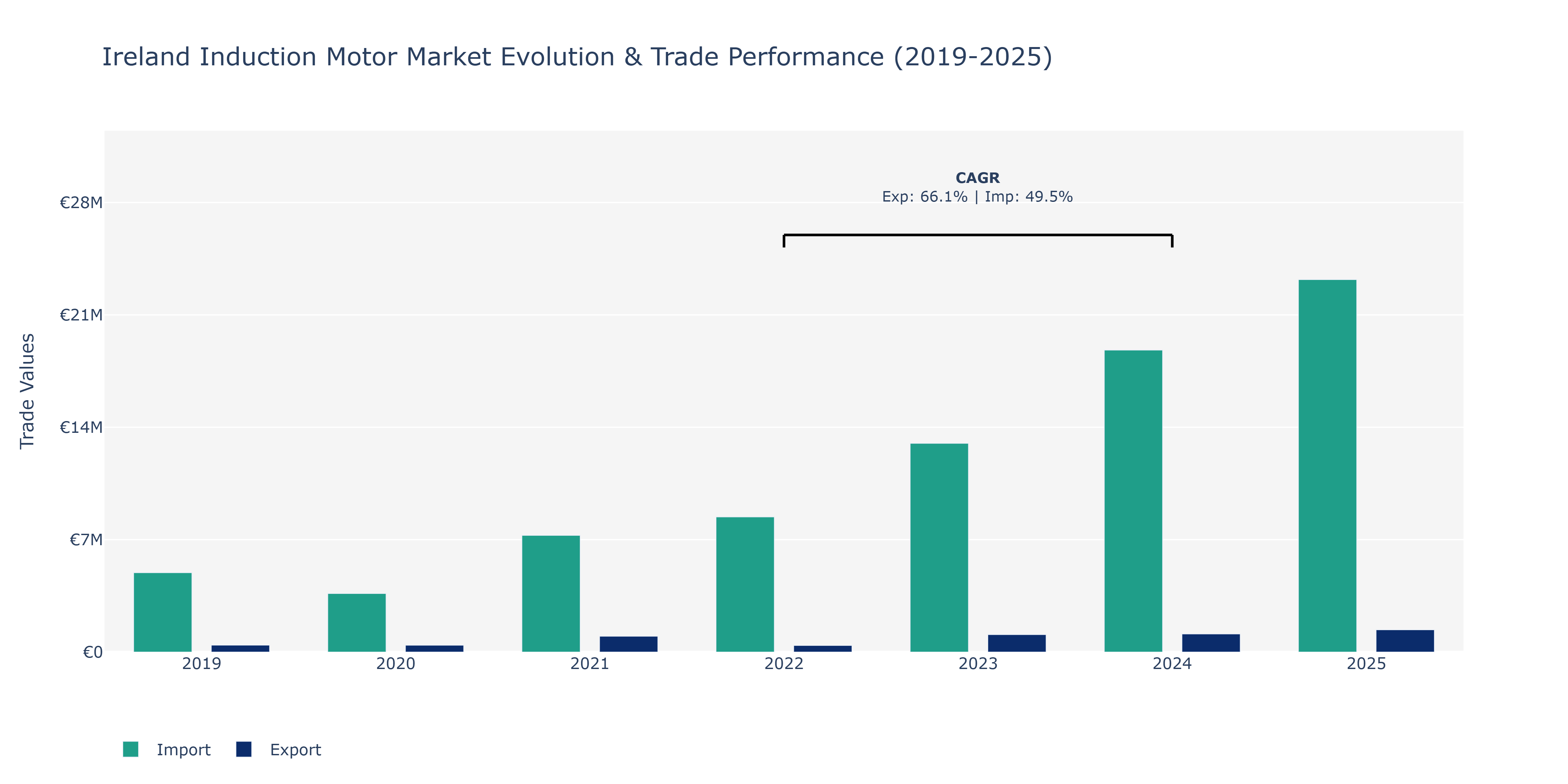
Between 2019 and 2025, Ireland's Induction Motor Market witnessed varying trends in exports and imports. In 2019, exports stood at €426.25 thousand, showing a slight decrease in 2020 to €424.18 thousand before experiencing a significant surge in 2021 to €982.43 thousand. This surge continued in the following years, reaching a peak of €1.39 million in 2025. Conversely, imports started at €4.94 million in 2019, decreased to €3.64 million in 2020, and then showed a consistent upward trend, peaking at €23.2 million in 2025. The impressive growth in exports could be attributed to Ireland's technological advancements in induction motor production, leading to increased international demand. On the other hand, the substantial rise in imports reflects the country's growing need for raw materials and components to support its expanding manufacturing sector. This aligns with global trends showing increased trade in electric motors and industrial machinery components.
Key Highlights of the Report:
- Ireland Induction Motor Market Outlook
- Market Size of Ireland Induction Motor Market, 2025
- Forecast of Ireland Induction Motor Market, 2032
- Historical Data and Forecast of Ireland Induction Motor Revenues & Volume for the Period 2022 - 2032F
- Ireland Induction Motor Market Trend Evolution
- Ireland Induction Motor Market Drivers and Challenges
- Ireland Induction Motor Price Trends
- Ireland Induction Motor Porter`s Five Forces
- Ireland Induction Motor Industry Life Cycle
- Historical Data and Forecast of Ireland Induction Motor Market Revenues & Volume By Type for the Period 2022 - 2032F
- Historical Data and Forecast of Ireland Induction Motor Market Revenues & Volume By Single Phase for the Period 2022 - 2032F
- Historical Data and Forecast of Ireland Induction Motor Market Revenues & Volume By Three Phase for the Period 2022 - 2032F
- Historical Data and Forecast of Ireland Induction Motor Market Revenues & Volume By Application for the Period 2022 - 2032F
- Historical Data and Forecast of Ireland Induction Motor Market Revenues & Volume By Residential for the Period 2022 - 2032F
- Historical Data and Forecast of Ireland Induction Motor Market Revenues & Volume By Industrial for the Period 2022 - 2032F
- Historical Data and Forecast of Ireland Induction Motor Market Revenues & Volume By Commercial for the Period 2022 - 2032F
- Historical Data and Forecast of Ireland Induction Motor Market Revenues & Volume By Transportation for the Period 2022 - 2032F
- Historical Data and Forecast of Ireland Induction Motor Market Revenues & Volume By Others for the Period 2022 - 2032F
- Ireland Induction Motor Import Export Trade Statistics
- Market Opportunity Assessment By Type
- Market Opportunity Assessment By Application
- Ireland Induction Motor Top Companies Market Share
- Ireland Induction Motor Competitive Benchmarking By Technical and Operational Parameters
- Ireland Induction Motor Company Profiles
- Ireland Induction Motor Key Strategic Recommendations






































