Italy Industrial Machinery Market: Import Trend Analysis
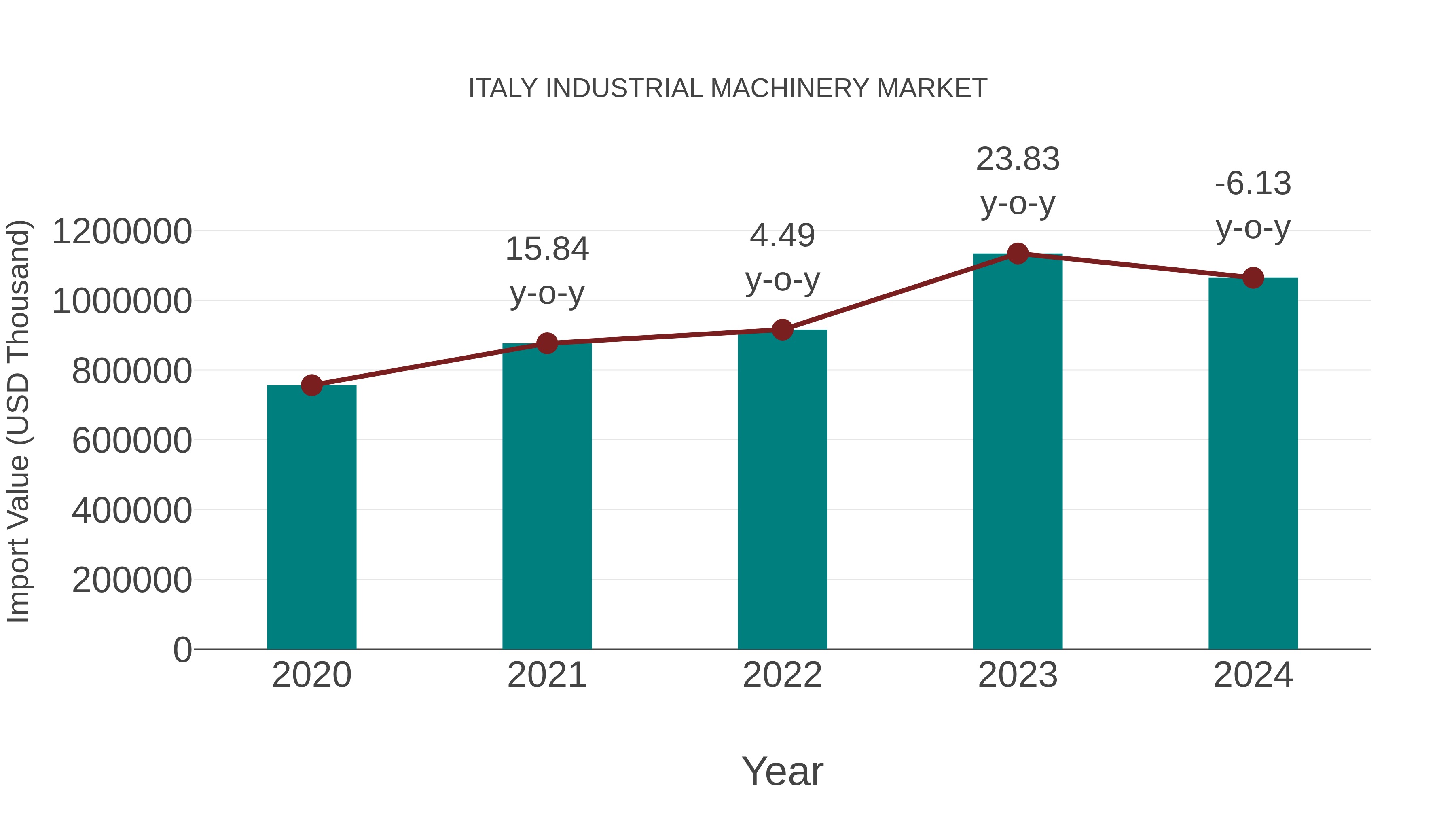
In 2024, Italy industrial machinery Market: Import Trend Analysis saw a notable increase in imports. This trend was driven by rising demand for specialized machinery and technological advancements. Italy reliance on imported industrial machinery continued to grow, reflecting the Market: Import Trend Analysis need for advanced equipment.
Italy Industrial Machinery Market Synopsis
The industrial machinery market in Italy is growing, supported by the demand for advanced manufacturing and processing equipment across various industries. Industrial machinery includes tools, machines, and equipment essential for production and automation. The market benefits from technological innovations and the increasing adoption of Industry 4.0 practices.
Drivers of the market
The Italy Industrial Machinery Market is influenced by demand from manufacturing sectors such as automotive, textiles, and food processing. Industrial machinery, including machine tools, robotics, and automation systems, plays a vital role in production processes, driving efficiency, productivity, and quality in Italy manufacturing industries.
Challenges of the market
The industrial machinery market in Italy is constrained by high production and maintenance costs, particularly for advanced, automated machinery. Ensuring compliance with stringent safety and environmental regulations adds to design and manufacturing complexities. The market also faces competition from global manufacturers and the need for continuous innovation to meet evolving customer demands. Additionally, economic fluctuations impact demand from key industries, influencing overall market growth.
Government Policy of the market
The Italy government encourages the growth of the industrial machinery market through research funding and tax incentives. Policies promote the adoption of advanced machinery that enhances productivity and reduces environmental impact. Regulations ensure that industrial machinery meets safety and performance standards, supporting market development.
Key Highlights of the Report:
- Italy Industrial Machinery Market Outlook
- Market Size of Italy Industrial Machinery Market, 2025
- Forecast of Italy Industrial Machinery Market, 2032
- Historical Data and Forecast of Italy Industrial Machinery Revenues & Volume for the Period 2022-2032F
- Italy Industrial Machinery Market Trend Evolution
- Italy Industrial Machinery Market Drivers and Challenges
- Italy Industrial Machinery Price Trends
- Italy Industrial Machinery Porter's Five Forces
- Italy Industrial Machinery Industry Life Cycle
- Historical Data and Forecast of Italy Industrial Machinery Market Revenues & Volume By Application for the Period 2022-2032F
- Historical Data and Forecast of Italy Industrial Machinery Market Revenues & Volume By Agriculture for the Period 2022-2032F
- Historical Data and Forecast of Italy Industrial Machinery Market Revenues & Volume By Construction for the Period 2022-2032F
- Historical Data and Forecast of Italy Industrial Machinery Market Revenues & Volume By Packaging for the Period 2022-2032F
- Historical Data and Forecast of Italy Industrial Machinery Market Revenues & Volume By Food Processing for the Period 2022-2032F
- Historical Data and Forecast of Italy Industrial Machinery Market Revenues & Volume By Mining for the Period 2022-2032F
- Historical Data and Forecast of Italy Industrial Machinery Market Revenues & Volume By Semiconductor Manufacturing for the Period 2022-2032F
- Italy Industrial Machinery Import Export Trade Statistics
- Market Opportunity Assessment By Application
- Italy Industrial Machinery Top Companies Market Share
- Italy Industrial Machinery Competitive Benchmarking By Technical and Operational Parameters
- Italy Industrial Machinery Company Profiles
- Italy Industrial Machinery Key Strategic Recommendations






































