Italy Office Chair Market: Import Trend Analysis
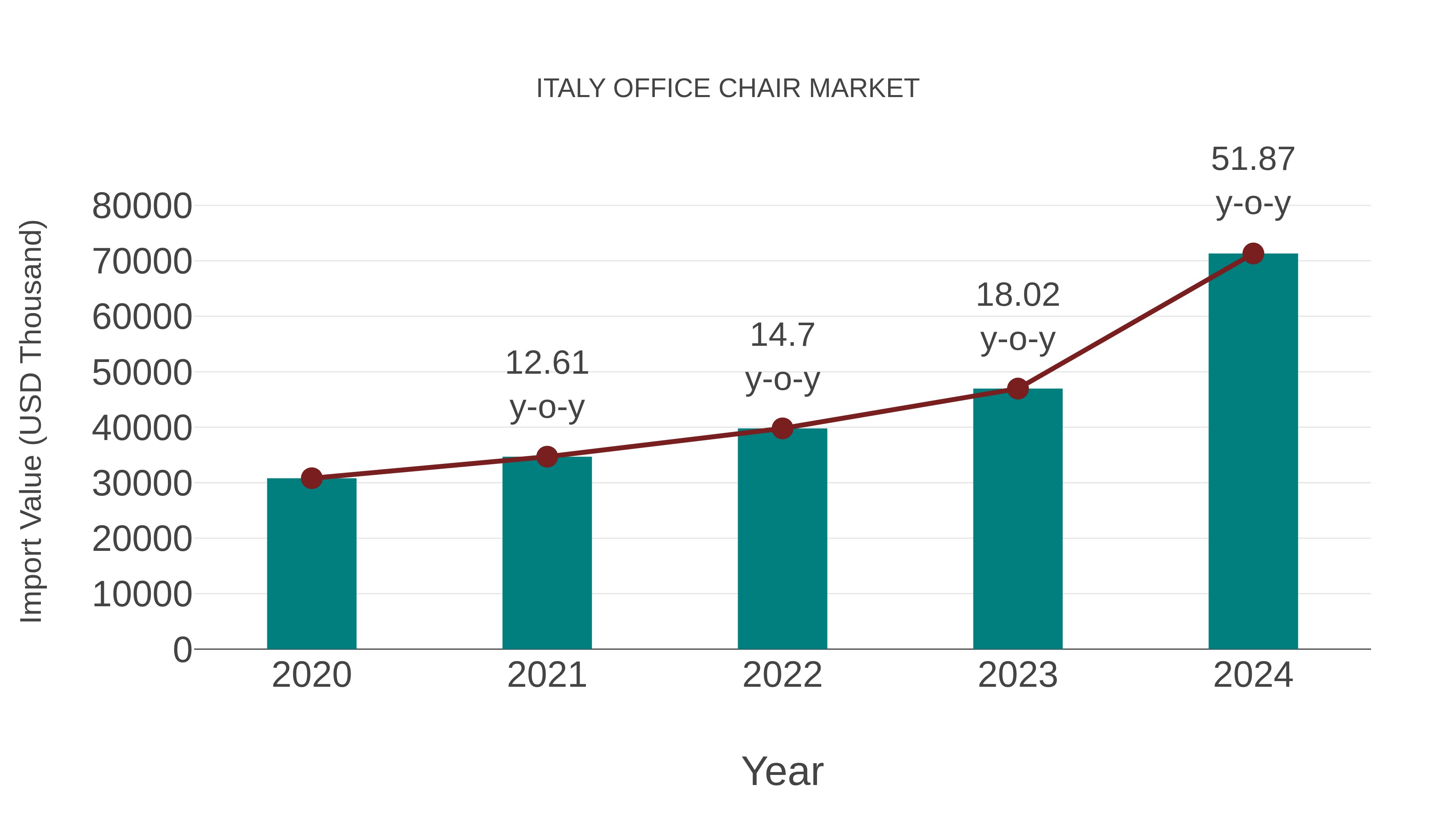
In 2024, Italy office chair Market: Import Trend Analysis saw a notable increase in imports, driven by a growing demand for ergonomic and stylish designs. The trend indicated a shift towards higher-quality products to meet consumer preferences and workplace needs.
Italy Office Chair Market Synopsis
The Italy office chair market is characterized by a high demand for ergonomic and stylish seating solutions to enhance workplace comfort and productivity. With a strong emphasis on design and quality, Italian office chair manufacturers offer a wide range of products, including task chairs, executive chairs, mesh chairs, and conference room chairs. Key trends driving the market include the growing adoption of remote work setups, which has led to an increased focus on home office furniture. Sustainable and eco-friendly materials are also gaining popularity among consumers. Major players in the market include companies like Poltrona Frau, Artemide, and Kartell, known for their innovative designs and craftsmanship. Overall, the Italy office chair market is poised for steady growth, driven by a combination of functional innovation and aesthetic appeal.
Italy Office Chair Market Trends
In the Italy Office Chair Market, there is a growing demand for ergonomic office chairs that prioritize comfort and support for individuals spending long hours at their desks. Sustainability is also a key trend, with consumers increasingly seeking chairs made from eco-friendly materials and manufactured using environmentally conscious processes. Customizability is another important factor, as companies and individuals look for chairs that can be adjusted to fit their specific needs and preferences. Additionally, there is a rising popularity of modern and aesthetically pleasing designs that blend functionality with style, reflecting the importance of creating visually appealing workspaces. As remote work continues to be prevalent, the market is seeing an increased focus on versatile chairs that can easily transition between home and office environments.
Italy Office Chair Market Challenges
In the Italy Office Chair Market, challenges include increasing competition from international manufacturers offering lower-priced products, fluctuating raw material costs impacting profit margins, and the need to constantly innovate and adapt to changing consumer preferences for ergonomic designs and sustainable materials. Additionally, economic uncertainties and market saturation in certain segments pose challenges for companies looking to expand their market share. Meeting stringent quality and safety regulations while keeping production costs low is another hurdle faced by manufacturers in the Italy Office Chair Market. To navigate these challenges successfully, companies must focus on product differentiation, efficient supply chain management, and strategic marketing tactics to stand out in a competitive landscape and maintain profitability.
Italy Office Chair Market Investment Opportunities
The Italy Office Chair Market presents various investment opportunities for growth and innovation. With the increasing emphasis on ergonomic design and comfort in office furniture, there is a demand for advanced office chairs that prioritize health and productivity. Investing in research and development for customizable and sustainable office chairs can cater to this trend. Additionally, the rise of remote work and home offices creates a need for versatile and space-saving office chairs that blend functionality with aesthetic appeal. Collaborating with designers and manufacturers to create stylish yet practical office chairs can target this emerging market segment. Furthermore, leveraging digital marketing strategies to reach a wider audience and offering competitive pricing can help attract both individual consumers and corporate clients, driving growth in the Italy Office Chair Market.
Jordan Agar Market Government Policies
Government policies related to the Italy Office Chair Market include regulations on health and safety standards, environmental sustainability, and labor laws. The government has implemented strict guidelines for office chair manufacturers to ensure ergonomic designs that promote employee well-being and prevent work-related injuries. Additionally, there are regulations in place to promote sustainable practices in the manufacturing process to reduce environmental impact. Labor laws dictate working conditions, wages, and employee rights within the industry. Compliance with these policies is essential for office chair manufacturers to operate legally within the Italian market and meet the expectations of consumers who prioritize quality, safety, and sustainability in their office furniture choices.
Italy Office Chair Market Future Outlook
The future outlook for the Italy Office Chair Market appears positive, with expected growth driven by factors such as the increasing adoption of ergonomic office furniture, rising demand for stylish and customizable designs, and the growing trend of remote work necessitating comfortable home office setups. As companies prioritize employee well-being and productivity, there is a shift towards investing in high-quality office chairs that offer ergonomic support and promote better posture. Additionally, the emphasis on sustainability and eco-friendly materials in furniture production is likely to influence consumer preferences in the market. The integration of technology features such as adjustable settings and smart functionalities is also expected to drive innovation and enhance the overall market appeal. Overall, the Italy Office Chair Market is poised for steady growth and evolution in response to changing consumer needs and market trends.
Key Highlights of the Report:
- Italy Office Chair Market Outlook
- Market Size of Italy Office Chair Market, 2021
- Forecast of Italy Office Chair Market, 2031
- Historical Data and Forecast of Italy Office Chair Revenues & Volume for the Period 2018 - 2031
- Italy Office Chair Market Trend Evolution
- Italy Office Chair Market Drivers and Challenges
- Italy Office Chair Price Trends
- Italy Office Chair Porter's Five Forces
- Italy Office Chair Industry Life Cycle
- Historical Data and Forecast of Italy Office Chair Market Revenues & Volume By Product Type for the Period 2018 - 2031
- Historical Data and Forecast of Italy Office Chair Market Revenues & Volume By Executive Office for the Period 2018 - 2031
- Historical Data and Forecast of Italy Office Chair Market Revenues & Volume By Ergonomic for the Period 2018 - 2031
- Historical Data and Forecast of Italy Office Chair Market Revenues & Volume By Conference for the Period 2018 - 2031
- Historical Data and Forecast of Italy Office Chair Market Revenues & Volume By Material for the Period 2018 - 2031
- Historical Data and Forecast of Italy Office Chair Market Revenues & Volume By Mesh for the Period 2018 - 2031
- Historical Data and Forecast of Italy Office Chair Market Revenues & Volume By Lather for the Period 2018 - 2031
- Historical Data and Forecast of Italy Office Chair Market Revenues & Volume By Plastic for the Period 2018 - 2031
- Historical Data and Forecast of Italy Office Chair Market Revenues & Volume By Fabric for the Period 2018 - 2031
- Historical Data and Forecast of Italy Office Chair Market Revenues & Volume By Sales Channel for the Period 2018 - 2031
- Historical Data and Forecast of Italy Office Chair Market Revenues & Volume By Offline for the Period 2018 - 2031
- Historical Data and Forecast of Italy Office Chair Market Revenues & Volume By Online for the Period 2018 - 2031
- Italy Office Chair Import Export Trade Statistics
- Market Opportunity Assessment By Product Type
- Market Opportunity Assessment By Material
- Market Opportunity Assessment By Sales Channel
- Italy Office Chair Top Companies Market Share
- Italy Office Chair Competitive Benchmarking By Technical and Operational Parameters
- Italy Office Chair Company Profiles
- Italy Office Chair Key Strategic Recommendations






































