Italy Packaged Water Market: Import Trend Analysis
In 2024, Italy packaged water Market: Import Trend Analysis saw a steady import trend. Imports of packaged water into Italy remained consistent throughout the year, reflecting stable demand for foreign brands in the Market: Import Trend Analysis.
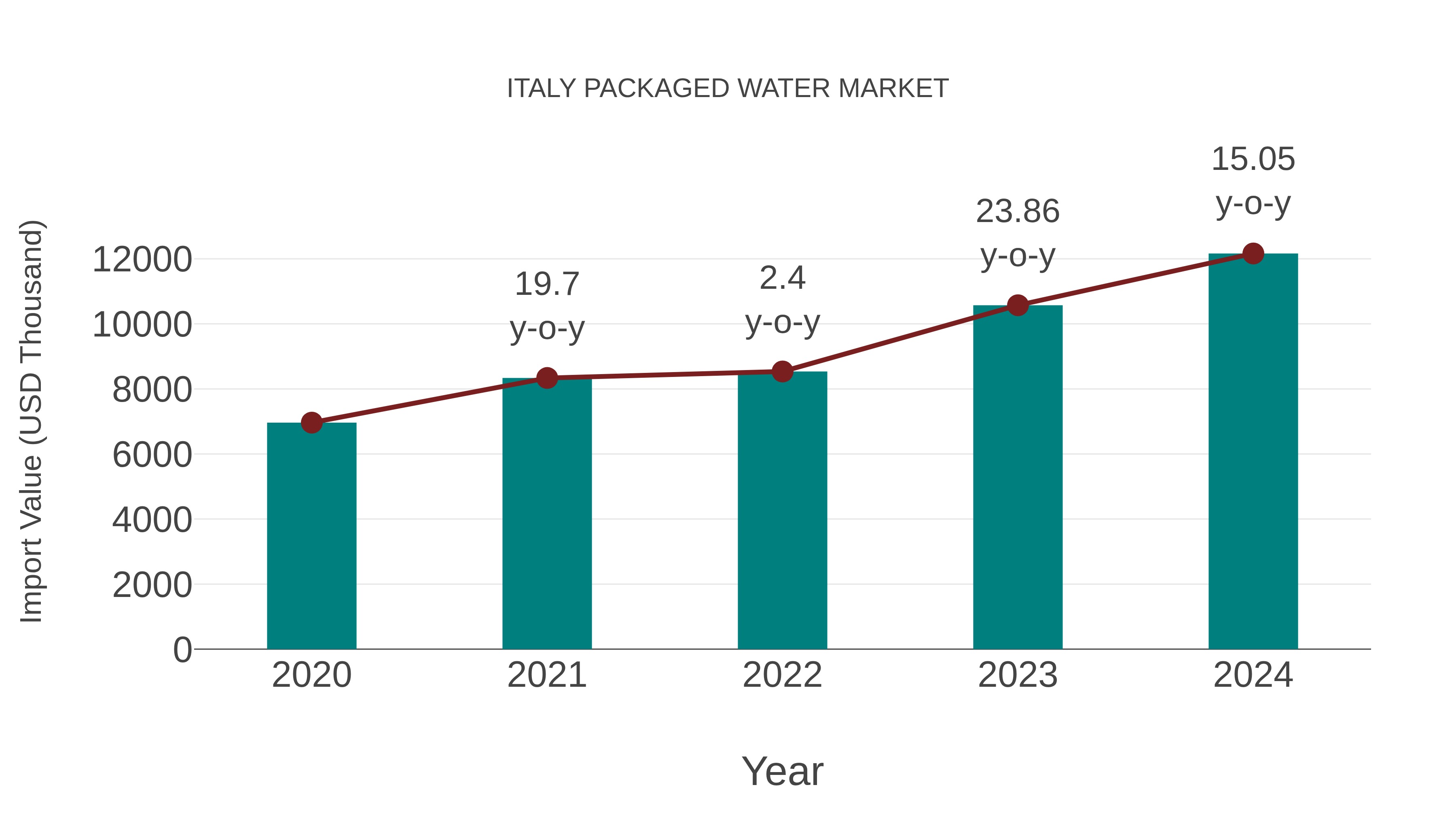
Italy Packaged water Market Overview
The Italy packaged water market is experiencing steady growth driven by factors such as increasing health consciousness, convenience, and the shift towards healthier beverage choices. Italian consumers are showing a preference for packaged water due to its perceived purity, safety, and convenience for on-the-go consumption. The market is characterized by a wide range of products including still water, sparkling water, flavored water, and functional water variants. Key players in the industry are focusing on product innovation, sustainable packaging solutions, and marketing strategies to differentiate themselves in a competitive landscape. With a strong emphasis on sustainability and environmental awareness, the market is witnessing a trend towards eco-friendly packaging materials and initiatives. Overall, the Italy packaged water market is poised for continued growth, driven by evolving consumer preferences and industry innovations.
Italy Packaged water Market Trends and Opportunities
The Italy packaged water market is experiencing steady growth driven by increasing health consciousness among consumers and a shift towards healthier beverage options. Key trends in the market include the rising demand for premium and flavored bottled water products, as well as the focus on sustainable packaging solutions to reduce environmental impact. Opportunities for market players lie in expanding product offerings to cater to specific consumer preferences, such as functional or infused waters, and leveraging e-commerce channels for distribution. Enhanced marketing strategies emphasizing health benefits and sustainability can also help brands differentiate themselves in a competitive market landscape. Overall, the Italy packaged water market presents promising opportunities for innovation and growth in response to evolving consumer preferences.
Italy Packaged water Market Challenges
In the Italy Packaged water market, one of the main challenges faced is increasing competition from both domestic and international brands. This intense competition leads to price wars and marketing battles, making it difficult for companies to differentiate their products and maintain profitability. Another challenge is the growing consumer awareness and preference for sustainable packaging options, such as glass or aluminum, over traditional plastic bottles. Companies in the market are under pressure to adopt more eco-friendly packaging solutions to align with changing consumer preferences and regulatory requirements. Additionally, fluctuations in raw material costs, logistics challenges, and stringent regulations regarding water quality and labeling also pose obstacles for businesses operating in the Italy Packaged water market.
Italy Packaged water Market Drivers
The Italy Packaged water market is primarily driven by factors such as increasing health consciousness among consumers, growing concerns regarding water quality and safety, and the convenience and portability offered by packaged water products. Additionally, the rising trend of on-the-go consumption, busy lifestyles, and the preference for hygienic and convenient options contribute to the market growth. The demand for packaged water is also boosted by the expanding tourism industry in Italy, as travelers often opt for bottled water for its reliability and purity. Furthermore, innovations in packaging materials and designs, as well as the availability of flavored and functional water variants, are attracting a wider consumer base and fueling market expansion in Italy.
Italy Packaged water Market Government Policy
The Italian government has implemented various policies related to the packaged water market to ensure consumer safety and environmental sustainability. These policies include regulations on water quality standards, labeling requirements, and packaging materials. The government closely monitors and enforces these regulations through agencies such as the Ministry of Health and the Italian Competition Authority. Additionally, there are initiatives in place to promote the use of eco-friendly packaging materials and reduce plastic waste, aligning with the European Union`s directives on circular economy and single-use plastics. Overall, the government`s policies aim to maintain high-quality standards in the packaged water market while also promoting environmental responsibility and sustainability.
Italy Packaged water Market Future Outlook
The future outlook for the Italy packaged water market appears promising with sustained growth expected in the coming years. Factors driving this growth include increasing health consciousness among consumers, rising concerns over water quality, and a shift towards healthier beverage choices. The market is also benefiting from the convenience and portability offered by packaged water, especially in on-the-go consumption scenarios. Additionally, innovations in packaging materials and designs, as well as the introduction of flavored and functional waters, are likely to attract a wider consumer base. Despite challenges such as environmental sustainability concerns surrounding plastic packaging, the market is anticipated to continue its growth trajectory, with opportunities for companies to focus on eco-friendly packaging solutions and tap into evolving consumer preferences for premium and value-added water products.
Key Highlights of the Report:
- Italy Packaged water Market Outlook
- Market Size of Italy Packaged water Market, 2025
- Forecast of Italy Packaged water Market, 2032
- Historical Data and Forecast of Italy Packaged water Revenues & Volume for the Period 2022 - 2032F
- Italy Packaged water Market Trend Evolution
- Italy Packaged water Market Drivers and Challenges
- Italy Packaged water Price Trends
- Italy Packaged water Porter's Five Forces
- Italy Packaged water Industry Life Cycle
- Historical Data and Forecast of Italy Packaged water Market Revenues & Volume By Product for the Period 2022 - 2032F
- Historical Data and Forecast of Italy Packaged water Market Revenues & Volume By Still for the Period 2022 - 2032F
- Historical Data and Forecast of Italy Packaged water Market Revenues & Volume By Carbonated for the Period 2022 - 2032F
- Historical Data and Forecast of Italy Packaged water Market Revenues & Volume By Flavored for the Period 2022 - 2032F
- Historical Data and Forecast of Italy Packaged water Market Revenues & Volume By Functional for the Period 2022 - 2032F
- Italy Packaged water Import Export Trade Statistics
- Market Opportunity Assessment By Product
- Italy Packaged water Top Companies Market Share
- Italy Packaged water Competitive Benchmarking By Technical and Operational Parameters
- Italy Packaged water Company Profiles
- Italy Packaged water Key Strategic Recommendations






































