Japan Acrylic Manufacturing Market Size & Growth Rate
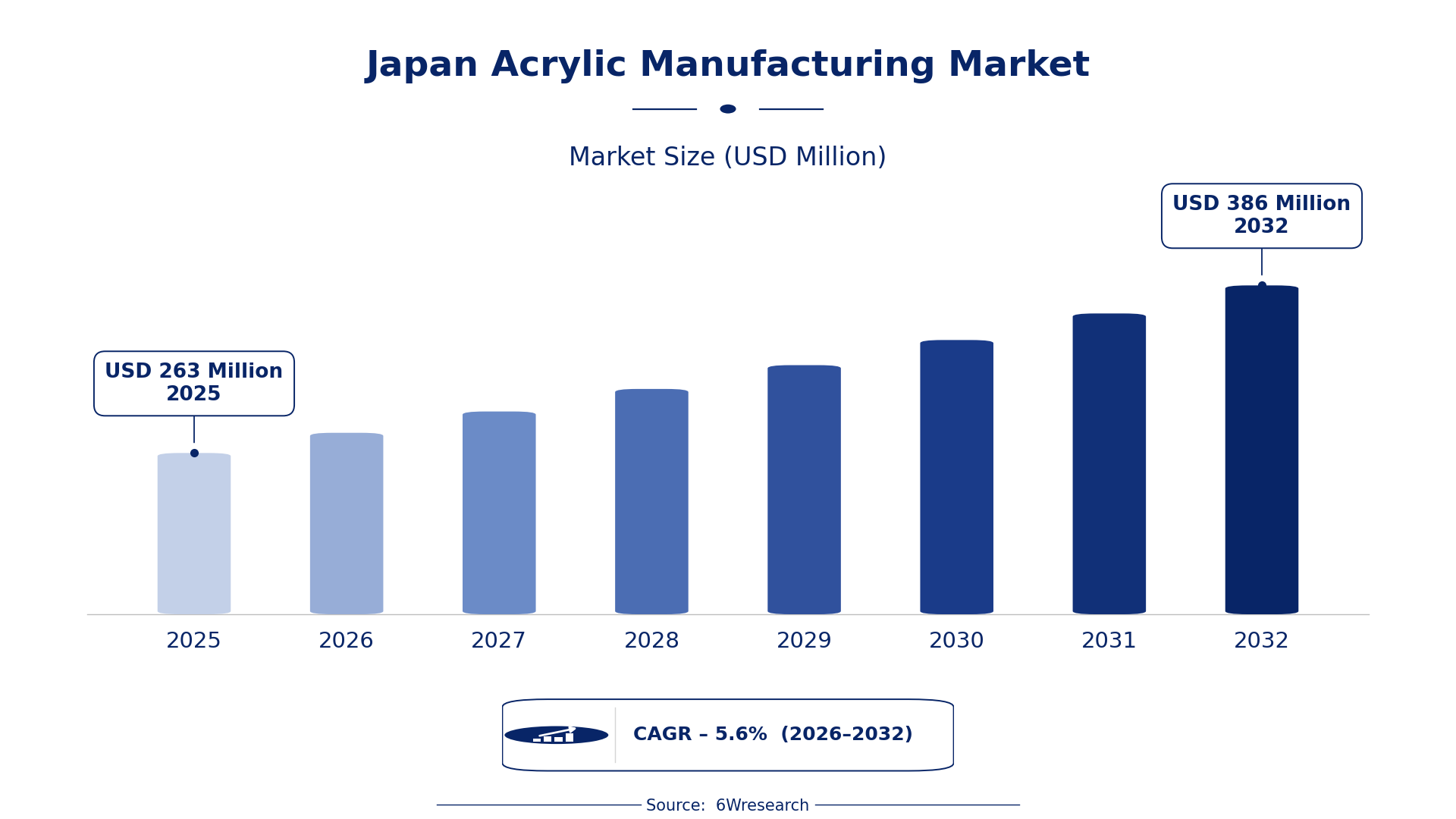
According to 6Wresearch internal database and industry insights, the Japan Acrylic Manufacturing Market was valued at USD 263 Million in 2025 and is projected to reach USD 386 Million by 2032, growing at a CAGR of approximately 5.6% during 2026–2032.
Japan Acrylic Manufacturing Market Highlights
| Report Metric | Details |
| Report Name | Japan Acrylic Manufacturing Market (2026-2032) |
| Market Size 2025 | USD 263 Million |
| Market Size 2032 | USD 386 Million |
| Absolute Growth 2025–2032 | USD 123 Million |
| CAGR 2026–2032 | 5.6% |
| Peak Annual Growth | 6.8% in 2029 |
| Forecast Period | 2026–2032 |
| Historical Data | 2022–2025 |
| Base Year | 2025 |
| Leading Product Type, 2025 | Acrylic Sheets (42% share) |
| Leading Process Type, 2025 | Extrusion Process (35% share) |
| Leading Distribution Channel, 2025 | Direct Sales (42% share) |
| Leading End User, 2025 | Construction Industry (44% share) |
| Fastest-Growing Product Type | Acrylic Rods (7.9% CAGR) |
| Fastest-Growing Process Type | Injection Molding (7.8% CAGR) |
| Fastest-Growing Distribution Channel | Online Platforms (7.5% CAGR) |
| Fastest-Growing End User | Signage & Advertising (7.4% CAGR) |
| Growing Sector | Construction Industry |
| Key End Users | Construction Industry, Automotive Components, Signage & Advertising, Furniture Manufacturers |
Japan Acrylic Manufacturing Market Year-wise Growth Rate and Key Drivers (2022–2032)
This graph illustrates the annual growth rates of the market from 2022 to 2032, highlighting a steady upward trajectory and projected market expansion over the forecast period.
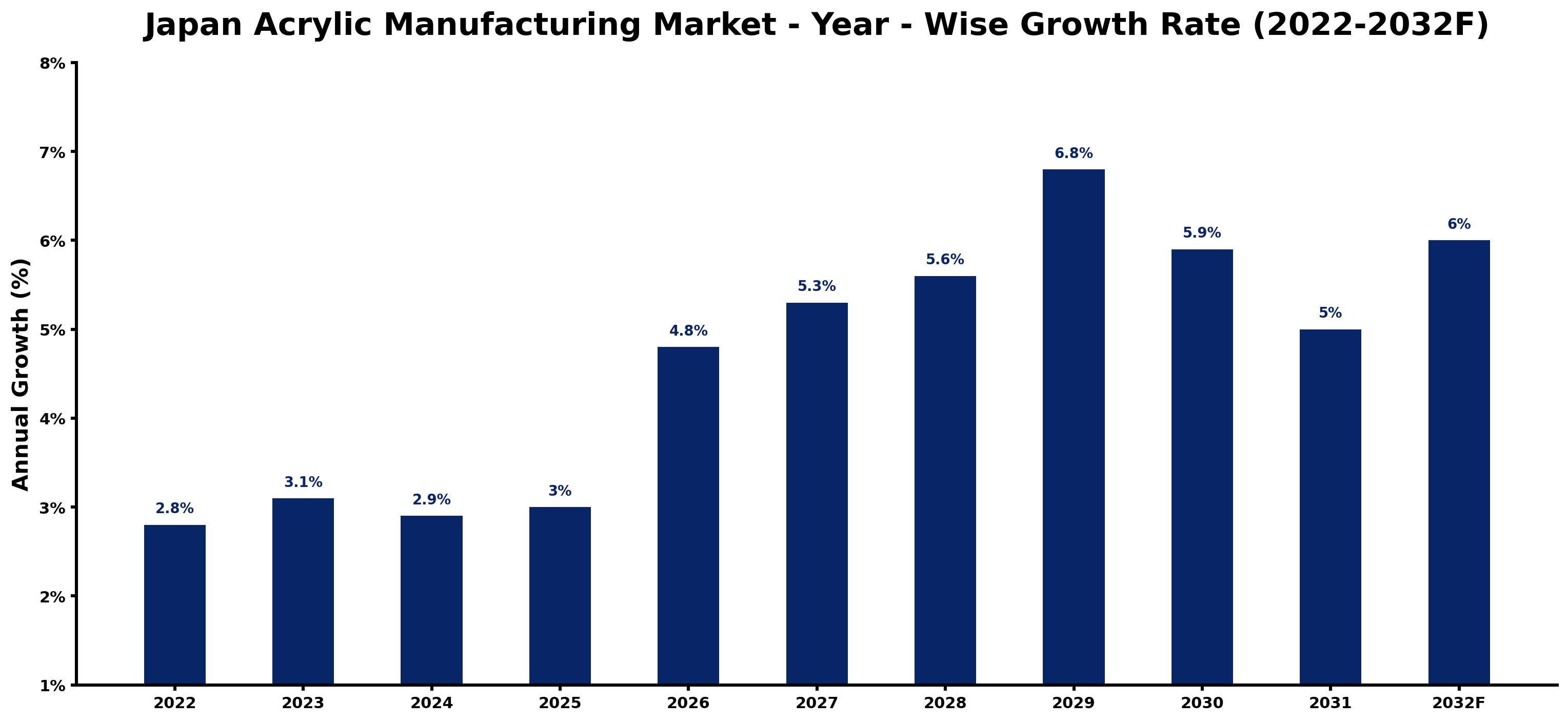
The yearly estimates that follow link every growth rate to its principal driver, so readers can see why the pace changed in each period.
| Year | Estimated Annual Growth (%) | Market Rationale |
| 2022 | 2.8 | The market experienced steady growth due to consistent demand from the construction sector. |
| 2023 | 3.1 | Growth accelerated as the construction industry showed signs of recovery. |
| 2024 | 2.9 | Demand growth slowed as market conditions began to stabilise after rapid expansion. |
| 2025 | 3.0 | The market rebounded with renewed interest in acrylic applications for signage and displays. |
| 2026 | 4.8 | Growth is expected to pick up as investments in acrylic manufacturing technology increase. |
| 2027 | 5.3 | The market will continue to expand, driven by rising demand from the automotive components sector. |
| 2028 | 5.6 | Demand growth is projected to remain strong, supported by ongoing construction projects. |
| 2029 | 6.8 | The market will peak as the construction sector fully embraces acrylic materials across various applications. |
| 2030 | 5.9 | Growth is expected to slow slightly as the market begins to stabilise after reaching a peak. |
| 2031 | 5.0 | The market will continue to grow, albeit at a slower rate, as demand from signage remains robust. |
| 2032 | 6.0 | Growth is projected to accelerate again as new applications for acrylic emerge in various industries. |
Note: Market size estimations and growth projections presented in this report are based on 6Wresearch's proprietary forecasting methodology, utilizing the latest available industry data, government publications, and primary research inputs.
Japan Acrylic Manufacturing Market Synopsis
Acrylic manufacturing involves producing polymethyl methacrylate (PMMA), a versatile thermoplastic widely used in signage, displays, and automotive components. The Japan Acrylic Manufacturing Market is expanding due to strong demand from the construction industry, which is projected to utilise 30% of all acrylic sheets in 2023. The automotive sector, with over 5 million vehicles produced annually, drives demand for PMMA resin, further boosting market growth. This expansion is supported by technological advancements and increasing consumer interest in custom designs, particularly in urban areas.
Market Dynamics Impact Analysis (2026–2032)
| Factor | Type | Impact | Primary Segment Affected |
| Strong demand from the construction industry drives acrylic sheet usage. | Driver | High | Acrylic Sheets |
| Increasing automotive production fuels the need for PMMA resin. | Driver | High | PMMA Resin |
| Growing interest in sustainable materials presents opportunities for new applications. | Opportunity | High | Acrylic Sheets |
| The rise of e-commerce creates a demand for online sales channels. | Opportunity | Medium | Online Platforms |
| High competition among suppliers may lead to price pressures. | Restraint | Medium | Acrylic Sheets |
| Limited awareness of acrylic's benefits in niche markets restricts growth. | Restraint | Medium | Acrylic Tubes |
| Supply chain disruptions can delay production schedules for manufacturers. | Challenge | High | Extrusion Process |
| Technological advancements require constant investment, straining smaller producers. | Challenge | Medium | PMMA Resin |
Evaluation of Drivers in Japan Acrylic Manufacturing Market (2026–2032)
The table below links each growth driver to the segment it affects and the evidence for it.
| Drivers | Primary Segment Affected | Why It Matters (Evidence) |
| Increased construction activity drives demand for acrylic sheets. | Acrylic Sheets | With 30% of all acrylic sheets used in construction, the sector's growth is vital. |
| Rising automotive production boosts PMMA resin demand. | PMMA Resin | Over 5 million vehicles produced annually increases the need for lightweight materials. |
| Growing consumer interest in custom furniture increases acrylic rod usage. | Acrylic Rods | The furniture sector's shift towards modern designs leads to higher acrylic rod demand. |
| Expansion of online sales channels increases accessibility for buyers. | Online Platforms | A 15% increase in online sales reflects changing purchasing habits among consumers. |
| Technological advancements in manufacturing improve production efficiency. | Extrusion Process | Investment in automation reached 10 billion yen, improving output and reducing costs. |
Buyers are adding capacity as the construction industry continues to grow, with 30% of acrylic sheets produced in 2023 destined for this sector. The automotive industry, producing over 5 million vehicles annually, increasingly utilises PMMA resin for lightweight components. The furniture sector is adopting acrylic rods for custom designs, reflecting a shift towards modern aesthetics. Investment in manufacturing technology reached 10 billion yen in 2023, focusing on automation and efficiency improvements, which further supports demand. The increasing consumer interest in unique home decor is reshaping the market for acrylic products, particularly in urban areas.
Evaluation of Restraints in Japan Acrylic Manufacturing Market
Below are the constraints most often cited by buyers and suppliers, with the segment each affects.
| Market Restraint | Primary Segment Affected | Why It Matters (Evidence) |
| High competition among suppliers leads to price pressures. | Acrylic Sheets | Price competition can reduce margins for manufacturers, impacting profitability. |
| Limited awareness of acrylic's benefits restricts niche market growth. | Acrylic Tubes | Niche applications in medical sectors remain underdeveloped due to lack of promotion. |
| Supply chain disruptions can delay production schedules. | Extrusion Process | Manufacturers face challenges in sourcing raw materials, affecting output timelines. |
| Technological advancements require constant investment. | PMMA Resin | Smaller producers may struggle to keep pace with innovations, limiting their competitiveness. |
| Regulatory compliance can increase operational costs. | Acrylic Sheets | Meeting JIS standards requires investment in quality assurance processes. |
Japan Acrylic Manufacturing Market Challenges
Over 100 million square meters of acrylic sheets produced annually face supply chain disruptions due to reliance on a limited number of raw material sources, delaying deliveries for buyers in the signage sector. Rising production costs, driven by a 10 billion yen investment in manufacturing technology, increase prices for suppliers, ultimately affecting profit margins for clinics using acrylic in medical applications. Intense competition from alternative materials forces producers to lower prices, squeezing margins for manufacturers and limiting their ability to invest in innovation. The slow adoption of advanced manufacturing technologies hinders efficiency, causing delays in product availability for buyers in the automotive components sector.
Trends in the Japan Acrylic Manufacturing Market
These developments are changing demand patterns in the Japan Acrylic Manufacturing Market.
- Shift towards Sustainable Materials in Construction: In 2023, the Japanese government initiated a program promoting sustainable materials, including acrylic. This shift is expected to increase the use of acrylic in eco-friendly construction projects, aligning with national sustainability goals.
- Growth of Online Sales Channels: Since 2023, online platforms have seen a 15% increase in acrylic product sales, reflecting changing consumer purchasing habits. This trend is reshaping how buyers access acrylic products, expanding market reach.
- Rising Demand for Custom Furniture Designs: The furniture manufacturing sector is increasingly adopting acrylic materials for modern designs, with a notable rise in custom applications. This shift reflects consumer preferences for unique and stylish home decor.
- Expansion of Automotive Applications: The automotive components sector is expected to grow due to increased use of lightweight materials, including acrylic. This trend is driven by the need for fuel efficiency in over 5 million vehicles produced annually.
Investment Opportunities in the Japan Acrylic Manufacturing Market
The opportunities below stand out in the Japan Acrylic Manufacturing Market for new entrants and existing suppliers.
- Investment in Sustainable Acrylic Solutions: With a growing focus on sustainability, there is an opportunity to develop eco-friendly acrylic products. The construction industry is a key buyer group, and investing in sustainable solutions can meet emerging demand.
- Expansion of E-commerce Platforms: The online sales channel is expanding rapidly, with a 15% increase in 2023. Suppliers can invest in effective e-commerce strategies to reach consumers directly, particularly in urban areas.
- Development of Niche Medical Applications: Acrylic tubes are gaining traction in medical applications, with increasing demand from healthcare facilities. Suppliers can target this sector by developing specialized products tailored to medical needs.
- Growth in Custom Furniture Market: The trend towards custom furniture designs presents an opportunity for suppliers to innovate. Focusing on urban areas with high consumer interest can facilitate market entry.
Government Initiatives in the Japan Acrylic Manufacturing Market
The Building Energy Efficiency Act, amended in 2022, mandates that all new buildings meet energy efficiency standards from April 2025. This law encourages the use of sustainable materials, including acrylic, in construction projects, promoting industry growth. The Green Growth Strategy aims to identify key sectors for sustainable development, further supporting acrylic manufacturing.
Buyers in the construction industry benefit from the Battery Industry Strategy, which targets domestic battery manufacturing capacity. This initiative, alongside funding for research into new acrylic applications, supports innovation in the acrylic sector. The Japan Acrylic Association promotes industry standards, ensuring compliance with regulations and supporting growth in the market.
Future Insight of the Japan Acrylic Manufacturing Market
New sustainable construction projects will emerge by 2032, particularly in urban areas, as the government promotes eco-friendly materials. Investment in automation technology will improve production efficiency, allowing suppliers to meet rising demand for acrylic in various sectors. The automotive sector will increasingly require lightweight acrylic components, with annual vehicle production projected to exceed 5 million units. As consumer interest in custom acrylic furniture grows, suppliers must innovate rapidly to capture market share.
Market Segmentation Analysis
Japan Acrylic Manufacturing Market report covers a detailed analysis of the following market segments:
By Product Type – Acrylic Sheets Lead, Acrylic Rods Expected to Grow Fastest
According to Saurav Kr Singh, Senior Research Analyst at 6Wresearch, with 42% of product type revenue in 2025, Acrylic Sheets was the largest category. Acrylic sheets dominate the market due to their extensive application in signage and construction, with over 100 million square meters produced annually in Japan. Their widespread use in urban settings highlights their essential role in effective visual communication and structural applications. Acrylic Rods are set to record the highest CAGR in this split, 7.9% over 2026–2032. Acrylic rods are experiencing rapid growth as furniture manufacturers increasingly incorporate acrylic into modern designs, reflecting a trend towards customisation. This surge in interest for unique home decor items is expected to further accelerate demand for acrylic rods. Suppliers should consider expanding their acrylic rod product lines to tap into the burgeoning furniture market.
By Process Type – Extrusion Process Leads, Injection Molding Expected to Grow Fastest
Extrusion Process accounted for 35% of the market by process type in 2025. The extrusion process leads the market, accounting for approximately 60% of acrylic production, as it is commonly used for producing sheets and rods. This widespread application makes it the preferred method among manufacturers. Over 2026–2032, Injection Molding is expected to post the fastest growth, at a CAGR of 7.8%. Injection molding is gaining traction due to its ability to produce specific components, reflecting a shift in demand for tailored acrylic solutions. As manufacturers seek efficiency, this process is likely to see increased adoption. Suppliers may need to invest in injection molding capabilities to meet the evolving demands of the market.
By Distribution Channel – Direct Sales Leads, Online Platforms Expected to Grow Fastest
Direct Sales held 42% of the Japan Acrylic Manufacturing Market by distribution channel in 2025. Direct sales serve as the main distribution channel for industrial customers, facilitating the efficient fulfilment of large orders. This approach fosters strong customer relationships and tailored services, which are crucial in the business-to-business environment. Online Platforms are projected to grow fastest, at a CAGR of 7.5% during 2026–2032. Online platforms are rapidly gaining traction, propelled by the rise of e-commerce, especially for smaller acrylic product purchases. This trend signifies a shift in consumer behaviour towards convenience and accessibility, necessitating adaptation by suppliers. Suppliers should strengthen their online sales strategies to capture the growing segment of customers favouring digital purchasing.
By End User – Construction Industry Leads, Signage & Advertising Expected to Grow Fastest
Construction Industry took 44% of end user revenue in 2025, more than any other category. The construction industry stands as the largest end user of acrylic materials, projected to utilise 30% of all acrylic sheets produced in 2023. This substantial share underscores the pivotal role of acrylic in contemporary construction projects, particularly in urban development. The quickest growth will come from Signage & Advertising, forecast to expand at a CAGR of 7.4% between 2026 and 2032. Signage and advertising are swiftly emerging as key application areas for acrylic sheets, with an estimated annual demand of 200,000 tons in Japan. This growth is fuelled by the increasing necessity for effective visual communication in urban settings, indicating robust market potential. Suppliers should focus on establishing partnerships with advertising agencies to capitalise on the rising demand within the signage sector.
Key Attractiveness of the Report
- 10 Years of Market Numbers
- Historical Data Starting from 2022 to 2025
- Base Year 2025
- Forecast Data until 2032
- Key Performance Indicators Impacting the Market
- Major Upcoming Developments and Projects
Key Highlights of the Report:
- Japan Acrylic Manufacturing Market Outlook
- Market Size of Japan Acrylic Manufacturing Market, 2025
- Forecast of Japan Acrylic Manufacturing Market, 2032
- Historical Data and Forecast of Japan Acrylic Manufacturing Revenues & Volume for the Period 2022-2032F
- Japan Acrylic Manufacturing Market Trend Evolution
- Japan Acrylic Manufacturing Market Drivers and Challenges
- Japan Acrylic Manufacturing Price Trends
- Japan Acrylic Manufacturing Porter's Five Forces
- Japan Acrylic Manufacturing Industry Life Cycle
- Historical Data and Forecast of Japan Acrylic Manufacturing Market Revenues & Volume By Product Type for the Period 2022-2032F
- Historical Data and Forecast of Japan Acrylic Manufacturing Market Revenues & Volume By Acrylic Sheets for the Period 2022-2032F
- Historical Data and Forecast of Japan Acrylic Manufacturing Market Revenues & Volume By Acrylic Rods for the Period 2022-2032F
- Historical Data and Forecast of Japan Acrylic Manufacturing Market Revenues & Volume By Acrylic Tubes for the Period 2022-2032F
- Historical Data and Forecast of Japan Acrylic Manufacturing Market Revenues & Volume By PMMA Resin for the Period 2022-2032F
- Historical Data and Forecast of Japan Acrylic Manufacturing Market Revenues & Volume By Process Type for the Period 2022-2032F
- Historical Data and Forecast of Japan Acrylic Manufacturing Market Revenues & Volume By Extrusion Process for the Period 2022-2032F
- Historical Data and Forecast of Japan Acrylic Manufacturing Market Revenues & Volume By Injection Molding for the Period 2022-2032F
- Historical Data and Forecast of Japan Acrylic Manufacturing Market Revenues & Volume By Cast Process for the Period 2022-2032F
- Historical Data and Forecast of Japan Acrylic Manufacturing Market Revenues & Volume By Bulk Polymerization for the Period 2022-2032F
- Historical Data and Forecast of Japan Acrylic Manufacturing Market Revenues & Volume By Distribution Channel for the Period 2022-2032F
- Historical Data and Forecast of Japan Acrylic Manufacturing Market Revenues & Volume By Direct Sales for the Period 2022-2032F
- Historical Data and Forecast of Japan Acrylic Manufacturing Market Revenues & Volume By Online Platforms for the Period 2022-2032F
- Historical Data and Forecast of Japan Acrylic Manufacturing Market Revenues & Volume By Industrial Suppliers for the Period 2022-2032F
- Historical Data and Forecast of Japan Acrylic Manufacturing Market Revenues & Volume By Specialty Stores for the Period 2022-2032F
- Historical Data and Forecast of Japan Acrylic Manufacturing Market Revenues & Volume By End User for the Period 2022-2032F
- Historical Data and Forecast of Japan Acrylic Manufacturing Market Revenues & Volume By Construction Industry for the Period 2022-2032F
- Historical Data and Forecast of Japan Acrylic Manufacturing Market Revenues & Volume By Signage & Advertising for the Period 2022-2032F
- Historical Data and Forecast of Japan Acrylic Manufacturing Market Revenues & Volume By Furniture Manufacturers for the Period 2022-2032F
- Historical Data and Forecast of Japan Acrylic Manufacturing Market Revenues & Volume By Automotive Components for the Period 2022-2032F
- Japan Acrylic Manufacturing Import Export Trade Statistics
- Market Opportunity Assessment By Product Type
- Market Opportunity Assessment By Process Type
- Market Opportunity Assessment By Distribution Channel
- Market Opportunity Assessment By End User
- Japan Acrylic Manufacturing Top Companies Market Share
- Japan Acrylic Manufacturing Competitive Benchmarking By Technical and Operational Parameters
- Japan Acrylic Manufacturing Company Profiles
- Japan Acrylic Manufacturing Key Strategic Recommendations
Market Covered
The following segment groups are covered in the report.
By Product Type
- Acrylic Sheets
- Acrylic Rods
- Acrylic Tubes
- PMMA Resin
By Process Type
- Extrusion Process
- Injection Molding
- Cast Process
- Bulk Polymerization
By Distribution Channel
- Direct Sales
- Online Platforms
- Industrial Suppliers
- Specialty Stores
By End User
- Construction Industry
- Signage & Advertising
- Furniture Manufacturers
- Automotive Components































