Japan Adaptogenic Herbs Market Size & Growth Rate
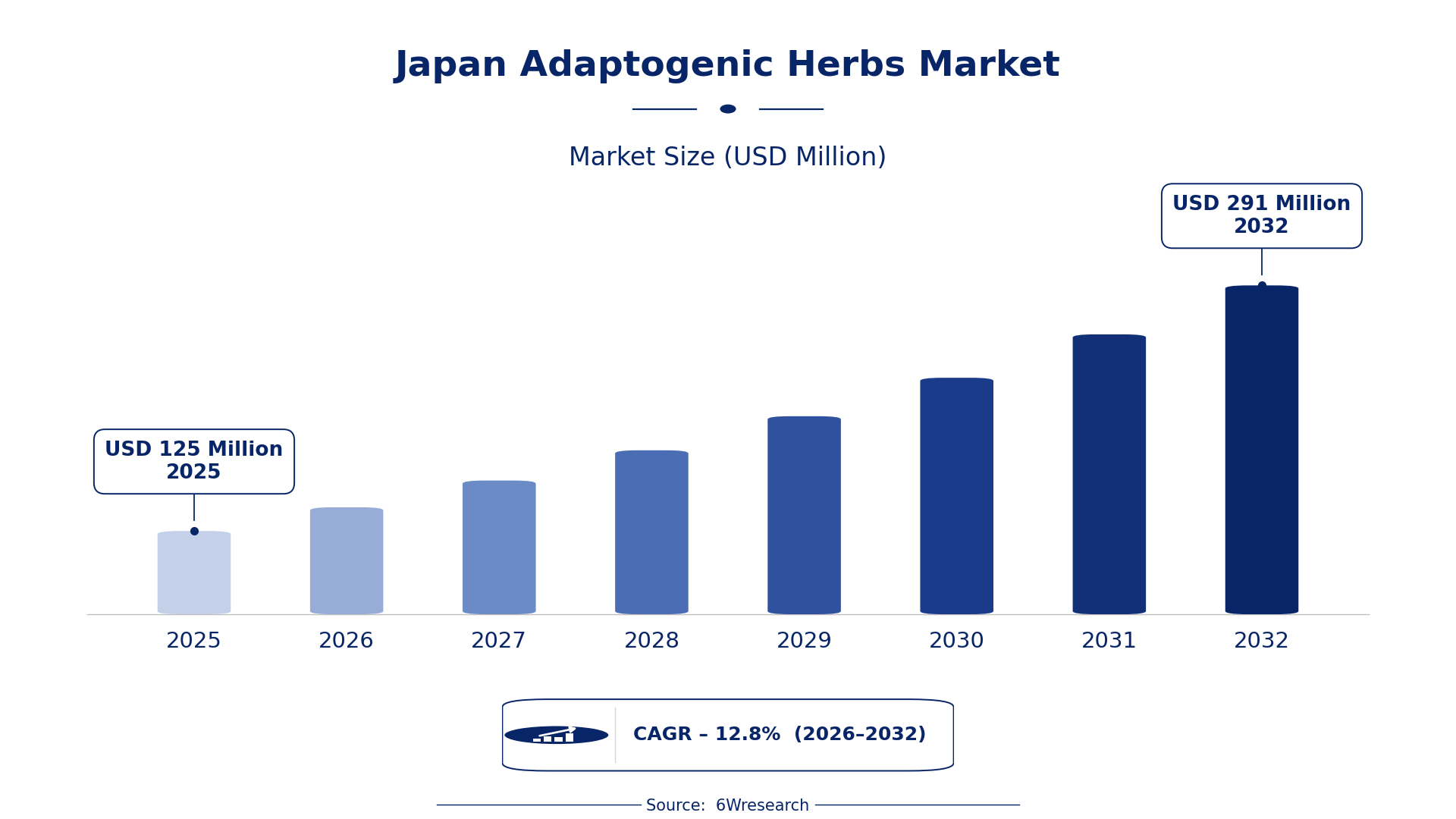
According to 6Wresearch internal database and industry insights, the Japan Adaptogenic Herbs Market was valued at USD 125 Million in 2025 and is projected to reach USD 291 Million by 2032, growing at a CAGR of approximately 12.8% during 2026–2032.
Japan Adaptogenic Herbs Market Highlights
| Report Metric | Details |
| Report Name | Japan Adaptogenic Herbs Market (2026-2032) |
| Market Size 2025 | USD 125 Million |
| Market Size 2032 | USD 291 Million |
| Absolute Growth 2025–2032 | USD 166 Million |
| CAGR 2026–2032 | 12.8% |
| Peak Annual Growth | 14.0% in 2026 |
| Forecast Period | 2026–2032 |
| Historical Data | 2022–2025 |
| Base Year | 2025 |
| Leading Adaptogenic Herbs, 2025 | Ashwagandha Supplements (53% share) |
| Leading Product Type, 2025 | Capsules/Pills (40% share) |
| Leading Distribution Channel, 2025 | Online Platforms (44% share) |
| Leading End User, 2025 | Health-Conscious Consumers (41% share) |
| Fastest-Growing Adaptogenic Herbs | Rhodiola Rosea Extract (16.1% CAGR) |
| Fastest-Growing Product Type | Powder (17.7% CAGR) |
| Fastest-Growing Distribution Channel | Health Stores (15.9% CAGR) |
| Fastest-Growing End User | Fitness Enthusiasts (16.0% CAGR) |
| Growing Sector | wellness market |
| Key End Users | health-conscious consumers, fitness enthusiasts, stress relief consumers |
Japan Adaptogenic Herbs Market Year-wise Growth Rate and Key Drivers (2022–2032)
This graph illustrates the annual growth rates of the market from 2022 to 2032, highlighting a steady upward trajectory and projected market expansion over the forecast period.
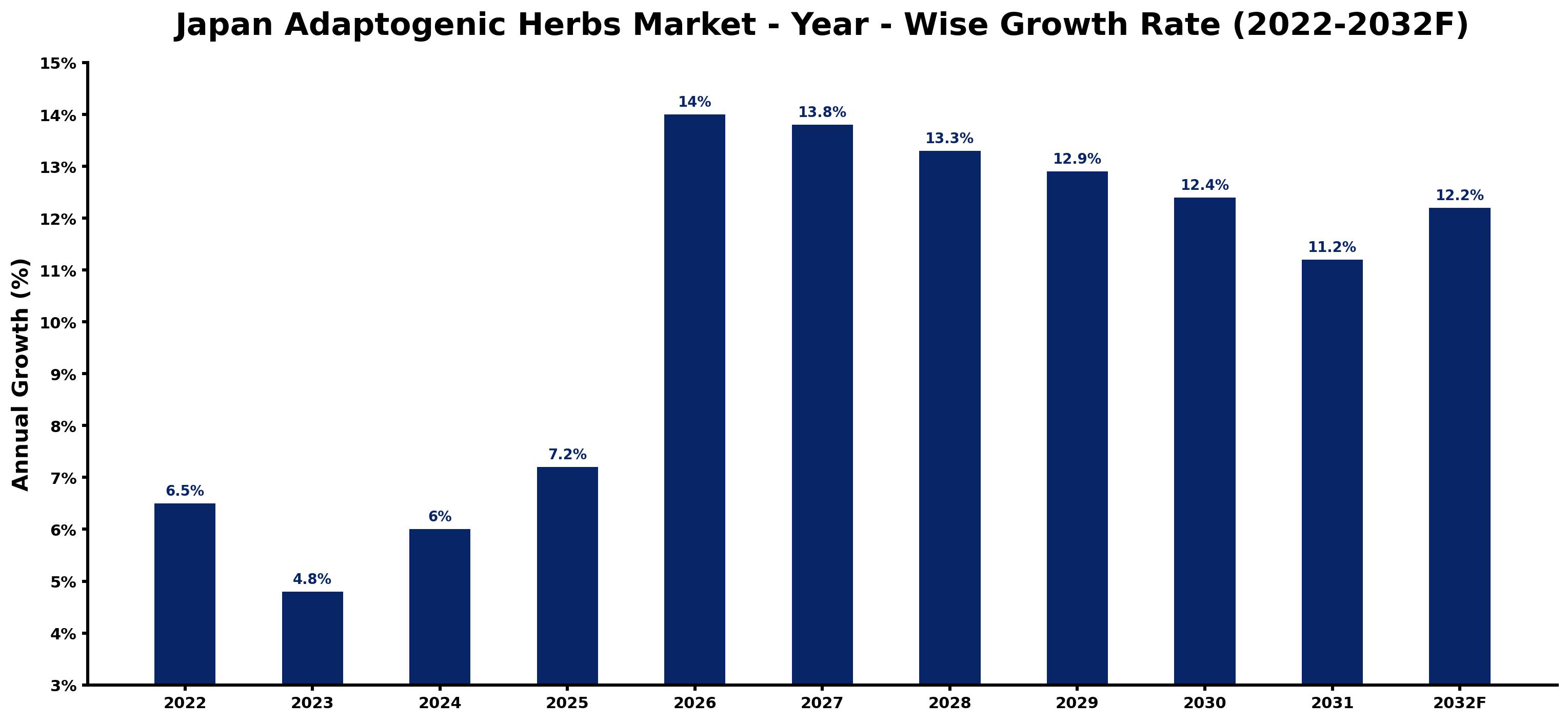
For each year, the table pairs the estimated growth rate with the leading influence on demand, showing how the drivers changed across the period.
| Year | Estimated Annual Growth (%) | Market Rationale |
| 2022 | 6.5 | The market experienced steady growth, reflecting ongoing interest in wellness products. |
| 2023 | 4.8 | Growth slowed due to market saturation and increased competition among suppliers. |
| 2024 | 6.0 | Demand increased as consumers sought natural remedies for stress management. |
| 2025 | 7.2 | Consumer interest in adaptogenic herbs rose, driven by wellness trends. |
| 2026 | 14.0 | Growth accelerated as awareness of health benefits expanded among consumers. |
| 2027 | 13.8 | A slight slowdown occurred as market maturity began to set in. |
| 2028 | 13.3 | Continued interest in herbal supplements sustained market growth, albeit at a slower rate. |
| 2029 | 12.9 | The market maintained growth as consumer habits shifted towards holistic health. |
| 2030 | 12.4 | Growth slowed further as the market approached saturation in key segments. |
| 2031 | 11.2 | The market continued to grow, driven by ongoing consumer education and product innovation. |
| 2032 | 12.2 | Demand is expected to rise as new health trends emerge and consumer awareness increases. |
Note: Market size estimations and growth projections presented in this report are based on 6Wresearch's proprietary forecasting methodology, utilizing the latest available industry data, government publications, and primary research inputs.
Japan Adaptogenic Herbs Market Synopsis
Adaptogenic herbs are natural substances that assist the body in adapting to stress and promoting mental balance. Extracted from various plants and roots, these herbs are becoming increasingly popular in the Japan Adaptogenic Herbs Market, valued at approximately 1 trillion JPY in 2023. Demand is primarily driven by over 40 million health-conscious consumers and a notable rise in online sales, which increased by 25% last year. The growing trend of herbal remedies among fitness enthusiasts further propels this market expansion.
Market Dynamics Impact Analysis (2026–2032)
| Factor | Type | Impact | Primary Segment Affected |
| Increasing consumer awareness of health benefits | Driver | High | Ashwagandha Supplements |
| Rising demand for natural stress relief solutions | Driver | High | Rhodiola Rosea Extract |
| Growing market for herbal supplements in urban areas | Opportunity | Medium | Health Stores |
| Expanding e-commerce channels for health products | Opportunity | High | Online Platforms |
| Market saturation leading to intense competition | Restraint | Medium | Ginseng Tea |
| Regulatory challenges affecting product approval | Restraint | High | Capsules/Pills |
| Consumer skepticism towards herbal efficacy | Challenge | Medium | Holy Basil (Tulsi) Drops |
| Supply chain disruptions impacting product availability | Challenge | High | Powder |
Evaluation of Drivers in Japan Adaptogenic Herbs Market (2026–2032)
The factors lifting demand, and the evidence behind each, are summarised below.
| Drivers | Primary Segment Affected | Why It Matters (Evidence) |
| Growing consumer preference for natural remedies | Ashwagandha Supplements | In 2023, 15% of consumers reported using adaptogenic herbs for stress relief, boosting sales. |
| Increased fitness awareness among consumers | Rhodiola Rosea Extract | 30% of adults in Japan regularly use herbal remedies, driving demand for supplements. |
| Expansion of online sales channels | Online Platforms | Online sales of adaptogenic herbs increased by 25% last year, broadening market access. |
| Rising popularity of herbal drinks | Ginseng Tea | Traditional tea houses in Japan report consistent consumption, supporting market growth. |
| Health stores expanding product offerings | Health Stores | Health stores in Osaka are seeing a growing demand for liquid herbal extracts. |
Most of the extra volume comes from the increasing consumer preference for natural remedies, with 15% of adults using adaptogenic herbs for stress relief in 2023. The rising interest among fitness enthusiasts is notable, as 30% of the population regularly adopts herbal supplements. Online platforms have seen a 25% increase in sales, allowing for wider access to these products. Traditional tea houses are also contributing to demand, particularly for Ginseng tea, which remains popular in wellness circles. Health stores are expanding their offerings, responding to the growing interest in liquid herbal extracts, further driving market growth.
Evaluation of Restraints in Japan Adaptogenic Herbs Market
Below are the constraints most often cited by buyers and suppliers, with the segment each affects.
| Market Restraint | Primary Segment Affected | Why It Matters (Evidence) |
| Intense competition among suppliers | Ginseng Tea | With numerous brands vying for market share, pricing pressures increase, impacting profitability. |
| Regulatory hurdles for product approval | Capsules/Pills | Compliance with the NHI drug price standard can delay market entry for new products. |
| Consumer skepticism about herbal efficacy | Holy Basil (Tulsi) Drops | Some consumers remain doubtful about the effectiveness of herbal supplements, limiting growth. |
| Supply chain disruptions affecting availability | Powder | Logistical challenges can lead to stock shortages, impacting sales and customer satisfaction. |
| Market saturation in urban areas | Ashwagandha Supplements | As more brands enter the market, differentiation becomes challenging, slowing growth. |
Japan Adaptogenic Herbs Market Challenges
In 2023, over 15% of consumers reported using adaptogenic herbs for stress relief, but stringent regulations complicate product approval for suppliers, delaying the market entry of new offerings. Health-conscious consumers face limited product diversity due to these regulatory challenges, which can restrict their choices. Compliance with JIS standards for herbal supplements raises production costs by up to 20%, significantly impacting suppliers' profit margins. Sourcing Rhodiola Rosea from Russia and Mongolia can lead to supply chain disruptions, causing delays in product availability for buyers in Japan.
Trends in the Japan Adaptogenic Herbs Market
Several trends are reshaping the Japan Adaptogenic Herbs Market; the most important are set out below.
- Surge in Online Sales: In 2023, online sales of adaptogenic herbs rose by 25%, reflecting changing consumer shopping habits. This trend highlights a growing preference for convenience among health-conscious consumers.
- Health Stores Gaining Popularity: Health stores in Osaka are experiencing increased demand for liquid herbal extracts, with a notable rise in foot traffic. This shift underscores the importance of specialised retailers in the wellness market.
- Growing Interest in Herbal Drinks: The consumption of Ginseng tea in traditional tea houses has gained popularity, with many consumers seeking natural energy sources. This trend reflects a broader movement towards holistic health practices.
- Increased Adoption of Herbal Remedies: Since 2023, 30% of adults in Japan have regularly used herbal remedies, indicating a cultural shift towards natural health solutions. This trend is reshaping the wellness market.
Investment Opportunities in the Japan Adaptogenic Herbs Market
Where to invest in the Japan Adaptogenic Herbs Market: the main openings are set out below.
- Expansion of Health Stores: Health stores in urban areas are expanding their product lines to include more adaptogenic herbs, reflecting a growing demand. This offers suppliers a chance to partner with local retailers.
- Growth of Online Platforms: With online platforms capturing 44% of the market share in 2025, there is an opportunity to invest in e-commerce strategies. Collaborating with digital marketing experts can improve visibility.
- Rising Demand from Fitness Enthusiasts: Fitness enthusiasts are increasingly seeking adaptogenic supplements, particularly powders, which are projected to grow rapidly. Suppliers can target this demographic through specialized marketing.
- Interest in Herbal Drinks: The trend towards herbal drinks presents an opportunity to introduce new products, particularly in urban areas. Engaging with health-conscious consumers through local events can boost brand awareness.
Government Initiatives in the Japan Adaptogenic Herbs Market
The recent revision of the NHI drug price standard by the Ministry of Health, Labour and Welfare establishes reimbursement prices for herbal supplements, improving market access for producers. This measure complements existing guidelines under the PMD Act, ensuring safety and quality in herbal products.
Health-conscious consumers benefit from the Next-Generation Medical Infrastructure Act, which allows for the anonymisation of medical data to support research on herbal remedies. This initiative promotes informed product development and builds consumer trust in adaptogenic herbs.
Future Insight of the Japan Adaptogenic Herbs Market
A policy-driven shift will promote natural health products, increasing consumer awareness and demand by 2032. Suppliers will respond by broadening product lines to include a wider variety of adaptogenic herbs, catering to the growing interest in holistic wellness. Online sales channels are projected to grow by 10% by 2025, enabling buyers to access products more easily. The Tokyo Health Promotion Program will further encourage the integration of herbal supplements into daily routines, strengthening the market for adaptogenic herbs.
Market Segmentation Analysis
Japan Adaptogenic Herbs Market report covers a detailed analysis of the following market segments:
By Adaptogenic Herbs – Ashwagandha Supplements Lead, Rhodiola Rosea Extract Expected to Grow Fastest
According to Saurav Kr Singh, Senior Research Analyst at 6Wresearch, with 53% of adaptogenic herbs revenue in 2025, Ashwagandha Supplements was the largest category. Ashwagandha Supplements hold the largest share due to their widespread recognition for stress relief and energy enhancement, appealing to Japan's health-conscious individuals. The established JIS standards for herbal supplements further reinforce buyer confidence in this segment. Rhodiola Rosea Extract is set to record the highest CAGR in this split, 16.1% over 2026–2032. Rhodiola Rosea Extract is experiencing rapid growth as it effectively addresses fatigue and improves mental clarity, attracting more consumers seeking support. Its sourcing from regions known for high-quality herbs enhances its appeal among buyers. Suppliers should emphasise the unique benefits of Rhodiola Rosea to capture the increasing consumer interest.
By Product Type – Capsules/Pills Lead, Powder Expected to Grow Fastest
Capsules/Pills took 40% of product type revenue in 2025, more than any other category. Capsules and Pills hold the largest share as they provide a convenient form for daily supplementation, appealing to busy consumers seeking easy-to-use health solutions. This format accounts for 60% of sales in the adaptogenic herbs market. The quickest growth will come from Powder, forecast to expand at a CAGR of 17.7% between 2026 and 2032. Powdered forms are gaining traction among consumers who prefer versatile options for mixing into drinks or foods, reflecting a shift towards more adaptable health products. This trend is driven by the growing interest in fitness and nutrition among the population. Suppliers should consider expanding their product lines to include more powdered options to meet evolving consumer preferences.
By Distribution Channel – Online Platforms Lead, Health Stores Expected to Grow Fastest
Online Platforms held 44% of the Japan Adaptogenic Herbs Market by distribution channel in 2025. Online Platforms lead the distribution sector as they effectively connect with health-conscious consumers who prefer the convenience of online shopping. A recent 25% increase in online sales highlights strong engagement from buyers seeking adaptogenic herbs. Health Stores are projected to grow fastest, at a CAGR of 15.9% during 2026–2032. Health Stores are witnessing the fastest growth as they provide specialised retail environments that cater to consumers looking for expert advice and product quality assurance. The rise of health stores in urban areas like Tokyo and Osaka supports this trend. Suppliers should consider partnerships with health stores to enhance product visibility and accessibility.
By End User – Health-Conscious Consumers Lead, Fitness Enthusiasts Expected to Grow Fastest
Health-Conscious Consumers accounted for 41% of the market by end user in 2025. Health-Conscious Consumers represent the largest segment, forming the primary target market for adaptogenic herbs, with a significant percentage of adults regularly using herbal remedies. Their commitment to wellness drives demand for products that promote mental balance and physical performance. Over 2026–2032, Fitness Enthusiasts are expected to post the fastest growth, at a CAGR of 16.0%. Fitness Enthusiasts are the fastest-growing group as they actively seek supplements to enhance performance and recovery, contributing to the rising interest in adaptogenic herbs. This growth is reflected in increasing participation rates in fitness activities across the population. Suppliers should tailor marketing strategies to address the specific needs of fitness enthusiasts to effectively penetrate this expanding market.
Key Attractiveness of the Report
- 10 Years of Market Numbers
- Historical Data Starting from 2022 to 2025
- Base Year 2025
- Forecast Data until 2032
- Key Performance Indicators Impacting the Market
- Major Upcoming Developments and Projects
Key Highlights of the Report:
- Japan Adaptogenic Herbs Market Outlook
- Market Size of Japan Adaptogenic Herbs Market, 2025
- Forecast of Japan Adaptogenic Herbs Market, 2032
- Historical Data and Forecast of Japan Adaptogenic Herbs Revenues & Volume for the Period 2022-2032F
- Japan Adaptogenic Herbs Market Trend Evolution
- Japan Adaptogenic Herbs Market Drivers and Challenges
- Japan Adaptogenic Herbs Price Trends
- Japan Adaptogenic Herbs Porter's Five Forces
- Japan Adaptogenic Herbs Industry Life Cycle
- Historical Data and Forecast of Japan Adaptogenic Herbs Market Revenues & Volume By Adaptogenic Herbs for the Period 2022-2032F
- Historical Data and Forecast of Japan Adaptogenic Herbs Market Revenues & Volume By Ashwagandha Supplements for the Period 2022-2032F
- Historical Data and Forecast of Japan Adaptogenic Herbs Market Revenues & Volume By Rhodiola Rosea Extract for the Period 2022-2032F
- Historical Data and Forecast of Japan Adaptogenic Herbs Market Revenues & Volume By Holy Basil (Tulsi) Drops for the Period 2022-2032F
- Historical Data and Forecast of Japan Adaptogenic Herbs Market Revenues & Volume By Ginseng Tea for the Period 2022-2032F
- Historical Data and Forecast of Japan Adaptogenic Herbs Market Revenues & Volume By Product Type for the Period 2022-2032F
- Historical Data and Forecast of Japan Adaptogenic Herbs Market Revenues & Volume By Capsules/Pills for the Period 2022-2032F
- Historical Data and Forecast of Japan Adaptogenic Herbs Market Revenues & Volume By Powder for the Period 2022-2032F
- Historical Data and Forecast of Japan Adaptogenic Herbs Market Revenues & Volume By Liquid Form for the Period 2022-2032F
- Historical Data and Forecast of Japan Adaptogenic Herbs Market Revenues & Volume By Herbal Drink for the Period 2022-2032F
- Historical Data and Forecast of Japan Adaptogenic Herbs Market Revenues & Volume By Distribution Channel for the Period 2022-2032F
- Historical Data and Forecast of Japan Adaptogenic Herbs Market Revenues & Volume By Online Platforms for the Period 2022-2032F
- Historical Data and Forecast of Japan Adaptogenic Herbs Market Revenues & Volume By Health Stores for the Period 2022-2032F
- Historical Data and Forecast of Japan Adaptogenic Herbs Market Revenues & Volume By Pharmacies for the Period 2022-2032F
- Historical Data and Forecast of Japan Adaptogenic Herbs Market Revenues & Volume By Direct Sales for the Period 2022-2032F
- Historical Data and Forecast of Japan Adaptogenic Herbs Market Revenues & Volume By End User for the Period 2022-2032F
- Historical Data and Forecast of Japan Adaptogenic Herbs Market Revenues & Volume By Health-Conscious Consumers for the Period 2022-2032F
- Historical Data and Forecast of Japan Adaptogenic Herbs Market Revenues & Volume By Fitness Enthusiasts for the Period 2022-2032F
- Historical Data and Forecast of Japan Adaptogenic Herbs Market Revenues & Volume By Stress Relief Consumers for the Period 2022-2032F
- Historical Data and Forecast of Japan Adaptogenic Herbs Market Revenues & Volume By Wellness Market for the Period 2022-2032F
- Japan Adaptogenic Herbs Import Export Trade Statistics
- Market Opportunity Assessment By Adaptogenic Herbs
- Market Opportunity Assessment By Product Type
- Market Opportunity Assessment By Distribution Channel
- Market Opportunity Assessment By End User
- Japan Adaptogenic Herbs Top Companies Market Share
- Japan Adaptogenic Herbs Competitive Benchmarking By Technical and Operational Parameters
- Japan Adaptogenic Herbs Company Profiles
- Japan Adaptogenic Herbs Key Strategic Recommendations
Market Covered
The study includes the following segmentation.
By Adaptogenic Herbs
- Ashwagandha Supplements
- Rhodiola Rosea Extract
- Holy Basil (Tulsi) Drops
- Ginseng Tea
By Product Type
- Capsules/Pills
- Powder
- Liquid Form
- Herbal Drink
By Distribution Channel
- Online Platforms
- Health Stores
- Pharmacies
- Direct Sales
By End User
- Health-Conscious Consumers
- Fitness Enthusiasts
- Stress Relief Consumers
- Wellness Market































