Japan ADHD Medication Market Size & Growth Rate
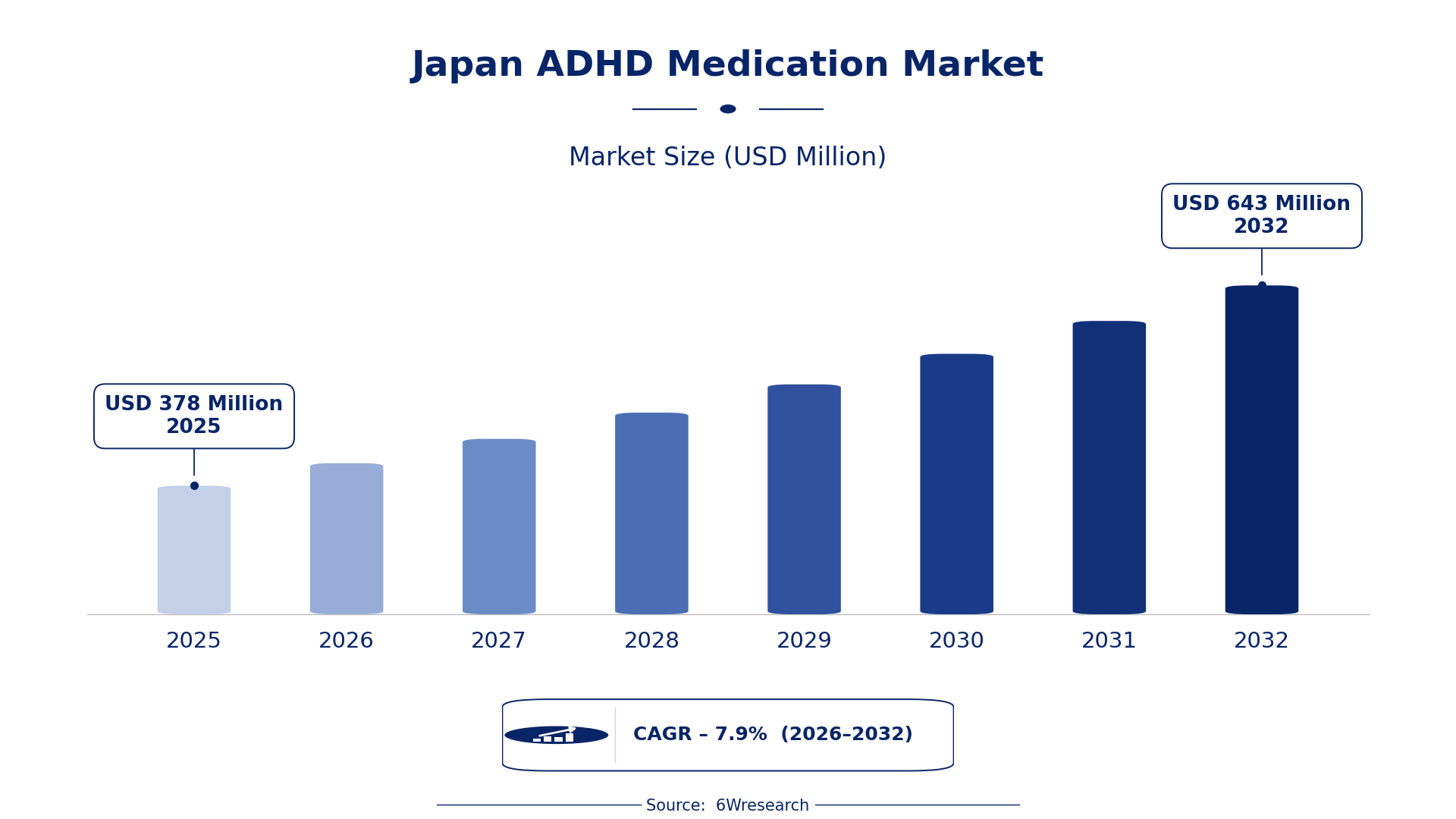
According to 6Wresearch internal database and industry insights, the Japan ADHD Medication Market was valued at USD 378 Million in 2025 and is projected to reach USD 643 Million by 2032, growing at a CAGR of approximately 7.9% during 2026–2032.
Japan ADHD Medication Market Highlights
| Report Metric | Details |
| Report Name | Japan ADHD Medication Market (2026-2032) |
| Market Size 2025 | USD 378 Million |
| Market Size 2032 | USD 643 Million |
| Absolute Growth 2025–2032 | USD 265 Million |
| CAGR 2026–2032 | 7.9% |
| Peak Annual Growth | 9.5% in 2032 |
| Forecast Period | 2026–2032 |
| Historical Data | 2022–2025 |
| Base Year | 2025 |
| Leading Product Type, 2025 | Stimulants (44% share) |
| Leading Distribution Channel, 2025 | Pharmacies (39% share) |
| Leading End User, 2025 | Adults with ADHD (44% share) |
| Fastest-Growing Product Type | Non-Stimulants (11.5% CAGR) |
| Fastest-Growing Distribution Channel | Online Platforms (10.1% CAGR) |
| Fastest-Growing End User | Children with ADHD (10.2% CAGR) |
| Growing Sector | Mental Health Treatment |
| Key End Users | Pediatric Clinics, Mental Health Centers, Pharmacies, Adults with ADHD |
Japan ADHD Medication Market Year-wise Growth Rate and Key Drivers (2022–2032)
This graph illustrates the annual growth rates of the market from 2022 to 2032, highlighting a steady upward trajectory and projected market expansion over the forecast period.
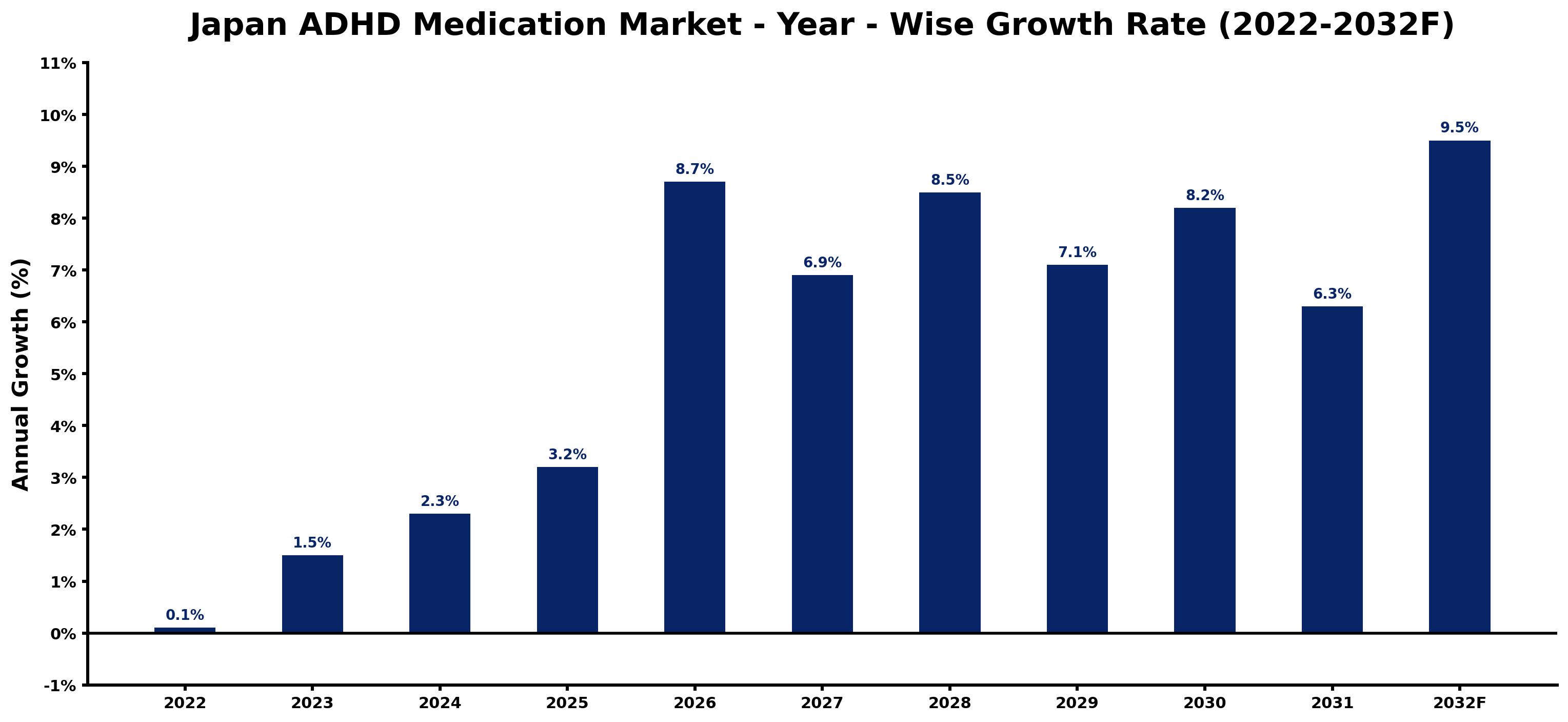
Annual growth estimates for each year appear below with the principal reason behind them, explaining the shifts that set the pace of the market.
| Year | Estimated Annual Growth (%) | Market Rationale |
| 2022 | 0.1 | The market experienced minimal growth as awareness of treatment options was developing. |
| 2023 | 1.5 | Growth accelerated due to increased ADHD diagnoses and awareness campaigns in Tokyo. |
| 2024 | 2.3 | The rise in prescriptions was supported by new treatment protocols from the Japanese Pediatric Society. |
| 2025 | 3.2 | Growth continued as more adults sought treatment, reflecting changing perceptions of ADHD. |
| 2026 | 8.7 | The market is expected to rise as non-stimulant medications gain popularity among patients. |
| 2027 | 6.9 | Growth will slow slightly as the market adjusts to increased competition from generics. |
| 2028 | 8.5 | Demand is projected to surge again as mental health integration in treatment settings expands. |
| 2029 | 7.1 | Growth will decelerate as the market stabilises following rapid adoption of new medications. |
| 2030 | 8.2 | The market is expected to rebound as hospitals increase ADHD treatment capacity and awareness. |
| 2031 | 6.3 | Growth will slow again as the market matures and competition intensifies among providers. |
| 2032 | 9.5 | The market is projected to peak as new treatment options become widely available. |
Note: Market size estimations and growth projections presented in this report are based on 6Wresearch's proprietary forecasting methodology, utilizing the latest available industry data, government publications, and primary research inputs.
Japan ADHD Medication Market Synopsis
ADHD medication includes stimulants and non-stimulants that help manage symptoms of Attention Deficit Hyperactivity Disorder. The Japan ADHD Medication Market is shaped by an increasing awareness of ADHD among both adults and children, with around 1.2 million children diagnosed in 2023. The rising use of non-stimulant medications and efforts to enhance ADHD diagnosis are driving market growth. The Tokyo region stands out in prescriptions, highlighting urban demand for effective treatment options. This market is set to expand as awareness and acceptance of ADHD treatments grow.
Market Dynamics Impact Analysis (2026–2032)
| Factor | Type | Impact | Primary Segment Affected |
| Growing number of ADHD diagnoses among children and adults | Driver | High | Stimulants |
| Increased adoption of non-stimulant medications for patients unable to tolerate stimulants | Driver | High | Non-Stimulants |
| Rising demand for ADHD medications in urban areas due to higher awareness | Opportunity | High | Pharmacies |
| Expansion of online platforms providing ADHD medication information and resources | Opportunity | Medium | Online Platforms |
| Strict regulations governing stimulant medications limiting availability | Restraint | High | Stimulants |
| Cost considerations leading to increased use of generics over branded medications | Restraint | Medium | Generic ADHD Drugs |
| High costs associated with ADHD treatment limiting access for some patients | Challenge | High | Adults with ADHD |
| Limited availability of specialized ADHD treatment facilities in rural areas | Challenge | Medium | Pediatric Clinics |
Evaluation of Drivers in Japan ADHD Medication Market (2026–2032)
The table below links each growth driver to the segment it affects and the evidence for it.
| Drivers | Primary Segment Affected | Why It Matters (Evidence) |
| Increased awareness of ADHD symptoms among healthcare providers and the public | Stimulants | This awareness has led to more children and adults seeking diagnosis and treatment, with 1.2 million children diagnosed in 2023. |
| Growing acceptance of non-stimulant medications as viable alternatives | Non-Stimulants | This shift allows patients who cannot tolerate stimulants to receive effective treatment, contributing to a projected CAGR of 11.5%. |
| Urban pharmacies reporting higher sales of ADHD medications | Pharmacies | Higher population density in urban areas leads to greater demand for effective medications. |
| Integration of ADHD treatment protocols in mental health centres | Mental Health Centers | This integration supports better care for ADHD patients, increasing treatment rates and improving outcomes. |
| Rising number of pediatric clinics regularly treating ADHD patients | Pediatric Clinics | In 2023, 60% of these clinics reported treating ADHD patients, reflecting a growing focus on early diagnosis. |
Volumes grow on the back of heightened awareness of ADHD symptoms, leading to increased diagnoses among both children and adults. In 2023, approximately 1.2 million children were diagnosed, prompting more families to seek treatment. Urban pharmacies report higher sales, indicating concentrated demand for effective medications. The integration of ADHD treatment protocols in mental health centres improves patient care, while pediatric clinics are increasingly treating ADHD cases, with 60% reporting regular treatment. The acceptance of non-stimulant medications is also rising, allowing a broader patient base to access effective therapies.
Evaluation of Restraints in Japan ADHD Medication Market
The table below lists the restraints and the evidence behind each.
| Market Restraint | Primary Segment Affected | Why It Matters (Evidence) |
| Regulatory restrictions on stimulant medications limit their availability | Stimulants | Stimulants are governed by strict regulations, which can hinder access for patients needing these treatments. |
| Cost concerns lead to preference for generic medications over branded options | Generic ADHD Drugs | The adoption of generics is influenced by financial considerations, impacting sales of branded medications. |
| Limited awareness of ADHD among certain demographics restricts treatment | Adults with ADHD | Many adults remain undiagnosed due to a lack of awareness, limiting market growth potential. |
| Insufficient specialized treatment facilities in rural areas restrict access | Pediatric Clinics | Patients in rural regions may struggle to find adequate ADHD treatment options, affecting overall market reach. |
| High costs associated with ADHD treatment can deter patients from seeking help | Children with ADHD | Families may delay or avoid treatment due to financial burdens, impacting overall medication sales. |
Japan ADHD Medication Market Challenges
Strict regulations on stimulant medications present challenges for suppliers, causing delays in product availability that can impede patient treatment. Buyers encounter difficulties accessing ADHD medications due to intense competition in urban areas, which may limit their choices and extend wait times for prescriptions. Rising operational costs, with a 15% increase in compliance-related expenses, hinder suppliers' capacity to innovate and expand their product offerings. Fluctuating raw material prices for chemical synthesis can elevate production costs, potentially increasing the average treatment cost for patients by 10%, affecting affordability for families.
Trends in the Japan ADHD Medication Market
Below are the shifts with the largest effect on the Japan ADHD Medication Market.
- Increase in ADHD Awareness in Urban Areas: The Tokyo region is seeing a marked rise in ADHD awareness, resulting in more diagnoses and prescriptions. In 2023, urban pharmacies noted an increase in ADHD medication sales, reflecting evolving attitudes towards mental health.
- Shift Towards Non-Stimulants: There is a notable trend towards non-stimulant medications for ADHD treatment, especially among patients unable to tolerate stimulants. This shift is anticipated as non-stimulants are projected to grow at a CAGR of 11.5%.
- Growth of Online ADHD Resources: Online platforms offering information about ADHD medications have experienced a 30% increase in usage since 2022. This trend supports patient education and empowers families to pursue suitable treatments.
- Expansion of ADHD Treatment Protocols: The Japanese Pediatric Society has introduced new treatment protocols for ADHD, leading to improved diagnosis and management. This initiative is expected to boost treatment rates among children diagnosed with ADHD.
Investment Opportunities in the Japan ADHD Medication Market
Several openings in the Japan ADHD Medication Market merit attention from investors.
- Collaborating with Local Pharmacies: Establishing partnerships with local pharmacies can improve distribution channels for ADHD medications. The Tokyo region, with its high prescription rates, presents a prime opportunity for collaboration.
- Investing in Online ADHD Information Platforms: The surge in online platforms for ADHD information indicates a gap in the market. Investing in these platforms can cater to the growing demand for accessible resources, particularly in urban areas.
- Supplying Non-Stimulant Medications: With non-stimulant medications projected to grow, there is a substantial opportunity to supply these products. Targeting pediatric clinics can facilitate entry into this expanding market.
- Developing ADHD Treatment Programs in Schools: The Ministry of Education's initiatives to support children with ADHD create an opportunity for developing tailored treatment programs. Collaborating with educational institutions can strengthen market presence.
Government Initiatives in the Japan ADHD Medication Market
The Medical Care Act of 1948 set standards for hospitals and clinics, ensuring adequate facilities and staffing for ADHD treatment. This legislation underpins the regulatory framework governing ADHD medications and their distribution, influencing patient access and care quality. In fiscal 2022, Japan's national medical care expenditure was approximately JPY 46.7 trillion, reflecting the government's commitment to healthcare.
The Pharmaceuticals and Medical Devices Agency (PMDA) reviews pharmaceuticals and monitors post-market safety. This agency is responsible for approving ADHD medications, ensuring they comply with safety and efficacy standards, thus affecting patient availability. In 2023, PMDA's oversight ensured that ADHD medications were accessible to a growing number of patients.
Future Insight of the Japan ADHD Medication Market
New mental health centres will integrate ADHD treatment services by 2032, improving access for patients. The Ministry of Education's initiatives will support children with ADHD in schools, enhancing educational outcomes. Advances in technology will provide real-time information, helping families navigate treatment options more effectively. By 2032, the number of ADHD diagnoses will rise, with approximately 1.5 million children expected to be diagnosed, necessitating a strong supply of medications to meet this growing demand.
Market Segmentation Analysis
Japan ADHD Medication Market report covers a detailed analysis of the following market segments:
By Product Type – Stimulants Lead, Non-Stimulants Expected to Grow Fastest
According to Saurav Kr Singh, Senior Research Analyst at 6Wresearch, Stimulants held 44% of the Japan ADHD Medication Market by product type in 2025. Stimulants hold the largest share due to their widespread prescription for ADHD management, particularly in urban areas where ADHD diagnoses are more prevalent. For instance, stimulant medications are often the first line of treatment for the 1.2 million children diagnosed with ADHD in Japan. Non-Stimulants are projected to grow fastest, at a CAGR of 11.5% during 2026–2032. Non-stimulants are experiencing rapid growth as they are increasingly prescribed when stimulants are not suitable, reflecting a shift in treatment approaches. The rising awareness and acceptance of non-stimulant options are supported by campaigns from medical societies promoting diverse treatment protocols. Suppliers should focus on expanding their non-stimulant offerings to meet the growing demand and diversify treatment options.
By Distribution Channel – Pharmacies Lead, Online Platforms Expected to Grow Fastest
With 39% of distribution channel revenue in 2025, Pharmacies was the largest category. Pharmacies dominate the market as they serve as the primary distribution channel for ADHD prescriptions, particularly in urban areas where patient demand is concentrated. Their established presence within the healthcare system facilitates convenient access to essential medications for patients. Over 2026–2032, Online Platforms are expected to post the fastest growth, at a CAGR of 10.1%. Online platforms are witnessing rapid growth due to their role in providing essential information and convenience for patients and families, aligning with modern consumer preferences. The 30% increase in usage since 2022 indicates a clear shift towards digital resources for ADHD treatment. This trend suggests that suppliers must enhance their online presence to effectively engage with the growing number of consumers seeking ADHD medication information and services.
By End User – Adults with ADHD Leads, Children with ADHD Expected to Grow Fastest
The largest end user category in 2025 was Adults with ADHD, at 44% of revenue. Adults with ADHD represent the largest segment as there is a growing recognition of adult ADHD, leading to increased treatment rates among this demographic. With 15% of adults receiving treatment, this group highlights the need for tailored medication options and support systems. Children with ADHD is set to record the highest CAGR in this split, 10.2% over 2026–2032. Children with ADHD are the fastest-growing end-user group, driven by early diagnosis and treatment initiatives supported by educational programmes. The focus on supporting children in schools and the average age of diagnosis at 7 years contribute to this rapid growth. Suppliers should prioritise developing child-specific formulations and support materials to cater to the needs of this expanding demographic.
Key Attractiveness of the Report
- 10 Years of Market Numbers
- Historical Data Starting from 2022 to 2025
- Base Year 2025
- Forecast Data until 2032
- Key Performance Indicators Impacting the Market
- Major Upcoming Developments and Projects
Key Highlights of the Report:
- Japan ADHD Medication Market Outlook
- Market Size of Japan ADHD Medication Market, 2025
- Forecast of Japan ADHD Medication Market, 2032
- Historical Data and Forecast of Japan ADHD Medication Revenues & Volume for the Period 2022-2032F
- Japan ADHD Medication Market Trend Evolution
- Japan ADHD Medication Market Drivers and Challenges
- Japan ADHD Medication Price Trends
- Japan ADHD Medication Porter's Five Forces
- Japan ADHD Medication Industry Life Cycle
- Historical Data and Forecast of Japan ADHD Medication Market Revenues & Volume By Product Type for the Period 2022-2032F
- Historical Data and Forecast of Japan ADHD Medication Market Revenues & Volume By Stimulants for the Period 2022-2032F
- Historical Data and Forecast of Japan ADHD Medication Market Revenues & Volume By Non-Stimulants for the Period 2022-2032F
- Historical Data and Forecast of Japan ADHD Medication Market Revenues & Volume By Long-Acting Medications for the Period 2022-2032F
- Historical Data and Forecast of Japan ADHD Medication Market Revenues & Volume By Generic ADHD Drugs for the Period 2022-2032F
- Historical Data and Forecast of Japan ADHD Medication Market Revenues & Volume By Distribution Channel for the Period 2022-2032F
- Historical Data and Forecast of Japan ADHD Medication Market Revenues & Volume By Pharmacies for the Period 2022-2032F
- Historical Data and Forecast of Japan ADHD Medication Market Revenues & Volume By Online Platforms for the Period 2022-2032F
- Historical Data and Forecast of Japan ADHD Medication Market Revenues & Volume By Hospital Distribution for the Period 2022-2032F
- Historical Data and Forecast of Japan ADHD Medication Market Revenues & Volume By Retail Medical Stores for the Period 2022-2032F
- Historical Data and Forecast of Japan ADHD Medication Market Revenues & Volume By End User for the Period 2022-2032F
- Historical Data and Forecast of Japan ADHD Medication Market Revenues & Volume By Adults with ADHD for the Period 2022-2032F
- Historical Data and Forecast of Japan ADHD Medication Market Revenues & Volume By Children with ADHD for the Period 2022-2032F
- Historical Data and Forecast of Japan ADHD Medication Market Revenues & Volume By Pediatric Clinics for the Period 2022-2032F
- Historical Data and Forecast of Japan ADHD Medication Market Revenues & Volume By Mental Health Centers for the Period 2022-2032F
- Japan ADHD Medication Import Export Trade Statistics
- Market Opportunity Assessment By Product Type
- Market Opportunity Assessment By Distribution Channel
- Market Opportunity Assessment By End User
- Japan ADHD Medication Top Companies Market Share
- Japan ADHD Medication Competitive Benchmarking By Technical and Operational Parameters
- Japan ADHD Medication Company Profiles
- Japan ADHD Medication Key Strategic Recommendations
Market Covered
This report examines the market across the segments below.
By Product Type
- Stimulants
- Non-Stimulants
- Long-Acting Medications
- Generic ADHD Drugs
By Distribution Channel
- Pharmacies
- Online Platforms
- Hospital Distribution
- Retail Medical Stores
By End User
- Adults with ADHD
- Children with ADHD
- Pediatric Clinics
- Mental Health Centers































