Japan AI-Based CBT Tools Market Size & Growth Rate
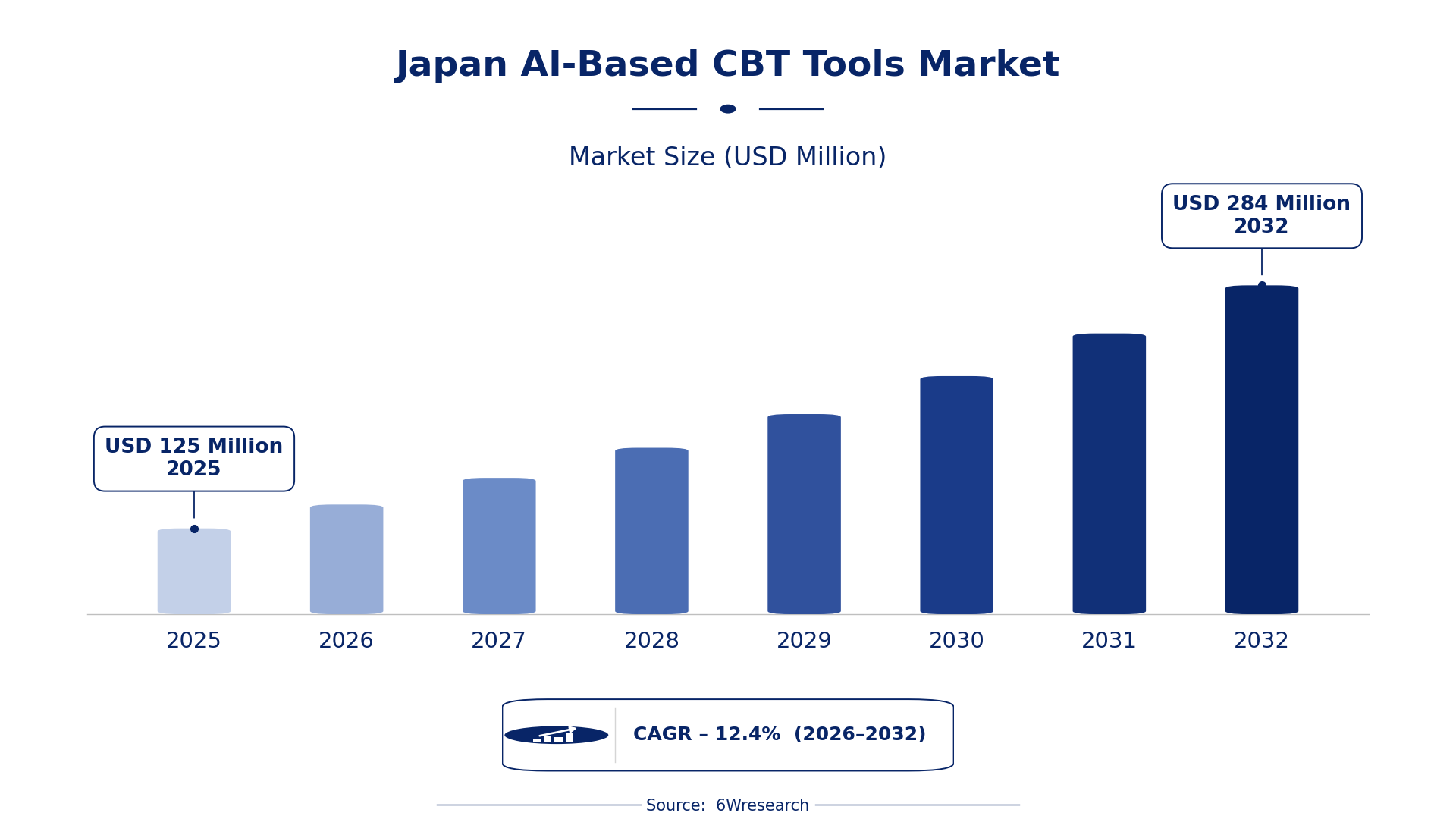
According to 6Wresearch internal database and industry insights, the Japan AI-Based CBT Tools Market was valued at USD 125 Million in 2025 and is projected to reach USD 284 Million by 2032, growing at a CAGR of approximately 12.4% during 2026–2032.
Japan AI-Based CBT Tools Market Highlights
| Report Metric | Details |
| Report Name | Japan AI-Based CBT Tools Market (2026-2032) |
| Market Size 2025 | USD 125 Million |
| Market Size 2032 | USD 284 Million |
| Absolute Growth 2025–2032 | USD 159 Million |
| CAGR 2026–2032 | 12.4% |
| Peak Annual Growth | 14.2% in 2027 |
| Forecast Period | 2026–2032 |
| Historical Data | 2022–2025 |
| Base Year | 2025 |
| Leading CBT Type, 2025 | Anxiety & Depression (49% share) |
| Leading AI Enhancement, 2025 | Adaptive Chatbots (39% share) |
| Leading Distribution Channel, 2025 | Mental Health Apps (51% share) |
| Leading End User, 2025 | Therapists & Users (41% share) |
| Fastest-Growing CBT Type | PTSD Therapy (17.5% CAGR) |
| Fastest-Growing AI Enhancement | AI Guided Journaling (16.9% CAGR) |
| Fastest-Growing Distribution Channel | CBT SaaS Tools (16.4% CAGR) |
| Fastest-Growing End User | Military & Veteran Programs (16.5% CAGR) |
| Growing Sector | mental health |
| Key End Users | therapists, corporate wellness coaches, mental health facilities |
Japan AI-Based CBT Tools Market Year-wise Growth Rate and Key Drivers (2022–2032)
This graph illustrates the annual growth rates of the market from 2022 to 2032, highlighting a steady upward trajectory and projected market expansion over the forecast period.
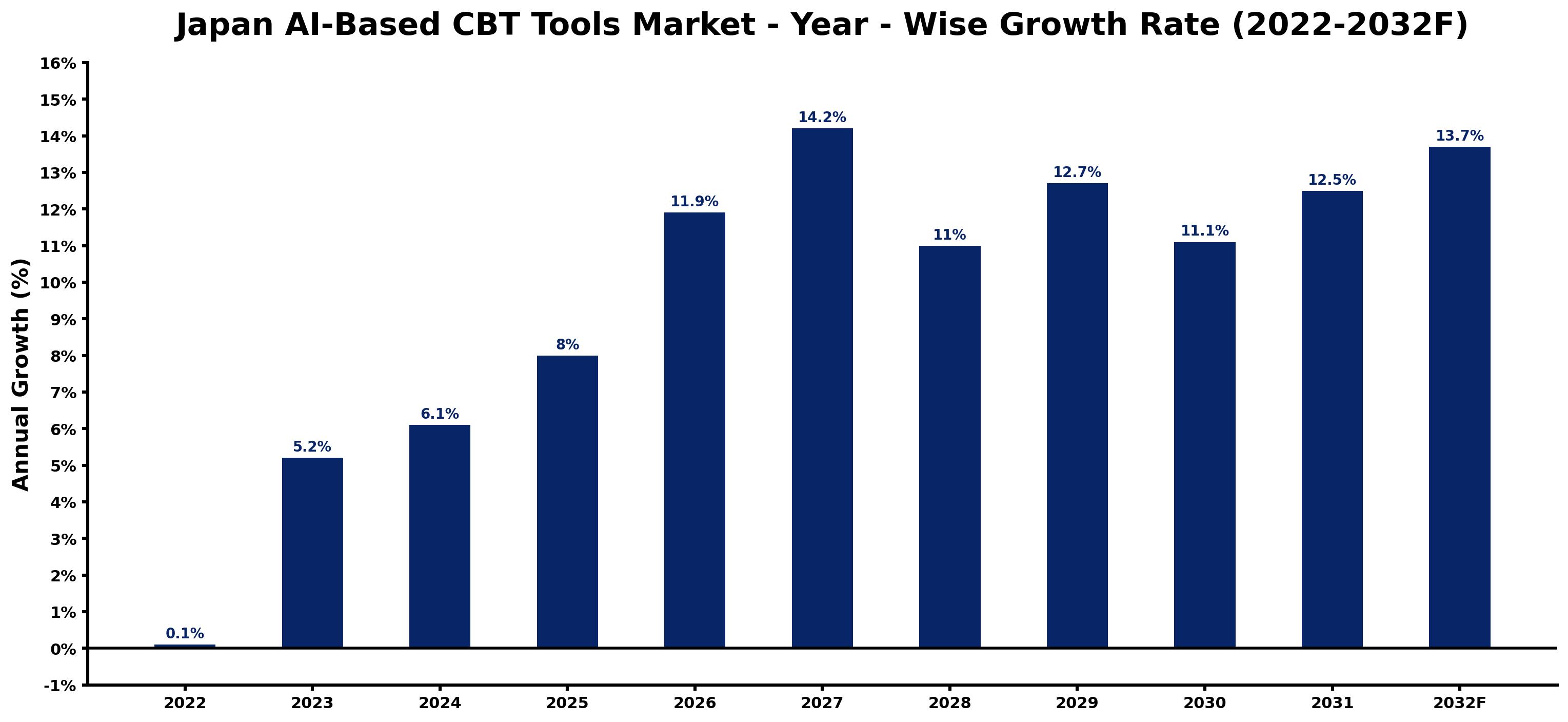
For each year, the table pairs the estimated growth rate with the leading influence on demand, showing how the drivers changed across the period.
| Year | Estimated Annual Growth (%) | Market Rationale |
| 2022 | 0.1 | The market was characterised by minimal adoption of AI tools in therapy practices. |
| 2023 | 5.2 | Increased awareness of mental health issues led to a rise in user engagement with AI solutions. |
| 2024 | 6.1 | The launch of new mental health initiatives spurred greater interest in AI-based tools. |
| 2025 | 8.0 | A rise in therapy demand resulted in accelerated integration of AI technologies. |
| 2026 | 11.9 | The introduction of supportive government programmes is expected to boost the market's growth potential. |
| 2027 | 14.2 | Innovations in AI applications are projected to contribute to the peak growth rate for this period. |
| 2028 | 11.0 | Growth is expected to slow as market saturation begins to affect new user acquisition rates. |
| 2029 | 12.7 | Continued advancements in AI technology will revitalise interest, boosting user adoption once more. |
| 2030 | 11.1 | Market growth is projected to moderate as competition intensifies among AI tool providers. |
| 2031 | 12.5 | Increased collaboration between tech developers and therapists will drive further market expansion. |
| 2032 | 13.7 | The sustained focus on mental health initiatives is expected to ensure ongoing demand for AI solutions. |
Note: Market size estimations and growth projections presented in this report are based on 6Wresearch's proprietary forecasting methodology, utilizing the latest available industry data, government publications, and primary research inputs.
Japan AI-Based CBT Tools Market Synopsis
AI-Based CBT Tools are digital solutions that utilise artificial intelligence to support cognitive behavioural therapy. These tools effectively treat mental health conditions such as anxiety, depression, and PTSD. The Japan AI-Based CBT Tools Market is expanding due to rising mental health awareness, government support for AI integration in therapy, and a growing number of mental health apps. In 2023, a programme launched by the Ministry of Health aims to incorporate AI tools into mental health services, further stimulating demand.
Market Dynamics Impact Analysis (2026–2032)
| Factor | Type | Impact | Primary Segment Affected |
| Rising mental health awareness drives demand for innovative therapeutic solutions. | Driver | High | Mental Health Apps |
| Government initiatives encourage the development and integration of AI tools in therapy. | Driver | High | AI Guided Journaling |
| The increasing number of mental health apps presents opportunities for new entrants. | Opportunity | High | Digital Therapy Providers |
| Corporate wellness programs are increasingly adopting AI-based solutions for employee support. | Opportunity | Medium | Corporate Wellness Coaches |
| High competition among AI tool providers may limit market share for new entrants. | Restraint | Medium | CBT SaaS Tools |
| The average wait time for therapy sessions remains a barrier to immediate access. | Restraint | High | Therapists & Users |
| The need for continuous updates and maintenance of AI tools can strain resources. | Challenge | Medium | Adaptive Chatbots |
| Integration of AI tools into existing therapeutic practices requires significant training. | Challenge | High | Clinical Psychologists |
Evaluation of Drivers in Japan AI-Based CBT Tools Market (2026–2032)
The main growth drivers and the segments they affect most are set out below.
| Drivers | Primary Segment Affected | Why It Matters (Evidence) |
| Increased mental health awareness leads to higher usage of AI tools. | Mental Health Apps | Japan's population is becoming more aware of mental health issues, driving demand for accessible therapy solutions. |
| Government support for AI integration boosts market growth. | AI Guided Journaling | The 2023 programme promotes AI tools in therapy, encouraging adoption by professionals. |
| The rise in available mental health apps expands user options. | Digital Therapy Providers | The number of mental health apps in Japan has increased by 30% since 2020, attracting more users. |
| Corporate wellness programs are increasingly adopting AI-based solutions. | Corporate Wellness Coaches | These programs are integrating AI tools to provide better support for employee mental health. |
| Therapists are showing interest in AI tools to improve their practice. | Therapists & Users | Over 60% of therapists are considering using AI tools, reflecting a shift in therapy approaches. |
Several shifts outside the market lift sales. Rising mental health awareness in Japan, with a population of approximately 126 million, has led to increased demand for AI tools. The number of mental health apps has surged, providing more choices for users. Over 60% of therapists are contemplating the use of AI tools, indicating a shift in therapeutic practices.
Evaluation of Restraints in Japan AI-Based CBT Tools Market
These are the pressures that could keep growth below its potential.
| Market Restraint | Primary Segment Affected | Why It Matters (Evidence) |
| High competition limits market share for new entrants. | CBT SaaS Tools | The competitive environment makes it challenging for new providers to establish a foothold. |
| Average wait times for therapy sessions hinder immediate access to care. | Therapists & Users | Urban areas experience wait times of around 3 weeks, impacting user engagement with AI tools. |
| Ongoing updates and maintenance of AI tools can strain resources. | Adaptive Chatbots | Development is necessary to keep pace with evolving user needs and technology. |
| Integration of AI tools requires extensive training for therapists. | Clinical Psychologists | Therapists must adapt to new technologies, which can slow down the adoption process. |
| Limited public awareness of AI tools may restrict user engagement. | Digital Therapy Providers | Despite rising mental health awareness, knowledge about AI solutions remains low among some users. |
Japan AI-Based CBT Tools Market Challenges
Buyers of AI-Based CBT Tools face high costs due to limited local production capabilities, inflating prices by up to 20%. This situation delays access to essential solutions, as the average wait time for therapy sessions in urban areas is around three weeks. Supply chain disruptions exacerbate these delays, impacting mental health facilities that struggle to provide timely services to patients. Skills shortages hinder progress, with over 60% of therapists expressing uncertainty about using AI tools, which limits the adoption of these technologies in addressing mental health needs.
Trends in the Japan AI-Based CBT Tools Market
The shifts below are changing how Japan AI-Based CBT Tools Market products are bought and supplied.
- Therapists Embracing AI Tools: Therapists in Japan are increasingly adopting AI-based tools to improve their practices, with over 60% considering their use. This trend reflects a shift towards more effective therapy methods, driven by rising mental health awareness.
- Expansion of Mental Health Apps: Since 2020, the number of mental health apps in Japan has increased by 30%, providing users with diverse therapeutic options. This expansion indicates a growing acceptance of digital solutions in mental health care.
- Corporate Wellness Programs Adopting AI Solutions: Corporate wellness coaches are integrating AI-based solutions into their programs to support employee mental health. This shift is evidenced by the increasing number of companies implementing such tools to improve workplace well-being.
- Government Support for AI Integration in Therapy: A 2023 programme aims to integrate AI tools into mental health services, fostering innovation in therapy. This initiative highlights the government's commitment to improving mental health care through technology.
Investment Opportunities in the Japan AI-Based CBT Tools Market
The following areas offer the clearest openings for investors and suppliers in the Japan AI-Based CBT Tools Market.
- Gap in AI Tool Adoption: With over 60% of therapists considering AI tools, there is an opportunity for new solutions. The increasing number of mental health apps provides a pathway for developers to enter the market.
- Expansion of Corporate Wellness Programs: Corporate wellness coaches are seeking effective solutions, creating opportunities for AI tool providers. The growing focus on employee mental health presents a market for new entrants.
- Integration of AI in Therapy: The 2023 government programme encourages AI tool adoption, offering a pathway for developers. Collaborating with mental health facilities can facilitate entry into this expanding market.
- Rising Demand for Digital Solutions: As mental health awareness rises, the demand for AI-based tools is expected to grow. Engaging with therapists and mental health organisations can help suppliers meet this demand.
Government Initiatives in the Japan AI-Based CBT Tools Market
The Medical Care Act of 1948 establishes standards for hospitals and clinics, ensuring quality care in mental health services. More recently, the AI Promotion Act of 2025 creates a national framework for the development and use of AI technologies in various sectors, including mental health. These laws foster a supportive environment for AI-based CBT tools, encouraging innovation and integration into therapy practices.
The National Center of Neurology and Psychiatry oversees the implementation of the AI Promotion Act, promoting the use of AI tools in mental health care. In 2023, the government allocated ¥500 million for mental health innovation projects, supporting initiatives that integrate AI solutions into therapy. This funding enables mental health facilities to adopt advanced technologies, improving the quality of care provided to patients.
Future Insight of the Japan AI-Based CBT Tools Market
By 2032, the integration of AI tools in mental health services will transform the landscape. The government's investment of ¥500 million in mental health innovation projects will catalyse advancements in therapy. Research from the Tokyo Institute of Technology will lead to new AI applications that enhance therapeutic outcomes. As the number of mental health apps has risen by 30% since 2020, buyers will benefit from a wider selection of digital solutions, while suppliers will need to adhere to evolving standards like JIS Z 8301 to remain competitive.
Market Segmentation Analysis
Japan AI-Based CBT Tools Market report covers a detailed analysis of the following market segments:
By CBT Type – Anxiety & Depression Leads, PTSD Therapy Expected to Grow Fastest
According to Saurav Kr Singh, Senior Research Analyst at 6Wresearch, with 49% of cbt type revenue in 2025, Anxiety & Depression was the largest category. Anxiety and Depression tools dominate the market due to their widespread application in treating common mental health issues. With rising mental health awareness among the population, these tools are increasingly integrated into therapy practices across various settings. The quickest growth will come from PTSD Therapy, forecast to expand at a CAGR of 17.5% between 2026 and 2032. PTSD Therapy is experiencing rapid growth as awareness of trauma-related mental health issues rises, particularly within military and veteran communities. The government's focus on mental health innovation further supports this segment's expansion. Suppliers should prioritise developing solutions tailored to trauma recovery to capitalise on this growing demand.
By AI Enhancement – Adaptive Chatbots Lead, AI Guided Journaling Expected to Grow Fastest
The largest ai enhancement category in 2025 was Adaptive Chatbots, at 39% of revenue. Adaptive Chatbots hold the largest share because they provide immediate support and guidance, making them essential for users in need of quick assistance. Their widespread use is evident in the Tokyo metropolitan area, where mental health facilities are integrating these tools into their services. Over 2026–2032, AI Guided Journaling is expected to post the fastest growth, at a CAGR of 16.9%. AI Guided Journaling is seeing rapid growth as it effectively encourages self-reflection and emotional processing, which are vital for therapy. The 30% increase in mental health apps since 2020 has significantly raised its profile among users seeking therapeutic support. This indicates that suppliers should focus on enhancing user engagement features to meet the increasing demand for effective mental health solutions.
By Distribution Channel – Mental Health Apps Lead, CBT SaaS Tools Expected to Grow Fastest
Mental Health Apps held 51% of the Japan AI-Based CBT Tools Market by distribution channel in 2025. Mental Health Apps lead the market as they provide users with convenient access to therapy solutions, aligning with the rising mental health awareness in Japan. The notable growth in the number of apps available has further cemented their popularity among users seeking accessible options. CBT SaaS Tools are projected to grow fastest, at a CAGR of 16.4% during 2026–2032. CBT SaaS Tools are rapidly gaining traction as more mental health professionals adopt them for efficient client management. This shift is driven by the increasing demand for streamlined and effective therapy delivery in clinical settings. This suggests that suppliers must strengthen partnerships with mental health professionals to improve the reach and impact of their SaaS offerings.
By End User – Therapists & Users Lead, Military & Veteran Programs Expected to Grow Fastest
Therapists & Users took 41% of end user revenue in 2025, more than any other category. Therapists and Users represent the largest segment as they are the primary beneficiaries of AI-based CBT tools, utilising them for various therapeutic applications. The integration of these tools into therapy practices is becoming increasingly common. Military & Veteran Programs are set to record the highest CAGR in this split, 16.5% over 2026–2032. Military and Veteran Programs are experiencing growth as there is a heightened focus on mental health support for veterans. This segment's expansion is supported by government initiatives aimed at improving mental health services for this population. Suppliers should tailor their offerings to meet the specific needs of military and veteran programs to capture this emerging market.
Key Attractiveness of the Report
- 10 Years of Market Numbers
- Historical Data Starting from 2022 to 2025
- Base Year 2025
- Forecast Data until 2032
- Key Performance Indicators Impacting the Market
- Major Upcoming Developments and Projects
Key Highlights of the Report:
- Japan AI-Based CBT Tools Market Outlook
- Market Size of Japan AI-Based CBT Tools Market, 2025
- Forecast of Japan AI-Based CBT Tools Market, 2032
- Historical Data and Forecast of Japan AI-Based CBT Tools Revenues & Volume for the Period 2022-2032F
- Japan AI-Based CBT Tools Market Trend Evolution
- Japan AI-Based CBT Tools Market Drivers and Challenges
- Japan AI-Based CBT Tools Price Trends
- Japan AI-Based CBT Tools Porter's Five Forces
- Japan AI-Based CBT Tools Industry Life Cycle
- Historical Data and Forecast of Japan AI-Based CBT Tools Market Revenues & Volume By CBT Type for the Period 2022-2032F
- Historical Data and Forecast of Japan AI-Based CBT Tools Market Revenues & Volume By Anxiety & Depression for the Period 2022-2032F
- Historical Data and Forecast of Japan AI-Based CBT Tools Market Revenues & Volume By PTSD Therapy for the Period 2022-2032F
- Historical Data and Forecast of Japan AI-Based CBT Tools Market Revenues & Volume By Stress Management for the Period 2022-2032F
- Historical Data and Forecast of Japan AI-Based CBT Tools Market Revenues & Volume By Phobia Treatment for the Period 2022-2032F
- Historical Data and Forecast of Japan AI-Based CBT Tools Market Revenues & Volume By AI Enhancement for the Period 2022-2032F
- Historical Data and Forecast of Japan AI-Based CBT Tools Market Revenues & Volume By Adaptive Chatbots for the Period 2022-2032F
- Historical Data and Forecast of Japan AI-Based CBT Tools Market Revenues & Volume By AI Guided Journaling for the Period 2022-2032F
- Historical Data and Forecast of Japan AI-Based CBT Tools Market Revenues & Volume By Emotion Tracking for the Period 2022-2032F
- Historical Data and Forecast of Japan AI-Based CBT Tools Market Revenues & Volume By VR + AI Interventions for the Period 2022-2032F
- Historical Data and Forecast of Japan AI-Based CBT Tools Market Revenues & Volume By Distribution Channel for the Period 2022-2032F
- Historical Data and Forecast of Japan AI-Based CBT Tools Market Revenues & Volume By Mental Health Apps for the Period 2022-2032F
- Historical Data and Forecast of Japan AI-Based CBT Tools Market Revenues & Volume By CBT SaaS Tools for the Period 2022-2032F
- Historical Data and Forecast of Japan AI-Based CBT Tools Market Revenues & Volume By Wellness Platforms for the Period 2022-2032F
- Historical Data and Forecast of Japan AI-Based CBT Tools Market Revenues & Volume By Digital Therapy Providers for the Period 2022-2032F
- Historical Data and Forecast of Japan AI-Based CBT Tools Market Revenues & Volume By End User for the Period 2022-2032F
- Historical Data and Forecast of Japan AI-Based CBT Tools Market Revenues & Volume By Therapists & Users for the Period 2022-2032F
- Historical Data and Forecast of Japan AI-Based CBT Tools Market Revenues & Volume By Military & Veteran Programs for the Period 2022-2032F
- Historical Data and Forecast of Japan AI-Based CBT Tools Market Revenues & Volume By Corporate Wellness Coaches for the Period 2022-2032F
- Historical Data and Forecast of Japan AI-Based CBT Tools Market Revenues & Volume By Clinical Psychologists for the Period 2022-2032F
- Japan AI-Based CBT Tools Import Export Trade Statistics
- Market Opportunity Assessment By CBT Type
- Market Opportunity Assessment By AI Enhancement
- Market Opportunity Assessment By Distribution Channel
- Market Opportunity Assessment By End User
- Japan AI-Based CBT Tools Top Companies Market Share
- Japan AI-Based CBT Tools Competitive Benchmarking By Technical and Operational Parameters
- Japan AI-Based CBT Tools Company Profiles
- Japan AI-Based CBT Tools Key Strategic Recommendations
Market Covered
This report examines the market across the segments below.
By CBT Type
- Anxiety & Depression
- PTSD Therapy
- Stress Management
- Phobia Treatment
By AI Enhancement
- Adaptive Chatbots
- AI Guided Journaling
- Emotion Tracking
- VR + AI Interventions
By Distribution Channel
- Mental Health Apps
- CBT SaaS Tools
- Wellness Platforms
- Digital Therapy Providers
By End User
- Therapists & Users
- Military & Veteran Programs
- Corporate Wellness Coaches
- Clinical Psychologists































