Japan Aircraft Cabin Interior Hardware Market Size & Growth Rate
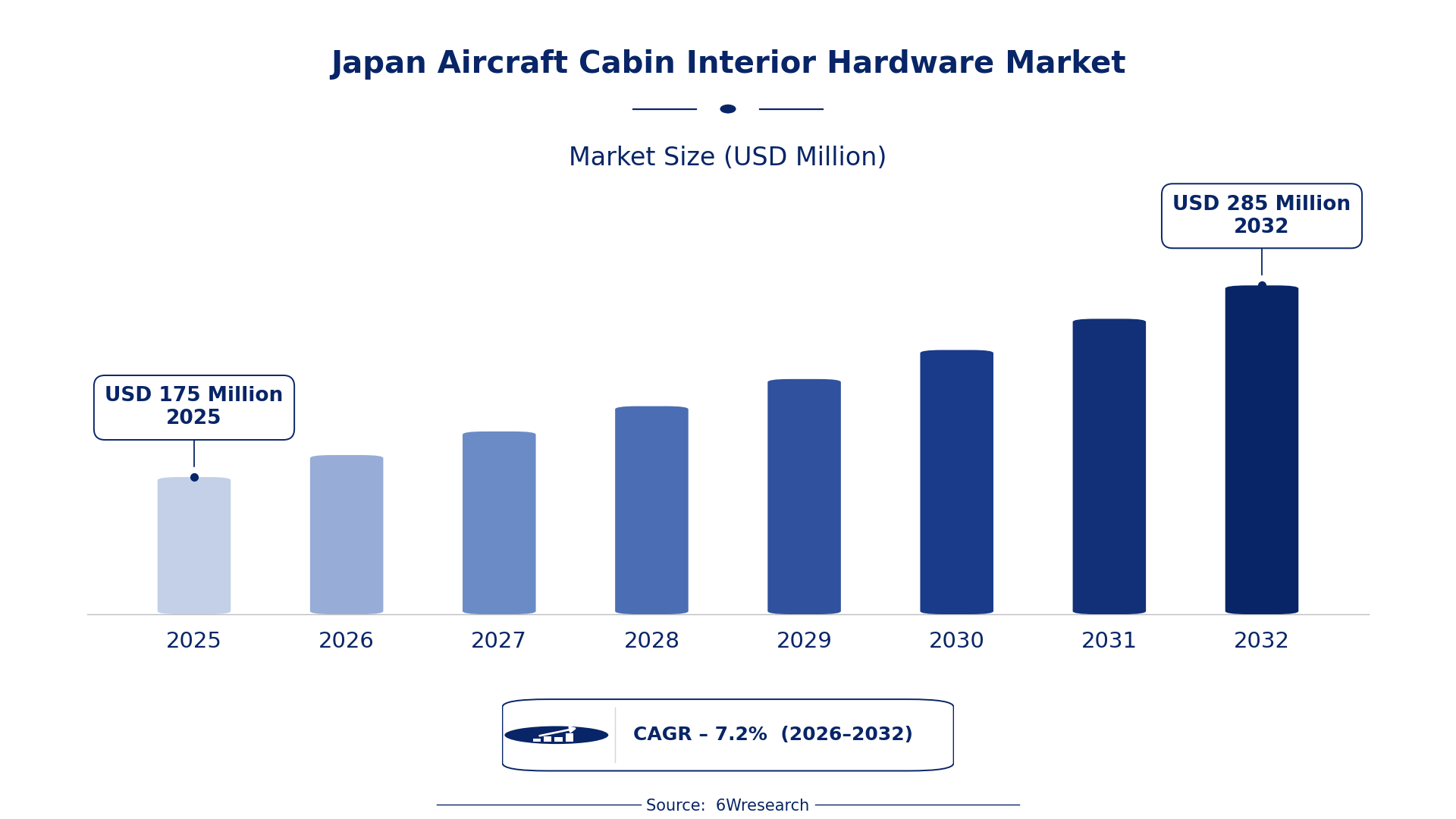
According to 6Wresearch internal database and industry insights, the Japan Aircraft Cabin Interior Hardware Market was valued at USD 175 Million in 2025 and is projected to reach USD 285 Million by 2032, growing at a CAGR of approximately 7.2% during 2026–2032.
Japan Aircraft Cabin Interior Hardware Market Highlights
| Report Metric | Details |
| Report Name | Japan Aircraft Cabin Interior Hardware Market (2026-2032) |
| Market Size 2025 | USD 175 Million |
| Market Size 2032 | USD 285 Million |
| Absolute Growth 2025–2032 | USD 110 Million |
| CAGR 2026–2032 | 7.2% |
| Peak Annual Growth | 8.8% in 2032 |
| Forecast Period | 2026–2032 |
| Historical Data | 2022–2025 |
| Base Year | 2025 |
| Leading Hardware Type, 2025 | Seat Mechanisms (48% share) |
| Leading Material Type, 2025 | Aluminum Alloy (49% share) |
| Leading Distribution Channel, 2025 | Cabin Component Dealers (53% share) |
| Leading End User, 2025 | Commercial Airlines (46% share) |
| Fastest-Growing Hardware Type | Overhead Compartments (10.3% CAGR) |
| Fastest-Growing Material Type | Polycarbonate (10.2% CAGR) |
| Fastest-Growing Distribution Channel | Interior Fitment Suppliers (9.2% CAGR) |
| Fastest-Growing End User | Aircraft Interior Firms (9.4% CAGR) |
| Growing Sector | Commercial Aviation |
| Key End Users | Commercial Airlines, Aircraft Interior Firms, OEM Hardware Vendors |
Japan Aircraft Cabin Interior Hardware Market Year-wise Growth Rate and Key Drivers (2022–2032)
This graph illustrates the annual growth rates of the market from 2022 to 2032, highlighting a steady upward trajectory and projected market expansion over the forecast period.
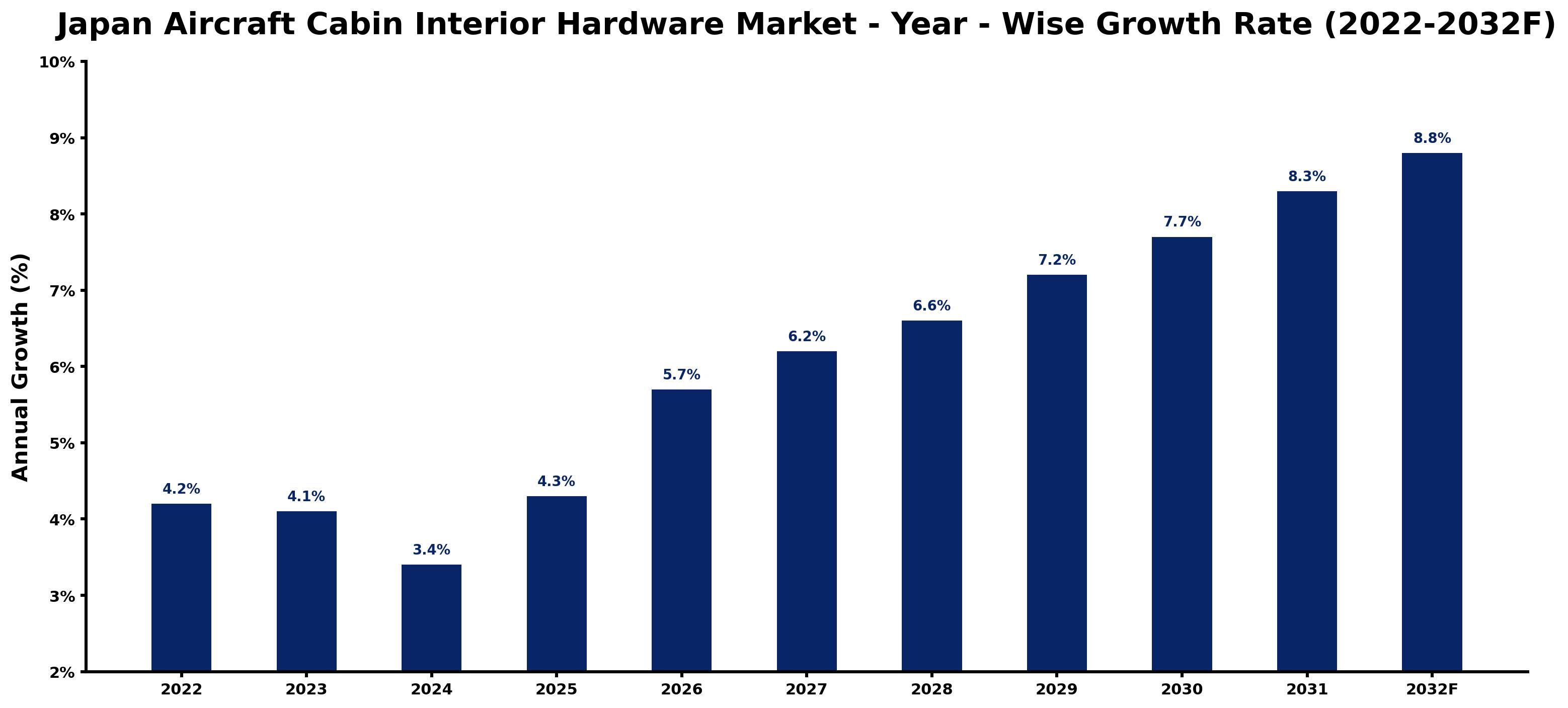
Year by year, the estimates below pair each growth rate with the development that shaped it.
| Year | Estimated Annual Growth (%) | Market Rationale |
| 2022 | 4.2 | The market experienced moderate growth driven by steady demand from airlines. |
| 2023 | 4.1 | Growth slowed slightly as airlines managed existing fleets amid rising operational costs. |
| 2024 | 3.4 | Demand continued to slow as airlines focused on cost management and refurbishment needs. |
| 2025 | 4.3 | The market saw an uptick in growth due to increased refurbishment activities in commercial aviation. |
| 2026 | 5.7 | Growth accelerated as airlines invested in upgrading cabin interiors to enhance passenger experience. |
| 2027 | 6.2 | Demand rose further as airlines expanded routes, requiring more cabin hardware for new aircraft. |
| 2028 | 6.6 | The market continued to grow as airlines prioritised passenger comfort and cabin aesthetics. |
| 2029 | 7.2 | Increased air travel demand led to a stronger market performance as airlines modernised interiors. |
| 2030 | 7.7 | The growth rate improved as airlines responded to competitive pressures for enhanced passenger experiences. |
| 2031 | 8.3 | Demand strengthened with airlines investing in advanced materials for cabin hardware. |
| 2032 | 8.8 | The market peaked as airlines fully embraced innovative designs and technologies in cabin interiors. |
Note: Market size estimations and growth projections presented in this report are based on 6Wresearch's proprietary forecasting methodology, utilizing the latest available industry data, government publications, and primary research inputs.
Japan Aircraft Cabin Interior Hardware Market Synopsis
Aircraft Cabin Interior Hardware includes components such as seat mechanisms, overhead compartments, and window shades, primarily made from aluminium alloy and thermoplastics. The Japan Aircraft Cabin Interior Hardware Market is projected to grow considerably, driven by increasing air travel demand and refurbishment needs. With over 100 airlines operating in Japan and a strong focus on passenger comfort, the market is set to expand as airlines invest in modernising their fleets and improving the passenger experience.
Market Dynamics Impact Analysis (2026–2032)
| Factor | Type | Impact | Primary Segment Affected |
| Increasing air travel demand drives the need for more aircraft interiors. | Driver | High | Seat Mechanisms |
| Refurbishment needs for aging aircraft create opportunities for suppliers. | Opportunity | High | Overhead Compartments |
| The shift towards lightweight materials enhances performance and efficiency. | Driver | High | Aluminum Alloy |
| Growing preference for customisation in cabin interiors opens new markets. | Opportunity | Medium | Window Shades |
| Regulatory compliance can delay product development and approvals. | Restraint | High | Door Handles & Locks |
| High competition among suppliers can limit profit margins. | Restraint | Medium | Seat Mechanisms |
| Supply chain disruptions can impact timely deliveries of components. | Challenge | High | Overhead Compartments |
| Technological advancements require continuous investment from manufacturers. | Challenge | Medium | Window Shades |
Evaluation of Drivers in Japan Aircraft Cabin Interior Hardware Market (2026–2032)
Demand rests on the following drivers, each shown with the segment it touches most.
| Drivers | Primary Segment Affected | Why It Matters (Evidence) |
| Increasing passenger numbers lead to higher demand for cabin hardware. | Seat Mechanisms | As air travel in Japan grows, airlines require more seat mechanisms to accommodate passengers. |
| Refurbishment of older aircraft drives demand for new cabin components. | Overhead Compartments | With an average aircraft age of around 12 years, airlines are investing in refurbishments. |
| The adoption of lightweight materials improves fuel efficiency and performance. | Aluminum Alloy | Over 60% of cabin hardware is made from aluminum alloy, which boosts aircraft performance. |
| Customisation trends in aircraft interiors boost demand for specific components. | Window Shades | Aircraft interior firms are increasingly focusing on bespoke designs to attract customers. |
| Technological advancements in manufacturing processes improve product quality. | Door Handles & Locks | The JIS Q 9100 standard ensures high-quality production, leading to increased demand. |
Much of the new demand traces back to the increasing passenger numbers in Japan, projected to reach approximately 126 million. This surge compels airlines to invest in new seat mechanisms, improving comfort and safety. With over 400 commercial aircraft in operation, refurbishment needs drive demand for overhead compartments and window shades. The adoption of aluminum alloy, which constitutes over 60% of cabin hardware, boosts fuel efficiency. Customisation trends further stimulate demand as airlines seek to differentiate their services and attract more passengers.
Evaluation of Restraints in Japan Aircraft Cabin Interior Hardware Market
The main factors holding the market back are set out below.
| Market Restraint | Primary Segment Affected | Why It Matters (Evidence) |
| Regulatory compliance can extend product development timelines. | Door Handles & Locks | The Chemical Substances Control Law requires thorough evaluation of materials, delaying approvals. |
| High competition among suppliers can compress profit margins. | Seat Mechanisms | With numerous suppliers in Japan, price competition limits profitability for manufacturers. |
| Supply chain disruptions can hinder timely deliveries of components. | Overhead Compartments | Global supply chain issues have affected the availability of critical materials for production. |
| Technological advancements require continuous investment from manufacturers. | Window Shades | Staying competitive necessitates investment in new technologies, straining financial resources. |
| Market saturation in certain segments limits growth potential. | Aluminum Alloy | As the primary material, increased supply has led to a saturated market, affecting prices. |
Japan Aircraft Cabin Interior Hardware Market Challenges
Japan's aviation safety regulations impose stringent compliance requirements, leading to increased costs that can delay product launches for manufacturers. Competition among over 100 airlines compels producers to reduce prices, squeezing margins and limiting their ability to invest in new technologies. Rapid technological advancements require manufacturers to frequently upgrade processes, straining resources and extending lead times for buyers. Supply chain disruptions in sourcing materials like aluminium alloy can result in production delays, affecting delivery schedules for aircraft interior firms.
Trends in the Japan Aircraft Cabin Interior Hardware Market
These developments are changing demand patterns in the Japan Aircraft Cabin Interior Hardware Market.
- Shift towards Lightweight Materials: In 2023, over 60% of aircraft cabin hardware is made from aluminium alloy, reflecting a shift towards lightweight materials. This trend improves fuel efficiency and performance, prompting suppliers to innovate in material selection.
- Emergence of Customisation in Cabin Interiors: Since 2023, aircraft interior firms have increasingly focused on bespoke designs, resulting in a rise in demand for custom cabin components. This trend allows airlines to differentiate their services and improve passenger experience.
- Transition from Standardisation to Personalisation: The trend towards personalisation began in 2023, with airlines seeking unique cabin experiences. This shift is evident in the growing demand for custom window shades, which enhance passenger comfort and privacy.
- Growing Adoption of Advanced Manufacturing Techniques: In 2023, the adoption of advanced manufacturing techniques has increased efficiency in producing cabin hardware. This change enables suppliers to meet rising demand while maintaining high-quality standards.
Investment Opportunities in the Japan Aircraft Cabin Interior Hardware Market
Below are the investment opportunities with the strongest case in the Japan Aircraft Cabin Interior Hardware Market.
- Commercial Airlines Seeking Upgrades: Commercial airlines in Japan are currently investing in cabin upgrades, with an estimated market potential of ¥200 billion. Suppliers can engage with airlines to provide tailored cabin hardware solutions.
- Tokyo Region as a Manufacturing Hub: The Tokyo region is a major hub for aircraft manufacturing, presenting opportunities for suppliers to establish partnerships. With over 100 airlines, there is a strong demand for local production of cabin components.
- Investment in Refurbishment Services: As the average age of commercial aircraft is around 12 years, there is a growing need for refurbishment services. Suppliers can focus on providing essential cabin hardware for these projects.
- Focus on Advanced Materials: With the government's support for aerospace technology development, there is a significant opportunity for suppliers to invest in advanced materials. Collaborating with the Japan Aerospace Exploration Agency can enhance product offerings.
Government Initiatives in the Japan Aircraft Cabin Interior Hardware Market
The Chemical Substances Control Law, enacted in 1973, mandates the evaluation and control of chemical substances in manufacturing. This law ensures that producers of aircraft cabin interior hardware comply with safety standards, impacting material selection and production processes. Additionally, the Industrial Safety and Health Act of 1972 sets employer responsibilities for hazardous substances, further influencing manufacturing practices.
The government allocates approximately ¥200 billion annually for aviation safety and infrastructure improvements. The Ministry of Land, Infrastructure, Transport and Tourism oversees these initiatives, ensuring that manufacturers meet safety regulations and standards. Furthermore, the Economic Security Promotion Act, introduced in 2022, supports supply-chain resilience for critical materials, benefiting producers of aircraft cabin hardware.
Future Insight of the Japan Aircraft Cabin Interior Hardware Market
Aircraft manufacturers will increasingly demand advanced cabin components, prompting suppliers to enhance their offerings and adopt new technologies. By 2032, collaboration with the Japan Aerospace Exploration Agency is expected to yield materials that improve durability, addressing buyer needs for longevity. The government's initiative to boost aerospace competitiveness will likely draw new investments, strengthening the supply chain. With the average age of commercial aircraft around 12 years, refurbishment opportunities will expand, benefiting both buyers and suppliers.
Market Segmentation Analysis
Japan Aircraft Cabin Interior Hardware Market report covers a detailed analysis of the following market segments:
By Hardware Type – Seat Mechanisms Lead, Overhead Compartments Expected to Grow Fastest
According to Saurav Kr Singh, Senior Research Analyst at 6Wresearch, the largest hardware type category in 2025 was Seat Mechanisms, at 48% of revenue. Seat mechanisms play a vital role in ensuring passenger seating adjustments, which are essential for comfort and safety in aircraft interiors. Their widespread use across Japan's installed base of over 400 commercial aircraft underscores their importance in the aviation sector. Overhead Compartments are projected to grow fastest, at a CAGR of 10.3% during 2026–2032. Overhead compartments are experiencing rapid growth due to the increasing need for efficient luggage storage solutions as air travel demand rises. This trend is particularly pronounced in the Tokyo region, where airlines are expanding their operations and fleet sizes. Suppliers must focus on developing innovative storage solutions to meet the growing demands of airlines and enhance passenger experience.
By Material Type – Aluminum Alloy Leads, Polycarbonate Expected to Grow Fastest
Aluminum Alloy held 49% of the Japan Aircraft Cabin Interior Hardware Market by material type in 2025. Aluminum alloy is the preferred material for aircraft cabin hardware due to its lightweight properties and strength, making it essential for manufacturers. With more than 60% of components produced from this material, it is vital for maintaining safety and efficiency in aircraft design. The quickest growth will come from Polycarbonate, forecast to expand at a CAGR of 10.2% between 2026 and 2032. Polycarbonate is gaining popularity for its durability and transparency, making it a desirable option for various cabin components. The trend towards more customised interior designs in 2023 is accelerating its adoption among manufacturers. Buyers should consider exploring alternative materials to improve the functionality and aesthetics of aircraft interiors.
By Distribution Channel – Cabin Component Dealers Lead, Interior Fitment Suppliers Expected to Grow Fastest
Cabin Component Dealers took 53% of distribution channel revenue in 2025, more than any other category. Cabin component dealers serve as the primary suppliers of aircraft interior parts, establishing a robust distribution network across Japan. Their strong relationships with over 100 airlines ensure a steady demand for essential components necessary for aircraft operations. Interior Fitment Suppliers are set to record the highest CAGR in this split, 9.2% over 2026–2032. Interior fitment suppliers are witnessing significant growth as airlines seek customised solutions for their aircraft interiors. The increasing emphasis on refurbishment and upgrades in the commercial aviation sector is propelling this segment forward. Suppliers should strengthen partnerships with fitment suppliers to capitalise on the expanding market for customised aircraft interiors.
By End User – Commercial Airlines Lead, Aircraft Interior Firms Expected to Grow Fastest
In 2025, Commercial Airlines led the end user split with a 46% share. Commercial airlines represent the largest consumer group for cabin hardware, holding a substantial market share. Their continuous fleet expansion and refurbishment projects are key factors driving demand in the aircraft cabin interior hardware sector. Over 2026–2032, Aircraft Interior Firms are expected to post the fastest growth, at a CAGR of 9.4%. Aircraft interior firms are rapidly growing as they design and implement tailored cabin solutions to meet changing passenger expectations. Their partnerships with airlines for customised interiors are fuelling their market expansion. Suppliers must align their product offerings with the requirements of interior firms to take advantage of the increasing demand for tailored cabin solutions.
Key Attractiveness of the Report
- 10 Years of Market Numbers
- Historical Data Starting from 2022 to 2025
- Base Year 2025
- Forecast Data until 2032
- Key Performance Indicators Impacting the Market
- Major Upcoming Developments and Projects
Key Highlights of the Report:
- Japan Aircraft Cabin Interior Hardware Market Outlook
- Market Size of Japan Aircraft Cabin Interior Hardware Market, 2025
- Forecast of Japan Aircraft Cabin Interior Hardware Market, 2032
- Historical Data and Forecast of Japan Aircraft Cabin Interior Hardware Revenues & Volume for the Period 2022-2032F
- Japan Aircraft Cabin Interior Hardware Market Trend Evolution
- Japan Aircraft Cabin Interior Hardware Market Drivers and Challenges
- Japan Aircraft Cabin Interior Hardware Price Trends
- Japan Aircraft Cabin Interior Hardware Porter's Five Forces
- Japan Aircraft Cabin Interior Hardware Industry Life Cycle
- Historical Data and Forecast of Japan Aircraft Cabin Interior Hardware Market Revenues & Volume By Hardware Type for the Period 2022-2032F
- Historical Data and Forecast of Japan Aircraft Cabin Interior Hardware Market Revenues & Volume By Seat Mechanisms for the Period 2022-2032F
- Historical Data and Forecast of Japan Aircraft Cabin Interior Hardware Market Revenues & Volume By Overhead Compartments for the Period 2022-2032F
- Historical Data and Forecast of Japan Aircraft Cabin Interior Hardware Market Revenues & Volume By Window Shades for the Period 2022-2032F
- Historical Data and Forecast of Japan Aircraft Cabin Interior Hardware Market Revenues & Volume By Door Handles & Locks for the Period 2022-2032F
- Historical Data and Forecast of Japan Aircraft Cabin Interior Hardware Market Revenues & Volume By Material Type for the Period 2022-2032F
- Historical Data and Forecast of Japan Aircraft Cabin Interior Hardware Market Revenues & Volume By Aluminum Alloy for the Period 2022-2032F
- Historical Data and Forecast of Japan Aircraft Cabin Interior Hardware Market Revenues & Volume By Polycarbonate for the Period 2022-2032F
- Historical Data and Forecast of Japan Aircraft Cabin Interior Hardware Market Revenues & Volume By Thermoplastic for the Period 2022-2032F
- Historical Data and Forecast of Japan Aircraft Cabin Interior Hardware Market Revenues & Volume By Stainless Steel for the Period 2022-2032F
- Historical Data and Forecast of Japan Aircraft Cabin Interior Hardware Market Revenues & Volume By Distribution Channel for the Period 2022-2032F
- Historical Data and Forecast of Japan Aircraft Cabin Interior Hardware Market Revenues & Volume By Cabin Component Dealers for the Period 2022-2032F
- Historical Data and Forecast of Japan Aircraft Cabin Interior Hardware Market Revenues & Volume By Interior Fitment Suppliers for the Period 2022-2032F
- Historical Data and Forecast of Japan Aircraft Cabin Interior Hardware Market Revenues & Volume By Aircraft Hardware Retailers for the Period 2022-2032F
- Historical Data and Forecast of Japan Aircraft Cabin Interior Hardware Market Revenues & Volume By OEM Hardware Vendors for the Period 2022-2032F
- Historical Data and Forecast of Japan Aircraft Cabin Interior Hardware Market Revenues & Volume By End User for the Period 2022-2032F
- Historical Data and Forecast of Japan Aircraft Cabin Interior Hardware Market Revenues & Volume By Commercial Airlines for the Period 2022-2032F
- Historical Data and Forecast of Japan Aircraft Cabin Interior Hardware Market Revenues & Volume By Aircraft Interior Firms for the Period 2022-2032F
- Historical Data and Forecast of Japan Aircraft Cabin Interior Hardware Market Revenues & Volume By Business Jet Designers for the Period 2022-2032F
- Historical Data and Forecast of Japan Aircraft Cabin Interior Hardware Market Revenues & Volume By Private Jet Assemblers for the Period 2022-2032F
- Japan Aircraft Cabin Interior Hardware Import Export Trade Statistics
- Market Opportunity Assessment By Hardware Type
- Market Opportunity Assessment By Material Type
- Market Opportunity Assessment By Distribution Channel
- Market Opportunity Assessment By End User
- Japan Aircraft Cabin Interior Hardware Top Companies Market Share
- Japan Aircraft Cabin Interior Hardware Competitive Benchmarking By Technical and Operational Parameters
- Japan Aircraft Cabin Interior Hardware Company Profiles
- Japan Aircraft Cabin Interior Hardware Key Strategic Recommendations
Market Covered
The report covers the following segments.
By Hardware Type
- Seat Mechanisms
- Overhead Compartments
- Window Shades
- Door Handles & Locks
By Material Type
- Aluminum Alloy
- Polycarbonate
- Thermoplastic
- Stainless Steel
By Distribution Channel
- Cabin Component Dealers
- Interior Fitment Suppliers
- Aircraft Hardware Retailers
- OEM Hardware Vendors
By End User
- Commercial Airlines
- Aircraft Interior Firms
- Business Jet Designers
- Private Jet Assemblers































