Japan Aircraft Engine Materials Market Size & Growth Rate
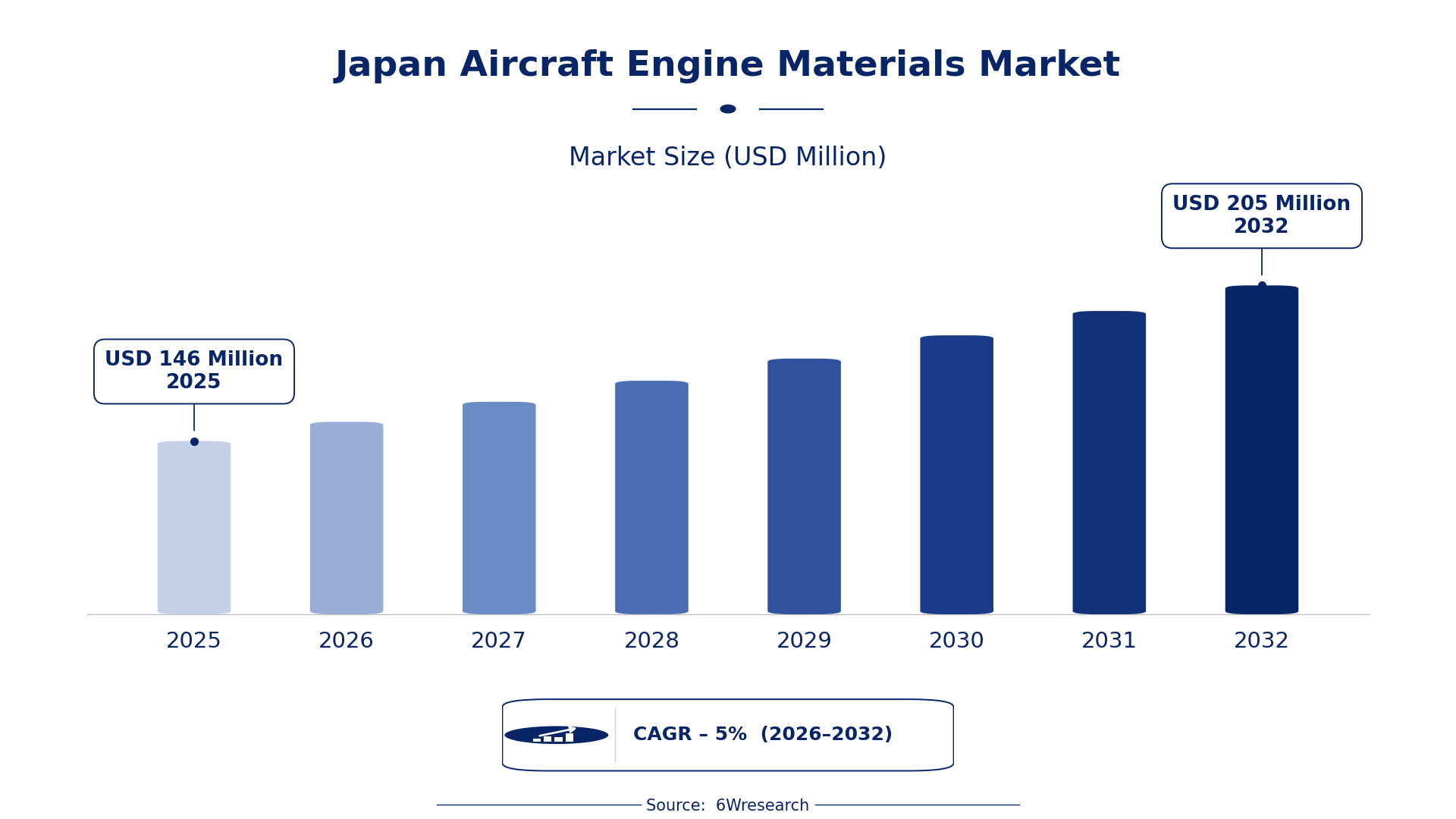
According to 6Wresearch internal database and industry insights, the Japan Aircraft Engine Materials Market was valued at USD 146 Million in 2025 and is projected to reach USD 205 Million by 2032, growing at a CAGR of approximately 5% during 2026–2032.
Japan Aircraft Engine Materials Market Highlights
| Report Metric | Details |
| Report Name | Japan Aircraft Engine Materials Market (2026-2032) |
| Market Size 2025 | USD 146 Million |
| Market Size 2032 | USD 205 Million |
| Absolute Growth 2025–2032 | USD 59 Million |
| CAGR 2026–2032 | 5% |
| Peak Annual Growth | 6.0% in 2032 |
| Forecast Period | 2026–2032 |
| Historical Data | 2022–2025 |
| Base Year | 2025 |
| Leading Material Type, 2025 | Superalloys (44% share) |
| Leading Application Area, 2025 | Turbine Blades (42% share) |
| Leading Distribution Channel, 2025 | Alloy Manufacturers (35% share) |
| Leading End User, 2025 | Aircraft Engine OEMs (47% share) |
| Fastest-Growing Material Type | Ceramic Matrix Composites (7.1% CAGR) |
| Fastest-Growing Application Area | Combustion Chamber (6.3% CAGR) |
| Fastest-Growing Distribution Channel | Forging Suppliers (6.6% CAGR) |
| Fastest-Growing End User | Defense Aircraft Builders (6.5% CAGR) |
| Growing Sector | Aerospace |
| Key End Users | Aircraft Engine OEMs, Defense Aircraft Builders, Jet Engine Designers |
Japan Aircraft Engine Materials Market Year-wise Growth Rate and Key Drivers (2022–2032)
This graph illustrates the annual growth rates of the market from 2022 to 2032, highlighting a steady upward trajectory and projected market expansion over the forecast period.
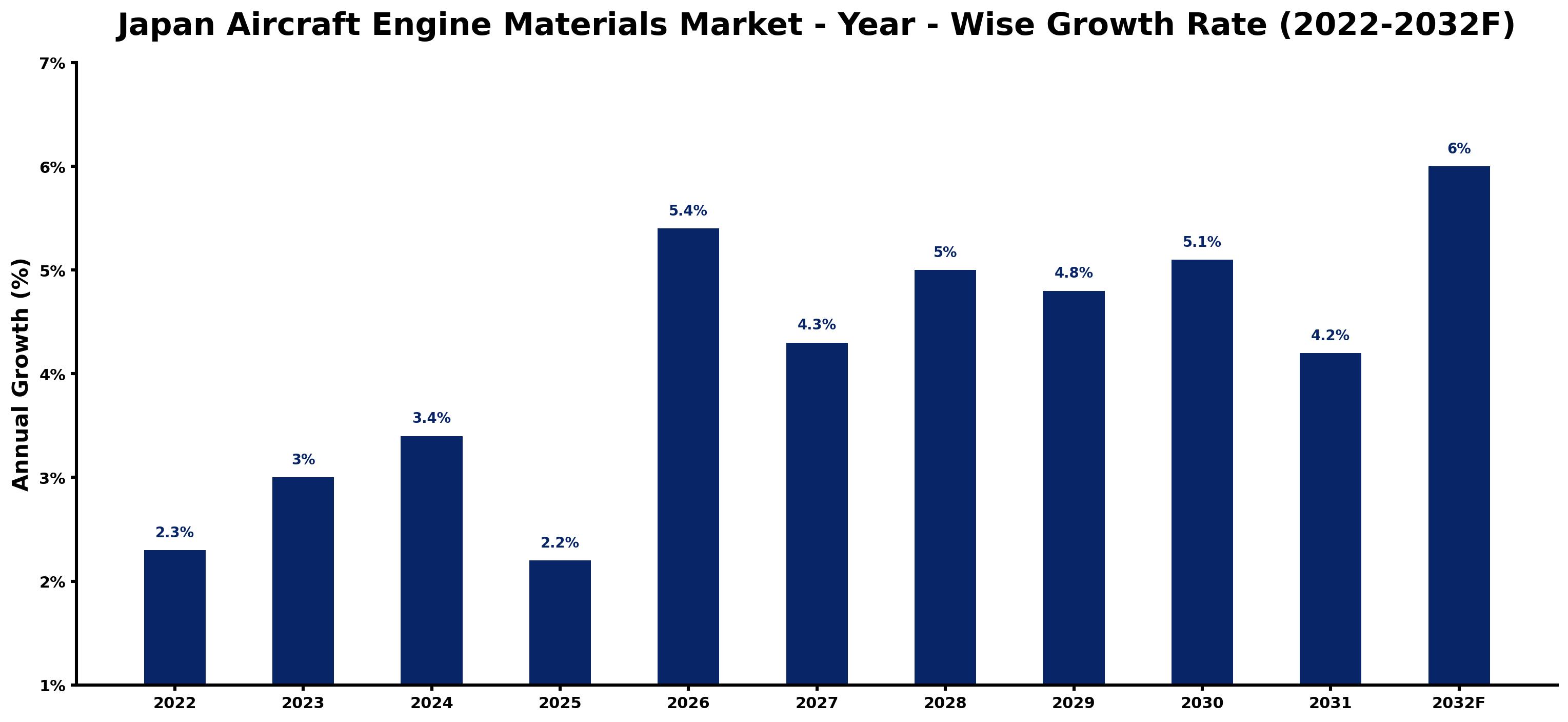
Below, each year's estimated growth is shown next to the factor that most influenced it.
| Year | Estimated Annual Growth (%) | Market Rationale |
| 2022 | 2.3 | The market experienced steady growth due to ongoing aerospace activities and production. |
| 2023 | 3.0 | Demand increased as domestic manufacturers ramped up aircraft engine production. |
| 2024 | 3.4 | Growth accelerated with rising exports and investments in aerospace technology. |
| 2025 | 2.2 | The market growth slowed as manufacturers faced supply chain challenges. |
| 2026 | 5.4 | Investment in advanced materials is anticipated to surge, boosting market demand. |
| 2027 | 4.3 | Growth is projected to moderate as manufacturers adapt to new material technologies. |
| 2028 | 5.0 | Demand is expected to rise again as innovation in aircraft design drives material needs. |
| 2029 | 4.8 | The market will see a slight slowdown as production stabilises. |
| 2030 | 5.1 | Increased focus on sustainability will push demand for advanced materials higher. |
| 2031 | 4.2 | Growth is projected to decelerate as the market adjusts to new production capacities. |
| 2032 | 6.0 | The market is expected to peak with heightened demand for high-performance materials. |
Note: Market size estimations and growth projections presented in this report are based on 6Wresearch's proprietary forecasting methodology, utilizing the latest available industry data, government publications, and primary research inputs.
Japan Aircraft Engine Materials Market Synopsis
Aircraft engine materials are specialised components designed for high performance and durability in extreme conditions, produced through advanced metallurgical processes. The Japan Aircraft Engine Materials Market is expanding, supported by a sector valued at approximately 1.5 trillion yen and substantial investments in decarbonisation, targeting JPY 150 trillion over ten years. The ongoing development of advanced materials for next-generation engines further fuels this demand, particularly from domestic manufacturers and export activities.
Market Dynamics Impact Analysis (2026–2032)
| Factor | Type | Impact | Primary Segment Affected |
| Increased production of aircraft engines drives demand for high-performance materials. | Driver | High | Superalloys |
| Growing emphasis on lightweight materials enhances demand for titanium alloys. | Driver | High | Titanium Alloys |
| The shift towards advanced materials presents opportunities for innovation in manufacturing. | Opportunity | High | Ceramic Matrix Composites |
| Rising investments in aerospace R&D create a demand for specialized materials. | Opportunity | High | Superalloys |
| Fluctuations in raw material prices can impact production costs. | Restraint | Medium | High-Temp Steel |
| Supply chain disruptions may hinder timely material availability. | Restraint | Medium | Titanium Alloys |
| Competition from alternative materials can limit market share for traditional materials. | Challenge | High | Ceramic Matrix Composites |
| Technological advancements may outpace material development, creating gaps. | Challenge | Medium | Superalloys |
Evaluation of Drivers in Japan Aircraft Engine Materials Market (2026–2032)
Below are the drivers that matter most for revenue growth, with supporting evidence.
| Drivers | Primary Segment Affected | Why It Matters (Evidence) |
| Increased aircraft engine production | Superalloys | Japan produced over 200 aircraft engines in 2022, driving demand for superalloys used in turbine blades. |
| Demand for lightweight materials | Titanium Alloys | Titanium alloys are essential for reducing weight in aircraft designs, leading to higher purchases by manufacturers. |
| Investment in aerospace R&D | Ceramic Matrix Composites | Investment in aerospace R&D is expected to reach 100 billion yen by 2025, increasing demand for advanced materials. |
| Technological advancements in engine design | Turbine Blades | Next-generation jet engines require high-performance turbine blades, boosting demand for specialized materials. |
| Focus on sustainability in aerospace | High-Temp Steel | Japan targets a 46% cut in greenhouse-gas emissions by 2030, promoting the use of durable materials. |
Volumes grow on the back of increased aircraft engine production, with over 200 engines manufactured in 2022, driving demand for superalloys in turbine blades. Investment in aerospace R&D is projected to reach 100 billion yen by 2025, increasing the need for advanced materials like ceramic matrix composites. The emphasis on lightweight designs boosts purchases of titanium alloys, essential for reducing aircraft weight. Technological advancements in engine design necessitate high-performance turbine blades, further increasing demand for specialized materials. Sustainability goals drive manufacturers to adopt high-temp steel for durability, aligning with Japan's greenhouse gas reduction targets.
Evaluation of Restraints in Japan Aircraft Engine Materials Market
The following restraints limit how fast demand can grow.
| Market Restraint | Primary Segment Affected | Why It Matters (Evidence) |
| Fluctuations in raw material prices | High-Temp Steel | Raw material price volatility can increase production costs, affecting manufacturers' profitability. |
| Supply chain disruptions | Titanium Alloys | Supply chain issues can delay material availability, hindering production timelines for manufacturers. |
| Competition from alternative materials | Ceramic Matrix Composites | Emerging materials may offer better performance, reducing demand for traditional composites. |
| Technological advancements outpacing material development | Superalloys | Rapid technology changes can create gaps in material specifications, impacting supplier relevance. |
| Regulatory compliance costs | Titanium Alloys | Compliance with environmental regulations can increase costs for titanium alloy manufacturers. |
Japan Aircraft Engine Materials Market Challenges
High production costs challenge buyers as they face increasing prices for aircraft engine materials due to Japan's stringent quality standards and advanced metallurgical processes. Skills shortages plague producers, with a lack of specialised knowledge delaying the development of critical components and potentially extending project timelines by up to 20%. Supply chain disruptions burden importers, particularly from reliance on specific raw materials, inflating costs by approximately 15% of total production expenses. Regulatory compliance complicates operations for distributors, as adherence to evolving standards can extend lead times and increase operational costs by around 10%.
Trends in the Japan Aircraft Engine Materials Market
The following changes are redrawing the Japan Aircraft Engine Materials Market.
- Shift from Traditional to Advanced Materials: Since 2023, the aerospace sector has increasingly adopted advanced materials like ceramic matrix composites, which improve performance and reduce weight. This shift is evidenced by the growing use of these materials in next-generation jet engines.
- Transition to Sustainable Manufacturing Practices: The focus on sustainability has led to a notable increase in the use of high-temp steel, which aligns with Japan's goal of a 46% reduction in greenhouse gas emissions by 2030.
- Emergence of Lightweight Materials: The demand for titanium alloys has surged as manufacturers seek to reduce aircraft weight. This trend is supported by the Japanese government's push for increased domestic aircraft production by 20% by 2025.
- Prioritisation of Aerospace Innovation: The Tokyo Metropolitan Government has initiated several programs to support aerospace innovation, with funding aimed at advancing material technologies and improving production capabilities.
Investment Opportunities in the Japan Aircraft Engine Materials Market
The following opportunities in the Japan Aircraft Engine Materials Market pair current demand with a clear way in.
- Aerospace Manufacturers Seeking Advanced Materials: With Japan's aerospace sector valued at approximately 1.5 trillion yen, there is a strong opportunity for suppliers of superalloys to meet increasing demands for high-performance materials.
- Investment in Aerospace R&D: The projected investment in aerospace R&D by 2025 highlights the need for advanced materials, creating opportunities for suppliers of ceramic matrix composites.
- Tokyo Region's Aerospace Innovation Initiatives: The Tokyo region's initiatives to support aerospace innovation present opportunities for manufacturers of titanium alloys to collaborate and expand their market presence.
- Defense Aircraft Builders' Demand for High-Performance Materials: With defense aircraft builders increasingly requiring advanced materials, suppliers can capitalise on this demand by providing high-temp steel and superalloys.
Government Initiatives in the Japan Aircraft Engine Materials Market
The Chemical Substances Control Law mandates that manufacturers evaluate and control chemical substances used in aircraft engine materials. This law ensures that producers maintain compliance and safety standards, impacting material selection and production processes. Additionally, the PRTR Law requires reporting of chemical substances, further influencing manufacturing practices.
The Ministry of Economy, Trade and Industry oversees funding for aerospace technology development, approving projects that support material innovation. This backing encourages producers to invest in advanced materials and technologies, promoting growth in the aerospace sector.
Future Insight of the Japan Aircraft Engine Materials Market
Advancements in ceramic matrix composites will revolutionise aircraft engine performance by 2032, enabling lighter and more efficient designs. Investment in aerospace R&D will reach 100 billion yen by 2025, driving innovation in material technologies. The implementation of JIS Q 9001 standards will enhance quality management, ensuring greater reliability for buyers. Collaborative initiatives led by the Japan Aerospace Industry Association will strengthen partnerships among manufacturers, promoting a more integrated supply chain.
Market Segmentation Analysis
Japan Aircraft Engine Materials Market report covers a detailed analysis of the following market segments:
By Material Type – Superalloys Lead, Ceramic Matrix Composites Expected to Grow Fastest
According to Saurav Kr Singh, Senior Research Analyst at 6Wresearch, in 2025, Superalloys led the material type split with a 44% share. Superalloys lead the market due to their essential use in turbine blades and combustion chambers, which are critical for high-performance aircraft engines. Their unique ability to endure temperatures above 1,600°C ensures their dominance in this sector. The quickest growth will come from Ceramic Matrix Composites, forecast to expand at a CAGR of 7.1% between 2026 and 2032. Ceramic matrix composites are rapidly gaining traction as they are increasingly utilised in next-generation jet engines, offering advantages in weight reduction and thermal stability. This growth is propelled by ongoing research initiatives within Japan's aerospace industry. Suppliers should consider expanding their product lines to include ceramic matrix composites to capitalise on the rising demand.
By Application Area – Turbine Blades Lead, Combustion Chamber Expected to Grow Fastest
Turbine Blades accounted for 42% of the market by application area in 2025. Turbine blades hold the largest share as they are essential components that require high-performance materials to withstand extreme temperatures and stresses. Their critical role in ensuring engine reliability and efficiency makes them indispensable in aircraft engine design. Over 2026–2032, Combustion Chamber is expected to post the fastest growth, at a CAGR of 6.3%. The combustion chamber is growing rapidly due to its essential function in optimising engine performance and efficiency. As manufacturers increasingly prioritise fuel efficiency, the demand for advanced materials specifically for combustion chambers is escalating. Suppliers must prioritise the development of advanced materials tailored for combustion chambers to meet the rising demand for enhanced engine performance.
By Distribution Channel – Alloy Manufacturers Lead, Forging Suppliers Expected to Grow Fastest
With 35% of distribution channel revenue in 2025, Alloy Manufacturers was the largest category. Alloy manufacturers lead the market as they are the primary providers of specialised materials essential for aircraft engines. Their established relationships with manufacturers and deep understanding of material properties solidify their dominant position in the supply chain. Forging Suppliers are projected to grow fastest, at a CAGR of 6.6% during 2026–2032. Forging suppliers are experiencing the fastest growth because they play a vital role in shaping and processing aircraft materials to meet complex design specifications. Their ability to deliver tailored solutions is propelling their rapid market expansion. Buyers should consider forming strategic partnerships with forging suppliers to enhance their access to customised material processing solutions.
By End User – Aircraft Engine OEMs Lead, Defense Aircraft Builders Expected to Grow Fastest
Aircraft Engine OEMs held 47% of the Japan Aircraft Engine Materials Market by end user in 2025. Aircraft engine OEMs are the leading end users, as they are the primary manufacturers of aircraft engines that rely heavily on advanced materials. Their consistent demand for high-quality materials ensures their dominant position in the market. Defense Aircraft Builders are set to record the highest CAGR in this split, 6.5% over 2026–2032. Defense aircraft builders are the fastest-growing end users, driven by increased investment in military aircraft development and the need for advanced materials in high-performance military engines. This segment's growth is supported by government funding and strategic initiatives. Suppliers should tailor their offerings to meet the specific requirements of defense aircraft builders to capitalise on this growth opportunity.
Key Attractiveness of the Report
- 10 Years of Market Numbers
- Historical Data Starting from 2022 to 2025
- Base Year 2025
- Forecast Data until 2032
- Key Performance Indicators Impacting the Market
- Major Upcoming Developments and Projects
Key Highlights of the Report:
- Japan Aircraft Engine Materials Market Outlook
- Market Size of Japan Aircraft Engine Materials Market, 2025
- Forecast of Japan Aircraft Engine Materials Market, 2032
- Historical Data and Forecast of Japan Aircraft Engine Materials Revenues & Volume for the Period 2022-2032F
- Japan Aircraft Engine Materials Market Trend Evolution
- Japan Aircraft Engine Materials Market Drivers and Challenges
- Japan Aircraft Engine Materials Price Trends
- Japan Aircraft Engine Materials Porter's Five Forces
- Japan Aircraft Engine Materials Industry Life Cycle
- Historical Data and Forecast of Japan Aircraft Engine Materials Market Revenues & Volume By Material Type for the Period 2022-2032F
- Historical Data and Forecast of Japan Aircraft Engine Materials Market Revenues & Volume By Superalloys for the Period 2022-2032F
- Historical Data and Forecast of Japan Aircraft Engine Materials Market Revenues & Volume By Ceramic Matrix Composites for the Period 2022-2032F
- Historical Data and Forecast of Japan Aircraft Engine Materials Market Revenues & Volume By Titanium Alloys for the Period 2022-2032F
- Historical Data and Forecast of Japan Aircraft Engine Materials Market Revenues & Volume By High-Temp Steel for the Period 2022-2032F
- Historical Data and Forecast of Japan Aircraft Engine Materials Market Revenues & Volume By Application Area for the Period 2022-2032F
- Historical Data and Forecast of Japan Aircraft Engine Materials Market Revenues & Volume By Turbine Blades for the Period 2022-2032F
- Historical Data and Forecast of Japan Aircraft Engine Materials Market Revenues & Volume By Combustion Chamber for the Period 2022-2032F
- Historical Data and Forecast of Japan Aircraft Engine Materials Market Revenues & Volume By Fan & Compressor for the Period 2022-2032F
- Historical Data and Forecast of Japan Aircraft Engine Materials Market Revenues & Volume By Bearings & Shafts for the Period 2022-2032F
- Historical Data and Forecast of Japan Aircraft Engine Materials Market Revenues & Volume By Distribution Channel for the Period 2022-2032F
- Historical Data and Forecast of Japan Aircraft Engine Materials Market Revenues & Volume By Alloy Manufacturers for the Period 2022-2032F
- Historical Data and Forecast of Japan Aircraft Engine Materials Market Revenues & Volume By Industrial Suppliers for the Period 2022-2032F
- Historical Data and Forecast of Japan Aircraft Engine Materials Market Revenues & Volume By Online Metals Retailers for the Period 2022-2032F
- Historical Data and Forecast of Japan Aircraft Engine Materials Market Revenues & Volume By Forging Suppliers for the Period 2022-2032F
- Historical Data and Forecast of Japan Aircraft Engine Materials Market Revenues & Volume By End User for the Period 2022-2032F
- Historical Data and Forecast of Japan Aircraft Engine Materials Market Revenues & Volume By Aircraft Engine OEMs for the Period 2022-2032F
- Historical Data and Forecast of Japan Aircraft Engine Materials Market Revenues & Volume By Jet Engine Designers for the Period 2022-2032F
- Historical Data and Forecast of Japan Aircraft Engine Materials Market Revenues & Volume By Business Jet OEMs for the Period 2022-2032F
- Historical Data and Forecast of Japan Aircraft Engine Materials Market Revenues & Volume By Defense Aircraft Builders for the Period 2022-2032F
- Japan Aircraft Engine Materials Import Export Trade Statistics
- Market Opportunity Assessment By Material Type
- Market Opportunity Assessment By Application Area
- Market Opportunity Assessment By Distribution Channel
- Market Opportunity Assessment By End User
- Japan Aircraft Engine Materials Top Companies Market Share
- Japan Aircraft Engine Materials Competitive Benchmarking By Technical and Operational Parameters
- Japan Aircraft Engine Materials Company Profiles
- Japan Aircraft Engine Materials Key Strategic Recommendations
Market Covered
Segments analysed in this report are listed below.
By Material Type
- Superalloys
- Ceramic Matrix Composites
- Titanium Alloys
- High-Temp Steel
By Application Area
- Turbine Blades
- Combustion Chamber
- Fan & Compressor
- Bearings & Shafts
By Distribution Channel
- Alloy Manufacturers
- Industrial Suppliers
- Online Metals Retailers
- Forging Suppliers
By End User
- Aircraft Engine OEMs
- Jet Engine Designers
- Business Jet OEMs
- Defense Aircraft Builders































