Japan Aircraft Environmental Control Systems Market Size & Growth Rate
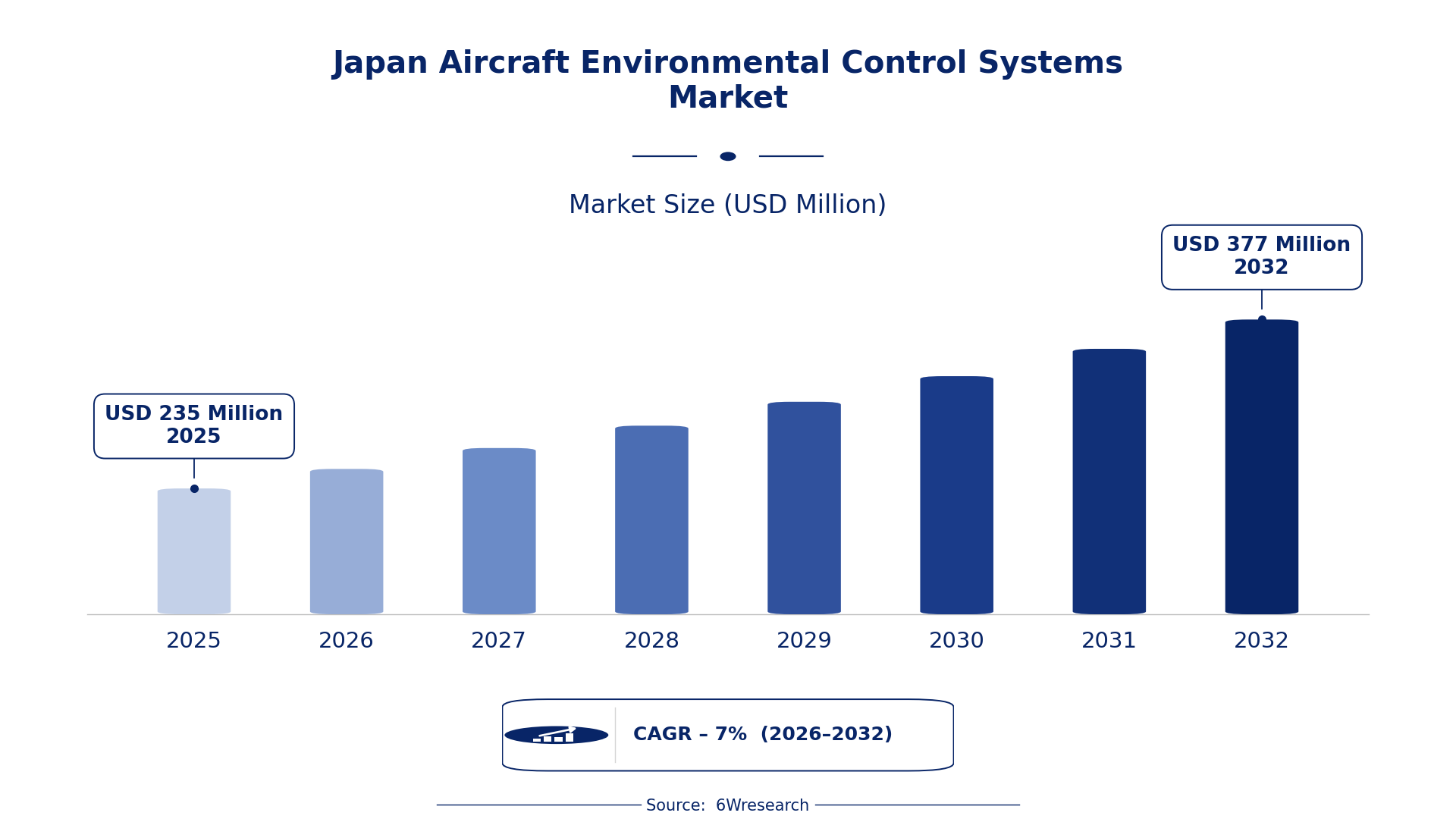
According to 6Wresearch internal database and industry insights, the Japan Aircraft Environmental Control Systems Market was valued at USD 235 Million in 2025 and is projected to reach USD 377 Million by 2032, growing at a CAGR of approximately 7% during 2026–2032.
Japan Aircraft Environmental Control Systems Market Highlights
| Report Metric | Details |
| Report Name | Japan Aircraft Environmental Control Systems Market (2026-2032) |
| Market Size 2025 | USD 235 Million |
| Market Size 2032 | USD 377 Million |
| Absolute Growth 2025–2032 | USD 142 Million |
| CAGR 2026–2032 | 7% |
| Peak Annual Growth | 7.5% in 2032 |
| Forecast Period | 2026–2032 |
| Historical Data | 2022–2025 |
| Base Year | 2025 |
| Leading System Type, 2025 | Air Conditioning (39% share) |
| Leading Functionality, 2025 | Cabin Comfort (50% share) |
| Leading Aircraft Type, 2025 | Commercial Aircraft (41% share) |
| Leading Distribution Channel, 2025 | OEM Supply (41% share) |
| Leading End User, 2025 | Airlines (47% share) |
| Fastest-Growing System Type | Pressurization Systems (9.7% CAGR) |
| Fastest-Growing Functionality | Pressure Control (9.0% CAGR) |
| Fastest-Growing Aircraft Type | Military Aircraft (9.9% CAGR) |
| Fastest-Growing Distribution Channel | Direct Contracts (8.7% CAGR) |
| Fastest-Growing End User | Defense Forces (8.9% CAGR) |
| Growing Sector | aviation |
| Key End Users | airlines, military forces, aircraft operators, fleet owners |
Japan Aircraft Environmental Control Systems Market Year-wise Growth Rate and Key Drivers (2022–2032)
This graph illustrates the annual growth rates of the market from 2022 to 2032, highlighting a steady upward trajectory and projected market expansion over the forecast period.
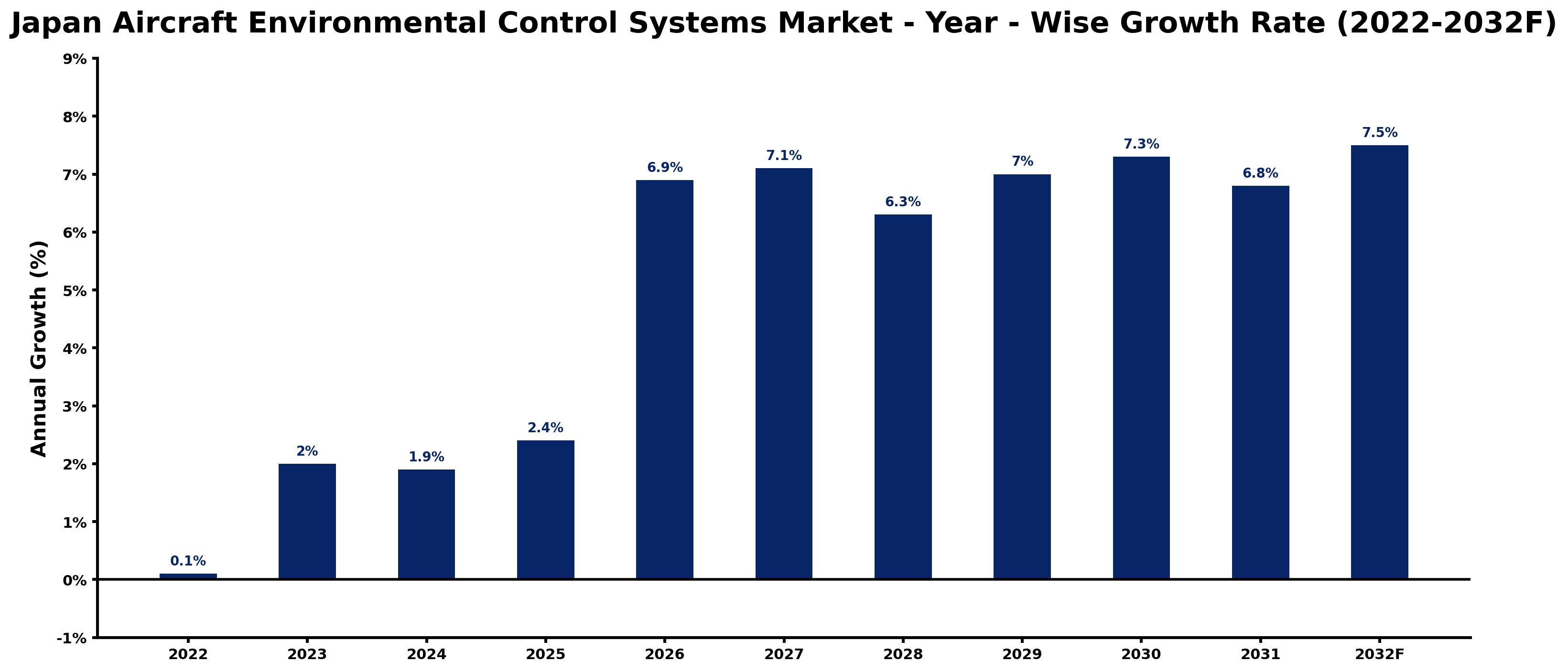
Annual growth estimates for each year appear below with the principal reason behind them, explaining the shifts that set the pace of the market.
| Year | Estimated Annual Growth (%) | Market Rationale |
| 2022 | 0.1 | The market showed minimal growth due to limited demand from airlines. |
| 2023 | 2.0 | Demand from commercial airlines increased significantly, boosting growth rates. |
| 2024 | 1.9 | Growth slowed as airlines faced operational challenges and budget constraints. |
| 2025 | 2.4 | A surge in air travel led to increased investments in ECS systems. |
| 2026 | 6.9 | Demand from military aircraft upgrades accelerated market expansion. |
| 2027 | 7.1 | Growing passenger numbers and fleet modernization supported higher growth. |
| 2028 | 6.3 | A slight slowdown occurred as the market adjusted to previous peaks. |
| 2029 | 7.0 | Increased military spending on aircraft systems drove demand higher. |
| 2030 | 7.3 | The market rebounded with renewed investments in commercial aviation. |
| 2031 | 6.8 | Growth moderated as the market stabilised after rapid expansions. |
| 2032 | 7.5 | A peak in demand is expected as military upgrades continue. |
Note: Market size estimations and growth projections presented in this report are based on 6Wresearch's proprietary forecasting methodology, utilizing the latest available industry data, government publications, and primary research inputs.
Japan Aircraft Environmental Control Systems Market Synopsis
Aircraft Environmental Control Systems manage cabin and cockpit environments in aircraft. In Japan, the aviation industry supports over 80 million passengers annually, creating demand for ECS from both commercial airlines and military operations. Increased air travel, military aircraft upgrades, and investments in green aviation technologies are driving market growth. The anticipated rise in passenger numbers and military modernization initiatives will further boost demand for ECS in the coming years.
Market Dynamics Impact Analysis (2026–2032)
| Factor | Type | Impact | Primary Segment Affected |
| Growing passenger numbers in commercial aviation | Driver | High | Air Conditioning |
| Increased military aircraft upgrades | Driver | High | Pressurization Systems |
| Expansion of MRO services for aircraft | Opportunity | Medium | MRO Providers |
| Rising demand for green aviation technologies | Opportunity | Medium | Thermal Control |
| High costs associated with advanced ECS systems | Restraint | High | Cabin Comfort |
| Regulatory compliance costs for safety standards | Restraint | Medium | Ventilation Systems |
| Limited budget allocations for military upgrades | Challenge | High | Military Aircraft |
| Supply chain disruptions affecting component availability | Challenge | Medium | OEM Supply |
Evaluation of Drivers in Japan Aircraft Environmental Control Systems Market (2026–2032)
The table below links each growth driver to the segment it affects and the evidence for it.
| Drivers | Primary Segment Affected | Why It Matters (Evidence) |
| Increased air travel demand | Air Conditioning | Japan's aviation sector supports over 80 million passengers annually, leading airlines to invest more in ECS. |
| Military modernization initiatives | Pressurization Systems | The Japanese military operates over 300 aircraft, necessitating upgrades to ECS for operational efficiency. |
| Growing focus on passenger comfort | Cabin Comfort | Air conditioning systems are vital for maintaining comfort, prompting airlines to invest in ECS. |
| Investment in MRO services | MRO Providers | With rising air travel, MRO services are expanding to maintain existing aircraft ECS systems. |
| Technological advancements in ECS | Thermal Control | Innovation in ECS technologies is driving demand for more efficient systems in both commercial and military aircraft. |
A wider customer base explains much of the growth, as demand from commercial airlines and military operations drives the need for Aircraft Environmental Control Systems. Japan's aviation sector supports over 80 million passengers annually, prompting airlines to invest heavily in ECS for passenger comfort. The Japanese military operates a fleet of over 300 aircraft, necessitating upgrades to ECS for operational readiness. The focus on green aviation technologies is increasing investments in more efficient systems. The expansion of MRO services is also contributing to rising demand for ECS, as airlines seek to maintain their fleets effectively.
Evaluation of Restraints in Japan Aircraft Environmental Control Systems Market
The main factors holding the market back are set out below.
| Market Restraint | Primary Segment Affected | Why It Matters (Evidence) |
| High costs associated with advanced ECS systems | Cabin Comfort | The investment required for advanced ECS systems can deter airlines from upgrading. |
| Regulatory compliance costs for safety standards | Ventilation Systems | Meeting aviation regulations increases operational costs for airlines and military operators. |
| Budget constraints within the defense sector | Military Aircraft | Limited budget allocations for military upgrades can restrict necessary ECS improvements. |
| Supply chain disruptions affecting component availability | OEM Supply | Global supply chain issues can delay the procurement of essential ECS components. |
| Market competition driving price pressures | Direct Contracts | Intense competition among suppliers can lead to reduced profit margins for ECS providers. |
Japan Aircraft Environmental Control Systems Market Challenges
A major obstacle for Aircraft Environmental Control Systems in Japan is supply chain disruptions due to reliance on imported components, which delays production for manufacturers. Domestic airlines face rising operational costs from increased minimum wages, now at JPY 1,055 per hour, straining budgets and affecting service quality. Buyers encounter challenges with technological advancements, as strict standards from the Japan Aerospace Exploration Agency can postpone new system implementations, impacting local suppliers' competitiveness. Compliance with international air quality regulations requires substantial investments, limiting available resources for military and commercial buyers and potentially delaying fleet upgrades.
Trends in the Japan Aircraft Environmental Control Systems Market
The following changes are redrawing the Japan Aircraft Environmental Control Systems Market.
- Shift towards Green Aviation Technologies: Japan is prioritising green aviation technologies, with government initiatives promoting sustainable practices. In 2023, funds were allocated to support eco-friendly aircraft upgrades, increasing demand for advanced ECS systems.
- Transition from Traditional to Advanced ECS Systems: The aviation sector is moving towards advanced ECS systems that offer improved efficiency and comfort. The Japan Aerospace Exploration Agency is setting new standards to encourage innovation in ECS technologies.
- Emergence of MRO Services Growth: MRO services are expanding rapidly in Japan, driven by increased air travel demand. In 2023, MRO services for aircraft are projected to grow, reflecting the need for regular maintenance of ECS.
- Focus on Passenger Comfort: Airlines are focusing on improving passenger comfort through advanced ECS. The Tokyo Metropolitan Area is a major hub for airline operations, driving investments in superior ECS systems.
Investment Opportunities in the Japan Aircraft Environmental Control Systems Market
Where to invest in the Japan Aircraft Environmental Control Systems Market: the main openings are set out below.
- Supply of Advanced ECS Components: There is a growing opportunity to supply advanced ECS components as airlines modernise fleets. Japan's aviation sector supports over 80 million passengers annually, indicating strong demand for upgrades.
- Investment in MRO Facilities: Investing in MRO facilities presents a prime opportunity, with the market for MRO services projected to grow due to increased air travel. Tokyo is a key region for such investments.
- Gap in Green Aviation Technologies: The push for green aviation technologies creates a gap for suppliers of eco-friendly ECS systems. The government has allocated funds to promote these technologies, indicating strong market potential.
- Partnerships with Airlines for ECS Upgrades: Forming partnerships with airlines for ECS upgrades is a viable entry route. The Japan Airlines Association represents commercial airlines, providing a pathway for collaboration.
Government Initiatives in the Japan Aircraft Environmental Control Systems Market
The Electrical Appliance and Material Safety Act, established in 1961, regulates the safety of electrical appliances, including ECS components, ensuring they meet safety standards. The Industrial Standardization Act, amended in 2019, governs JIS product standards, which are essential for ECS compliance in Japan's aviation sector.
In 2023, the government allocated funds to support the development of green aviation technologies. The Ministry of Land, Infrastructure, Transport and Tourism oversees these initiatives, ensuring compliance with safety and environmental standards.
Future Insight of the Japan Aircraft Environmental Control Systems Market
Investment in green aviation technologies will create robust demand for Aircraft Environmental Control Systems by 2032, spurred by government initiatives and military upgrades. The modernization of the military fleet will necessitate enhancements for over 300 aircraft, opening new opportunities for suppliers. MRO services are projected to grow, aligning with the recovery of Japan's air transport sector post-2023, which supports over 80 million passengers annually. The Tokyo International Air Show will showcase innovations that will further drive market growth, as stakeholders emphasise passenger comfort and operational efficiency.
Market Segmentation Analysis
Japan Aircraft Environmental Control Systems Market report covers a detailed analysis of the following market segments:
By System Type – Air Conditioning Leads, Pressurization Systems Expected to Grow Fastest
According to Prakhar Dixit, Senior Research Analyst at 6Wresearch, with 39% of system type revenue in 2025, Air Conditioning was the largest category. Air Conditioning holds the largest share because it is essential for maintaining a comfortable environment for passengers during flights. With Japan's aviation sector serving over 80 million passengers annually, the demand for effective air conditioning systems remains strong. The quickest growth will come from Pressurization Systems, forecast to expand at a CAGR of 9.7% between 2026 and 2032. Pressurization Systems is experiencing rapid growth as they are critical for ensuring safe operation at high altitudes, particularly in Japan's military aircraft fleet. This necessity guarantees that the demand for pressurization systems will continue to rise. Suppliers should focus on improving air conditioning solutions to meet the increasing demands of the aviation sector.
By Functionality – Cabin Comfort Leads, Pressure Control Expected to Grow Fastest
The largest functionality category in 2025 was Cabin Comfort, at 50% of revenue. Cabin Comfort is the leading functionality since it directly impacts passenger experience and satisfaction during flights. Given the high volume of passenger traffic in Japan, maintaining excellent standards of cabin comfort is crucial for airlines. Pressure Control is projected to grow fastest, at a CAGR of 9.0% during 2026–2032. Pressure Control is growing quickly because it is vital for maintaining safe cabin pressure levels, especially in military aircraft operations. The heightened focus on safety regulations further accelerates this segment's growth. Buyers must prioritise systems that enhance cabin comfort and pressure control to ensure compliance with safety standards and improve passenger satisfaction.
By Aircraft Type – Commercial Aircraft Leads, Military Aircraft Expected to Grow Fastest
Commercial Aircraft held 41% of the Japan Aircraft Environmental Control Systems Market by aircraft type in 2025. Commercial Aircraft leads the market due to significant demand from airlines operating in Japan's dynamic aviation sector. The Tokyo Metropolitan Area serves as a major hub for these operations, reinforcing the need for ECS in commercial aircraft. Military Aircraft is set to record the highest CAGR in this split, 9.9% over 2026–2032. Military Aircraft is the fastest-growing segment due to extensive use by defense forces for operational readiness, particularly as Japan's military aircraft fleet requires advanced ECS. This trend is expected to continue as modernization efforts increase. Suppliers should customise their offerings to address the specific requirements of both commercial and military aircraft to capture a larger market share.
By Distribution Channel – OEM Supply Leads, Direct Contracts Expected to Grow Fastest
OEM Supply took 41% of distribution channel revenue in 2025, more than any other category. OEM Supply is the leading distribution channel as it acts as the primary source for new aircraft manufacturing in Japan. The robust presence of domestic airlines further drives the demand for OEM-supplied ECS. Over 2026–2032, Direct Contracts are expected to post the fastest growth, at a CAGR of 8.7%. Direct Contracts are expanding rapidly as they represent a common procurement method for airlines and military, indicating a shift towards more streamlined purchasing processes. This trend is likely to persist as efficiency becomes a priority. Suppliers need to build strong relationships with OEMs and explore direct contract opportunities to enhance market penetration.
By End User – Airlines Lead, Defense Forces Expected to Grow Fastest
In 2025, Airlines led the end user split with a 47% share. Airlines are the largest end user segment in the ECS market, driven by the necessity to accommodate millions of passengers annually. Their substantial investment in passenger comfort and safety guarantees a steady demand for ECS. The quickest growth will come from Defense Forces, forecast to expand at a CAGR of 8.9% between 2026 and 2032. Defense Forces are rapidly increasing their use of ECS in military aircraft, particularly as modernization efforts intensify. This growth reflects a heightened focus on operational readiness and efficiency within the military sector. Suppliers should consider the unique requirements of both airlines and defense forces to effectively cater to their ECS needs.
Key Attractiveness of the Report
- 10 Years of Market Numbers
- Historical Data Starting from 2022 to 2025
- Base Year 2025
- Forecast Data until 2032
- Key Performance Indicators Impacting the Market
- Major Upcoming Developments and Projects
Key Highlights of the Report:
- Japan Aircraft Environmental Control Systems Market Outlook
- Market Size of Japan Aircraft Environmental Control Systems Market, 2025
- Forecast of Japan Aircraft Environmental Control Systems Market, 2032
- Historical Data and Forecast of Japan Aircraft Environmental Control Systems Market Revenues & Volume for the Period 2022-2032F
- Japan Aircraft Environmental Control Systems Market Trend Evolution
- Japan Aircraft Environmental Control Systems Market Drivers and Challenges
- Japan Aircraft Environmental Control Systems Market Price Trends
- Japan Aircraft Environmental Control Systems Market Porter's Five Forces
- Japan Aircraft Environmental Control Systems Market Industry Life Cycle
- Historical Data and Forecast of Japan Aircraft Environmental Control Systems Market Revenues & Volume By System Type for the Period 2022-2032F
- Historical Data and Forecast of Japan Aircraft Environmental Control Systems Market Revenues & Volume By Air Conditioning for the Period 2022-2032F
- Historical Data and Forecast of Japan Aircraft Environmental Control Systems Market Revenues & Volume By Pressurization Systems for the Period 2022-2032F
- Historical Data and Forecast of Japan Aircraft Environmental Control Systems Market Revenues & Volume By Thermal Control for the Period 2022-2032F
- Historical Data and Forecast of Japan Aircraft Environmental Control Systems Market Revenues & Volume By Ventilation Systems for the Period 2022-2032F
- Historical Data and Forecast of Japan Aircraft Environmental Control Systems Market Revenues & Volume By Functionality for the Period 2022-2032F
- Historical Data and Forecast of Japan Aircraft Environmental Control Systems Market Revenues & Volume By Cabin Comfort for the Period 2022-2032F
- Historical Data and Forecast of Japan Aircraft Environmental Control Systems Market Revenues & Volume By Pressure Control for the Period 2022-2032F
- Historical Data and Forecast of Japan Aircraft Environmental Control Systems Market Revenues & Volume By Temperature Regulation for the Period 2022-2032F
- Historical Data and Forecast of Japan Aircraft Environmental Control Systems Market Revenues & Volume By Air Circulation for the Period 2022-2032F
- Historical Data and Forecast of Japan Aircraft Environmental Control Systems Market Revenues & Volume By Aircraft Type for the Period 2022-2032F
- Historical Data and Forecast of Japan Aircraft Environmental Control Systems Market Revenues & Volume By Commercial Aircraft for the Period 2022-2032F
- Historical Data and Forecast of Japan Aircraft Environmental Control Systems Market Revenues & Volume By Military Aircraft for the Period 2022-2032F
- Historical Data and Forecast of Japan Aircraft Environmental Control Systems Market Revenues & Volume By Business Jets for the Period 2022-2032F
- Historical Data and Forecast of Japan Aircraft Environmental Control Systems Market Revenues & Volume By Cargo Aircraft for the Period 2022-2032F
- Historical Data and Forecast of Japan Aircraft Environmental Control Systems Market Revenues & Volume By Distribution Channel for the Period 2022-2032F
- Historical Data and Forecast of Japan Aircraft Environmental Control Systems Market Revenues & Volume By OEM Supply for the Period 2022-2032F
- Historical Data and Forecast of Japan Aircraft Environmental Control Systems Market Revenues & Volume By Direct Contracts for the Period 2022-2032F
- Historical Data and Forecast of Japan Aircraft Environmental Control Systems Market Revenues & Volume By MRO Providers for the Period 2022-2032F
- Historical Data and Forecast of Japan Aircraft Environmental Control Systems Market Revenues & Volume By System Integrators for the Period 2022-2032F
- Historical Data and Forecast of Japan Aircraft Environmental Control Systems Market Revenues & Volume By End User for the Period 2022-2032F
- Historical Data and Forecast of Japan Aircraft Environmental Control Systems Market Revenues & Volume By Airlines for the Period 2022-2032F
- Historical Data and Forecast of Japan Aircraft Environmental Control Systems Market Revenues & Volume By Defense Forces for the Period 2022-2032F
- Historical Data and Forecast of Japan Aircraft Environmental Control Systems Market Revenues & Volume By Aircraft Operators for the Period 2022-2032F
- Historical Data and Forecast of Japan Aircraft Environmental Control Systems Market Revenues & Volume By Fleet Owners for the Period 2022-2032F
- Japan Aircraft Environmental Control Systems Market Import Export Trade Statistics
- Market Opportunity Assessment By System Type
- Market Opportunity Assessment By Functionality
- Market Opportunity Assessment By Aircraft Type
- Market Opportunity Assessment By Distribution Channel
- Market Opportunity Assessment By End User
- Japan Aircraft Environmental Control Systems Market Top Companies Market Share
- Japan Aircraft Environmental Control Systems Market Competitive Benchmarking By Technical and Operational Parameters
- Japan Aircraft Environmental Control Systems Market Company Profiles
- Japan Aircraft Environmental Control Systems Market Key Strategic Recommendations
Market Covered
The study includes the following segmentation.
By System Type
- Air Conditioning
- Pressurization Systems
- Thermal Control
- Ventilation Systems
By Functionality
- Cabin Comfort
- Pressure Control
- Temperature Regulation
- Air Circulation
By Aircraft Type
- Commercial Aircraft
- Military Aircraft
- Business Jets
- Cargo Aircraft
By Distribution Channel
- OEM Supply
- Direct Contracts
- MRO Providers
- System Integrators
By End User
- Airlines
- Defense Forces
- Aircraft Operators
- Fleet Owners































