Japan Amusement Theme Park Market Size & Growth Rate
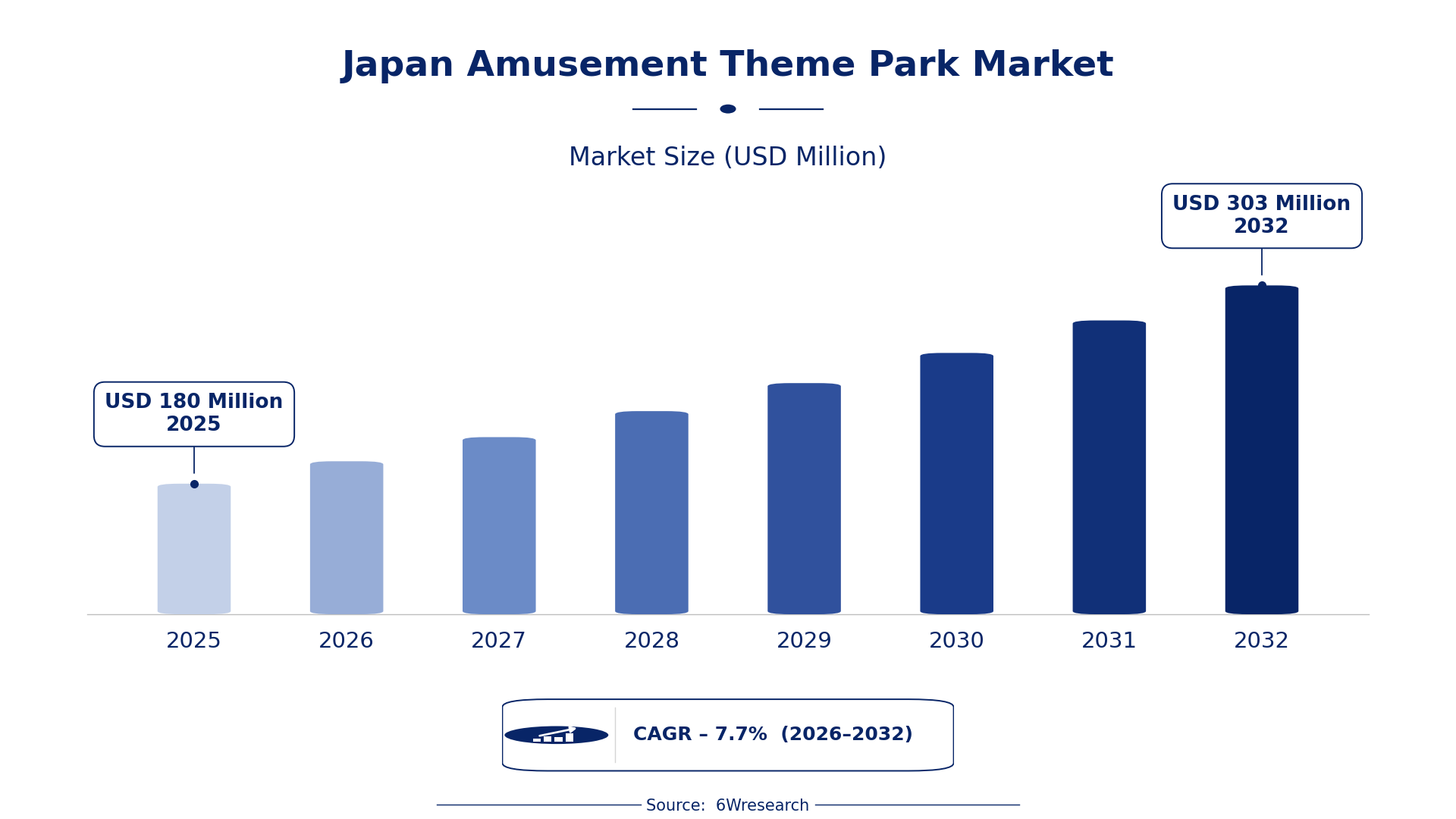
According to 6Wresearch internal database and industry insights, the Japan Amusement Theme Park Market was valued at USD 180 Million in 2025 and is projected to reach USD 303 Million by 2032, growing at a CAGR of approximately 7.7% during 2026–2032.
Japan Amusement Theme Park Market Highlights
| Report Metric | Details |
| Report Name | Japan Amusement Theme Park Market (2026-2032) |
| Market Size 2025 | USD 180 Million |
| Market Size 2032 | USD 303 Million |
| Absolute Growth 2025–2032 | USD 123 Million |
| CAGR 2026–2032 | 7.7% |
| Peak Annual Growth | 8.7% in 2028 |
| Forecast Period | 2026–2032 |
| Historical Data | 2022–2025 |
| Base Year | 2025 |
| Leading Product Type, 2025 | Roller Coasters (46% share) |
| Leading Application, 2025 | Themed Entertainment (54% share) |
| Leading End-Use, 2025 | Amusement Parks (42% share) |
| Fastest-Growing Product Type | Interactive Rides (10.6% CAGR) |
| Fastest-Growing End-Use | Leisure & Entertainment (11.1% CAGR) |
| Growing Sector | Family Amusement Parks |
| Key End Users | Families, thrill-seekers, tourists, local visitors |
Japan Amusement Theme Park Market Year-wise Growth Rate and Key Drivers (2022–2032)
This graph illustrates the annual growth rates of the market from 2022 to 2032, highlighting a steady upward trajectory and projected market expansion over the forecast period.
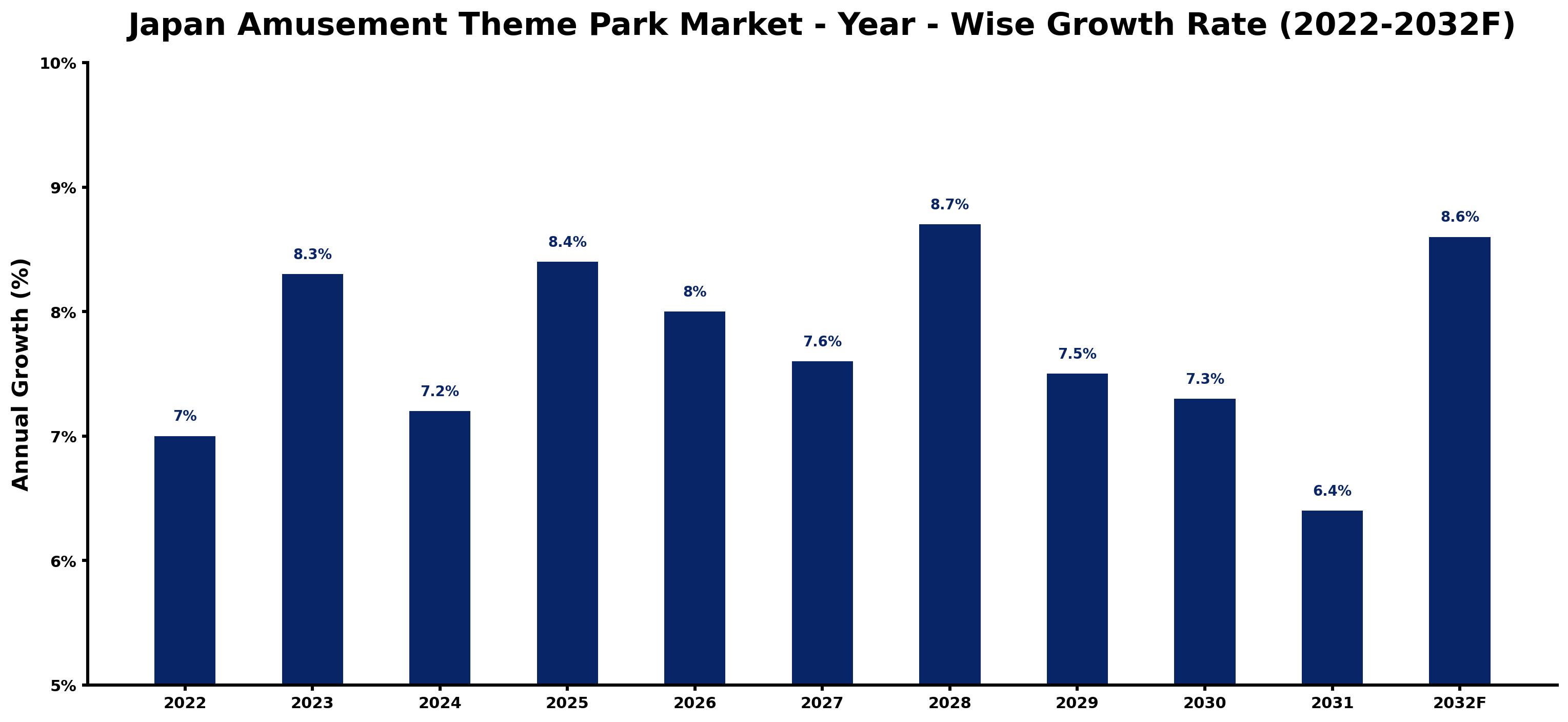
For each year, the table pairs the estimated growth rate with the leading influence on demand, showing how the drivers changed across the period.
| Year | Estimated Annual Growth (%) | Market Rationale |
| 2022 | 7.0 | The market experienced steady growth, driven by strong domestic tourism. |
| 2023 | 8.3 | Visitor numbers increased due to successful promotional campaigns targeting families. |
| 2024 | 7.2 | Growth slowed as competition intensified among amusement parks in the region. |
| 2025 | 8.4 | The market peaked with heightened interest in family-oriented attractions. |
| 2026 | 8.0 | A slight slowdown occurred as visitor preferences shifted towards new experiences. |
| 2027 | 7.6 | Growth continued but at a reduced rate as market saturation approached. |
| 2028 | 8.7 | The market rebounded with new attractions attracting thrill-seekers. |
| 2029 | 7.5 | Growth slowed again as economic conditions began to affect discretionary spending. |
| 2030 | 7.3 | Visitor numbers stabilised as parks adapted to changing consumer preferences. |
| 2031 | 6.4 | A further slowdown was noted as competition remained fierce in the sector. |
| 2032 | 8.6 | The market is projected to grow faster as new attractions are introduced. |
Note: Market size estimations and growth projections presented in this report are based on 6Wresearch's proprietary forecasting methodology, utilizing the latest available industry data, government publications, and primary research inputs.
Japan Amusement Theme Park Market Synopsis
Amusement theme parks in Japan are entertainment venues featuring rides, attractions, and shows designed for recreational activities and family entertainment. The Tokyo Disney Resort is a key player in this vibrant market, attracting millions of visitors annually. The Japan Amusement Theme Park Market is expanding due to rising domestic tourism, with government initiatives targeting 60 million visitors by 2030. Family-oriented attractions, which account for 40% of total park offerings, are driving this growth, reflecting changing consumer preferences.
Market Dynamics Impact Analysis (2026–2032)
| Factor | Type | Impact | Primary Segment Affected |
| Growing domestic tourism and family-oriented attractions are driving demand. | Driver | High | Family Amusement Parks |
| The rise in interactive experiences enhances visitor engagement. | Driver | High | Interactive Rides |
| The increasing popularity of water parks during summer months presents an opportunity. | Opportunity | Medium | Water Parks |
| The demand for themed entertainment is rising as parks enhance visitor experiences. | Opportunity | High | Themed Entertainment |
| Competition among amusement parks can lead to price wars, affecting profitability. | Restraint | High | Amusement Parks |
| Economic fluctuations may impact discretionary spending on entertainment. | Restraint | Medium | Leisure & Entertainment |
| Rising operational costs can strain park budgets and investment capacity. | Challenge | High | Theme Park Operators |
| Compliance with safety standards requires ongoing investment and training. | Challenge | Medium | Amusement Parks |
Evaluation of Drivers in Japan Amusement Theme Park Market (2026–2032)
These are the developments adding the most demand over the forecast period.
| Drivers | Primary Segment Affected | Why It Matters (Evidence) |
| Rising domestic tourism boosts visitor numbers to amusement parks. | Family Amusement Parks | The government aims for 60 million visitors by 2030, increasing family visits. |
| The demand for interactive rides is increasing among younger audiences. | Interactive Rides | Families are seeking immersive experiences, leading to higher attendance. |
| Water parks see peak attendance during summer months, attracting visitors. | Water Parks | The popularity of summer activities drives demand for water-based attractions. |
| Themed entertainment attracts repeat customers and improves visitor experience. | Themed Entertainment | Parks are investing in storytelling elements to engage visitors more effectively. |
| Technological advancements in ride design create new attractions. | Roller Coasters | Innovative engineering techniques lead to more thrilling experiences, drawing thrill-seekers. |
Family-oriented attractions, which account for 40% of total park offerings, are increasingly popular among visitors aged 30-40 years. The demand for interactive rides has surged as families seek immersive experiences, resulting in higher attendance. Technological advancements in ride design are creating new attractions that appeal to thrill-seekers, further boosting visitor numbers. Water parks experience peak attendance during summer, driving demand for water-based attractions and improving overall visitor engagement.
Evaluation of Restraints in Japan Amusement Theme Park Market
The key brakes on demand, and where they bite hardest, are shown below.
| Market Restraint | Primary Segment Affected | Why It Matters (Evidence) |
| Competition among amusement parks leads to price wars, affecting profitability. | Amusement Parks | Price competition can reduce margins, impacting financial sustainability for operators. |
| Economic fluctuations may impact discretionary spending on entertainment. | Leisure & Entertainment | Economic downturns can lead to reduced visitor numbers as families cut back. |
| Rising operational costs can strain park budgets and investment capacity. | Theme Park Operators | Increased costs for maintenance and staffing can limit growth potential. |
| Compliance with safety standards requires ongoing investment and training. | Amusement Parks | Meeting JIS standards demands resources that can affect operational budgets. |
| Saturation in the market may limit growth opportunities for new parks. | Family Amusement Parks | With many established parks, new entrants face barriers to success. |
Japan Amusement Theme Park Market Challenges
High maintenance costs burden producers, as safety upgrades can consume up to 30% of annual budgets, limiting funds for new attractions. Many parks struggle with outdated technology, which fails to engage visitors and results in a 20% drop in attendance during off-peak seasons. Supply chain disruptions arise from reliance on specific components, causing delays in ride installations that can cost parks substantial revenue during peak months. Compliance with JIS standards raises operational expenses, inflating costs by 15% for new attractions, which can jeopardise the financial viability of smaller parks.
Trends in the Japan Amusement Theme Park Market
Below are the shifts with the largest effect on the Japan Amusement Theme Park Market.
- Launch of Domestic Tourism Campaigns: In 2023, the government initiated campaigns to revitalise domestic tourism, aiming for 60 million visitors by 2030. This initiative is expected to increase visitor numbers to amusement parks, creating more revenue opportunities.
- Shift Towards Interactive Experiences: The trend towards interactive rides began gaining traction in 2025, appealing to younger audiences. Parks are investing in immersive attractions, which are anticipated to boost visitor engagement and satisfaction.
- Increased Focus on Family-Oriented Attractions: Families are prioritising entertainment options that cater to all ages, with family rides constituting 40% of park offerings. This shift is driving parks to improve their family-friendly experiences.
- Expansion of Water Parks in Summer: Water parks have seen increased popularity during summer months, resulting in a rise in attendance. This trend highlights the demand for water-based attractions, particularly among families.
Investment Opportunities in the Japan Amusement Theme Park Market
The following opportunities in the Japan Amusement Theme Park Market pair current demand with a clear way in.
- Growing Demand for Family-Oriented Attractions: With 40% of park offerings focused on family entertainment, there is an opportunity to invest in new family rides. Family amusement parks in the Kanto region are well-positioned to cater to this demand.
- Investment in Interactive Rides: The interactive rides segment is expected to grow rapidly, presenting an opportunity for suppliers to develop new technologies. Theme park operators are actively seeking solutions to enhance visitor experiences.
- Expansion of Water Parks: Water parks are experiencing peak attendance during summer months, creating opportunities for new attractions. Operators in Osaka can capitalise on this trend by expanding their water-based offerings.
- Enhancing Themed Entertainment Experiences: Themed entertainment is anticipated to grow, indicating a need for investment in storytelling elements. Parks in Tokyo can enhance their attractions to meet this demand.
Government Initiatives in the Japan Amusement Theme Park Market
The GX Basic Policy, adopted in 2023, aims for about JPY 150 trillion in public-private decarbonisation investment over 10 years, improving infrastructure and sustainability in amusement parks. This policy complements older laws like the Water Supply Act, which sets standards for drinking-water quality and supply, ensuring safe operations for parks.
The Consumer Affairs Agency oversees regulations that prohibit misleading advertising in the amusement park sector. This regulation ensures that parks maintain transparency in their marketing, building consumer trust and safety.
Future Insight of the Japan Amusement Theme Park Market
Government initiatives will drive a focus on revitalising domestic tourism by 2032, prompting parks to enhance attractions and facilities. The aim for 60 million visitors by 2030 will encourage parks to invest in unique experiences. Advanced technologies, such as virtual reality, will reshape visitor interactions, creating immersive environments. New safety standards will streamline compliance, allowing suppliers to reduce costs and improve service delivery.
Market Segmentation Analysis
Japan Amusement Theme Park Market report covers a detailed analysis of the following market segments:
By Product Type – Roller Coasters Lead, Interactive Rides Expected to Grow Fastest
According to Sachin Kumar Rai, Senior Research Analyst at 6Wresearch, Roller Coasters held 46% of the Japan Amusement Theme Park Market by product type in 2025. Roller coasters attract thrill-seeking visitors, making them a staple in many Japanese amusement parks. Their popularity is particularly pronounced in the Kanto region, where they dominate the ride offerings. The quickest growth will come from Interactive Rides, forecast to expand at a CAGR of 10.6% between 2026 and 2032. Interactive rides are experiencing rapid growth as they offer immersive experiences that appeal to younger audiences. This surge is driven by parks increasingly incorporating advanced technology to enhance visitor engagement. Suppliers must focus on creating innovative interactive rides to meet the rising demand in this segment.
By Application – Themed Entertainment Leads and Records the Fastest Growth
In 2025, Themed Entertainment led the application split with a 54% share. Themed entertainment plays a vital role in enriching visitor experiences through captivating narratives, making it a cornerstone of many amusement parks. This approach is especially effective at the Tokyo Disney Resort, where storytelling enhances the overall attraction. Its lead should widen, with a projected CAGR of 10.1% during 2026–2032, the highest in this split. Themed entertainment is growing quickly as parks continually refine their storytelling techniques to attract more visitors. This focus on narrative innovation ensures that this segment remains appealing and relevant. Buyers should prioritise parks that excel in themed entertainment, as they are likely to draw larger crowds.
By End-Use – Amusement Parks Lead, Leisure & Entertainment Expected to Grow Fastest
The largest end-use category in 2025 was Amusement Parks, at 42% of revenue. Amusement parks serve as the primary venues for leisure and entertainment, drawing millions of visitors annually. Their importance in Japan's recreational landscape is underscored by high attendance figures, particularly in vibrant areas like Osaka. Leisure & Entertainment is projected to grow fastest, at a CAGR of 11.1% during 2026–2032. Leisure and entertainment activities are rapidly expanding, reflecting a shift towards diverse recreational options. This trend is driven by changing consumer preferences for varied experiences beyond traditional amusement parks. Suppliers should aim to diversify their offerings to align with the growing demands of the leisure and entertainment sector.
Key Attractiveness of the Report
- 10 Years of Market Numbers
- Historical Data Starting from 2022 to 2025
- Base Year 2025
- Forecast Data until 2032
- Key Performance Indicators Impacting the Market
- Major Upcoming Developments and Projects
Key Highlights of the Report:
- Japan Amusement Theme Park Market Outlook
- Market Size of Japan Amusement Theme Park Market, 2025
- Forecast of Japan Amusement Theme Park Market, 2032
- Historical Data and Forecast of Japan Amusement Theme Park Revenues & Volume for the Period 2022-2032
- Japan Amusement Theme Park Market Trend Evolution
- Japan Amusement Theme Park Market Drivers and Challenges
- Japan Amusement Theme Park Price Trends
- Japan Amusement Theme Park Porter's Five Forces
- Japan Amusement Theme Park Industry Life Cycle
- Historical Data and Forecast of Japan Amusement Theme Park Market Revenues & Volume By Product Type for the Period 2022-2032
- Historical Data and Forecast of Japan Amusement Theme Park Market Revenues & Volume By Roller Coasters for the Period 2022-2032
- Historical Data and Forecast of Japan Amusement Theme Park Market Revenues & Volume By Water Rides for the Period 2022-2032
- Historical Data and Forecast of Japan Amusement Theme Park Market Revenues & Volume By Interactive Rides for the Period 2022-2032
- Historical Data and Forecast of Japan Amusement Theme Park Market Revenues & Volume By Family Rides for the Period 2022-2032
- Historical Data and Forecast of Japan Amusement Theme Park Market Revenues & Volume By Application for the Period 2022-2032
- Historical Data and Forecast of Japan Amusement Theme Park Market Revenues & Volume By Thrill Rides for the Period 2022-2032
- Historical Data and Forecast of Japan Amusement Theme Park Market Revenues & Volume By Water Parks for the Period 2022-2032
- Historical Data and Forecast of Japan Amusement Theme Park Market Revenues & Volume By Themed Entertainment for the Period 2022-2032
- Historical Data and Forecast of Japan Amusement Theme Park Market Revenues & Volume By Family Amusement Parks for the Period 2022-2032
- Historical Data and Forecast of Japan Amusement Theme Park Market Revenues & Volume By End-Use for the Period 2022-2032
- Historical Data and Forecast of Japan Amusement Theme Park Market Revenues & Volume By Amusement Parks for the Period 2022-2032
- Historical Data and Forecast of Japan Amusement Theme Park Market Revenues & Volume By Leisure & Entertainment for the Period 2022-2032
- Historical Data and Forecast of Japan Amusement Theme Park Market Revenues & Volume By Theme Park Operators for the Period 2022-2032
- Historical Data and Forecast of Japan Amusement Theme Park Market Revenues & Volume By Tourism & Recreation for the Period 2022-2032
- Japan Amusement Theme Park Import Export Trade Statistics
- Market Opportunity Assessment By Product Type
- Market Opportunity Assessment By Application
- Market Opportunity Assessment By End-Use
- Japan Amusement Theme Park Top Companies Market Share
- Japan Amusement Theme Park Competitive Benchmarking By Technical and Operational Parameters
- Japan Amusement Theme Park Company Profiles
- Japan Amusement Theme Park Key Strategic Recommendations
Market Covered
The report covers the following segments.
By Product Type
- Roller Coasters
- Water Rides
- Interactive Rides
- Family Rides
By Application
- Thrill Rides
- Water Parks
- Themed Entertainment
- Family Amusement Parks
By End-Use
- Amusement Parks
- Leisure & Entertainment
- Theme Park Operators
- Tourism & Recreation































