Japan Architectural and Structural Metals Market Size & Growth Rate
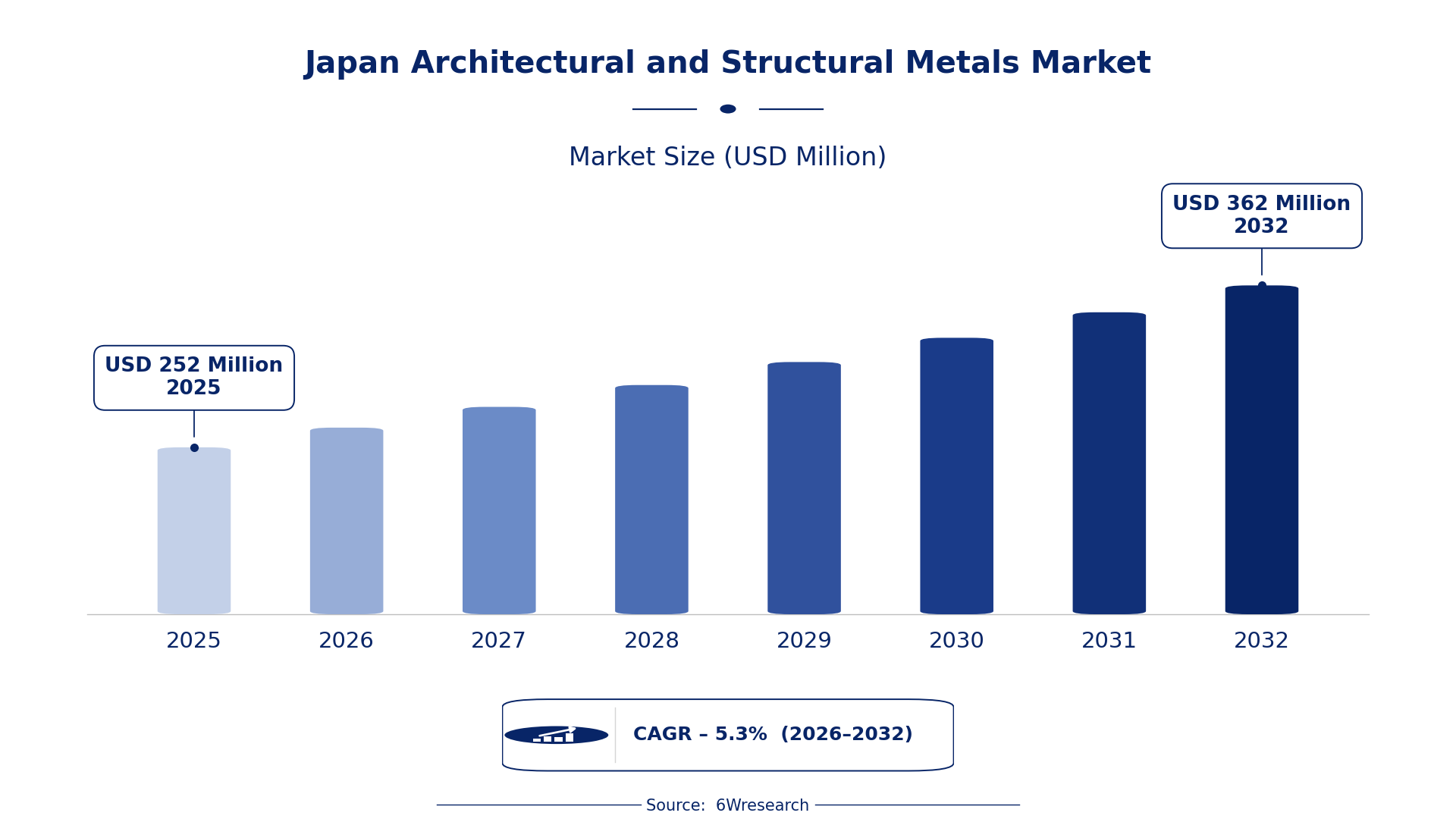
According to 6Wresearch internal database and industry insights, the Japan Architectural and Structural Metals Market was valued at USD 252 Million in 2025 and is projected to reach USD 362 Million by 2032, growing at a CAGR of approximately 5.3% during 2026–2032.
Japan Architectural and Structural Metals Market Highlights
| Report Metric | Details |
| Report Name | Japan Architectural and Structural Metals Market (2026-2032) |
| Market Size 2025 | USD 252 Million |
| Market Size 2032 | USD 362 Million |
| Absolute Growth 2025–2032 | USD 110 Million |
| CAGR 2026–2032 | 5.3% |
| Peak Annual Growth | 6.2% in 2032 |
| Forecast Period | 2026–2032 |
| Historical Data | 2022–2025 |
| Base Year | 2025 |
| Leading Type, 2025 | Plate Work and Fabricated Structural Products (68% share) |
| Leading Application, 2025 | Construction (42% share) |
| Fastest-Growing Type | Ornamental and Architectural Metal Products (7.4% CAGR) |
| Fastest-Growing Application | Manufacturing (6.9% CAGR) |
| Growing Sector | Construction |
| Key End Users | Construction firms, manufacturers, architects, urban developers |
Japan Architectural and Structural Metals Market Year-wise Growth Rate and Key Drivers (2022–2032)
This graph illustrates the annual growth rates of the market from 2022 to 2032, highlighting a steady upward trajectory and projected market expansion over the forecast period.
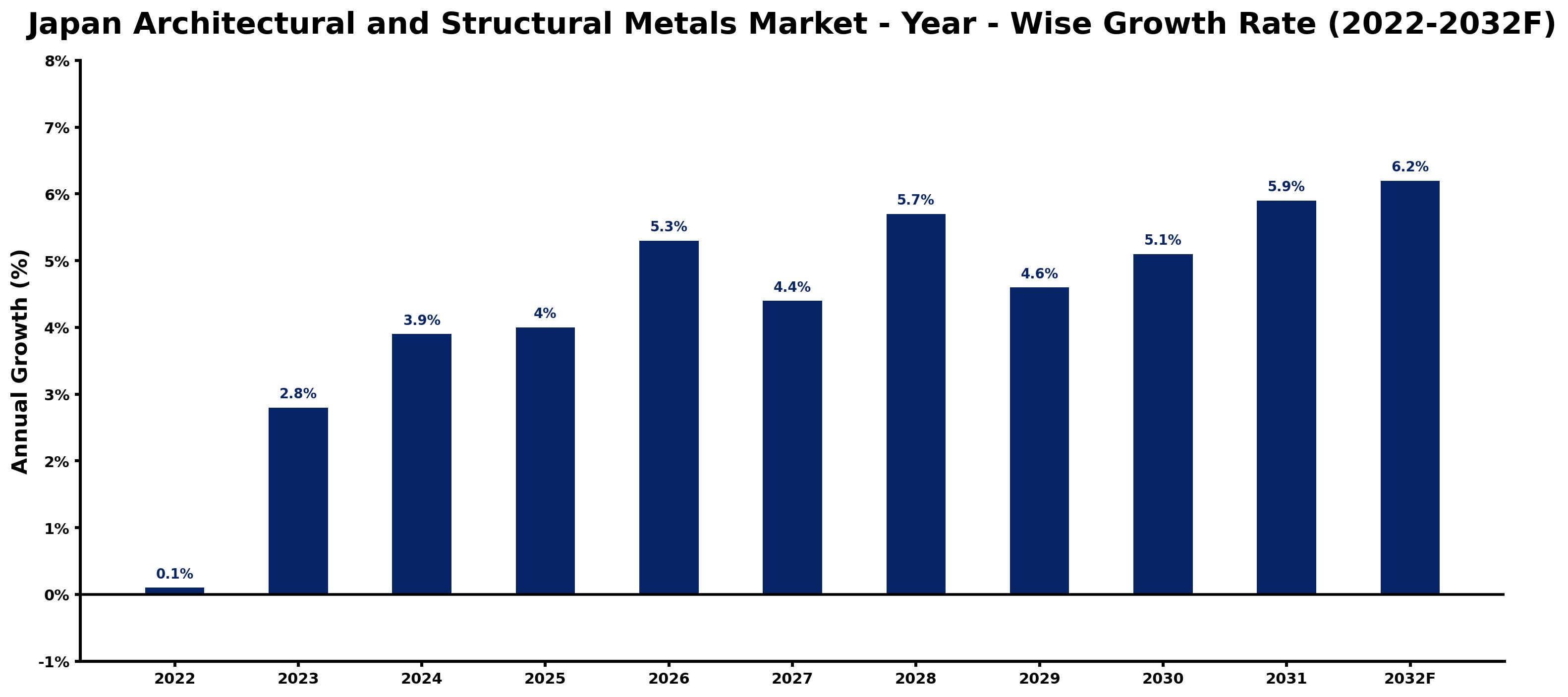
The table below sets out the estimated growth rate for each year and the main factor behind it.
| Year | Estimated Annual Growth (%) | Market Rationale |
| 2022 | 0.1 | The market experienced minimal growth due to ongoing recovery from previous economic challenges. |
| 2023 | 2.8 | Growth accelerated as construction activity increased following the easing of restrictions. |
| 2024 | 3.9 | Demand continued to rise, driven by urban development projects and infrastructure investments. |
| 2025 | 4.0 | The market reached its historical peak as major construction initiatives were implemented across the country. |
| 2026 | 5.3 | Investment in sustainable construction materials is anticipated to gain traction, boosting demand for architectural metals. |
| 2027 | 4.4 | Growth will slow slightly as the market adjusts to the previous year's peak performance. |
| 2028 | 5.7 | Demand is projected to rebound as urbanisation efforts intensify, particularly in metropolitan areas. |
| 2029 | 4.6 | Growth will decelerate due to market saturation in certain segments and increased competition. |
| 2030 | 5.1 | Sustainable building practices will gain momentum, further driving demand for architectural metals. |
| 2031 | 5.9 | The market is expected to experience steady growth as investments in infrastructure continue to rise. |
| 2032 | 6.2 | Demand will peak as the focus on green building initiatives and urban development intensifies. |
Note: Market size estimations and growth projections presented in this report are based on 6Wresearch's proprietary forecasting methodology, utilizing the latest available industry data, government publications, and primary research inputs.
Japan Architectural and Structural Metals Market Synopsis
Architectural and structural metals, primarily made from steel and aluminum, are essential in construction for structural support and aesthetic purposes. The Japan Architectural and Structural Metals Market is expanding due to rising urbanisation, investments in sustainable construction, and a thriving domestic construction sector valued at approximately ¥60 trillion in 2022. Key buyer groups include construction firms and manufacturers, both driving demand for high-quality metal products. The government's commitment to decarbonisation and green building initiatives further stimulates growth in this sector.
Market Dynamics Impact Analysis (2026–2032)
| Factor | Type | Impact | Primary Segment Affected |
| Rising urbanisation is driving demand for architectural metals in construction projects. | Driver | High | Construction |
| Investment in sustainable construction materials is unlocking new opportunities for architectural metals. | Driver | High | Ornamental and Architectural Metal Products |
| Increased focus on green building initiatives creates demand for sustainable metal products. | Opportunity | High | Ornamental and Architectural Metal Products |
| Growing public and private decarbonisation investment opens avenues for innovative metal applications. | Opportunity | High | Plate Work and Fabricated Structural Products |
| Compliance with stringent environmental regulations can increase operational costs for producers. | Restraint | Medium | Plate Work and Fabricated Structural Products |
| Competition among over 1,000 registered construction companies may pressure profit margins. | Restraint | Medium | Construction |
| Cost pressures from raw material price fluctuations can impact project budgets. | Challenge | High | Manufacturing |
| Capacity constraints in production facilities may limit the ability to meet rising demand. | Challenge | Medium | Ornamental and Architectural Metal Products |
Evaluation of Drivers in Japan Architectural and Structural Metals Market (2026–2032)
The factors lifting demand, and the evidence behind each, are summarised below.
| Drivers | Primary Segment Affected | Why It Matters (Evidence) |
| Increased investment in infrastructure projects is driving demand for structural metals. | Construction | Japan's construction industry was valued at approximately ¥60 trillion in 2022, leading to more purchases of architectural metals. |
| Urbanisation trends are boosting demand for ornamental and architectural metal products. | Ornamental and Architectural Metal Products | As urban populations grow, the need for aesthetic features in buildings increases. |
| Government initiatives promoting sustainable construction materials are influencing market growth. | Plate Work and Fabricated Structural Products | The 2023 green building program in Tokyo encourages the use of eco-friendly materials. |
| Technological advancements in metal fabrication are improving production efficiency. | Plate Work and Fabricated Structural Products | Support for innovation in manufacturing processes enhances output quality. |
| Rising consumer preferences for sustainable building practices are reshaping demand. | Ornamental and Architectural Metal Products | Japan targets a 46% cut in greenhouse-gas emissions by 2030, increasing demand for eco-friendly products. |
Orders keep climbing as investment in infrastructure projects surges, with the construction industry valued at approximately ¥60 trillion in 2022. Urbanisation trends are driving demand for ornamental and architectural metal products, as cities expand and require aesthetic features. Advancements in metal fabrication improve production efficiency, allowing manufacturers to meet rising needs. Consumer preferences for sustainable building practices reshape the market, with Japan targeting a 46% reduction in greenhouse-gas emissions by 2030, further boosting demand for eco-friendly architectural metals.
Evaluation of Restraints in Japan Architectural and Structural Metals Market
The following restraints limit how fast demand can grow.
| Market Restraint | Primary Segment Affected | Why It Matters (Evidence) |
| Compliance with the PRTR Law increases operational costs for producers. | Plate Work and Fabricated Structural Products | The law requires businesses to report chemical substance releases, adding regulatory burdens. |
| Competition among over 1,000 registered construction companies pressures profit margins. | Construction | Intense competition can lead to price wars, affecting profitability for metal suppliers. |
| Fluctuating raw material prices create uncertainty in project budgets. | Manufacturing | Rising costs of steel and aluminum can impact the overall expenses for manufacturers. |
| Limited manufacturing capacity can delay project timelines and affect delivery schedules. | Ornamental and Architectural Metal Products | Production constraints may hinder the ability to meet rising demand. |
| Stringent environmental regulations may slow down production processes. | Plate Work and Fabricated Structural Products | Producers must invest in compliance measures, which can divert resources from production. |
Japan Architectural and Structural Metals Market Challenges
Tokyo's green building program imposes stricter emissions standards, complicating compliance for construction companies and potentially delaying project approvals by up to six months. Regulatory changes raise costs for suppliers, as they must invest in new technologies to meet the JIS G 3101 standard, which may reduce profit margins by around 10%. Competition from alternative materials, such as composites, pressures suppliers to lower prices, impacting profit margins by approximately 15%. Supply chain disruptions have emerged due to global shortages of raw materials, causing production delays that can extend lead times for buyers by over 20%.
Trends in the Japan Architectural and Structural Metals Market
Four trends stand out in the Japan Architectural and Structural Metals Market.
- Launch of Green Building Program in Tokyo: In 2023, the Tokyo Metropolitan Government initiated a program aimed at reducing carbon emissions. This initiative encourages the use of sustainable construction materials, increasing demand for architectural metals that meet eco-friendly standards.
- Construction Firms Emphasising Sustainable Materials: Construction firms are increasingly focusing on sustainable materials for their projects. This shift towards eco-friendly practices has led to a surge in demand for ornamental and architectural metal products that comply with green building standards.
- Advancements in Metal Fabrication Techniques: Recent advancements in metal fabrication techniques are changing production methods. Support for innovation is improving the efficiency and quality of architectural metals used in construction.
- Urbanisation Driving Demand for Architectural Metals: Urbanisation trends are reshaping construction, particularly in metropolitan areas like Tokyo. As the population grows, the demand for aesthetic and structural metal products is expected to rise.
Investment Opportunities in the Japan Architectural and Structural Metals Market
Where to invest in the Japan Architectural and Structural Metals Market: the main openings are set out below.
- Timely Investment in Sustainable Construction Materials: With Japan targeting a 46% reduction in greenhouse gas emissions by 2030, there is an opportunity for suppliers of sustainable architectural metals. Construction firms are actively seeking eco-friendly materials to comply with new regulations.
- Surge in Demand from Urban Development Projects: As urbanisation accelerates, construction companies in metropolitan areas like Tokyo are seeking high-quality architectural metals. Suppliers can enter this market by forming partnerships with local firms to meet growing demand.
- Investment in Advanced Metal Fabrication: The Ornamental and Architectural Metal Products segment is projected to grow due to urbanisation. Suppliers can capitalise on this trend by offering unique designs that cater to the evolving preferences of architects and builders.
- Market Gap for Eco-Friendly Architectural Metals: With Japan's construction sector valued at approximately ¥60 trillion, there is a gap for suppliers of eco-friendly architectural metals. Collaborating with local construction firms can facilitate market entry.
Government Initiatives in the Japan Architectural and Structural Metals Market
The Economic Security Promotion Act of 2022 impacts buyers by supporting supply chain resilience for critical products. This act ensures that producers of architectural metals can maintain steady access to essential materials, stabilising production and pricing in the market. Additionally, the GX Promotion Act of 2023 provides a legal framework for promoting decarbonisation strategies, encouraging the adoption of sustainable practices in the metal industry.
Construction sector buyers benefit from the PRTR Law, which mandates reporting of chemical substances. This law ensures that construction companies are aware of the environmental impact of materials used, leading to more informed purchasing decisions. Agencies such as the Ministry of the Environment and the Ministry of Economy, Trade and Industry oversee compliance, ensuring that buyers can trust the sustainability of the products they procure.
Future Insight of the Japan Architectural and Structural Metals Market
Suppliers will adapt to the growing demand for sustainable materials, influenced by government initiatives and public preference for eco-friendly options. By 2032, Japan's decarbonisation investment will reach JPY 150 trillion, creating a robust market for architectural metals that comply with new standards. Urbanisation will drive the need for high-rise buildings, presenting opportunities for suppliers to innovate in metal design and fabrication. The ongoing adoption of ISO 9001 will enhance quality assurance, benefiting buyers through improved product reliability.
Market Segmentation Analysis
Japan Architectural and Structural Metals Market report covers a detailed analysis of the following market segments:
By Type – Plate Work and Fabricated Structural Products Lead, Ornamental and Architectural Metal Products Expected to Grow Fastest
According to Ravi Bhandari, Research Head at 6Wresearch, Plate Work and Fabricated Structural Products held 68% of the Japan Architectural and Structural Metals Market by type in 2025. Plate Work and Fabricated Structural Products hold the largest share because they are essential for providing structural integrity in various construction projects. Their extensive use in Tokyo, known for its high-rise buildings, exemplifies the demand for these products. Ornamental and Architectural Metal Products are projected to grow fastest, at a CAGR of 7.4% during 2026–2032. Ornamental and Architectural Metal Products are experiencing rapid growth due to urbanisation and the increasing emphasis on aesthetic improvements in urban environments. The Tokyo Metropolitan Government's green building programme is further stimulating demand for these sustainable materials. Suppliers should focus on ornamental and architectural products to align with urbanisation trends and meet evolving market demands.
By Application – Construction Leads, Manufacturing Expected to Grow Fastest
Construction accounted for 42% of the market by application in 2025. The Construction application leads the market as it is the primary sector utilising architectural and structural metals for a wide range of projects. With Japan's construction industry valued at around ¥60 trillion, the demand for these materials remains strong and steady. Manufacturing is set to record the highest CAGR in this split, 6.9% over 2026–2032. Manufacturing is the fastest-growing application, driven by the rising need for precision-engineered components in machinery and equipment. The growth of Japan's manufacturing sector is significantly increasing the demand for metal products. Buyers in the manufacturing sector must anticipate a broader selection of specialised metal products to address their specific requirements.
Key Attractiveness of the Report
- 10 Years of Market Numbers
- Historical Data Starting from 2022 to 2025
- Base Year 2025
- Forecast Data until 2032
- Key Performance Indicators Impacting the Market
- Major Upcoming Developments and Projects
Key Highlights of the Report:
- Japan Architectural and Structural Metals Market Outlook
- Market Size of Japan Architectural and Structural Metals Market, 2025
- Forecast of Japan Architectural and Structural Metals Market, 2032
- Historical Data and Forecast of Japan Architectural and Structural Metals Revenues & Volume for the Period 2022-2032
- Japan Architectural and Structural Metals Market Trend Evolution
- Japan Architectural and Structural Metals Market Drivers and Challenges
- Japan Architectural and Structural Metals Price Trends
- Japan Architectural and Structural Metals Porter's Five Forces
- Japan Architectural and Structural Metals Industry Life Cycle
- Historical Data and Forecast of Japan Architectural and Structural Metals Market Revenues & Volume By Type for the Period 2022-2032
- Historical Data and Forecast of Japan Architectural and Structural Metals Market Revenues & Volume By Plate Work and Fabricated Structural Products for the Period 2022-2032
- Historical Data and Forecast of Japan Architectural and Structural Metals Market Revenues & Volume By Ornamental and Architectural Metal Products for the Period 2022-2032
- Historical Data and Forecast of Japan Architectural and Structural Metals Market Revenues & Volume By Application for the Period 2022-2032
- Historical Data and Forecast of Japan Architectural and Structural Metals Market Revenues & Volume By Construction for the Period 2022-2032
- Historical Data and Forecast of Japan Architectural and Structural Metals Market Revenues & Volume By Manufacturing for the Period 2022-2032
- Historical Data and Forecast of Japan Architectural and Structural Metals Market Revenues & Volume By Others for the Period 2022-2032
- Japan Architectural and Structural Metals Import Export Trade Statistics
- Market Opportunity Assessment By Type
- Market Opportunity Assessment By Application
- Japan Architectural and Structural Metals Top Companies Market Share
- Japan Architectural and Structural Metals Competitive Benchmarking By Technical and Operational Parameters
- Japan Architectural and Structural Metals Company Profiles
- Japan Architectural and Structural Metals Key Strategic Recommendations
Market Covered
Segments analysed in this report are listed below.
By Type
- Plate Work and Fabricated Structural Products
- Ornamental and Architectural Metal Products
By Application
- Construction
- Manufacturing
- Others































