Japan Aroma Ingredients Market Size & Growth Rate
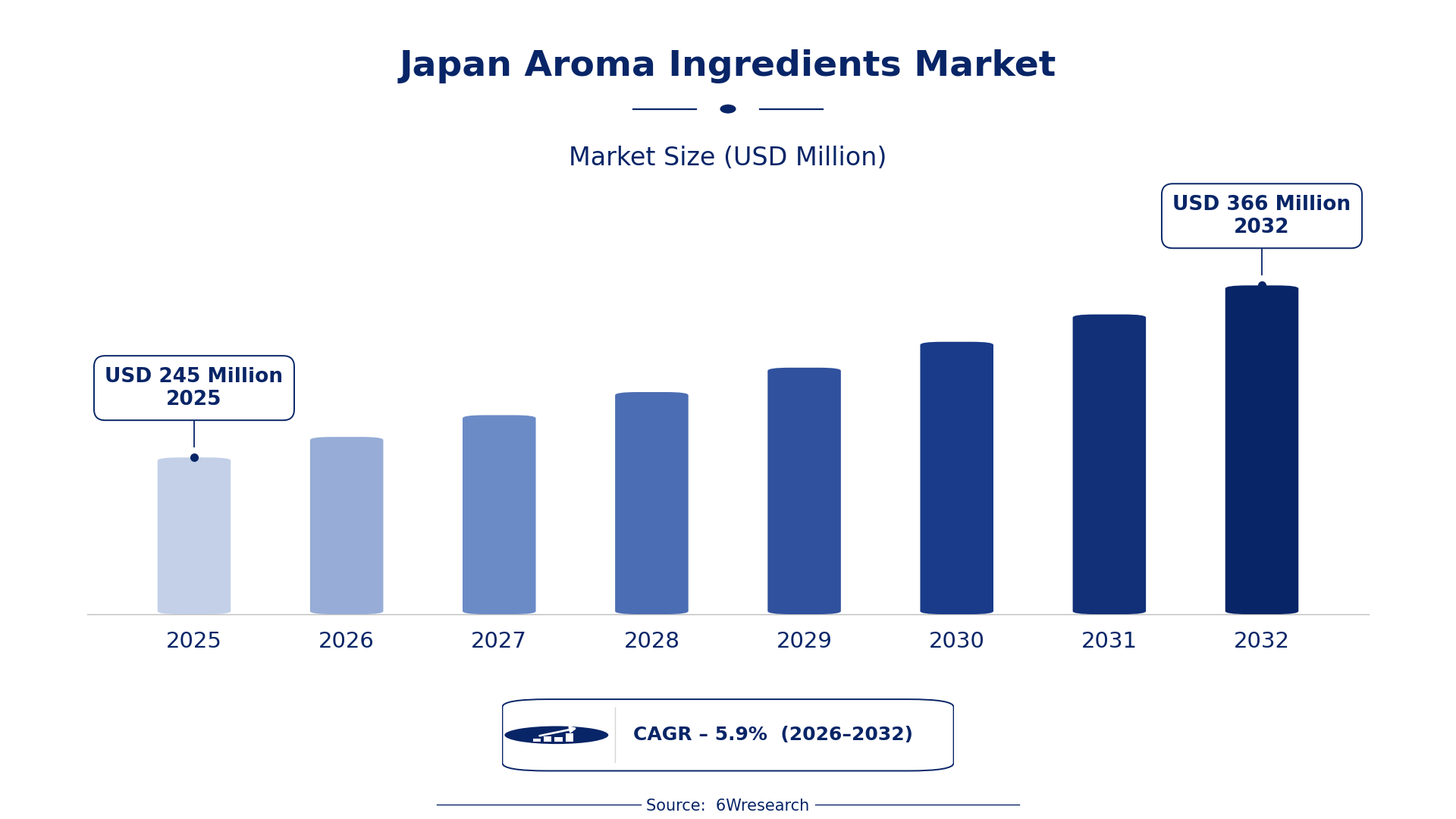
According to 6Wresearch internal database and industry insights, the Japan Aroma Ingredients Market was valued at USD 245 Million in 2025 and is projected to reach USD 366 Million by 2032, growing at a CAGR of approximately 5.9% during 2026–2032.
Japan Aroma Ingredients Market Highlights
| Report Metric | Details |
| Report Name | Japan Aroma Ingredients Market (2026-2032) |
| Market Size 2025 | USD 245 Million |
| Market Size 2032 | USD 366 Million |
| Absolute Growth 2025–2032 | USD 121 Million |
| CAGR 2026–2032 | 5.9% |
| Peak Annual Growth | 6.6% in 2026 |
| Forecast Period | 2026–2032 |
| Historical Data | 2022–2025 |
| Base Year | 2025 |
| Leading Type, 2025 | Synthetic Ingredients (68% share) |
| Leading Application, 2025 | Fine Fragrances (51% share) |
| Fastest-Growing Type | Natural Ingredients (8.0% CAGR) |
| Fastest-Growing Application | Toiletries (7.5% CAGR) |
| Growing Sector | Fine Fragrances |
| Key End Users | cosmetics makers, toiletries manufacturers, fragrance developers |
Japan Aroma Ingredients Market Year-wise Growth Rate and Key Drivers (2022–2032)
This graph illustrates the annual growth rates of the market from 2022 to 2032, highlighting a steady upward trajectory and projected market expansion over the forecast period.
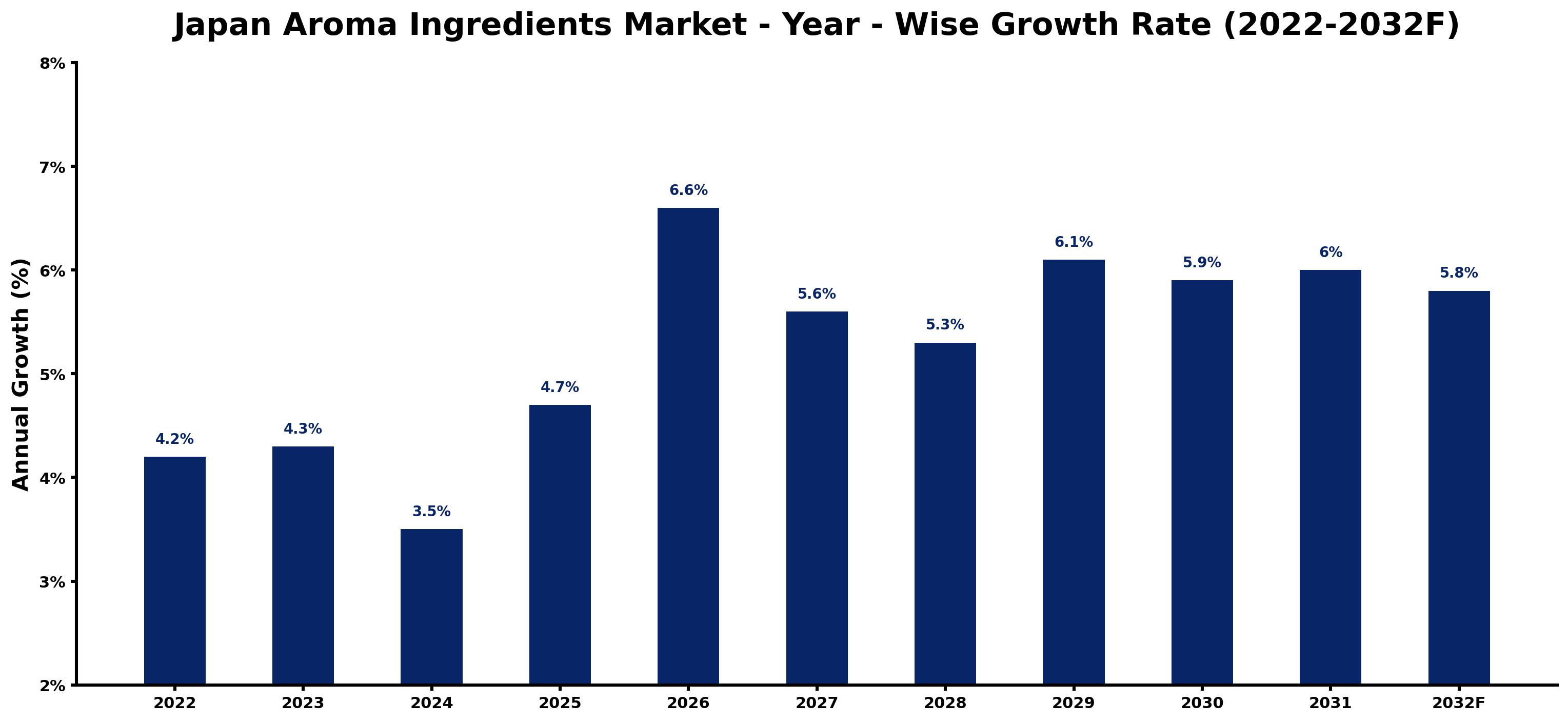
Below, each year's estimated growth is shown next to the factor that most influenced it.
| Year | Estimated Annual Growth (%) | Market Rationale |
| 2022 | 4.2 | The market experienced steady growth due to consistent demand from the cosmetics industry. |
| 2023 | 4.3 | Growth continued as consumer interest in high-quality aroma ingredients increased. |
| 2024 | 3.5 | A slowdown occurred as demand stabilised following previous growth rates. |
| 2025 | 4.7 | The market saw a resurgence in growth driven by the fine fragrances segment. |
| 2026 | 6.6 | A peak in growth is expected as natural ingredients gain popularity among consumers. |
| 2027 | 5.6 | Growth is projected to slow as the market adjusts to the rapid increase in the previous year. |
| 2028 | 5.3 | A further slowdown is anticipated as the market stabilises after peak growth. |
| 2029 | 6.1 | An uptick in growth is expected as demand for toiletries begins to rise. |
| 2030 | 5.9 | The market will experience another slowdown as growth rates normalise. |
| 2031 | 6.0 | A slight recovery in growth is projected as fine fragrances continue to drive demand. |
| 2032 | 5.8 | Growth is expected to slow again as the market reaches a more stable phase. |
Note: Market size estimations and growth projections presented in this report are based on 6Wresearch's proprietary forecasting methodology, utilizing the latest available industry data, government publications, and primary research inputs.
Japan Aroma Ingredients Market Synopsis
Aroma ingredients are compounds used to create fragrances in products such as fine fragrances, toiletries, and cosmetics. The Japan Aroma Ingredients Market is expanding, driven by rising consumer demand for high-quality natural ingredients and the growth of the cosmetics industry, valued at around 3 trillion JPY. The market for natural aroma ingredients is steadily increasing, supported by initiatives promoting sustainable sourcing and innovation in fragrance development, particularly in Tokyo.
Market Dynamics Impact Analysis (2026–2032)
| Factor | Type | Impact | Primary Segment Affected |
| Growing demand for natural ingredients among consumers | Driver | High | Natural Ingredients |
| Expansion of the cosmetics industry in Japan | Driver | High | Fine Fragrances |
| Rising interest in organic products | Opportunity | High | Natural Ingredients |
| Increased investment in fragrance innovation | Opportunity | Medium | Fine Fragrances |
| Stringent regulations for synthetic ingredients | Restraint | High | Synthetic Ingredients |
| Limited supply of high-quality natural ingredients | Restraint | Medium | Natural Ingredients |
| Cost pressures from raw material sourcing | Challenge | High | Synthetic Ingredients |
| Capacity constraints in production facilities | Challenge | Medium | Natural Ingredients |
Evaluation of Drivers in Japan Aroma Ingredients Market (2026–2032)
The factors lifting demand, and the evidence behind each, are summarised below.
| Drivers | Primary Segment Affected | Why It Matters (Evidence) |
| Growing consumer preference for natural products | Natural Ingredients | Natural ingredients account for about 30% of the total aroma ingredients market, prompting increased purchases from cosmetics makers. |
| Expansion of fine fragrances market | Fine Fragrances | Fine fragrances contribute significantly to the overall aroma market, prompting increased purchases from luxury brands. |
| Rising investments in fragrance development | Fine Fragrances | Investment in fragrance innovation in Tokyo boosts demand for aroma ingredients, enhancing market growth. |
| Increased focus on sustainability | Natural Ingredients | The government's 2023 programme promotes sustainable sourcing, encouraging buyers to seek natural aroma ingredients. |
| Growth in personal care products | Toiletries | The toiletries sector is expanding, resulting in higher demand for aroma ingredients in personal care formulations. |
Most of the extra volume comes from rising consumer interest in natural ingredients, which account for about 30% of the aroma ingredients market. The cosmetics industry, valued at around 3 trillion JPY, is expanding, leading to increased purchases of fine fragrances. Investment in fragrance development in Tokyo boosts demand for aroma ingredients, propelling market growth. Growth in personal care products is also contributing to higher demand for aroma ingredients in toiletries.
Evaluation of Restraints in Japan Aroma Ingredients Market
The table below lists the restraints and the evidence behind each.
| Market Restraint | Primary Segment Affected | Why It Matters (Evidence) |
| High costs associated with synthetic ingredient compliance | Synthetic Ingredients | Stringent regulations for synthetic aroma ingredients increase costs for producers, affecting pricing strategies. |
| Limited availability of premium natural ingredients | Natural Ingredients | The growing demand for high-quality natural ingredients is outpacing supply, causing potential shortages. |
| Regulatory hurdles for new product formulations | Synthetic Ingredients | Strict regulations hinder the introduction of new synthetic aroma products, delaying market entry. |
| Challenges in sourcing sustainable materials | Natural Ingredients | Producers face difficulties in sourcing sustainable natural ingredients, impacting production timelines. |
| Market competition affecting pricing strategies | Fine Fragrances | Intense competition among fragrance producers pressures pricing, affecting profit margins. |
Japan Aroma Ingredients Market Challenges
Regulatory hurdles create delays for buyers, as the Ministry of Health, Labour and Welfare enforces lengthy approval processes that can extend timelines by up to six months. Producers incur high operational costs due to stringent testing requirements for synthetic aroma ingredients, raising expenses by 15% and squeezing profit margins. Importers struggle with supply chain issues for natural ingredients, where demand often outstrips supply, risking stock shortages that can disrupt product availability. Technology adoption is lagging among producers, which hampers efficiency gains and forces buyers to pay higher prices for less competitive products.
Trends in the Japan Aroma Ingredients Market
The trends below show where the Japan Aroma Ingredients Market is heading.
- Shift towards Natural Ingredients in Fragrance Development: Tokyo is experiencing a shift towards the use of natural ingredients in fragrance development, with consumer preferences driving this change. In 2023, the government launched a programme supporting sustainable sourcing of these ingredients.
- Increasing Demand for Fine Fragrances: The fine fragrances segment is growing as luxury brands expand their offerings. This trend is reflected in the cosmetics industry's overall valuation of around 3 trillion JPY.
- Rise of Sustainable Sourcing Practices: The adoption of sustainable sourcing practices is becoming more prevalent among fragrance producers, driven by consumer demand for environmentally friendly products. The 2023 government programme encourages this transition.
- Growth in Toiletries Market: The toiletries market is expanding rapidly, with a notable increase in demand for aroma ingredients. This trend is reflected in the 7.5% CAGR projected for toiletries from 2026 to 2032.
Investment Opportunities in the Japan Aroma Ingredients Market
The following areas offer the clearest openings for investors and suppliers in the Japan Aroma Ingredients Market.
- Partnerships for Sustainable Sourcing: Now is the time to invest in sustainable sourcing partnerships, particularly with local suppliers of natural ingredients. The government's 2023 programme offers support, creating a favourable environment for collaboration.
- Investment in Fragrance Innovation: With the cosmetics industry valued at around 3 trillion JPY, there is an opportunity to invest in fragrance innovation. Collaborating with fragrance development hubs in Tokyo can facilitate market entry.
- Supply of High-Quality Natural Ingredients: The gap in high-quality natural ingredients presents an opportunity for suppliers to meet rising demand. Engaging with cosmetics makers focused on organic products can facilitate market entry.
- Expansion of Fine Fragrance Offerings: Investing in the development of fine fragrances can yield high returns, especially as this segment continues to grow. Targeting luxury brands will be essential for successful market penetration.
Government Initiatives in the Japan Aroma Ingredients Market
The Standards for Cosmetics, established in 2000, outline the prohibited and restricted ingredient lists that cosmetics sold in Japan must follow, ensuring safety for consumers and compliance for producers. This regulation impacts aroma ingredients used in cosmetics, requiring rigorous testing and certification processes. The Ministry of Health, Labour and Welfare oversees these regulations, ensuring that producers adhere to safety standards and consumers receive quality products.
The GX Basic Policy, adopted in 2023, aims for about JPY 150 trillion in public-private decarbonisation investment over the next decade. The Ministry of Health, Labour and Welfare implements regulations that support sustainable sourcing of aroma ingredients, benefiting both producers and consumers.
Future Insight of the Japan Aroma Ingredients Market
A government programme aimed at supporting sustainable sourcing of natural ingredients will launch by 2032, encouraging suppliers to adopt environmentally friendly practices. Expansion of fragrance development facilities in Tokyo will stimulate innovation and collaboration among producers, leading to diverse product offerings. Stricter adherence to quality standards, such as ISO 9235, will improve consistency and safety in aroma ingredients, ensuring buyers receive reliable products. As the market for natural aroma ingredients grows, suppliers will need to adapt to changing consumer preferences and demands.
Market Segmentation Analysis
Japan Aroma Ingredients Market report covers a detailed analysis of the following market segments:
By Type – Synthetic Ingredients Lead, Natural Ingredients Expected to Grow Fastest
According to Sachin Kumar Rai, Senior Research Analyst at 6Wresearch, Synthetic Ingredients took 68% of type revenue in 2025, more than any other category. Synthetic ingredients dominate the market due to their cost-effectiveness and versatility across various applications. This segment benefits from a well-established supply chain that meets the demands of fragrance manufacturers in Japan. Natural Ingredients are set to record the highest CAGR in this split, 8.0% over 2026–2032. Natural ingredients are experiencing rapid growth as consumers increasingly seek organic and environmentally friendly products. The government's recent programme to support sustainable sourcing of these ingredients further accelerates this trend. Suppliers should focus on expanding their natural ingredient offerings to capture the growing consumer preference for sustainability.
By Application – Fine Fragrances Lead, Toiletries Expected to Grow Fastest
Fine Fragrances accounted for 51% of the market by application in 2025. Fine fragrances hold the largest market share as they are essential for creating perfumes and luxury scents, which resonate with Japan's discerning consumers. The cultural appreciation for high-quality fragrances, particularly in urban centres like Tokyo, sustains strong demand in this segment. Over 2026–2032, Toiletries are expected to post the fastest growth, at a CAGR of 7.5%. Toiletries are witnessing rapid growth due to their widespread use in daily personal care products such as soaps and shampoos. The increasing consumer focus on hygiene and grooming drives this upward trend in the toiletries segment. This indicates that suppliers should prioritise expanding their product lines in toiletries to cater to the rising consumer interest in personal care and hygiene.
Key Attractiveness of the Report
- 10 Years of Market Numbers
- Historical Data Starting from 2022 to 2025
- Base Year 2025
- Forecast Data until 2032
- Key Performance Indicators Impacting the Market
- Major Upcoming Developments and Projects
Key Highlights of the Report:
- Japan Aroma Ingredients Market Outlook
- Market Size of Japan Aroma Ingredients Market, 2025
- Forecast of Japan Aroma Ingredients Market, 2032
- Historical Data and Forecast of Japan Aroma Ingredients Revenues & Volume for the Period 2022-2032
- Japan Aroma Ingredients Market Trend Evolution
- Japan Aroma Ingredients Market Drivers and Challenges
- Japan Aroma Ingredients Price Trends
- Japan Aroma Ingredients Porter's Five Forces
- Japan Aroma Ingredients Industry Life Cycle
- Historical Data and Forecast of Japan Aroma Ingredients Market Revenues & Volume By Type for the Period 2022-2032
- Historical Data and Forecast of Japan Aroma Ingredients Market Revenues & Volume By Synthetic Ingredients for the Period 2022-2032
- Historical Data and Forecast of Japan Aroma Ingredients Market Revenues & Volume By Natural Ingredients for the Period 2022-2032
- Historical Data and Forecast of Japan Aroma Ingredients Market Revenues & Volume By Application for the Period 2022-2032
- Historical Data and Forecast of Japan Aroma Ingredients Market Revenues & Volume By Fine Fragrances for the Period 2022-2032
- Historical Data and Forecast of Japan Aroma Ingredients Market Revenues & Volume By Toiletries for the Period 2022-2032
- Historical Data and Forecast of Japan Aroma Ingredients Market Revenues & Volume By Cosmetics for the Period 2022-2032
- Japan Aroma Ingredients Import Export Trade Statistics
- Market Opportunity Assessment By Type
- Market Opportunity Assessment By Application
- Japan Aroma Ingredients Top Companies Market Share
- Japan Aroma Ingredients Competitive Benchmarking By Technical and Operational Parameters
- Japan Aroma Ingredients Company Profiles
- Japan Aroma Ingredients Key Strategic Recommendations
Market Covered
The report covers the following segments.
By Type
- Synthetic Ingredients
- Natural Ingredients
By Application
- Fine Fragrances
- Toiletries
- Cosmetics































