Japan Athletic Training Aids Market Size & Growth Rate
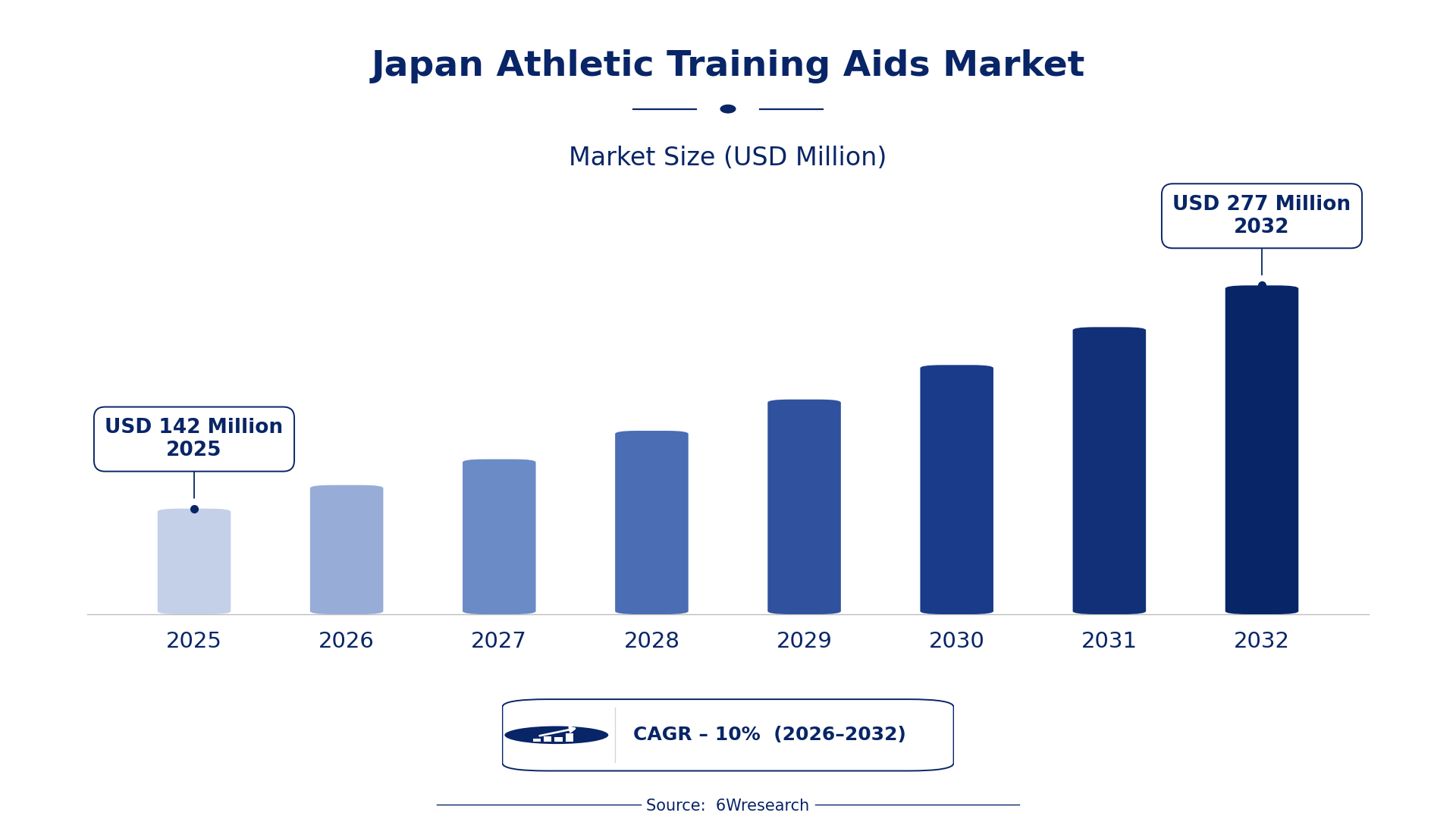
According to 6Wresearch internal database and industry insights, the Japan Athletic Training Aids Market was valued at USD 142 Million in 2025 and is projected to reach USD 277 Million by 2032, growing at a CAGR of approximately 10% during 2026–2032.
Japan Athletic Training Aids Market Highlights
| Report Metric | Details |
| Report Name | Japan Athletic Training Aids Market (2026-2032) |
| Market Size 2025 | USD 142 Million |
| Market Size 2032 | USD 277 Million |
| Absolute Growth 2025–2032 | USD 135 Million |
| CAGR 2026–2032 | 10% |
| Peak Annual Growth | 11.3% in 2029 |
| Forecast Period | 2026–2032 |
| Historical Data | 2022–2025 |
| Base Year | 2025 |
| Leading Aid Type, 2025 | Agility Ladders (36% share) |
| Leading Training Purpose, 2025 | Speed & Coordination (48% share) |
| Leading Material Type, 2025 | Nylon + Plastic (44% share) |
| Leading Distribution Channel, 2025 | Online Platforms (44% share) |
| Leading End User, 2025 | Personal Trainers (38% share) |
| Fastest-Growing Aid Type | Resistance Parachutes (14.2% CAGR) |
| Fastest-Growing Training Purpose | Sprint Resistance (13.6% CAGR) |
| Fastest-Growing Material Type | Lightweight Fabric (14.7% CAGR) |
| Fastest-Growing Distribution Channel | Direct Sales (13.1% CAGR) |
| Fastest-Growing End User | Track Athletes (12.9% CAGR) |
| Growing Sector | athletic training |
| Key End Users | sports academies, personal trainers, team coaches, track athletes |
Japan Athletic Training Aids Market Year-wise Growth Rate and Key Drivers (2022–2032)
This graph illustrates the annual growth rates of the market from 2022 to 2032, highlighting a steady upward trajectory and projected market expansion over the forecast period.
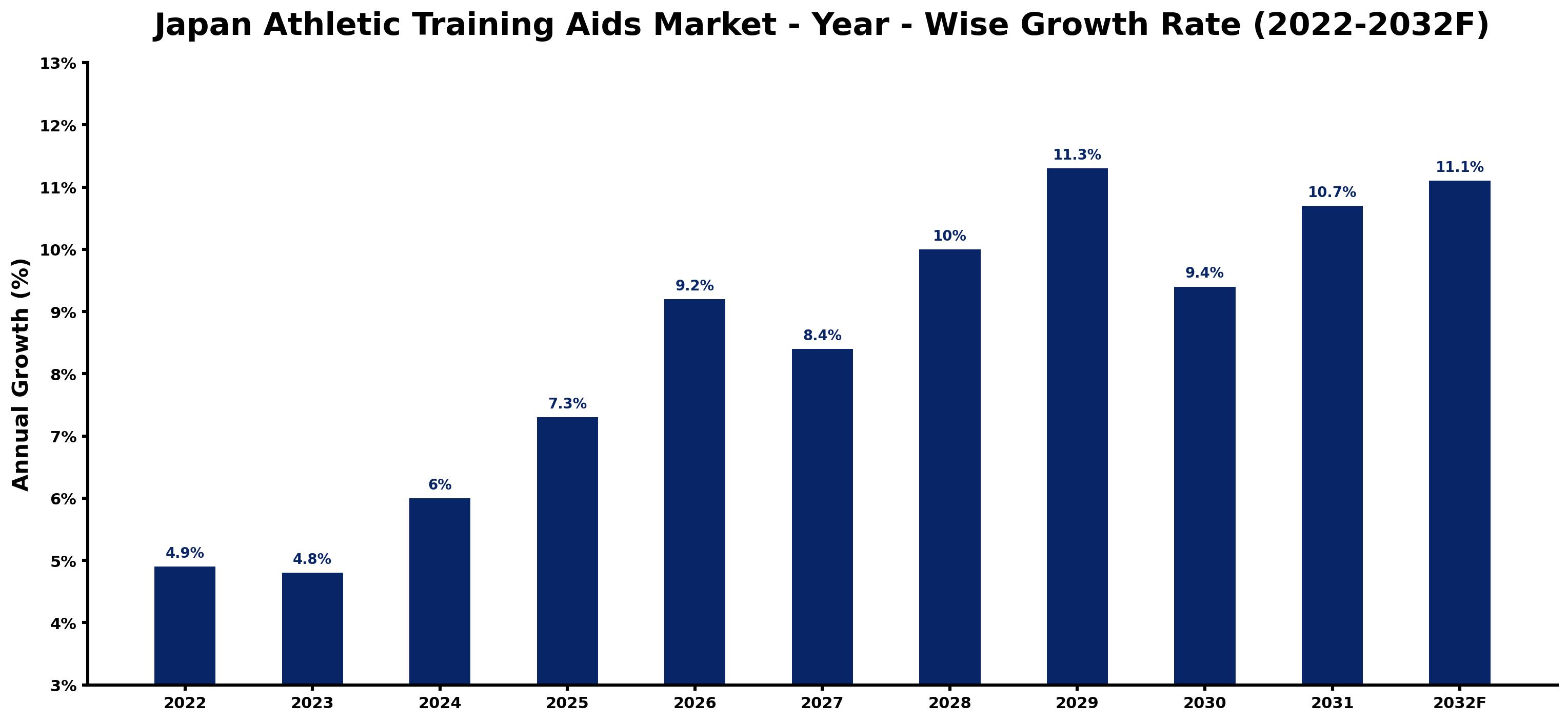
Each row of the following table gives one year's estimated growth and the event or demand shift that explains it.
| Year | Estimated Annual Growth (%) | Market Rationale |
| 2022 | 4.9 | The market showed steady growth as athletic training aids gained popularity among a wide range of users. |
| 2023 | 4.8 | Growth slowed slightly due to market saturation in urban areas, yet demand remained strong. |
| 2024 | 6.0 | An increase in sports academies contributed to a faster growth rate as more facilities adopted training aids. |
| 2025 | 7.3 | The market experienced accelerated growth as awareness of athletic training aids expanded among coaches and trainers. |
| 2026 | 9.2 | A surge in youth sports participation is expected to drive demand for training aids in schools and academies. |
| 2027 | 8.4 | Growth is anticipated to slow as the market matures, but demand from educational institutions will continue to rise. |
| 2028 | 10.0 | An increase in online sales is projected to boost growth as more consumers turn to digital platforms for purchases. |
| 2029 | 11.3 | The market is expected to peak as new training methodologies are adopted across various sports academies. |
| 2030 | 9.4 | Growth is projected to slow as the market stabilizes, but innovation in training aids will sustain interest. |
| 2031 | 10.7 | A resurgence in demand is anticipated as personal trainers increasingly utilize online platforms for sales and marketing. |
| 2032 | 11.1 | The market will continue to expand as athletic training aids become integral to competitive sports training programs. |
Note: Market size estimations and growth projections presented in this report are based on 6Wresearch's proprietary forecasting methodology, utilizing the latest available industry data, government publications, and primary research inputs.
Japan Athletic Training Aids Market Synopsis
Athletic training aids are equipment designed to improve physical performance in sports, made from materials like nylon and plastic. In Japan, over 1,000 sports academies actively utilise these aids, driven by a growing emphasis on performance improvement among athletes. Increased youth sports participation and the rise of online sales platforms are fuelling market growth, alongside investments in training infrastructure and initiatives supporting this trend.
Market Dynamics Impact Analysis (2026–2032)
| Factor | Type | Impact | Primary Segment Affected |
| Growing youth sports participation | Driver | High | Speed & Coordination |
| Increased adoption of online sales platforms | Driver | High | Agility Ladders |
| Rising demand for training aids in schools | Opportunity | High | Agility Ladders |
| Expansion of sports academies in urban areas | Opportunity | High | Sports Academies |
| Market saturation in certain regions | Restraint | Medium | Agility Ladders |
| High competition among suppliers | Restraint | Medium | Resistance Parachutes |
| Cost pressures from material sourcing | Challenge | High | Agility Ladders |
| Compliance with updated safety standards | Challenge | Medium | Agility Ladders |
Evaluation of Drivers in Japan Athletic Training Aids Market (2026–2032)
The table below links each growth driver to the segment it affects and the evidence for it.
| Drivers | Primary Segment Affected | Why It Matters (Evidence) |
| Increased youth sports participation | Speed & Coordination | Over 500 high schools in Japan incorporate athletic training aids, driving demand for performance enhancement. |
| Growth of online sales channels | Agility Ladders | Online sales of athletic training aids increased by 15% in 2023, making them more accessible to consumers. |
| Expansion of sports academies | Sports Academies | With over 1,000 sports academies in Japan, demand for training aids continues to rise significantly. |
| Focus on core strength training | Balance Trainers | Balance trainers are included in 90% of core strength programs, highlighting their importance in training regimens. |
| Emphasis on sprint resistance training | Sprint Resistance | Resistance training is emphasized in over 70% of athletic training programs, boosting demand for specific aids. |
Behind the steady rise in orders sits the increasing participation of youth in sports, with over 500 high schools integrating athletic training aids into their curricula. The numerous sports academies in the Tokyo region are driving demand, as they seek to improve athlete performance. The growth of online sales channels has made these aids more accessible to consumers, with a 15% increase in online sales in 2023.
Evaluation of Restraints in Japan Athletic Training Aids Market
These restraints slow adoption and weigh on supplier margins.
| Market Restraint | Primary Segment Affected | Why It Matters (Evidence) |
| Market saturation in urban areas | Agility Ladders | With over 1,000 sports academies, competition has intensified, limiting growth opportunities in dense markets. |
| High competition among suppliers | Resistance Parachutes | Numerous suppliers are vying for market share, leading to price pressures and reduced margins. |
| Cost pressures from material sourcing | Plastic | Rising costs of nylon and plastic materials impact the pricing strategies of training aid manufacturers. |
| Compliance with updated safety standards | Agility Ladders | The updated JIS standard for sports equipment requires additional testing and certification, increasing operational costs. |
| Limited awareness in rural areas | Agility Ladders | Athletic training aids are less recognized outside urban centres, restricting market penetration in these regions. |
Japan Athletic Training Aids Market Challenges
High school athletic programs in Japan face prohibitive costs for athletic training aids, limiting access for over 500 institutions and affecting student athletes' performance. Producers encounter rising material expenses, particularly for PVC and rubber, which have led to a 20% price increase that buyers must absorb. Distributors struggle with delays linked to the updated JIS standard, causing a two-month backlog that hampers supply to sports academies. Coaches report inadequate technological integration in training methods, reducing efficiency for the average 200 athletes per academy and impacting overall performance outcomes.
Trends in the Japan Athletic Training Aids Market
The trends below show where the Japan Athletic Training Aids Market is heading.
- Shift towards Online Sales Platforms: Japan is experiencing a shift towards online sales platforms for athletic training aids, with a 15% increase in 2023. This trend allows personal trainers and sports academies to reach a wider audience, improving accessibility for consumers.
- Increased Focus on Core Strength Training: The emphasis on core strength training has surged, with balance trainers being included in 90% of core strength programs in sports academies. This shift reflects a growing understanding of the importance of core stability in athletic performance.
- Rise in Youth Sports Participation: Youth sports participation is on the rise, with over 500 high schools adopting athletic training aids into their curricula. This trend is expected to drive demand for training aids as schools seek to improve student-athlete performance.
- Adoption of New Training Methodologies: The Tokyo 2020 Olympic Games highlighted the importance of athletic training aids, prompting the adoption of new training methodologies. Sports academies are increasingly investing in advanced training equipment to enhance athlete performance.
Investment Opportunities in the Japan Athletic Training Aids Market
Where to invest in the Japan Athletic Training Aids Market: the main openings are set out below.
- Investment in Training Infrastructure: Investment in training infrastructure is crucial, with the government allocating USD 50 million for improvements. This presents opportunities for suppliers of athletic training aids to cater to the growing number of sports academies.
- Supply of Lightweight Training Aids: With online sales increasing, suppliers should focus on effective online marketing strategies. This approach can help reach personal trainers and sports academies looking for accessible training solutions.
- Partnerships with Sports Academies: Forming partnerships with sports academies can improve market presence. As these institutions expand, they require reliable suppliers of athletic training aids to support their programs.
- Focus on Core Strength Products: There is a growing demand for core strength training aids, especially balance trainers, as they are included in many training regimens. Suppliers should target sports academies and personal trainers to meet this need.
Government Initiatives in the Japan Athletic Training Aids Market
The GX Promotion Act (2023) introduces new regulations that update the existing Plastic Resource Circulation Act (2021), which mandates the reduction and recycling of plastics. This updated framework encourages producers of athletic training aids to adopt sustainable practices, ensuring compliance with safety standards while promoting environmentally friendly materials. As a result, manufacturers are required to invest in research for alternative materials, impacting their production processes and overall costs.
In 2023, the government allocated USD 50 million for sports infrastructure improvements, overseen by the Sports Agency of Japan. This funding supports the development of new training facilities and programs across the country, enhancing access to athletic training aids for schools and sports academies. The agency's initiatives aim to boost youth sports participation and improve training standards, benefiting both producers and consumers in the market.
Future Insight of the Japan Athletic Training Aids Market
New sports facilities will emerge by 2032, driven by government funding for infrastructure improvements. The Sports Agency of Japan will introduce training programs that leverage advanced technology, which will improve efficiency by 30%. Online sales platforms will become commonplace, allowing trainers to reach broader audiences and meet specific demands. As athletic training aids gain prominence in university curricula, the emphasis on performance will create a more competitive landscape for athletes.
Market Segmentation Analysis
Japan Athletic Training Aids Market report covers a detailed analysis of the following market segments:
By Aid Type – Agility Ladders Lead, Resistance Parachutes Expected to Grow Fastest
According to Saurav Kr Singh, Senior Research Analyst at 6Wresearch, the largest aid type category in 2025 was Agility Ladders, at 36% of revenue. Agility Ladders hold the largest market share as they are widely used in training to improve foot speed and coordination among athletes. Their integration into the training regimens of over 1,000 sports academies in Japan highlights their importance in athletic development. The quickest growth will come from Resistance Parachutes, forecast to expand at a CAGR of 14.2% between 2026 and 2032. Resistance Parachutes are rapidly gaining traction due to their effectiveness in developing explosive speed, a critical aspect of many training programmes. The focus on sprint resistance training is becoming increasingly recognised among coaches, driving demand for these aids. Suppliers should prioritise agility training aids to align with the high demand from sports academies.
By Training Purpose – Speed & Coordination Leads, Sprint Resistance Expected to Grow Fastest
With 48% of training purpose revenue in 2025, Speed & Coordination was the largest category. Speed & Coordination training holds the largest share as it is essential for enhancing athletic performance across various sports. This is evident in the training programmes of over 500 high schools in Japan that prioritise these skills. Over 2026–2032, Sprint Resistance is expected to post the fastest growth, at a CAGR of 13.6%. Sprint Resistance training is witnessing rapid growth due to its critical role in developing explosive speed, a priority recognised by many trainers. This focus on speed enhancement is likely to drive further adoption among athletes. Suppliers should prioritise training aids that improve speed and coordination to meet market demand.
By Material Type – Nylon + Plastic Leads, Lightweight Fabric Expected to Grow Fastest
In 2025, Nylon + Plastic led the material type split with a 44% share. Nylon + Plastic is the leading material type because of its durability and flexibility, making it ideal for various athletic training aids. This combination is commonly used in 80% of training equipment across Japan, highlighting its popularity. Lightweight Fabric is set to record the highest CAGR in this split, 14.7% over 2026–2032. Lightweight Fabric is gaining traction as it is increasingly favoured for portable training aids, appealing to trainers and athletes who prioritise mobility. This trend towards convenience is a key factor in its rapid growth. Suppliers must consider the rising demand for lightweight materials to align with market preferences.
By Distribution Channel – Online Platforms Lead, Direct Sales Expected to Grow Fastest
Online Platforms held 44% of the Japan Athletic Training Aids Market by distribution channel in 2025. Online Platforms are the dominant distribution channel, providing essential accessibility for buyers seeking athletic training aids. The 15% increase in online sales in 2023 reflects a significant shift towards digital purchasing methods. Direct Sales is projected to grow fastest, at a CAGR of 13.1% during 2026–2032. Direct Sales are expanding quickly as they offer personalised training solutions that many trainers find advantageous. This channel's growth is fuelled by the increasing demand for tailored equipment to address specific training needs. Suppliers should enhance their direct sales approaches to meet the personalised requirements of trainers and athletes.
By End User – Personal Trainers Lead, Track Athletes Expected to Grow Fastest
Personal Trainers took 38% of end user revenue in 2025, more than any other category. Personal Trainers represent the largest end user group as they are crucial users of training aids for client sessions, especially in urban areas. Their reliance on effective training tools is vital for ensuring client satisfaction and performance improvement. The quickest growth will come from Track Athletes, forecast to expand at a CAGR of 12.9% between 2026 and 2032. Track Athletes are the fastest-growing end user segment due to their dedicated use of athletic training aids to enhance performance. The rising number of athletes preparing for competitions is driving this growth. Suppliers should focus on developing specialised products for personal trainers and track athletes to capitalise on market opportunities.
Key Attractiveness of the Report
- 10 Years of Market Numbers
- Historical Data Starting from 2022 to 2025
- Base Year 2025
- Forecast Data until 2032
- Key Performance Indicators Impacting the Market
- Major Upcoming Developments and Projects
Key Highlights of the Report:
- Japan Athletic Training Aids Market Outlook
- Market Size of Japan Athletic Training Aids Market, 2025
- Forecast of Japan Athletic Training Aids Market, 2032
- Historical Data and Forecast of Japan Athletic Training Aids Revenues & Volume for the Period 2022-2032F
- Japan Athletic Training Aids Market Trend Evolution
- Japan Athletic Training Aids Market Drivers and Challenges
- Japan Athletic Training Aids Price Trends
- Japan Athletic Training Aids Porter's Five Forces
- Japan Athletic Training Aids Industry Life Cycle
- Historical Data and Forecast of Japan Athletic Training Aids Market Revenues & Volume By Aid Type for the Period 2022-2032F
- Historical Data and Forecast of Japan Athletic Training Aids Market Revenues & Volume By Agility Ladders for the Period 2022-2032F
- Historical Data and Forecast of Japan Athletic Training Aids Market Revenues & Volume By Resistance Parachutes for the Period 2022-2032F
- Historical Data and Forecast of Japan Athletic Training Aids Market Revenues & Volume By Balance Trainers for the Period 2022-2032F
- Historical Data and Forecast of Japan Athletic Training Aids Market Revenues & Volume By Cones & Markers for the Period 2022-2032F
- Historical Data and Forecast of Japan Athletic Training Aids Market Revenues & Volume By Training Purpose for the Period 2022-2032F
- Historical Data and Forecast of Japan Athletic Training Aids Market Revenues & Volume By Speed & Coordination for the Period 2022-2032F
- Historical Data and Forecast of Japan Athletic Training Aids Market Revenues & Volume By Sprint Resistance for the Period 2022-2032F
- Historical Data and Forecast of Japan Athletic Training Aids Market Revenues & Volume By Core Strengthening for the Period 2022-2032F
- Historical Data and Forecast of Japan Athletic Training Aids Market Revenues & Volume By Agility Drills for the Period 2022-2032F
- Historical Data and Forecast of Japan Athletic Training Aids Market Revenues & Volume By Material Type for the Period 2022-2032F
- Historical Data and Forecast of Japan Athletic Training Aids Market Revenues & Volume By Nylon + Plastic for the Period 2022-2032F
- Historical Data and Forecast of Japan Athletic Training Aids Market Revenues & Volume By Lightweight Fabric for the Period 2022-2032F
- Historical Data and Forecast of Japan Athletic Training Aids Market Revenues & Volume By PVC/Rubber for the Period 2022-2032F
- Historical Data and Forecast of Japan Athletic Training Aids Market Revenues & Volume By Plastic for the Period 2022-2032F
- Historical Data and Forecast of Japan Athletic Training Aids Market Revenues & Volume By Distribution Channel for the Period 2022-2032F
- Historical Data and Forecast of Japan Athletic Training Aids Market Revenues & Volume By Online Platforms for the Period 2022-2032F
- Historical Data and Forecast of Japan Athletic Training Aids Market Revenues & Volume By Direct Sales for the Period 2022-2032F
- Historical Data and Forecast of Japan Athletic Training Aids Market Revenues & Volume By Specialty Stores for the Period 2022-2032F
- Historical Data and Forecast of Japan Athletic Training Aids Market Revenues & Volume By Industrial Suppliers for the Period 2022-2032F
- Historical Data and Forecast of Japan Athletic Training Aids Market Revenues & Volume By End User for the Period 2022-2032F
- Historical Data and Forecast of Japan Athletic Training Aids Market Revenues & Volume By Personal Trainers for the Period 2022-2032F
- Historical Data and Forecast of Japan Athletic Training Aids Market Revenues & Volume By Track Athletes for the Period 2022-2032F
- Historical Data and Forecast of Japan Athletic Training Aids Market Revenues & Volume By Sports Academies for the Period 2022-2032F
- Historical Data and Forecast of Japan Athletic Training Aids Market Revenues & Volume By Team Coaches for the Period 2022-2032F
- Japan Athletic Training Aids Import Export Trade Statistics
- Market Opportunity Assessment By Aid Type
- Market Opportunity Assessment By Training Purpose
- Market Opportunity Assessment By Material Type
- Market Opportunity Assessment By Distribution Channel
- Market Opportunity Assessment By End User
- Japan Athletic Training Aids Top Companies Market Share
- Japan Athletic Training Aids Competitive Benchmarking By Technical and Operational Parameters
- Japan Athletic Training Aids Company Profiles
- Japan Athletic Training Aids Key Strategic Recommendations
Market Covered
This report examines the market across the segments below.
By Aid Type
- Agility Ladders
- Resistance Parachutes
- Balance Trainers
- Cones & Markers
By Training Purpose
- Speed & Coordination
- Sprint Resistance
- Core Strengthening
- Agility Drills
By Material Type
- Nylon + Plastic
- Lightweight Fabric
- PVC/Rubber
- Plastic
By Distribution Channel
- Online Platforms
- Direct Sales
- Specialty Stores
- Industrial Suppliers
By End User
- Personal Trainers
- Track Athletes
- Sports Academies
- Team Coaches































