Japan Automotive Silencer Market Size & Growth Rate
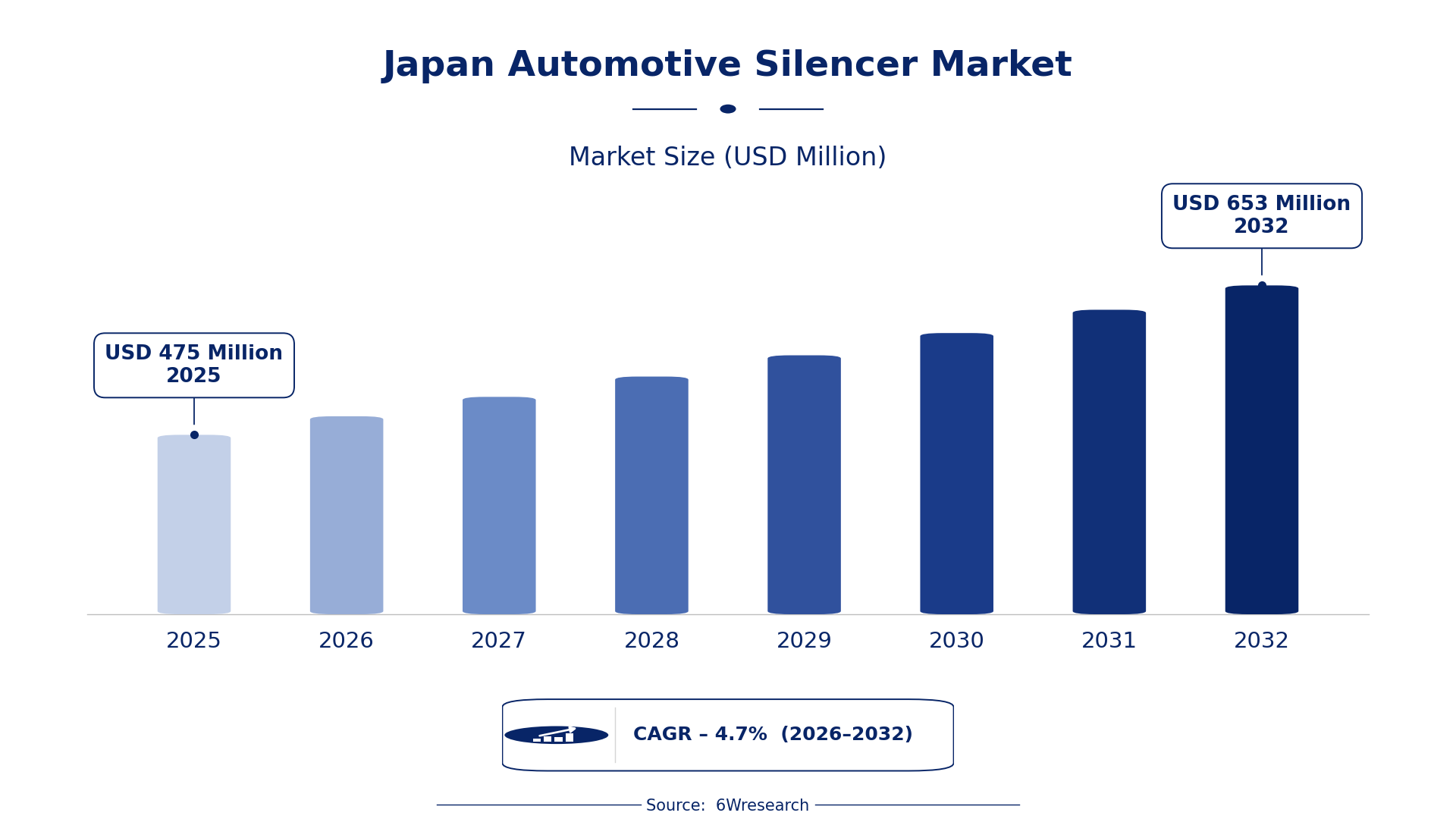
According to 6Wresearch internal database and industry insights, the Japan Automotive Silencer Market was valued at USD 475 Million in 2025 and is projected to reach USD 653 Million by 2032, growing at a CAGR of approximately 4.7% during 2026–2032.
Japan Automotive Silencer Market Highlights
| Report Metric | Details |
| Report Name | Japan Automotive Silencer Market (2026-2032) |
| Market Size 2025 | USD 475 Million |
| Market Size 2032 | USD 653 Million |
| Absolute Growth 2025–2032 | USD 178 Million |
| CAGR 2026–2032 | 4.7% |
| Peak Annual Growth | 5.3% in 2027 |
| Forecast Period | 2026–2032 |
| Historical Data | 2022–2025 |
| Base Year | 2025 |
| Leading Silencer Type, 2025 | Center Inlet (34% share) |
| Leading Vehicle Type, 2025 | Passenger Vehicle (41% share) |
| Leading Sales Channel, 2025 | OEM (65% share) |
| Fastest-Growing Silencer Type | Dual Inlet (6.7% CAGR) |
| Fastest-Growing Vehicle Type | Light Commercial Vehicle (6.5% CAGR) |
| Fastest-Growing Sales Channel | Aftermarket (5.7% CAGR) |
| Growing Sector | automotive |
| Key End Users | vehicle manufacturers, aftermarket suppliers, commercial vehicle operators, electric vehicle producers |
Japan Automotive Silencer Market Year-wise Growth Rate and Key Drivers (2022–2032)
This graph illustrates the annual growth rates of the market from 2022 to 2032, highlighting a steady upward trajectory and projected market expansion over the forecast period.
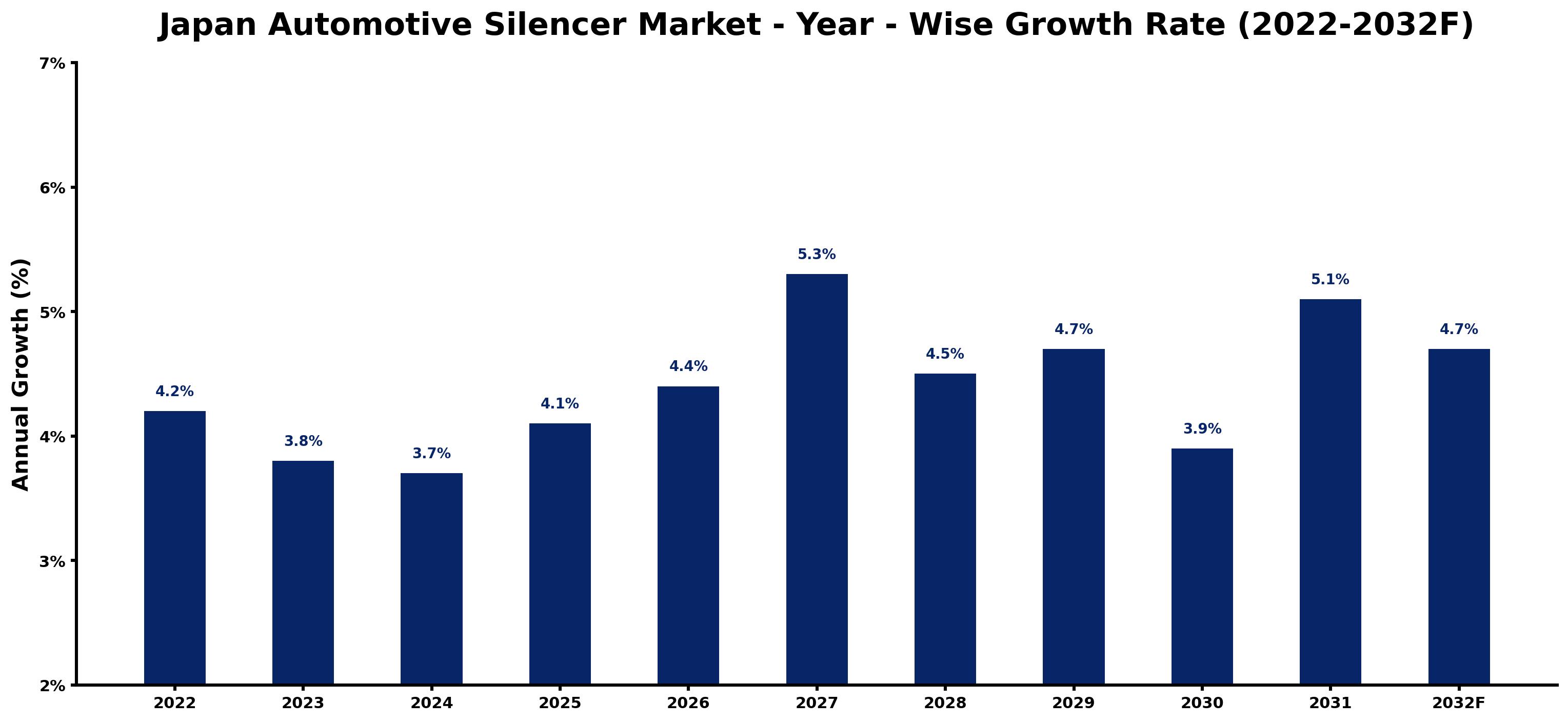
Year by year, the estimates below pair each growth rate with the development that shaped it.
| Year | Estimated Annual Growth (%) | Market Rationale |
| 2022 | 4.2 | The market experienced stable growth due to consistent vehicle production levels. |
| 2023 | 3.8 | Growth slowed as manufacturers adjusted to changing consumer preferences and supply chain issues. |
| 2024 | 3.7 | Continued supply chain challenges constrained growth, affecting production rates and deliveries. |
| 2025 | 4.1 | Demand increased as manufacturers focused on improving vehicle performance and emissions standards. |
| 2026 | 4.4 | Growth is expected to accelerate as investments in cleaner technologies gain traction among automotive producers. |
| 2027 | 5.3 | The peak growth year is driven by heightened demand for advanced noise reduction solutions. |
| 2028 | 4.5 | Growth is projected to slow as market saturation begins to affect new vehicle sales and replacements. |
| 2029 | 4.7 | Demand is expected to increase again as light commercial vehicles gain popularity in urban areas. |
| 2030 | 3.9 | Growth is projected to slow due to market adjustments in response to evolving regulatory frameworks. |
| 2031 | 5.1 | The market is expected to rebound as manufacturers adopt new silencer technologies to meet standards. |
| 2032 | 4.7 | Growth is projected to slow as the market stabilises, reflecting maturity in the automotive sector. |
Note: Market size estimations and growth projections presented in this report are based on 6Wresearch's proprietary forecasting methodology, utilizing the latest available industry data, government publications, and primary research inputs.
Japan Automotive Silencer Market Synopsis
Automotive silencers are components designed to reduce noise from vehicle exhaust systems, typically made from stainless steel, aluminum, or fiberglass. The Japan Automotive Silencer Market is experiencing growth driven by domestic production and increasing demand for vehicles. Japan's commitment to reducing greenhouse gas emissions and substantial investments in decarbonisation are propelling this growth. The GX Basic Policy aims for JPY 150 trillion in investment over ten years, stimulating demand for advanced automotive technologies.
Market Dynamics Impact Analysis (2026–2032)
| Factor | Type | Impact | Primary Segment Affected |
| Growing demand for noise reduction technologies in vehicles | Driver | High | Passenger Vehicle |
| Increase in light commercial vehicle production | Driver | Medium | Light Commercial Vehicle |
| Rising aftermarket demand for replacement parts | Opportunity | High | Aftermarket |
| Expansion of electric vehicle production | Opportunity | Medium | Passenger Vehicle |
| Supply chain disruptions affecting parts availability | Restraint | High | OEM |
| Increasing costs of raw materials impacting production | Restraint | Medium | OEM |
| Compliance with stringent emission regulations | Challenge | High | Passenger Vehicle |
| Capacity constraints in manufacturing facilities | Challenge | Medium | OEM |
Evaluation of Drivers in Japan Automotive Silencer Market (2026–2032)
These are the developments adding the most demand over the forecast period.
| Drivers | Primary Segment Affected | Why It Matters (Evidence) |
| Investment in cleaner technologies | Passenger Vehicle | Japan's automotive sector is focusing on reducing emissions, which increases demand for advanced silencers. |
| Rising production of light commercial vehicles | Light Commercial Vehicle | The demand for utility vehicles is increasing, driving the need for effective noise reduction systems. |
| Growth in the automotive aftermarket | Aftermarket | The aftermarket in Japan is valued at approximately 3 trillion yen, indicating strong demand for replacement parts. |
| Emphasis on noise reduction in electric vehicles | Passenger Vehicle | As electric vehicle adoption rises, manufacturers seek advanced silencers to meet consumer expectations. |
| Technological advancements in silencer design | Dual Inlet | Innovations in silencer technology are improving performance, attracting more manufacturers to adopt these solutions. |
Buyers are adding capacity as the automotive sector shifts towards cleaner technologies and noise reduction solutions. In 2022, Japan produced 8.3 million vehicles, with rising demand for light commercial vehicles driving growth. The automotive aftermarket is valued at approximately 3 trillion yen, reflecting strong consumer interest in replacement parts. Japan's commitment to a 46% reduction in greenhouse gas emissions by 2030 is further propelling demand for advanced silencers. The focus on electric vehicles is also contributing to increased purchases of new silencer designs, boosting overall market growth.
Evaluation of Restraints in Japan Automotive Silencer Market
The key brakes on demand, and where they bite hardest, are shown below.
| Market Restraint | Primary Segment Affected | Why It Matters (Evidence) |
| Supply chain disruptions affecting parts availability | OEM | Manufacturers face delays in receiving critical components, impacting production timelines and sales. |
| Increasing costs of raw materials impacting production | OEM | Rising prices for materials like stainless steel lead to higher production costs, affecting profitability. |
| Compliance with stringent emission regulations | Passenger Vehicle | Manufacturers must invest in advanced technologies to meet regulations, increasing operational costs. |
| Limited capacity in manufacturing facilities | OEM | Existing facilities struggle to meet rising demand, resulting in longer lead times and potential lost sales. |
| Market saturation in passenger vehicles | Passenger Vehicle | As the market matures, growth rates are affected by reduced consumer interest in new purchases. |
Japan Automotive Silencer Market Challenges
High raw material costs for automotive silencers strain buyers, with stainless steel prices rising by 15% last year. Delays in compliance with regulations from the Ministry of Land, Infrastructure, Transport and Tourism extend product launch timelines for suppliers by an average of six months. The demand for advanced technology in silencers forces producers to invest heavily, leading to price increases that directly impact buyers. Japan's push for decarbonisation under the GX Basic Policy requires costly upgrades to manufacturing processes, which can lead to increased prices for consumers and tighter margins for suppliers.
Trends in the Japan Automotive Silencer Market
The shifts below are changing how Japan Automotive Silencer Market products are bought and supplied.
- Green Vehicle Initiative Launch: In 2023, Japan introduced a green vehicle initiative aimed at reducing emissions, promoting electric vehicles and hybrids. This initiative is projected to drive demand for advanced automotive silencers, with an investment target of JPY 150 trillion over ten years.
- Shift Towards Lightweight Materials: The automotive industry is increasingly adopting lightweight materials for silencers to improve fuel efficiency. This trend began in 2022, with manufacturers focusing on materials like aluminum and fiberglass to improve performance and reduce weight.
- Expansion of Electric Vehicle Production: The Tokyo metropolitan area is experiencing a surge in electric vehicle production, reflecting a broader trend towards sustainable transportation. This shift began in 2023, with government support for initiatives to increase EV manufacturing capacity.
- Adoption of New Emission Standards: The introduction of JIS B 2401 in 2023 has set new standards for automotive silencers, driving manufacturers to innovate. Compliance with these standards is essential for maintaining market competitiveness and ensuring environmental sustainability.
Investment Opportunities in the Japan Automotive Silencer Market
Where to invest in the Japan Automotive Silencer Market: the main openings are set out below.
- Automotive Silencers for Electric Vehicles: With the rise of electric vehicles, there is a growing need for specialized automotive silencers. The Tokyo metropolitan area is a key hub for EV production, presenting opportunities for suppliers to meet this demand.
- Investment in Aftermarket Solutions: The aftermarket for automotive parts is valued at approximately 3 trillion yen, indicating a strong opportunity for suppliers. Collaborating with local distributors can facilitate market entry and expand reach.
- Development of Advanced Silencer Technologies: Investing in R&D for new silencer designs can capture market share. The growing demand for performance vehicles in Japan presents an opportunity for manufacturers.
- Partnerships with Local Manufacturers: Establishing joint ventures with local manufacturers can enhance market presence. The automotive sector employs over 5 million people in Japan, providing a skilled workforce for collaboration.
Government Initiatives in the Japan Automotive Silencer Market
Japan's Green Growth Strategy, adopted in December 2020 and updated in 2021, outlines the country's commitment to reducing greenhouse gas emissions. This policy identifies 14 growth sectors, including automotive, which are essential for achieving decarbonisation targets. The GX Promotion Act, enacted in 2023, serves as the legal basis for this strategy, mandating compliance with new emission standards for automotive manufacturers.
In 2023, an investment of JPY 150 trillion was allocated to promote sustainable transportation through a green vehicle initiative. The Ministry of Land, Infrastructure, Transport and Tourism oversees the implementation of this initiative, ensuring that manufacturers adhere to new regulations and standards.
Future Insight of the Japan Automotive Silencer Market
Emerging technologies in materials will reshape demand for automotive silencers by 2032, allowing for lighter and more efficient designs. The green vehicle initiative will drive the creation of silencers that meet new emission standards, favouring suppliers who adapt swiftly. Updates to JIS B 2401 will introduce innovative noise reduction methods, ensuring compliance and improving market competitiveness. By 2030, the transition to electric vehicles will require a fundamental redesign of silencers to align with changing vehicle requirements.
Market Segmentation Analysis
Japan Automotive Silencer Market report covers a detailed analysis of the following market segments:
By Silencer Type – Center Inlet Leads, Dual Inlet Expected to Grow Fastest
According to Ravi Bhandari, Research Head at 6Wresearch, Center Inlet accounted for 34% of the market by silencer type in 2025. Center Inlet silencers dominate the market as they are integral to a wide range of vehicle designs, ensuring effective noise control. Their established role in the automotive sector, especially in manufacturing hubs like Tokyo, solidifies their market leadership. Over 2026–2032, Dual Inlet is expected to post the fastest growth, at a CAGR of 6.7%. The Dual Inlet silencer is experiencing rapid growth, largely due to its popularity in performance vehicles that require enhanced sound management. This trend is propelled by increasing consumer interest in high-performance options, which will likely further boost demand. Suppliers should focus on increasing the availability of Dual Inlet silencers to capitalise on this expanding segment.
By Vehicle Type – Passenger Vehicle Leads, Light Commercial Vehicle Expected to Grow Fastest
In 2025, Passenger Vehicle led the vehicle type split with a 41% share. Passenger Vehicles lead the automotive silencer market, accounting for the largest share of vehicle production in Japan. The production of 8.3 million vehicles in 2022 underscores this segment's importance in the overall market. Light Commercial Vehicle is projected to grow fastest, at a CAGR of 6.5% during 2026–2032. Light Commercial Vehicles are witnessing the fastest growth, driven by rising demand for versatile utility vehicles in urban areas. This shift in consumer preferences highlights the need for suppliers to respond to changing market requirements. Manufacturers should adapt their offerings to meet the increasing demand for Light Commercial Vehicles.
By Sales Channel – OEM Leads, Aftermarket Expected to Grow Fastest
OEM held 65% of the Japan Automotive Silencer Market by sales channel in 2025. The OEM channel serves as the primary sales avenue for automotive silencers, allowing manufacturers to directly supply vehicle producers. This direct connection ensures a consistent supply chain for new vehicles, reinforcing its leading position in the market. Aftermarket is set to record the highest CAGR in this split, 5.7% over 2026–2032. The Aftermarket channel is growing swiftly due to the rising need for replacement parts, as the average age of passenger vehicles in Japan reaches 13.5 years. This trend signifies a robust demand for aftermarket silencers as vehicle owners focus on maintenance. Suppliers should develop strategies for the aftermarket to capture the rising demand for replacement silencers in an ageing vehicle market.
Key Attractiveness of the Report
- 10 Years of Market Numbers
- Historical Data Starting from 2022 to 2025
- Base Year 2025
- Forecast Data until 2032
- Key Performance Indicators Impacting the Market
- Major Upcoming Developments and Projects
Key Highlights of the Report:
- Japan Automotive Silencer Market Outlook
- Market Size of Japan Automotive Silencer Market, 2025
- Forecast of Japan Automotive Silencer Market, 2032
- Historical Data and Forecast of Japan Automotive Silencer Revenues & Volume for the Period 2022-2032
- Japan Automotive Silencer Market Trend Evolution
- Japan Automotive Silencer Market Drivers and Challenges
- Japan Automotive Silencer Price Trends
- Japan Automotive Silencer Porter's Five Forces
- Japan Automotive Silencer Industry Life Cycle
- Historical Data and Forecast of Japan Automotive Silencer Market Revenues & Volume By Silencer Type for the Period 2022-2032
- Historical Data and Forecast of Japan Automotive Silencer Market Revenues & Volume By Center Inlet for the Period 2022-2032
- Historical Data and Forecast of Japan Automotive Silencer Market Revenues & Volume By Dual Inlet for the Period 2022-2032
- Historical Data and Forecast of Japan Automotive Silencer Market Revenues & Volume By Offset Inlet for the Period 2022-2032
- Historical Data and Forecast of Japan Automotive Silencer Market Revenues & Volume By Center Outlet for the Period 2022-2032
- Historical Data and Forecast of Japan Automotive Silencer Market Revenues & Volume By Dual Outlet for the Period 2022-2032
- Historical Data and Forecast of Japan Automotive Silencer Market Revenues & Volume By Offset Outlet for the Period 2022-2032
- Historical Data and Forecast of Japan Automotive Silencer Market Revenues & Volume By Vehicle Type for the Period 2022-2032
- Historical Data and Forecast of Japan Automotive Silencer Market Revenues & Volume By Passenger Vehicle for the Period 2022-2032
- Historical Data and Forecast of Japan Automotive Silencer Market Revenues & Volume By Light Commercial Vehicle for the Period 2022-2032
- Historical Data and Forecast of Japan Automotive Silencer Market Revenues & Volume By Heavy Commercial Vehicle for the Period 2022-2032
- Historical Data and Forecast of Japan Automotive Silencer Market Revenues & Volume By Two Wheeler for the Period 2022-2032
- Historical Data and Forecast of Japan Automotive Silencer Market Revenues & Volume By Sales Channel for the Period 2022-2032
- Historical Data and Forecast of Japan Automotive Silencer Market Revenues & Volume By OEM for the Period 2022-2032
- Historical Data and Forecast of Japan Automotive Silencer Market Revenues & Volume By Aftermarket for the Period 2022-2032
- Japan Automotive Silencer Import Export Trade Statistics
- Market Opportunity Assessment By Silencer Type
- Market Opportunity Assessment By Vehicle Type
- Market Opportunity Assessment By Sales Channel
- Japan Automotive Silencer Top Companies Market Share
- Japan Automotive Silencer Competitive Benchmarking By Technical and Operational Parameters
- Japan Automotive Silencer Company Profiles
- Japan Automotive Silencer Key Strategic Recommendations
Market Covered
This report examines the market across the segments below.
By Silencer Type
- Center Inlet
- Dual Inlet
- Offset Inlet
- Center Outlet
- Dual Outlet
- Offset Outlet
By Vehicle Type
- Passenger Vehicle
- Light Commercial Vehicle
- Heavy Commercial Vehicle
- Two Wheeler
By Sales Channel
- OEM
- Aftermarket































