Japan Azodicarbonamide Market Size & Growth Rate
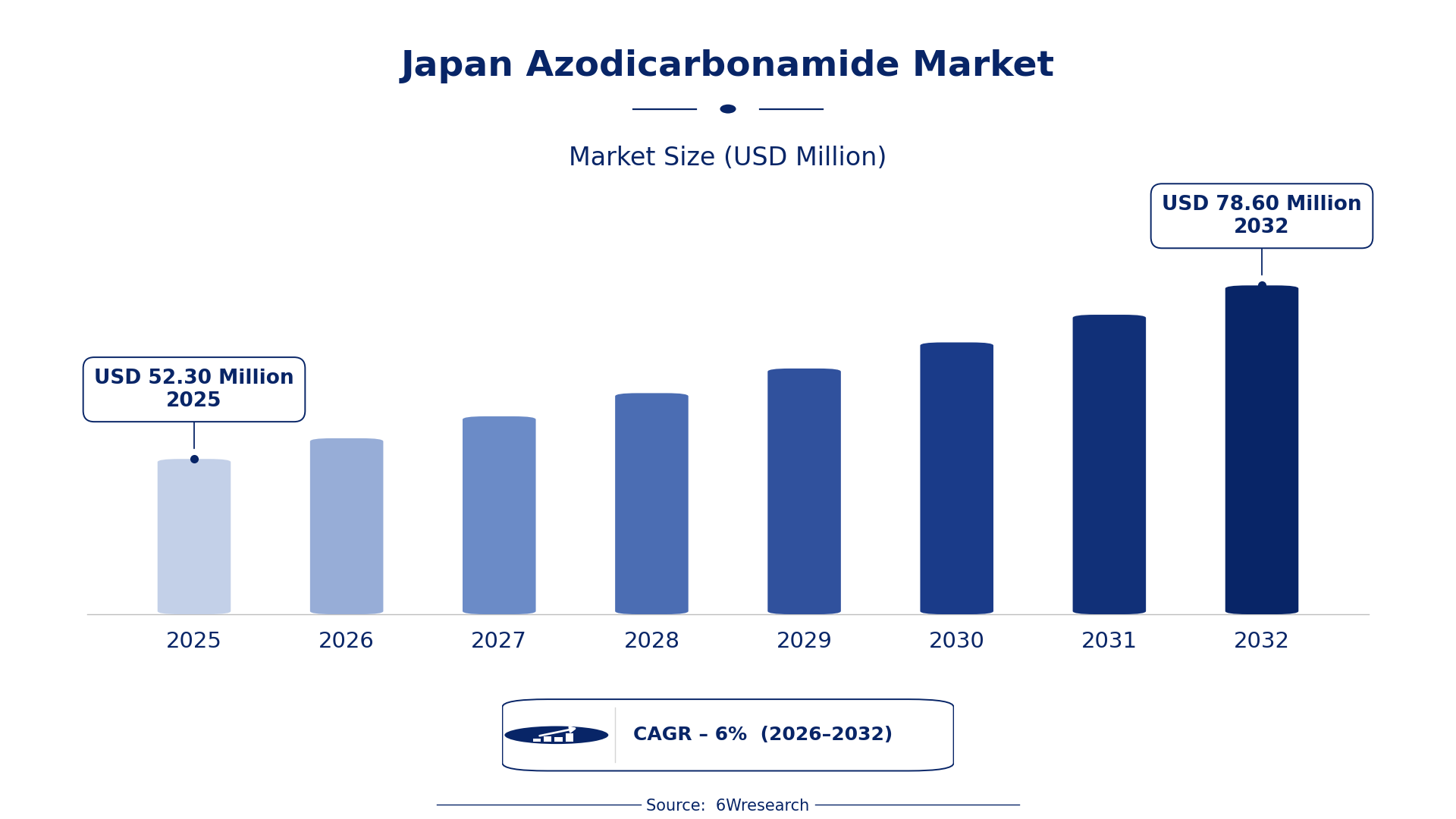
According to 6Wresearch internal database and industry insights, the Japan Azodicarbonamide Market was valued at USD 52.30 Million in 2025 and is projected to reach USD 78.60 Million by 2032, growing at a CAGR of approximately 6% during 2026–2032.
Japan Azodicarbonamide Market Highlights
| Report Metric | Details |
| Report Name | Japan Azodicarbonamide Market (2026-2032) |
| Market Size 2025 | USD 52.30 Million |
| Market Size 2032 | USD 78.60 Million |
| Absolute Growth 2025–2032 | USD 26.30 Million |
| CAGR 2026–2032 | 6% |
| Peak Annual Growth | 6.3% in 2031 |
| Forecast Period | 2026–2032 |
| Historical Data | 2022–2025 |
| Base Year | 2025 |
| Leading Type, 2025 | Industrial Quality (62% share) |
| Leading Application, 2025 | Blowing Agent (43% share) |
| Leading End User, 2025 | Plastic and Rubber (45% share) |
| Fastest-Growing Type | Food Quality (7.9% CAGR) |
| Fastest-Growing Application | Plastic Additive (8.0% CAGR) |
| Fastest-Growing End User | Food and Beverage (7.8% CAGR) |
| Growing Sector | Plastic and Rubber |
| Key End Users | Plastic manufacturers, food processors, rubber producers |
Japan Azodicarbonamide Market Year-wise Growth Rate and Key Drivers (2022–2032)
This graph illustrates the annual growth rates of the market from 2022 to 2032, highlighting a steady upward trajectory and projected market expansion over the forecast period.
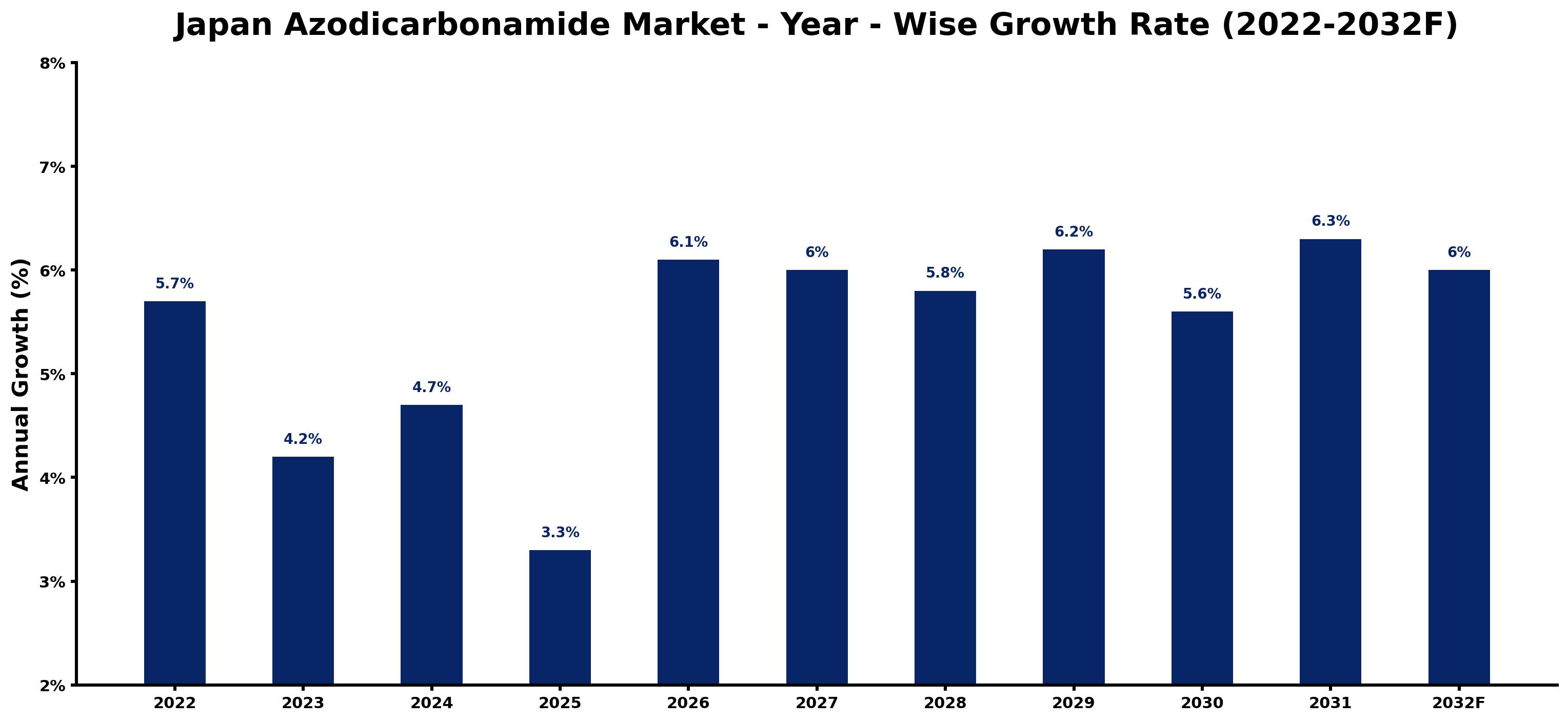
The following figures match every annual growth estimate with the main market development of that year, giving the reasoning behind each rise or slowdown.
| Year | Estimated Annual Growth (%) | Market Rationale |
| 2022 | 5.7 | The market experienced strong activity, driven by high demand from the plastic and rubber industries. |
| 2023 | 4.2 | Growth slowed as companies adjusted to supply chain disruptions affecting production rates. |
| 2024 | 4.7 | Demand increased as manufacturers resumed operations and sought to improve product quality. |
| 2025 | 3.3 | Growth decelerated due to market saturation in certain applications, yet remained positive. |
| 2026 | 6.1 | A surge in investment in production capacity is expected to drive demand higher. |
| 2027 | 6.0 | Growth is projected to slow slightly as the market stabilises after rapid expansion. |
| 2028 | 5.8 | Demand is expected to remain steady as manufacturers adapt to evolving industry standards. |
| 2029 | 6.2 | A renewed focus on sustainability is projected to boost demand for eco-friendly alternatives. |
| 2030 | 5.6 | Growth is expected to slow as competition intensifies among suppliers. |
| 2031 | 6.3 | A peak in growth will occur as new applications for azodicarbonamide emerge. |
| 2032 | 6.0 | The market is projected to stabilise as demand reaches maturity. |
Note: Market size estimations and growth projections presented in this report are based on 6Wresearch's proprietary forecasting methodology, utilizing the latest available industry data, government publications, and primary research inputs.
Japan Azodicarbonamide Market Synopsis
Azodicarbonamide acts as a blowing agent in foamed plastics and a food additive in flour processing, synthesised from hydrazine and carbonyl compounds. The Japan Azodicarbonamide Market is growing, propelled by a strong plastic and rubber sector that employs over 400,000 individuals. The food processing industry, valued at approximately ¥5 trillion, plays a crucial role in driving demand, as azodicarbonamide is utilised in over 60% of flour bleaching processes, presenting further growth potential.
Market Dynamics Impact Analysis (2026–2032)
| Factor | Type | Impact | Primary Segment Affected |
| High demand from the plastic and rubber industries drives growth. | Driver | High | Blowing Agent |
| Increasing food safety standards are boosting demand for food additives. | Driver | High | Food Additive |
| Growing interest in sustainable materials presents new market opportunities. | Opportunity | Medium | Plastic Additive |
| Expansion in food processing capabilities creates demand for quality enhancers. | Opportunity | High | Food Quality |
| Stringent regulations may limit production capabilities for some manufacturers. | Restraint | High | Food Quality |
| Market saturation in certain applications could restrict growth potential. | Restraint | Medium | Blowing Agent |
| Rising competition among suppliers may lead to price pressures. | Challenge | High | Plastic and Rubber |
| Technological advancements may outpace current production methods. | Challenge | Medium | Plastic Additive |
Evaluation of Drivers in Japan Azodicarbonamide Market (2026–2032)
These are the developments adding the most demand over the forecast period.
| Drivers | Primary Segment Affected | Why It Matters (Evidence) |
| Strong growth in the plastic industry increases azodicarbonamide usage. | Blowing Agent | Japan produced around 1.2 million tons of plastic materials in 2022, boosting demand for blowing agents. |
| The expansion of the food processing sector drives demand for food additives. | Food Additive | Japan's food processing industry is valued at approximately ¥5 trillion, increasing the need for quality additives. |
| Rising consumer awareness of food safety drives demand for certified additives. | Food Quality | Azodicarbonamide is listed as a permissible food additive under the Food Sanitation Act, ensuring compliance. |
| Investment in production facilities supports growth in azodicarbonamide applications. | Plastic Additive | The Tokyo region is a major hub for plastic manufacturing, increasing demand for additives. |
| The need for improved product quality in manufacturing drives azodicarbonamide adoption. | Improving Agent | Azodicarbonamide is used in over 60% of flour bleaching processes in Japan, improving flour quality. |
Orders continue to rise as investments in the plastic industry increase, with Japan producing around 1.2 million tons of plastic materials in 2022, resulting in higher azodicarbonamide consumption. The food processing sector, valued at approximately ¥5 trillion, fuels demand for food additives, particularly as consumer safety awareness grows. Enhanced production capabilities in the Tokyo region bolster demand for plastic additives, while the push for improved product quality in manufacturing accelerates azodicarbonamide adoption, especially in flour bleaching processes. The market is anticipated to transition towards sustainable practices, further driving demand for this compound.
Evaluation of Restraints in Japan Azodicarbonamide Market
These restraints slow adoption and weigh on supplier margins.
| Market Restraint | Primary Segment Affected | Why It Matters (Evidence) |
| Stringent regulations may limit production capabilities for some manufacturers. | Food Quality | Japan has stringent ISO standards for food safety and additives, which can restrict some production processes. |
| Market saturation in certain applications could restrict growth potential. | Blowing Agent | The increasing availability of alternative blowing agents may limit the growth of azodicarbonamide in specific applications. |
| High production costs may deter smaller manufacturers from entering the market. | Plastic Additive | Rising material costs and operational expenses can limit competitiveness for smaller players. |
| Dependence on imported raw materials can disrupt supply chains. | Improving Agent | Supply chain disruptions can affect the availability of essential components for azodicarbonamide production. |
| Limited awareness of azodicarbonamide's benefits may hinder market penetration. | Food Additive | Some food processors may not fully understand the advantages of using azodicarbonamide, impacting demand. |
Japan Azodicarbonamide Market Challenges
Producers in Japan's food processing sector encounter delays due to strict food safety regulations, which can prolong approval times for azodicarbonamide applications by three months. Compliance with JIS K 6850 standards necessitates extensive testing, costing producers around ¥10 million annually in documentation and testing fees. Rising raw material costs are squeezing profit margins, leading to a 15% price increase for buyers in the plastic and rubber industries. Skills shortages in the chemical manufacturing workforce are causing production inefficiencies, resulting in a 20% rise in operational costs for producers, ultimately affecting pricing for end users.
Trends in the Japan Azodicarbonamide Market
The shifts below are changing how Japan Azodicarbonamide Market products are bought and supplied.
- Shift from Traditional to Sustainable Materials: The plastic industry is increasingly embracing sustainable materials, with the Plastic Resource Circulation Act promoting reduction and recycling initiatives. This act, enacted in 2021, aims to encourage alternatives such as biomass and biodegradable plastics, motivating manufacturers to pursue eco-friendly solutions.
- Growing Demand for Food Safety Compliance: Food processors are focusing on compliance with the Food Sanitation Act, which requires HACCP-based hygiene management. This shift is evident as companies invest in quality control measures to meet regulatory standards, driving demand for certified additives.
- Expansion of Blowing Agent Applications: The use of azodicarbonamide is broadening beyond traditional plastics, with new applications surfacing in the automotive and construction sectors. This trend is fuelled by the demand for lightweight materials, with Japan producing around 1.2 million tons of plastic materials in 2022.
- Increased Focus on Product Quality in Food Processing: Food and beverage manufacturers are prioritising product quality, leading to heightened demand for azodicarbonamide as a quality enhancer. In Japan, over 60% of flour bleaching processes incorporate this additive, underscoring its importance in food processing.
Investment Opportunities in the Japan Azodicarbonamide Market
Investors looking at the Japan Azodicarbonamide Market should consider the following areas.
- Form Joint Ventures with Local Producers: Now is an ideal time to invest in partnerships with local manufacturers to improve production capabilities. The Tokyo region, a hub for plastic manufacturing, offers opportunities for collaboration to meet rising demand for azodicarbonamide.
- Invest in Sustainable Alternatives: With the Plastic Resource Circulation Act promoting eco-friendly materials, there is a gap for sustainable alternatives. Suppliers can target the plastic and rubber industries, which are increasingly seeking biodegradable options.
- Expand into Food Processing Applications: The food processing sector is experiencing growth, with a market valued at approximately ¥5 trillion. Suppliers should focus on improving their offerings for food additives to cater to this expanding market.
- Seek Certification for Food Additives: Now is the time to invest in obtaining certifications for food additives. Compliance with the Food Sanitation Act can open doors to the food and beverage sector, ensuring access to a larger customer base.
Government Initiatives in the Japan Azodicarbonamide Market
The Food Sanitation Act, amended in 2018, mandates HACCP-based hygiene management for food businesses, ensuring safety in food processing. This law requires producers to comply with strict standards, influencing how azodicarbonamide is used as a food additive. Additionally, the Plastic Resource Circulation Act, enacted in 2021, promotes the reduction and recycling of plastics, encouraging manufacturers to seek alternatives and improve sustainability practices.
The Japan Plastics Industry Federation oversees the enforcement of food safety regulations, including the Food Sanitation Act. This agency ensures compliance and monitors food businesses, affecting how azodicarbonamide is utilised in food processing. The federation also advocates for industry standards and practices, assisting producers in meeting regulatory requirements.
Future Insight of the Japan Azodicarbonamide Market
A policy shift will transform the food processing sector by 2032, as new safety regulations compel suppliers to adopt advanced processing technologies. The government's initiative will elevate standards in food safety, prompting buyers to seek higher quality additives. With the plastic and rubber industry expected to produce around 1.2 million tons, suppliers will invest in modern manufacturing facilities to meet market demands. The integration of automation in production processes will improve efficiency, providing benefits for both buyers and suppliers.
Market Segmentation Analysis
Japan Azodicarbonamide Market report covers a detailed analysis of the following market segments:
By Type – Industrial Quality Leads, Food Quality Expected to Grow Fastest
According to Vasudha, AM at 6Wresearch, the largest type category in 2025 was Industrial Quality, at 62% of revenue. The Industrial Quality segment holds the largest share as it is extensively used in manufacturing processes for plastics and rubber, which are vital to Japan's economy. The sector benefits from a well-established infrastructure and a skilled workforce, ensuring consistent demand for azodicarbonamide. Over 2026–2032, Food Quality is expected to post the fastest growth, at a CAGR of 7.9%. The Food Quality segment is experiencing rapid growth due to the rising recognition of azodicarbonamide as a key food additive in flour processing. Its application in over 60% of flour bleaching processes highlights the increasing emphasis on food safety and quality in Japan. Suppliers should prioritise the food processing sector to leverage the growing demand for quality food additives.
By Application – Blowing Agent Leads, Plastic Additive Expected to Grow Fastest
With 43% of application revenue in 2025, Blowing Agent was the largest category. Blowing Agent is the leading application because it is primarily utilised in producing foamed plastics, which are crucial in various manufacturing sectors. The production of around 1.2 million tons of plastic materials in Japan illustrates the importance of this application in the market. The quickest growth will come from Plastic Additive, forecast to expand at a CAGR of 8.0% between 2026 and 2032. The Plastic Additive segment is expanding rapidly as it is essential for enhancing plastic properties, which are necessary to meet stringent quality standards. The concentration of plastic manufacturing in the Tokyo region further drives the demand for this application. Buyers should recognise the critical role of plastic additives in improving product quality and performance.
By End User – Plastic and Rubber Leads, Food and Beverage Expected to Grow Fastest
In 2025, Plastic and Rubber led the end user split with a 45% share. The Plastic and Rubber segment leads the market as it represents a major application area for azodicarbonamide, supported by a robust plastic and rubber industry in Japan. The high employment rate in this sector indicates a stable and ongoing demand for materials. Food and Beverage is projected to grow fastest, at a CAGR of 7.8% during 2026–2032. The Food and Beverage segment is the fastest-growing end user due to the notable use of azodicarbonamide in food processing, especially in flour applications. Recent government initiatives aimed at enhancing food safety in processing industries are expected to further accelerate this growth. Suppliers must adapt to the increasing focus on food safety and quality within the food and beverage sector.
Key Attractiveness of the Report
- 10 Years of Market Numbers
- Historical Data Starting from 2022 to 2025
- Base Year 2025
- Forecast Data until 2032
- Key Performance Indicators Impacting the Market
- Major Upcoming Developments and Projects
Key Highlights of the Report:
- Japan Azodicarbonamide Market Outlook
- Market Size of Japan Azodicarbonamide Market, 2025
- Forecast of Japan Azodicarbonamide Market, 2032
- Historical Data and Forecast of Japan Azodicarbonamide Revenues & Volume for the Period 2022-2032
- Japan Azodicarbonamide Market Trend Evolution
- Japan Azodicarbonamide Market Drivers and Challenges
- Japan Azodicarbonamide Price Trends
- Japan Azodicarbonamide Porter's Five Forces
- Japan Azodicarbonamide Industry Life Cycle
- Historical Data and Forecast of Japan Azodicarbonamide Market Revenues & Volume By Type for the Period 2022-2032
- Historical Data and Forecast of Japan Azodicarbonamide Market Revenues & Volume By Industrial Quality for the Period 2022-2032
- Historical Data and Forecast of Japan Azodicarbonamide Market Revenues & Volume By Food Quality for the Period 2022-2032
- Historical Data and Forecast of Japan Azodicarbonamide Market Revenues & Volume By Application for the Period 2022-2032
- Historical Data and Forecast of Japan Azodicarbonamide Market Revenues & Volume By Blowing Agent for the Period 2022-2032
- Historical Data and Forecast of Japan Azodicarbonamide Market Revenues & Volume By Plastic Additive for the Period 2022-2032
- Historical Data and Forecast of Japan Azodicarbonamide Market Revenues & Volume By Food Additive for the Period 2022-2032
- Historical Data and Forecast of Japan Azodicarbonamide Market Revenues & Volume By Flour Bleaching Agent for the Period 2022-2032
- Historical Data and Forecast of Japan Azodicarbonamide Market Revenues & Volume By Improving Agent for the Period 2022-2032
- Historical Data and Forecast of Japan Azodicarbonamide Market Revenues & Volume By End User for the Period 2022-2032
- Historical Data and Forecast of Japan Azodicarbonamide Market Revenues & Volume By Plastic and Rubber for the Period 2022-2032
- Historical Data and Forecast of Japan Azodicarbonamide Market Revenues & Volume By Food and Beverage for the Period 2022-2032
- Historical Data and Forecast of Japan Azodicarbonamide Market Revenues & Volume By Leather and Textile for the Period 2022-2032
- Historical Data and Forecast of Japan Azodicarbonamide Market Revenues & Volume By Others for the Period 2022-2032
- Japan Azodicarbonamide Import Export Trade Statistics
- Market Opportunity Assessment By Type
- Market Opportunity Assessment By Application
- Market Opportunity Assessment By End User
- Japan Azodicarbonamide Top Companies Market Share
- Japan Azodicarbonamide Competitive Benchmarking By Technical and Operational Parameters
- Japan Azodicarbonamide Company Profiles
- Japan Azodicarbonamide Key Strategic Recommendations
Market Covered
The report covers the following segments.
By Type
- Industrial Quality
- Food Quality
By Application
- Blowing Agent
- Plastic Additive
- Food Additive
- Flour Bleaching Agent
- Improving Agent
By End User
- Plastic and Rubber
- Food and Beverage
- Leather and Textile
- Others






































