Japan Beauty Salon Market Size & Growth Rate
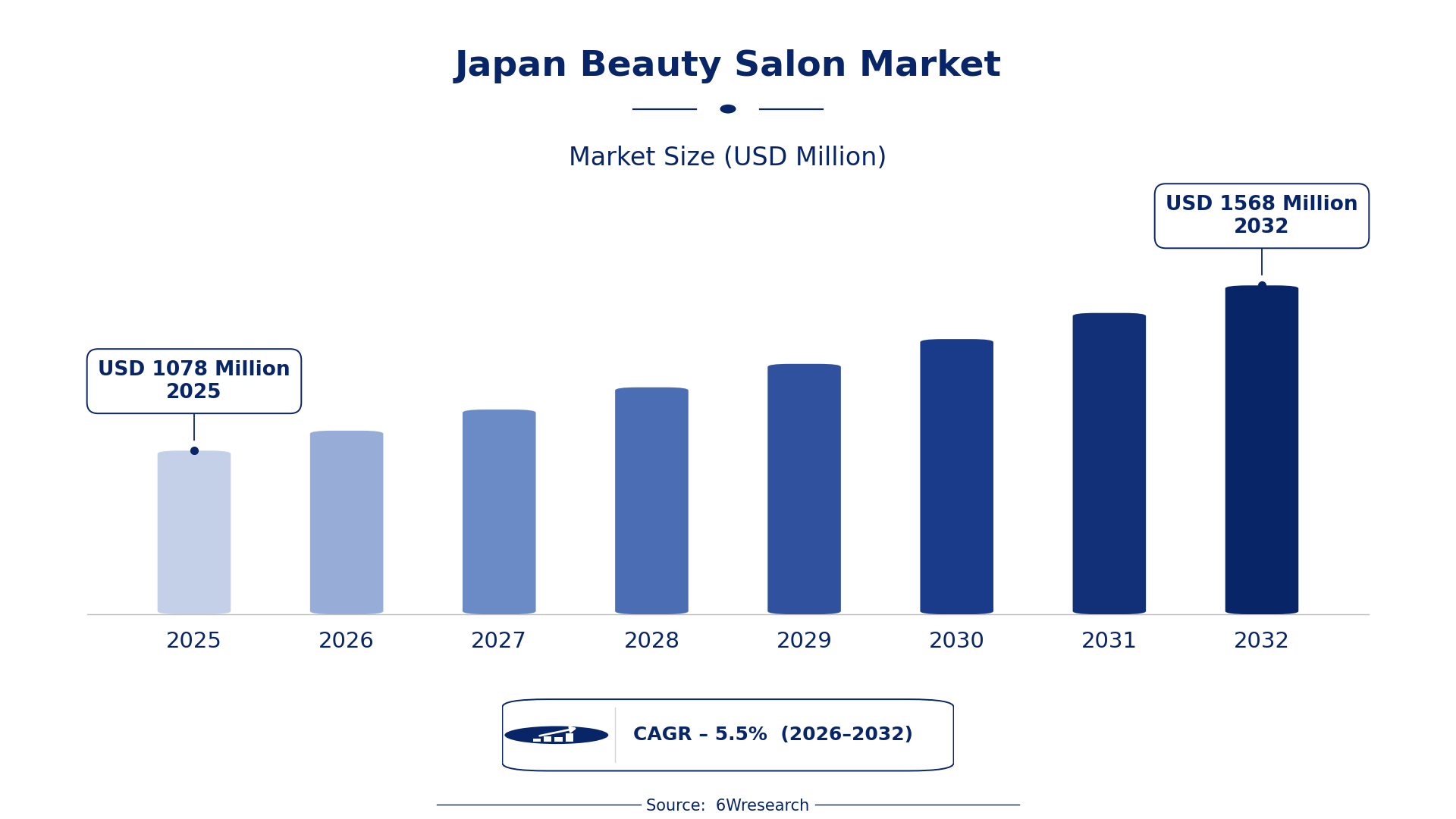
According to 6Wresearch internal database and industry insights, the Japan Beauty Salon Market was valued at USD 1,078 Million in 2025 and is projected to reach USD 1,568 Million by 2032, growing at a CAGR of approximately 5.5% during 2026–2032.
Japan Beauty Salon Market Highlights
| Report Metric | Details |
| Report Name | Japan Beauty Salon Market (2026-2032) |
| Market Size 2025 | USD 1,078 Million |
| Market Size 2032 | USD 1,568 Million |
| Absolute Growth 2025–2032 | USD 490 Million |
| CAGR 2026–2032 | 5.5% |
| Peak Annual Growth | 6.2% in 2032 |
| Forecast Period | 2026–2032 |
| Historical Data | 2022–2025 |
| Base Year | 2025 |
| Leading Service Type, 2025 | Hair Care (60% share) |
| Leading End-user, 2025 | Women (64% share) |
| Fastest-Growing Service Type | Skin Care Nail Care (7.2% CAGR) |
| Fastest-Growing End-user | Men (6.9% CAGR) |
| Growing Sector | Skin Care |
| Key End Users | Women, Men, Beauty Professionals, Salon Owners |
Japan Beauty Salon Market Year-wise Growth Rate and Key Drivers (2022–2032)
This graph illustrates the annual growth rates of the market from 2022 to 2032, highlighting a steady upward trajectory and projected market expansion over the forecast period.
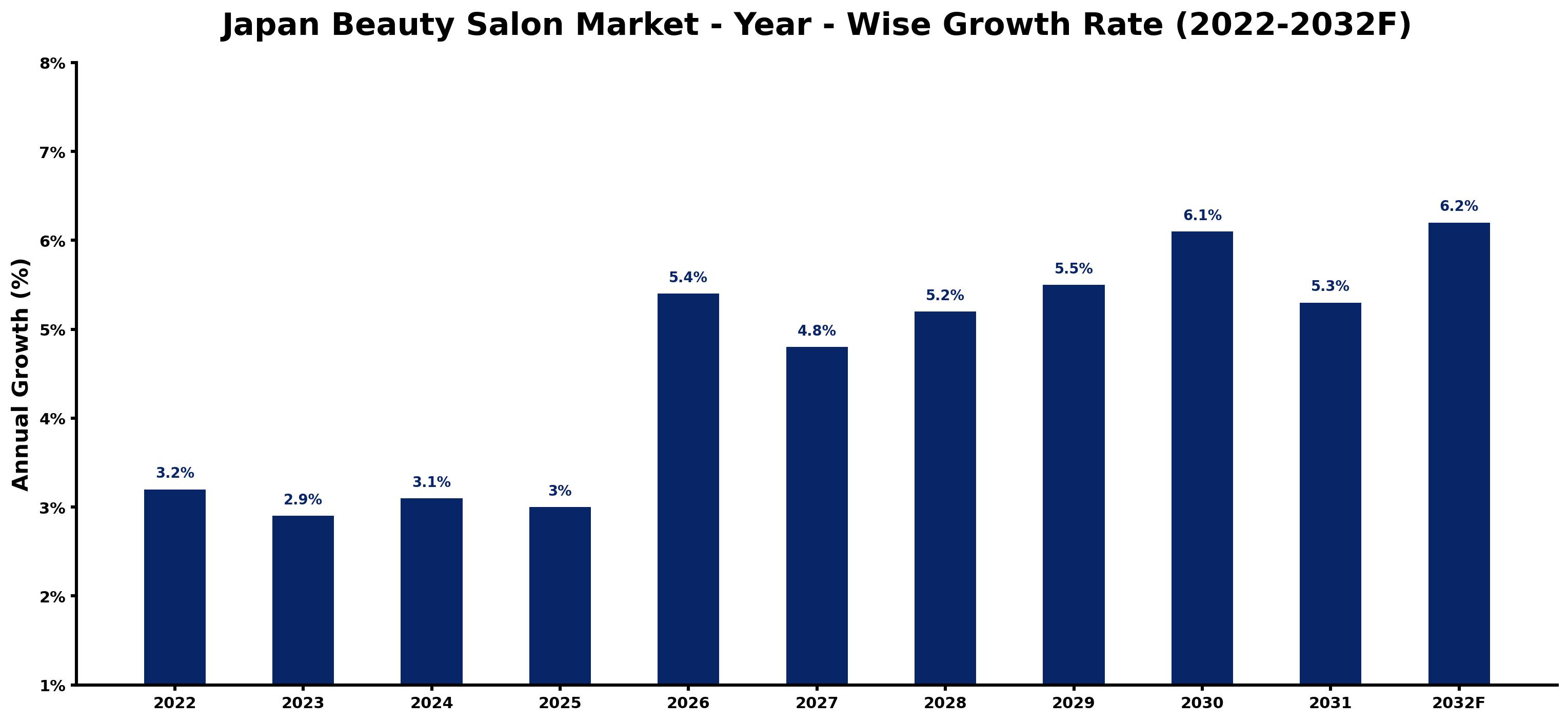
Year by year, the estimates below pair each growth rate with the development that shaped it.
| Year | Estimated Annual Growth (%) | Market Rationale |
| 2022 | 3.2 | The market experienced steady growth, reflecting a stable demand for beauty services. |
| 2023 | 2.9 | Growth slowed slightly due to a decline in the population and changing consumer preferences. |
| 2024 | 3.1 | An increase in disposable income led to a faster growth rate as consumers spent more on beauty services. |
| 2025 | 3.0 | Growth slowed again as competition intensified among beauty salons in urban areas. |
| 2026 | 5.4 | A surge in demand for skin care services is expected to drive growth in the market. |
| 2027 | 4.8 | Growth is projected to slow as the market adjusts to increased service offerings and consumer expectations. |
| 2028 | 5.2 | Rising interest in personal grooming among younger demographics is expected to accelerate market expansion. |
| 2029 | 5.5 | The market is projected to continue growing as disposable income levels rise, encouraging more salon visits. |
| 2030 | 6.1 | A growing trend towards premium beauty services will contribute to a higher growth rate. |
| 2031 | 5.3 | Growth is anticipated to slow as market saturation begins to impact the number of new salon openings. |
| 2032 | 6.2 | The market is expected to peak as consumer spending on beauty services reaches new heights. |
Note: Market size estimations and growth projections presented in this report are based on 6Wresearch's proprietary forecasting methodology, utilizing the latest available industry data, government publications, and primary research inputs.
Japan Beauty Salon Market Synopsis
Beauty salons in Japan provide vital services such as hair care, skin care, and nail care, focusing on personal aesthetics through trained professionals. The Japan Beauty Salon Market thrives on a culture that values grooming, with key buyer groups including women and increasingly men. Rising disposable income and the popularity of skin care services are driving growth, with the market projected to reach approximately 1 trillion yen by 2032.
Market Dynamics Impact Analysis (2026–2032)
| Factor | Type | Impact | Primary Segment Affected |
| Increasing disposable income drives demand for beauty services. | Driver | High | Hair Care |
| Growing interest in skin care services boosts salon revenue. | Driver | High | Skin Care Nail Care |
| Expansion of beauty service offerings presents investment opportunities. | Opportunity | High | Skin Care Nail Care |
| Rising demand for premium beauty services creates market entry points. | Opportunity | High | Hair Care |
| Population decline limits the potential customer base for salons. | Restraint | High | Hair Care |
| Intense competition among salons may pressure pricing strategies. | Restraint | Medium | Skin Care Nail Care |
| High operational costs affect profitability for beauty salons. | Challenge | High | Hair Care |
| Evolving consumer preferences require constant adaptation from salons. | Challenge | Medium | Skin Care Nail Care |
Evaluation of Drivers in Japan Beauty Salon Market (2026–2032)
Key forces behind demand, with the segment each one moves most, are listed below.
| Drivers | Primary Segment Affected | Why It Matters (Evidence) |
| Rising disposable income increases spending on beauty services. | Hair Care | As disposable income rises, consumers are more willing to spend on hair care, particularly in urban areas like Tokyo. |
| Growing interest in skin care services boosts salon revenue. | Skin Care Nail Care | With skin care accounting for 40% of total salon revenue, salons are expanding their offerings to meet this demand, especially among younger clients. |
| An increase in beauty professionals improves service availability. | Skin Care Nail Care | With over 500,000 beauty professionals in Japan, salons can cater to a wider range of client needs, increasing overall market participation. |
| Cultural emphasis on personal grooming drives salon visits. | Hair Care | The average age of salon clients is 35 years, indicating strong demand for hair care services among working adults. |
| Vocational training programs improve service quality in salons. | Hair Care | Government support for vocational training enhances the skill level of beauty professionals, leading to better service delivery. |
A wider customer base explains much of the growth, as rising disposable income has led to increased spending on beauty services. In urban areas, the average expenditure per visit to a beauty salon is around 5,000 yen, encouraging more frequent visits. The skin care segment, accounting for 40% of total salon revenue, has seen notable interest, particularly among younger consumers. The cultural emphasis on personal grooming further drives demand among working adults, who represent the primary target demographic for salons. The number of beauty professionals in Japan exceeds 500,000, ensuring a wide availability of services.
Evaluation of Restraints in Japan Beauty Salon Market
The table below lists the restraints and the evidence behind each.
| Market Restraint | Primary Segment Affected | Why It Matters (Evidence) |
| Population decline limits the customer base for salons. | Hair Care | Japan's population has been declining since 2011, reducing potential salon clients, particularly in rural areas. |
| Intense competition among salons pressures pricing strategies. | Skin Care Nail Care | With over 200,000 registered beauty salons, competition leads to price wars that can impact profitability. |
| High operational costs affect salon profitability. | Hair Care | Rising costs for products and rent in urban areas strain the financial performance of beauty salons. |
| Evolving consumer preferences require constant adaptation. | Skin Care Nail Care | Salons must continuously innovate their service offerings to meet changing consumer demands, which can be resource-intensive. |
| Regulatory compliance can increase operational complexity. | Hair Care | Adherence to JIS standards for hygiene requires salons to invest in training and equipment, raising operational costs. |
Japan Beauty Salon Market Challenges
A shortage of trained beauty professionals hampers service quality in the market, resulting in reduced client satisfaction across over 200,000 registered establishments. This skills gap stems from insufficient vocational training programmes, delaying service delivery and affecting revenue for producers. Buyers face increased costs as salons compete for limited talent, raising average visit expenditures to around 5,000 yen. Slow technology adoption prevents salons from utilising modern techniques, which diminishes their appeal and client retention. Supply chain disruptions for beauty products lead to inconsistent availability, negatively impacting service offerings and customer experiences throughout the industry.
Trends in the Japan Beauty Salon Market
The trends below show where the Japan Beauty Salon Market is heading.
- Shift towards Premium Beauty Services: Consumers are increasingly opting for premium beauty services, reflecting a growing willingness to invest in personal grooming. In 2023, the average expenditure per visit to a beauty salon reached around 5,000 yen, indicating this trend.
- Growing Demand for Skin Care Treatments: The skin care segment is gaining prominence, with salons expanding their offerings to cater to this demand. This segment accounts for 40% of total salon revenue, highlighting its importance in the market.
- Expansion of Men’s Beauty Services: There is a noticeable increase in men seeking beauty services, with the segment projected to grow at a CAGR of 6.9% from 2026 to 2032. This shift is evident in urban areas where salons are tailoring services for male clients.
- Rise of Innovative Beauty Products: Salons are increasingly incorporating innovative beauty products into their services, driven by consumer interest in quality and effectiveness. This trend is supported by the Japan Hairdressing Association promoting best practices in the industry.
Investment Opportunities in the Japan Beauty Salon Market
The following opportunities in the Japan Beauty Salon Market pair current demand with a clear way in.
- Partnerships with Local Suppliers: Establishing partnerships with local suppliers is timely to improve service offerings. With the beauty salon market valued at approximately 1 trillion yen, collaboration can lead to mutual growth.
- Investment in Training Programs: Government support for vocational training programs creates opportunities for investment in training facilities. This support can improve service quality and attract more clients to salons.
- Expansion into Urban Areas: Urban areas like Tokyo and Osaka present significant opportunities for salon expansion, with a growing population of beauty-conscious consumers. Investing in new locations can effectively capture this demand.
- Offering Specialized Skin Care Services: With skin care accounting for 40% of total salon revenue, salons should consider offering specialized treatments. This focus can attract a broader clientele and increase overall revenue.
Government Initiatives in the Japan Beauty Salon Market
The Standards for Cosmetics under the PMD Act set hygiene and ingredient regulations for beauty salons. Compliance with these standards ensures that salons maintain high-quality services, which is vital for client trust and safety.
In 2023, the Long-Term Care Insurance Act provided funding for nursing care and support services, administered by the MHLW. This funding supports the training of beauty professionals, improving service quality in salons.
Future Insight of the Japan Beauty Salon Market
The introduction of advanced vocational training facilities will elevate skill levels among beauty professionals by 2032, improving service quality. Increased disposable income will drive demand for premium beauty services, encouraging salons to expand their offerings. Enhanced hygiene standards will strengthen client trust, particularly in major urban centres like Tokyo and Osaka. The integration of automated booking systems will streamline operations, making it easier for buyers to access services and allowing suppliers to optimise inventory management.
Market Segmentation Analysis
Japan Beauty Salon Market report covers a detailed analysis of the following market segments:
By Service Type – Hair Care Leads, Skin Care Nail Care Expected to Grow Fastest
According to Summon Dutta, Assistant Manager at 6Wresearch, Hair Care took 60% of service type revenue in 2025, more than any other category. Hair care services dominate Japan's beauty salon market due to their essential role in personal grooming and high demand among clients. With over 200,000 registered beauty salons, this service is consistently prioritised, appealing to a broad demographic. Over 2026–2032, Skin Care Nail Care is expected to post the fastest growth, at a CAGR of 7.2%. The skin care segment is experiencing rapid growth as consumers prioritise skin health and aesthetics, especially in urban centres like Tokyo. This trend is evidenced by skin care accounting for 40% of total salon revenue, indicating a shift towards specialised services. This means suppliers should realign their offerings to cater to the increasing focus on skin care services.
By End-user – Women Leads, Men Expected to Grow Fastest
Women held 64% of the Japan Beauty Salon Market by end-user in 2025. Women represent the largest demographic in the beauty salon market, accounting for the majority of salon visits and expenditures. Their consistent engagement with beauty services underscores the importance of targeting this group for sustained revenue generation. Men is projected to grow fastest, at a CAGR of 6.9% during 2026–2032. Men are increasingly seeking beauty services, contributing to a notable rise in demand for male grooming options. This shift is reflected in changing societal norms and the growing acceptance of personal grooming among men. Suppliers may benefit from tailoring marketing strategies to attract male clients, tapping into this expanding segment.
Key Attractiveness of the Report
- 10 Years of Market Numbers
- Historical Data Starting from 2022 to 2025
- Base Year 2025
- Forecast Data until 2032
- Key Performance Indicators Impacting the Market
- Major Upcoming Developments and Projects
Key Highlights of the Report:
- Japan Beauty Salon Market Outlook
- Market Size of Japan Beauty Salon Market, 2025
- Forecast of Japan Beauty Salon Market, 2032
- Historical Data and Forecast of Japan Beauty Salon Revenues & Volume for the Period 2022-2032
- Japan Beauty Salon Market Trend Evolution
- Japan Beauty Salon Market Drivers and Challenges
- Japan Beauty Salon Price Trends
- Japan Beauty Salon Porter's Five Forces
- Japan Beauty Salon Industry Life Cycle
- Historical Data and Forecast of Japan Beauty Salon Market Revenues & Volume By Service Type for the Period 2022-2032
- Historical Data and Forecast of Japan Beauty Salon Market Revenues & Volume By Hair Care for the Period 2022-2032
- Historical Data and Forecast of Japan Beauty Salon Market Revenues & Volume By Skin Care Nail Care for the Period 2022-2032
- Historical Data and Forecast of Japan Beauty Salon Market Revenues & Volume By End-user for the Period 2022-2032
- Historical Data and Forecast of Japan Beauty Salon Market Revenues & Volume By Men for the Period 2022-2032
- Historical Data and Forecast of Japan Beauty Salon Market Revenues & Volume By Women for the Period 2022-2032
- Japan Beauty Salon Import Export Trade Statistics
- Market Opportunity Assessment By Service Type
- Market Opportunity Assessment By End-user
- Japan Beauty Salon Top Companies Market Share
- Japan Beauty Salon Competitive Benchmarking By Technical and Operational Parameters
- Japan Beauty Salon Company Profiles
- Japan Beauty Salon Key Strategic Recommendations
Market Covered
The study includes the following segmentation.
By Service Type
- Hair Care
- Skin Care Nail Care
By End-user
- Men
- Women































