Japan Cancer Vaccine Market Size & Growth Rate
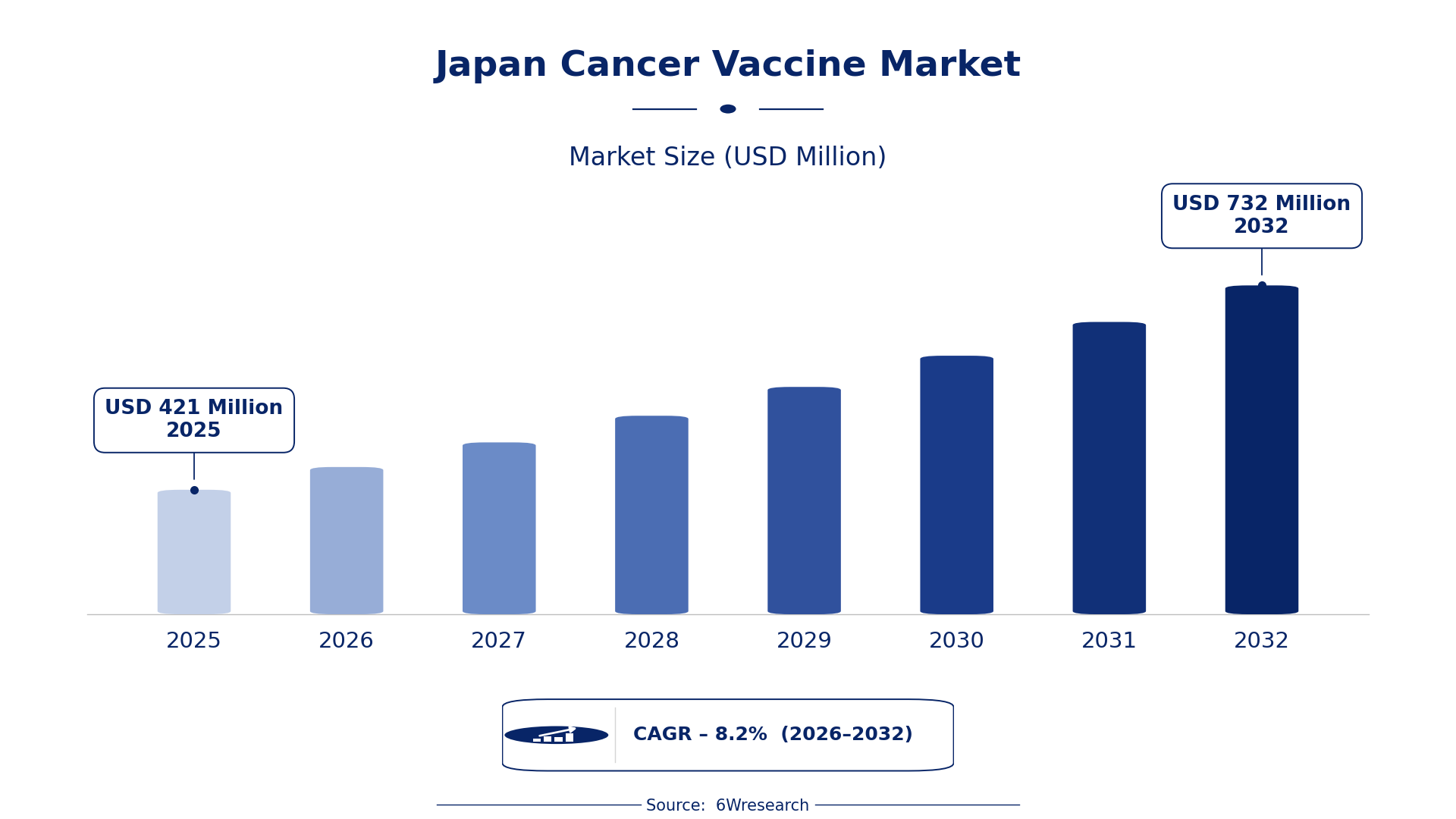
According to 6Wresearch internal database and industry insights, the Japan Cancer Vaccine Market was valued at USD 421 Million in 2025 and is projected to reach USD 732 Million by 2032, growing at a CAGR of approximately 8.2% during 2026–2032.
Japan Cancer Vaccine Market Highlights
| Report Metric | Details |
| Report Name | Japan Cancer Vaccine Market (2026-2032) |
| Market Size 2025 | USD 421 Million |
| Market Size 2032 | USD 732 Million |
| Absolute Growth 2025–2032 | USD 311 Million |
| CAGR 2026–2032 | 8.2% |
| Peak Annual Growth | 9.3% in 2032 |
| Forecast Period | 2026–2032 |
| Historical Data | 2022–2025 |
| Base Year | 2025 |
| Leading Vaccine Type, 2025 | Preventive Vaccine (68% share) |
| Leading Application, 2025 | Cancer Prevention (56% share) |
| Leading End User, 2025 | Clinics (57% share) |
| Leading Mechanism, 2025 | Immune Activation (54% share) |
| Fastest-Growing Vaccine Type | Therapeutic Vaccine (11.2% CAGR) |
| Fastest-Growing Application | Cancer Treatment (10.7% CAGR) |
| Fastest-Growing End User | Hospitals (10.3% CAGR) |
| Fastest-Growing Mechanism | Tumor Regression (10.4% CAGR) |
| Growing Sector | cancer prevention |
| Key End Users | clinics, hospitals, healthcare providers |
Japan Cancer Vaccine Market Year-wise Growth Rate and Key Drivers (2022–2032)
This graph illustrates the annual growth rates of the market from 2022 to 2032, highlighting a steady upward trajectory and projected market expansion over the forecast period.
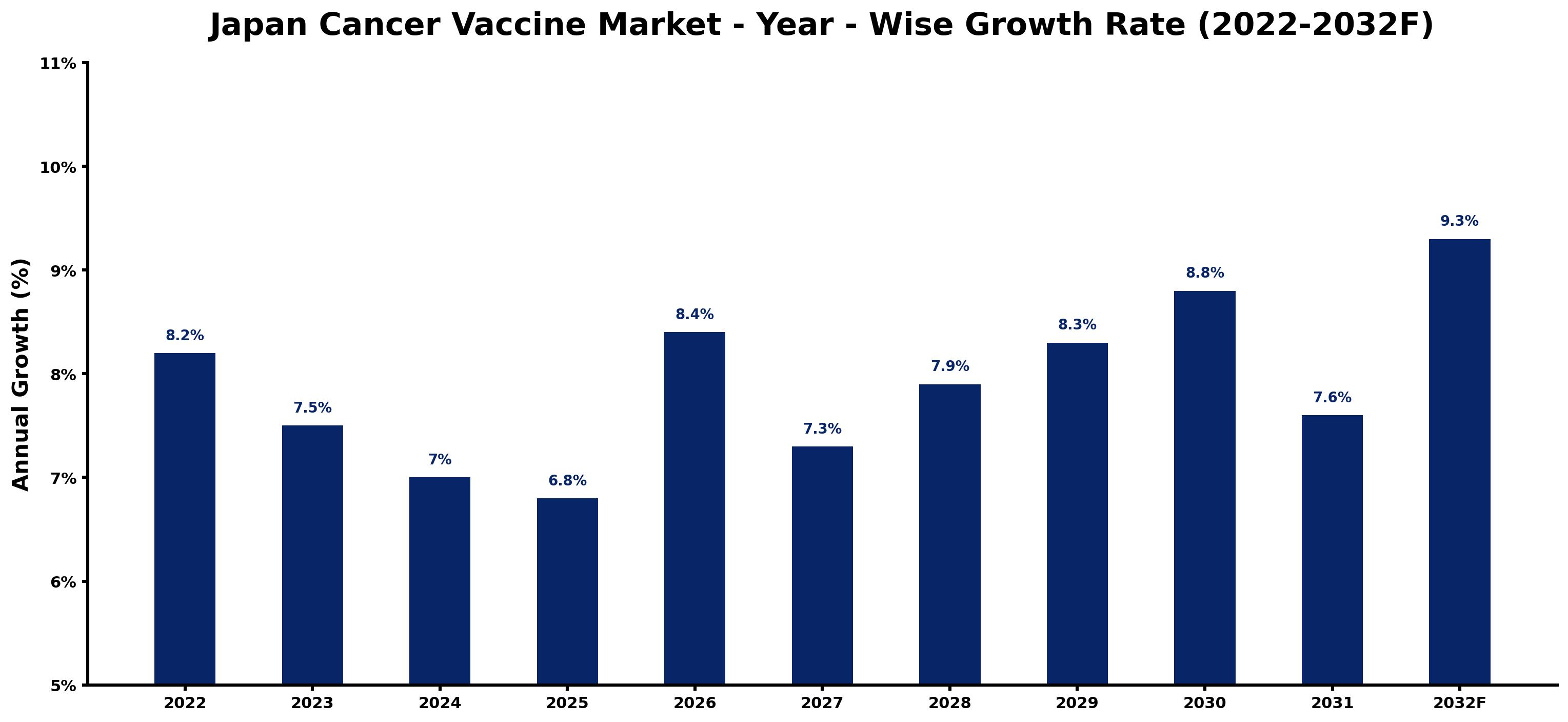
Annual growth estimates for each year appear below with the principal reason behind them, explaining the shifts that set the pace of the market.
| Year | Estimated Annual Growth (%) | Market Rationale |
| 2022 | 8.2 | The market experienced strong growth due to increased awareness of cancer prevention initiatives. |
| 2023 | 7.5 | Demand growth slowed as healthcare providers adjusted to the introduction of new vaccines. |
| 2024 | 7.0 | The trend of slower growth continued as competition among existing vaccines intensified. |
| 2025 | 6.8 | Growth slowed further as market saturation began to impact sales of established vaccines. |
| 2026 | 8.4 | Demand is expected to rebound with the introduction of innovative therapeutic vaccines. |
| 2027 | 7.3 | Growth is projected to slow again as the market stabilises with established products. |
| 2028 | 7.9 | A resurgence in demand is anticipated as clinical trials yield promising results. |
| 2029 | 8.3 | The market will continue to expand with rising cancer incidence rates nationwide. |
| 2030 | 8.8 | Demand is expected to accelerate as healthcare providers adopt updated treatment protocols. |
| 2031 | 7.6 | Growth will slow as market maturity sets in with established vaccine options. |
| 2032 | 9.3 | A peak in growth is projected due to increased investment in cancer research. |
Note: Market size estimations and growth projections presented in this report are based on 6Wresearch's proprietary forecasting methodology, utilizing the latest available industry data, government publications, and primary research inputs.
Japan Cancer Vaccine Market Synopsis
Cancer vaccines are biological preparations that stimulate the immune system to combat cancer. In Japan, these vaccines are primarily used in cancer prevention and treatment, with demand driven by healthcare providers and ongoing research. The market is expanding due to rising cancer incidence, increased funding for research, and clinical trials. For instance, the Japanese government allocated ¥10 billion for cancer research in 2023, which supports the development of new therapies.
Market Dynamics Impact Analysis (2026–2032)
| Factor | Type | Impact | Primary Segment Affected |
| Growing cancer incidence rates drive demand for preventive measures. | Driver | High | Cancer Prevention |
| Increased funding for cancer research facilitates vaccine development. | Driver | High | Therapeutic Vaccine |
| Rising public awareness of cancer prevention creates new opportunities. | Opportunity | High | Cancer Prevention |
| Investment in oncology clinics is expanding access to vaccines. | Opportunity | High | Clinics |
| High production costs limit the availability of vaccines. | Restraint | High | Cancer Treatment |
| Strict regulatory requirements slow the approval process for new vaccines. | Restraint | Medium | Therapeutic Vaccine |
| Limited supply capacity affects timely access to vaccines for patients. | Challenge | High | Cancer Treatment |
| Competition among existing vaccines may hinder market entry for new products. | Challenge | Medium | Cancer Prevention |
Evaluation of Drivers in Japan Cancer Vaccine Market (2026–2032)
These are the developments adding the most demand over the forecast period.
| Drivers | Primary Segment Affected | Why It Matters (Evidence) |
| Increasing cancer patient population | Cancer Prevention | The number of cancer patients reached 1 million in 2022, prompting hospitals to invest in preventive vaccines to address rising demand. |
| Growing funding for cancer research | Therapeutic Vaccine | The Japanese government allocated ¥10 billion for cancer research in 2023, facilitating the development of innovative therapeutic vaccines. |
| Rising public awareness of cancer prevention | Cancer Treatment | Public campaigns have increased awareness and engagement, leading to higher demand for cancer treatment solutions in clinics. |
| Expansion of clinical trials for vaccines | Therapeutic Vaccine | The number of clinical trials for cancer vaccines increased by 20% in 2023, driving innovation and new product development. |
| Urban hospital investments in vaccine technology | Preventive Vaccine | Preventive vaccines are primarily used in urban hospitals in Tokyo and Osaka, where healthcare providers are investing in advanced technologies. |
Much of the new demand stems from the increasing cancer patient population, which reached 1 million in 2022. This surge has prompted healthcare providers to seek preventive solutions, particularly in urban hospitals. The allocation of ¥10 billion for cancer research in 2023 has facilitated the development of new therapeutic vaccines.
Evaluation of Restraints in Japan Cancer Vaccine Market
The key brakes on demand, and where they bite hardest, are shown below.
| Market Restraint | Primary Segment Affected | Why It Matters (Evidence) |
| High production costs limit the availability of vaccines. | Cancer Treatment | The average cost of cancer treatment in Japan is approximately ¥5 million per patient, making vaccines less accessible. |
| Strict regulatory requirements slow the approval process for new vaccines. | Therapeutic Vaccine | The PMD Act regulates the approval and quality of pharmaceuticals, extending the timeline for new vaccine introductions. |
| Limited healthcare infrastructure affects vaccine distribution. | Cancer Prevention | With over 8,000 hospitals providing cancer treatment, resource allocation can impact vaccine availability. |
| Market saturation leads to intense competition among existing vaccines. | Cancer Treatment | As more vaccines enter the market, differentiation becomes challenging, affecting sales. |
| Public hesitance towards new treatments can slow adoption rates. | Cancer Prevention | Cultural factors may influence patient willingness to accept new cancer vaccines. |
Japan Cancer Vaccine Market Challenges
In 2023, the average cost of cancer treatment in Japan is approximately ¥5 million per patient, creating financial strain for hospitals that struggle with budget limitations. Slow regulatory approvals for new cancer vaccines delay access to treatments for patients who require timely interventions. A shortage of qualified oncology specialists hampers clinics' ability to hire skilled staff, resulting in longer wait times for patients seeking care. With ¥10 billion allocated for cancer research in 2023, competition for funding limits resources available for developing new vaccine technologies, impacting progress in the sector.
Trends in the Japan Cancer Vaccine Market
The shifts below are changing how Japan Cancer Vaccine Market products are bought and supplied.
- Tokyo's Cancer Prevention Initiative: In 2023, the Tokyo Metropolitan Government launched a cancer prevention initiative, aiming to raise awareness and reduce incidence rates. This programme is expected to influence public engagement in preventive healthcare.
- Shift towards Therapeutic Vaccines: Japan is experiencing a shift towards therapeutic vaccines, particularly as the number of clinical trials increases. The therapeutic vaccine segment is set to grow at a CAGR of 11.2% from 2026 to 2032, reflecting the demand for new cancer treatments.
- Transition to Outpatient Clinics: The trend is moving towards outpatient clinics for cancer vaccine administration. In 2025, clinics are expected to hold a 57% share in the market, improving patient access to vaccines.
- Focus on Immune Activation Mechanisms: There is a growing emphasis on immune activation mechanisms in vaccine development. The Immune Activation segment held a 54% share in 2025, highlighting its importance in eliciting responses against tumours.
Investment Opportunities in the Japan Cancer Vaccine Market
Investors looking at the Japan Cancer Vaccine Market should consider the following areas.
- ¥10 billion allocated for cancer research: The Japanese government allocated ¥10 billion for cancer research in 2023, creating opportunities for investment in vaccine development. Collaborating with research institutions can facilitate market entry.
- Growing need for cancer prevention in urban areas: With rising cancer incidence, urban hospitals are looking for preventive solutions. Partnering with these facilities can facilitate access to the growing market.
- Increased demand for therapeutic vaccines: The therapeutic vaccine segment is expected to grow significantly, driven by ongoing clinical trials and research. Engaging with oncology clinics can provide entry into this expanding market.
- Expansion of clinical trials for new vaccines: The increase in clinical trials by 20% in 2023 indicates a demand for new vaccine options. Collaborating with research institutions can help tap into this opportunity.
Government Initiatives in the Japan Cancer Vaccine Market
The PMD Act, revised in 2014, regulates the approval and quality of pharmaceuticals, ensuring that cancer vaccines meet stringent safety standards. This law complements the Medical Care Act, which sets operational standards for hospitals and clinics, improving the overall healthcare framework for cancer treatment.
In 2023, the Japanese government allocated ¥10 billion for cancer research, administered by the Ministry of Health, Labour and Welfare. This funding supports various initiatives, including clinical trials and the development of new cancer vaccines, ultimately benefiting patients and healthcare providers.
Future Insight of the Japan Cancer Vaccine Market
By 2032, Japan will see a shift as the government aims for a 30% reduction in cancer mortality by 2030, prompting increased investment in research initiatives. The National Cancer Center Japan plans to expand clinical trials, which will improve treatment options for patients. JIS standards will evolve to enhance vaccine production efficiency, benefiting suppliers and ensuring higher quality. Urban healthcare providers will adopt advanced technologies for better vaccine delivery, leading to improved patient outcomes across the nation.
Market Segmentation Analysis
Japan Cancer Vaccine Market report covers a detailed analysis of the following market segments:
By Vaccine Type – Preventive Vaccine Leads, Therapeutic Vaccine Expected to Grow Fastest
According to Bhawna Singh, Assistant Manager at 6Wresearch, the largest vaccine type category in 2025 was Preventive Vaccine, at 68% of revenue. Preventive vaccines dominate the market as they are essential for immunisation against cancer risk factors, especially in urban hospitals in Tokyo and Osaka. With 1 million cancer patients recorded in 2022, the emphasis on prevention is critical for healthcare providers. Over 2026–2032, Therapeutic Vaccine is expected to post the fastest growth, at a CAGR of 11.2%. Therapeutic vaccines are experiencing rapid growth as they are increasingly administered in specialised oncology clinics, catering to patients already diagnosed with cancer. The 20% rise in clinical trials for cancer vaccines in 2023 shows a strong commitment to enhancing therapeutic options. Suppliers should focus on expanding their therapeutic vaccine portfolios to meet the growing demand in oncology clinics.
By Application – Cancer Prevention Leads, Cancer Treatment Expected to Grow Fastest
In 2025, Cancer Prevention led the application split with a 56% share. Cancer prevention leads the market due to robust initiatives by the Tokyo Metropolitan Government and the Japan Society of Clinical Oncology that advocate for preventive strategies. This emphasis on reducing incidence rates aligns with the government's target to decrease cancer mortality by 30% by 2030. The quickest growth will come from Cancer Treatment, forecast to expand at a CAGR of 10.7% between 2026 and 2032. Cancer treatment is the fastest-growing application as the number of hospitals offering comprehensive cancer care continues to increase, addressing the needs of a rising patient population. The average treatment cost of approximately ¥5 million per patient highlights the urgent demand for effective treatment solutions. Buyers should prioritise investments in cancer treatment technologies to align with the growing demand in hospitals.
By End User – Clinics Lead, Hospitals Expected to Grow Fastest
Clinics accounted for 57% of the market by end user in 2025. Clinics are the leading segment as they provide vital outpatient cancer care services, serving a large portion of the cancer patient population. The extensive network of over 8,000 hospitals in Japan supports clinics by referring patients for specialised care, solidifying their dominant position. Hospitals are set to record the highest CAGR in this split, 10.3% over 2026–2032. Hospitals are the fastest-growing end user segment due to their comprehensive cancer treatment facilities, which are increasingly preferred by patients. The average hospital stay of 14 days for cancer treatment reflects a growing dependence on hospital resources for effective care. Suppliers should explore partnerships with hospitals to broaden their market presence in cancer treatment.
By Mechanism – Immune Activation Leads, Tumor Regression Expected to Grow Fastest
Immune Activation held 54% of the Japan Cancer Vaccine Market by mechanism in 2025. Immune activation is the leading mechanism as it is essential for eliciting a response against tumors, making it a critical focus for vaccine development. The established JIS standards for vaccine production and safety further solidify the importance of this mechanism in Japan's healthcare framework. Tumor Regression is projected to grow fastest, at a CAGR of 10.4% during 2026–2032. Tumor regression is the fastest-growing mechanism as it is critical for reducing tumor size and spread, addressing the urgent needs of patients undergoing treatment. The increase in clinical trials highlights the focus on developing vaccines that effectively promote tumor regression. Suppliers must invest in research and development of vaccines that target tumor regression to stay competitive.
Key Attractiveness of the Report
- 10 Years of Market Numbers
- Historical Data Starting from 2022 to 2025
- Base Year 2025
- Forecast Data until 2032
- Key Performance Indicators Impacting the Market
- Major Upcoming Developments and Projects
Key Highlights of the Report:
- Japan Cancer Vaccine Market Outlook
- Market Size of Japan Cancer Vaccine Market, 2025
- Forecast of Japan Cancer Vaccine Market, 2032
- Historical Data and Forecast of Japan Cancer Vaccine Revenues & Volume for the Period 2022-2032
- Japan Cancer Vaccine Market Trend Evolution
- Japan Cancer Vaccine Market Drivers and Challenges
- Japan Cancer Vaccine Price Trends
- Japan Cancer Vaccine Porter's Five Forces
- Japan Cancer Vaccine Industry Life Cycle
- Historical Data and Forecast of Japan Cancer Vaccine Market Revenues & Volume By Vaccine Type for the Period 2022-2032
- Historical Data and Forecast of Japan Cancer Vaccine Market Revenues & Volume By Preventive Vaccine for the Period 2022-2032
- Historical Data and Forecast of Japan Cancer Vaccine Market Revenues & Volume By Therapeutic Vaccine for the Period 2022-2032
- Historical Data and Forecast of Japan Cancer Vaccine Market Revenues & Volume By Application for the Period 2022-2032
- Historical Data and Forecast of Japan Cancer Vaccine Market Revenues & Volume By Cancer Prevention for the Period 2022-2032
- Historical Data and Forecast of Japan Cancer Vaccine Market Revenues & Volume By Cancer Treatment for the Period 2022-2032
- Historical Data and Forecast of Japan Cancer Vaccine Market Revenues & Volume By End User for the Period 2022-2032
- Historical Data and Forecast of Japan Cancer Vaccine Market Revenues & Volume By Clinics for the Period 2022-2032
- Historical Data and Forecast of Japan Cancer Vaccine Market Revenues & Volume By Hospitals for the Period 2022-2032
- Historical Data and Forecast of Japan Cancer Vaccine Market Revenues & Volume By Mechanism for the Period 2022-2032
- Historical Data and Forecast of Japan Cancer Vaccine Market Revenues & Volume By Immune Activation for the Period 2022-2032
- Historical Data and Forecast of Japan Cancer Vaccine Market Revenues & Volume By Tumor Regression for the Period 2022-2032
- Japan Cancer Vaccine Import Export Trade Statistics
- Market Opportunity Assessment By Vaccine Type
- Market Opportunity Assessment By Application
- Market Opportunity Assessment By End User
- Market Opportunity Assessment By Mechanism
- Japan Cancer Vaccine Top Companies Market Share
- Japan Cancer Vaccine Competitive Benchmarking By Technical and Operational Parameters
- Japan Cancer Vaccine Company Profiles
- Japan Cancer Vaccine Key Strategic Recommendations
Market Covered
Segments analysed in this report are listed below.
By Vaccine Type
- Preventive Vaccine
- Therapeutic Vaccine
By Application
- Cancer Prevention
- Cancer Treatment
By End User
- Clinics
- Hospitals
By Mechanism
- Immune Activation
- Tumor Regression






































