Japan Cinema Cameras Market Size & Growth Rate
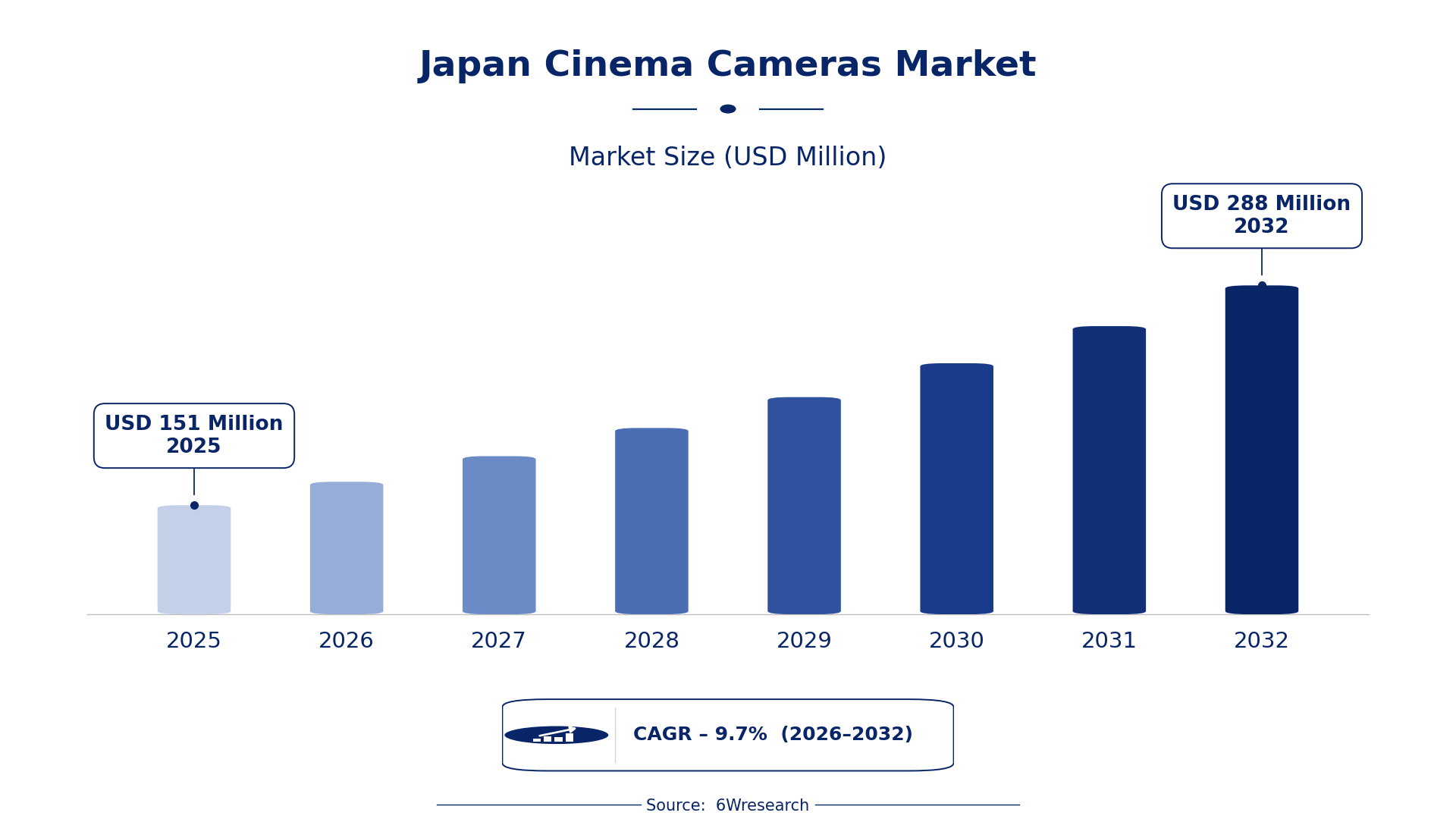
According to 6Wresearch internal database and industry insights, the Japan Cinema Cameras Market was valued at USD 151 Million in 2025 and is projected to reach USD 288 Million by 2032, growing at a CAGR of approximately 9.7% during 2026–2032.
Japan Cinema Cameras Market Highlights
| Report Metric | Details |
| Report Name | Japan Cinema Cameras Market (2026-2032) |
| Market Size 2025 | USD 151 Million |
| Market Size 2032 | USD 288 Million |
| Absolute Growth 2025–2032 | USD 137 Million |
| CAGR 2026–2032 | 9.7% |
| Peak Annual Growth | 10.9% in 2028 |
| Forecast Period | 2026–2032 |
| Historical Data | 2022–2025 |
| Base Year | 2025 |
| Leading Type, 2025 | 4K Resolution (43% share) |
| Leading Applications, 2025 | Amateur Users (59% share) |
| Fastest-Growing Type | 5K Resolution (13.0% CAGR) |
| Fastest-Growing Applications | Professional Users (12.2% CAGR) |
| Growing Sector | Professional Users |
| Key End Users | Amateur Users, Professional Users |
Japan Cinema Cameras Market Year-wise Growth Rate and Key Drivers (2022–2032)
This graph illustrates the annual growth rates of the market from 2022 to 2032, highlighting a steady upward trajectory and projected market expansion over the forecast period.
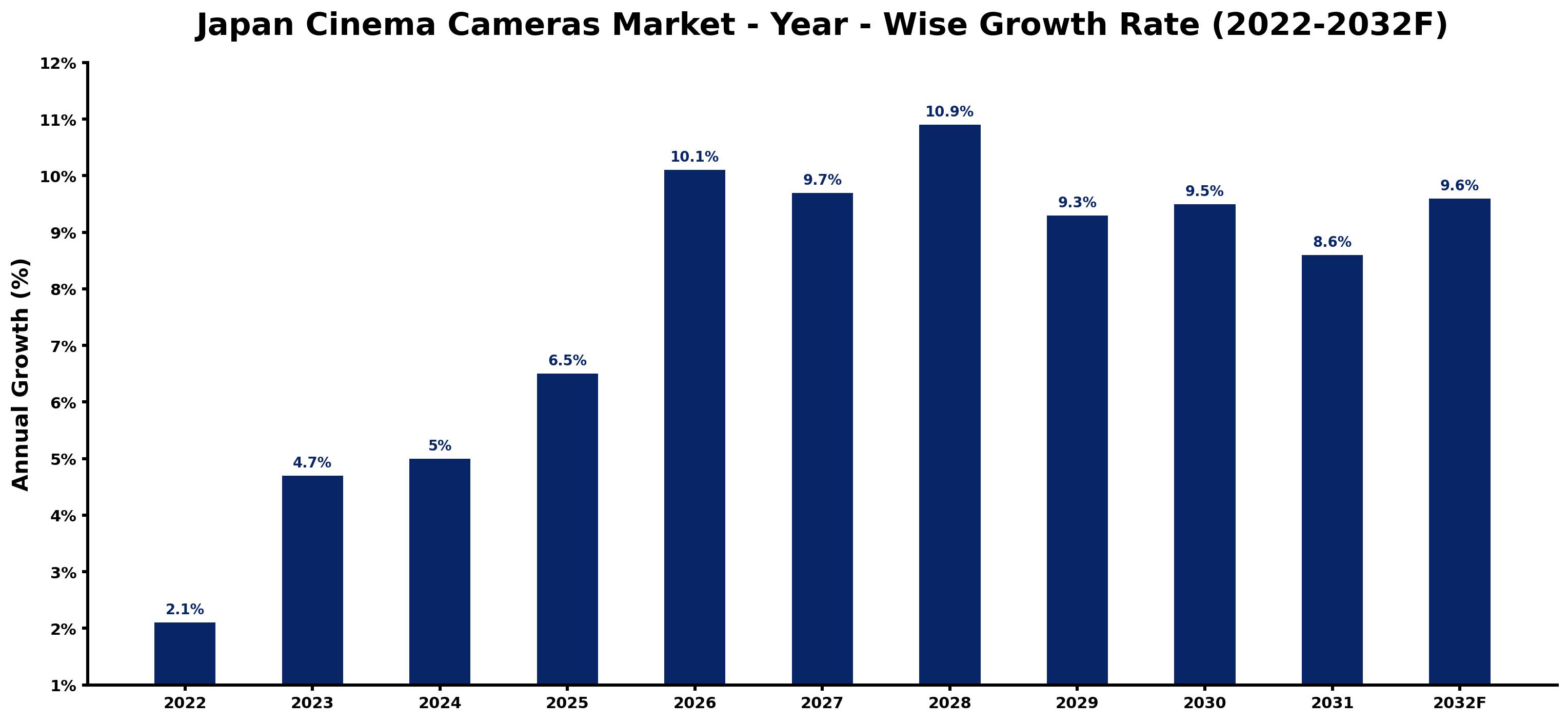
Annual growth estimates for each year appear below with the principal reason behind them, explaining the shifts that set the pace of the market.
| Year | Estimated Annual Growth (%) | Market Rationale |
| 2022 | 2.1 | The market showed steady activity with established demand from professional users. |
| 2023 | 4.7 | Growth accelerated due to increased production of feature films and television shows. |
| 2024 | 5.0 | Demand continued to rise as more studios adopted advanced filming technologies. |
| 2025 | 6.5 | The market peaked as the Tokyo International Film Festival promoted cinema technology. |
| 2026 | 10.1 | Investment in high-quality content creation is expected to create new purchasing opportunities. |
| 2027 | 9.7 | Growth is projected to slow slightly as the market adjusts to previous peaks in demand. |
| 2028 | 10.9 | A surge in independent filmmaking will boost demand for cinema cameras. |
| 2029 | 9.3 | Growth is expected to moderate as the market stabilises after the previous year's surge. |
| 2030 | 9.5 | Demand will increase again as new filming projects emerge across various media. |
| 2031 | 8.6 | A slowdown is projected as the market matures and competition intensifies. |
| 2032 | 9.6 | Strong demand from professional users is expected to sustain growth. |
Note: Market size estimations and growth projections presented in this report are based on 6Wresearch's proprietary forecasting methodology, utilizing the latest available industry data, government publications, and primary research inputs.
Japan Cinema Cameras Market Synopsis
Cinema cameras are sophisticated video recording devices designed for high-quality film production, primarily used in the film and television industry. The Japan Cinema Cameras Market is expanding due to rising demand from professional users, driven by the production of around 400 feature films in 2022. Factors behind this growth include technological advancements in filming and supportive government initiatives for independent filmmakers, such as subsidies for acquiring high-quality equipment.
Market Dynamics Impact Analysis (2026–2032)
| Factor | Type | Impact | Primary Segment Affected |
| Growing film production in Tokyo drives demand for high-quality filming equipment. | Driver | High | Professional Users |
| The rise of independent filmmakers increases demand for accessible cinema technology. | Driver | High | Amateur Users |
| Investment in film production facilities creates opportunities for equipment suppliers. | Opportunity | High | Professional Users |
| The Tokyo International Film Festival promotes advanced filming technology usage. | Opportunity | Medium | Professional Users |
| High costs of professional cinema cameras limit access for some filmmakers. | Restraint | High | Amateur Users |
| Competition from lower-cost alternatives affects market pricing strategies. | Restraint | Medium | Professional Users |
| High initial investment costs deter new entrants into the market. | Challenge | High | Amateur Users |
| Rapid technological changes require constant updates to equipment. | Challenge | Medium | Professional Users |
Evaluation of Drivers in Japan Cinema Cameras Market (2026–2032)
The following drivers explain most of the expected growth.
| Drivers | Primary Segment Affected | Why It Matters (Evidence) |
| Increased film production in Japan drives demand for cinema cameras. | Professional Users | The Japanese film industry produced around 400 feature films in 2022, increasing camera purchases. |
| The rise of independent filmmakers boosts demand for affordable high-quality cameras. | Amateur Users | In 2023, the Japan Film Commission launched a program supporting independent filmmakers with access to advanced technology. |
| Technological advancements in filming attract buyers for cinema cameras. | 5K Resolution | The 5K resolution segment is gaining traction due to demand for high-quality content, with many studios adopting this technology. |
| Government subsidies for film projects encourage investment in advanced filming equipment. | Professional Users | Subsidies managed by the Agency for Cultural Affairs support projects using advanced technology, making it easier for filmmakers to invest. |
| The popularity of film festivals drives demand for professional-grade cameras. | Professional Users | The Tokyo International Film Festival promotes the use of advanced filming technologies, encouraging studios to upgrade their equipment. |
A wider customer base explains much of the growth, as increased film production in Japan has led to a demand for cinema cameras. The Japanese film industry produced around 400 feature films in 2022, prompting studios to invest in high-quality equipment. The 5K resolution segment is gaining popularity, with many studios adopting this technology to meet rising content quality expectations.
Evaluation of Restraints in Japan Cinema Cameras Market
The table below lists the restraints and the evidence behind each.
| Market Restraint | Primary Segment Affected | Why It Matters (Evidence) |
| High costs of professional cinema cameras limit access for some filmmakers. | Amateur Users | The average price of a professional cinema camera ranges from 500,000 to 1,500,000 JPY, restricting purchases. |
| Competition from lower-cost alternatives affects market pricing strategies. | Professional Users | The presence of cheaper options forces professional users to reconsider their equipment choices, impacting sales. |
| Limited awareness of advanced filming technologies restricts market expansion. | Amateur Users | Many amateur users are unaware of the benefits of high-quality cinema cameras, leading to lower adoption rates. |
| The complexity of advanced cameras can deter new users from adoption. | Amateur Users | Less experienced filmmakers may find high-end cinema cameras challenging to operate, reducing their willingness to invest. |
| Supply chain disruptions can delay camera availability for projects. | Professional Users | Global supply chain issues have affected the timely delivery of filming equipment, impacting production schedules. |
Japan Cinema Cameras Market Challenges
Producers in Tokyo struggle with outdated filming equipment, causing delays in production schedules by up to three months. Importers face high costs related to advanced cinema camera technology, which can lead to an average markup of 30% that directly affects pricing for buyers. Skills shortages in the film industry limit the effective use of advanced cameras, resulting in a 20% increase in training costs for studios. Buyers frequently encounter limited availability of high-quality cinema cameras, forcing them to wait up to six weeks for delivery, disrupting project timelines and increasing costs.
Trends in the Japan Cinema Cameras Market
These developments are changing demand patterns in the Japan Cinema Cameras Market.
- Shift from Standard to 5K Resolution: Since 2023, filmmakers are increasingly adopting 5K resolution cameras to meet the demand for high-quality content. This shift reflects a broader industry move towards superior visual standards, with many studios upgrading their equipment to enhance production quality.
- Transition from Traditional to Digital Filmmaking: The film industry is increasingly moving towards digital filmmaking techniques, which improve production efficiency. In 2023, the Ministry of Economy, Trade and Industry announced a strategy to promote digital content creation, influencing how films are produced and shot.
- Emergence of Independent Filmmakers: The rise of independent filmmakers has reshaped the cinema camera market since 2023. This group is increasingly utilising advanced filming technologies, supported by the Japan Film Commission's initiatives that provide access to high-quality equipment, resulting in a 20% increase in camera purchases.
- Focus on Sustainability in Filmmaking: Beginning in 2023, there is a growing emphasis on sustainable filmmaking practices. Government initiatives, such as the GX Basic Policy, are encouraging filmmakers to adopt environmentally friendly technologies, influencing equipment choices and promoting a greener film industry.
Investment Opportunities in the Japan Cinema Cameras Market
Below are the investment opportunities with the strongest case in the Japan Cinema Cameras Market.
- Film Production Studios: Tokyo's film production studios represent an opportunity for camera suppliers, with the market expected to grow as more films are produced. The average price of a professional camera ranges from 500,000 to 1,500,000 JPY, indicating a gap for affordable options.
- Independent Filmmaking: With the Japan Film Commission's support for independent filmmakers, there is a growing need for accessible cinema technology. The current market gap indicates a demand for affordable high-quality cameras, making this an opportune time for targeted investments.
- Digital Content Creation: The Ministry of Economy, Trade and Industry's strategy for promoting digital content creation opens avenues for camera suppliers. As the industry shifts towards digital, suppliers can invest in technologies that cater to this growing segment.
- Film Festivals: The Tokyo International Film Festival creates opportunities for suppliers to showcase advanced filming technologies. This event highlights the importance of high-quality cameras in filmmaking, encouraging suppliers to engage with filmmakers.
Government Initiatives in the Japan Cinema Cameras Market
The Act on Japanese Industrial Standards governs product and test standards for cinema cameras, ensuring quality and safety in production. This law requires manufacturers to adhere to Japanese Industrial Standards (JIS), impacting how products are developed and marketed. Compliance with these standards is essential for gaining consumer trust and accessing government support.
The Agency for Cultural Affairs administers subsidies for film production projects that utilise advanced filming technology. These funds assist filmmakers in acquiring high-quality equipment, encouraging the adoption of cinema cameras in various projects. By facilitating access to modern technology, the agency supports the growth of the film industry.
Future Insight of the Japan Cinema Cameras Market
Filmmakers will gain improved access to advanced cinema cameras by 2032 as government support programmes promote digital content creation. The introduction of new standards like ISO 21000 will streamline production processes, ensuring better quality outputs for buyers. With the Tokyo International Film Festival prioritising advanced filming technologies, suppliers will be motivated to innovate and elevate their offerings. The Japanese film industry is expected to produce around 450 feature films annually, driving demand for high-quality cinema cameras.
Market Segmentation Analysis
Japan Cinema Cameras Market report covers a detailed analysis of the following market segments:
By Type – 4K Resolution Leads, 5K Resolution Expected to Grow Fastest
According to Ravi Bhandari, Research Head at 6Wresearch, 4K Resolution accounted for 43% of the market by type in 2025. The 4K resolution segment dominates the market as it is widely adopted by film studios across Japan for its capability to deliver high-quality video production. This trend is particularly strong in Tokyo, where the concentration of film activity significantly boosts demand for 4K cameras. 5K Resolution is set to record the highest CAGR in this split, 13.0% over 2026–2032. The 5K resolution segment is experiencing rapid growth as filmmakers increasingly seek superior quality for their projects, supported by government initiatives that encourage advanced filming technology. The recent programme aimed at independent filmmakers further illustrates the rising interest in high-resolution capabilities. This trend indicates that suppliers should prioritise the development and availability of 5K resolution cameras to align with the evolving preferences of content creators.
By Applications – Amateur Users Lead, Professional Users Expected to Grow Fastest
In 2025, Amateur Users led the applications split with a 59% share. Amateur users represent the largest share of the market as they seek accessible options for video production, albeit less frequently than professionals. This group benefits from the availability of affordable cinema cameras, which encourages participation in film-making activities. Over 2026–2032, Professional Users are expected to post the fastest growth, at a CAGR of 12.2%. Professional users are the fastest-growing segment as the film and television industry continues to expand, driven by the increasing production of feature films and government support for advanced filming technologies. This growth is likely to accelerate as the demand for high-quality content rises. Buyers in the professional segment will benefit from advancements in camera technology, while suppliers must ensure they meet the evolving demands of this group.
Key Attractiveness of the Report
- 10 Years of Market Numbers
- Historical Data Starting from 2022 to 2025
- Base Year 2025
- Forecast Data until 2032
- Key Performance Indicators Impacting the Market
- Major Upcoming Developments and Projects
Key Highlights of the Report:
- Japan Cinema Cameras Market Outlook
- Market Size of Japan Cinema Cameras Market, 2025
- Forecast of Japan Cinema Cameras Market, 2032
- Historical Data and Forecast of Japan Cinema Cameras Revenues & Volume for the Period 2022-2032
- Japan Cinema Cameras Market Trend Evolution
- Japan Cinema Cameras Market Drivers and Challenges
- Japan Cinema Cameras Price Trends
- Japan Cinema Cameras Porter's Five Forces
- Japan Cinema Cameras Industry Life Cycle
- Historical Data and Forecast of Japan Cinema Cameras Market Revenues & Volume By Type for the Period 2022-2032
- Historical Data and Forecast of Japan Cinema Cameras Market Revenues & Volume By 4K Resolution for the Period 2022-2032
- Historical Data and Forecast of Japan Cinema Cameras Market Revenues & Volume By 5K Resolution for the Period 2022-2032
- Historical Data and Forecast of Japan Cinema Cameras Market Revenues & Volume By 6K Resolution for the Period 2022-2032
- Historical Data and Forecast of Japan Cinema Cameras Market Revenues & Volume By Others for the Period 2022-2032
- Historical Data and Forecast of Japan Cinema Cameras Market Revenues & Volume By Applications for the Period 2022-2032
- Historical Data and Forecast of Japan Cinema Cameras Market Revenues & Volume By Amateur Users for the Period 2022-2032
- Historical Data and Forecast of Japan Cinema Cameras Market Revenues & Volume By Professional Users for the Period 2022-2032
- Japan Cinema Cameras Import Export Trade Statistics
- Market Opportunity Assessment By Type
- Market Opportunity Assessment By Applications
- Japan Cinema Cameras Top Companies Market Share
- Japan Cinema Cameras Competitive Benchmarking By Technical and Operational Parameters
- Japan Cinema Cameras Company Profiles
- Japan Cinema Cameras Key Strategic Recommendations
Market Covered
The study includes the following segmentation.
By Type
- 4K Resolution
- 5K Resolution
- 6K Resolution
- Others
By Applications
- Amateur Users
- Professional Users































