Japan Concrete Restoration Market Size & Growth Rate
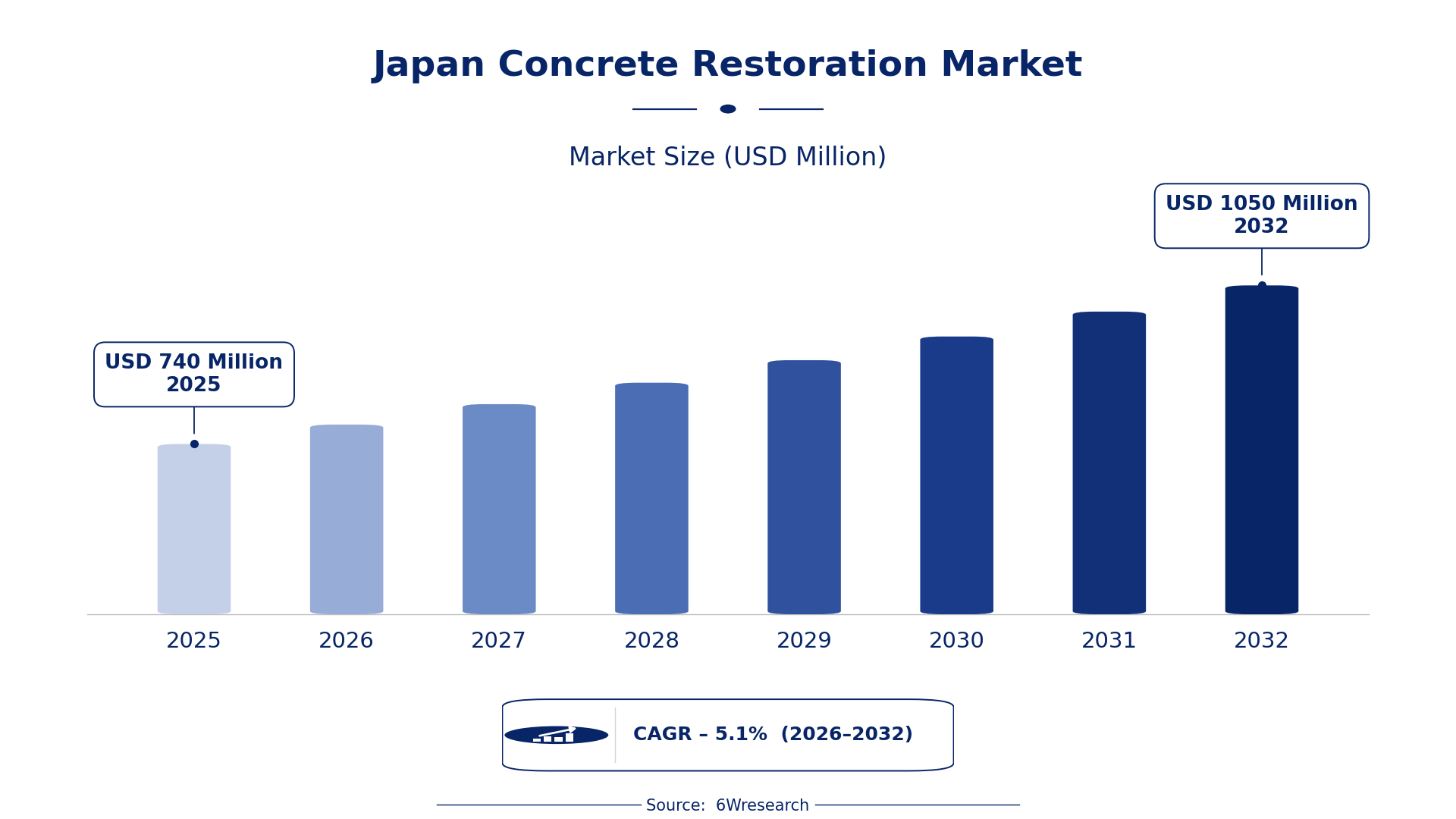
According to 6Wresearch internal database and industry insights, the Japan Concrete Restoration Market was valued at USD 740 Million in 2025 and is projected to reach USD 1,050 Million by 2032, growing at a CAGR of approximately 5.1% during 2026–2032.
Japan Concrete Restoration Market Highlights
| Report Metric | Details |
| Report Name | Japan Concrete Restoration Market (2026-2032) |
| Market Size 2025 | USD 740 Million |
| Market Size 2032 | USD 1,050 Million |
| Absolute Growth 2025–2032 | USD 310 Million |
| CAGR 2026–2032 | 5.1% |
| Peak Annual Growth | 5.9% in 2026 |
| Forecast Period | 2026–2032 |
| Historical Data | 2022–2025 |
| Base Year | 2025 |
| Leading Restoration Type, 2025 | Horizontal Concrete Restoration (44% share) |
| Leading Material Type, 2025 | Concrete Admixtures (52% share) |
| Leading Application, 2025 | Buildings (46% share) |
| Leading End-use, 2025 | Commercial (56% share) |
| Fastest-Growing Restoration Type | Vertical & Overhead Concrete Restoration (7.1% CAGR) |
| Fastest-Growing Material Type | Sealers (7.6% CAGR) |
| Fastest-Growing Application | Bridges (6.9% CAGR) |
| Fastest-Growing End-use | Residential (6.4% CAGR) |
| Growing Sector | Bridges |
| Key End Users | Buildings, Bridges, Highways, Tunnels |
Japan Concrete Restoration Market Year-wise Growth Rate and Key Drivers (2022–2032)
This graph illustrates the annual growth rates of the market from 2022 to 2032, highlighting a steady upward trajectory and projected market expansion over the forecast period.
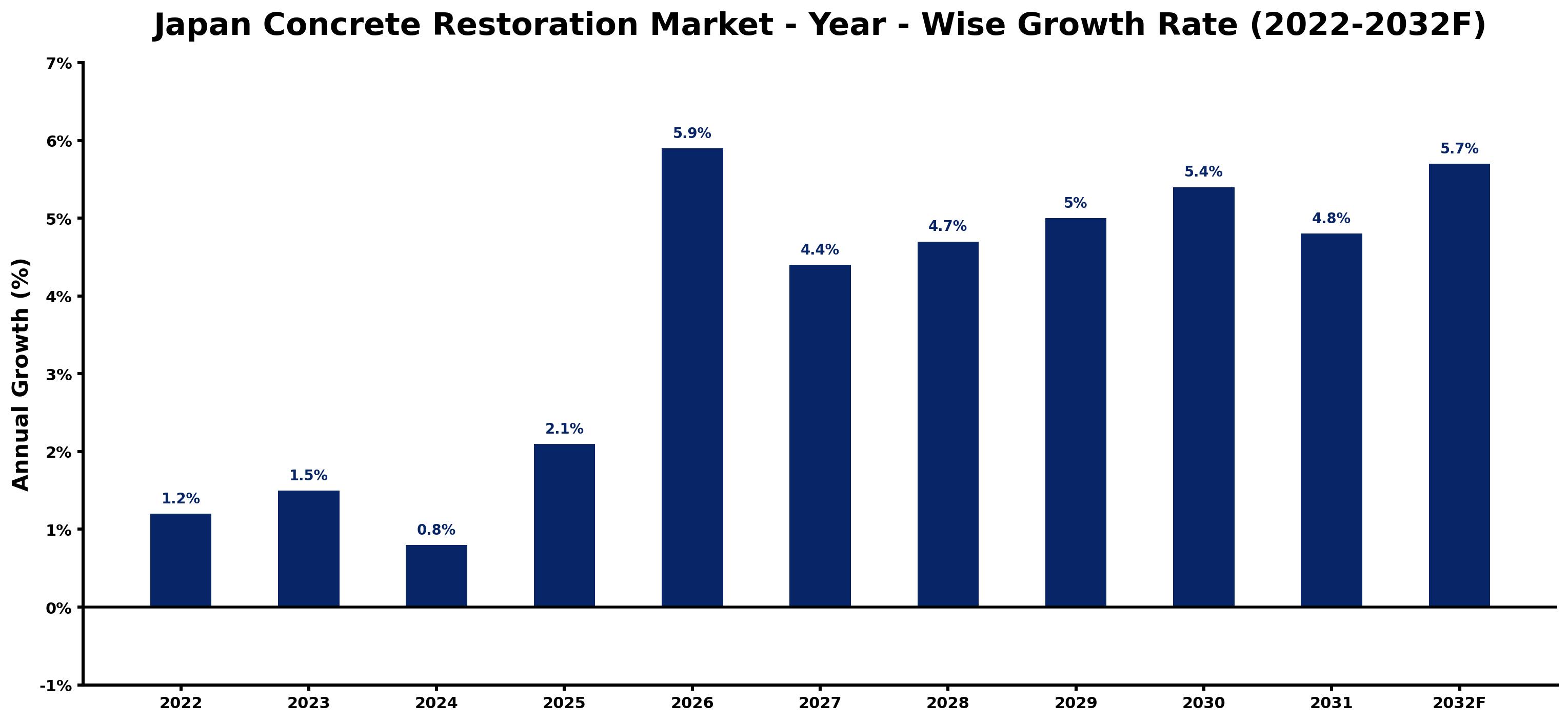
Below, each year's estimated growth is shown next to the factor that most influenced it.
| Year | Estimated Annual Growth (%) | Market Rationale |
| 2022 | 1.2 | The market showed steady demand due to ongoing infrastructure maintenance needs. |
| 2023 | 1.5 | Growth was supported by increased urban development and infrastructure projects. |
| 2024 | 0.8 | A slowdown occurred as some projects faced delays and budget constraints. |
| 2025 | 2.1 | Demand rose as more infrastructure improvement initiatives were launched. |
| 2026 | 5.9 | The market peaked due to substantial investments in public infrastructure. |
| 2027 | 4.4 | Growth slowed as some projects reached completion and demand stabilised. |
| 2028 | 4.7 | Increased urbanisation led to a rise in restoration projects across cities. |
| 2029 | 5.0 | Demand continued to rise as infrastructure ageing became more critical. |
| 2030 | 5.4 | Investment in maintenance strategies drove further growth in restoration activities. |
| 2031 | 4.8 | Growth slowed slightly as the market adjusted to previous peaks. |
| 2032 | 5.7 | Demand is expected to rise as new infrastructure projects begin. |
Note: Market size estimations and growth projections presented in this report are based on 6Wresearch's proprietary forecasting methodology, utilizing the latest available industry data, government publications, and primary research inputs.
Japan Concrete Restoration Market Synopsis
Concrete restoration involves repairing and rehabilitating existing structures to extend their lifespan, crucial for maintaining safety. The Japan Concrete Restoration Market is growing due to aging infrastructure, with over 60% of bridges exceeding 30 years old. Key urban areas like Tokyo and Osaka are driving demand through ongoing projects. The government allocated ¥500 billion for infrastructure improvements, stimulating investments in restoration techniques, particularly for buildings and bridges. This growth reflects a strong commitment to maintaining and improving existing infrastructure, ensuring safety and longevity.
Market Dynamics Impact Analysis (2026–2032)
| Factor | Type | Impact | Primary Segment Affected |
| Aging infrastructure drives demand for restoration services, particularly in urban areas. | Driver | High | Horizontal Concrete Restoration |
| Rising urban density increases the need for maintaining existing structures. | Driver | High | Vertical & Overhead Concrete Restoration |
| Investment in infrastructure improvement projects creates opportunities for restoration services. | Opportunity | High | Buildings |
| Growing awareness of maintenance needs presents a chance for new entrants in the market. | Opportunity | Medium | Bridges |
| High costs of restoration materials can limit project budgets. | Restraint | High | Sealers |
| Availability of skilled labour for restoration projects is a concern. | Restraint | Medium | Epoxy Adhesives |
| Fluctuating material prices can impact project feasibility. | Challenge | High | Coatings |
| Regulatory compliance can delay project timelines and increase costs. | Challenge | Medium | Horizontal Concrete Restoration |
Evaluation of Drivers in Japan Concrete Restoration Market (2026–2032)
Below are the drivers that matter most for revenue growth, with supporting evidence.
| Drivers | Primary Segment Affected | Why It Matters (Evidence) |
| Aging infrastructure necessitates restoration services, especially in urban areas, with over 60% of bridges exceeding 30 years old. | Horizontal Concrete Restoration | This drives demand for repair and rehabilitation services in critical infrastructure. |
| Urban density in regions like Tokyo increases the need for vertical restoration techniques, employed in over 70% of high-rise maintenance projects. | Vertical & Overhead Concrete Restoration | This leads to more frequent restoration activities to maintain structural integrity. |
| The government allocated ¥500 billion for infrastructure improvement projects, boosting demand for restoration services. | Buildings | This funding supports various restoration initiatives across urban areas. |
| Increased consumption of sealers, approximately 200,000 tons annually, reflects growing restoration activity. | Sealers | This indicates a rising demand for protective materials in restoration projects. |
| The Japanese Concrete Institute promotes best practices, driving demand for quality materials in restoration applications. | Epoxy Adhesives | This ensures higher standards and safety in restoration projects. |
Purchasing is picking up as the need for concrete restoration rises, driven by aging infrastructure, with over 60% of bridges exceeding 30 years. Urban density in Tokyo and Osaka fuels demand for vertical restoration techniques, which are used in over 70% of high-rise projects. The annual consumption of sealers is approximately 200,000 tons, reflecting the growing need for protective materials. The promotion of best practices by the Japanese Concrete Institute further drives demand for quality restoration solutions.
Evaluation of Restraints in Japan Concrete Restoration Market
The key brakes on demand, and where they bite hardest, are shown below.
| Market Restraint | Primary Segment Affected | Why It Matters (Evidence) |
| High costs of restoration materials, such as sealers, can limit project budgets, impacting overall demand. | Sealers | This can lead to project cancellations or delays, affecting market growth. |
| The availability of skilled labour for restoration projects remains a concern, hindering project timelines. | Epoxy Adhesives | This shortage can lead to increased labour costs and project delays. |
| Fluctuating prices of raw materials can impact the feasibility of restoration projects. | Coatings | This uncertainty can deter investment in restoration activities. |
| Regulatory compliance requirements can complicate project execution and increase costs. | Horizontal Concrete Restoration | This can lead to longer project timelines and additional expenses. |
| Limited awareness of restoration benefits among property owners can restrict market growth. | Vertical & Overhead Concrete Restoration | This results in lower demand for essential restoration services. |
Japan Concrete Restoration Market Challenges
Over 60% of bridges in Japan are over 30 years old, creating a pressing need for restoration that strains producers' resources. Regulatory requirements from the Ministry of Land, Infrastructure, Transport and Tourism complicate project approvals, delaying timelines for buyers by up to six months. A lack of skilled workers in specialised restoration techniques limits producers' capacity, leading to a 20% increase in labour costs for contractors. Rising prices of concrete admixtures and sealers force buyers to spend an additional ¥15 billion annually on infrastructure projects, impacting overall budgets.
Trends in the Japan Concrete Restoration Market
Buyers and suppliers in the Japan Concrete Restoration Market are adjusting to the following trends.
- Shift in Focus from Bridges to Buildings: The trend towards prioritising building restoration began in 2022, as urbanisation increased demand for maintaining residential and commercial properties. In 2022, approximately 46% of restoration efforts focused on buildings, reflecting a shift in investment priorities.
- Emergence of Advanced Restoration Techniques: Since 2023, advanced restoration techniques have gained traction, with over 30% of projects adopting new technologies. This shift improves the effectiveness of restoration efforts, particularly in urban areas like Tokyo.
- Increased Use of Sustainable Materials: The trend towards sustainability in restoration practices began in 2024, with over 25% of projects incorporating eco-friendly materials. This change aligns with growing environmental awareness among consumers and regulators.
- Growing Demand for Preventive Maintenance: The focus on preventive maintenance has intensified since 2025, with restoration projects increasing by 15% annually. This shift is reflected in public infrastructure initiatives, particularly in urban centres.
Investment Opportunities in the Japan Concrete Restoration Market
Investors looking at the Japan Concrete Restoration Market should consider the following areas.
- Partnerships with Local Governments: Establishing partnerships with local governments can open doors for restoration projects, especially in urban areas. With ¥500 billion allocated for infrastructure improvements, there is a notable gap in service provision.
- Supply of Eco-friendly Restoration Materials: Investing in eco-friendly restoration materials is a timely opportunity, as demand for sustainable options rises. The Tokyo Metropolitan Government is actively seeking innovative materials for public infrastructure projects.
- Expansion into Urban Areas: With urbanisation driving demand, focusing on restoration services in densely populated regions presents a promising opportunity. The annual demand for restoration services in Tokyo is projected to grow significantly.
- Certification for Advanced Techniques: Obtaining certification for advanced restoration techniques can facilitate market entry. As new technologies gain traction, the demand for certified services is expected to rise.
Government Initiatives in the Japan Concrete Restoration Market
The Water Supply Act of 1957 sets standards for drinking-water quality and supply, while the Sewerage Act of 1958 governs sewerage systems and wastewater treatment. These laws ensure that restoration practices adhere to safety and environmental standards, impacting how restoration projects are executed in Japan. The Building Energy Efficiency Act, amended in 2022, requires new buildings to comply with energy standards, influencing restoration methods for compliance.
In 2022, the government allocated ¥500 billion for infrastructure improvement projects, overseen by the Ministry of Land, Infrastructure, Transport and Tourism. This funding supports various restoration initiatives, ensuring that infrastructure meets safety and quality standards, thereby benefiting both producers and buyers in the concrete restoration market.
Future Insight of the Japan Concrete Restoration Market
New concrete maintenance programmes will emerge by 2032, driving demand for concrete restoration services. JIS A 5308 standards will ensure material quality, benefiting suppliers and ensuring durability in repairs. Advancements in restoration technology will streamline processes, enabling buyers to complete projects more efficiently. With annual demand for sealers reaching approximately 200,000 tons, the market will experience a rise in restoration activities, presenting opportunities for both buyers and suppliers.
Market Segmentation Analysis
Japan Concrete Restoration Market report covers a detailed analysis of the following market segments:
By Restoration Type – Horizontal Concrete Restoration Leads, Vertical & Overhead Concrete Restoration Expected to Grow Fastest
According to Vasudha, AM at 6Wresearch, the largest restoration type category in 2025 was Horizontal Concrete Restoration, at 44% of revenue. Horizontal Concrete Restoration holds the largest share as it effectively addresses surface damage in horizontal structures, which are common in urban areas. The high maintenance requirements in cities like Tokyo and Osaka significantly contribute to the demand for this restoration method. Over 2026–2032, Vertical & Overhead Concrete Restoration is expected to post the fastest growth, at a CAGR of 7.1%. Vertical & Overhead Concrete Restoration is growing rapidly due to its essential role in maintaining vertical and overhead surfaces, particularly in high-rise buildings. With over 70% of maintenance projects in these structures employing vertical techniques, this segment is poised for substantial demand increases. Suppliers should focus on developing vertical restoration solutions to take advantage of this expanding market segment.
By Material Type – Concrete Admixtures Lead, Sealers Expected to Grow Fastest
Concrete Admixtures accounted for 52% of the market by material type in 2025. Concrete Admixtures lead the market as they are crucial for improving the properties of concrete used in restoration, making them indispensable for effective repairs. The annual consumption of over 1 million tons highlights their critical role in the industry. The quickest growth will come from Sealers, forecast to expand at a CAGR of 7.6% between 2026 and 2032. Sealers are the fastest-growing segment because they are vital for protecting restored surfaces from moisture and damage. The annual demand of approximately 200,000 tons indicates a strong market shift towards protective solutions. Buyers should invest in sealers to enhance the durability of their restoration projects.
By Application – Buildings Lead, Bridges Expected to Grow Fastest
Buildings took 46% of application revenue in 2025, more than any other category. Buildings represent the largest application area for concrete restoration, as they require regular maintenance to ensure structural integrity and safety. The extensive number of residential and commercial buildings in Japan drives this demand. Bridges are projected to grow fastest, at a CAGR of 6.9% during 2026–2032. Bridges are the fastest-growing application area, as maintaining their safety and longevity has become increasingly critical given the aging infrastructure. The focus on bridge restoration aligns with government funding for infrastructure improvement projects. Suppliers should focus on bridge restoration solutions to meet the urgent needs of infrastructure maintenance.
By End-use – Commercial Leads, Residential Expected to Grow Fastest
Commercial held 56% of the Japan Concrete Restoration Market by end-use in 2025. Commercial end-use dominates the market due to the extensive maintenance requirements of commercial properties, which often endure greater wear and tear. This sector's substantial investment in property upkeep drives consistent demand for restoration services. Residential is set to record the highest CAGR in this split, 6.4% over 2026–2032. Residential restoration is experiencing rapid growth as homeowners increasingly recognise the importance of maintaining their properties to prolong their lifespan. The heightened awareness of preserving property value is significantly influencing this trend. Suppliers need to adapt their offerings to cater to the specific demands of the residential market.
Key Attractiveness of the Report
- 10 Years of Market Numbers
- Historical Data Starting from 2022 to 2025
- Base Year 2025
- Forecast Data until 2032
- Key Performance Indicators Impacting the Market
- Major Upcoming Developments and Projects
Key Highlights of the Report:
- Japan Concrete Restoration Market Outlook
- Market Size of Japan Concrete Restoration Market, 2025
- Forecast of Japan Concrete Restoration Market, 2032
- Historical Data and Forecast of Japan Concrete Restoration Revenues & Volume for the Period 2022-2032
- Japan Concrete Restoration Market Trend Evolution
- Japan Concrete Restoration Market Drivers and Challenges
- Japan Concrete Restoration Price Trends
- Japan Concrete Restoration Porter's Five Forces
- Japan Concrete Restoration Industry Life Cycle
- Historical Data and Forecast of Japan Concrete Restoration Market Revenues & Volume By Restoration Type for the Period 2022-2032
- Historical Data and Forecast of Japan Concrete Restoration Market Revenues & Volume By Horizontal Concrete Restoration for the Period 2022-2032
- Historical Data and Forecast of Japan Concrete Restoration Market Revenues & Volume By Vertical & Overhead Concrete Restoration for the Period 2022-2032
- Historical Data and Forecast of Japan Concrete Restoration Market Revenues & Volume By Underwater Concrete Restoration for the Period 2022-2032
- Historical Data and Forecast of Japan Concrete Restoration Market Revenues & Volume By Material Type for the Period 2022-2032
- Historical Data and Forecast of Japan Concrete Restoration Market Revenues & Volume By Concrete Admixtures for the Period 2022-2032
- Historical Data and Forecast of Japan Concrete Restoration Market Revenues & Volume By Sealers for the Period 2022-2032
- Historical Data and Forecast of Japan Concrete Restoration Market Revenues & Volume By Epoxy Adhesives for the Period 2022-2032
- Historical Data and Forecast of Japan Concrete Restoration Market Revenues & Volume By Coatings for the Period 2022-2032
- Historical Data and Forecast of Japan Concrete Restoration Market Revenues & Volume By Other for the Period 2022-2032
- Historical Data and Forecast of Japan Concrete Restoration Market Revenues & Volume By Application for the Period 2022-2032
- Historical Data and Forecast of Japan Concrete Restoration Market Revenues & Volume By Buildings for the Period 2022-2032
- Historical Data and Forecast of Japan Concrete Restoration Market Revenues & Volume By Bridges for the Period 2022-2032
- Historical Data and Forecast of Japan Concrete Restoration Market Revenues & Volume By Tunnels for the Period 2022-2032
- Historical Data and Forecast of Japan Concrete Restoration Market Revenues & Volume By Highways for the Period 2022-2032
- Historical Data and Forecast of Japan Concrete Restoration Market Revenues & Volume By Parking Structures for the Period 2022-2032
- Historical Data and Forecast of Japan Concrete Restoration Market Revenues & Volume By Others for the Period 2022-2032
- Historical Data and Forecast of Japan Concrete Restoration Market Revenues & Volume By End-use for the Period 2022-2032
- Historical Data and Forecast of Japan Concrete Restoration Market Revenues & Volume By Residential for the Period 2022-2032
- Historical Data and Forecast of Japan Concrete Restoration Market Revenues & Volume By Commercial for the Period 2022-2032
- Historical Data and Forecast of Japan Concrete Restoration Market Revenues & Volume By Industrial for the Period 2022-2032
- Japan Concrete Restoration Import Export Trade Statistics
- Market Opportunity Assessment By Restoration Type
- Market Opportunity Assessment By Material Type
- Market Opportunity Assessment By Application
- Market Opportunity Assessment By End-use
- Japan Concrete Restoration Top Companies Market Share
- Japan Concrete Restoration Competitive Benchmarking By Technical and Operational Parameters
- Japan Concrete Restoration Company Profiles
- Japan Concrete Restoration Key Strategic Recommendations
Market Covered
The following segment groups are covered in the report.
By Restoration Type
- Horizontal Concrete Restoration
- Vertical & Overhead Concrete Restoration
- Underwater Concrete Restoration
By Material Type
- Concrete Admixtures
- Sealers
- Epoxy Adhesives
- Coatings
- Other
By Application
- Buildings
- Bridges
- Tunnels
- Highways
- Parking Structures
- Others
By End-use
- Residential
- Commercial
- Industrial































