Japan Department Stores & Other General Merchandise Stores Market Size & Growth Rate
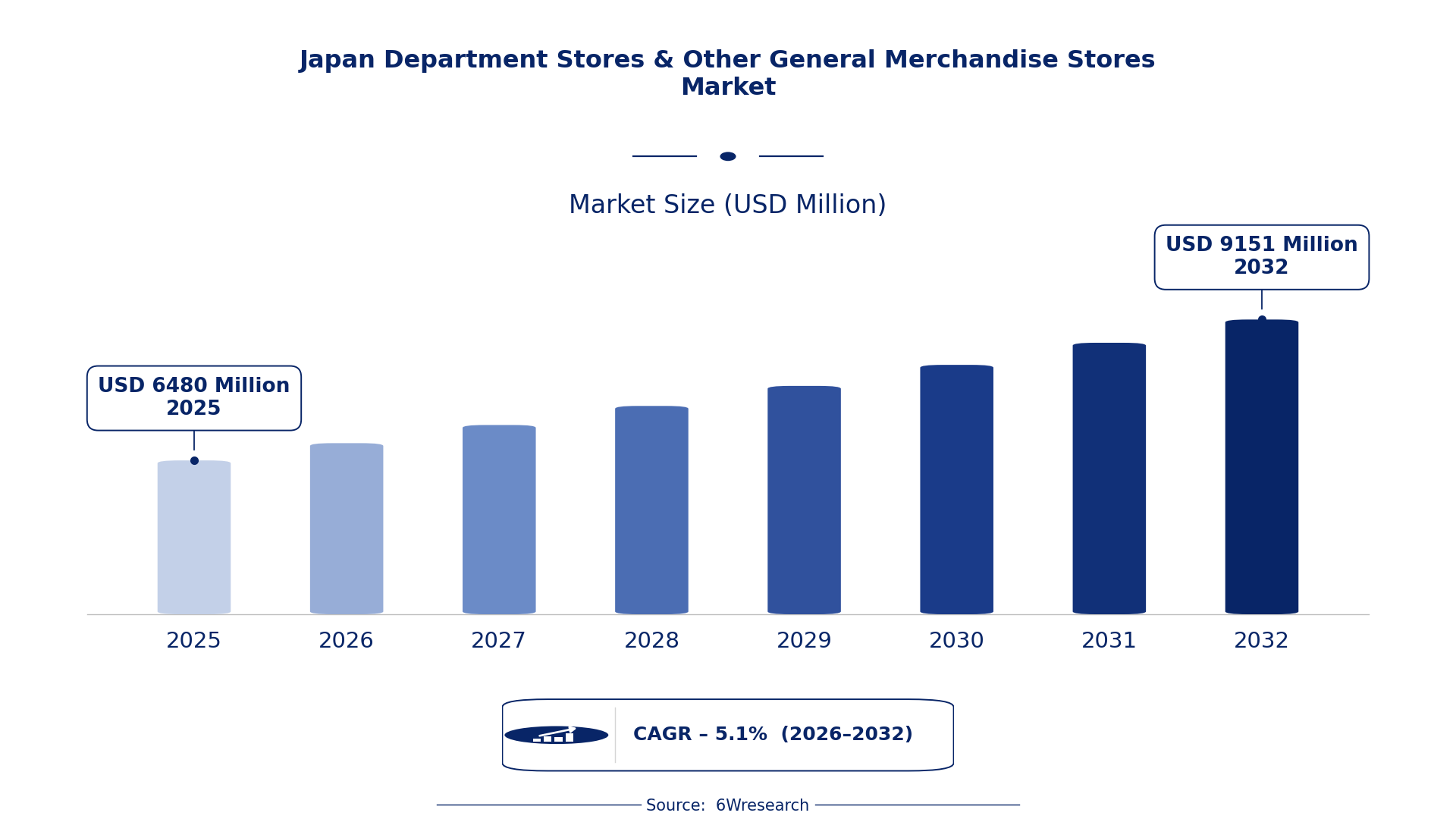
According to 6Wresearch internal database and industry insights, the Japan Department Stores & Other General Merchandise Stores Market was valued at USD 6,480 Million in 2025 and is projected to reach USD 9,151 Million by 2032, growing at a CAGR of approximately 5.1% during 2026–2032.
Japan Department Stores & Other General Merchandise Stores Market Highlights
| Report Metric | Details |
| Report Name | Japan Department Stores & Other General Merchandise Stores Market (2026-2032) |
| Market Size 2025 | USD 6,480 Million |
| Market Size 2032 | USD 9,151 Million |
| Absolute Growth 2025–2032 | USD 2,671 Million |
| CAGR 2026–2032 | 5.1% |
| Peak Annual Growth | 6.2% in 2032 |
| Forecast Period | 2026–2032 |
| Historical Data | 2022–2025 |
| Base Year | 2025 |
| Leading Type, 2025 | Department Stores (61% share) |
| Leading Ownership, 2025 | Retail Chain (64% share) |
| Leading License, 2025 | Branded (46% share) |
| Fastest-Growing Type | Other General Merchandise Stores (6.9% CAGR) |
| Fastest-Growing Ownership | Independent Retailer (6.3% CAGR) |
| Fastest-Growing License | Brand Licensed (6.6% CAGR) |
| Growing Sector | Retail |
| Key End Users | Domestic consumers, urban shoppers, online shoppers |
Japan Department Stores & Other General Merchandise Stores Market Year-wise Growth Rate and Key Drivers (2022–2032)
This graph illustrates the annual growth rates of the market from 2022 to 2032, highlighting a steady upward trajectory and projected market expansion over the forecast period.
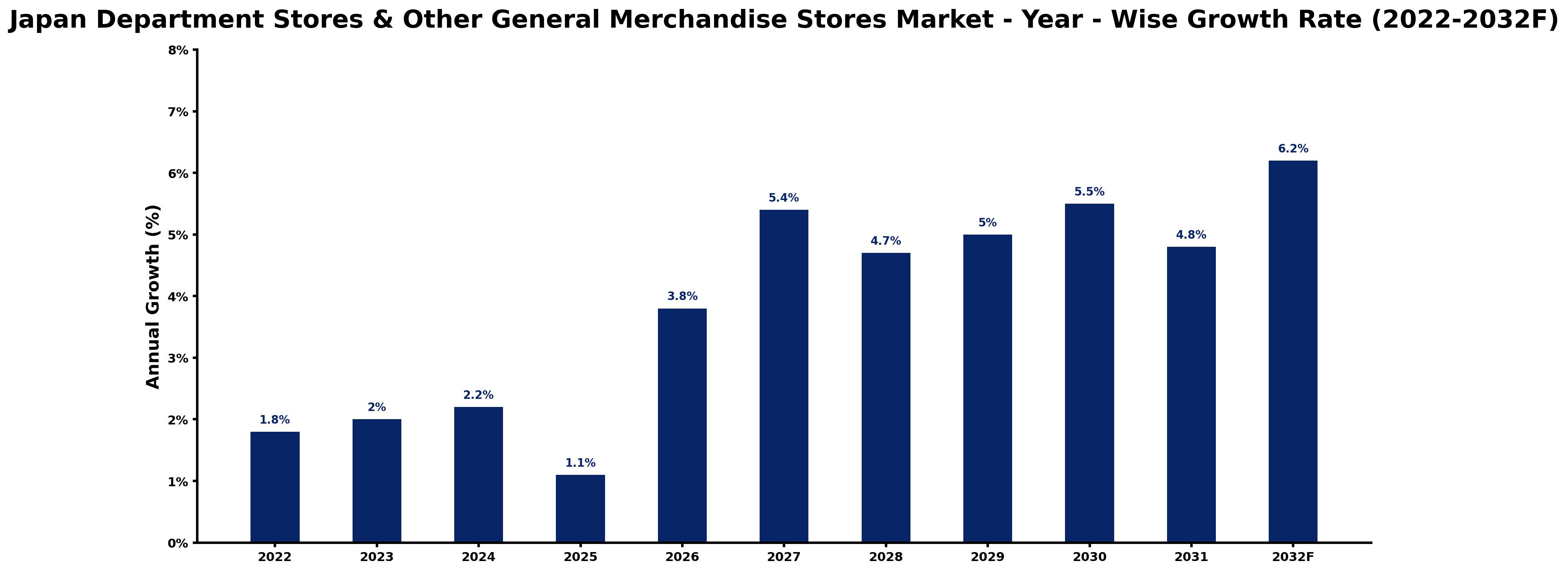
Each row of the following table gives one year's estimated growth and the event or demand shift that explains it.
| Year | Estimated Annual Growth (%) | Market Rationale |
| 2022 | 1.8 | The market experienced steady demand from domestic consumers and imports. |
| 2023 | 2.0 | Growth accelerated due to increased consumer spending and urbanisation. |
| 2024 | 2.2 | Demand continued to rise as consumers preferred the variety offered by department stores. |
| 2025 | 1.1 | Growth slowed as market saturation began to affect retail performance. |
| 2026 | 3.8 | Investment in retail innovation spurred a resurgence in consumer interest. |
| 2027 | 5.4 | Rising disposable incomes led to increased spending in department stores. |
| 2028 | 4.7 | Growth moderated as competition from online shopping intensified. |
| 2029 | 5.0 | Consumer preferences shifted towards convenience, boosting department store visits. |
| 2030 | 5.5 | Enhanced shopping experiences attracted more customers to physical stores. |
| 2031 | 4.8 | Growth slowed as the market adjusted to evolving consumer habits. |
| 2032 | 6.2 | A surge in sustainable retail practices drove higher consumer engagement. |
Note: Market size estimations and growth projections presented in this report are based on 6Wresearch's proprietary forecasting methodology, utilizing the latest available industry data, government publications, and primary research inputs.
Japan Department Stores & Other General Merchandise Stores Market Synopsis
Department stores in Japan are large retail establishments offering a wide range of goods, including clothing, electronics, and household items. The market is expanding due to increased consumer spending, particularly in urban areas like Tokyo, where department stores attract around 1 million visitors monthly. The retail sector employs over 1.5 million people, underscoring its economic importance. The introduction of sustainable retail practices is further engaging consumers, leading to rising demand for diverse product offerings.
Market Dynamics Impact Analysis (2026–2032)
| Factor | Type | Impact | Primary Segment Affected |
| Increasing consumer preference for variety and convenience | Driver | High | Department Stores |
| Investment in sustainable retail practices | Driver | High | Other General Merchandise Stores |
| Expansion of urban shopping districts | Opportunity | High | Department Stores |
| Growth in online shopping trends | Opportunity | High | Other General Merchandise Stores |
| Market saturation in urban areas | Restraint | High | Department Stores |
| Intense competition from online retailers | Restraint | High | Other General Merchandise Stores |
| Rising operational costs for retailers | Challenge | Medium | Department Stores |
| Shifts in consumer spending habits | Challenge | Medium | Other General Merchandise Stores |
Evaluation of Drivers in Japan Department Stores & Other General Merchandise Stores Market (2026–2032)
Below are the drivers that matter most for revenue growth, with supporting evidence.
| Drivers | Primary Segment Affected | Why It Matters (Evidence) |
| Increased consumer spending | Department Stores | In 2022, retail sales reached approximately 3 trillion yen, driving demand for diverse product offerings. |
| Investment in retail innovation | Other General Merchandise Stores | Support for innovation programs is increasing demand for improved retail operations. |
| Urbanisation leading to higher foot traffic | Department Stores | Tokyo's shopping districts attract millions of visitors monthly, boosting sales. |
| Consumer preference for sustainable practices | Other General Merchandise Stores | In 2023, a new initiative promoted sustainable retail, appealing to environmentally conscious shoppers. |
| Employment growth in the retail sector | Department Stores | The retail sector employs over 1.5 million people, contributing to increased consumer spending. |
Much of the new demand traces back to increased consumer spending, with retail sales in department stores reaching approximately 3 trillion yen in 2022. Urbanisation, particularly in Tokyo's shopping districts, drives foot traffic, attracting around 1 million visitors monthly. Investment in sustainable retail practices appeals to environmentally conscious consumers. The employment of over 1.5 million people in the retail sector contributes to rising disposable incomes, further boosting demand for diverse product offerings.
Evaluation of Restraints in Japan Department Stores & Other General Merchandise Stores Market
Below are the constraints most often cited by buyers and suppliers, with the segment each affects.
| Market Restraint | Primary Segment Affected | Why It Matters (Evidence) |
| Market saturation limiting growth potential | Department Stores | With over 400 department stores in Japan, saturation in urban areas restricts expansion opportunities. |
| Competition from online retailers affecting foot traffic | Other General Merchandise Stores | The rise of e-commerce has diverted consumers from physical stores, impacting sales. |
| Rising operational costs impacting profitability | Department Stores | Increased costs for utilities and wages strain profit margins for retailers. |
| Changing consumer preferences towards online shopping | Other General Merchandise Stores | More consumers prefer the convenience of online shopping, reducing in-store visits. |
| Regulatory compliance costs for retailers | Department Stores | Compliance with the Act against Unjustifiable Premiums increases operational costs for department stores. |
Japan Department Stores & Other General Merchandise Stores Market Challenges
High supply chain costs burden Japan's retail sector, arising from expensive urban real estate that elevates operational expenses for department stores and compresses profit margins. A shortage of skilled workers is emerging as the workforce ages, resulting in inadequate customer service training that detracts from the experience of 1 million monthly visitors. Intense competition from online retailers forces traditional stores to reduce prices, leading to a 15% revenue drop for suppliers reliant on physical retail. Rising logistics costs, driven by increasing fuel prices, disrupt product availability, causing delays for consumers eager for timely purchases.
Trends in the Japan Department Stores & Other General Merchandise Stores Market
Buyers and suppliers in the Japan Department Stores & Other General Merchandise Stores Market are adjusting to the following trends.
- Increased Focus on Sustainable Retail Practices: In 2023, a government initiative promoted sustainable retail practices, encouraging department stores to adopt eco-friendly measures. This shift is expected to attract environmentally conscious consumers, boosting foot traffic.
- Growth in Urban Shopping Districts: Tokyo's shopping districts, such as Shibuya and Ginza, are experiencing increased foot traffic as urbanisation continues. The average monthly visitor count of 1 million highlights the appeal of these areas.
- Rise of Online Shopping: The trend towards online shopping is reshaping consumer behaviour, with more shoppers opting for convenience. This shift is particularly evident in urban areas, impacting foot traffic in physical stores.
- Increased Employment in Retail Sector: The retail sector's employment of over 1.5 million people is driving consumer spending. This growth in jobs supports the economy and boosts demand for diverse product offerings.
Investment Opportunities in the Japan Department Stores & Other General Merchandise Stores Market
The following areas offer the clearest openings for investors and suppliers in the Japan Department Stores & Other General Merchandise Stores Market.
- Expansion in Urban Areas: Tokyo's urbanisation presents opportunities for new department stores, with the potential to capture a growing customer base. The average floor space of 10,000 square meters allows for diverse product offerings.
- Adoption of Sustainable Practices: The recent government initiative encourages retailers to adopt sustainable practices, appealing to eco-conscious consumers. Retail chains can capitalise on this trend to improve their market presence.
- Diversification of Product Offerings: With over 60% of consumers preferring department stores for variety, there is a significant opportunity to expand product ranges. Retail chains can cater to diverse consumer preferences in urban areas.
- Improving In-Store Experiences: Investing in improved in-store experiences can attract more customers. Retail chains in major shopping districts can implement innovative layouts and services to boost foot traffic.
Government Initiatives in the Japan Department Stores & Other General Merchandise Stores Market
The Industrial Standardization Act governs product and test standards, ensuring quality in retail operations. This regulation affects department stores by requiring compliance with JIS standards, which builds consumer trust in product quality. The Act against Unjustifiable Premiums prohibits misleading advertising, protecting consumers and ensuring fair competition among retailers.
The Consumer Affairs Agency oversees the implementation of the Act against Unjustifiable Premiums, ensuring compliance among retailers. This agency's efforts help maintain market integrity, benefiting consumers by ensuring accurate product information and preventing deceptive practices.
Future Insight of the Japan Department Stores & Other General Merchandise Stores Market
By 2032, buyers will witness a transformation in the retail landscape, with suppliers needing to align their offerings with evolving consumer preferences. Retail innovation programmes will streamline operations, improving supply chain efficiency. The average retail sales in department stores are expected to reach 4 trillion yen, reflecting a robust recovery. Sustainability initiatives will reshape product lines, catering to the increasing demand for environmentally responsible options.
Market Segmentation Analysis
Japan Department Stores & Other General Merchandise Stores Market report covers a detailed analysis of the following market segments:
By Type – Department Stores Lead, Other General Merchandise Stores Expected to Grow Fastest
According to Ravi Bhandari, Research Head at 6Wresearch, Department Stores took 61% of type revenue in 2025, more than any other category. Department stores hold the largest share in Japan due to their extensive product offerings, catering to diverse consumer needs. For instance, Tokyo's major shopping districts like Shibuya and Ginza attract millions of visitors, solidifying their dominance in the retail sector. Other General Merchandise Stores are set to record the highest CAGR in this split, 6.9% over 2026–2032. The growth of other general merchandise stores is propelled by their ability to cater to niche markets and local preferences, with many consumers seeking unique products. This trend is reflected in the increasing number of smaller retailers that complement the offerings of larger department stores. Suppliers should consider partnerships with both department stores and general merchandise stores to maximise market reach.
By Ownership – Retail Chain Leads, Independent Retailer Expected to Grow Fastest
In 2025, Retail Chain led the ownership split with a 64% share. Retail chains dominate Japan's market because they operate over 400 stores, mainly in urban areas, allowing them to reach a wide audience. Their presence in major shopping districts, such as those in Tokyo, ensures a steady flow of customers seeking convenience and variety. The quickest growth will come from Independent Retailer, forecast to expand at a CAGR of 6.3% between 2026 and 2032. Independent retailers are experiencing rapid growth as they effectively meet the unique preferences of local communities, which larger chains often overlook. This shift reflects a consumer trend towards personalised shopping experiences that foster stronger customer relationships. Suppliers should explore collaborations with independent retailers to access niche markets and enhance their distribution strategies.
By License – Branded Leads, Brand Licensed Expected to Grow Fastest
The largest license category in 2025 was Branded, at 46% of revenue. Branded products dominate the market as they are synonymous with quality and reliability, which attracts a loyal customer base. Their strong presence in department stores ensures consistent sales and reinforces consumer trust in these retail environments. Brand Licensed is projected to grow fastest, at a CAGR of 6.6% during 2026–2032. Brand licensed products are on the rise as they offer consumers a broader selection at competitive prices, appealing to those who value both brand recognition and affordability. This trend highlights a shift towards value-oriented shopping among consumers. Suppliers should prioritise the development of brand licensed products to align with consumer preferences for value and variety.
Key Attractiveness of the Report
- 10 Years of Market Numbers
- Historical Data Starting from 2022 to 2025
- Base Year 2025
- Forecast Data until 2032
- Key Performance Indicators Impacting the Market
- Major Upcoming Developments and Projects
Key Highlights of the Report:
- Japan Department Stores & Other General Merchandise Stores Market Outlook
- Market Size of Japan Department Stores & Other General Merchandise Stores Market, 2025
- Forecast of Japan Department Stores & Other General Merchandise Stores Market, 2032
- Historical Data and Forecast of Japan Department Stores & Other General Merchandise Stores Revenues & Volume for the Period 2022-2032
- Japan Department Stores & Other General Merchandise Stores Market Trend Evolution
- Japan Department Stores & Other General Merchandise Stores Market Drivers and Challenges
- Japan Department Stores & Other General Merchandise Stores Price Trends
- Japan Department Stores & Other General Merchandise Stores Porter's Five Forces
- Japan Department Stores & Other General Merchandise Stores Industry Life Cycle
- Historical Data and Forecast of Japan Department Stores & Other General Merchandise Stores Market Revenues & Volume By Type for the Period 2022-2032
- Historical Data and Forecast of Japan Department Stores & Other General Merchandise Stores Market Revenues & Volume By Department Stores for the Period 2022-2032
- Historical Data and Forecast of Japan Department Stores & Other General Merchandise Stores Market Revenues & Volume By Other General Merchandise Stores for the Period 2022-2032
- Historical Data and Forecast of Japan Department Stores & Other General Merchandise Stores Market Revenues & Volume By Ownership for the Period 2022-2032
- Historical Data and Forecast of Japan Department Stores & Other General Merchandise Stores Market Revenues & Volume By Retail Chain for the Period 2022-2032
- Historical Data and Forecast of Japan Department Stores & Other General Merchandise Stores Market Revenues & Volume By Independent Retailer for the Period 2022-2032
- Historical Data and Forecast of Japan Department Stores & Other General Merchandise Stores Market Revenues & Volume By License for the Period 2022-2032
- Historical Data and Forecast of Japan Department Stores & Other General Merchandise Stores Market Revenues & Volume By Branded for the Period 2022-2032
- Historical Data and Forecast of Japan Department Stores & Other General Merchandise Stores Market Revenues & Volume By Brand Licensed for the Period 2022-2032
- Historical Data and Forecast of Japan Department Stores & Other General Merchandise Stores Market Revenues & Volume By Unbranded for the Period 2022-2032
- Japan Department Stores & Other General Merchandise Stores Import Export Trade Statistics
- Market Opportunity Assessment By Type
- Market Opportunity Assessment By Ownership
- Market Opportunity Assessment By License
- Japan Department Stores & Other General Merchandise Stores Top Companies Market Share
- Japan Department Stores & Other General Merchandise Stores Competitive Benchmarking By Technical and Operational Parameters
- Japan Department Stores & Other General Merchandise Stores Company Profiles
- Japan Department Stores & Other General Merchandise Stores Key Strategic Recommendations
Market Covered
Coverage by segment is as follows.
By Type
- Department Stores
- Other General Merchandise Stores
By Ownership
- Retail Chain
- Independent Retailer
By License
- Branded
- Brand Licensed
- Unbranded































