Japan E-commerce Market Growth Rate
According to 6Wresearch internal database and industry insights, the Japan E-commerce Market is growing at a compound annual growth rate (CAGR) of 11.5% during the forecast period (2026-2032).
Japan E-commerce Market Year-wise Growth Rate and Key Drivers
This graph highlights how the Japan E-commerce Market has steadily grown over the past five years, supported by major growth factors.
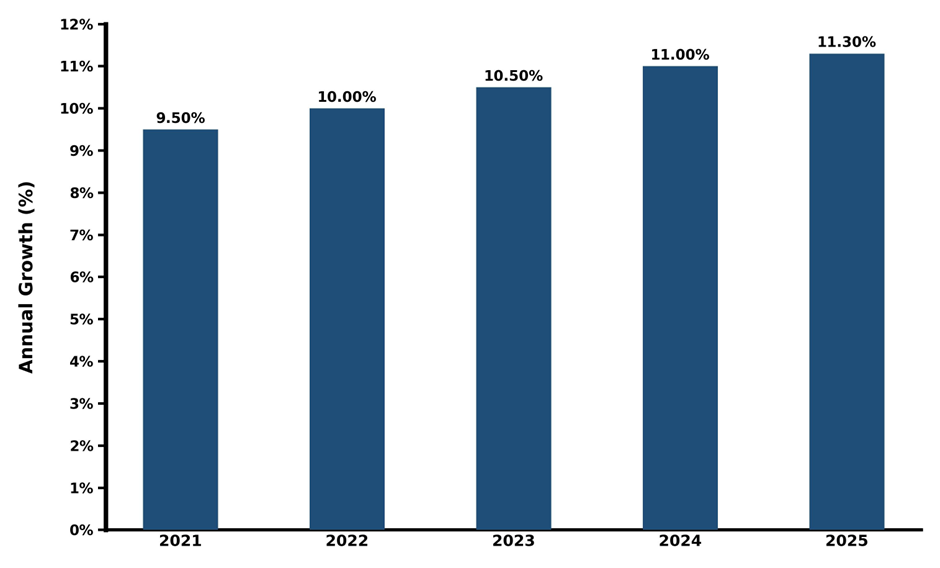
The table below presents the year‑wise growth rates along with the key drivers influencing the market
| Years | Est. Annual Growth in % | Growth Drivers |
| 2021 | 9.5% | Growing demand for online shopping platforms and e-payment solutions, especially in consumer electronics and fashion. |
| 2022 | 10% | Increasing adoption of mobile commerce and digital marketing strategies particularly in fashion & beauty segment. |
| 2023 | 10.5% | Government programs that promotes digital transformation and ecommerce framework. |
| 2024 | 11% | Disposable income to grow and ecommerce to grow in rural areas, especially in the food & beverage sector. |
| 2025 | 11.3% | Surge in demand for home delivery services and subscription-based ecommerce models in various product categories. |
Topics Covered in the Japan E-commerce Market Report
The Japan E-commerce Market report thoroughly covers the market by application types, product categories, and end-use industries. The market report provides an unbiased and detailed analysis of ongoing market trends, opportunities/high growth areas, and market drivers, which would help stakeholders devise and align their market strategies according to the current and future market dynamics.
Japan E-commerce Market Highlights
| Report Name |
Japan E-commerce Market |
| Forecast period | 2026-2032 |
| CAGR | 11.5% |
| Market Size |
Fashion & Apparel |
Japan E-commerce Market Synopsis
The Japan E-commerce Market is anticipated to experience a significant growth, that is fueled by increased demand for online shopping platforms and digital payment solutions. The market is expanding quickly owing to the increasing use of mobile commerce, government initiatives promoting digital transformation, and rising disposable income among consumers. Along with that, the ecommerce sectors of fashion, consumer electronics, and food & beverage are experiencing a high growth, with more consumers adopting online shopping for convenience and efficiency. Moreover, the government's support for ecommerce framework and logistics is further accelerating market’s expansion.
Evaluation of Growth Drivers in the Japan E-commerce Market (2026-2032)
Below mentioned are some growth drivers and their impact on market dynamics:
| Drivers | Primary Segments Affected | Why It Matters |
| Government Support & Digital Policies | All Applications | Government initiatives supporting digital transformation drive the growth of ecommerce platforms across various sectors. |
| Mobile Commerce & E-payment Solutions | Fashion & Apparel, Consumer Electronics | Increased use of mobile commerce and digital payments makes online shopping more accessible and convenient for consumers. |
| Growth in Consumer Demand | Beauty & Personal Care, Food & Beverage | Rise of disposable incomes and changing consumer habits drive to higher demand for online products, especially in beauty & food sectors. |
| Logistics Infrastructure Expansion | All Applications | Improved ecommerce logistics infrastructure, including home delivery services, enables faster and more efficient delivery systems. |
| Subscription-Based Services | Furniture & Home, Consumer Electronics | The growth of subscription-based ecommerce models is fostering greater consumer engagement in various product categories. |
The Japan E-commerce Market is projected to grow significantly, with a CAGR of 11.5% during the forecast period of 2026-2032. The market is led by the increasing demand for online shopping platforms, digital payment systems, and the government’s support for digital transformation. Along with that, the sectors such as fashion, consumer electronics, and food & beverage are experiencing robust growth, particularly in urban and rural areas. As more as consumers embrace mobile commerce and online subscriptions, these factors are predicted to drive market’s expansion.
Evaluation of Restraints in the Japan E-commerce Market
Below mentioned are some major restraints and their influence on market dynamics:
| Restraints | Primary Segments Affected | What This Means |
| Logistics and Delivery Challenges | All Applications | Delivery delays, high logistics costs, and inefficient infrastructure can limit the growth of ecommerce in certain regions. |
| Data Privacy & Security Concerns | All Applications | Data privacy concerns may deter consumers from shopping online, especially if security measures are not clearly communicated. |
| Intense Competition from Offline Retailers | Fashion & Apparel, Consumer Electronics | Competition from traditional brick-and-mortar stores that offer similar products at competitive prices may slow down online sales. |
| Payment Fraud & Cybersecurity Issues | All Applications | Payment fraud and cyber security risks can undermine consumer’s confidence and slow down the acceptance of e-commerce platforms. |
| Regulatory Compliance | All Applications | Development of government regulations, such as tax laws and ecommerce policies, can increase the operational complexity for online businesses. |
Japan E-commerce Market Challenges
The Japan E-commerce Market faces several challenges such as logistics and delivery inefficiencies, competition from offline retailers, and concerns about data privacy and cybersecurity. Moreover, the regulatory adherence issues and the potential for payment fraud may pose barriers to further expansion. However, this growing adoption of mobile commerce and digital payment systems, along with the government programs are to improve ecommerce framework that is expected to help mitigate these challenges.
Japan E-commerce Market Trends
Some major trends contributing to the Japan E-commerce Market Growth are:
- Rise of Mobile Commerce: With smartphones becoming the main device for shopping, mobile commerce is experiencing a rapid growth, while making online shopping more accessible.
- Subscription-Based Ecommerce Models: Subscription services in sectors such as fashion and home products are attracting to consumers who look for convenience, curated selections, and cost savings.
- E-commerce in Rural Areas: With the increase of internet adoption and mobile usage in rural areas, ecommerce platforms are reaching to new customers outside the main cities.
Investment Opportunities in the Japan E-commerce Market
Here are some investment opportunities in the Japan Ecommerce Industry:
- Mobile Ecommerce Solutions: By investing in mobile commerce platforms that offer seamless, user-friendly experiences can capitalize on the increase of smartphone adoption.
- E-commerce Logistics: By investing in last-mile delivery services and logistics infrastructure to address delivery challenges and improve customer satisfaction presents several significant opportunities.
- Subscription Services: By developing subscription-based ecommerce models in several categories such as beauty, food, and fashion can lead to customer’s loyalty and recurring revenue.
Top 5 Leading Players in the Japan E-commerce Market
Here are some top companies contributing to Japan E-commerce Market Share:
1. Rakuten Inc
| Company Name | Rakuten, Inc. |
|---|---|
| Established Year | 1997 |
| Headquarters | Tokyo, Japan |
| Official Website | Click Here |
Rakuten is Japan's largest ecommerce company, offering a wide range of products from electronics to fashion. Rakuten also operates a global marketplace and digital services platform.
2. Amazon Japan
| Company Name | Amazon Japan |
|---|---|
| Established Year | 2000 |
| Headquarters | Tokyo, Japan |
| Official Website | Click Here |
Amazon Japan is a leading player in the Japanese ecommerce market, offering a broad selection of products, including electronics, books, and groceries. Known for fast delivery and customer service.
3. Yahoo Shopping Japan
| Company Name | Yahoo! Shopping Japan |
|---|---|
| Established Year | 1996 |
| Headquarters | Tokyo, Japan |
| Official Website | Click Here |
Yahoo! Shopping Japan is one of the major ecommerce platforms in Japan, offering a wide range of products, including fashion, electronics, and home goods.
4. Zozotown
| Company Name | Zozotown |
|---|---|
| Established Year | 2004 |
| Headquarters | Chiba, Japan |
| Official Website | Click Here |
Zozotown is Japan's leading online fashion retailer, offering a wide range of clothing and accessories from both local and international brands.
5. Mercari Inc
| Company Name | Mercari, Inc. |
|---|---|
| Established Year | 2013 |
| Headquarters | Tokyo, Japan |
| Official Website | Click Here |
Mercari is a popular Japanese ecommerce platform focused on peer-to-peer transactions for buying and selling secondhand goods. It’s known for its user-friendly mobile app and marketplace features.
Government Regulations Introduced in the Japan E-commerce Market
According to the Japanese government data, the Japan E-commerce Market is influenced by several government regulations, which includes the E-commerce Business Law, that states guidelines for online retailers regarding consumer’s protection, data privacy, and fair competition. Besides, the Consumer Protection Act and Privacy Protection Laws make sures that the ecommerce businesses protect customer data and provide safe online shopping environments. The Japanese government also supports digital transformation initiatives under the Digital Government Promotion Act, stimulates a more beneficial environment for ecommerce growth.
Future Insights of the Japan E-commerce Market
The upcoming years for Japan E-commerce Market is predicted to grow at a healthy pace, led by the rise of mobile commerce, subscription-based models, and increase in demand for online products across various sectors. As the government continues to support digital transformation, and with the expansion of ecommerce infrastructure, the market will continue to thrive, with fashion, electronics, and food & beverage sectors leading the way. Moreover, the consumer preferences for convenience, quick delivery, and personalized experiences will continue to lead innovation and growth.
Market Segmentation Analysis
The report offers a comprehensive study of the subsequent market segments and their leading categories.
Fashion & Apparel to Dominate the Market: By Application
According to Kanak Phartiyal, Senior Research Analyst at 6Wresearch, fashion & apparel dominates the market owing to the growing preferred type for online shopping for clothing, shoes, and accessories, especially with the rise of e-commerce platforms offering exclusive deals and trends.
Consumer Electronics to Dominate the Market: By End-use Industry
Consumer Electronics leads the market with a growing demand for electronic gadgets and accessories, led by increased internet penetration and the convenience of online shopping.
Key attractiveness of the report
- 10 Years Market Numbers.
- Historical Data Starting from 2022 to 2025.
- Base Year: 2025
- Forecast Data until 2032.
- Key Performance Indicators Impacting the Market.
- Major Upcoming Developments and Projects.
Key Highlights of the Report:
- Japan E-commerce Market Outlook
- Market Size of Japan E-commerce Market, 2025
- Forecast of Japan E-commerce Market, 2032
- Historical Data and Forecast of Japan Ecommerce Revenues & Volume for the Period 2022- 2032
- Japan E-commerce Market Trend Evolution
- Japan E-commerce Market Drivers and Challenges
- Japan Ecommerce Price Trends
- Japan Ecommerce Porter's Five Forces
- Japan Ecommerce Industry Life Cycle
- Historical Data and Forecast of Japan E-commerce Market Revenues & Volume By Application for the Period 2022- 2032
- Historical Data and Forecast of Japan E-commerce Market Revenues & Volume By Beauty & Personal Care for the Period 2022- 2032
- Historical Data and Forecast of Japan E-commerce Market Revenues & Volume By Consumer Electronics for the Period 2022- 2032
- Historical Data and Forecast of Japan E-commerce Market Revenues & Volume By Fashion & Apparel for the Period 2022- 2032
- Historical Data and Forecast of Japan E-commerce Market Revenues & Volume By Food & Beverage for the Period 2022- 2032
- Historical Data and Forecast of Japan E-commerce Market Revenues & Volume By Furniture & Home for the Period 2022- 2032
- Historical Data and Forecast of Japan E-commerce Market Revenues & Volume By Others for the Period 2022- 2032
- Japan Ecommerce Import Export Trade Statistics
- Market Opportunity Assessment By Application
- Japan Ecommerce Top Companies Market Share
- Japan Ecommerce Competitive Benchmarking By Technical and Operational Parameters
- Japan Ecommerce Company Profiles
- Japan Ecommerce Key Strategic Recommendations
Market covered
The report subsequently covers the market by the following segments and subsegments.
By Application
- Beauty & Personal Care
- Consumer Electronics
- Fashion & Apparel
- Food & Beverage
- Furniture & Home
- Others
By End-use Industry
- Energy & Power
- Automobile
- Manufacturing
- Home Appliance
- Others






































