Japan Electrical Equipment Market Summary
The japan electrical equipment market was estimated at USD 92 Million in 2025 and is projected to reach USD 99 Million by 2032, growing at a CAGR of 1.9% from 2026 to 2032.
Japan Electrical Equipment Market Year-wise Growth Rate and Key Drivers
This graph highlights how the Japan Electrical Equipment Market has steadily grown over the past five years, supported by major growth factors.
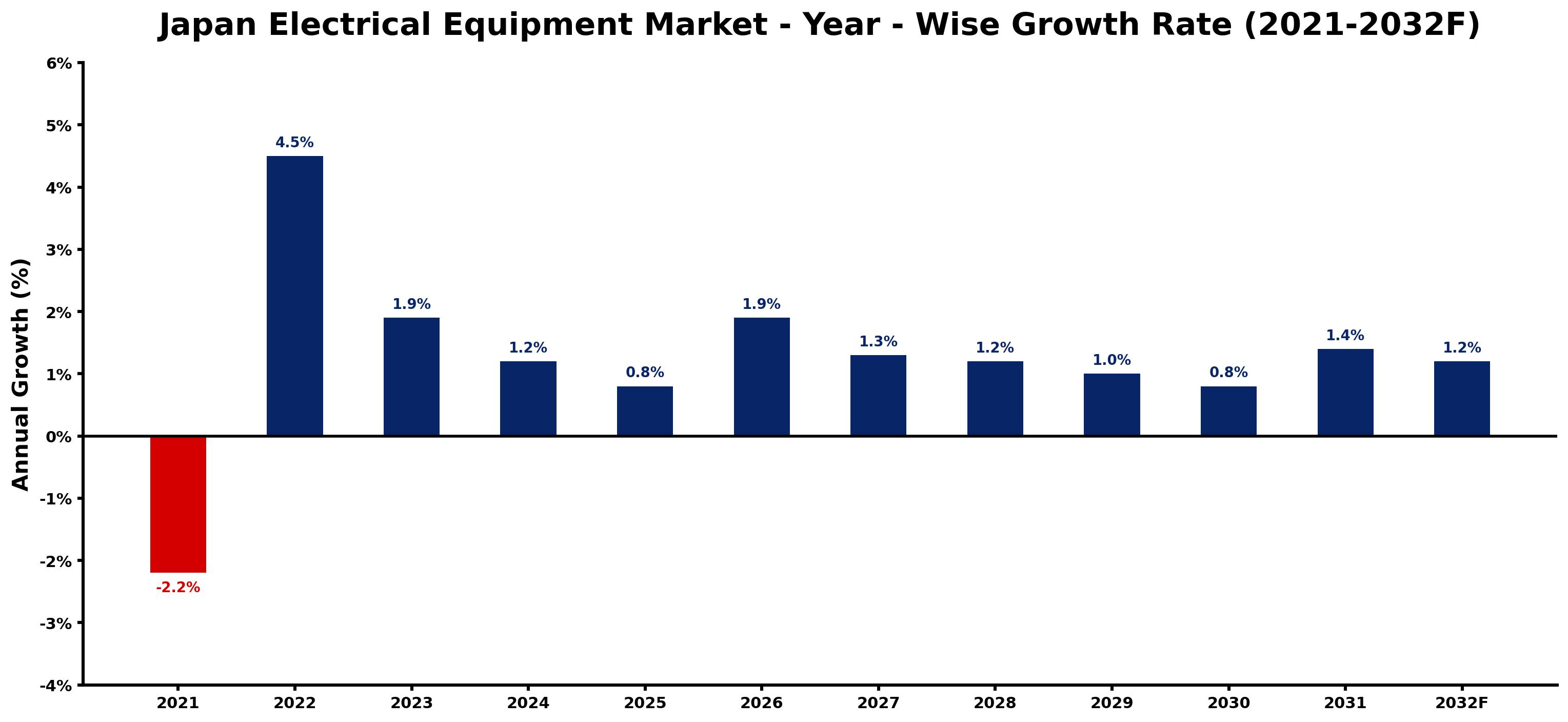
The table below presents the year wise growth rates along with the key drivers influencing the market
| Year | Growth Rate | Major Drivers |
| 2021 | -2.2% | Supply chain disruptions hindered manufacturing efficiency, leading to decreased product availability and reduced sales opportunities. |
| 2022 | 4.5% | Technological upgrades in manufacturing plants increase the demand for advanced electrical systems. |
| 2023 | 1.9% | Manufacturers facing supply chain disruptions prioritize local sourcing for electrical components. |
| 2024 | 1.2% | Rising energy efficiency standards push companies to invest in modern electrical solutions. |
| 2025 | 0.8% | Corporate sustainability goals lead to greater adoption of renewable energy technologies. |
| 2026 | 1.9% | Electrification of transportation, including EVs, stimulates new electrical infrastructure developments. |
| 2027 | 1.3% | Smart grid technologies gain traction, enhancing operational efficiency across the sector. |
| 2028 | 1.2% | The aging population necessitates upgrades in healthcare facilities, driving equipment demand. |
| 2029 | 1.0% | Emerging smart home technologies expand the residential electrical equipment market significantly. |
| 2030 | 0.8% | Increased focus on disaster resilience promotes investment in robust electrical systems. |
| 2031 | 1.4% | Collaborative innovation among tech firms fosters breakthroughs in electrical equipment design. |
| 2032 | 1.2% | Shift towards a circular economy influences electrical equipment lifecycle management practices. |
Note - Market size estimations and growth projections presented in this report are based on 6Wresearch's advanced forecasting approach, validated with industry datasets as of June 2026.
Japan Electrical Equipment Market Synopsis
The Japan Electrical Equipment Market is projected to reach 1.9% and witness significant growth during the forecast period (2026-2032). This sector plays a pivotal role in Japan's economy, given its technological advancement and the essential nature of its products, which include electrical machinery, electronic components, and consumer electronics. The market is characterized by a strong emphasis on quality and innovation, with Japanese firms recognized globally for their reliability and cutting-edge technologies.
Japan Electrical Equipment Market Growth Drivers
Several key factors are driving the growth of the Japan Electrical Equipment Market. First, the increasing demand for energy-efficient products is significantly influencing purchasing decisions. Consumers and businesses alike are prioritizing sustainability, which fosters a favorable environment for energy-efficient solutions. Second, rapid advancements in technology, especially in automation and smart devices, are reshaping the landscape of electrical equipment. The integration of IoT (Internet of Things) technologies is further enhancing product connectivity and operational efficiency.
In addition, urbanization and infrastructure development projects continue to propel the sector. As Japan's infrastructure modernizes, the need for upgraded electrical systems and equipment becomes critical. Furthermore, the shift towards renewable energy sources is another significant factor as businesses and consumers increasingly seek clean energy solutions for sustainability. This trend is expected to promote the demand for advanced electrical equipment designed for renewable applications.
Japan Electrical Equipment Market Trends and Opportunities
The Japan Electrical Equipment Market is currently witnessing notable trends that present various opportunities. The growing interest in electric vehicles (EVs) has led to increased demand for charging infrastructure and related electrical components. As more consumers adopt EVs, the necessity for reliable charging solutions will continue to rise.
- The proliferation of smart home technologies, such as smart lighting and automated systems, is enhancing consumer preferences for energy efficiency and convenience.
- Organizations are gradually incorporating AI into their electrical systems, leading to innovations in automation and enhanced operational efficiency across sectors.
- With a heightened focus on sustainability, manufacturers are increasingly prioritizing environmentally friendly production practices and product designs.
- The demand for advanced communication systems within businesses is fostering the development of networking equipment tailored for seamless connectivity.
- Investment in research and development to create next-generation electrical solutions remains a pivotal opportunity for market participants aiming to stay competitive.
Japan Electrical Equipment Market Challenges and Restraints
Despite the opportunities, the Japan Electrical Equipment Market faces several challenges. Intense competition from both domestic and international manufacturers requires companies to innovate constantly; a challenge compounded by the rapid pace of technological advancements. Moreover, changes in regulations and standards necessitate continuous adaptation of products and operational processes.
Additionally, the market is under pressure to meet developing energy efficiency and sustainability practices, impacting production methods and practices. The aging population in Japan and a shrinking workforce raises concerns about labor shortages, which can affect production capabilities and product quality over time. Furthermore, fluctuating costs of raw materials and components and the global economic climate add complexity to the challenges faced by companies.
Japan Electrical Equipment Market Government Investment and Initiatives
Government policies play a crucial role in shaping the Japan Electrical Equipment Market. The Japanese government is actively promoting energy efficiency and sustainability through various regulations and incentives aimed at encouraging the adoption of energy-efficient electrical equipment. Initiatives include setting targets for reducing greenhouse gas emissions and increasing the use of renewable energy sources, which in turn influence the market dynamics.
Additionally, the government has established standards and certification programs to ensure the safety and quality of electrical products, reinforcing consumer trust in the marketplace. Public spending on infrastructure modernization, particularly regarding renewable energy technologies and smart grids, creates an attractive environment for investment in the electrical equipment sector. Overall, these initiatives align with Japan's commitment to advancing its electrical equipment market while addressing environmental concerns.
Japan Electrical Equipment Market Latest Developments (May 2025 - June 2026)
Recent developments in the Japan Electrical Equipment Market indicate a strong trajectory towards innovation and sustainability. Companies within the sector are increasingly focusing on integrating smart technologies into their product offerings, thereby enhancing user experience and operational efficiency. Furthermore, advancements in renewable energy technologies are becoming a priority, aligning with governmental goals for a greener future.
Research initiatives are underway to develop next-generation electrical equipment that meets rigorous performance standards while adhering to sustainability goals. The move towards electric vehicles continues to dominate discussions, with infrastructure improvements gaining momentum to support this evolving market landscape. Overall, these developments reflect a responsive industry adapting to changing consumer demands and regulatory frameworks.
Japan Electrical Equipment Market - Key Attractiveness of the Report
- 10 Years of Market Numbers
- Historical Data Starting from 2022 to 2025
- Base Year: 2025
- Forecast Data until 2032
- Key Performance Indicators Impacting the Market
- Major Upcoming Developments and Projects
Key Highlights of the Report:
- Japan Electrical Equipment Market Outlook
- Market Size of Japan Electrical Equipment Market, 2025
- Forecast of Japan Electrical Equipment Market, 2032F
- Historical Data and Forecast of Japan Electrical Equipment Revenues & Volume for the Period 2022-2032F
- Japan Electrical Equipment Market Trend Evolution
- Japan Electrical Equipment Market Drivers and Challenges
- Japan Electrical Equipment Price Trends
- Japan Electrical Equipment Porter's Five Forces
- Japan Electrical Equipment Industry Life Cycle
- Historical Data and Forecast of Japan Electrical Equipment Market Revenues & Volume By Types for the Period 2022-2032F
- Historical Data and Forecast of Japan Electrical Equipment Market Revenues & Volume By Electronic and electrical wires and cables for the Period 2022-2032F
- Historical Data and Forecast of Japan Electrical Equipment Market Revenues & Volume By Batteries and accumulators for the Period 2022-2032F
- Historical Data and Forecast of Japan Electrical Equipment Market Revenues & Volume By Wiring devices for the Period 2022-2032F
- Historical Data and Forecast of Japan Electrical Equipment Market Revenues & Volume By Electric lighting equipment for the Period 2022-2032F
- Historical Data and Forecast of Japan Electrical Equipment Market Revenues & Volume By Others for the Period 2022-2032F
- Historical Data and Forecast of Japan Electrical Equipment Market Revenues & Volume By Applications for the Period 2022-2032F
- Historical Data and Forecast of Japan Electrical Equipment Market Revenues & Volume By Residential end-users for the Period 2022-2032F
- Historical Data and Forecast of Japan Electrical Equipment Market Revenues & Volume By Non-residential end-users for the Period 2022-2032F
- Japan Electrical Equipment Import Export Trade Statistics
- Market Opportunity Assessment By Types
- Market Opportunity Assessment By Applications
- Japan Electrical Equipment Top Companies Market Share
- Japan Electrical Equipment Competitive Benchmarking By Technical and Operational Parameters
- Japan Electrical Equipment Company Profiles
- Japan Electrical Equipment Key Strategic Recommendations






































