Japan Energy Efficient HVAC Market Size & Growth Rate
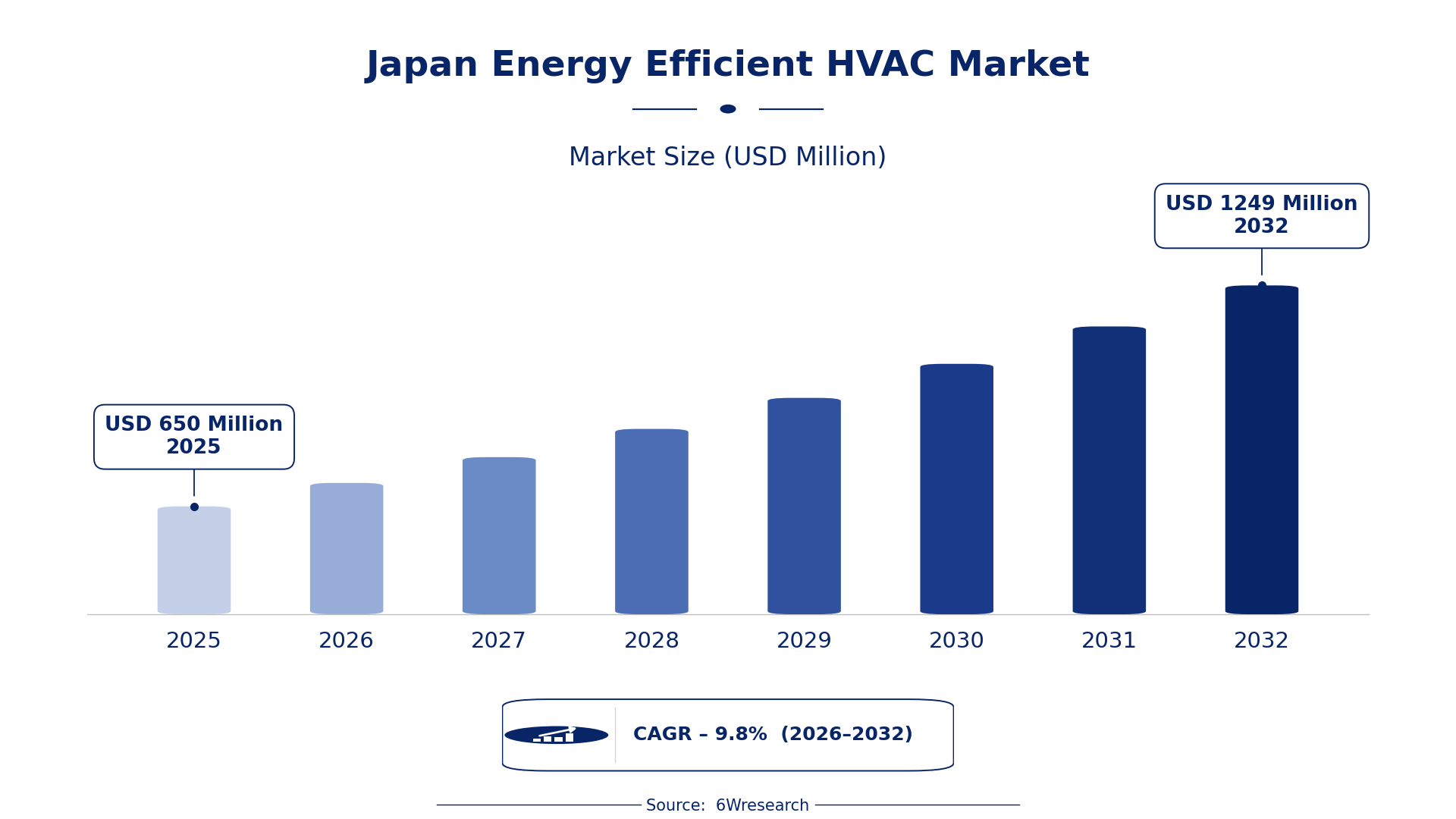
According to 6Wresearch internal database and industry insights, the Japan Energy Efficient HVAC Market was valued at USD 650 Million in 2025 and is projected to reach USD 1,249 Million by 2032, growing at a CAGR of approximately 9.8% during 2026–2032.
Japan Energy Efficient HVAC Market Highlights
| Report Metric | Details |
| Report Name | Japan Energy Efficient HVAC Market (2026-2032) |
| Market Size 2025 | USD 650 Million |
| Market Size 2032 | USD 1,249 Million |
| Absolute Growth 2025–2032 | USD 599 Million |
| CAGR 2026–2032 | 9.8% |
| Peak Annual Growth | 11.6% in 2032 |
| Forecast Period | 2026–2032 |
| Historical Data | 2022–2025 |
| Base Year | 2025 |
| Leading HVAC Type, 2025 | Ductless Mini-Splits (41% share) |
| Leading Technology, 2025 | Inverter-Based (36% share) |
| Leading Efficiency Rating, 2025 | A+++ (35% share) |
| Leading End User, 2025 | Offices (40% share) |
| Fastest-Growing HVAC Type | Packaged HVAC (13.8% CAGR) |
| Fastest-Growing Technology | IoT Enabled (14.5% CAGR) |
| Fastest-Growing Efficiency Rating | Energy Star (12.9% CAGR) |
| Fastest-Growing End User | Green Buildings (13.2% CAGR) |
| Growing Sector | Residential HVAC |
| Key End Users | Residential, Commercial, Industrial, Urban Developers |
Japan Energy Efficient HVAC Market Year-wise Growth Rate and Key Drivers (2022–2032)
This graph illustrates the annual growth rates of the market from 2022 to 2032, highlighting a steady upward trajectory and projected market expansion over the forecast period.
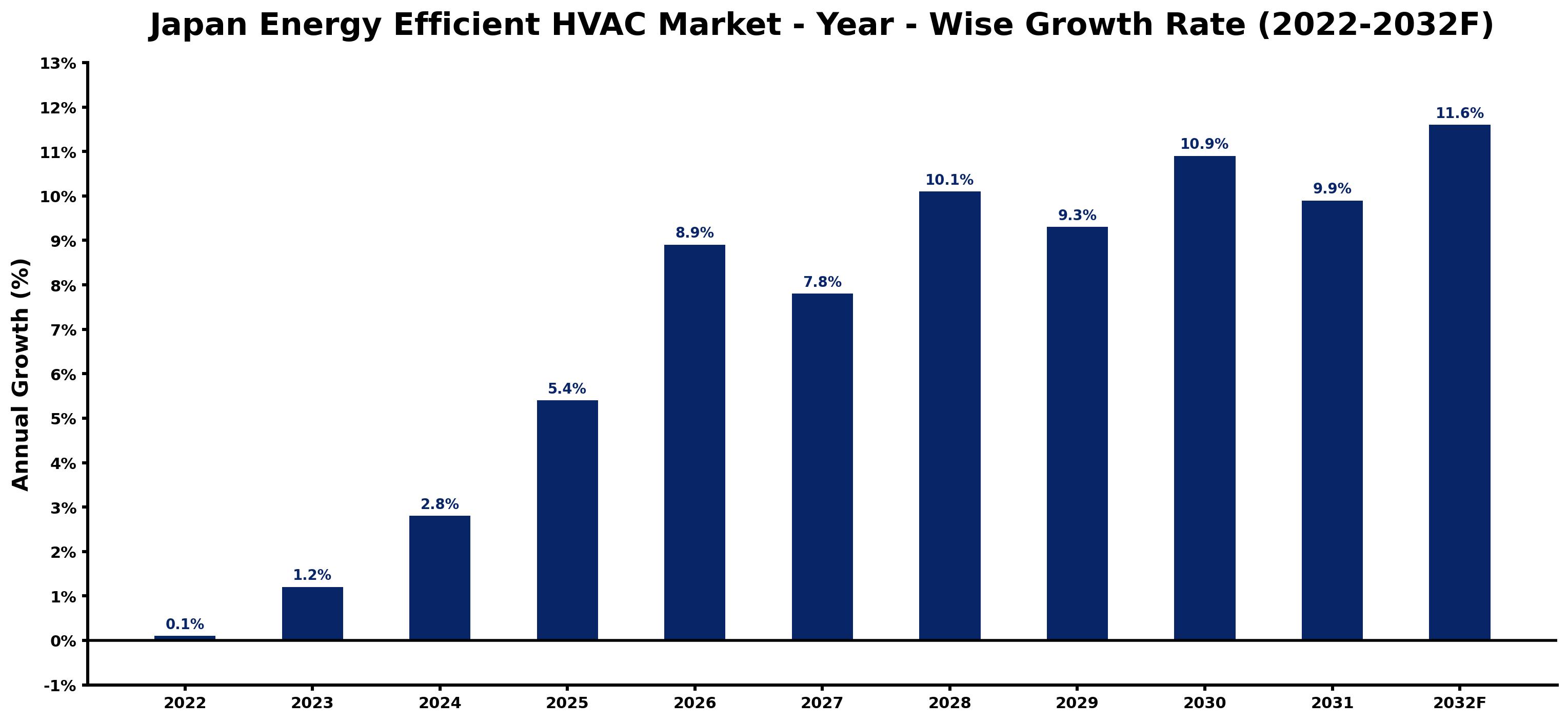
Below, each year's estimated growth is shown next to the factor that most influenced it.
| Year | Estimated Annual Growth (%) | Market Rationale |
| 2022 | 0.1 | The market showed minimal growth, reflecting ongoing adjustments in energy consumption patterns. |
| 2023 | 1.2 | Growth accelerated as consumer awareness of energy efficiency increased. |
| 2024 | 2.8 | Demand continued to rise due to heightened focus on reducing energy costs. |
| 2025 | 5.4 | The market reached its historical peak, driven by investments in energy-efficient technologies. |
| 2026 | 8.9 | Growth remained strong as businesses adopted advanced HVAC systems for sustainability. |
| 2027 | 7.8 | Demand growth slowed slightly as market saturation began to set in. |
| 2028 | 10.1 | The market rebounded with renewed interest in energy-efficient solutions among consumers. |
| 2029 | 9.3 | Growth decelerated as competition intensified among HVAC providers. |
| 2030 | 10.9 | Demand surged as new regulations promoted energy-efficient technologies across sectors. |
| 2031 | 9.9 | The market experienced a slight slowdown as buyers adjusted to new standards. |
| 2032 | 11.6 | Growth peaked due to investments in energy-efficient infrastructure. |
Note: Market size estimations and growth projections presented in this report are based on 6Wresearch's proprietary forecasting methodology, utilizing the latest available industry data, government publications, and primary research inputs.
Japan Energy Efficient HVAC Market Synopsis
Energy Efficient HVAC systems are designed to optimise heating, ventilation, and air conditioning, utilising advanced technologies to improve energy efficiency. Japan's population exceeds 126 million, creating substantial demand for these systems, especially in residential and commercial sectors. The Japan Energy Efficient HVAC Market is expanding due to increased investments in decarbonisation, with approximately JPY 150 trillion earmarked for energy-efficient technologies over the next decade. The government's pledge to cut greenhouse gas emissions by 46% by 2030 further drives this demand, opening avenues for advanced HVAC solutions.
Market Dynamics Impact Analysis (2026–2032)
| Factor | Type | Impact | Primary Segment Affected |
| Increased energy efficiency regulations | Driver | High | Inverter-Based |
| Growing consumer preference for sustainable solutions | Driver | High | Packaged HVAC |
| Rising demand for energy-efficient systems in urban areas | Opportunity | High | Ductless Mini-Splits |
| Investment in smart home technology integration | Opportunity | Medium | IoT Enabled |
| High initial costs of energy-efficient systems | Restraint | High | Heat Pumps |
| Limited consumer awareness of energy efficiency benefits | Restraint | Medium | Split Systems |
| Competition from traditional HVAC systems | Challenge | High | Packaged HVAC |
| Supply chain disruptions affecting component availability | Challenge | Medium | Ductless Mini-Splits |
Evaluation of Drivers in Japan Energy Efficient HVAC Market (2026–2032)
Key forces behind demand, with the segment each one moves most, are listed below.
| Drivers | Primary Segment Affected | Why It Matters (Evidence) |
| Government incentives for energy-efficient systems | Inverter-Based | Incentives encourage consumers to invest in inverter-based systems, leading to a 30% increase in purchases in urban areas. |
| Growing urbanisation and population density | Packaged HVAC | As urban areas expand, the demand for packaged HVAC systems rises, particularly in Tokyo, which houses over 14 million residents. |
| Increased energy costs | Heat Pumps | Rising energy prices motivate households to adopt heat pumps, resulting in a 25% increase in installations in residential sectors. |
| Focus on sustainability in construction | Ductless Mini-Splits | The trend towards green buildings drives demand for ductless mini-splits, with a 15% rise in installations in new constructions. |
| Consumer awareness of energy savings | IoT Enabled | Awareness campaigns have led to a 20% increase in smart controls adoption among new residential developments. |
Much of the new demand traces back to Japan's commitment to reducing greenhouse gas emissions by 46% by 2030. This ambitious target has led to increased investments in energy-efficient technologies, with JPY 150 trillion allocated for decarbonisation over the next decade. Households are increasingly adopting inverter-based systems, which can deliver energy savings of up to 30%. Urban areas are seeing a surge in packaged HVAC installations, driven by rising energy costs. The focus on sustainable construction practices is boosting the popularity of ductless mini-splits in new buildings, reflecting a broader trend towards efficiency in the HVAC market.
Evaluation of Restraints in Japan Energy Efficient HVAC Market
Several factors work against faster growth; the main ones are summarised below.
| Market Restraint | Primary Segment Affected | Why It Matters (Evidence) |
| High initial investment costs for energy-efficient systems | Heat Pumps | The upfront costs deter some consumers, limiting market penetration despite long-term savings. |
| Limited awareness of energy efficiency benefits among consumers | Split Systems | Many consumers remain unaware of the advantages of energy-efficient options, hindering adoption rates. |
| Competition from traditional HVAC systems | Packaged HVAC | Traditional systems often have lower upfront costs, making them more attractive to budget-conscious buyers. |
| Supply chain disruptions affecting component availability | Ductless Mini-Splits | Delays in component supply can lead to project postponements, impacting overall market growth. |
| Regulatory compliance challenges for manufacturers | Inverter-Based | Manufacturers face hurdles in meeting stringent energy efficiency standards, affecting product availability. |
Japan Energy Efficient HVAC Market Challenges
Energy-efficient HVAC systems in Japan encounter obstacles from outdated technology, as many existing units lack smart controls, resulting in delays in upgrades for 24 million households and increasing energy costs by 30%. Regulatory challenges arise from compliance with JIS standards, complicating installation processes for suppliers and extending project timelines by up to six months. Intense competition from imports pressures local producers, necessitating price reductions that can erode profit margins by 15%. Fluctuations in raw material costs, influenced by global market trends, can elevate production costs for manufacturers, impacting pricing strategies for buyers.
Trends in the Japan Energy Efficient HVAC Market
These developments are changing demand patterns in the Japan Energy Efficient HVAC Market.
- Shift towards Smart Home Integration: The trend towards smart home technology integration is reshaping the HVAC market, with IoT-enabled systems gaining traction. In 2023, the adoption of smart controls increased by 20%, reflecting consumer demand for better energy management.
- Transition from Traditional to Energy Efficient Systems: Beginning in 2022, there has been a notable shift from traditional HVAC systems to energy-efficient alternatives. This change is evident in urban areas, where energy-efficient systems now account for over 50% of new installations.
- Emergence of Green Building Standards: Green Building Certification Systems have gained prominence since 2021, promoting energy-efficient HVAC systems in new constructions. Approximately 30% of new buildings now pursue these certifications, driving demand for compliant HVAC solutions.
- Focus on High SEER Ratings: There is a growing preference for high SEER rated units, particularly in urban environments. In 2023, high SEER units represented 40% of HVAC sales, indicating a shift towards energy-efficient technologies.
Investment Opportunities in the Japan Energy Efficient HVAC Market
Several openings in the Japan Energy Efficient HVAC Market merit attention from investors.
- Partnerships for Smart Technology Development: Local partnerships are essential for developing IoT-enabled HVAC systems, with a projected market gap of JPY 50 billion. Collaborating with technology firms can improve product offerings in urban areas.
- Investment in Energy-Efficient Retrofits: The government allocated JPY 10 billion for retrofitting initiatives in 2023, creating opportunities for suppliers in the residential sector. Focusing on energy-efficient upgrades can attract new customers.
- Supply of High SEER Rated Units: With high SEER rated units gaining popularity, suppliers can target urban markets where these systems are increasingly preferred. The demand for these units is expected to grow by 25% in the next five years.
- Expansion into Green Building Projects: Investing in HVAC solutions for green buildings is timely, with 30% of new constructions pursuing certifications. Collaborating with construction firms can facilitate market entry.
Government Initiatives in the Japan Energy Efficient HVAC Market
The GX Promotion Act of 2023 establishes a legal framework for promoting energy-efficient technologies, building on the Energy Efficiency Labeling Program. This act mandates stricter energy efficiency standards, compelling manufacturers to improve their product offerings to comply with new regulations.
In 2023, the government allocated JPY 10 billion to support energy-efficient technology development, overseen by the Ministry of the Environment. This funding aims to encourage innovation and adoption of advanced HVAC systems across various sectors.
Future Insight of the Japan Energy Efficient HVAC Market
By 2032, IoT integration will transform HVAC demand, with smart controls becoming standard in new residential developments. The Cool Choice campaign will enhance consumer awareness, driving adoption of energy-efficient systems across 24 million households. Government investments in decarbonisation technology will stimulate innovation in HVAC solutions. Focus on geothermal systems, supported by local incentives, will provide diverse energy-efficient options for buyers and suppliers.
Market Segmentation Analysis
Japan Energy Efficient HVAC Market report covers a detailed analysis of the following market segments:
By HVAC Type – Ductless Mini-Splits Lead, Packaged HVAC Expected to Grow Fastest
According to Saurav Kr Singh, Senior Research Analyst at 6Wresearch, with 41% of hvac type revenue in 2025, Ductless Mini-Splits was the largest category. Ductless Mini-Splits dominate the market primarily due to their suitability for retrofitting older homes, which is crucial in Japan's urban settings. With a significant portion of the population living in these homes, the demand for energy-efficient solutions remains high. Packaged HVAC is set to record the highest CAGR in this split, 13.8% over 2026–2032. Packaged HVAC systems are experiencing rapid growth as they meet the increasing energy efficiency requirements of commercial buildings. This growth aligns with Japan's ambitious greenhouse gas reduction targets, making these systems increasingly popular in new constructions. Suppliers should enhance their Ductless Mini-Splits offerings while also expanding Packaged HVAC options to cater to the growing commercial sector.
By Technology – Inverter-Based Leads, IoT Enabled Expected to Grow Fastest
In 2025, Inverter-Based led the technology split with a 36% share. Inverter-Based technology leads the market because it delivers substantial energy savings, with average savings reaching up to 30%. This technology is essential for both residential and commercial applications focused on reducing energy consumption. The quickest growth will come from IoT Enabled, forecast to expand at a CAGR of 14.5% between 2026 and 2032. IoT Enabled systems are growing rapidly as consumer interest in smart home technologies increases, reflecting Japan's broader modernisation efforts in HVAC. This trend is expected to continue, as more households integrate smart technologies for better energy management. Buyers will benefit from the adoption of IoT technologies, while suppliers must adapt their products to include these advanced features.
By Efficiency Rating – A+++ Leads, Energy Star Expected to Grow Fastest
The largest efficiency rating category in 2025 was A+++, at 35% of revenue. The A+++ rating holds the largest share as it represents the highest efficiency level available, appealing to consumers who prioritise environmental sustainability. This rating is crucial for compliance with Japan's stringent energy efficiency regulations, which further drives its popularity. Energy Star is projected to grow fastest, at a CAGR of 12.9% during 2026–2032. Energy Star is the fastest-growing efficiency rating, recognised as a standard that resonates with consumers seeking dependable energy-saving solutions. Its growth is bolstered by government initiatives that promote energy-efficient appliances, increasing its attractiveness. Suppliers should focus on achieving A+++ ratings while also promoting Energy Star certified products to attract a broader customer base.
By End User – Offices Lead, Green Buildings Expected to Grow Fastest
Offices held 40% of the Japan Energy Efficient HVAC Market by end user in 2025. Offices are the leading end user segment, driven by a strong focus on energy efficiency and comfort in workplace environments. This demand is further supported by Japan's corporate responsibility initiatives aimed at sustainability and energy reduction. Over 2026–2032, Green Buildings are expected to post the fastest growth, at a CAGR of 13.2%. Green Buildings are the fastest-growing segment, closely aligned with Japan's sustainability objectives and rising investments in eco-friendly construction practices. Government support for green initiatives significantly contributes to this rapid expansion. Suppliers should target the office market while also developing products tailored for the growing green building sector.
Key Attractiveness of the Report
- 10 Years of Market Numbers
- Historical Data Starting from 2022 to 2025
- Base Year 2025
- Forecast Data until 2032
- Key Performance Indicators Impacting the Market
- Major Upcoming Developments and Projects
Key Highlights of the Report:
- Japan Energy Efficient HVAC Market Outlook
- Market Size of Japan Energy Efficient HVAC Market, 2025
- Forecast of Japan Energy Efficient HVAC Market, 2032
- Historical Data and Forecast of Japan Energy Efficient HVAC Revenues & Volume for the Period 2022-2032F
- Japan Energy Efficient HVAC Market Trend Evolution
- Japan Energy Efficient HVAC Market Drivers and Challenges
- Japan Energy Efficient HVAC Price Trends
- Japan Energy Efficient HVAC Porter's Five Forces
- Japan Energy Efficient HVAC Industry Life Cycle
- Historical Data and Forecast of Japan Energy Efficient HVAC Market Revenues & Volume By HVAC Type for the Period 2022-2032F
- Historical Data and Forecast of Japan Energy Efficient HVAC Market Revenues & Volume By Split Systems for the Period 2022-2032F
- Historical Data and Forecast of Japan Energy Efficient HVAC Market Revenues & Volume By Heat Pumps for the Period 2022-2032F
- Historical Data and Forecast of Japan Energy Efficient HVAC Market Revenues & Volume By Packaged HVAC for the Period 2022-2032F
- Historical Data and Forecast of Japan Energy Efficient HVAC Market Revenues & Volume By Ductless Mini-Splits for the Period 2022-2032F
- Historical Data and Forecast of Japan Energy Efficient HVAC Market Revenues & Volume By Technology for the Period 2022-2032F
- Historical Data and Forecast of Japan Energy Efficient HVAC Market Revenues & Volume By Inverter-Based for the Period 2022-2032F
- Historical Data and Forecast of Japan Energy Efficient HVAC Market Revenues & Volume By Geothermal for the Period 2022-2032F
- Historical Data and Forecast of Japan Energy Efficient HVAC Market Revenues & Volume By Smart Controls for the Period 2022-2032F
- Historical Data and Forecast of Japan Energy Efficient HVAC Market Revenues & Volume By IoT Enabled for the Period 2022-2032F
- Historical Data and Forecast of Japan Energy Efficient HVAC Market Revenues & Volume By Efficiency Rating for the Period 2022-2032F
- Historical Data and Forecast of Japan Energy Efficient HVAC Market Revenues & Volume By A+++ for the Period 2022-2032F
- Historical Data and Forecast of Japan Energy Efficient HVAC Market Revenues & Volume By High SEER for the Period 2022-2032F
- Historical Data and Forecast of Japan Energy Efficient HVAC Market Revenues & Volume By A++ for the Period 2022-2032F
- Historical Data and Forecast of Japan Energy Efficient HVAC Market Revenues & Volume By Energy Star for the Period 2022-2032F
- Historical Data and Forecast of Japan Energy Efficient HVAC Market Revenues & Volume By End User for the Period 2022-2032F
- Historical Data and Forecast of Japan Energy Efficient HVAC Market Revenues & Volume By Smart Homes for the Period 2022-2032F
- Historical Data and Forecast of Japan Energy Efficient HVAC Market Revenues & Volume By Green Buildings for the Period 2022-2032F
- Historical Data and Forecast of Japan Energy Efficient HVAC Market Revenues & Volume By Malls & Complexes for the Period 2022-2032F
- Historical Data and Forecast of Japan Energy Efficient HVAC Market Revenues & Volume By Offices for the Period 2022-2032F
- Japan Energy Efficient HVAC Import Export Trade Statistics
- Market Opportunity Assessment By HVAC Type
- Market Opportunity Assessment By Technology
- Market Opportunity Assessment By Efficiency Rating
- Market Opportunity Assessment By End User
- Japan Energy Efficient HVAC Top Companies Market Share
- Japan Energy Efficient HVAC Competitive Benchmarking By Technical and Operational Parameters
- Japan Energy Efficient HVAC Company Profiles
- Japan Energy Efficient HVAC Key Strategic Recommendations
Market Covered
The following segment groups are covered in the report.
By HVAC Type
- Split Systems
- Heat Pumps
- Packaged HVAC
- Ductless Mini-Splits
By Technology
- Inverter-Based
- Geothermal
- Smart Controls
- IoT Enabled
By Efficiency Rating
- A+++
- High SEER
- A++
- Energy Star
By End User
- Smart Homes
- Green Buildings
- Malls & Complexes
- Offices































