Japan Fashion-as-a-Service Market Size & Growth Rate
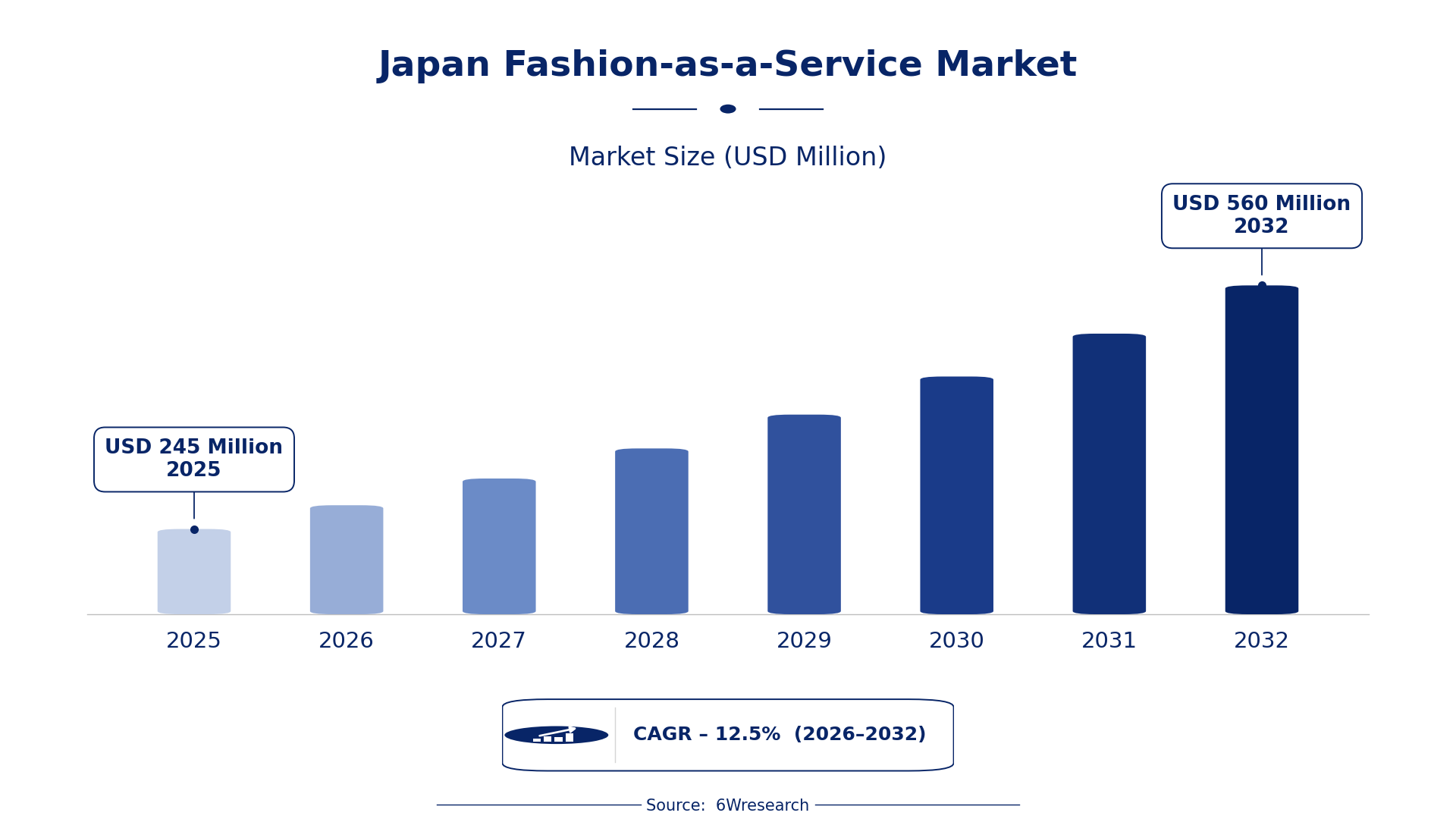
According to 6Wresearch internal database and industry insights, the Japan Fashion-as-a-Service Market was valued at USD 245 Million in 2025 and is projected to reach USD 560 Million by 2032, growing at a CAGR of approximately 12.5% during 2026–2032.
Japan Fashion-as-a-Service Market Highlights
| Report Metric | Details |
| Report Name | Japan Fashion-as-a-Service Market (2026-2032) |
| Market Size 2025 | USD 245 Million |
| Market Size 2032 | USD 560 Million |
| Absolute Growth 2025–2032 | USD 315 Million |
| CAGR 2026–2032 | 12.5% |
| Peak Annual Growth | 14.1% in 2026 |
| Forecast Period | 2026–2032 |
| Historical Data | 2022–2025 |
| Base Year | 2025 |
| Leading Service Type, 2025 | Monthly Subscriptions (43% share) |
| Leading Product Type, 2025 | Casualwear (46% share) |
| Leading Distribution Channel, 2025 | Online Portals (49% share) |
| Leading End User, 2025 | Young Professionals (47% share) |
| Fastest-Growing Product Type | Formal Wear (16.7% CAGR) |
| Fastest-Growing Distribution Channel | Subscription Apps (15.7% CAGR) |
| Fastest-Growing End User | Event Attendees (15.4% CAGR) |
| Growing Sector | Fashion rental services |
| Key End Users | Young Professionals, Event Attendees, Urban Users |
Japan Fashion-as-a-Service Market Year-wise Growth Rate and Key Drivers (2022–2032)
This graph illustrates the annual growth rates of the market from 2022 to 2032, highlighting a steady upward trajectory and projected market expansion over the forecast period.
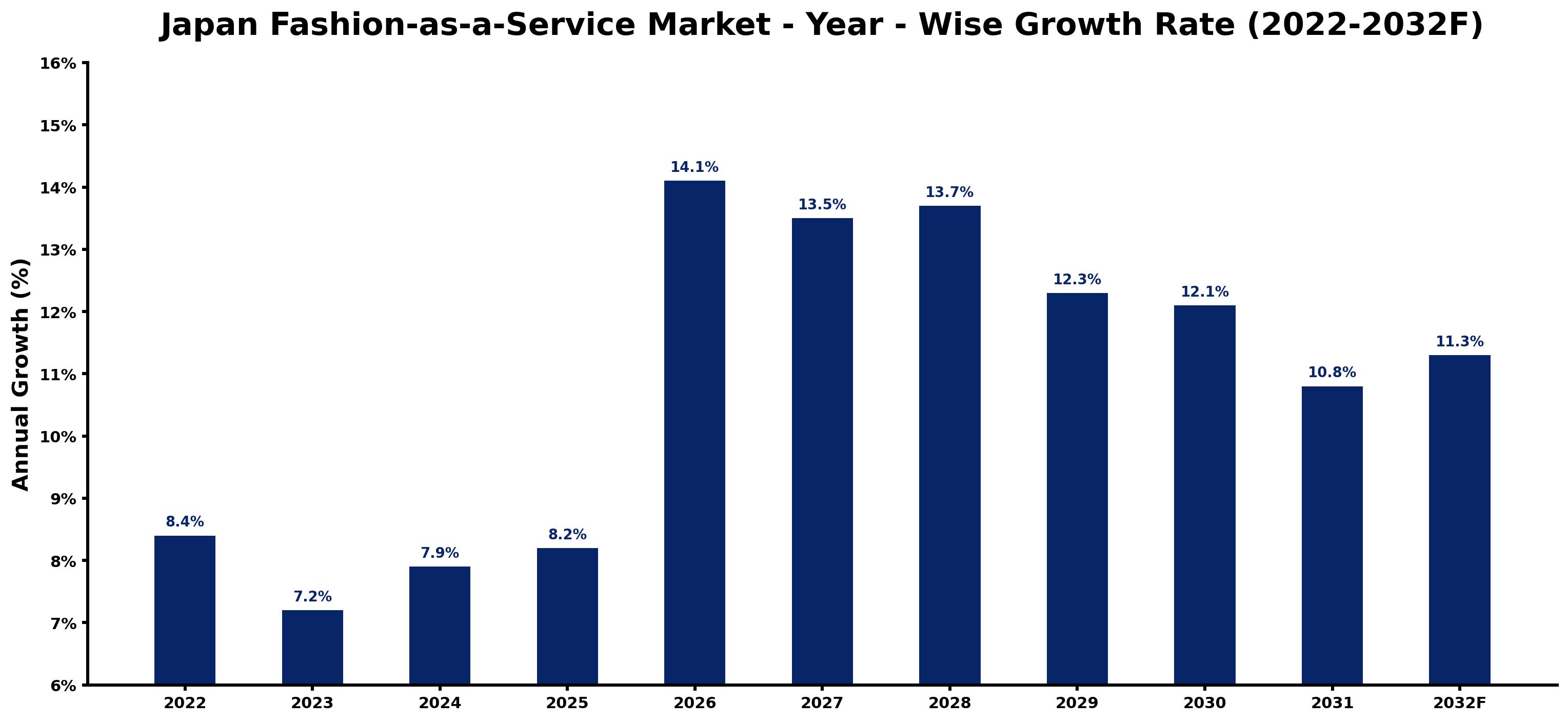
Annual growth estimates for each year appear below with the principal reason behind them, explaining the shifts that set the pace of the market.
| Year | Estimated Annual Growth (%) | Market Rationale |
| 2022 | 8.4 | The market experienced strong demand due to increased interest in rental fashion. |
| 2023 | 7.2 | Growth slowed as consumer spending faced challenges from economic uncertainty. |
| 2024 | 7.9 | Demand increased as more urban consumers sought affordable fashion options. |
| 2025 | 8.2 | The market grew as awareness of sustainable fashion practices expanded. |
| 2026 | 14.1 | A surge in subscriptions is expected to drive growth in the market. |
| 2027 | 13.5 | Growth is projected to slow as the market begins to stabilise after rapid expansion. |
| 2028 | 13.7 | Demand is expected to pick up again, driven by new marketing strategies targeting young users. |
| 2029 | 12.3 | Growth is projected to slow slightly as competition increases among rental platforms. |
| 2030 | 12.1 | The market will continue to grow, supported by ongoing trends in sustainability. |
| 2031 | 10.8 | Growth is expected to slow as the market matures and consumer preferences evolve. |
| 2032 | 11.3 | Demand is projected to rise as more users embrace rental services for events. |
Note: Market size estimations and growth projections presented in this report are based on 6Wresearch's proprietary forecasting methodology, utilizing the latest available industry data, government publications, and primary research inputs.
Japan Fashion-as-a-Service Market Synopsis
Fashion-as-a-Service is a business model offering clothing and accessories on a rental or subscription basis, providing affordable access to high-quality fashion. Young professionals aged 20-35 represent 60% of users, reflecting a shift in consumer behaviour towards renting for special occasions and everyday wear.
Market Dynamics Impact Analysis (2026–2032)
| Factor | Type | Impact | Primary Segment Affected |
| The increasing popularity of sustainable fashion drives demand for rental services. | Driver | High | Monthly Subscriptions |
| Urban lifestyles in cities like Tokyo create a strong demand for convenient rental options. | Driver | High | Casualwear |
| The rise of eco-conscious consumers presents opportunities for new rental services. | Opportunity | High | Clothing Rental |
| Young professionals are increasingly seeking affordable access to trendy clothing. | Opportunity | High | Event Attendees |
| High competition among rental platforms may limit market entry for new players. | Restraint | Medium | Monthly Subscriptions |
| Consumer preferences for ownership can hinder the rental market's growth. | Restraint | Medium | Casualwear |
| Logistics challenges in managing returns can affect service efficiency. | Challenge | High | Return Management |
| Technological barriers may delay the adoption of rental platforms. | Challenge | Medium | Subscription Apps |
Evaluation of Drivers in Japan Fashion-as-a-Service Market (2026–2032)
Below are the drivers that matter most for revenue growth, with supporting evidence.
| Drivers | Primary Segment Affected | Why It Matters (Evidence) |
| Increased urbanisation drives demand for convenient fashion rental services. | Casualwear | Tokyo's urban lifestyle encourages young professionals to rent rather than buy, with 60% of users aged 20-35. |
| The trend towards sustainability boosts interest in rental services. | Monthly Subscriptions | The average user rents 3-5 items monthly, reflecting a shift towards eco-friendly consumption. |
| Growing disposable income among young consumers increases spending on fashion rentals. | Event Attendees | The average monthly subscription fee is around 5,000 yen, making rentals accessible. |
| The rise of online platforms facilitates easy access to rental services. | Online Portals | 80% of rental transactions occur online, catering to tech-savvy consumers. |
| Fashion rental events promote awareness and usage of rental services. | Clothing Rental | Annual events in major cities attract new users, highlighting the benefits of renting. |
The strongest pull on demand comes from urbanisation, with Tokyo's lifestyle encouraging young professionals to rent clothing instead of buying. Approximately 60% of rental service users are aged 20-35, reflecting a demographic shift towards affordability and sustainability. The average monthly subscription fee of around 5,000 yen makes rentals accessible, while 80% of transactions occur through online platforms, providing convenience for consumers. Fashion rental events held annually in major cities promote awareness and usage, further driving demand.
Evaluation of Restraints in Japan Fashion-as-a-Service Market
The following restraints limit how fast demand can grow.
| Market Restraint | Primary Segment Affected | Why It Matters (Evidence) |
| High competition among rental platforms can limit market entry for new players. | Monthly Subscriptions | With numerous options available, new entrants struggle to gain market share in a crowded space. |
| Consumer preferences for ownership may hinder the growth of rental services. | Casualwear | Many consumers still prefer to own clothing, limiting the potential user base for rentals. |
| Inefficient return processes can lead to customer dissatisfaction and impact repeat usage. | Return Management | Logistics challenges in managing returns can affect service efficiency. |
| Limited access to technology may delay the adoption of rental platforms. | Subscription Apps | Some demographics face barriers to using digital rental services, restricting market growth. |
| Regulatory hurdles can complicate operations for rental service providers. | Clothing Rental | Compliance with standards like ISO 14001 requires investment and may slow market entry. |
Japan Fashion-as-a-Service Market Challenges
In Japan, 80% of rental transactions occur online, so technology gaps in digital platforms can frustrate buyers and delay orders. Regulatory complexities arise from the government's sustainability initiative, complicating compliance for suppliers and increasing their operational costs. The average user rents 3-5 items monthly, which can strain budgets and limit market reach for providers. Logistics partners face challenges in return management services, leading to delays that can diminish customer satisfaction and reduce repeat business for suppliers.
Trends in the Japan Fashion-as-a-Service Market
The trends below show where the Japan Fashion-as-a-Service Market is heading.
- Young Professionals Embracing Rental Fashion: A growing number of young professionals are choosing rental fashion for events, with 70% preferring to rent instead of buy. This shift highlights changing consumer habits and the appeal of affordable, trendy options.
- Sustainability Practices Gaining Traction: The trend towards sustainability is reshaping consumer preferences, with many opting for rental services. In 2023, the government launched a sustainability initiative promoting the benefits of rental fashion.
- Fashion Rental Events Increasing Engagement: Fashion rental events are becoming more prominent, showcasing the benefits of renting clothing. These events, held in major cities, attract a growing audience, highlighting the market's potential.
- Online Platforms Transforming Access: The rise of online platforms is changing how consumers access rental services. With 80% of transactions occurring online, convenience is a key factor in attracting new users.
Investment Opportunities in the Japan Fashion-as-a-Service Market
The openings below show where demand in the Japan Fashion-as-a-Service Market is visible and how suppliers can enter.
- Partnering with Local Influencers: Collaborating with local influencers can effectively promote rental services among young professionals. Engaging fashion bloggers in Tokyo can enhance visibility and draw in new users, driving demand for rentals.
- Targeting Urban Professionals: The increasing trend towards subscriptions opens avenues for new rental services. Focusing on urban users in Tokyo can stimulate demand for monthly subscription options, appealing to the younger demographic.
- Investing in Logistics Solutions: Enhancing logistics for rental services can improve customer satisfaction. Prioritising efficient return management in major urban areas will attract more users and boost service reliability.
- Developing Mobile Platforms: Investing in mobile platforms can simplify access to rental services. Targeting tech-savvy consumers in urban areas can stimulate growth and engagement, catering to their preferences.
Government Initiatives in the Japan Fashion-as-a-Service Market
The GX Basic Policy, adopted in 2023, aims to promote decarbonisation through public-private investment, targeting JPY 150 trillion over ten years. This policy supports the Fashion-as-a-Service sector by encouraging sustainable practices among producers and users alike.
In 2023, the government established the Digital Agency to spearhead digital transformation efforts. This agency facilitates the implementation of common system standards, which can improve the operational efficiency of rental platforms and benefit their users.
Future Insight of the Japan Fashion-as-a-Service Market
By 2032, a shift towards sustainable fashion will prompt suppliers to broaden their service offerings. New JIS standards for quality assurance will build consumer trust and streamline operations. The average monthly subscription fee of 5,000 yen will drive growth in rental services, as buyers seek affordable options. Increased frequency of fashion rental events will strengthen community ties and expand the customer base for both buyers and suppliers.
Market Segmentation Analysis
Japan Fashion-as-a-Service Market report covers a detailed analysis of the following market segments:
By Service Type – Monthly Subscriptions Lead and Record the Fastest Growth
According to Saurav Kr Singh, Senior Research Analyst at 6Wresearch, Monthly Subscriptions held 43% of the Japan Fashion-as-a-Service Market by service type in 2025. Monthly subscriptions hold the largest share as they provide users with regular access to a variety of fashion items for a fixed fee. This model resonates particularly well with young professionals who seek convenience and affordability in their wardrobe choices. Its lead should widen, with a projected CAGR of 13.9% during 2026–2032, the highest in this split. The monthly subscriptions segment is set to sustain its rapid growth as urban consumers increasingly favour sustainable fashion solutions. The government's 2023 initiative promoting rental fashion is expected to further drive this trend, enhancing the appeal of rental services. Suppliers should refine their subscription offerings to meet the growing demand for sustainable fashion alternatives.
By Product Type – Casualwear Leads, Formal Wear Expected to Grow Fastest
Casualwear accounted for 46% of the market by product type in 2025. Casualwear holds the largest share as it aligns with the preferences of young professionals who seek affordable and trendy clothing for everyday use. This segment benefits from a high volume of rentals, reflecting the lifestyle choices of the target demographic. The quickest growth will come from Formal Wear, forecast to expand at a CAGR of 16.7% between 2026 and 2032. Formal wear is experiencing the fastest growth due to its high demand for special occasions such as weddings and corporate events. The increasing number of events in urban areas drives consumers to rent formal attire rather than purchase it. Suppliers should expand their formal wear offerings to meet the rising demand from event attendees.
By Distribution Channel – Online Portals Lead, Subscription Apps Expected to Grow Fastest
Online Portals took 49% of distribution channel revenue in 2025, more than any other category. Online portals lead the distribution channel as they serve as the primary access point for consumers engaging with Fashion-as-a-Service. With 80% of rental transactions occurring online, these platforms are essential for connecting suppliers with a broad consumer base. Subscription Apps are projected to grow fastest, at a CAGR of 15.7% during 2026–2032. Subscription apps are the fastest-growing distribution channel, offering a user-friendly experience that simplifies the rental process. Their appeal to tech-savvy consumers is driving rapid adoption and engagement in the market. Suppliers need to prioritise the development of effective app solutions to capitalise on the increasing popularity of subscription-based services.
By End User – Young Professionals Lead, Event Attendees Expected to Grow Fastest
The largest end user category in 2025 was Young Professionals, at 47% of revenue. Young professionals represent the largest user group as they prefer affordable and trendy clothing options, making them key consumers of rental services. Their lifestyle preferences significantly influence market trends, driving the demand for fashion rentals. Event Attendees are set to record the highest CAGR in this split, 15.4% over 2026–2032. Event attendees are the fastest-growing segment, frequently seeking rental options for special occasions. The rise in social events in urban areas is contributing to this demand, creating opportunities for suppliers to cater to this audience. Suppliers should target their marketing strategies towards event attendees to effectively tap into this expanding user segment.
Key Attractiveness of the Report
- 10 Years of Market Numbers
- Historical Data Starting from 2022 to 2025
- Base Year 2025
- Forecast Data until 2032
- Key Performance Indicators Impacting the Market
- Major Upcoming Developments and Projects
Key Highlights of the Report:
- Japan Fashion-as-a-Service Market Outlook
- Market Size of Japan Fashion-as-a-Service Market, 2025
- Forecast of Japan Fashion-as-a-Service Market, 2032
- Historical Data and Forecast of Japan Fashion-as-a-Service Revenues & Volume for the Period 2022-2032F
- Japan Fashion-as-a-Service Market Trend Evolution
- Japan Fashion-as-a-Service Market Drivers and Challenges
- Japan Fashion-as-a-Service Price Trends
- Japan Fashion-as-a-Service Porter's Five Forces
- Japan Fashion-as-a-Service Industry Life Cycle
- Historical Data and Forecast of Japan Fashion-as-a-Service Market Revenues & Volume By Service Type for the Period 2022-2032F
- Historical Data and Forecast of Japan Fashion-as-a-Service Market Revenues & Volume By Clothing Rental for the Period 2022-2032F
- Historical Data and Forecast of Japan Fashion-as-a-Service Market Revenues & Volume By Monthly Subscriptions for the Period 2022-2032F
- Historical Data and Forecast of Japan Fashion-as-a-Service Market Revenues & Volume By Style Curation for the Period 2022-2032F
- Historical Data and Forecast of Japan Fashion-as-a-Service Market Revenues & Volume By Return Management for the Period 2022-2032F
- Historical Data and Forecast of Japan Fashion-as-a-Service Market Revenues & Volume By Product Type for the Period 2022-2032F
- Historical Data and Forecast of Japan Fashion-as-a-Service Market Revenues & Volume By Formal Wear for the Period 2022-2032F
- Historical Data and Forecast of Japan Fashion-as-a-Service Market Revenues & Volume By Casualwear for the Period 2022-2032F
- Historical Data and Forecast of Japan Fashion-as-a-Service Market Revenues & Volume By Mixed Apparel for the Period 2022-2032F
- Historical Data and Forecast of Japan Fashion-as-a-Service Market Revenues & Volume By Accessories for the Period 2022-2032F
- Historical Data and Forecast of Japan Fashion-as-a-Service Market Revenues & Volume By Distribution Channel for the Period 2022-2032F
- Historical Data and Forecast of Japan Fashion-as-a-Service Market Revenues & Volume By Subscription Apps for the Period 2022-2032F
- Historical Data and Forecast of Japan Fashion-as-a-Service Market Revenues & Volume By Mobile Platforms for the Period 2022-2032F
- Historical Data and Forecast of Japan Fashion-as-a-Service Market Revenues & Volume By Online Portals for the Period 2022-2032F
- Historical Data and Forecast of Japan Fashion-as-a-Service Market Revenues & Volume By Logistics Partners for the Period 2022-2032F
- Historical Data and Forecast of Japan Fashion-as-a-Service Market Revenues & Volume By End User for the Period 2022-2032F
- Historical Data and Forecast of Japan Fashion-as-a-Service Market Revenues & Volume By Event Attendees for the Period 2022-2032F
- Historical Data and Forecast of Japan Fashion-as-a-Service Market Revenues & Volume By Young Professionals for the Period 2022-2032F
- Historical Data and Forecast of Japan Fashion-as-a-Service Market Revenues & Volume By Fashion Shoppers for the Period 2022-2032F
- Historical Data and Forecast of Japan Fashion-as-a-Service Market Revenues & Volume By Urban Users for the Period 2022-2032F
- Japan Fashion-as-a-Service Import Export Trade Statistics
- Market Opportunity Assessment By Service Type
- Market Opportunity Assessment By Product Type
- Market Opportunity Assessment By Distribution Channel
- Market Opportunity Assessment By End User
- Japan Fashion-as-a-Service Top Companies Market Share
- Japan Fashion-as-a-Service Competitive Benchmarking By Technical and Operational Parameters
- Japan Fashion-as-a-Service Company Profiles
- Japan Fashion-as-a-Service Key Strategic Recommendations
Market Covered
The report covers the following segments.
By Service Type
- Clothing Rental
- Monthly Subscriptions
- Style Curation
- Return Management
By Product Type
- Formal Wear
- Casualwear
- Mixed Apparel
- Accessories
By Distribution Channel
- Subscription Apps
- Mobile Platforms
- Online Portals
- Logistics Partners
By End User
- Event Attendees
- Young Professionals
- Fashion Shoppers
- Urban Users































