Japan Fermented Food Ingredients Market Size & Growth Rate
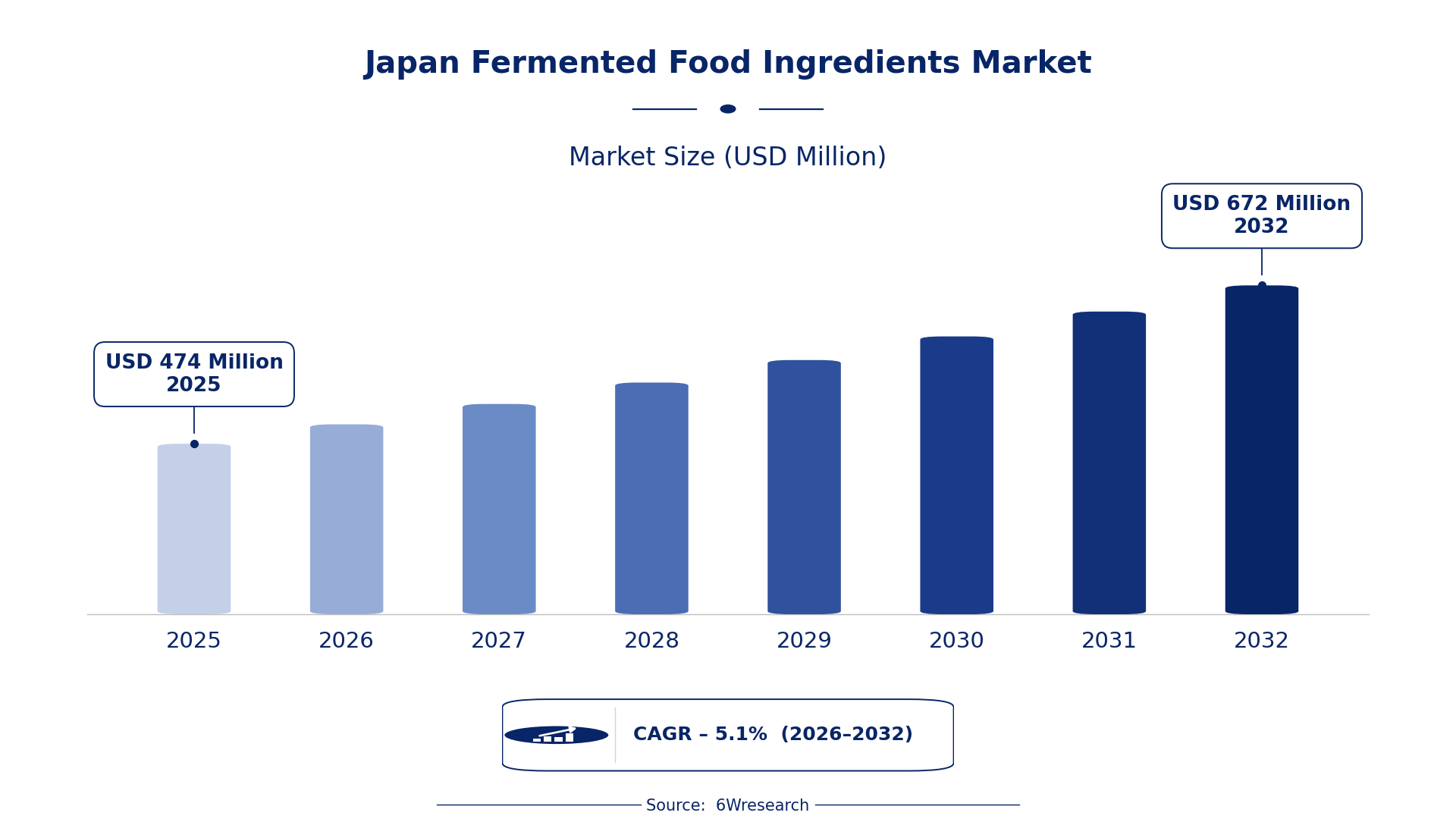
According to 6Wresearch internal database and industry insights, the Japan Fermented Food Ingredients Market was valued at USD 474 Million in 2025 and is projected to reach USD 672 Million by 2032, growing at a CAGR of approximately 5.1% during 2026–2032.
Japan Fermented Food Ingredients Market Highlights
| Report Metric | Details |
| Report Name | Japan Fermented Food Ingredients Market (2026-2032) |
| Market Size 2025 | USD 474 Million |
| Market Size 2032 | USD 672 Million |
| Absolute Growth 2025–2032 | USD 198 Million |
| CAGR 2026–2032 | 5.1% |
| Peak Annual Growth | 6.0% in 2032 |
| Forecast Period | 2026–2032 |
| Historical Data | 2022–2025 |
| Base Year | 2025 |
| Leading Ingredient Type, 2025 | Lactic Acid Bacteria (38% share) |
| Leading Food Product Type, 2025 | Yogurt (48% share) |
| Leading Distribution Channel, 2025 | Food Ingredient Suppliers (46% share) |
| Leading End User, 2025 | Dairy Processors (32% share) |
| Fastest-Growing Ingredient Type | Yeast (7.2% CAGR) |
| Fastest-Growing Food Product Type | Bread (7.3% CAGR) |
| Fastest-Growing Distribution Channel | Bakery Distributors (6.8% CAGR) |
| Fastest-Growing End User | Food Producers (6.6% CAGR) |
| Growing Sector | health food sector |
| Key End Users | Dairy Processors, Beverage Makers, Health Food Suppliers, Food Producers |
Japan Fermented Food Ingredients Market Year-wise Growth Rate and Key Drivers (2022–2032)
This graph illustrates the annual growth rates of the market from 2022 to 2032, highlighting a steady upward trajectory and projected market expansion over the forecast period.
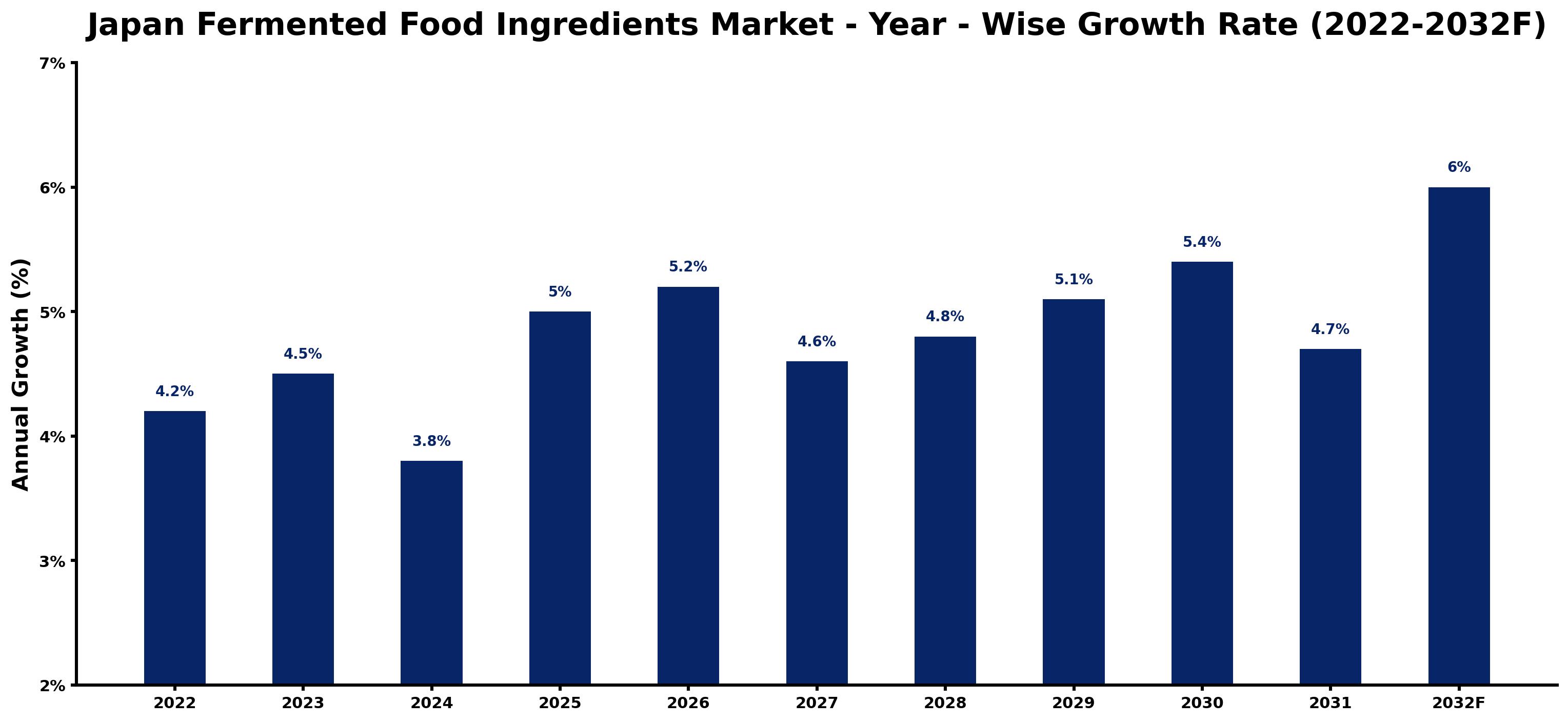
Year by year, the estimates below pair each growth rate with the development that shaped it.
| Year | Estimated Annual Growth (%) | Market Rationale |
| 2022 | 4.2 | The market experienced steady growth due to increasing health-consciousness among consumers. |
| 2023 | 4.5 | Growth accelerated as yogurt consumption rose, driven by evolving dietary preferences. |
| 2024 | 3.8 | A slight slowdown occurred as competition intensified among local producers. |
| 2025 | 5.0 | The market peaked as new fermented products gained widespread popularity. |
| 2026 | 5.2 | Growth is expected to continue as advancements in fermentation technology expand production capabilities. |
| 2027 | 4.6 | A slowdown is projected as market saturation begins to affect growth rates. |
| 2028 | 4.8 | Demand is expected to rebound as new health trends emerge, particularly in beverages. |
| 2029 | 5.1 | Growth is projected to pick up again, supported by rising consumer interest in health foods. |
| 2030 | 5.4 | The market is expected to maintain momentum as traditional fermented foods gain renewed interest. |
| 2031 | 4.7 | A slowdown is projected as the market begins to stabilise post-peak growth. |
| 2032 | 6.0 | The market is expected to peak again as health trends drive new product development. |
Note: Market size estimations and growth projections presented in this report are based on 6Wresearch's proprietary forecasting methodology, utilizing the latest available industry data, government publications, and primary research inputs.
Japan Fermented Food Ingredients Market Synopsis
Fermented food ingredients are substances used in food production, primarily derived from microorganisms like bacteria and yeast. The Japan Fermented Food Ingredients Market is growing due to a thriving food and beverage industry, particularly in dairy and health food sectors. The yogurt market was valued at approximately 400 billion JPY in 2022, while the rising popularity of fermented beverages, including a notable increase in kombucha consumption, further drives demand. This growth reflects a shift towards health-conscious eating habits among consumers in Japan, with fermented products gaining traction across various demographics.
Market Dynamics Impact Analysis (2026–2032)
| Factor | Type | Impact | Primary Segment Affected |
| Growing health consciousness among consumers drives demand for fermented products. | Driver | High | Yogurt |
| Investment in fermentation technology enhances production capabilities. | Driver | High | Yeast |
| Emerging health food trends create demand for innovative fermented products. | Opportunity | High | Kombucha |
| Rising popularity of traditional fermented foods opens new market avenues. | Opportunity | Medium | Sauerkraut |
| Intense competition among local producers pressures profit margins. | Restraint | High | Dairy Processors |
| Regulatory compliance costs can hinder small producers' market entry. | Restraint | Medium | Fermented Food Startups |
| Rising raw material costs strain production budgets for manufacturers. | Challenge | High | Food Producers |
| Capacity constraints limit the ability to meet growing demand. | Challenge | Medium | Beverage Makers |
Evaluation of Drivers in Japan Fermented Food Ingredients Market (2026–2032)
The factors lifting demand, and the evidence behind each, are summarised below.
| Drivers | Primary Segment Affected | Why It Matters (Evidence) |
| Health-conscious consumers are increasingly purchasing yogurt and fermented beverages. | Yogurt | Japan's yogurt market was valued at approximately 400 billion JPY in 2022, reflecting strong consumer interest. |
| Investment in fermentation technology is improving production efficiency. | Yeast | Over 1,000 dairy processing facilities in Japan are adopting advanced fermentation techniques. |
| The rise of health food trends is boosting demand for kombucha and other fermented beverages. | Kombucha | Kombucha consumption has increased by 30% among young consumers since 2020. |
| Growing interest in traditional fermented foods is expanding market opportunities. | Sauerkraut | The traditional method of making miso is recognised as an important cultural heritage in Japan. |
| Increased consumer awareness of probiotics drives demand for lactic acid bacteria. | Lactic Acid Bacteria | Lactic acid bacteria are essential in over 80% of yogurt production in Japan. |
Several shifts outside the market lift sales. The yogurt market, valued at approximately 400 billion JPY in 2022, reflects a growing consumer preference for health-oriented products. Investment in fermentation technology is improving production efficiency, with over 1,000 dairy processing facilities adopting advanced techniques. The rise of health food trends is boosting demand for kombucha, which has seen a notable increase in consumption among young consumers since 2020. Interest in traditional fermented foods is expanding market opportunities, supported by a strong cultural emphasis on culinary heritage. Increased awareness of probiotics further drives demand for lactic acid bacteria, essential in yogurt production.
Evaluation of Restraints in Japan Fermented Food Ingredients Market
The main factors holding the market back are set out below.
| Market Restraint | Primary Segment Affected | Why It Matters (Evidence) |
| Intense competition among local producers pressures profit margins. | Dairy Processors | The market's saturation has led to aggressive pricing strategies, impacting profitability. |
| Regulatory compliance costs can hinder small producers' market entry. | Fermented Food Startups | Smaller companies struggle to meet stringent safety standards, limiting their growth potential. |
| Rising raw material costs strain production budgets for manufacturers. | Food Producers | Increased costs of ingredients affect the pricing strategies of fermented food products. |
| Capacity constraints limit the ability to meet growing demand. | Beverage Makers | Production facilities are often running at full capacity, unable to expand quickly. |
| Market saturation can lead to slower growth rates. | Kombucha | As more brands enter the market, differentiation becomes challenging, impacting sales. |
Japan Fermented Food Ingredients Market Challenges
Japan's food production sector faces a skills shortage, as 29.3% of the population is aged 65 or older, complicating recruitment for producers and delaying output. Rising operational costs present another hurdle; the national minimum wage rose to JPY 1,055 per hour in October 2024, increasing expenses for suppliers and squeezing profit margins. Local producers encounter fierce competition from imported fermented products, which pressures them to reduce prices, potentially compromising quality. Strict regulations from the Japanese Food Safety Agency create compliance challenges for smaller businesses, leading to increased costs and delayed product launches.
Trends in the Japan Fermented Food Ingredients Market
Four trends stand out in the Japan Fermented Food Ingredients Market.
- Shift in Fermented Beverage Popularity: Kombucha has gained traction among young consumers in Japan, with a 30% increase in popularity since 2020. This trend reflects a broader shift towards health-conscious choices, prompting suppliers to innovate and diversify their offerings.
- Transition from Traditional to New Fermented Products: The Japanese market is experiencing a shift from traditional fermented foods to new products like plant-based yogurts. This change is driven by evolving consumer preferences, particularly among younger demographics seeking healthier options.
- Emergence of Health-Conscious Fermented Foods: Health food suppliers are increasingly focusing on fermented products, reporting a 25% increase in sales in 2023. This trend indicates a growing consumer demand for products that promote gut health and overall wellness.
- Growth of Online Distribution Channels: Online ingredient stores are becoming a popular channel for niche fermented products, reflecting changing consumer shopping habits. This shift is particularly evident as more health-conscious consumers seek convenient access to specialty items.
Investment Opportunities in the Japan Fermented Food Ingredients Market
Several openings in the Japan Fermented Food Ingredients Market merit attention from investors.
- Gap in Health-Conscious Product Offerings: With Japan's population showing a growing trend towards health-conscious eating habits, there is an opportunity to supply new fermented products. Health food suppliers are actively seeking ingredients to meet this demand.
- Expansion of Fermented Beverage Market: The rising popularity of kombucha presents an opportunity to supply unique flavours and formulations. Beverage makers are looking for local partners to develop products that cater to health-conscious consumers.
- Investment in Fermented Food Startups: The Tokyo region is a hub for fermented food startups, with significant growth potential. Investing in local partnerships or joint ventures can facilitate market entry and innovation.
- Support for Traditional Fermented Foods: The Japanese government promotes traditional fermented foods through various initiatives, creating opportunities for producers to align with cultural heritage. This approach encourages investments in sustainable practices.
Government Initiatives in the Japan Fermented Food Ingredients Market
The Food Sanitation Act amendment of 2018 introduced a system for approving materials used in food packaging, which ensures food safety. This measure complements existing regulations by ensuring that only verified materials are used in food contact applications, thereby protecting consumer health. The amendment has led to increased scrutiny of food safety practices across the industry, benefiting producers of fermented food ingredients.
Dairy processors benefit from the Food Recycling Law, which mandates food businesses to reduce waste. This law encourages the recycling of food waste into feed or fertiliser, helping dairy processors to comply with sustainability initiatives while also reducing operational costs. It has resulted in significant reductions in waste disposal fees, supporting the overall profitability of dairy operations.
Future Insight of the Japan Fermented Food Ingredients Market
The launch of new fermentation facilities will modernise production methods by 2032, allowing suppliers to increase output. Fermented food consumption is projected to reach 3.5 million tons by 2025, indicating a growing demand for health-focused products. The Ministry of Agriculture, Forestry and Fisheries will fund research initiatives, driving innovation in product development. Culinary events will increasingly highlight fermented ingredients, boosting consumer awareness and interest.
Market Segmentation Analysis
Japan Fermented Food Ingredients Market report covers a detailed analysis of the following market segments:
By Ingredient Type – Lactic Acid Bacteria Leads, Yeast Expected to Grow Fastest
According to Saurav Kr Singh, Senior Research Analyst at 6Wresearch, Lactic Acid Bacteria accounted for 38% of the market by ingredient type in 2025. Lactic acid bacteria play a crucial role in Japan's dairy industry, particularly in yogurt production, which is integral to the local diet. Their presence in over 1,000 dairy processing facilities highlights their importance in maintaining product quality and safety standards. Over 2026–2032, Yeast is expected to post the fastest growth, at a CAGR of 7.2%. Yeast is seeing accelerated growth due to its essential role in bread production, with over 2 million tons produced annually in Japan. As consumer preferences shift towards diverse and artisanal bread varieties, the demand for yeast is expected to continue rising. Suppliers should focus on ensuring a reliable supply of yeast to meet the increasing needs of the expanding bread market.
By Food Product Type – Yogurt Leads, Bread Expected to Grow Fastest
Yogurt held 48% of the Japan Fermented Food Ingredients Market by food product type in 2025. Yogurt dominates the market as a key fermented dairy product, valued at approximately 400 billion JPY in 2022. This strong market position is supported by Japan's cultural affinity for dairy, which ensures consistent consumer demand. The quickest growth will come from Bread, forecast to expand at a CAGR of 7.3% between 2026 and 2032. Bread is experiencing the fastest growth as a staple food, with yeast being a vital ingredient in its production. The growing consumer interest in artisanal and diverse bread options is propelling this segment's rapid expansion. Manufacturers should consider opportunities to innovate and diversify their bread products to take advantage of this growth trend.
By Distribution Channel – Food Ingredient Suppliers Lead, Bakery Distributors Expected to Grow Fastest
In 2025, Food Ingredient Suppliers led the distribution channel split with a 46% share. Food ingredient suppliers are the primary source for manufacturers of fermented products, ensuring a steady supply of essential ingredients. Their established networks and relationships with producers are vital for the smooth operation of the industry. Bakery Distributors are projected to grow fastest, at a CAGR of 6.8% during 2026–2032. Bakery distributors are witnessing rapid growth as they play a key role in supplying yeast and other ingredients directly to bakeries. The rising trend towards artisanal baking is driving the demand for these specialised distribution channels. Distributors need to improve their logistics and inventory management to effectively support the growing bakery market.
By End User – Dairy Processors Lead, Food Producers Expected to Grow Fastest
Dairy Processors took 32% of end user revenue in 2025, more than any other category. Dairy processors are the largest end users of fermented ingredients, primarily for yogurt and cheese production. Their established operations and high demand for quality fermented products solidify their leading position in the market. Food Producers are set to record the highest CAGR in this split, 6.6% over 2026–2032. Food producers are growing quickly as they encompass a broad category of manufacturers creating various fermented goods. The increasing consumer interest in diverse fermented products is driving this segment's expansion. Suppliers should tailor their offerings to meet the diverse needs of food producers as they expand their product ranges.
Key Attractiveness of the Report
- 10 Years of Market Numbers
- Historical Data Starting from 2022 to 2025
- Base Year 2025
- Forecast Data until 2032
- Key Performance Indicators Impacting the Market
- Major Upcoming Developments and Projects
Key Highlights of the Report:
- Japan Fermented Food Ingredients Market Outlook
- Market Size of Japan Fermented Food Ingredients Market, 2025
- Forecast of Japan Fermented Food Ingredients Market, 2032
- Historical Data and Forecast of Japan Fermented Food Ingredients Revenues & Volume for the Period 2022-2032F
- Japan Fermented Food Ingredients Market Trend Evolution
- Japan Fermented Food Ingredients Market Drivers and Challenges
- Japan Fermented Food Ingredients Price Trends
- Japan Fermented Food Ingredients Porter's Five Forces
- Japan Fermented Food Ingredients Industry Life Cycle
- Historical Data and Forecast of Japan Fermented Food Ingredients Market Revenues & Volume By Ingredient Type for the Period 2022-2032F
- Historical Data and Forecast of Japan Fermented Food Ingredients Market Revenues & Volume By Lactic Acid Bacteria for the Period 2022-2032F
- Historical Data and Forecast of Japan Fermented Food Ingredients Market Revenues & Volume By Yeast for the Period 2022-2032F
- Historical Data and Forecast of Japan Fermented Food Ingredients Market Revenues & Volume By Enzymes for the Period 2022-2032F
- Historical Data and Forecast of Japan Fermented Food Ingredients Market Revenues & Volume By Cultures for the Period 2022-2032F
- Historical Data and Forecast of Japan Fermented Food Ingredients Market Revenues & Volume By Food Product Type for the Period 2022-2032F
- Historical Data and Forecast of Japan Fermented Food Ingredients Market Revenues & Volume By Yogurt for the Period 2022-2032F
- Historical Data and Forecast of Japan Fermented Food Ingredients Market Revenues & Volume By Bread for the Period 2022-2032F
- Historical Data and Forecast of Japan Fermented Food Ingredients Market Revenues & Volume By Sauerkraut for the Period 2022-2032F
- Historical Data and Forecast of Japan Fermented Food Ingredients Market Revenues & Volume By Kombucha for the Period 2022-2032F
- Historical Data and Forecast of Japan Fermented Food Ingredients Market Revenues & Volume By Distribution Channel for the Period 2022-2032F
- Historical Data and Forecast of Japan Fermented Food Ingredients Market Revenues & Volume By Food Ingredient Suppliers for the Period 2022-2032F
- Historical Data and Forecast of Japan Fermented Food Ingredients Market Revenues & Volume By Bakery Distributors for the Period 2022-2032F
- Historical Data and Forecast of Japan Fermented Food Ingredients Market Revenues & Volume By Online Ingredient Stores for the Period 2022-2032F
- Historical Data and Forecast of Japan Fermented Food Ingredients Market Revenues & Volume By Health Food Suppliers for the Period 2022-2032F
- Historical Data and Forecast of Japan Fermented Food Ingredients Market Revenues & Volume By End User for the Period 2022-2032F
- Historical Data and Forecast of Japan Fermented Food Ingredients Market Revenues & Volume By Dairy Processors for the Period 2022-2032F
- Historical Data and Forecast of Japan Fermented Food Ingredients Market Revenues & Volume By Food Producers for the Period 2022-2032F
- Historical Data and Forecast of Japan Fermented Food Ingredients Market Revenues & Volume By Fermented Food Startups for the Period 2022-2032F
- Historical Data and Forecast of Japan Fermented Food Ingredients Market Revenues & Volume By Beverage Makers for the Period 2022-2032F
- Japan Fermented Food Ingredients Import Export Trade Statistics
- Market Opportunity Assessment By Ingredient Type
- Market Opportunity Assessment By Food Product Type
- Market Opportunity Assessment By Distribution Channel
- Market Opportunity Assessment By End User
- Japan Fermented Food Ingredients Top Companies Market Share
- Japan Fermented Food Ingredients Competitive Benchmarking By Technical and Operational Parameters
- Japan Fermented Food Ingredients Company Profiles
- Japan Fermented Food Ingredients Key Strategic Recommendations
Market Covered
This report examines the market across the segments below.
By Ingredient Type
- Lactic Acid Bacteria
- Yeast
- Enzymes
- Cultures
By Food Product Type
- Yogurt
- Bread
- Sauerkraut
- Kombucha
By Distribution Channel
- Food Ingredient Suppliers
- Bakery Distributors
- Online Ingredient Stores
- Health Food Suppliers
By End User
- Dairy Processors
- Food Producers
- Fermented Food Startups
- Beverage Makers































