Japan Fireworks Market Size & Growth Rate
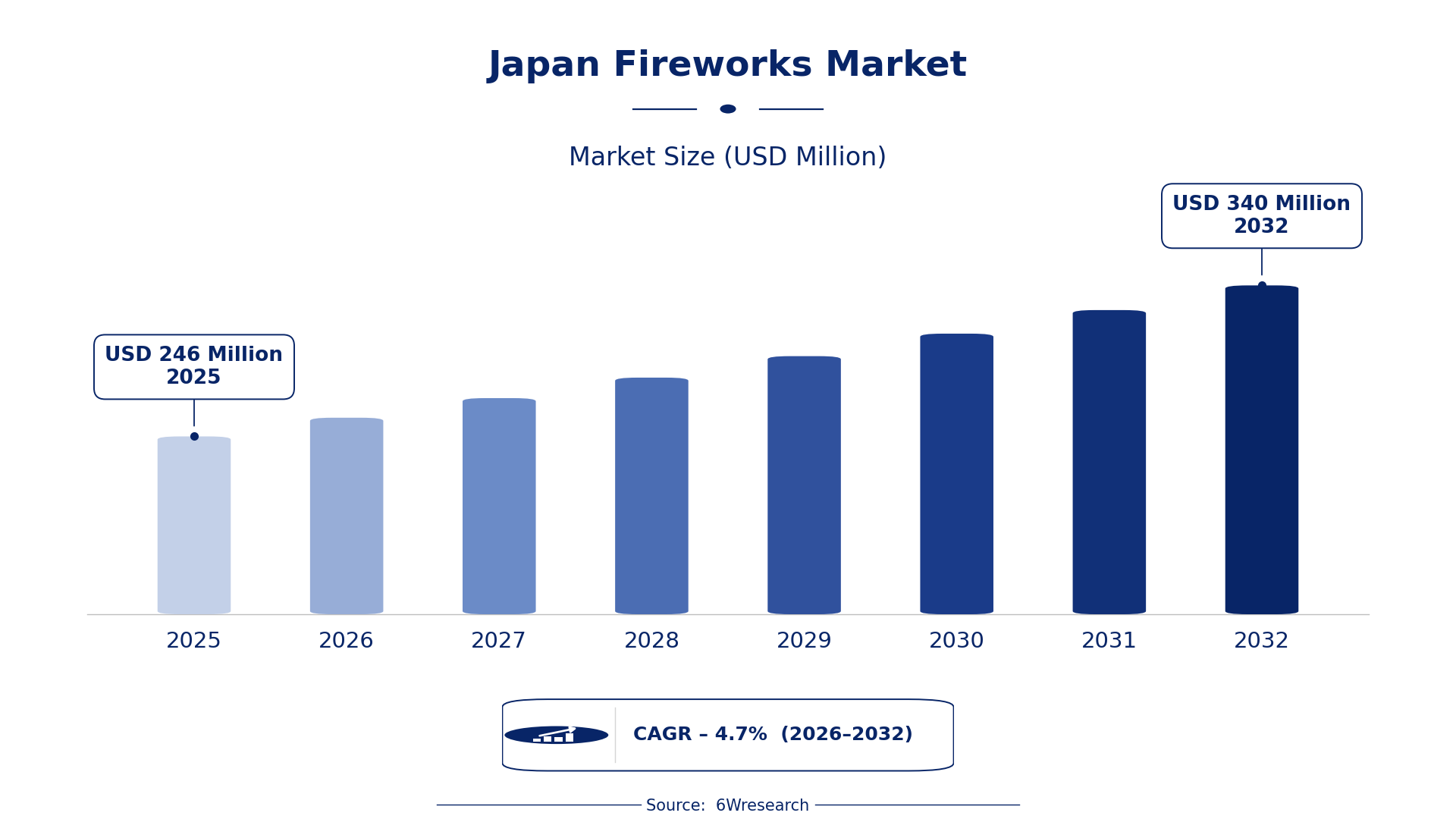
According to 6Wresearch internal database and industry insights, the Japan Fireworks Market was valued at USD 246 Million in 2025 and is projected to reach USD 340 Million by 2032, growing at a CAGR of approximately 4.7% during 2026–2032.
Japan Fireworks Market Highlights
| Report Metric | Details |
| Report Name | Japan Fireworks Market (2026-2032) |
| Market Size 2025 | USD 246 Million |
| Market Size 2032 | USD 340 Million |
| Absolute Growth 2025–2032 | USD 94 Million |
| CAGR 2026–2032 | 4.7% |
| Peak Annual Growth | 6.0% in 2027 |
| Forecast Period | 2026–2032 |
| Historical Data | 2022–2025 |
| Base Year | 2025 |
| Leading Type Coverage, 2025 | Category A (38% share) |
| Leading Application Coverage, 2025 | Government (51% share) |
| Fastest-Growing Type Coverage | Category B (6.4% CAGR) |
| Fastest-Growing Application Coverage | Company (6.0% CAGR) |
| Growing Sector | public celebrations |
| Key End Users | government, companies, individuals |
Japan Fireworks Market Year-wise Growth Rate and Key Drivers (2022–2032)
This graph illustrates the annual growth rates of the market from 2022 to 2032, highlighting a steady upward trajectory and projected market expansion over the forecast period.
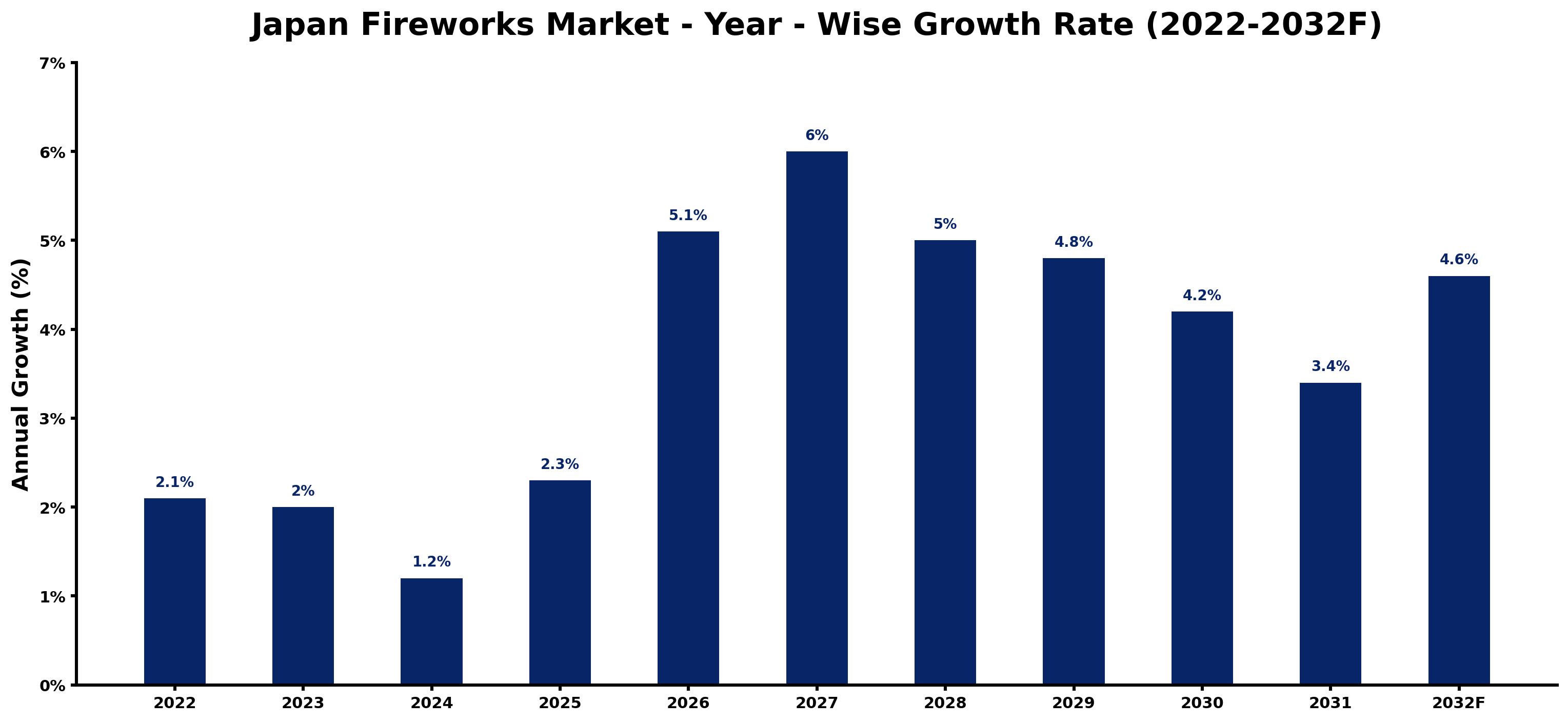
The following figures match every annual growth estimate with the main market development of that year, giving the reasoning behind each rise or slowdown.
| Year | Estimated Annual Growth (%) | Market Rationale |
| 2022 | 2.1 | The market showed steady growth, reflecting consistent demand during summer festivals and New Year's celebrations. |
| 2023 | 2.0 | Demand continued to grow, albeit at a slower pace due to market saturation in urban areas. |
| 2024 | 1.2 | Growth slowed further as fewer large-scale events were held, impacting overall fireworks sales. |
| 2025 | 2.3 | A resurgence in public interest and events led to faster growth, particularly in major cities. |
| 2026 | 5.1 | Increased investment in community festivals and events spurred higher demand for fireworks. |
| 2027 | 6.0 | The market peaked as major festivals attracted large crowds, significantly boosting sales. |
| 2028 | 5.0 | Growth moderated slightly as the market adjusted to the previous year's peak demand. |
| 2029 | 4.8 | Demand continued to slow, reflecting a stabilisation after the peak festival season. |
| 2030 | 4.2 | The market experienced further slowdown as competition from alternative entertainment increased. |
| 2031 | 3.4 | Growth decelerated as consumer spending shifted towards other leisure activities. |
| 2032 | 4.6 | A renewed interest in traditional celebrations is expected to drive growth, increasing fireworks purchases. |
Note: Market size estimations and growth projections presented in this report are based on 6Wresearch's proprietary forecasting methodology, utilizing the latest available industry data, government publications, and primary research inputs.
Japan Fireworks Market Synopsis
Fireworks are pyrotechnic devices that create visual and auditory effects through combustion, primarily used in celebrations, festivals, and public displays. The Japan Fireworks Market is growing due to high demand from domestic users, particularly during summer festivals and New Year's celebrations. Major events, such as the Tokyo Bay Fireworks Festival, attract over 1 million spectators annually, driving increased purchases. The government's allocation of ¥500 million for promoting traditional festivals further supports this growth, indicating a strong market potential.
Market Dynamics Impact Analysis (2026–2032)
| Factor | Type | Impact | Primary Segment Affected |
| High demand during summer festivals and New Year's celebrations drives fireworks sales. | Driver | High | Category A |
| Investment in local festivals enhances community engagement and fireworks displays. | Driver | High | Government |
| Growing interest in corporate events creates a need for fireworks displays. | Opportunity | Medium | Category B |
| Increasing public funding for cultural events opens new avenues for fireworks sales. | Opportunity | Medium | Government |
| Strict safety regulations can limit the types of fireworks available for sale. | Restraint | High | Category A |
| High production costs may deter small-scale manufacturers from entering the market. | Restraint | Medium | Category B |
| Rising competition from alternative entertainment options challenges fireworks sales. | Challenge | High | Individual |
| Seasonal demand fluctuations lead to unpredictable sales patterns for suppliers. | Challenge | Medium | Company |
Evaluation of Drivers in Japan Fireworks Market (2026–2032)
Key forces behind demand, with the segment each one moves most, are listed below.
| Drivers | Primary Segment Affected | Why It Matters (Evidence) |
| High population density in urban areas increases demand for fireworks during festivals. | Category A | Japan's population of approximately 125 million contributes to significant fireworks sales during major events. |
| Government funding for traditional festivals encourages local municipalities to organise fireworks displays. | Government | In 2023, ¥500 million was allocated to promote traditional festivals, boosting fireworks usage. |
| Corporate events increasingly incorporate fireworks to enhance celebrations and promotions. | Category B | The trend towards extravagant corporate events drives demand for fireworks as a visual spectacle. |
| The popularity of large public displays, such as the Tokyo Bay Fireworks Festival, boosts sales. | Category A | This festival attracts over 1 million spectators annually, significantly increasing fireworks purchases. |
| Cultural significance of fireworks during New Year celebrations drives consistent demand. | Individual | Households spend an average of ¥10,000 on fireworks during festive occasions. |
What keeps demand rising is the high population density in urban areas, leading to increased fireworks sales during festivals, especially in regions like Tokyo and Osaka. Corporate events are incorporating fireworks more frequently, as companies seek to create memorable experiences. The Tokyo Bay Fireworks Festival, attracting over 1 million spectators, illustrates the popularity of large public displays, further driving demand. Households also contribute significantly, with average expenditures of ¥10,000 during New Year celebrations.
Evaluation of Restraints in Japan Fireworks Market
The main factors holding the market back are set out below.
| Market Restraint | Primary Segment Affected | Why It Matters (Evidence) |
| Safety regulations limit the types of fireworks available for public use. | Category A | The Industrial Standardization Act governs the use and storage of fireworks, ensuring public safety. |
| High production costs deter small manufacturers from entering the fireworks market. | Category B | Manufacturers face costs in adhering to JIS safety standards, impacting pricing. |
| Seasonal demand fluctuations create uncertainty for suppliers and retailers. | Individual | Sales peak during summer festivals, causing unpredictable revenue streams for businesses. |
| Competition from alternative entertainment options reduces fireworks sales. | Company | As consumer preferences shift towards other forms of entertainment, demand for fireworks may decline. |
| Limited marketing channels restrict visibility for smaller fireworks producers. | Category C | Smaller producers struggle to compete with established brands in promotional activities. |
Japan Fireworks Market Challenges
Producers encounter skills shortages as fewer young workers are attracted to the fireworks industry, leading to production delays that can extend timelines for festivals. Technology adoption is slow, resulting in outdated manufacturing processes that can increase costs for suppliers by 20%. Competition from alternative entertainment, such as digital displays, forces fireworks producers to lower prices, reducing profit margins by 15% for local manufacturers. Regulatory compliance with the Fireworks Safety Act demands significant investment, costing producers approximately ¥50 million annually, which can hinder smaller businesses from maintaining operations.
Trends in the Japan Fireworks Market
The following changes are redrawing the Japan Fireworks Market.
- Shift from Traditional to Modern Fireworks Displays: A noticeable change is occurring towards modern fireworks displays that incorporate technology and artistry. Events like the Tokyo Bay Fireworks Festival have begun integrating digital elements, attracting over 1 million spectators annually.
- Transition from Public to Private Fireworks Events: A growing trend of private fireworks displays for corporate events and celebrations is emerging. Corporate clients are increasingly investing in bespoke fireworks shows, contributing to rising demand for Category B fireworks.
- Emergence of Eco-Friendly Fireworks: Eco-friendly fireworks are gaining traction as environmental awareness increases. In 2023, several municipalities adopted eco-friendly standards, prompting suppliers to innovate and meet new consumer expectations.
- Prioritisation of Safety in Fireworks Production: Safety has become a top priority in fireworks production, with stricter adherence to safety standards. Manufacturers are investing in compliance measures to ensure public safety, impacting production costs.
Investment Opportunities in the Japan Fireworks Market
Investors looking at the Japan Fireworks Market should consider the following areas.
- Osaka's Summer Festivals: Osaka hosts numerous summer festivals, creating a demand for fireworks displays. With an estimated ¥500 million allocated for local events, suppliers can partner with municipalities to meet this need.
- Corporate Celebrations: Corporate events are increasingly incorporating fireworks, with a growing market for bespoke displays. Companies are willing to invest, providing an opportunity for suppliers to offer tailored services.
- Local Community Events: Local municipalities are allocating funds for community celebrations, with an average budget of ¥10 million per event. Suppliers can engage with these municipalities to provide fireworks for public displays.
- Cultural Festivals: Cultural festivals across Japan are expanding, creating a gap in the market for fireworks. With an average household expenditure of ¥10,000 during festivals, suppliers can target this consumer segment effectively.
Government Initiatives in the Japan Fireworks Market
The Industrial Standardization Act governs the safety standards for fireworks manufacturing, ensuring compliance with JIS regulations. This act mandates that producers adhere to strict testing and quality assurance processes, which impacts production costs and market entry for new suppliers. Additionally, the Act against Unjustifiable Premiums and Misleading Representations prohibits misleading advertising, ensuring consumers receive accurate information about fireworks products.
Municipalities utilise government funding to support fireworks displays during cultural events. For instance, the ¥500 million allocated in 2023 for traditional festivals enables municipalities to organise large-scale fireworks shows, enhancing community engagement and boosting local economies. This funding encourages more frequent public displays, benefiting both suppliers and local economies.
Future Insight of the Japan Fireworks Market
Households will alter their spending patterns by 2032, with average expenditure on fireworks during festivals projected to rise to ¥15,000, influenced by community engagement initiatives. Technological advancements in fireworks manufacturing will improve production efficiency, allowing suppliers to respond to increased demand effectively. Enhanced funding for traditional festivals will enable local municipalities to organise more events, increasing market participation. Stricter safety standards from the JIS will build consumer confidence in fireworks, leading to a rise in public displays.
Market Segmentation Analysis
Japan Fireworks Market report covers a detailed analysis of the following market segments:
By Type Coverage – Category A Leads, Category B Expected to Grow Fastest
According to Ravi Bhandari, Research Head at 6Wresearch, Category A held 38% of the Japan Fireworks Market by type coverage in 2025. Category A fireworks dominate the market due to their essential role in large public displays and festivals, attracting millions of spectators. Events like the Tokyo Bay Fireworks Festival highlight the significant demand for these fireworks during major celebrations. Over 2026–2032, Category B is expected to post the fastest growth, at a CAGR of 6.4%. Category B fireworks are experiencing rapid growth as an increasing number of corporate events incorporate fireworks for promotional purposes. This trend is evident as businesses actively seek to make their events more memorable through the use of fireworks. Suppliers should focus on expanding their Category B product range to meet the rising demand from the corporate sector.
By Application Coverage – Government Leads, Company Expected to Grow Fastest
In 2025, Government led the application coverage split with a 51% share. The government sector leads the market as it sponsors numerous public celebrations and events, ensuring a consistent demand for fireworks. The government's allocation of ¥500 million for traditional festivals illustrates its commitment to supporting fireworks displays. Company is projected to grow fastest, at a CAGR of 6.0% during 2026–2032. Company applications are growing swiftly as more businesses adopt fireworks for promotional events and corporate celebrations. This shift indicates a rising trend of integrating fireworks into corporate festivities, especially during peak seasons. Corporate buyers may find new opportunities to enhance their events with fireworks, prompting suppliers to adjust their offerings accordingly.
Key Attractiveness of the Report
- 10 Years of Market Numbers
- Historical Data Starting from 2022 to 2025
- Base Year 2025
- Forecast Data until 2032
- Key Performance Indicators Impacting the Market
- Major Upcoming Developments and Projects
Key Highlights of the Report:
- Japan Fireworks Market Outlook
- Market Size of Japan Fireworks Market, 2025
- Forecast of Japan Fireworks Market, 2032
- Historical Data and Forecast of Japan Fireworks Revenues & Volume for the Period 2022-2032
- Japan Fireworks Market Trend Evolution
- Japan Fireworks Market Drivers and Challenges
- Japan Fireworks Price Trends
- Japan Fireworks Porter's Five Forces
- Japan Fireworks Industry Life Cycle
- Historical Data and Forecast of Japan Fireworks Market Revenues & Volume By Type Coverage for the Period 2022-2032
- Historical Data and Forecast of Japan Fireworks Market Revenues & Volume By Category A for the Period 2022-2032
- Historical Data and Forecast of Japan Fireworks Market Revenues & Volume By Category B for the Period 2022-2032
- Historical Data and Forecast of Japan Fireworks Market Revenues & Volume By Category C for the Period 2022-2032
- Historical Data and Forecast of Japan Fireworks Market Revenues & Volume By Category D for the Period 2022-2032
- Historical Data and Forecast of Japan Fireworks Market Revenues & Volume By Application Coverage for the Period 2022-2032
- Historical Data and Forecast of Japan Fireworks Market Revenues & Volume By Government for the Period 2022-2032
- Historical Data and Forecast of Japan Fireworks Market Revenues & Volume By Company for the Period 2022-2032
- Historical Data and Forecast of Japan Fireworks Market Revenues & Volume By Individual for the Period 2022-2032
- Historical Data and Forecast of Japan Fireworks Market Revenues & Volume By Others for the Period 2022-2032
- Japan Fireworks Import Export Trade Statistics
- Market Opportunity Assessment By Type Coverage
- Market Opportunity Assessment By Application Coverage
- Japan Fireworks Top Companies Market Share
- Japan Fireworks Competitive Benchmarking By Technical and Operational Parameters
- Japan Fireworks Company Profiles
- Japan Fireworks Key Strategic Recommendations
Market Covered
The report covers the following segments.
By Type Coverage
- Category A
- Category B
- Category C
- Category D
By Application Coverage
- Government
- Company
- Individual
- Others































