Japan Fleet Analytics Market Size & Growth Rate
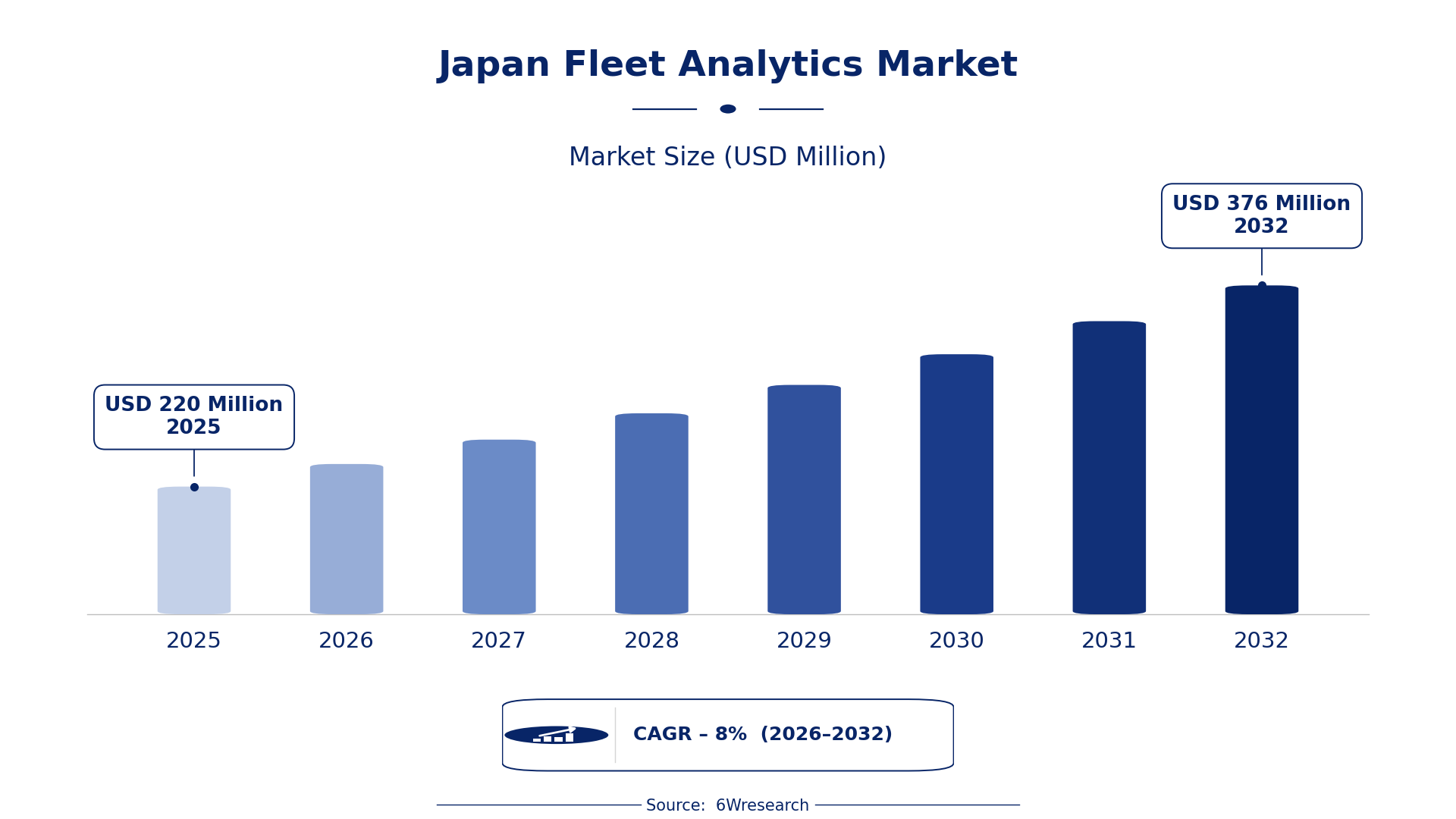
According to 6Wresearch internal database and industry insights, the Japan Fleet Analytics Market was valued at USD 220 Million in 2025 and is projected to reach USD 376 Million by 2032, growing at a CAGR of approximately 8% during 2026–2032.
Japan Fleet Analytics Market Highlights
| Report Metric | Details |
| Report Name | Japan Fleet Analytics Market (2026-2032) |
| Market Size 2025 | USD 220 Million |
| Market Size 2032 | USD 376 Million |
| Absolute Growth 2025–2032 | USD 156 Million |
| CAGR 2026–2032 | 8% |
| Peak Annual Growth | 9.6% in 2032 |
| Forecast Period | 2026–2032 |
| Historical Data | 2022–2025 |
| Base Year | 2025 |
| Leading Analytics Type, 2025 | Predictive Analytics (36% share) |
| Leading Use Case, 2025 | Maintenance Forecast (55% share) |
| Leading Distribution Channel, 2025 | SaaS Providers (47% share) |
| Leading End User, 2025 | Logistics Companies (35% share) |
| Fastest-Growing Analytics Type | Descriptive Analytics (11.3% CAGR) |
| Fastest-Growing Use Case | Route Efficiency (10.8% CAGR) |
| Fastest-Growing Distribution Channel | Online Platforms (10.5% CAGR) |
| Fastest-Growing End User | Transport Aggregators (10.4% CAGR) |
| Growing Sector | Transport Aggregators |
| Key End Users | Logistics Companies, Transport Aggregators, Corporate Fleet Managers, Delivery Service Providers |
Japan Fleet Analytics Market Year-wise Growth Rate and Key Drivers (2022–2032)
This graph illustrates the annual growth rates of the market from 2022 to 2032, highlighting a steady upward trajectory and projected market expansion over the forecast period.
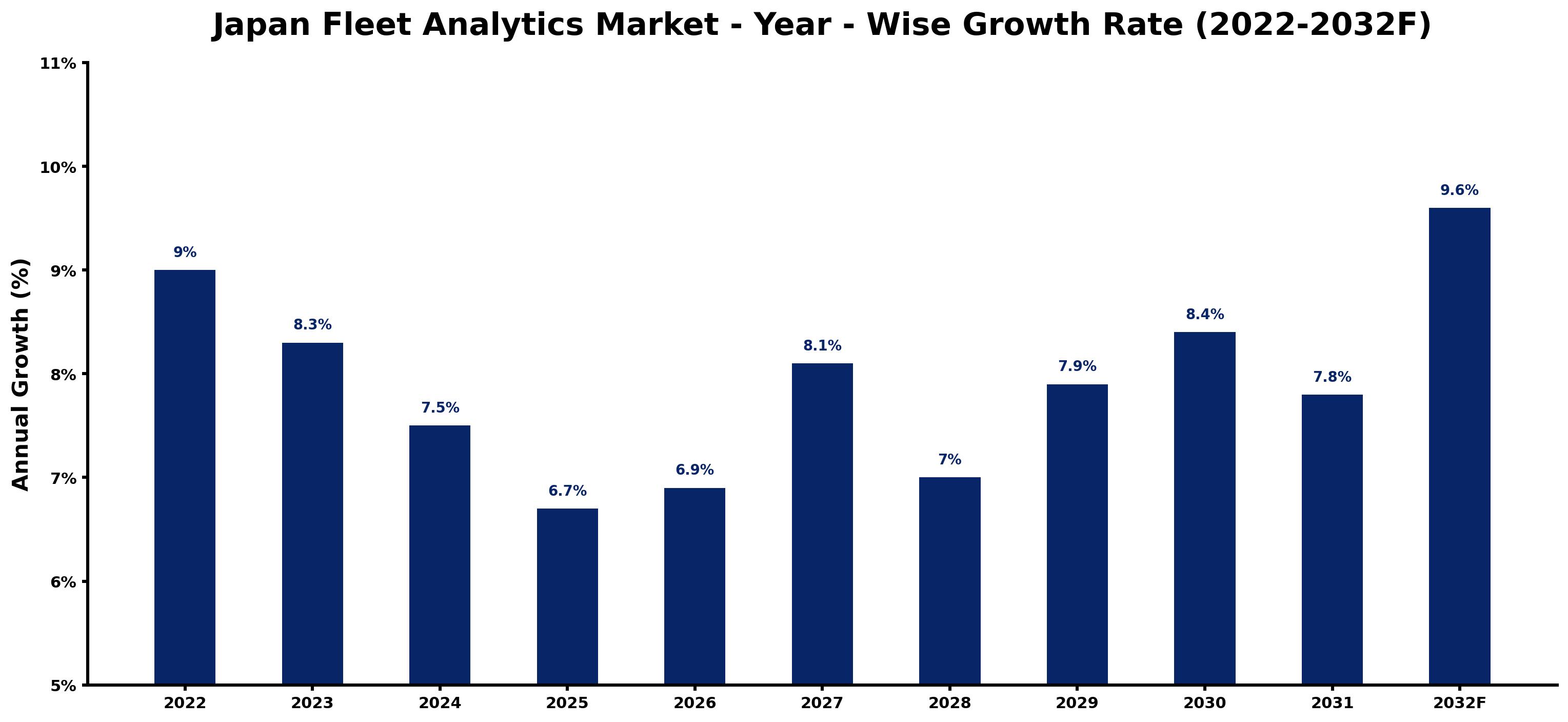
For each year, the table pairs the estimated growth rate with the leading influence on demand, showing how the drivers changed across the period.
| Year | Estimated Annual Growth (%) | Market Rationale |
| 2022 | 9.0 | The market experienced strong demand from logistics companies and fleet operators. |
| 2023 | 8.3 | Growth slowed as companies adjusted to previous investments in fleet analytics technology. |
| 2024 | 7.5 | Demand continued to rise, but at a slower pace due to market saturation. |
| 2025 | 6.7 | The market saw further slow growth as logistics firms focused on cost management. |
| 2026 | 6.9 | Growth is expected to accelerate as new technologies improve fleet management capabilities. |
| 2027 | 8.1 | Demand will increase with more logistics companies adopting advanced analytics solutions. |
| 2028 | 7.0 | Growth is projected to slow again as the market matures and competition intensifies. |
| 2029 | 7.9 | Demand is expected to rise as fleet operators seek efficiency improvements amid rising costs. |
| 2030 | 8.4 | Growth will continue as more companies recognise the value of real-time analytics. |
| 2031 | 7.8 | The market is projected to grow at a slower rate as the focus shifts to integration of solutions. |
| 2032 | 9.6 | Demand will peak with substantial investments in predictive analytics technologies. |
Note: Market size estimations and growth projections presented in this report are based on 6Wresearch's proprietary forecasting methodology, utilizing the latest available industry data, government publications, and primary research inputs.
Japan Fleet Analytics Market Synopsis
Fleet analytics utilises data analysis to optimise fleet management by integrating telematics devices with software platforms. In Japan, logistics companies are major users, driving demand for improved operational efficiency and cost reduction. The market is expanding due to a growing adoption of fleet management software, currently at around 30%. Initiatives like the Tokyo Metropolitan Government's smart logistics programme stimulate investment in advanced analytics solutions, further supporting market growth.
Market Dynamics Impact Analysis (2026–2032)
| Factor | Type | Impact | Primary Segment Affected |
| Growing adoption of telematics devices | Driver | High | Predictive Analytics |
| Increasing focus on operational efficiency | Driver | High | Maintenance Forecast |
| Rising demand for real-time decision-making | Opportunity | High | Real-Time Analytics |
| Expansion of logistics operations in urban areas | Opportunity | Medium | Route Efficiency |
| Limited awareness of analytics benefits | Restraint | Medium | Descriptive Analytics |
| High initial investment costs for analytics solutions | Restraint | High | Diagnostic Analytics |
| Competition from alternative fleet management solutions | Challenge | High | Vehicle Health |
| Slow integration of new technologies into existing systems | Challenge | Medium | Fuel Optimization |
Evaluation of Drivers in Japan Fleet Analytics Market (2026–2032)
Key forces behind demand, with the segment each one moves most, are listed below.
| Drivers | Primary Segment Affected | Why It Matters (Evidence) |
| Increasing investment in telematics | Predictive Analytics | This investment leads to better forecasting of maintenance needs, improving operational efficiency for logistics companies. |
| Focus on reducing operational costs | Maintenance Forecast | Logistics companies are investing in analytics to lower servicing costs, which account for approximately 30% of their expenses. |
| Demand for real-time data access | Real-Time Analytics | Real-time tracking is increasingly adopted in urban logistics, enabling immediate decision-making and improving delivery efficiency. |
| Urban logistics expansion | Route Efficiency | As urban areas grow, logistics firms are optimising delivery routes to reduce costs and improve service levels. |
| Growing awareness of analytics benefits | Descriptive Analytics | More logistics companies are recognising the value of insights from past performance data, driving demand for these analytics solutions. |
The strongest pull on demand comes from the increasing investment in telematics devices, with over 4 million registered commercial vehicles in Japan. This investment enhances predictive analytics capabilities, allowing logistics companies to forecast maintenance needs more accurately. The focus on reducing operational costs drives demand for maintenance forecasting solutions, as servicing expenses account for approximately 30% of logistics costs. Real-time analytics adoption is rising, particularly in urban logistics, enabling immediate decision-making and improving delivery efficiency. The expansion of urban logistics operations encourages firms to optimise delivery routes, thus increasing the need for route efficiency analytics.
Evaluation of Restraints in Japan Fleet Analytics Market
These are the pressures that could keep growth below its potential.
| Market Restraint | Primary Segment Affected | Why It Matters (Evidence) |
| Limited awareness of analytics benefits among smaller firms | Descriptive Analytics | Many smaller logistics companies lack knowledge about the advantages of analytics, hindering their adoption of these solutions. |
| High initial investment costs for advanced analytics solutions | Diagnostic Analytics | The cost of implementing sophisticated analytics systems can be prohibitive for some logistics companies, slowing market growth. |
| Competition from alternative fleet management solutions | Vehicle Health | Alternative solutions may offer lower costs or simpler implementations, diverting attention from advanced analytics. |
| Slow integration of new technologies into existing systems | Fuel Optimization | Logistics companies often face challenges in integrating new analytics technologies with legacy systems, delaying adoption. |
| Data privacy concerns regarding telematics usage | Real-Time Analytics | Concerns over data security may prevent some companies from fully utilising real-time analytics capabilities. |
Japan Fleet Analytics Market Challenges
Buyers face escalating operational costs, as fuel expenses constitute around 30% of total logistics expenditures. Competition intensifies because only 30% of logistics companies have embraced fleet management software, leaving many unable to optimise their operations effectively. Regulatory pressures from the Ministry of Land, Infrastructure, Transport and Tourism necessitate compliance with the JIS B 8001 standard, delaying fleet upgrades for producers. Technology gaps are evident, with the average age of commercial vehicles at about 10 years, resulting in higher maintenance costs and inefficiencies for buyers.
Trends in the Japan Fleet Analytics Market
Buyers and suppliers in the Japan Fleet Analytics Market are adjusting to the following trends.
- Shift Towards Real-Time Fleet Tracking: Real-time fleet tracking is becoming increasingly prevalent in urban areas, with the Tokyo Metropolitan Government promoting smart logistics initiatives. This shift is improving operational efficiency and service delivery for logistics companies.
- Growing Emphasis on Predictive Maintenance: The adoption of predictive maintenance analytics is rising, with logistics companies aiming to reduce downtime. Approximately 30% of firms are now using predictive analytics to forecast maintenance needs, improving fleet reliability.
- Increased Use of Online Platforms for Analytics: Online platforms for accessing fleet analytics tools are gaining traction, particularly among logistics companies. With a projected growth of 10.5% in this segment, firms are utilising these solutions for better data accessibility.
- Focus on Fuel Optimization Technologies: Fuel optimization is becoming a priority for logistics firms as fuel costs account for about 30% of their expenses. Companies are investing in analytics solutions to manage fuel consumption more effectively.
Investment Opportunities in the Japan Fleet Analytics Market
The following areas offer the clearest openings for investors and suppliers in the Japan Fleet Analytics Market.
- Supply Advanced Analytics Solutions: There is a growing demand for advanced analytics solutions in Japan, with the logistics sector valued at approximately ¥20 trillion. Partnering with logistics companies can facilitate market entry and drive revenue.
- Invest in Predictive Maintenance Tools: With the average age of commercial vehicles around 10 years, there is an opportunity for predictive maintenance tools. Logistics firms are seeking solutions to enhance vehicle reliability and reduce downtime.
- Develop Real-Time Tracking Systems: As real-time tracking becomes more critical, the market gap for innovative tracking systems is expanding. Collaborating with urban logistics providers can help penetrate this growing segment.
- Enhance Fuel Management Solutions: With fuel costs accounting for 30% of logistics expenses, there is a pressing need for effective fuel management solutions. Engaging with corporate fleet managers can open new avenues for growth.
Government Initiatives in the Japan Fleet Analytics Market
The green transportation initiative launched in 2023 aims to reduce emissions and promote cleaner technologies in the logistics sector. This initiative complements existing regulations, such as the JIS B 8001 standard, which governs fleet management systems, ensuring compliance and enhancing operational efficiency.
The Ministry of Land, Infrastructure, Transport and Tourism oversees the implementation of these regulations, providing guidelines and support for logistics companies. The agency also facilitates funding for projects that align with the green transportation initiative, promoting sustainable practices in fleet management.
Future Insight of the Japan Fleet Analytics Market
Real-time tracking technology will transform demand by 2032, driven by smart logistics initiatives in urban areas. The green transportation initiative launched by the government will compel suppliers to create cleaner operational solutions. Fleet management software adoption is expected to rise significantly, enhancing operational efficiency for buyers. As logistics operations evolve, the integration of advanced analytics solutions will become crucial for maintaining competitiveness.
Market Segmentation Analysis
Japan Fleet Analytics Market report covers a detailed analysis of the following market segments:
By Analytics Type – Predictive Analytics Leads, Descriptive Analytics Expected to Grow Fastest
According to Saurav Kr Singh, Senior Research Analyst at 6Wresearch, Predictive Analytics accounted for 36% of the market by analytics type in 2025. Predictive analytics holds the largest share as it is essential for forecasting maintenance needs based on data trends, crucial for effective fleet management. Logistics companies in Tokyo rely on predictive analytics to minimise downtime and optimise vehicle performance. Descriptive Analytics is projected to grow fastest, at a CAGR of 11.3% during 2026–2032. Descriptive analytics is experiencing rapid growth because it provides insights into past fleet performance, allowing companies to make better-informed decisions. This segment's expansion is particularly evident as logistics firms in Osaka increasingly adopt these analytics to refine their operational strategies. Suppliers should prioritise the development of descriptive analytics solutions to meet the rising demand from logistics companies.
By Use Case – Maintenance Forecast Leads, Route Efficiency Expected to Grow Fastest
Maintenance Forecast took 55% of use case revenue in 2025, more than any other category. Maintenance forecast is the leading use case due to its importance in planning vehicle servicing schedules, which is vital for ensuring operational efficiency in logistics. With the average age of commercial vehicles in Japan being around 10 years, maintenance forecasting becomes essential to avoid breakdowns. Over 2026–2032, Route Efficiency is expected to post the fastest growth, at a CAGR of 10.8%. Route efficiency is the fastest-growing use case as it is vital for optimising delivery routes and cutting costs, particularly in urban centres like Tokyo. The increasing demand for improved delivery times is propelling the growth of this segment. Buyers should invest in solutions that enhance route efficiency to stay competitive in the logistics market.
By Distribution Channel – SaaS Providers Lead, Online Platforms Expected to Grow Fastest
The largest distribution channel category in 2025 was SaaS Providers, at 47% of revenue. SaaS providers dominate the distribution channel as they serve as the primary delivery method for fleet analytics solutions, offering flexibility and scalability. The widespread adoption of cloud-based services among logistics companies in Japan further solidifies this segment's leadership. The quickest growth will come from Online Platforms, forecast to expand at a CAGR of 10.5% between 2026 and 2032. Online platforms are growing rapidly as they are widely used for accessing fleet analytics tools, making them more accessible to smaller logistics firms. The trend towards digitalisation in the logistics sector is driving this growth. Suppliers must invest in online platforms to meet the increasing demand for accessible fleet analytics solutions.
By End User – Logistics Companies Lead, Transport Aggregators Expected to Grow Fastest
With 35% of end user revenue in 2025, Logistics Companies was the largest category. Logistics companies form the largest end user group, employing fleet analytics to achieve operational efficiency in managing their extensive vehicle fleets. The logistics sector in Japan, valued at approximately ¥20 trillion, highlights the significance of analytics in this industry. Transport Aggregators are set to record the highest CAGR in this split, 10.4% over 2026–2032. Transport aggregators are the fastest-growing end user group as they increasingly utilise analytics for fleet management and optimisation, reflecting a shift towards more integrated logistics solutions. The growth of e-commerce is propelling this segment forward. Suppliers should customise their offerings to address the specific requirements of transport aggregators to seize this growth opportunity.
Key Attractiveness of the Report
- 10 Years of Market Numbers
- Historical Data Starting from 2022 to 2025
- Base Year 2025
- Forecast Data until 2032
- Key Performance Indicators Impacting the Market
- Major Upcoming Developments and Projects
Key Highlights of the Report:
- Japan Fleet Analytics Market Outlook
- Market Size of Japan Fleet Analytics Market, 2025
- Forecast of Japan Fleet Analytics Market, 2032
- Historical Data and Forecast of Japan Fleet Analytics Revenues & Volume for the Period 2022-2032F
- Japan Fleet Analytics Market Trend Evolution
- Japan Fleet Analytics Market Drivers and Challenges
- Japan Fleet Analytics Price Trends
- Japan Fleet Analytics Porter's Five Forces
- Japan Fleet Analytics Industry Life Cycle
- Historical Data and Forecast of Japan Fleet Analytics Market Revenues & Volume By Analytics Type for the Period 2022-2032F
- Historical Data and Forecast of Japan Fleet Analytics Market Revenues & Volume By Predictive Analytics for the Period 2022-2032F
- Historical Data and Forecast of Japan Fleet Analytics Market Revenues & Volume By Descriptive Analytics for the Period 2022-2032F
- Historical Data and Forecast of Japan Fleet Analytics Market Revenues & Volume By Diagnostic Analytics for the Period 2022-2032F
- Historical Data and Forecast of Japan Fleet Analytics Market Revenues & Volume By Real-Time Analytics for the Period 2022-2032F
- Historical Data and Forecast of Japan Fleet Analytics Market Revenues & Volume By Use Case for the Period 2022-2032F
- Historical Data and Forecast of Japan Fleet Analytics Market Revenues & Volume By Maintenance Forecast for the Period 2022-2032F
- Historical Data and Forecast of Japan Fleet Analytics Market Revenues & Volume By Route Efficiency for the Period 2022-2032F
- Historical Data and Forecast of Japan Fleet Analytics Market Revenues & Volume By Vehicle Health for the Period 2022-2032F
- Historical Data and Forecast of Japan Fleet Analytics Market Revenues & Volume By Fuel Optimization for the Period 2022-2032F
- Historical Data and Forecast of Japan Fleet Analytics Market Revenues & Volume By Distribution Channel for the Period 2022-2032F
- Historical Data and Forecast of Japan Fleet Analytics Market Revenues & Volume By SaaS Providers for the Period 2022-2032F
- Historical Data and Forecast of Japan Fleet Analytics Market Revenues & Volume By Online Platforms for the Period 2022-2032F
- Historical Data and Forecast of Japan Fleet Analytics Market Revenues & Volume By OEM Integrators for the Period 2022-2032F
- Historical Data and Forecast of Japan Fleet Analytics Market Revenues & Volume By Direct Sales for the Period 2022-2032F
- Historical Data and Forecast of Japan Fleet Analytics Market Revenues & Volume By End User for the Period 2022-2032F
- Historical Data and Forecast of Japan Fleet Analytics Market Revenues & Volume By Logistics Companies for the Period 2022-2032F
- Historical Data and Forecast of Japan Fleet Analytics Market Revenues & Volume By Transport Aggregators for the Period 2022-2032F
- Historical Data and Forecast of Japan Fleet Analytics Market Revenues & Volume By Corporate Fleet Managers for the Period 2022-2032F
- Historical Data and Forecast of Japan Fleet Analytics Market Revenues & Volume By Delivery Service Providers for the Period 2022-2032F
- Japan Fleet Analytics Import Export Trade Statistics
- Market Opportunity Assessment By Analytics Type
- Market Opportunity Assessment By Use Case
- Market Opportunity Assessment By Distribution Channel
- Market Opportunity Assessment By End User
- Japan Fleet Analytics Top Companies Market Share
- Japan Fleet Analytics Competitive Benchmarking By Technical and Operational Parameters
- Japan Fleet Analytics Company Profiles
- Japan Fleet Analytics Key Strategic Recommendations
Market Covered
Coverage by segment is as follows.
By Analytics Type
- Predictive Analytics
- Descriptive Analytics
- Diagnostic Analytics
- Real-Time Analytics
By Use Case
- Maintenance Forecast
- Route Efficiency
- Vehicle Health
- Fuel Optimization
By Distribution Channel
- SaaS Providers
- Online Platforms
- OEM Integrators
- Direct Sales
By End User
- Logistics Companies
- Transport Aggregators
- Corporate Fleet Managers
- Delivery Service Providers































