Japan Gluten Free Flour Market Size & Growth Rate
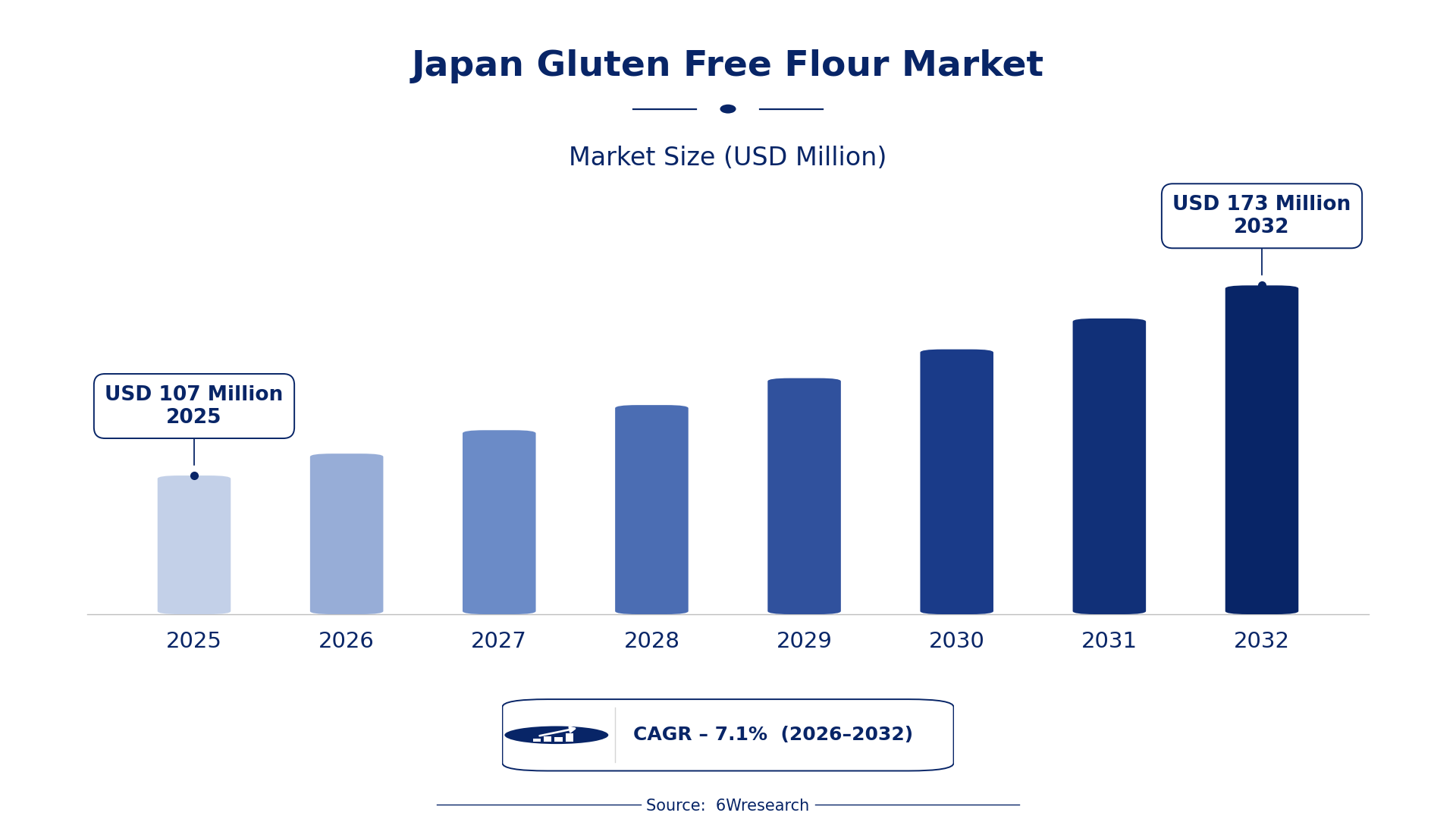
According to 6Wresearch internal database and industry insights, the Japan Gluten Free Flour Market was valued at USD 107 Million in 2025 and is projected to reach USD 173 Million by 2032, growing at a CAGR of approximately 7.1% during 2026–2032.
Japan Gluten Free Flour Market Highlights
| Report Metric | Details |
| Report Name | Japan Gluten Free Flour Market (2026-2032) |
| Market Size 2025 | USD 107 Million |
| Market Size 2032 | USD 173 Million |
| Absolute Growth 2025–2032 | USD 66 Million |
| CAGR 2026–2032 | 7.1% |
| Peak Annual Growth | 8.2% in 2027 |
| Forecast Period | 2026–2032 |
| Historical Data | 2022–2025 |
| Base Year | 2025 |
| Leading Product, 2025 | Amaranth Flour (47% share) |
| Leading Source, 2025 | Cereals (62% share) |
| Leading Application, 2025 | Bread and Bakery Products (49% share) |
| Fastest-Growing Product | Almond Flour (9.6% CAGR) |
| Fastest-Growing Source | Legumes (9.3% CAGR) |
| Fastest-Growing Application | Soups and Sauces (9.8% CAGR) |
| Growing Sector | gluten-free bakery products |
| Key End Users | health-conscious consumers, celiac disease patients, food manufacturers |
Japan Gluten Free Flour Market Year-wise Growth Rate and Key Drivers (2022–2032)
This graph illustrates the annual growth rates of the market from 2022 to 2032, highlighting a steady upward trajectory and projected market expansion over the forecast period.
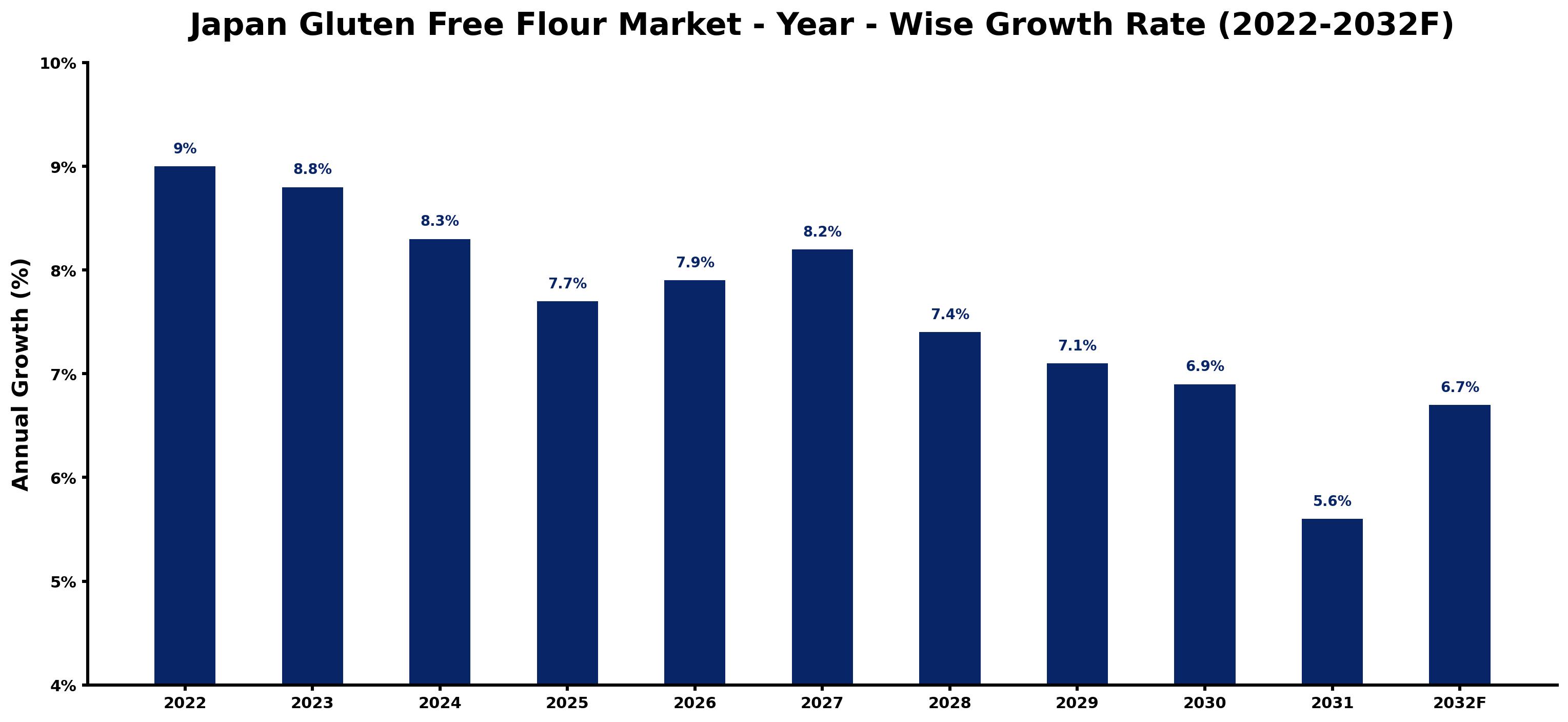
Annual growth estimates for each year appear below with the principal reason behind them, explaining the shifts that set the pace of the market.
| Year | Estimated Annual Growth (%) | Market Rationale |
| 2022 | 9.0 | The market experienced strong demand due to rising health awareness among consumers. |
| 2023 | 8.8 | Growth slowed as consumers adjusted to gluten-free diets and product availability increased. |
| 2024 | 8.3 | Continued health trends maintained interest, but competition intensified among suppliers. |
| 2025 | 7.7 | Demand remained steady as consumer education on gluten-free benefits expanded. |
| 2026 | 7.9 | Interest in gluten-free products is expected to rise as health initiatives gain traction. |
| 2027 | 8.2 | The market is projected to peak as new product innovations attract more buyers. |
| 2028 | 7.4 | Growth is anticipated to slow as market saturation begins to take effect. |
| 2029 | 7.1 | A gradual slowdown in growth is expected as consumer preferences stabilise. |
| 2030 | 6.9 | Market growth will slow further as competition among suppliers increases. |
| 2031 | 5.6 | Growth is expected to remain steady as consumer awareness levels off. |
| 2032 | 6.7 | A slight increase in growth is anticipated as new health trends emerge. |
Note: Market size estimations and growth projections presented in this report are based on 6Wresearch's proprietary forecasting methodology, utilizing the latest available industry data, government publications, and primary research inputs.
Japan Gluten Free Flour Market Synopsis
Gluten Free Flour is a specialized flour produced from gluten-free grains and legumes, primarily used in baking gluten-free bread, pastries, and sauces. The Japan Gluten Free Flour Market is expanding due to rising health consciousness among the population of 126 million, alongside government initiatives promoting gluten-free diets for celiac disease patients. With an estimated production of 150,000 tons in 2023, key regions such as Tokyo and Osaka are driving this market, where demand is particularly high. This growth reflects a broader trend of increasing consumer awareness and preference for gluten-free options in the food industry.
Market Dynamics Impact Analysis (2026–2032)
| Factor | Type | Impact | Primary Segment Affected |
| Rising health awareness among consumers drives demand for gluten-free products. | Driver | High | Cereals |
| The increasing number of gluten-free cafes and restaurants boosts flour consumption. | Driver | High | Bread and Bakery Products |
| Growing interest in gluten-free diets creates opportunities for new product development. | Opportunity | High | Almond Flour |
| The rise in health-conscious consumers opens avenues for gluten-free product lines. | Opportunity | High | Oat Flour |
| High competition among suppliers may limit market share for new entrants. | Restraint | Medium | Corn Flour |
| Consumer price sensitivity can restrict the growth of premium gluten-free products. | Restraint | Medium | Others |
| Supply chain disruptions can delay product availability for consumers. | Challenge | High | Amaranth Flour |
| Fluctuations in raw material prices can affect production costs for suppliers. | Challenge | High | Legumes |
Evaluation of Drivers in Japan Gluten Free Flour Market (2026–2032)
Below are the drivers that matter most for revenue growth, with supporting evidence.
| Drivers | Primary Segment Affected | Why It Matters (Evidence) |
| Health-conscious consumers increasingly seek gluten-free options. | Cereals | In 2023, the gluten-free product segment grew due to rising health awareness among Japan's population of 126 million. |
| The popularity of gluten-free cafes boosts demand for flour. | Bread and Bakery Products | In urban areas, gluten-free establishments have increased, leading to higher flour consumption. |
| Government health initiatives promote gluten-free diets for celiac disease patients. | Oat Flour | In 2023, a health initiative was launched to support gluten-free diets, driving market growth. |
| Increased awareness of gluten intolerance drives demand for gluten-free flour. | Almond Flour | Awareness campaigns about gluten intolerance have led to more consumers seeking gluten-free options. |
| ISO 22000 standards ensure safety and quality in gluten-free flour production. | Corn Flour | Compliance with these standards builds consumer trust. |
Spending rises as health-conscious consumers increasingly seek gluten-free options, with the gluten-free product segment growing due to heightened awareness. The popularity of gluten-free cafes in urban areas has also led to increased flour consumption. Educational campaigns about gluten intolerance are raising awareness and driving demand for gluten-free products. The rise in gluten-free bakeries is expanding the market, as consumers look for diverse options in their diets.
Evaluation of Restraints in Japan Gluten Free Flour Market
These are the pressures that could keep growth below its potential.
| Market Restraint | Primary Segment Affected | Why It Matters (Evidence) |
| High competition among suppliers limits market entry for new brands. | Corn Flour | With many established brands, new entrants struggle to gain market share in a crowded field. |
| Consumer price sensitivity restricts premium gluten-free product growth. | Others | Many buyers opt for lower-priced alternatives, limiting the market for higher-end products. |
| Supply chain disruptions can delay product availability for consumers. | Amaranth Flour | Logistical challenges may hinder timely distribution, affecting consumer access to products. |
| Fluctuations in raw material prices impact production costs for suppliers. | Legumes | Rising costs can lead to higher retail prices, deterring price-sensitive buyers. |
| Limited consumer knowledge about gluten-free options may hinder market growth. | Almond Flour | Many potential buyers remain unaware of the benefits of gluten-free products. |
Japan Gluten Free Flour Market Challenges
Producers face supply chain disruptions, as reliance on specific grains can lead to shortages, delaying production timelines by up to three months. Buyers encounter rising prices driven by increased demand from health-conscious consumers, inflating costs by 20% for gluten-free flour products. New cafes and restaurants struggle with a lack of skilled bakers trained in gluten-free techniques, resulting in lost revenue opportunities. Compliance with Japan Food Safety Commission regulations raises production costs, potentially increasing prices for consumers by 15% in the short term.
Trends in the Japan Gluten Free Flour Market
Four trends stand out in the Japan Gluten Free Flour Market.
- Shift towards Health-Conscious Eating: A notable shift towards health-conscious eating is occurring, particularly in urban areas. In 2023, the number of gluten-free cafes rose, reflecting a 15% increase in gluten-free dining options.
- Emergence of Gluten-Free Bakeries: Since 2022, gluten-free bakeries have become increasingly popular among consumers. In Tokyo, the number of dedicated gluten-free bakeries increased by 20%, catering to the growing demand for gluten-free products.
- Increased Awareness of Celiac Disease: The Japan Association for Celiac Disease has been actively promoting awareness since 2023. This initiative has led to a 30% increase in gluten-free product consumption among diagnosed individuals.
- Growth of Gluten-Free Ready-to-Eat Products: The market for gluten-free ready-to-eat products has expanded since 2023, driven by busy lifestyles. Sales of these products grew by 25% in urban areas, reflecting changing consumer preferences.
Investment Opportunities in the Japan Gluten Free Flour Market
Several openings in the Japan Gluten Free Flour Market merit attention from investors.
- Local Partnerships for Distribution: Forming local partnerships is essential for entering the gluten-free market. With an estimated 50 billion yen market value, collaboration with local distributors can improve reach and visibility.
- Investment in Gluten-Free Product Development: With a growing consumer base, investing in gluten-free product development is timely. The Japan Food Safety Commission's regulations ensure safety, making it a prime opportunity for suppliers.
- Expansion of Gluten-Free Cafes: The rise of gluten-free cafes presents a significant opportunity for suppliers. With urban areas like Tokyo seeing a 15% increase in such establishments, suppliers can tap into this expanding market.
- Certification for Gluten-Free Products: Obtaining certification for gluten-free products is a strategic entry point. The demand for certified gluten-free options is rising, particularly among health-conscious consumers.
Government Initiatives in the Japan Gluten Free Flour Market
The Act against Unjustifiable Premiums and Misleading Representations, established in 1962, prohibits misleading labelling and advertising of gluten-free products. This law ensures that consumers receive accurate information about gluten-free options, which builds trust in the market. Additionally, the Industrial Standardization Act, amended in 2019, governs Japanese Industrial Standards for gluten-free products, ensuring consistent quality and safety across the industry.
The Ministry of Health, Labour and Welfare oversees gluten-free food labeling initiatives, promoting transparency for consumers. In 2023, the government launched a health initiative aimed at supporting celiac disease patients, increasing awareness and accessibility of gluten-free products. This initiative is expected to benefit approximately 1 million individuals in Japan, expanding the market for gluten-free flour.
Future Insight of the Japan Gluten Free Flour Market
Investment in gluten-free production facilities will increase, driven by the government's health initiative promoting gluten-free diets. This will create a surge in demand for gluten-free flour, particularly in urban areas like Tokyo and Osaka. By 2032, advancements in processing technology will improve product quality and variety, benefiting both buyers and suppliers. The establishment of more gluten-free cafes will stimulate market growth, as consumer awareness and preference for gluten-free options continue to expand.
Market Segmentation Analysis
Japan Gluten Free Flour Market report covers a detailed analysis of the following market segments:
By Product – Amaranth Flour Leads, Almond Flour Expected to Grow Fastest
According to Dhaval Chaurasia, Assistant Manager at 6Wresearch, the largest product category in 2025 was Amaranth Flour, at 47% of revenue. Amaranth flour holds the largest share due to its widespread use in gluten-free baking and cooking, appealing to health-conscious consumers. Its versatility in recipes and strong presence in gluten-free cafes in urban areas like Tokyo contribute to its dominance. Almond Flour is set to record the highest CAGR in this split, 9.6% over 2026–2032. Almond flour is experiencing rapid growth as it is increasingly popular for low-carb and gluten-free recipes, catering to the rising demand from health-conscious individuals. The trend towards healthier eating habits among the population fuels this surge in popularity. Suppliers should focus on expanding their almond flour offerings to meet growing consumer demand.
By Source – Cereals Lead, Legumes Expected to Grow Fastest
With 62% of source revenue in 2025, Cereals was the largest category. Cereals serve as the primary source for gluten-free flour production, holding the largest market share due to their widespread availability and adaptability in various recipes. The established supply chain for cereals ensures a consistent supply, making them a preferred choice among manufacturers in Japan. The quickest growth will come from Legumes, forecast to expand at a CAGR of 9.3% between 2026 and 2032. Legumes are experiencing rapid growth as they are increasingly incorporated into gluten-free flour blends, catering to health-conscious consumers seeking protein-rich alternatives. This trend is further supported by the government's health initiative promoting gluten-free diets, which encourages diverse ingredient usage. Suppliers should consider expanding their product lines to include flour blends with legumes to meet the rising consumer demand for nutritious options.
By Application – Bread and Bakery Products Lead, Soups and Sauces Expected to Grow Fastest
Bread and Bakery Products took 49% of application revenue in 2025, more than any other category. Bread and bakery products dominate the market as the major application of gluten-free flour, driven by the high demand for gluten-free alternatives among consumers. The increasing number of gluten-free bakeries in cities like Osaka highlights the importance of this segment. Over 2026–2032, Soups and Sauces are expected to post the fastest growth, at a CAGR of 9.8%. Soups and sauces are the fastest-growing application, as gluten-free flour is often used as a thickener in various recipes, appealing to health-conscious consumers. This growth is supported by the rising awareness of gluten intolerance among the population. Suppliers should consider developing gluten-free flour products tailored for soups and sauces to capture this emerging market.
Key Attractiveness of the Report
- 10 Years of Market Numbers
- Historical Data Starting from 2022 to 2025
- Base Year 2025
- Forecast Data until 2032
- Key Performance Indicators Impacting the Market
- Major Upcoming Developments and Projects
Key Highlights of the Report:
- Japan Gluten Free Flour Market Outlook
- Market Size of Japan Gluten Free Flour Market, 2025
- Forecast of Japan Gluten Free Flour Market, 2032
- Historical Data and Forecast of Japan Gluten Free Flour Revenues & Volume for the Period 2022-2032
- Japan Gluten Free Flour Market Trend Evolution
- Japan Gluten Free Flour Market Drivers and Challenges
- Japan Gluten Free Flour Price Trends
- Japan Gluten Free Flour Porter's Five Forces
- Japan Gluten Free Flour Industry Life Cycle
- Historical Data and Forecast of Japan Gluten Free Flour Market Revenues & Volume By Product for the Period 2022-2032
- Historical Data and Forecast of Japan Gluten Free Flour Market Revenues & Volume By Amaranth Flour for the Period 2022-2032
- Historical Data and Forecast of Japan Gluten Free Flour Market Revenues & Volume By Almond Flour for the Period 2022-2032
- Historical Data and Forecast of Japan Gluten Free Flour Market Revenues & Volume By Oat Flour for the Period 2022-2032
- Historical Data and Forecast of Japan Gluten Free Flour Market Revenues & Volume By Corn Flour for the Period 2022-2032
- Historical Data and Forecast of Japan Gluten Free Flour Market Revenues & Volume By Others for the Period 2022-2032
- Historical Data and Forecast of Japan Gluten Free Flour Market Revenues & Volume By Source for the Period 2022-2032
- Historical Data and Forecast of Japan Gluten Free Flour Market Revenues & Volume By Cereals for the Period 2022-2032
- Historical Data and Forecast of Japan Gluten Free Flour Market Revenues & Volume By Legumes for the Period 2022-2032
- Historical Data and Forecast of Japan Gluten Free Flour Market Revenues & Volume By Application for the Period 2022-2032
- Historical Data and Forecast of Japan Gluten Free Flour Market Revenues & Volume By Bread and Bakery Products for the Period 2022-2032
- Historical Data and Forecast of Japan Gluten Free Flour Market Revenues & Volume By Soups and Sauces for the Period 2022-2032
- Historical Data and Forecast of Japan Gluten Free Flour Market Revenues & Volume By Ready to Eat Products for the Period 2022-2032
- Japan Gluten Free Flour Import Export Trade Statistics
- Market Opportunity Assessment By Product
- Market Opportunity Assessment By Source
- Market Opportunity Assessment By Application
- Japan Gluten Free Flour Top Companies Market Share
- Japan Gluten Free Flour Competitive Benchmarking By Technical and Operational Parameters
- Japan Gluten Free Flour Company Profiles
- Japan Gluten Free Flour Key Strategic Recommendations
Market Covered
The following segment groups are covered in the report.
By Product
- Amaranth Flour
- Almond Flour
- Oat Flour
- Corn Flour
- Others
By Source
- Cereals
- Legumes
By Application
- Bread and Bakery Products
- Soups and Sauces
- Ready to Eat Products































