Japan Hardwood Veneer and Plywood Market Size & Growth Rate
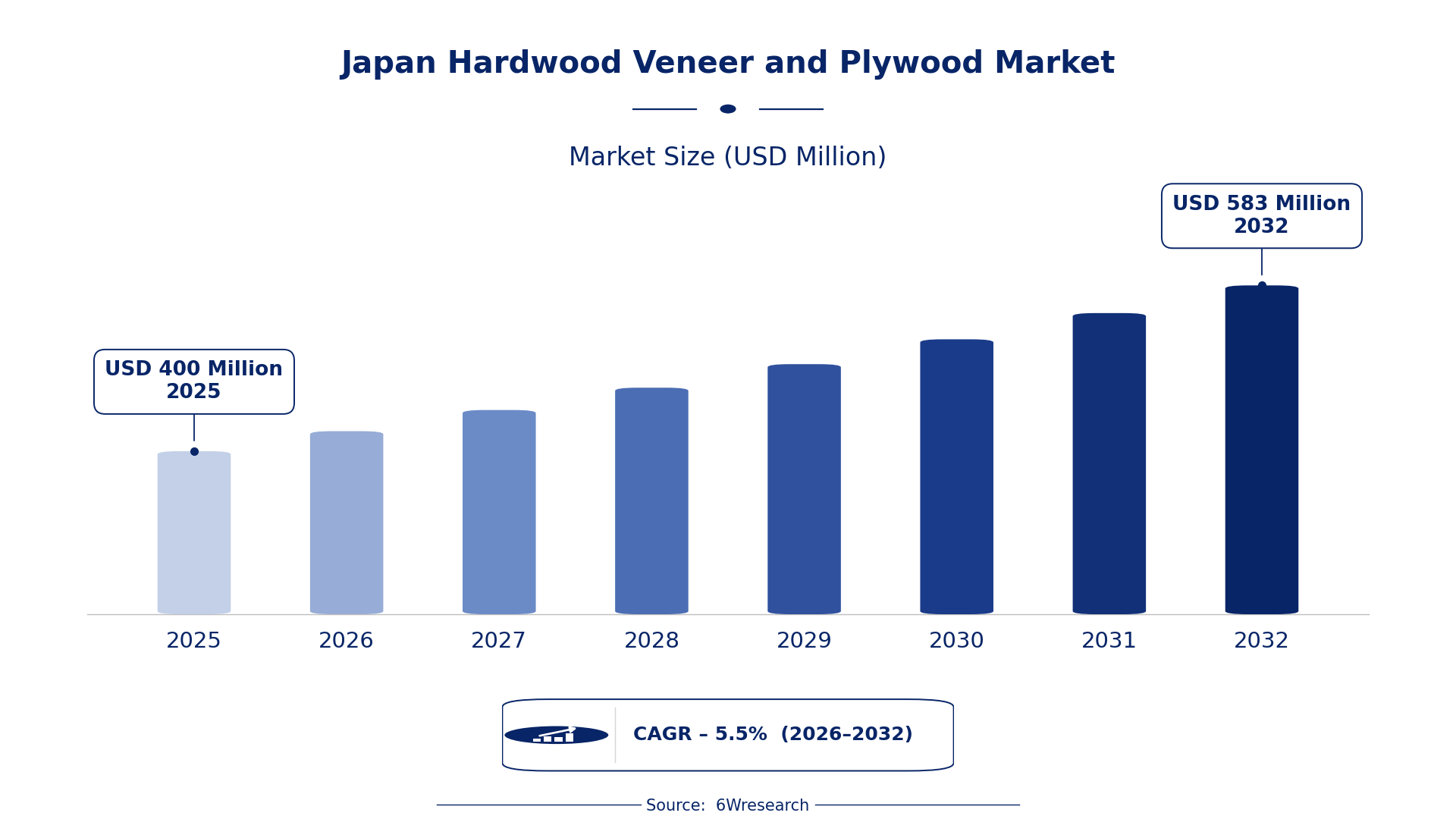
According to 6Wresearch internal database and industry insights, the Japan Hardwood Veneer and Plywood Market was valued at USD 400 Million in 2025 and is projected to reach USD 583 Million by 2032, growing at a CAGR of approximately 5.5% during 2026–2032.
Japan Hardwood Veneer and Plywood Market Highlights
| Report Metric | Details |
| Report Name | Japan Hardwood Veneer and Plywood Market (2026-2032) |
| Market Size 2025 | USD 400 Million |
| Market Size 2032 | USD 583 Million |
| Absolute Growth 2025–2032 | USD 183 Million |
| CAGR 2026–2032 | 5.5% |
| Peak Annual Growth | 6.7% in 2032 |
| Forecast Period | 2026–2032 |
| Historical Data | 2022–2025 |
| Base Year | 2025 |
| Leading Type, 2025 | Plywood (59% share) |
| Leading Sales Channel, 2025 | Direct Sales (68% share) |
| Leading Application, 2025 | Furniture (41% share) |
| Fastest-Growing Type | Veneer (7.5% CAGR) |
| Fastest-Growing Sales Channel | Distributors/Retailers (6.9% CAGR) |
| Fastest-Growing Application | Flooring & Construction (7.7% CAGR) |
| Growing Sector | Flooring & Construction |
| Key End Users | Furniture, Flooring & Construction, Automotive Interior, Packaging |
Japan Hardwood Veneer and Plywood Market Year-wise Growth Rate and Key Drivers (2022–2032)
This graph illustrates the annual growth rates of the market from 2022 to 2032, highlighting a steady upward trajectory and projected market expansion over the forecast period.
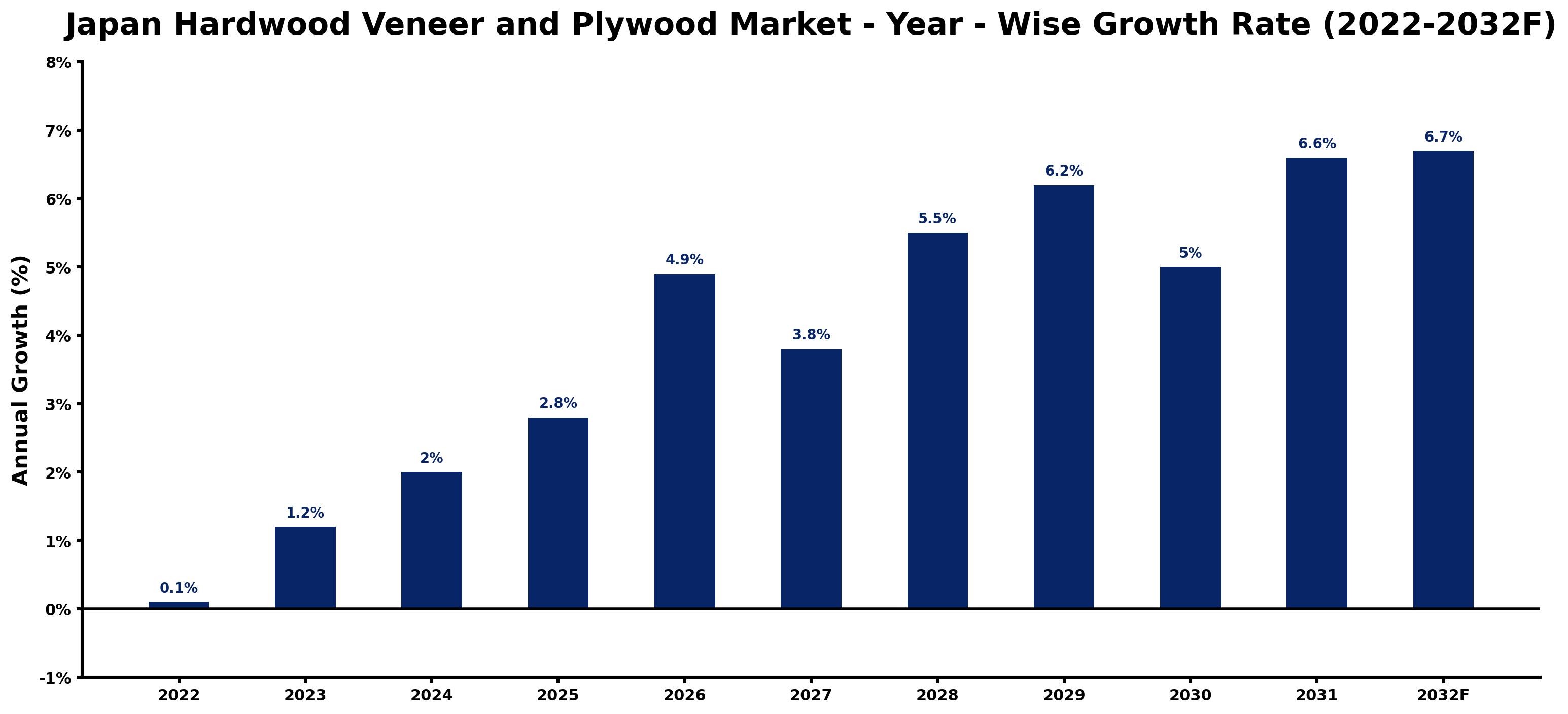
Annual growth estimates for each year appear below with the principal reason behind them, explaining the shifts that set the pace of the market.
| Year | Estimated Annual Growth (%) | Market Rationale |
| 2022 | 0.1 | The market experienced minimal growth, reflecting stable demand from furniture manufacturers. |
| 2023 | 1.2 | Demand accelerated due to increased construction activity and furniture production. |
| 2024 | 2.0 | Growth continued as consumer spending on home improvement rose. |
| 2025 | 2.8 | The market peaked historically as the furniture industry expanded its workforce. |
| 2026 | 4.9 | Growth surged as investments in residential construction projects increased. |
| 2027 | 3.8 | A slowdown occurred as the market adjusted to previous high growth rates. |
| 2028 | 5.5 | Demand picked up again, driven by rising renovation projects across urban areas. |
| 2029 | 6.2 | Growth remained strong as construction activities continued to rise steadily. |
| 2030 | 5.0 | A slowdown was noted as the market stabilised after rapid growth. |
| 2031 | 6.6 | Demand increased again due to heightened activity in the construction sector. |
| 2032 | 6.7 | The market peaked with investments in sustainable building materials. |
Note: Market size estimations and growth projections presented in this report are based on 6Wresearch's proprietary forecasting methodology, utilizing the latest available industry data, government publications, and primary research inputs.
Japan Hardwood Veneer and Plywood Market Synopsis
Hardwood veneer and plywood are engineered wood products made from thin layers of wood glued together. In 2022, Japan's hardwood veneer production reached 1.2 million cubic meters, primarily driven by the furniture and construction sectors. The plywood market is valued at approximately 600 billion yen, with demand stemming from domestic users and investments in sustainable forestry practices. As urbanisation progresses, the demand for these products is expected to grow, particularly in residential and commercial applications.
Market Dynamics Impact Analysis (2026–2032)
| Factor | Type | Impact | Primary Segment Affected |
| Rising residential construction projects boost demand for plywood. | Driver | High | Plywood |
| Increased consumer spending on home furnishings drives veneer sales. | Driver | High | Veneer |
| Growing focus on sustainable products creates opportunities for certification programs. | Opportunity | High | Veneer |
| Urbanisation trends lead to higher demand for construction materials. | Opportunity | High | Plywood |
| Volatility in raw material prices affects production costs. | Restraint | High | Plywood |
| Limited availability of certain hardwood species constrains supply. | Restraint | Medium | Veneer |
| High competition among suppliers leads to pricing pressures. | Challenge | Medium | Veneer |
| Technological advancements in production require significant investment. | Challenge | Medium | Plywood |
Evaluation of Drivers in Japan Hardwood Veneer and Plywood Market (2026–2032)
Below are the drivers that matter most for revenue growth, with supporting evidence.
| Drivers | Primary Segment Affected | Why It Matters (Evidence) |
| Increased construction activities drive plywood demand for residential projects. | Plywood | Japan's construction sector is projected to grow, with investments in urban housing expected to reach 3 trillion yen by 2025. |
| Rising consumer interest in home furnishings boosts veneer purchases. | Veneer | The furniture industry employs over 200,000 people, increasing demand for quality materials. |
| Sustainable forestry practices improve veneer market appeal. | Veneer | The Japan Wood-Products Association's certification program promotes eco-friendly products, increasing market interest. |
| Urbanisation trends lead to higher plywood consumption in building projects. | Plywood | Tokyo and Osaka are key regions driving demand for construction materials, with urban housing projects increasing by 12%. |
| Growing investments in home renovation projects increase veneer sales. | Veneer | Consumer spending on home improvement has risen by 10% in recent years. |
What keeps demand rising is the growth of Japan's construction sector, which will see investments in urban housing that drive plywood demand for residential projects. In 2022, the furniture industry employed over 200,000 people, increasing the need for quality veneers. Demand for plywood is particularly strong in Tokyo and Osaka, where urban housing projects are increasing by 12%. Consumer spending on home renovations has further boosted veneer sales as homeowners invest in quality materials.
Evaluation of Restraints in Japan Hardwood Veneer and Plywood Market
Several factors work against faster growth; the main ones are summarised below.
| Market Restraint | Primary Segment Affected | Why It Matters (Evidence) |
| Limited skilled workforce hampers production efficiency. | Veneer | As experienced workers retire, the industry faces a skills gap that delays production timelines. |
| Fluctuating hardwood prices increase costs for buyers. | Plywood | Prices can rise by 15% during peak demand seasons, impacting budgeting and project planning. |
| Slow technology adoption affects manufacturing processes. | Veneer | Many manufacturers still use outdated machinery, leading to inefficiencies that can extend lead times by up to 20%. |
| Supply chain disruptions delay imports of hardwood. | Plywood | Natural disasters often cause stock shortages for distributors, increasing delivery times. |
| Regulatory compliance costs burden small producers. | Veneer | Meeting standards requires investment in certifications that can strain smaller operations. |
Japan Hardwood Veneer and Plywood Market Challenges
Japan's hardwood veneer production reached 1.2 million cubic meters in 2022, yet producers encounter a skills gap, as many experienced workers retire without sufficient replacements, causing delays in production timelines for manufacturers. Buyers face rising costs due to fluctuating hardwood prices, which can increase by 15% during peak demand seasons, complicating their budgeting. Technology adoption remains slow, with many manufacturers still using outdated machinery, leading to inefficiencies that can extend lead times by up to 20% for buyers. Supply chain disruptions from natural disasters often delay imports, causing stock shortages for distributors and increasing delivery times.
Trends in the Japan Hardwood Veneer and Plywood Market
Four trends stand out in the Japan Hardwood Veneer and Plywood Market.
- Shift in Furniture Design Preferences: Furniture manufacturers are increasingly opting for eco-friendly materials, as consumer demand for sustainability rises. The Japan Wood-Products Association's certification program for sustainable wood launched in 2023 is a key example, promoting responsible sourcing.
- Increase in Urban Housing Projects: Tokyo is experiencing a surge in urban housing developments, with new residential projects increasing by 12% in 2023. This trend is boosting plywood consumption, as builders seek quality materials for construction.
- Transition to Sustainable Manufacturing Practices: Manufacturers are adopting sustainable practices, including the use of certified wood and eco-friendly adhesives. The 2021 Plastic Resource Circulation Act encourages these changes, prompting suppliers to innovate.
- Growing Demand for Customised Flooring Solutions: Homeowners are increasingly seeking customised flooring options, leading to a rise in demand for high-quality plywood. This trend is reflected in the growing renovation projects across urban areas.
Investment Opportunities in the Japan Hardwood Veneer and Plywood Market
Investors looking at the Japan Hardwood Veneer and Plywood Market should consider the following areas.
- Rising Demand for Sustainable Products: With the plywood market valued at approximately 600 billion yen, there is a gap for suppliers of sustainable materials. The furniture industry is a key buyer group, seeking eco-friendly options.
- Investment in Urban Housing: The ongoing urban housing projects present a timely opportunity for suppliers of hardwood plywood. Builders in Tokyo are actively looking for quality materials to meet rising construction demands.
- Expansion of Eco-Friendly Certifications: The launch of sustainable wood certification programs creates opportunities for suppliers to enter the market. Engaging with the Japan Wood-Products Association can facilitate access to this growing segment.
- Growing Renovation Market: Consumer spending on home improvement has risen by 10%, indicating a strong opportunity for veneer suppliers. Targeting homeowners through partnerships with local distributors can improve market entry.
Government Initiatives in the Japan Hardwood Veneer and Plywood Market
The Building Energy Efficiency Act, amended in 2022, mandates that all new buildings meet energy standards from April 2025. This law affects hardwood veneer and plywood producers, as they must ensure their products comply with these standards to remain competitive in the market. The Food Sanitation Act amendment, fully applied in June 2021, also impacts the industry by enforcing stricter hygiene management protocols for wood used in food-related applications.
The Ministry of Agriculture, Forestry and Fisheries oversees the implementation of sustainable forestry practices, approving initiatives that promote responsible sourcing of hardwood. Their funding supports projects aimed at improving wood quality and sustainability, benefiting both producers and buyers in the hardwood veneer and plywood market.
Future Insight of the Japan Hardwood Veneer and Plywood Market
The launch of new sustainable forestry certification programmes will enhance wood sourcing practices by 2032, benefiting both suppliers and buyers. Increased automation in production facilities will streamline operations and reduce lead times. The implementation of advanced manufacturing technologies will improve product quality and consistency, meeting buyer expectations. By 2032, Japan's hardwood veneer production is projected to reach approximately 1.5 million cubic meters, reflecting growth in construction and furniture applications.
Market Segmentation Analysis
Japan Hardwood Veneer and Plywood Market report covers a detailed analysis of the following market segments:
By Type – Plywood Leads, Veneer Expected to Grow Fastest
According to Ravi Bhandari, Research Head at 6Wresearch, Plywood took 59% of type revenue in 2025, more than any other category. Plywood holds the largest share due to its widespread application in construction and flooring, essential for both residential and commercial developments. Key regions like Tokyo and Osaka drive this demand, reflecting the material's integral role in building projects. Veneer is set to record the highest CAGR in this split, 7.5% over 2026–2032. Veneer is rapidly gaining traction, particularly in furniture and interior applications, as consumers seek aesthetically appealing designs. The Japan Wood-Products Association's recent certification program for sustainable wood is likely to further boost this segment's appeal. Suppliers should prioritise veneer offerings to align with the growing consumer preference for sustainable and attractive materials.
By Sales Channel – Direct Sales Leads, Distributors/Retailers Expected to Grow Fastest
With 68% of sales channel revenue in 2025, Direct Sales was the largest category. Direct Sales is the primary channel, favoured for large volume purchases that allow buyers to negotiate terms directly with manufacturers. This approach is especially relevant for substantial projects in the construction and furniture sectors, ensuring a steady supply chain. Over 2026–2032, Distributors/Retailers are expected to post the fastest growth, at a CAGR of 6.9%. Distributors/Retailers are witnessing rapid growth, as they provide essential access for smaller customers requiring lower volumes of hardwood products. This trend highlights an opportunity for suppliers to expand their distribution networks and reach a wider audience. Suppliers should focus on building relationships with distributors to capture the growing retail market.
By Application – Furniture Leads, Flooring & Construction Expected to Grow Fastest
In 2025, Furniture led the application split with a 41% share. Furniture is the leading application for hardwood products, bolstered by a thriving industry that employs over 200,000 people in Japan. The consistent demand for quality furniture creates a reliable market for hardwood veneer and plywood. Flooring & Construction is projected to grow fastest, at a CAGR of 7.7% during 2026–2032. Flooring & Construction is the fastest-growing application, fuelled by increased investments in building projects and renovations across Japan. The emphasis on high-quality materials in construction is driving this segment's rapid expansion. Buyers in flooring and construction should prepare for heightened competition for premium hardwood products.
Key Attractiveness of the Report
- 10 Years of Market Numbers
- Historical Data Starting from 2022 to 2025
- Base Year 2025
- Forecast Data until 2032
- Key Performance Indicators Impacting the Market
- Major Upcoming Developments and Projects
Key Highlights of the Report:
- Japan Hardwood Veneer and Plywood Market Outlook
- Market Size of Japan Hardwood Veneer and Plywood Market, 2025
- Forecast of Japan Hardwood Veneer and Plywood Market, 2032
- Historical Data and Forecast of Japan Hardwood Veneer and Plywood Revenues & Volume for the Period 2022-2032
- Japan Hardwood Veneer and Plywood Market Trend Evolution
- Japan Hardwood Veneer and Plywood Market Drivers and Challenges
- Japan Hardwood Veneer and Plywood Price Trends
- Japan Hardwood Veneer and Plywood Porter's Five Forces
- Japan Hardwood Veneer and Plywood Industry Life Cycle
- Historical Data and Forecast of Japan Hardwood Veneer and Plywood Market Revenues & Volume By Type for the Period 2022-2032
- Historical Data and Forecast of Japan Hardwood Veneer and Plywood Market Revenues & Volume By Veneer for the Period 2022-2032
- Historical Data and Forecast of Japan Hardwood Veneer and Plywood Market Revenues & Volume By Plywood for the Period 2022-2032
- Historical Data and Forecast of Japan Hardwood Veneer and Plywood Market Revenues & Volume By Sales Channel for the Period 2022-2032
- Historical Data and Forecast of Japan Hardwood Veneer and Plywood Market Revenues & Volume By Direct Sales for the Period 2022-2032
- Historical Data and Forecast of Japan Hardwood Veneer and Plywood Market Revenues & Volume By Distributors/Retailers for the Period 2022-2032
- Historical Data and Forecast of Japan Hardwood Veneer and Plywood Market Revenues & Volume By Application for the Period 2022-2032
- Historical Data and Forecast of Japan Hardwood Veneer and Plywood Market Revenues & Volume By Furniture for the Period 2022-2032
- Historical Data and Forecast of Japan Hardwood Veneer and Plywood Market Revenues & Volume By Flooring & Construction for the Period 2022-2032
- Historical Data and Forecast of Japan Hardwood Veneer and Plywood Market Revenues & Volume By Automotive Interior for the Period 2022-2032
- Historical Data and Forecast of Japan Hardwood Veneer and Plywood Market Revenues & Volume By Packaging for the Period 2022-2032
- Historical Data and Forecast of Japan Hardwood Veneer and Plywood Market Revenues & Volume By Marine for the Period 2022-2032
- Historical Data and Forecast of Japan Hardwood Veneer and Plywood Market Revenues & Volume By Others for the Period 2022-2032
- Japan Hardwood Veneer and Plywood Import Export Trade Statistics
- Market Opportunity Assessment By Type
- Market Opportunity Assessment By Sales Channel
- Market Opportunity Assessment By Application
- Japan Hardwood Veneer and Plywood Top Companies Market Share
- Japan Hardwood Veneer and Plywood Competitive Benchmarking By Technical and Operational Parameters
- Japan Hardwood Veneer and Plywood Company Profiles
- Japan Hardwood Veneer and Plywood Key Strategic Recommendations
Market Covered
The following segment groups are covered in the report.
By Type
- Veneer
- Plywood
By Sales Channel
- Direct Sales
- Distributors/Retailers
By Application
- Furniture
- Flooring & Construction
- Automotive Interior
- Packaging
- Marine
- Others































