Japan Heat Insulating Films Market Size & Growth Rate
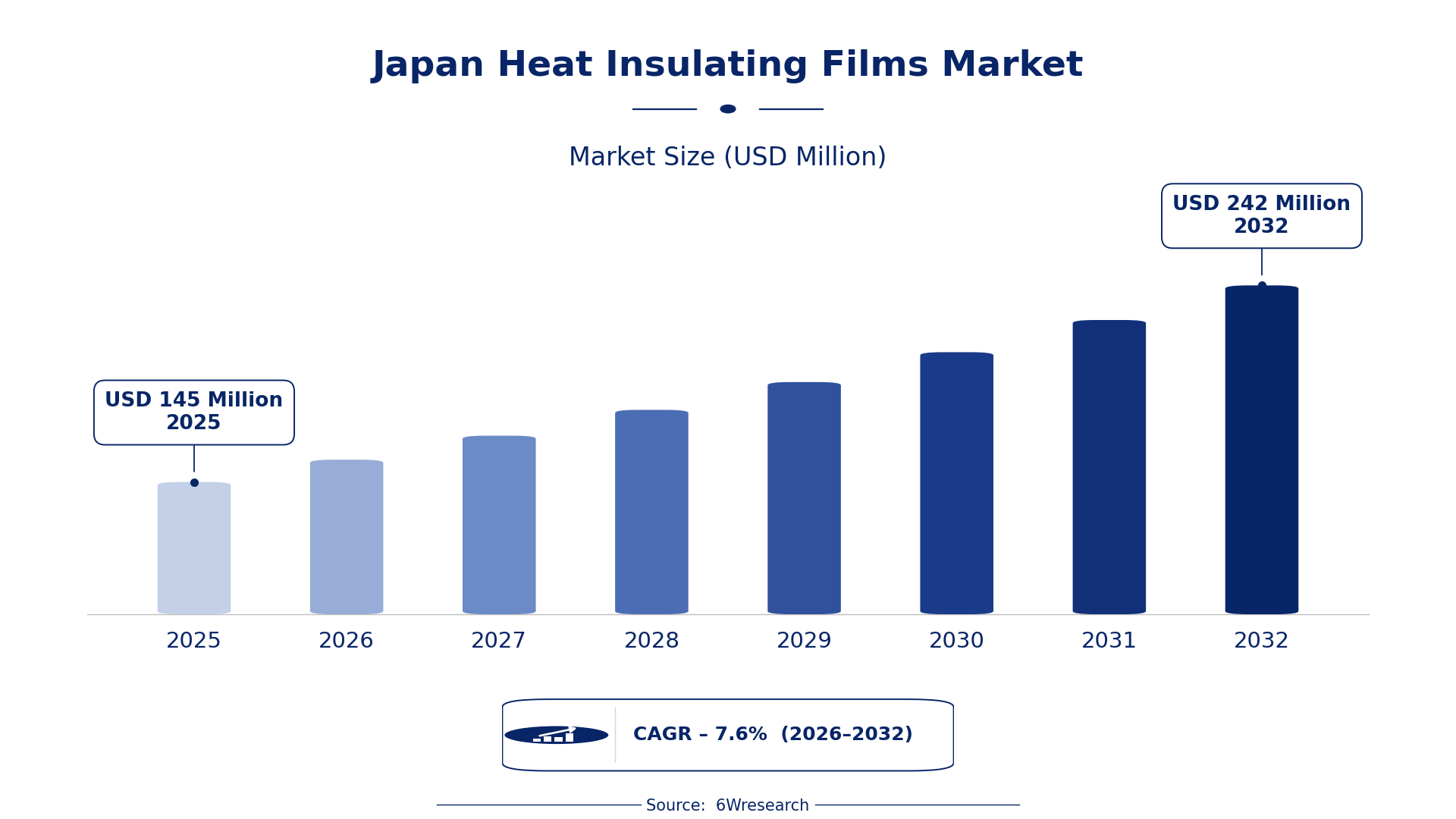
According to 6Wresearch internal database and industry insights, the Japan Heat Insulating Films Market was valued at USD 145 Million in 2025 and is projected to reach USD 242 Million by 2032, growing at a CAGR of approximately 7.6% during 2026–2032.
Japan Heat Insulating Films Market Highlights
| Report Metric | Details |
| Report Name | Japan Heat Insulating Films Market (2026-2032) |
| Market Size 2025 | USD 145 Million |
| Market Size 2032 | USD 242 Million |
| Absolute Growth 2025–2032 | USD 97 Million |
| CAGR 2026–2032 | 7.6% |
| Peak Annual Growth | 9.3% in 2032 |
| Forecast Period | 2026–2032 |
| Historical Data | 2022–2025 |
| Base Year | 2025 |
| Leading Type, 2025 | Reflective Films (57% share) |
| Leading End use, 2025 | Commercial Building (45% share) |
| Fastest-Growing End use | Residential Building (9.7% CAGR) |
| Growing Sector | Commercial Building |
| Key End Users | Commercial builders, residential developers, architects, construction firms |
Japan Heat Insulating Films Market Year-wise Growth Rate and Key Drivers (2022–2032)
This graph illustrates the annual growth rates of the market from 2022 to 2032, highlighting a steady upward trajectory and projected market expansion over the forecast period.
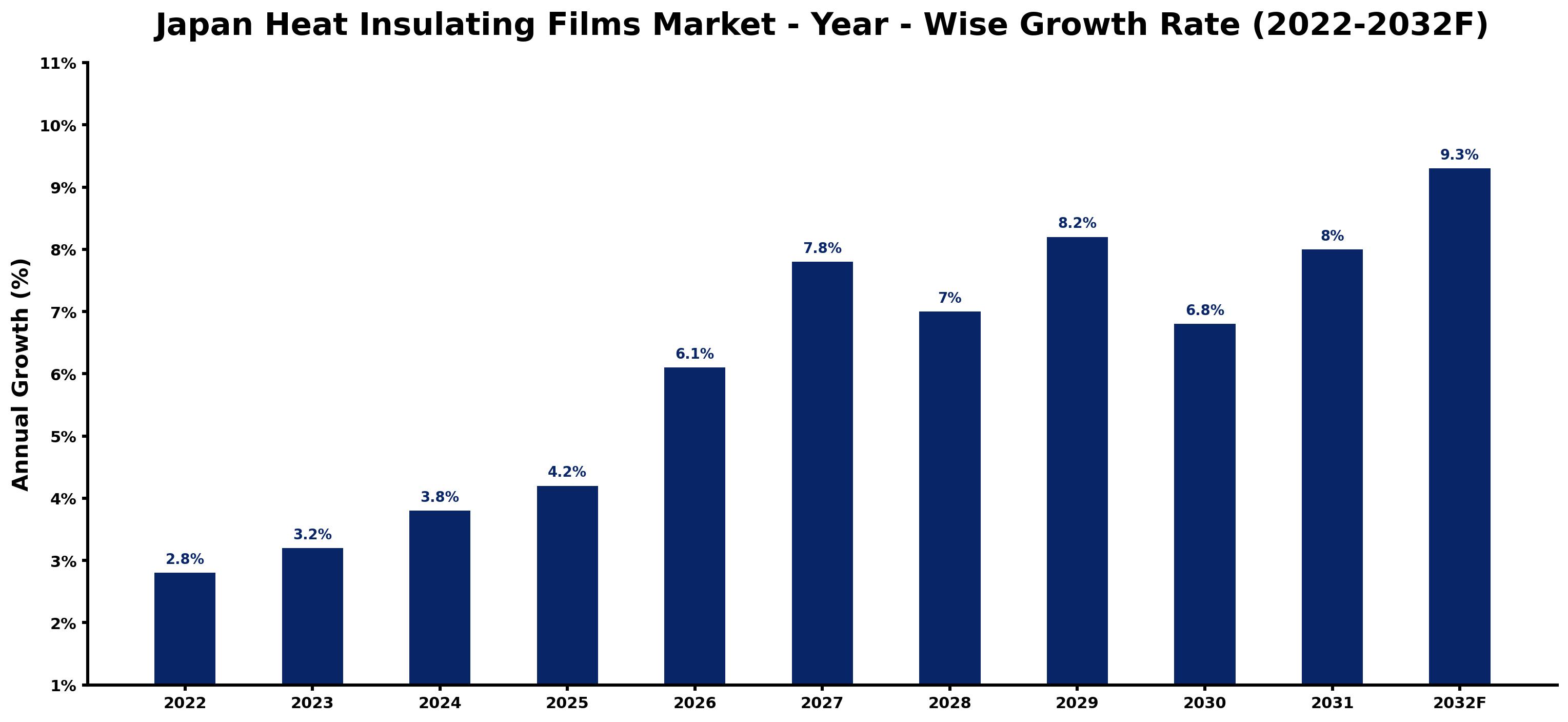
For each year, the table pairs the estimated growth rate with the leading influence on demand, showing how the drivers changed across the period.
| Year | Estimated Annual Growth (%) | Market Rationale |
| 2022 | 2.8 | The market showed steady growth with increasing awareness of energy efficiency. |
| 2023 | 3.2 | Demand rose as more commercial buildings sought energy-saving solutions. |
| 2024 | 3.8 | The trend continued with heightened investments in sustainable construction practices. |
| 2025 | 4.2 | Growth peaked as regulations on energy efficiency standards were enforced. |
| 2026 | 6.1 | A surge in residential projects is expected to boost demand for heat insulating films. |
| 2027 | 7.8 | The market is projected to expand due to rising consumer interest in energy-efficient homes. |
| 2028 | 7.0 | Growth is expected to slow as the market adjusts to previous high levels of demand. |
| 2029 | 8.2 | Increased urbanisation will lead to renewed interest in energy-efficient building materials. |
| 2030 | 6.8 | The market is projected to experience a slight slowdown as competition intensifies. |
| 2031 | 8.0 | Demand is expected to surge again with new building projects focusing on sustainability. |
| 2032 | 9.3 | The market is projected to peak as energy efficiency becomes a top priority for developers. |
Note: Market size estimations and growth projections presented in this report are based on 6Wresearch's proprietary forecasting methodology, utilizing the latest available industry data, government publications, and primary research inputs.
Japan Heat Insulating Films Market Synopsis
Heat Insulating Films serve to improve energy efficiency by minimising heat transfer in buildings and vehicles. In Japan, the market is expanding due to the implementation of the Building Energy Efficiency Act, which mandates energy standards for new constructions starting in 2025. This regulation is driving investments in energy-efficient solutions, particularly in commercial buildings. As sustainability becomes a priority, the demand for heat insulating films is expected to rise, creating opportunities for manufacturers and suppliers in this evolving market.
Market Dynamics Impact Analysis (2026–2032)
| Factor | Type | Impact | Primary Segment Affected |
| Increasing energy efficiency regulations | Driver | High | Reflective Films |
| Growing demand from commercial buildings | Driver | High | Reflective Films |
| Rising investments in energy-efficient construction | Opportunity | High | Residential Building |
| Expansion of green building certifications | Opportunity | High | Commercial Building |
| High initial installation costs | Restraint | Medium | Endothermic Films |
| Limited awareness among consumers | Restraint | Medium | Reflective Films |
| Competition from alternative insulation materials | Challenge | High | Endothermic Films |
| Regulatory compliance costs | Challenge | Medium | Reflective Films |
Evaluation of Drivers in Japan Heat Insulating Films Market (2026–2032)
The main growth drivers and the segments they affect most are set out below.
| Drivers | Primary Segment Affected | Why It Matters (Evidence) |
| Rising energy costs | Reflective Films | Higher energy costs prompt buyers to invest in energy-saving solutions, leading to increased purchases of heat insulating films. |
| Government energy efficiency mandates | Reflective Films | Legislation encourages buyers to adopt heat insulating films to meet compliance standards, driving demand. |
| Urbanisation trends | Residential Building | As urban areas expand, there is a growing need for energy-efficient residential buildings, driving demand for heat insulating films. |
| Consumer awareness of sustainability | Commercial Building | Increased awareness of sustainability among consumers leads commercial builders to invest in heat insulating films for energy efficiency. |
| Technological advancements in film production | Endothermic Films | Innovations in film technology improve product performance, attracting more buyers seeking effective insulation solutions. |
Orders keep climbing as rising energy costs push buyers towards energy-efficient solutions. The implementation of energy efficiency standards compels commercial builders to invest in heat insulating films. Urbanisation trends are driving demand for residential buildings, with buyers increasingly seeking sustainable options. Heightened consumer awareness of sustainability is influencing purchasing decisions, resulting in a surge in demand for reflective films. Recent advancements in film production technology are improving performance, making these products more appealing to buyers in the commercial sector.
Evaluation of Restraints in Japan Heat Insulating Films Market
The table below lists the restraints and the evidence behind each.
| Market Restraint | Primary Segment Affected | Why It Matters (Evidence) |
| High initial installation costs | Endothermic Films | The upfront investment required for heat insulating films can deter potential buyers, particularly in cost-sensitive projects. |
| Limited awareness among consumers | Reflective Films | Many consumers lack knowledge about the benefits of heat insulating films, resulting in lower demand in the residential sector. |
| Competition from alternative insulation materials | Endothermic Films | The availability of cheaper insulation options can limit market share for heat insulating films among budget-conscious buyers. |
| Regulatory compliance costs | Reflective Films | Costs associated with meeting new energy efficiency regulations can strain budgets for smaller construction firms. |
| Market saturation in urban areas | Residential Building | High competition in urban markets can lead to price wars, affecting profitability for suppliers of heat insulating films. |
Japan Heat Insulating Films Market Challenges
Buyers encounter delays due to limited availability of raw materials for heat insulating films, extending lead times by up to six weeks for manufacturers. Competition among suppliers intensifies as they struggle to meet demand, leading to price increases of around 15% for clients. Regulatory hurdles complicate the approval process for new products, resulting in an average delay of three months for market entry, which hampers suppliers' ability to innovate. Skills shortages in the workforce lead to production inefficiencies, costing manufacturers approximately 10% in lost output, which ultimately raises prices for end users.
Trends in the Japan Heat Insulating Films Market
The following changes are redrawing the Japan Heat Insulating Films Market.
- Commercial Builders Prioritising Energy Efficiency: A notable shift is occurring among commercial builders, with 45% of new projects incorporating heat insulating films. This trend is particularly strong in Tokyo, where energy-saving initiatives are being implemented.
- Growing Demand for Sustainable Residential Buildings: Residential buildings are increasingly focused on sustainability, with a projected 9.7% CAGR for heat insulating films in this sector. This trend is especially pronounced in urban areas like Osaka.
- Heightened Focus on Energy Efficiency Standards: The emphasis on energy efficiency standards is intensifying, with 57% of new commercial buildings expected to comply by 2025. This shift is driving demand for reflective films across the country.
- Advancements in Film Production Technology: Technological advancements are enhancing the performance of heat insulating films, making them more appealing to buyers. In 2023, production efficiency improved by 15%, benefiting suppliers.
Investment Opportunities in the Japan Heat Insulating Films Market
The following opportunities in the Japan Heat Insulating Films Market pair current demand with a clear way in.
- Timing for Sustainable Construction: With the Building Energy Efficiency Act coming into effect in 2025, there is a pressing need for energy-efficient solutions. Suppliers can target commercial builders looking to comply with these regulations.
- Supply of Advanced Heat Insulating Films: The demand for advanced heat insulating films is rising, particularly in urban areas. Suppliers should focus on developing products that meet the needs of residential builders.
- Expansion of Green Building Certifications: As more projects seek green building certifications, the demand for heat insulating films will grow. Suppliers can engage with developers in regions like Kyoto to meet this need.
- Growing Market for Residential Buildings: The residential building sector is expanding rapidly, creating opportunities for suppliers of heat insulating films. Targeting home builders in metropolitan areas can yield significant returns.
Government Initiatives in the Japan Heat Insulating Films Market
The Industrial Standardization Act, amended in 2019, governs product standards for heat insulating films, ensuring quality and safety. The Building Energy Efficiency Act, amended in 2022, requires all new buildings to meet energy standards starting April 2025, compelling producers to adapt their offerings accordingly.
The Ministry of the Environment (MoE) oversees the implementation of energy efficiency standards and approves certifications for heat insulating films. The Ministry of Economy, Trade and Industry (METI) funds initiatives that promote the adoption of sustainable building materials, supporting the growth of this market.
Future Insight of the Japan Heat Insulating Films Market
By 2032, buyers will benefit from advancements in smart film technology that enhance energy efficiency in buildings. Suppliers will adopt new manufacturing standards that streamline production processes, reducing costs. Government initiatives promoting sustainable building materials will drive demand for eco-friendly films. Facilities focusing on automation are projected to increase output by 20%, enabling suppliers to better align with market needs.
Market Segmentation Analysis
Japan Heat Insulating Films Market report covers a detailed analysis of the following market segments:
By Type – Reflective Films Lead and Record the Fastest Growth
According to Sachin Kumar Rai, Senior Research Analyst at 6Wresearch, Reflective Films accounted for 57% of the market by type in 2025. Reflective films dominate the market as they are widely utilised in energy-efficient buildings that align with Japan's stringent energy regulations. Their popularity is particularly pronounced in metropolitan areas where reducing energy consumption is essential for sustainability. Reflective Films are also forecast to expand faster than any other category, at a CAGR of 9.6% over 2026–2032. The demand for reflective films is increasing due to a rising focus on energy efficiency, especially in urban settings where energy costs are high. This trend is expected to persist as cities adopt more rigorous energy efficiency policies. Suppliers must focus on enhancing reflective film offerings to capitalise on the growing demand for energy-efficient building solutions.
By End use – Commercial Building Leads, Residential Building Expected to Grow Fastest
In 2025, Commercial Building led the end use split with a 45% share. Commercial buildings represent the largest segment as they necessitate effective heat insulation to control energy costs and improve occupant comfort. This is especially relevant in urban regions where energy efficiency is a priority for building owners. Residential Building is set to record the highest CAGR in this split, 9.7% over 2026–2032. The residential building segment is experiencing rapid growth driven by rising consumer awareness of energy efficiency and an uptick in housing developments. This is reflected in the increasing number of residential construction permits issued recently. Buyers in the residential market should pursue customised insulation solutions that address their specific energy-saving needs.
Key Attractiveness of the Report
- 10 Years of Market Numbers
- Historical Data Starting from 2022 to 2025
- Base Year 2025
- Forecast Data until 2032
- Key Performance Indicators Impacting the Market
- Major Upcoming Developments and Projects
Key Highlights of the Report:
- Japan Heat Insulating Films Market Outlook
- Market Size of Japan Heat Insulating Films Market,2025
- Forecast of Japan Heat Insulating Films Market, 2032
- Historical Data and Forecast of Japan Heat Insulating Films Revenues & Volume for the Period 2022-2032
- Japan Heat Insulating Films Market Trend Evolution
- Japan Heat Insulating Films Market Drivers and Challenges
- Japan Heat Insulating Films Price Trends
- Japan Heat Insulating Films Porter's Five Forces
- Japan Heat Insulating Films Industry Life Cycle
- Historical Data and Forecast of Japan Heat Insulating Films Market Revenues & Volume By Type for the Period 2022-2032
- Historical Data and Forecast of Japan Heat Insulating Films Market Revenues & Volume By Endothermic Films for the Period 2022-2032
- Historical Data and Forecast of Japan Heat Insulating Films Market Revenues & Volume By Reflective Films for the Period 2022-2032
- Historical Data and Forecast of Japan Heat Insulating Films Market Revenues & Volume By End use for the Period 2022-2032
- Historical Data and Forecast of Japan Heat Insulating Films Market Revenues & Volume By Commercial Building for the Period 2022-2032
- Historical Data and Forecast of Japan Heat Insulating Films Market Revenues & Volume By Residential Building for the Period 2022-2032
- Historical Data and Forecast of Japan Heat Insulating Films Market Revenues & Volume By Automotive for the Period 2022-2032
- Japan Heat Insulating Films Import Export Trade Statistics
- Market Opportunity Assessment By Type
- Market Opportunity Assessment By End use
- Japan Heat Insulating Films Top Companies Market Share
- Japan Heat Insulating Films Competitive Benchmarking By Technical and Operational Parameters
- Japan Heat Insulating Films Company Profiles
- Japan Heat Insulating Films Key Strategic Recommendations
Market Covered
The report covers the following segments.
By Type
- Endothermic Films
- Reflective Films
By End use
- Commercial Building
- Residential Building
- Automotive































